The short answer
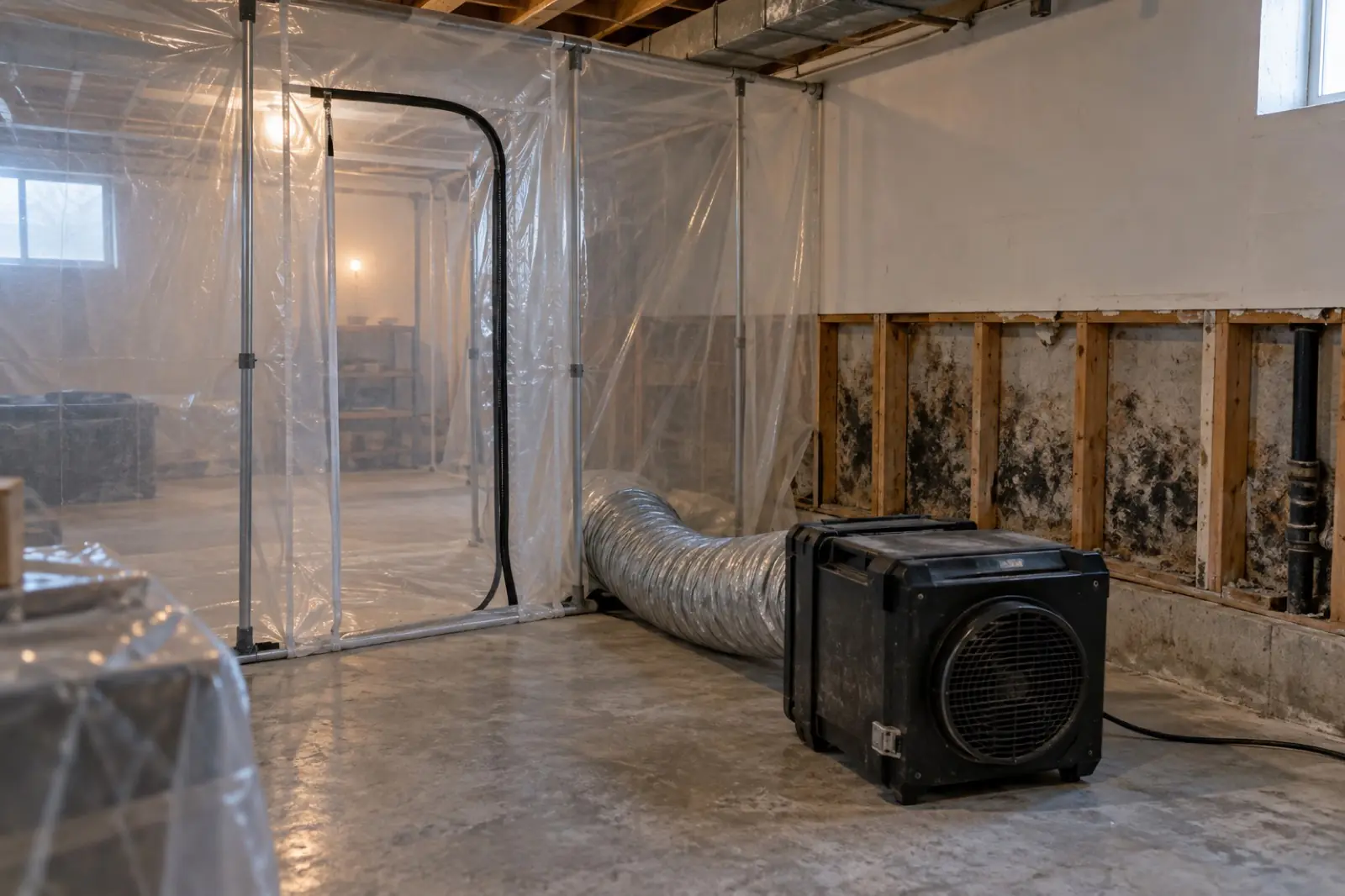
Mold remediation is the controlled removal of mold growth and the materials it has colonised, done behind containment, followed by cleaning, drying and verification, with the moisture source fixed first. It is not spraying or painting over growth, and it is not removing every spore, which EPA says is impossible indoors. Size, the water involved and the HVAC system decide whether it is a homeowner job or a professional one.
Start here
- The mold remediation process: the eight steps in order, and what each one protects.
- Mold inspection cost: what an assessment should produce before anyone quotes.
- Mold remediation cost: why containment, not area, sets the price.
On this page
What mold remediation is, and what it is not
The word that does the work is remediation. Removal implies getting rid of every spore, which is not possible inside a building. EPA’s own guide says so plainly: A Brief Guide to Mold, Moisture and Your Home states that “It is impossible to get rid of all mold and mold spores indoors; some mold spores will be found floating through the air and in house dust.” Remediation means something more modest and more useful: physically removing growth and the materials it has colonised, cleaning what stays, drying the assembly, and returning the space to the normal background that every building has.
The same EPA guide puts the controlling principle in seven words: “The key to mold control is moisture control.” Every competent scope starts there, which is why the first step in the eight-step mold remediation process is finding and stopping the water, not reaching for a sprayer. Cleaning growth while the leak, the condensation or the wicking groundwater continues produces a repeat job, and a remediator who will not ask where the water came from is selling cleaning rather than remediation.
Three things are commonly sold as remediation and are not. Spraying a biocide over growth leaves the growth in place. Painting or encapsulating over it hides it, and EPA’s brief guide is direct on the point: “Do not paint or caulk moldy surfaces.” And fogging a room treats the air, not the colonised material that keeps releasing into it. The professional reference for the real thing is the IICRC’s S520, which the institute describes on its S520 page as “a procedural standard for the remediation of mold damaged structures and contents”. Our standards and licensing hub explains how a consensus standard like S520 differs from a law.
How common mold is, and why water comes first
Most published claims about how many homes have mold are not sourced. The federal government does measure it. In the 2023 American Housing Survey, an estimated 3.9 million of the 132.2 million occupied homes that answered, 3.0%, reported mold covering at least the area of a sheet of letter paper in the previous 12 months (Census AHS 2023, our analysis in the homes with mold report). That is a household-reported, visible-growth measure, so it sets a floor rather than a ceiling, but it is a real number with a stated method.
Bathrooms lead by a wide margin: 47.5% of homes with mold named a bathroom, according to the same Census AHS 2023 file. The survey’s room choices are kitchen, bathrooms, bedrooms, living room, basement and some other room, with no separate attic option, so the survey says nothing specific about attics. Attic growth is usually found by a roofer or a home inspector rather than the owner, and the signs of mold in an attic appear in a fairly fixed order, starting with frost on the nail points in cold weather.
The water connection is the most useful finding in the survey. Homes that reported a leak in the same 12 months reported mold at 10.6%, against 1.6% for homes with no leak, about 6.7 times the rate (Census AHS 2023). Leaks themselves are common: 15.4% of answering homes reported one, per the Census AHS figures behind our household water leak report. The link is not total, though. Only 55% of homes with mold also reported a leak in that window, according to the same Census data. The survey records no cause for the rest, and condensation, which needs no leak at all, is the mechanism behind most of the attic cases described below.
| Group | Sample homes | Share reporting mold |
|---|---|---|
| Homes with any water leak in the past 12 months | 7,326 | 10.6% |
| Homes with no leak reported | 40,837 | 1.6% |
| All occupied homes that answered | 48,163 | 3.0% |
That pattern is why mold sits next to water damage on this site rather than apart from it. Water that is dried quickly rarely becomes a mold job. EPA’s brief guide advises drying water-damaged areas and items within 24 to 48 hours, and our water damage hub covers the drying side in detail.
Homeowner job or professional job: EPA’s 10 square foot line
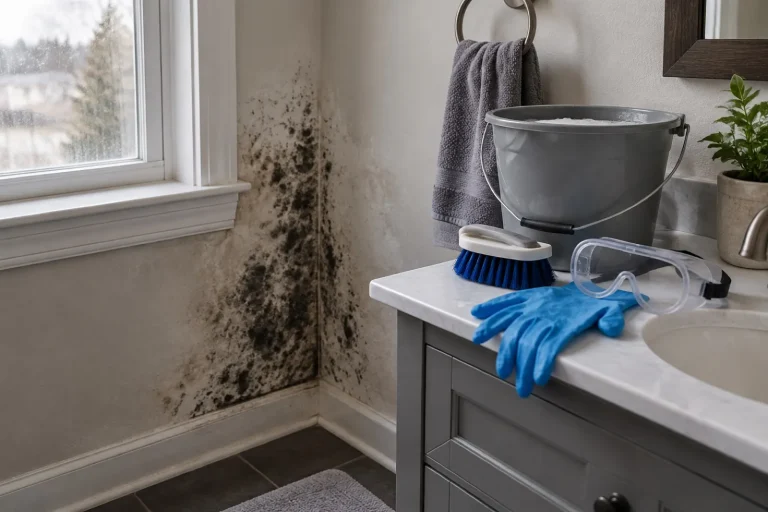
The most quoted number in mold cleanup is a piece of federal guidance, and it is worth reading in its own words. EPA’s brief guide says: “If the moldy area is less than about 10 square feet (less than roughly a 3 ft. by 3 ft. patch), in most cases, you can handle the job yourself, follow the guidelines.” It continues: “If there has been a lot of water damage, and/or mold growth covers more than 10 square feet, consult EPA’s Mold Remediation in Schools and Commercial Buildings.”
Area is only one of the triggers in that guide. Three others move a small patch into professional territory regardless of size, and each is quoted from the same EPA page:
- Contaminated water. “If the water and/or mold damage was caused by sewage or other contaminated water, then call in a professional who has experience cleaning and fixing buildings damaged by contaminated water.”
- The HVAC system. Where the system “may be contaminated with mold”, EPA points readers to its separate guide on whether to have the air ducts cleaned. Growth in a duct or air handler is distributed to every room the system serves.
- Health. “If you have health concerns, consult a health professional before starting cleanup.” Health questions belong with a clinician, not with a remediator or a publication.
The 10 square foot figure is advice, not law, and it is often confused with a statute that uses the same number. Florida writes a 10 square foot threshold into Chapter 468, Part XVI of the Florida Statutes for when mold-related services require a licence. Same number, different instrument, different force. Our mold remediation cost guide sets out why the distinction matters when someone tells you what you are allowed to do.
Size also explains the price of small jobs. Containment, negative air and decontamination cost roughly the same on 10 square feet as on 100, which is why most contractors apply a $500 to $1,500 minimum, according to the published contractor price guides compiled in our cost guide. A homeowner job inside EPA’s line avoids that floor; a professional job never does.
The mold remediation process, in order
A compliant job runs in a fixed sequence, and the order is the point. Each step protects the next, and reordering them moves contamination into parts of the building that were clean. The table below is our summary of standard practice; our step-by-step process guide explains each stage and why it sits where it does.
| Step | Why it is in this position |
|---|---|
| 1. Find and stop the moisture | Everything after it is temporary until it is done. |
| 2. Assess and scope | Defines the containment size and what comes out, ideally by an independent assessor. |
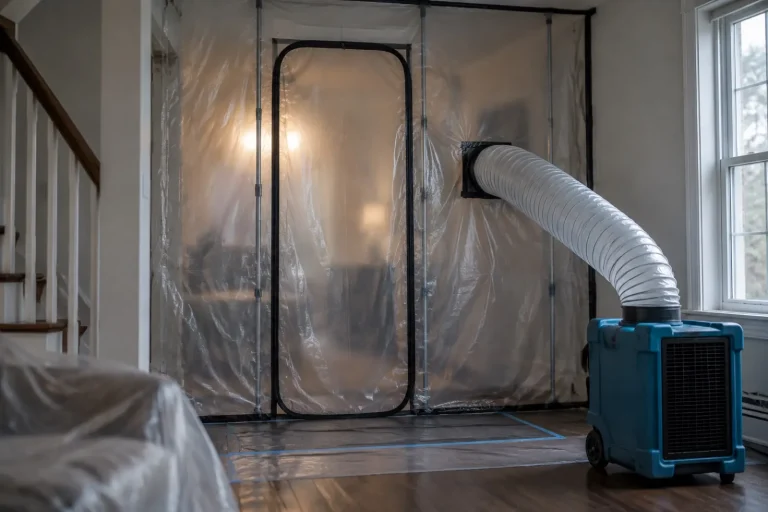
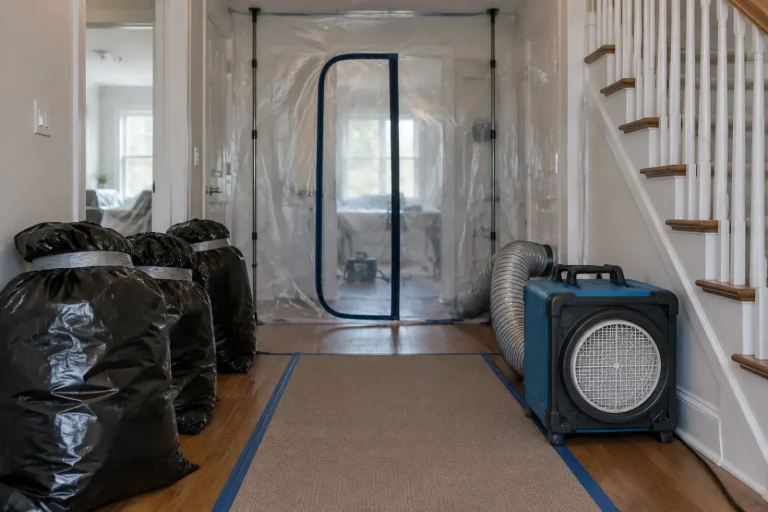
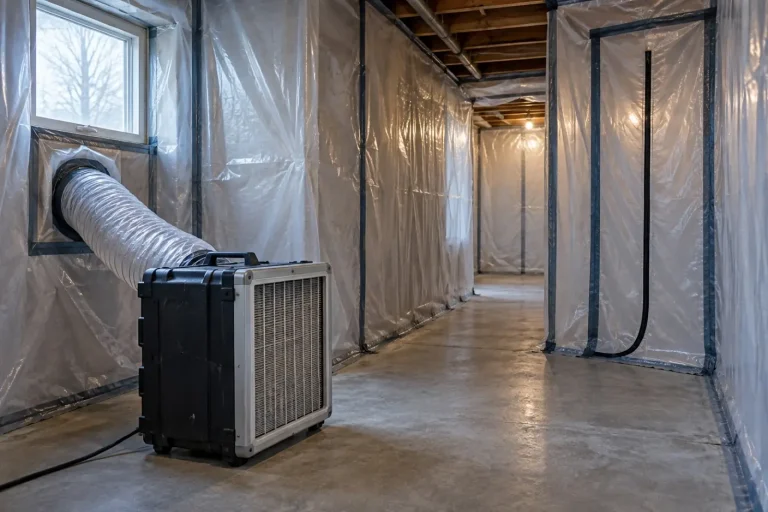
| 3. Build containment | Demolition is the highest-release moment of the job. |
| 4. Run negative air | HEPA-filtered extraction keeps any leakage flowing into the work area, not out of it. |
| 5. Remove colonised porous material | Saturated drywall, insulation and carpet are cut out, bagged and removed. |
| 6. Clean what stays | HEPA vacuuming and damp wiping of non-porous and retained structural surfaces. |
| 7. Dry the assembly | Back to normal moisture content so the repaired cavity does not regrow. |
| 8. Verify | Visual inspection and, where specified, sampling, against criteria written before the work started. |
Containment levels, by size
Containment exists for one reason, which EPA states directly: “The purpose of containment during remediation activities is to limit release of mold into the air and surroundings, in order to minimize the exposure of remediators and building occupants to mold.” Its schools and commercial buildings guide sets two levels, limited and full, and recommends limited containment “for areas involving between 10 and 100 square feet” and full containment for areas “greater than 100” square feet or wherever occupied space would otherwise be further contaminated.
| Affected area | EPA containment recommendation | What it means |
|---|---|---|
| Under about 10 sq ft | Homeowner cleanup in most cases | EPA’s household guidance applies; no containment level set |
| 10 to 100 sq ft | Limited containment | Single layer of 6-mil fire-retardant polyethylene, slit entry with covering flap, vents and doors sealed |
| More than 100 sq ft | Full containment | Double layer polyethylene, decontamination chamber or airlock for entry and exit |
Two practical consequences follow. Whether you can stay in the house depends on whether the containment isolates the work from living space and from the air handler, which is a question for the assessor, and for a clinician where anyone in the household has a respiratory or immune condition. And the containment footprint, not the visible growth, is what a quote is really pricing, which is why two quotes that disagree on area are describing two different jobs.
Testing, sampling and clearance
Testing is the most oversold part of this field, and EPA’s position is short: “In most cases, if visible mold growth is present, sampling is unnecessary.” The same page explains why a lab number cannot settle a dispute on its own: “Since no EPA or other federal limits have been set for mold or mold spores, sampling cannot be used to check a building’s compliance with federal mold standards.” A report that says your counts exceed a safe level should be able to name the limit it is citing, and there is no federal one.
Sampling still earns its fee in specific cases, and EPA’s commercial guide lists them: where litigation is involved, where the source of the contamination is unclear, and where health concerns are a problem. When it is done, the method matters more than the price. Spores are present in outdoor air everywhere, so an indoor air sample means nothing without a simultaneous outdoor control taken the same day. Our mold inspection cost guide sets out what a real assessment includes, from moisture mapping to the written protocol. According to the published inspector price guides it compiles, a standard residential inspection runs $300 to $1,000.
Clearance is a second inspection
Post-remediation verification, often called clearance, is a separate visit after the remediator finishes and before the walls are closed. EPA’s schools guide gives the finish line in plain terms: “You must have completely fixed the water or moisture problem”, and “Visible mold, mold-damaged materials and moldy odors should not be present.” If sampling was done, the kinds and concentrations of mold indoors should be similar to those found outside.
Who performs clearance matters as much as how. A firm that assesses, remediates and then clears its own work is marking its own homework, and several states remove that conflict by law. Where no statute does it, the same separation can be written into the contract: hire the assessor directly on a fee basis, put the protocol out to remediators, then bring the assessor back to verify. The free inspection offered by a firm that also sells remediation is a proposal rather than an assessment, which is fine for a small obvious patch and the wrong document for an insurance claim or a property sale.
Attics are a different job
Attic growth breaks two of the normal rules. The cause is rarely a roof leak: diffuse staining across a slope, worst on the north side in the northern hemisphere, points at warm moist household air condensing on cold sheathing. And the method changes, because the sheathing is the roof. In a living space, colonised porous material comes out; in an attic, sound sheathing is cleaned in place, since removing it means re-roofing the house.
Before anyone quotes, establish what the marking is. Our guide to reading attic staining separates surface growth from old water staining and from blue or sap stain, which was in the timber before it was installed and needs no remediation at all. Then fix the cause, which is almost always one of three faults: bathroom or dryer vents that end inside the attic, blocked or unbalanced soffit and ridge ventilation, or air leaks through the ceiling plane at hatches, recessed lights and top plates.
According to the published price guides compiled in our attic mold removal cost guide, a small localised area runs $1,500 to $3,000 and a full attic with insulation replacement runs $6,000 to $10,000 or more, with ventilation correction adding roughly $500 to $2,500. The quote worth accepting prices the airflow alongside the cleaning, because an attic cleaned without it can look the same again within two winters.
What mold remediation costs, and what the quote leaves out
According to the price guides compiled in our mold remediation cost guide, standard work runs $10 to $25 per square foot and hidden growth in cavities or HVAC $15 to $30, as indicative 2026 ranges. Whole-structure jobs run $10,000 to $30,000 or more, according to the same compiled guides. Because the setup is fixed, the per foot rate falls as the job grows, so the quoted rate is the wrong number to negotiate. The contained area, and the reason for it, is the right one.
The remediation quote is also usually one of four bills. Repairing the moisture source is a separate trade. Rebuilding the drywall, insulation and flooring that came out is a construction scope. Contents are priced separately. And clearance is often billed by the independent assessor. Ask for the four as separate figures, because merged they compare to nothing.
Insurance is where many owners first meet the word sublimit. Mold is commonly capped well below the dwelling limit, and cover generally turns on whether the growth followed a covered sudden water loss rather than gradual seepage or deferred maintenance. That is a description of common policy structure, not advice on any policy: the wording governs, and your state insurance department handles complaints. Our insurance and claims hub covers how water cause decides most mold claims.
Who regulates mold work
There is no federal mold licence and no federal exposure limit for mold. EPA publishes guidance, OSHA covers worker protection, and any licensing that exists is state law. Our state mold licensing map classified all 51 jurisdictions from primary sources and found that only 5 issue a state occupational licence for mold work (Florida, Louisiana, New York, Tennessee and Texas), while 42 have no programme at all.
| Category | Jurisdictions | Which |
|---|---|---|
| State-issued occupational licence | 5 | Florida, Louisiana, New York, Tennessee, Texas |
| Private certification mandated by statute | 1 | New Hampshire |
| Folded into a general contractor classification | 1 | Mississippi |
| Enforceable standards without licensure | 2 | Kentucky, Maine |
| No programme | 42 | All other states and DC |
Circulating lists get this wrong in both directions, and our state mold licensing review sets out the corrections: Virginia’s mold regulations were repealed, Maryland’s programme terminated in 2019, Arkansas repealed its licence in 2011, Illinois passed a law that is not in force, and Texas moved the programme from its health department to its licensing department in 2017. Kentucky has no licence but does have enforceable conduct standards.
Where licensing exists it often separates the two roles that matter most to a homeowner. Florida licenses assessors and remediators separately, and the state register file pulled on 23 September 2026 listed 3,310 assessors against 3,192 remediators, per the Florida DBPR data in our mold licensee density report. Near parity is what a separation rule produces: if one firm could do both, one credential would dominate.
Every mold guide
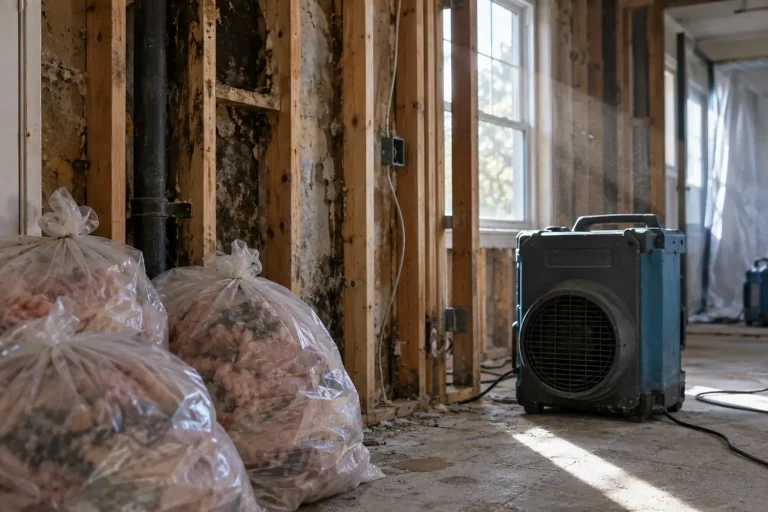 The Mold Remediation Process: 8 Steps, In OrderThe eight steps in order, and why reordering them spreads contamination.
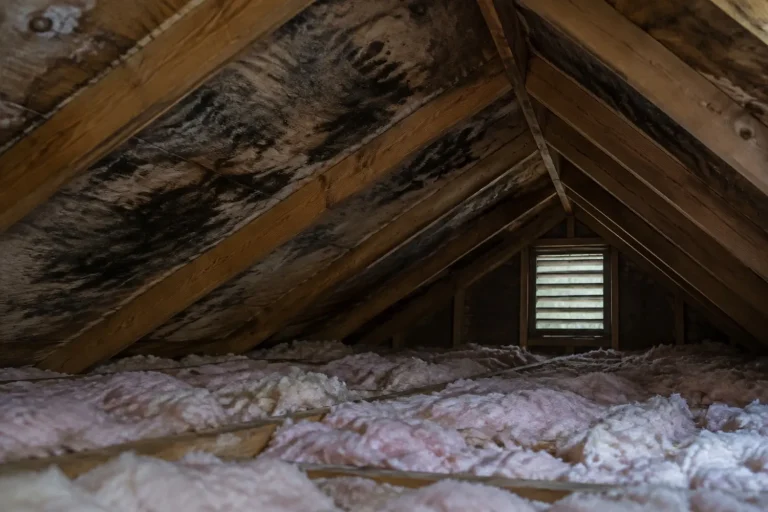 Signs of Mold in an Attic, and What Causes ItThe signs in the order they appear, and how to tell condensation from a leak.
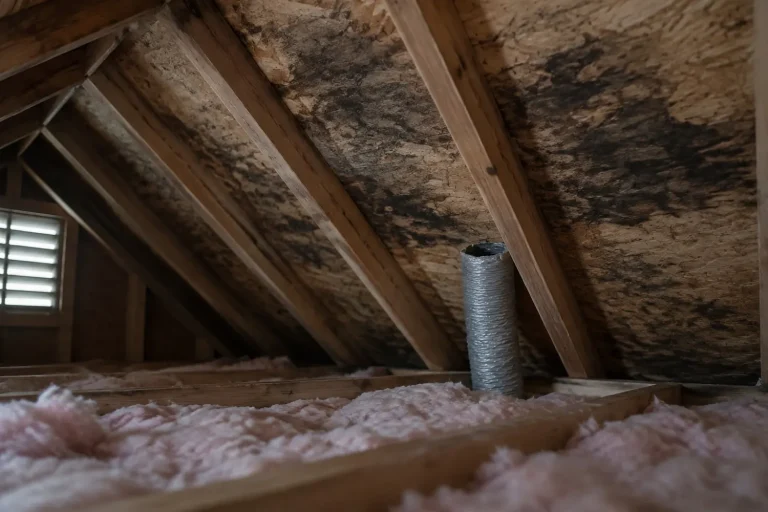 Attic Mold Removal Cost 2026: $1,500 to $10,000Cost tiers for attic work, and why the ventilation fix belongs in the quote.
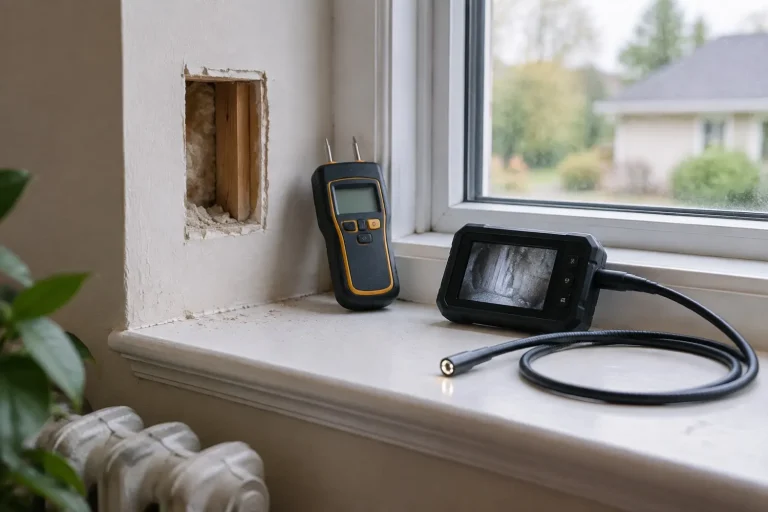 Mold Inspection Cost 2026: $300 to $1,000 TypicalWhat an assessment should include, outdoor controls, and clearance as a second job.
 Mold Remediation Cost 2026: $10 to $30 per Square FootPer square foot bands, the minimum charge, and the four bills on a mold job.
 State Mold Licensing: Which States Actually Require ItWhich states license mold work, and the corrections to the lists in circulation.
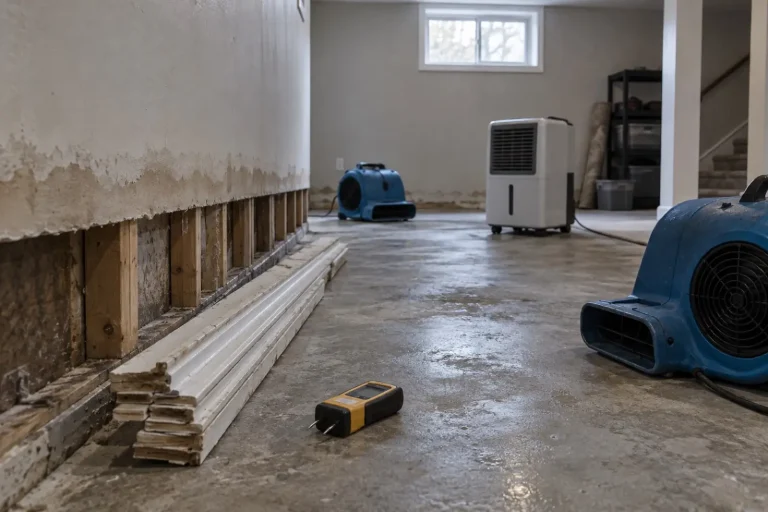 How Long Does It Take for Mold to Grow After Water Damage?The 24 to 48 hour guidance, and what humidity and material do to the clock.
 Black Mold vs Regular Mold: What Colour Can and Cannot Tell YouWhat colour can and cannot tell you, and why scope is set by area.
 How Long Does Mold Remediation Take? Phases and Real DelaysDuration phase by phase, and where the real delays come from.
 DIY Mold Remediation: EPA’s 10 Square Foot Rule and LimitsEPA's 10 square foot guideline and a go or no-go matrix.
 Musty Smell in Basement: Find the Cause, Then Fix ItThe causes ranked, a step-by-step check, and the fixes by cost.
 Mold in Shower: Clean It, Replace the Joint or Find the LeakClean it, replace the joint or find the leak, plus the fan rule that prevents it.
 Mold on Walls: Condensation, Leak or Cavity, and What to DoCondensation, leak or cavity: read the pattern, then clean or cut.
 Mold on Wood: Surface Mold, Stain or Rot, and What to DoSurface mold, sap stain or rot, and the moisture content that decides it.
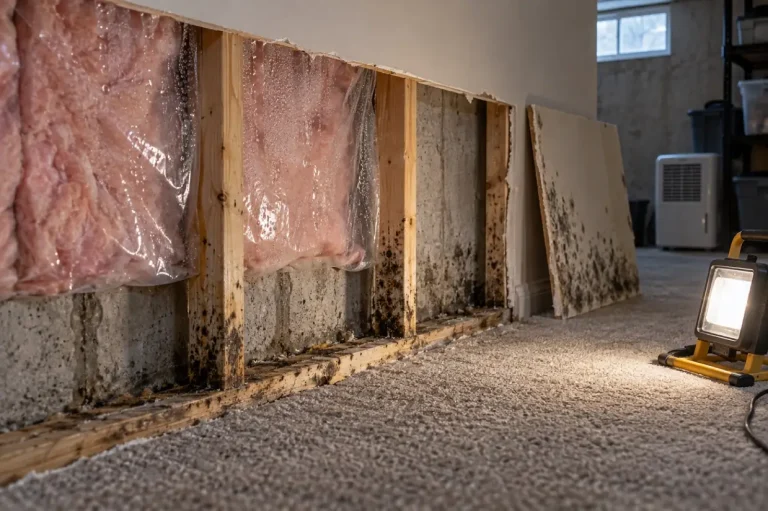 Mold in Basement: Where It Grows, Why, and the Fix OrderWhere basement mold grows, the wall assemblies that trap it, and the fix order.
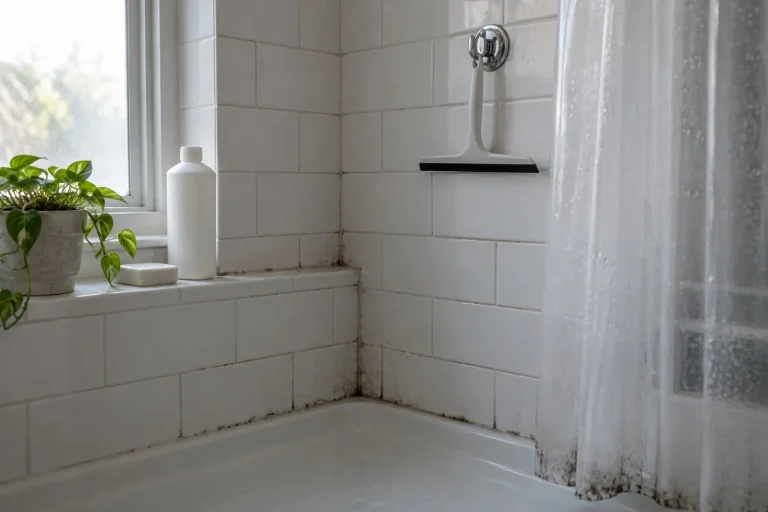 Mold vs Mildew: What the Words Mean and What Changes CleanupWhat the two words actually mean, and when cleanup changes.
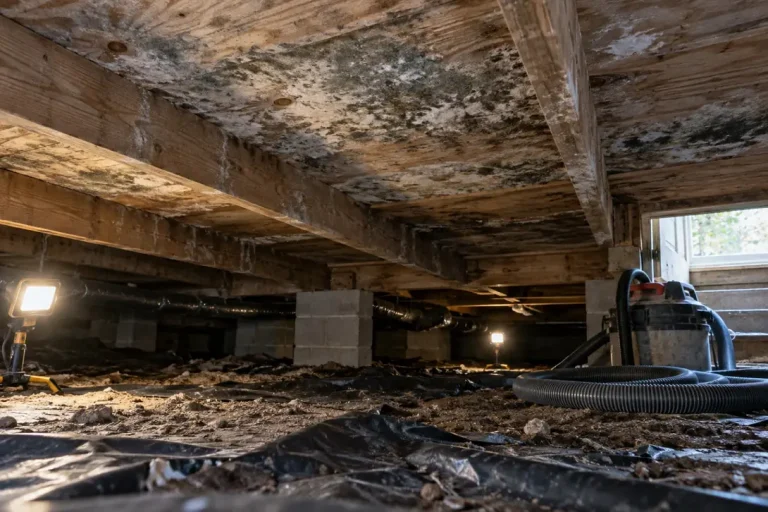 Crawl Space Mold Remediation: Methods, Costs, the Moisture FixMethods, published prices and the moisture fix the job depends on.
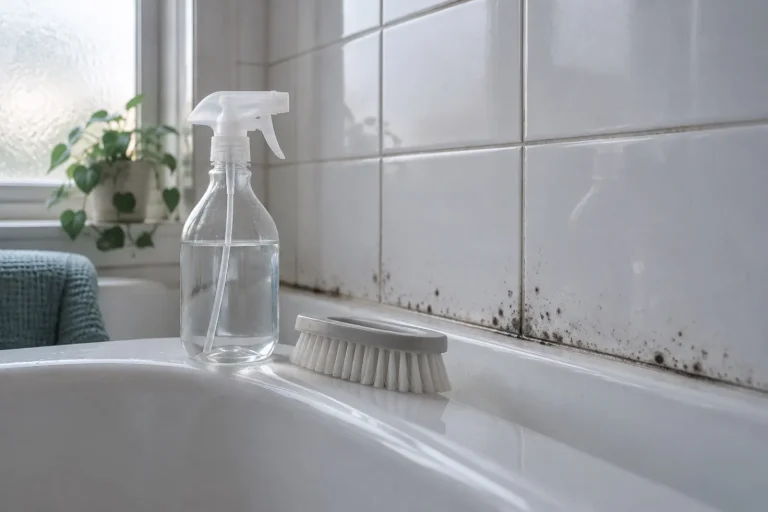 Does Vinegar Kill Mold? What the Studies Found, and Its LimitsWhat the studies found, the strength tested and the surfaces it damages.
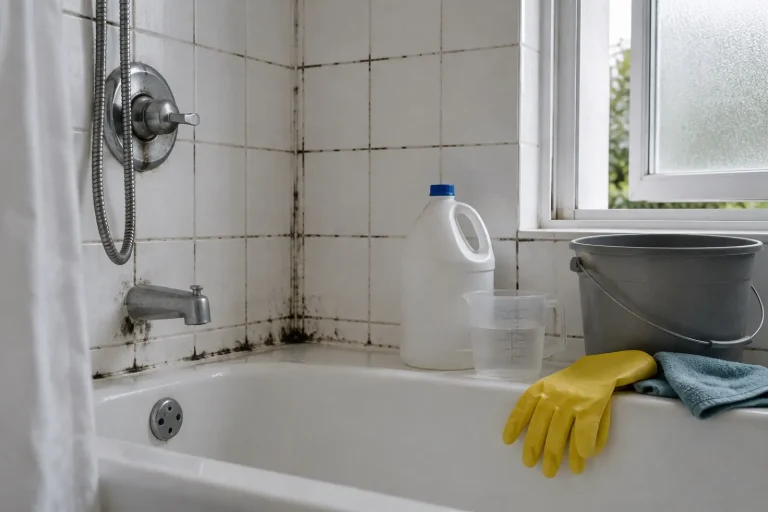 Does Bleach Kill Mold? EPA vs CDC, Label Claims and SafetyEPA against CDC, what the label allows, and the mixing rules.
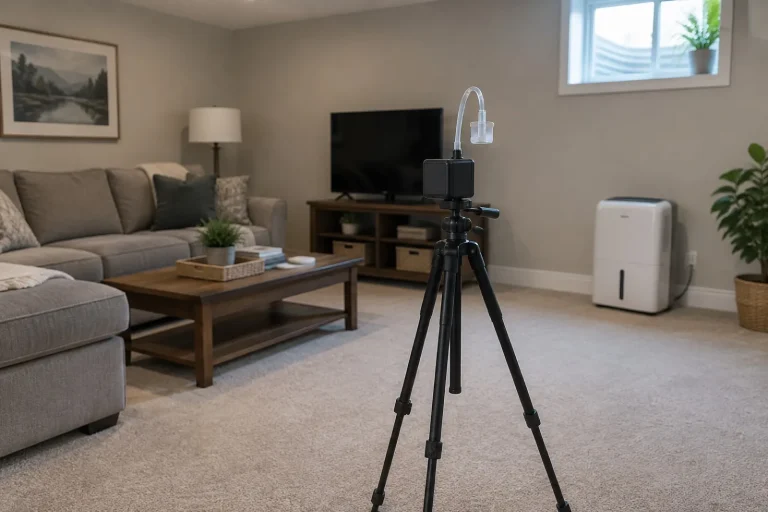 Mold Testing: When It Helps, Methods, Lab Fees, ResultsWhen sampling helps, the lab methods, lab fees and how to read a report.
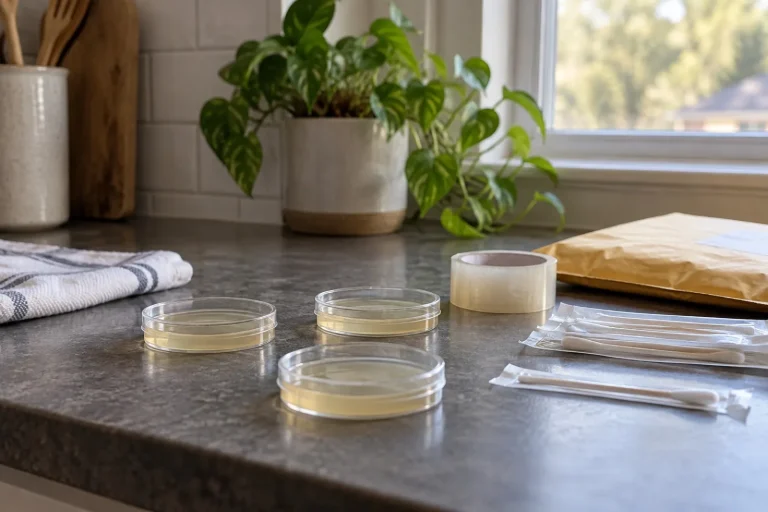 At Home Mold Test Kits: What Each Type Can and Cannot ShowWhat each kit type can and cannot show, and when to skip the kit.
 Mold Spores in Air: Normal Counts, Indoor vs Outdoor, ClearanceNormal counts, indoor against outdoor, and what clearance means.
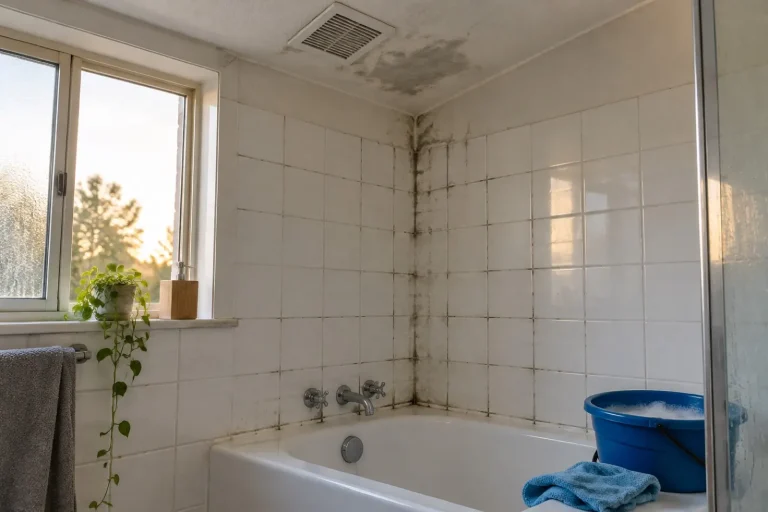 How to Kill Black Mold: Why Removal Wins, Surface by SurfaceWhy removal beats killing, surface by surface.
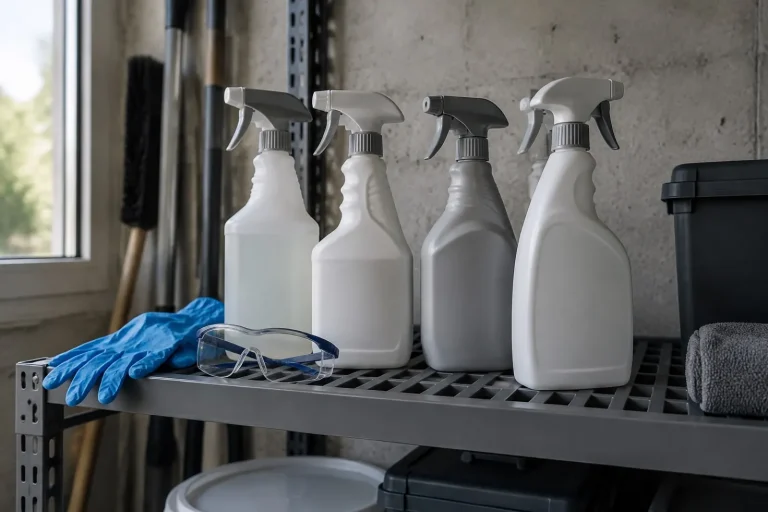 Mold Killer: What the EPA Label Allows, Product by ProductWhat a registered mold killer is, read from the labels themselves.
 Mildew Remover: Methods by Surface, From Grout to Boat VinylTaking mildew stains off grout, fabric, siding, paper and vinyl.
 Mold Mitigation vs Remediation: What the Law and EPA SayMitigation against remediation and abatement, as EPA and state law use them.
 Mold Damage: What Mold Does to Each Building MaterialWhat mold does to each building material, cosmetic or structural.
 Mold Damage Restoration: The Rebuild After RemediationThe rebuild after remediation, and why clearance comes first.
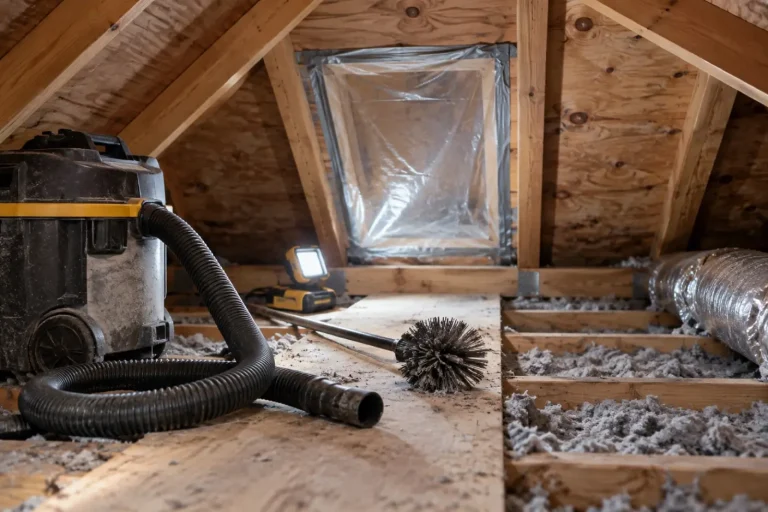 Attic Mold Removal: Methods, Vent Code and ClearanceRemoval methods for sheathing, the vent code and clearance.
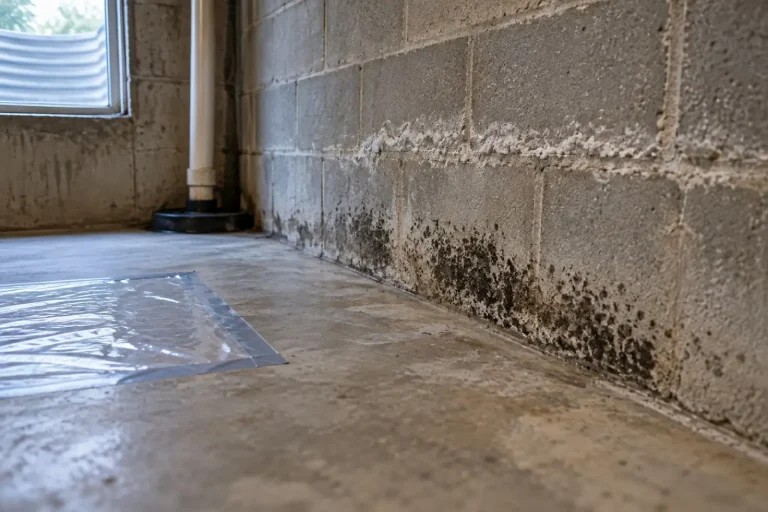 Mold on Concrete: Efflorescence Test, Slab Moisture, CleanupEfflorescence or mold, the three slab moisture tests and cleanup.
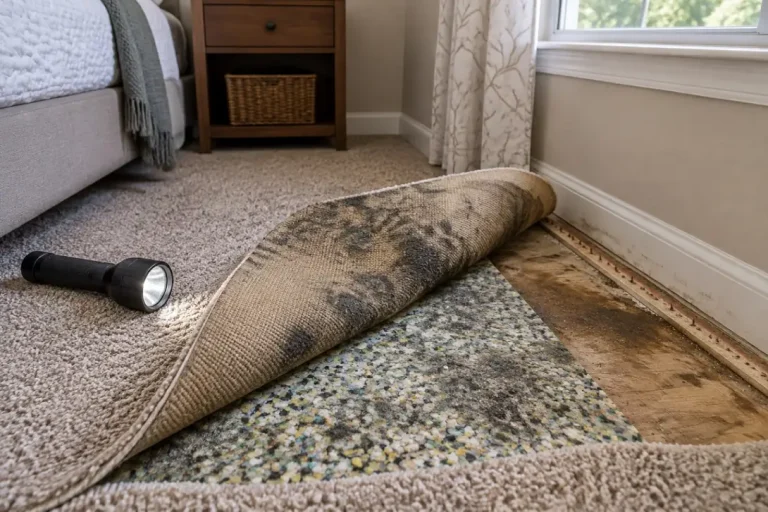 Mold on Carpet: Clean or Discard by Fiber, Water and TimeClean or discard by fibre, water category and time wet.
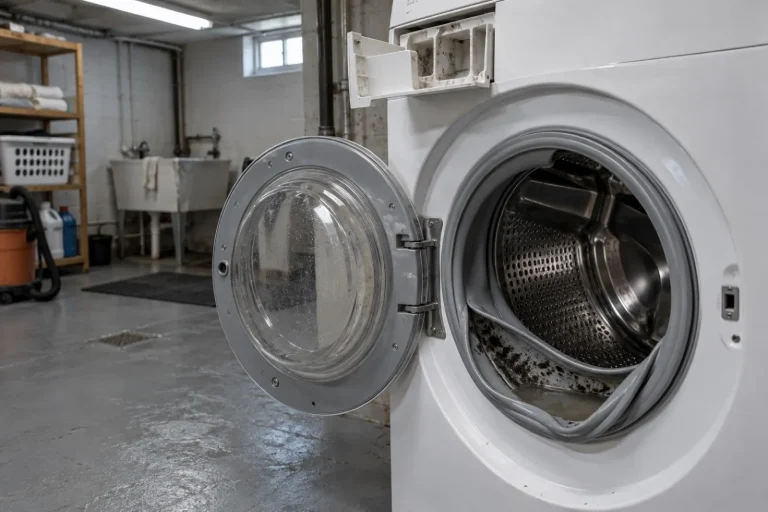 Mold in Washing Machine: Gasket, Drawer, Filter, Brand FixesGasket, drawer and pump filter, with each brand's own cleaning cycle.
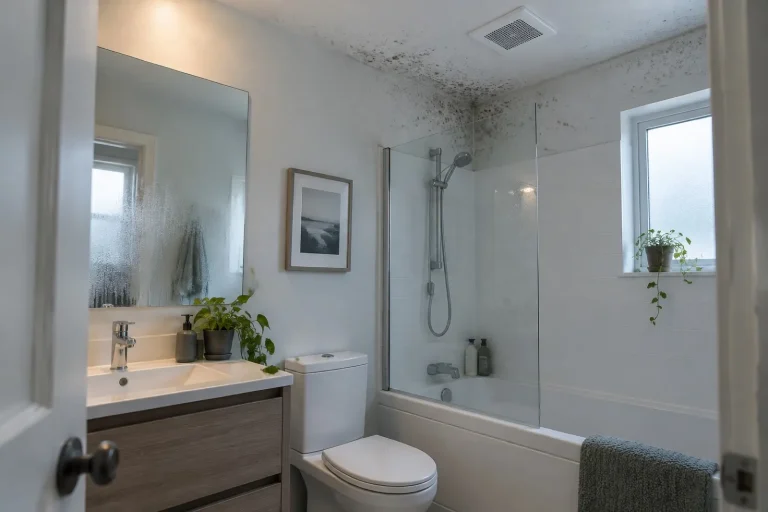 Mold on Bathroom Ceiling: Read the Spot Pattern, Fix the CauseRead the spot pattern, then fix the fan or the leak.
 Mold in Closet: The Wall, the Clothes and the Air BetweenThe wall, the clothes and the air between, item by item.
 Mold on Furniture: Wood, Upholstery, Leather and WickerWood, upholstery codes, leather, wicker and antiques.
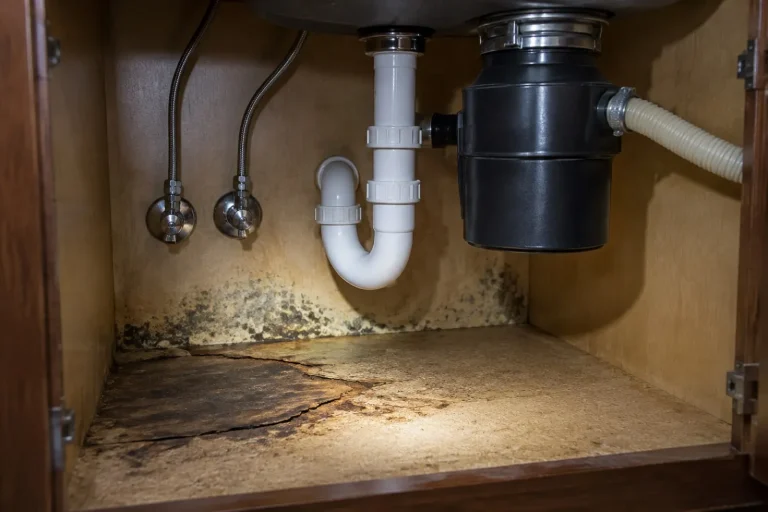 Mold Under Sink: Find the Leak, Judge the Cabinet FloorNine leak points and when the cabinet floor has to go.
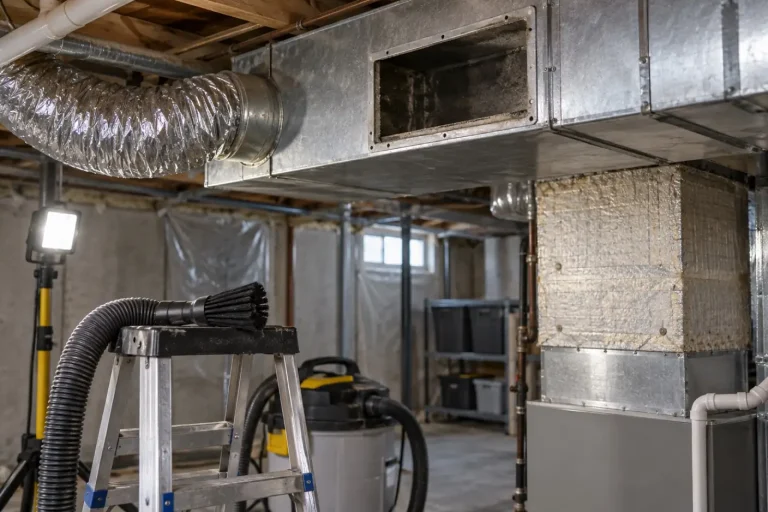 Mold in Air Ducts: Clean or Replace, by Duct MaterialClean or replace, by duct material, per EPA and NADCA.
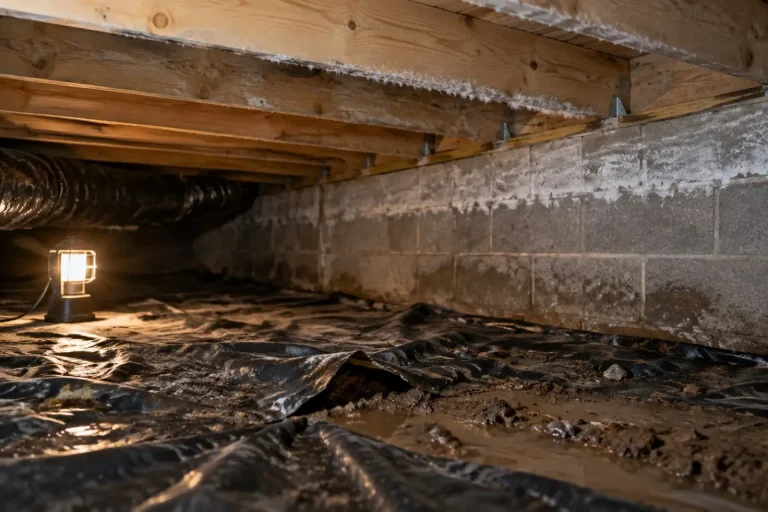 How to Get Rid of White Mold: Test It, Then Treat the SurfaceTest it against efflorescence first, then treat the surface.
 Mold Killing Paint: What the Labels and Data Sheets ClaimWhat the labels and data sheets actually claim.
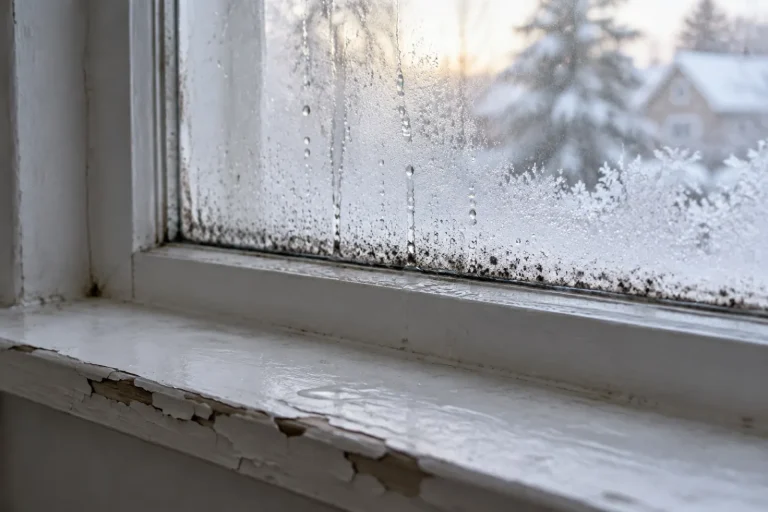 Mold on Window Sills: Humidity Limits, Frames and Real FixesCondensation limits by outdoor temperature, frames and fixes.
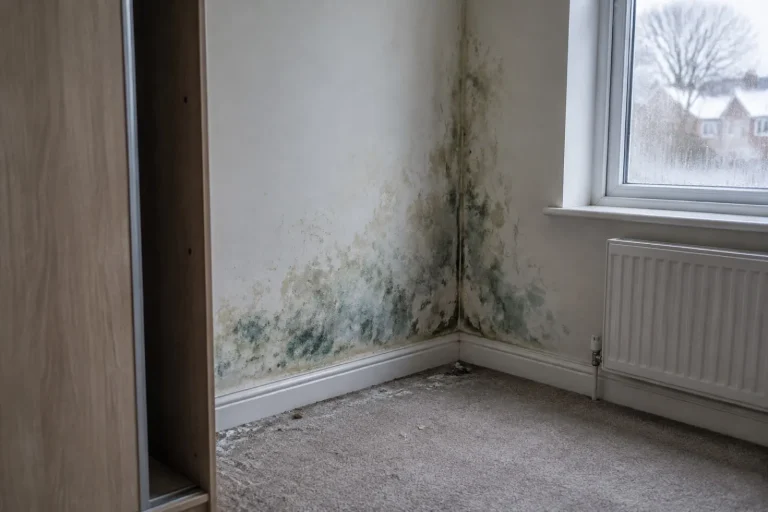 Green Mold: What It Is, Its Look-Alikes and How to Remove ItPenicillium, Aspergillus or algae, and the copper patina look-alike.
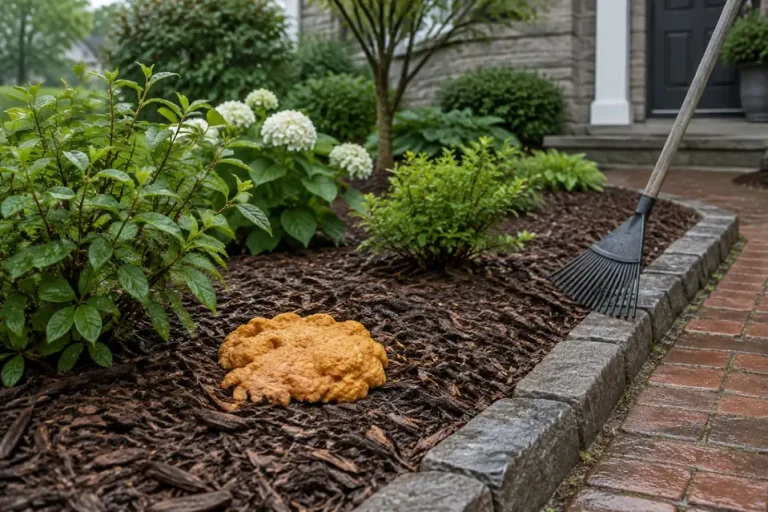 Orange Mold: Slime Mold, Fungus or Bacteria, and What to DoSlime mold, Neurospora after fires, iron stains and what each needs.
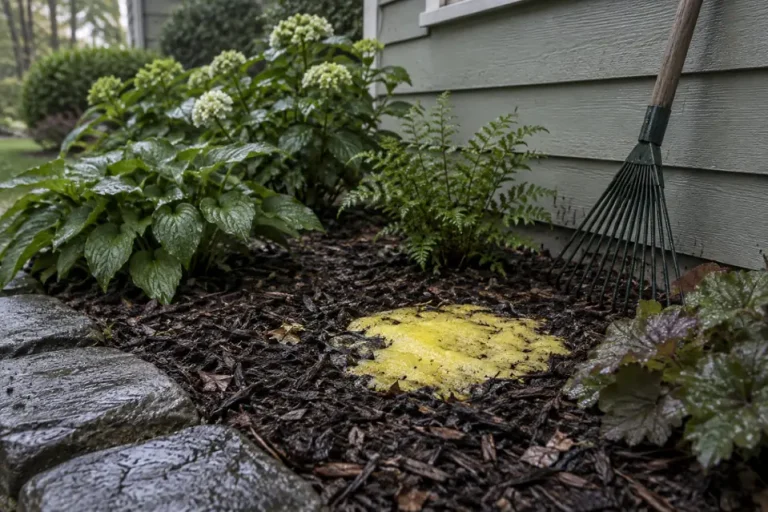 Yellow Mold: Slime Mold, Dry Rot or Aspergillus?Yellow growth by genus, location and the look-alikes to rule out.
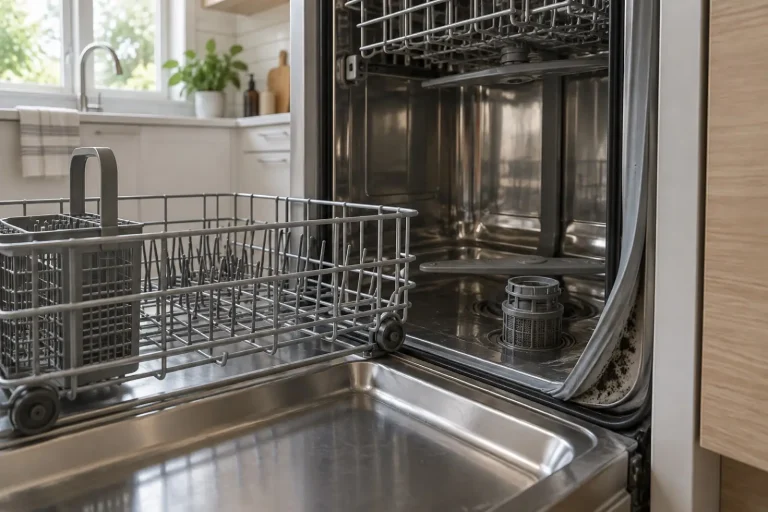 Mold in Dishwasher: Seal, Filter and Six Brands’ RulesSeal, filter and sump, with six brands' cleaning rules.
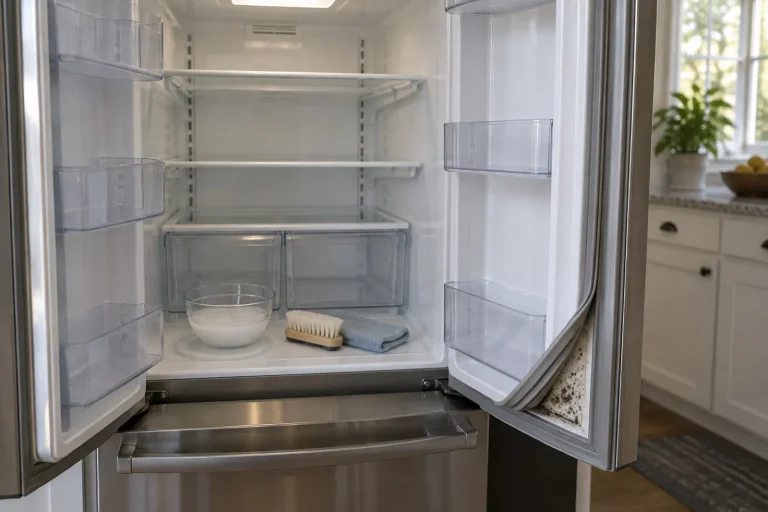 Mold in Refrigerator: Gasket, Drip Pan, Ice Maker, USDA RulesGasket, drip pan, ice maker and the USDA keep-or-toss table.
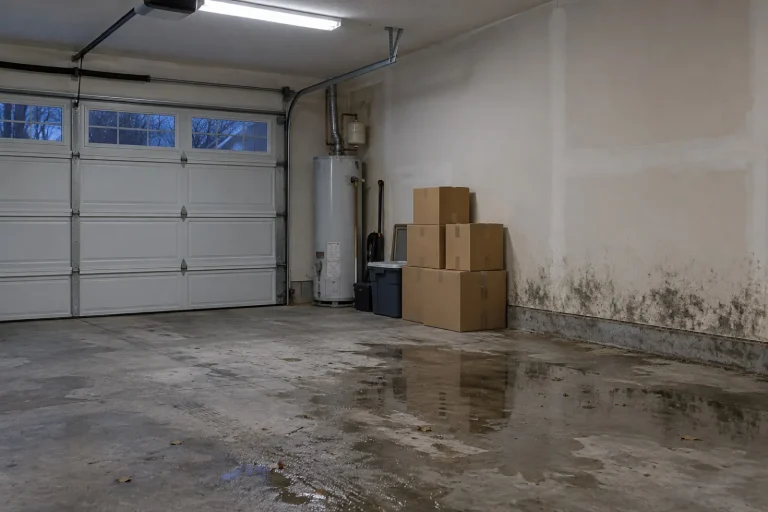 Mold in Garage: Causes, Fire-Rated Drywall and the SlabSlab, drywall and stored boxes, and why garages stay damp.
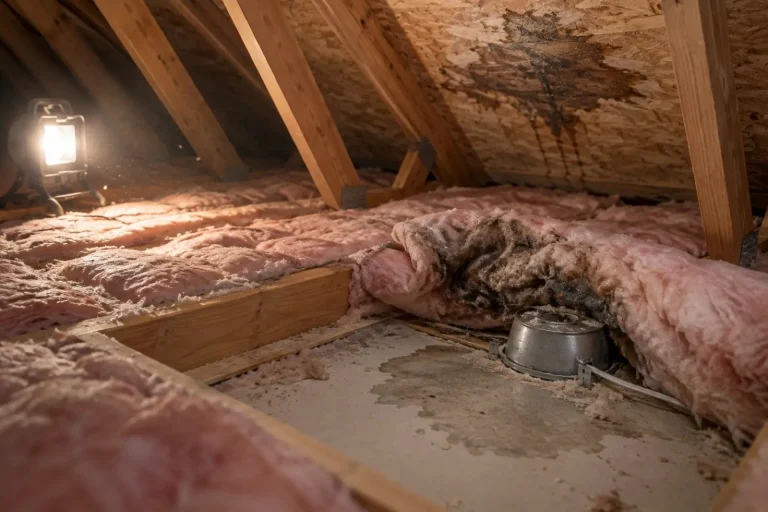 Mold in Insulation: What Feeds It and When to Replace ItFiberglass, cellulose and foam: clean, dry or remove.
 Mold on Mattress: Warranty Clauses, Bed Bases, Discard RulesWarranty mold clauses, bed bases and when to discard.
 Mold on Deck Boards: Wood, Composite and PVC Cleaning RulesWood, composite and PVC decking, by maker's cleaning rules.
 Mold on Pipes: Sweating Pipes, Dew Point and the Insulation FixCondensation on cold lines, insulation fixes and leak checks.
 Mold on Baseboards: MDF vs Pine vs PVC, and What Is BehindMDF, pine and PVC trim, and what sits behind the baseboard.
 Blue Mold: What It Is on Walls, Wood and Bread, and What to DoPenicillium, blue stain in wood, and the food and plant meanings.
 Red Mold: Fungus, Serratia Film or Iron Stain? How to TellRed fungi, Serratia film or iron stain, and how to tell.
 Pink Mold: What It Is, What Causes It, and How to Remove ItSerratia bacteria, pink yeast and vinyl pink stain.
 Brown Mold vs Water Stains, Tannin Bleed and Wood RotGrowth against water stains, tannin bleed and brown rot.
 Purple Mold: What It Is on Walls and Wood, and the Look-AlikesRare purple growth and the far more common look-alikes.
 Mold in Bathroom: Find the Source, Size the Fan, EscalateWhich surface, which water source, and the fan the code requires.
 Shower Curtain Mold: Clean, Wash or Replace by MaterialCare labels by material: clean, wash or replace.
 Black Mold in Toilet: Bowl Ring, Tank and Seat, and the FixBowl ring, tank and seat, and what the makers forbid.
 Mold in Humidifier: What It Is and How to Clean It by TypeEPA care rules and six makers' cleaning instructions.
 Mold in Car: Carpet Pads, Seats, Flood Titles and the FixCarpet pads, seats, flood titles and the fix.
 Mold on Clothes: How to Get It Out, by Fibre and Wash TempWash temperature, fibre and the care label decide.
 Mold on Leather: Shoes, Jackets, Couches, the Conservator WayShoes, jackets and couches, the conservator way.
 Does Ammonia Kill Mold? EPA Lists No Household Ammonia Mold ProductWhat EPA registrations and product labels actually claim.
 Bleach to Water Ratio for Mold: 1 Cup or 1/3 Cup per Gallon?A dilution calculator by bottle strength, and why sources disagree.
 N95 Mask for Mold: Which Job Size It Covers, When to Step UpWhich job size an N95 covers and when to step up to a P100.
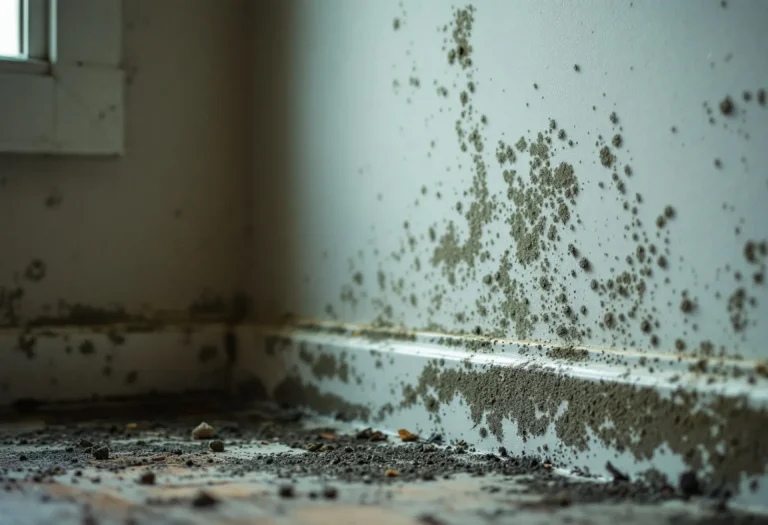 How to Get a Free Mold Inspection: 5 Routes and Their CatchesFive routes, what each really includes, and the state conflict rules.
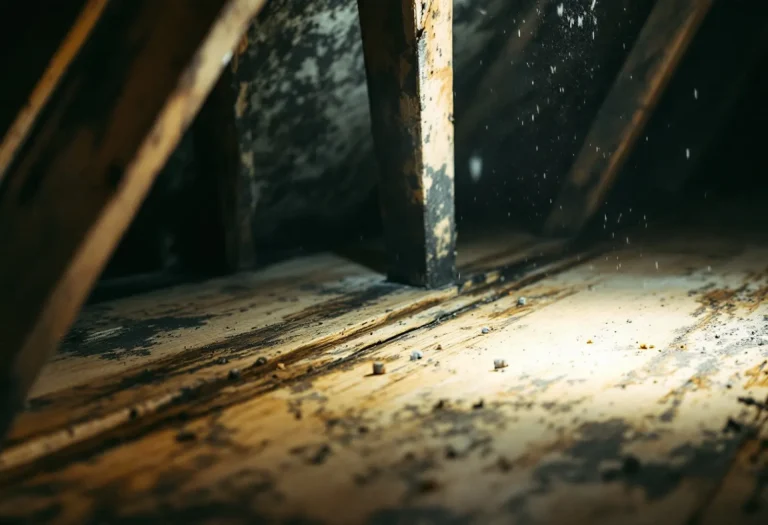 Do Home Inspectors Check for Mold? What 8 Standards Actually SayEight inspection standards quoted, and when to add an assessor.
 How to Get Rid of Mold Smell: Find the Source Room by RoomFind the source room by room, and why masking fails.
 Mold in RV: Condensation Math, Cleaning by Material, Warranty TermsCondensation maths, cleaning by RV material and warranty terms.
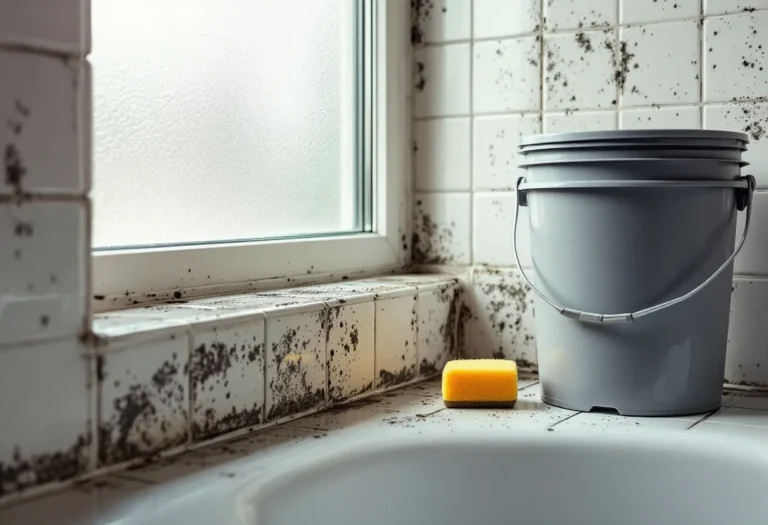 Can You Mix Bleach and Vinegar to Kill Mold? No: It Makes ChlorineWhy the pair releases chlorine gas, with the pH chemistry.
 Does Dish Soap Kill Mold? No, It Removes It, and EPA Prefers ThatRemoval versus killing, and the surfaces EPA says detergent suits.
 Does Hot Water Kill Mold? Temperatures and Minutes From Lab DataLab kill times at 50 to 100 C, and spores that survive.
 When Is Mold Remediation Required? 10 Sq Ft Lines and State LawsThe 10 sq ft lines and state laws that make it mandatory.
 Does Hydrogen Peroxide Kill Mold? 3% vs EPA Labels and Spore DataLabel strengths, contact times and where peroxide fits.
 Does Lysol Kill Mold? 6 EPA Labels Read, Only 2 Claim a KillWhich Lysol labels carry mold claims, word for word.
 Mold Clearance Test: Pass Criteria, State Rules and Lab FeesPass criteria and the states that require clearance.
 Level 3 Mold Remediation: 30 to 100 Sq Ft, Every System MappedLevel 1 to Level 4 by area, containment and gear.
 Can Air Quality Monitor Detect Mold? Sensor Specs vs Spore SizesWhat PM, VOC and humidity sensors can and cannot see.
 Does UV Light Kill Mold? The mJ/cm2 Doses and Minutes It TakesUV-C doses per species and the minutes they take.
 Does Baking Soda Kill Mold? Only at 12 g/L in a Lab DishThe bicarbonate studies graded, and the recipe maths.
 Does Rubbing Alcohol Kill Mold? 70% vs 99%, Contact Time, 6 Surfaces70% vs 99%, contact time and six surfaces.
 Does Borax Kill Mold? 7 Claims Graded Against USDA TestsWhat borate studies measured, and the recipe maths.
 Does Tea Tree Oil Kill Mold? Lab Kill Doses vs the 2% Home SprayLab kill doses against the home spray strength.
 What Temperature Kills Mold? 140 to 160 F, Held for MinutesHeat and cold thresholds, from freezer to dryer.
 Does Mold Die When It Dries Out? Water Activity by SpeciesDormancy, water activity and why EPA says remove it.
 Does Mold Come Back After Remediation? 8 Failure ModesThe failure modes and the state rules that catch them.
 Can Mold Grow on Plastic? Yes: 6 Plastics, Clean or TossWhich plastics feed mold and the ASTM G21 test.
 How Does Mold Spread? 4 Routes, Spore Fall Times, mm per DayThe four routes mold travels, with spore settling times.
 Mold on Brick: Identify It, Then Clean Under 400 psi by TypeMold, algae or salts, and cleaning without damaging the brick.
 Mold Behind Wallpaper: Why 0.5 Perm Vinyl Traps It on AC WallsWhy vinyl wallcoverings trap moisture on outside walls.
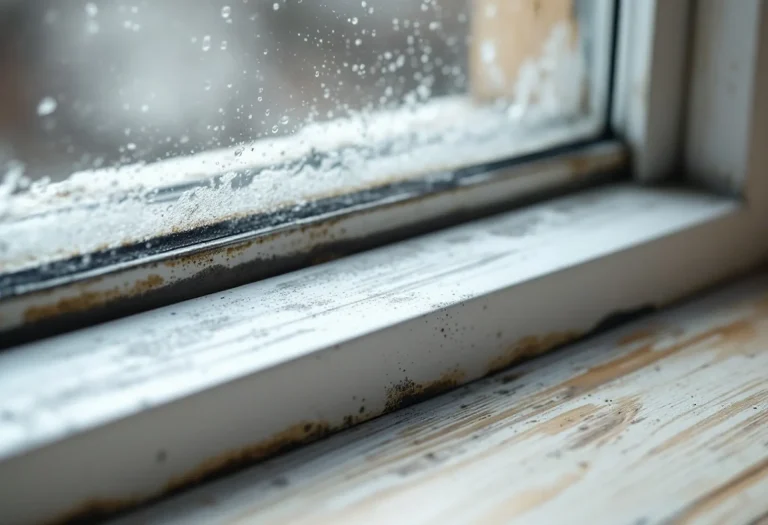 Can Mold Grow on Metal? Yes, on Dust and Paint: 6 House MetalsMold feeds on the film on metal, surface by surface.
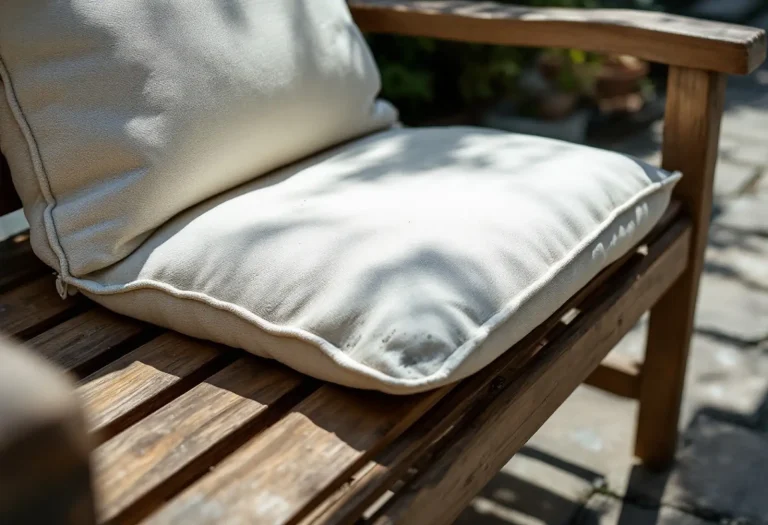 Does Sunlight Kill Mold? Hours of Sun per 90% Spore KillThe UV dose arithmetic for real sunshine.
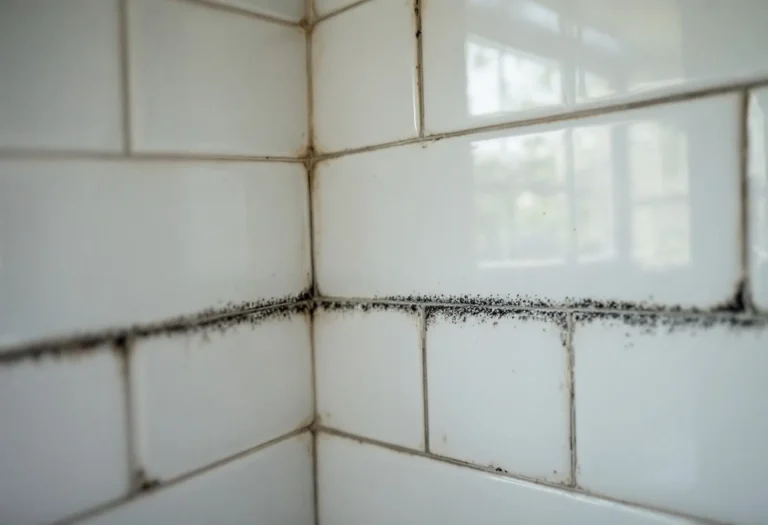 Mold on Grout: Why Cement Grout Holds It and Epoxy Does NotWhy grout type decides the fix, kitchen to shower.
 Mold on Shoes: What to Wash, Wipe or Bin, Material by MaterialWhat each shoe material tolerates, canvas to foam.
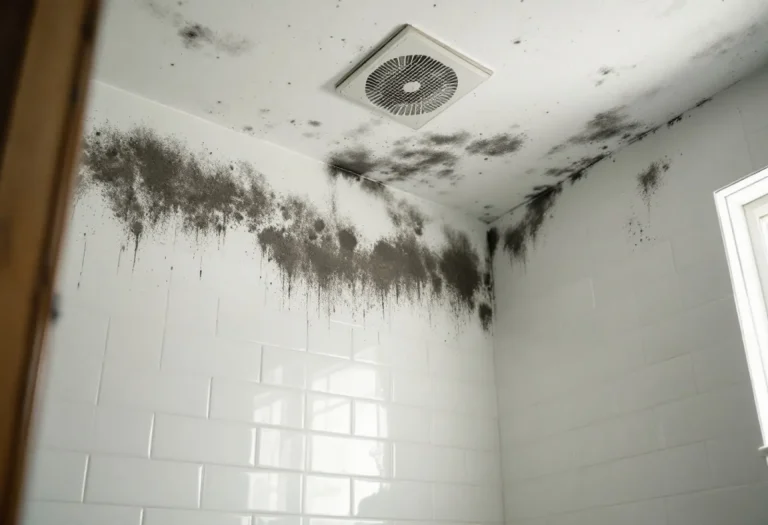 Black Mold in Apartment: Tenant Steps and 8 State Repair ClocksThe tenant's steps, with the housing codes behind them.
 Mold or Dirt? 7 Tests Ranked, From a 2 Minute Bleach Drop to a LabField tests ranked by how reliable they are.
 Mold in Coffee Maker: 10 Wet Parts and What Each Maker PrintsWhere each machine stays wet, and what makers say.
 What Humidity Does Mold Grow At? 80% at the Wall, Not the RoomRoom humidity against surface humidity, worked through.
 Mold on Vinyl Siding: 9 Published Recipes and the Right Spray AngleThe siding makers' cleaning recipes, side by side.
 Does Mold Grow in Winter? Yes: When Windows Sweat at 0 to 30 FCondensation, cold walls and the winter season.
 Does an Air Purifier Help With Mold? Spores Yes, Growth NoWhat filtration removes and what it never reaches.
 Can Mold Grow on Glass? Only on the Film: 7 Glass SurfacesThe films that feed it, windows to camera lenses.
 How to Tell if Mold Is Behind Walls: 7 Checks, Least to Most InvasiveAn investigation ladder, least to most invasive.
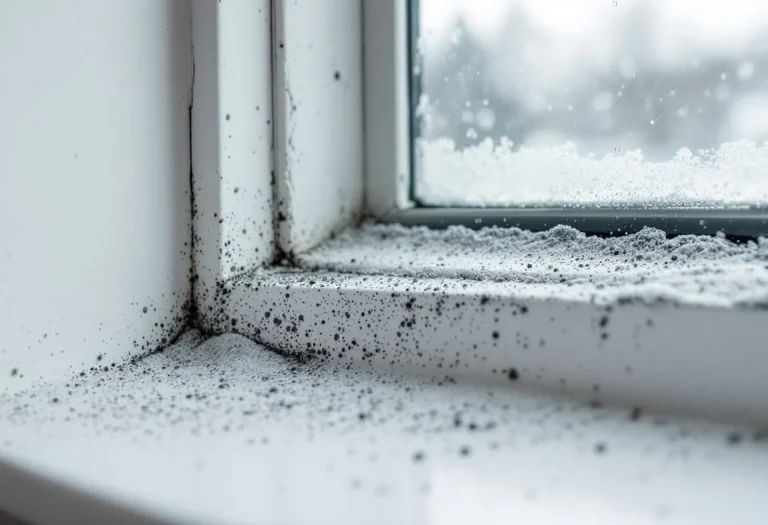 What Does Mold Look Like? 5 Growth Stages and 9 Look-AlikesA look-alike field guide, from soot lines to salt bloom.
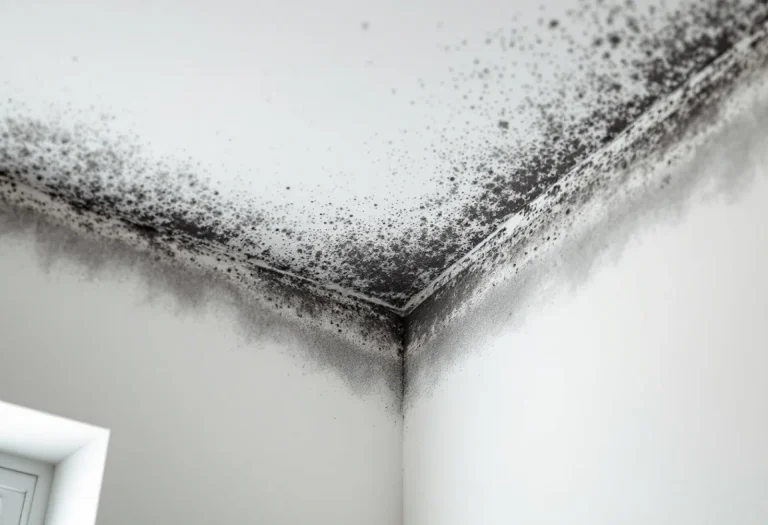 Mold on Ceiling: 6 Patterns That Point to the Water SourceFive ceiling patterns outside the bathroom, and their causes.
 Mold Encapsulation: Why It Goes On After Removal, Never Over MoldWhat coatings do after removal, and what they cannot.
 Mold in Water Bottle: 8 Hiding Spots and What 4 Makers SayThe lid, straw and gasket parts that stay wet.
 Mold in Hot Tub Pipes: Purge, CDC 3 to 10 ppm and Drain MathBiofilm in the lines and the sanitizer numbers.
 Mold on Tent Fabric: Cleaners by Coating, and What Bleach RuinsCleaning by fabric and coating, and dry storage.
Related hubs
Questions people actually ask
What is the difference between mold removal and mold remediation?
Removal implies eliminating all mold, which EPA says is impossible indoors because spores are always present in air and dust. Remediation means removing growth and colonised material, cleaning, drying and verifying, so the space returns to a normal background, with the moisture source fixed first.
Can I remove mold myself?
EPA’s guidance says that if the moldy area is less than about 10 square feet, in most cases you can handle the job yourself. It points to professional help where the water was sewage or otherwise contaminated, where the HVAC system may be involved, or where growth is larger, and to a health professional first if you have health concerns.
Do I need mold testing before remediation?
Often not. EPA states that in most cases, if visible mold growth is present, sampling is unnecessary, and that no federal limits exist for a result to be compared against. Sampling is most useful where the source is unclear, where litigation is involved or where health concerns are in play.
How long does mold remediation take?
A contained single-room job commonly runs three to five days including drying and verification, and whole-structure work runs weeks, as our process guide sets out. Drying, not removal, is usually the longest stage.
Can I stay in my house during mold remediation?
Often yes, if containment isolates the work area from living space and from the HVAC system. It depends on the extent, the location and the occupants’ health, so ask the assessor and involve a clinician where anyone has a respiratory or immune condition.
Does homeowners insurance cover mold remediation?
Sometimes, usually under a sublimit well below the dwelling limit, and generally only where the mold followed a covered sudden water loss. Your policy wording governs, and your state insurance department is the authority for complaints.
Who should do the clearance test?
Someone other than the remediator. Several states, Florida among them, license assessors and remediators separately for exactly this reason. Where no law requires it, hiring an independent assessor recreates the separation.
Sources
- EPA, A Brief Guide to Mold, Moisture and Your Home. Quoted on the 10 square foot guidance, contaminated water, HVAC, health, sampling, and moisture control. Retrieved 7 October 2026.
- EPA, Mold Remediation in Schools and Commercial Buildings, chapter 3. Quoted on the purpose and levels of containment and on when remediation is finished. Retrieved 7 October 2026.
- EPA, Mold cleanup in your home. Retrieved 7 October 2026.
- IICRC, S520 Standard for Professional Mold Remediation. Quoted for its description of S520 as a procedural standard; the standard text is sold by IICRC. Retrieved 7 October 2026.
- OSHA, Mold safety and health topic. Worker protection. Retrieved 7 October 2026.
- Florida Statutes Chapter 468, Part XVI, Mold-Related Services. Retrieved 23 September 2026.
- Census Bureau and HUD, American Housing Survey 2023 national PUF v1.1, US Census Bureau, weighted, analysed by Remediation Insider. Retrieved 6 October 2026.
- Florida DBPR, Texas TDLR and New York State mold licence registers, as analysed in our licensing reports. Retrieved 23 September 2026.
- Cost and fee bands are compiled from published contractor, inspector and aggregator price guides current in 2026, as set out in our cost articles. They are indicative, not survey results.
How this page is maintained. This hub is reviewed whenever an article in its section is added or corrected, and its charts are rebuilt from the same data files as the research reports they link to, so a figure here never drifts from its source report. It was last reviewed on 7 October 2026. The standing rules for every figure are on our methodology page, and errors are logged on our corrections page.