The short answer
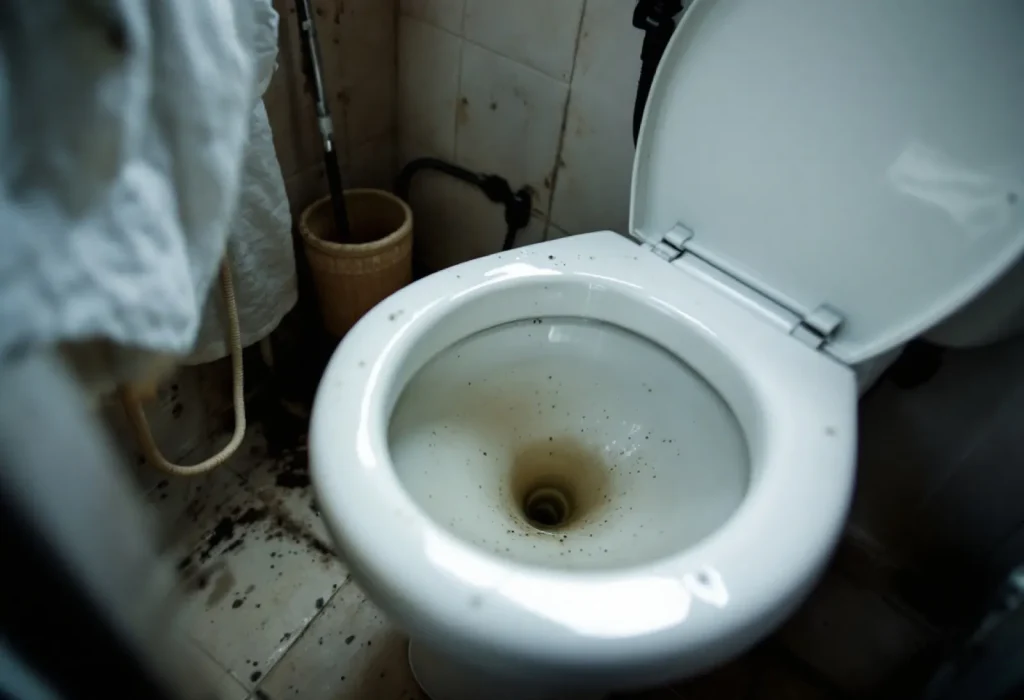
Black mold in toilet bowls usually shows up as a dark ring at the waterline or speckling under the rim, where water sits and its chlorine fades. Not every black ring is mold: manganese in well water leaves black stains, and mineral scale holds grime. Check the texture and the water source, clean the tank as well as the bowl, and keep chlorine tablets out of the tank.
Key takeaways
- EPA's secondary drinking water standards list black staining for manganese above 0.05 mg/L, reddish or orange staining for iron above 0.3 mg/L and blue-green staining for copper above 1.0 mg/L.
- For a dirty tank, North Dakota State University Extension says 1/4 cup of bleach for 15 to 20 minutes, then flush several times; bleach left in the tank damages rubber valves and seals.
- Kohler, American Standard, TOTO and Fluidmaster all warn against in-tank chlorine cleaners or exclude their damage from warranty.
- The Bemis seat care FAQ says to clean seats with antibacterial wipes, dish soap or antibacterial hand soap only, and lists bleach, vinegar and disinfectants among the products to avoid.
- Water or mold at the base points to a seal leak, a plumbing repair before any cleaning.
On this page
- What you are looking at
- Manganese, iron and the EPA stain thresholds
- Hard water and scale rings
- Why does my toilet keep getting black mold?
- Mold in toilet tank
- Black ring in toilet bowl: the method
- Mold under toilet seat
- Signs it is bigger than the toilet
- For contractors
- Questions people actually ask
What you are looking at
A toilet collects three kinds of dark ring: living film, mineral stain and scale. Each needs a different product, so start with texture and the water supply.
| What you see | Most likely | Tell | Source |
|---|---|---|---|
| Grey to black slimy ring at the waterline that smears | Biofilm with mold | Comes off with a brush and bowl cleaner | EPA's Mold Cleanup in Your Home |
| Dense black stain that resists scrubbing, on well water | Manganese | Also stains sinks and laundry; lab water test | Penn State Extension |
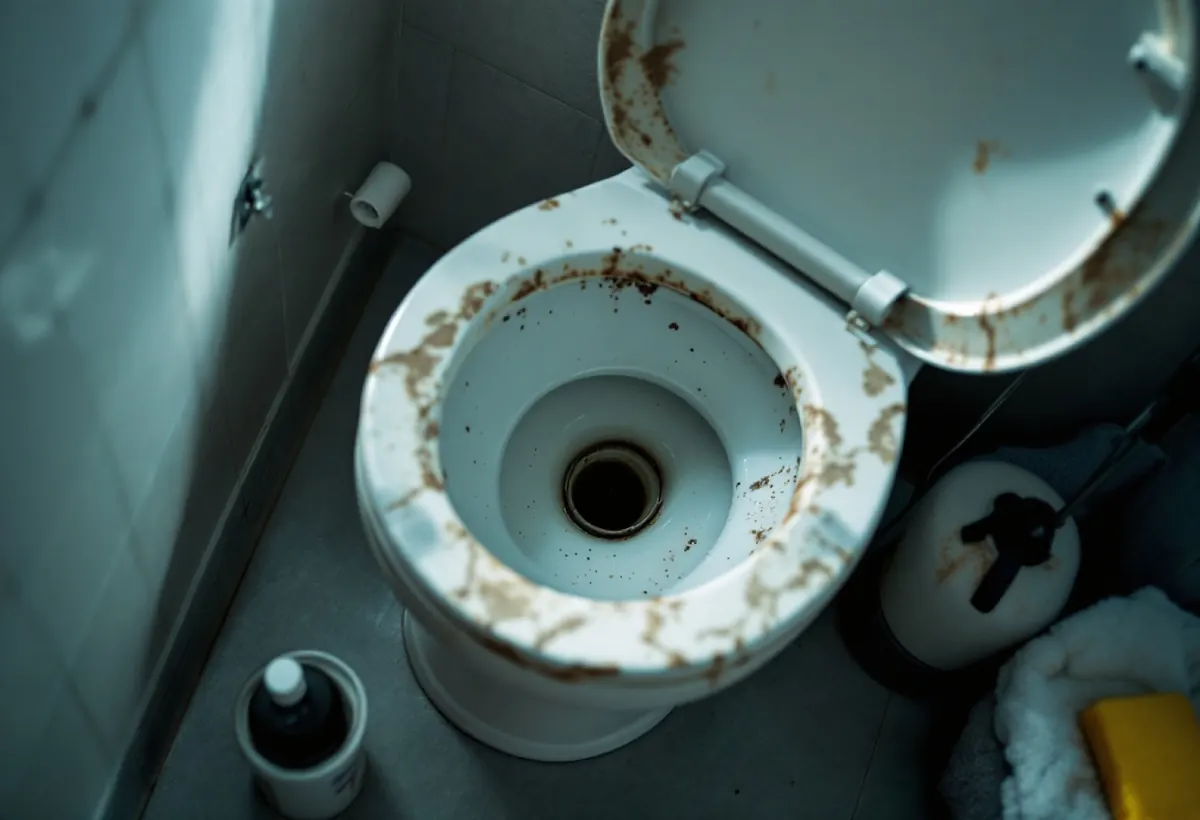
| Rough, hard crust, grey to brown, at or below the waterline | Hard water or urine scale holding grime | Feels gritty; a descaler removes it | USGS Water Science School |
| Orange to rust-brown ring or streaks | Iron | Reddish or orange staining above the iron threshold | EPA's secondary drinking water standards |
| Blue-green streaks below the jets | Copper | Blue-green staining above the copper threshold | EPA's secondary drinking water standards |
| Pink to orange-red band | Serratia bacteria | See pink mold | North Dakota State University Extension |
| Sticky rusty, yellow or grey slime, oily sheen in the tank | Iron bacteria from a well | Laboratory test | Minnesota Department of Health |
| Dark discolouration on the seat where skin touches | Skin chemistry reacting with the seat | Bemis says it cannot be predicted | Bemis seat care FAQ |
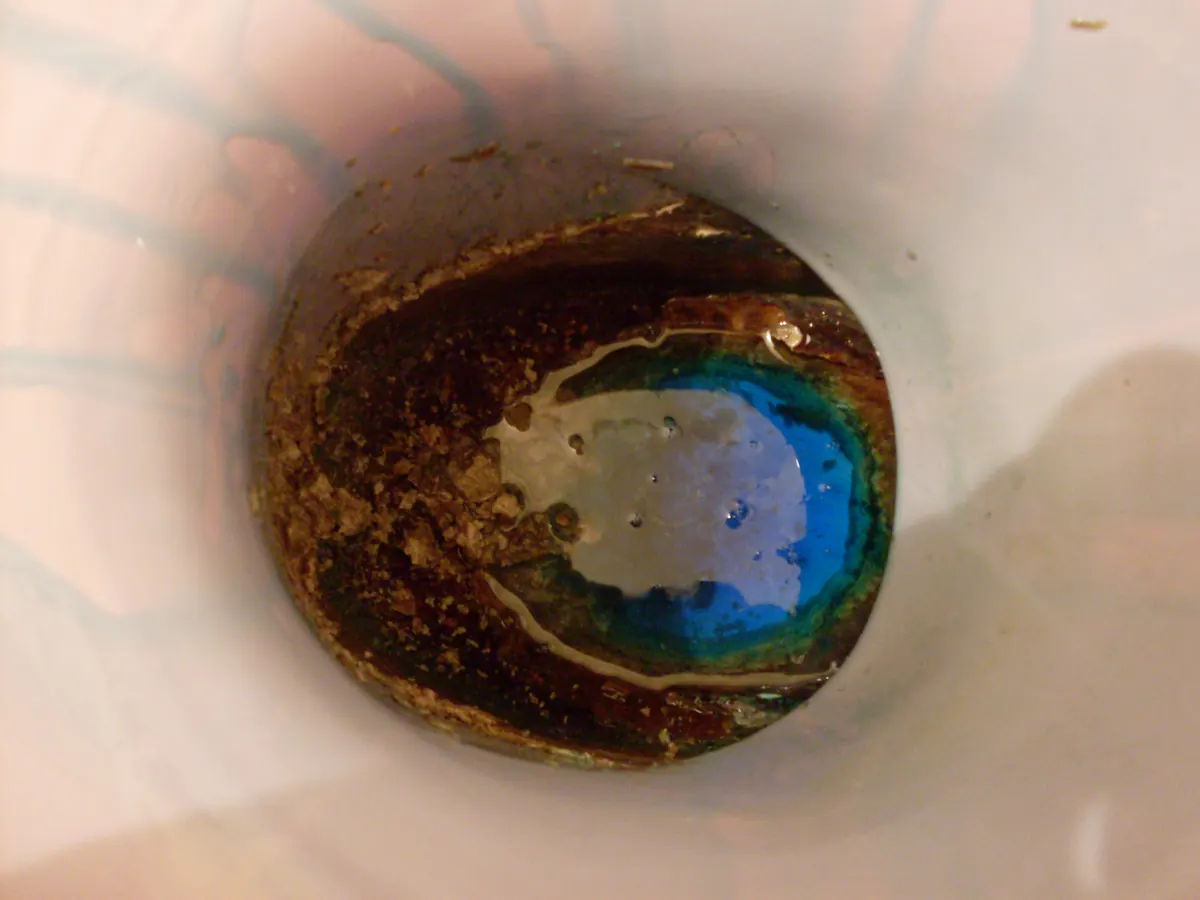

Colour does not name the mold; see black mold vs regular mold.
Manganese, iron and the EPA stain thresholds
The black ring that will not scrub off is often not alive. Penn State Extension says manganese often results in a dense black stain or solid, and iron causes orange or brown stains in sinks and laundry. The federal numbers behind those stains are EPA’s secondary standards, which the agency titles guidance for nuisance chemicals.
| Contaminant | Secondary standard | Noticeable effect above it (EPA wording) |
|---|---|---|
| Manganese | 0.05 mg/L | Black to brown colour; black staining; bitter metallic taste |
| Iron | 0.3 mg/L | Rusty colour; sediment; metallic taste; reddish or orange staining |
| Copper | 1.0 mg/L | Metallic taste; blue-green staining |
| Total dissolved solids | 500 mg/L | Hardness; deposits; coloured water; staining; salty taste |
| pH | 6.5 to 8.5 | High pH: slippery feel, soda taste, deposits |
Private wells are where this shows up. Penn State Extension reports that a Penn State survey found excessive iron in 17% of private water supplies sampled in Pennsylvania, and recommends drinking water with less than 0.05 mg/L of manganese. If the house is on a well and the ring is black and hard, send a sample to a water testing laboratory for iron and manganese before buying a mold product. Slime with an oily sheen in the tank is a well issue too: the Minnesota Department of Health says iron bacteria are confirmed by laboratory test and treated by shock chlorinating the well at close to but not above 200 ppm.
Hard water and scale rings
The USGS Water Science School classifies water from 0 to 60 mg/L as calcium carbonate as soft, 61 to 120 as moderately hard, 121 to 180 as hard and more than 180 as very hard. Hard water leaves mineral buildup on fixtures and reacts with soap to form soap scum, per USGS. In a toilet that deposit shares the waterline band with the dark film.
Our reading, not a measured result: bleach whitens the film in the scale, the crust stays, and the film returns. Descale first, then clean.

Why does my toilet keep getting black mold?
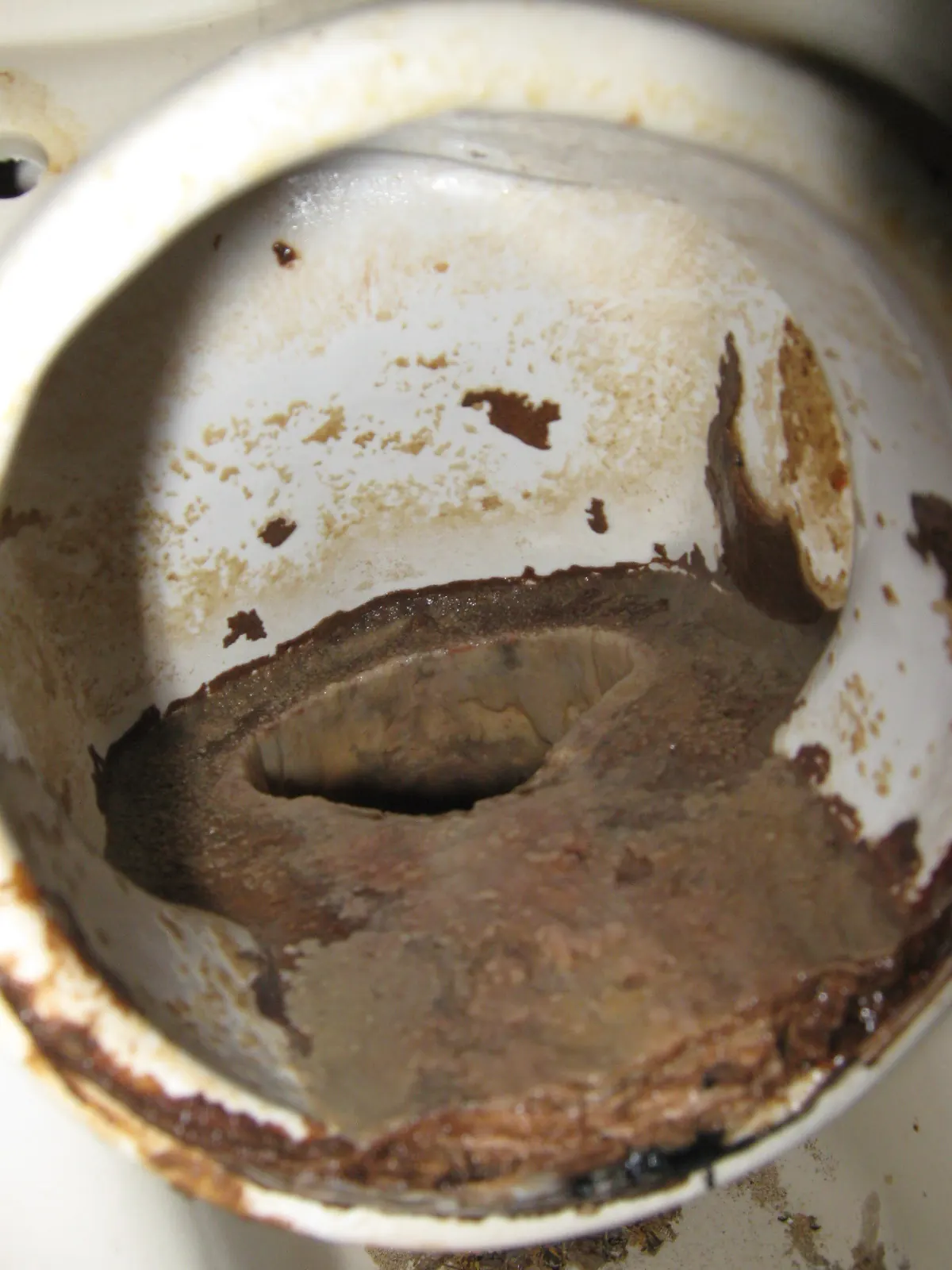
Because a toilet is a reservoir of still water. North Dakota State University Extension notes that bacterial film in toilets grows where water sits until its chlorine dissipates, feeding on feces residue. Work through this checklist in order; it is the part to bookmark.
- Is it hard and gritty? Treat the scale first. Why this differs from generic advice: mold cleaners do not dissolve mineral crust.
- Is the house on a well, and is the stain black on other fixtures too? Test for manganese. Why: no surface product fixes a water supply.
- Does it return within a week of cleaning? Lift the tank lid. Why: every flush refills the bowl from the tank.
- Is it a guest toilet? Flush it on a schedule. Why: NDSU ties growth to water that sits.
- Is the room humid? Fix ventilation. Why: EPA advises indoor humidity below 60 percent, ideally 30 to 50 percent.
- Is the floor wet or the seal leaking? Stop and call a plumber. Why: that is a leak, not a cleaning job.
Mold in toilet tank
Mold in toilet tank water and walls stays out of sight until the lid comes off, yet the tank refills the bowl after every flush. It also holds the rubber parts, and their makers agree about chlorine tablets.
| Source | On chlorine in the tank | Detail |
|---|---|---|
| NDSU Extension (2010) | 1/4 cup for 15 to 20 minutes, then flush several times | Do not leave bleach in the tank; it damages rubber valves and seals |
| Kohler homeowners guide (2006) | Do not use in-tank cleaners | Chlorine (calcium hypochlorite) can seriously damage tank fittings; use mild detergent; do not let cleaners sit or soak |
| Kohler installation guide 1346513 (2025) | Do not use in-tank cleaners | Same chlorine warning; continuous clean models take only white tablet cleaners in their own reservoir |
| American Standard warranty (2025) | Not covered: damage from in-tank cleaners | Also excludes failure to follow care and cleaning instructions |
| TOTO limited warranty | Not liable for chlorine cleaner damage | Names calcium hypochlorite cleaners and chloramines in public water; high concentrate chlorine can damage fittings |
| Fluidmaster 500 flapper (2013) | No drop-in cleaners with bleach or chlorine | Damages tank components, may cause flooding, voids the warranty |
The tank method, with the reason for each step
- Close the supply valve and flush until the tank is nearly empty. Why this differs from generic advice: cleaning a full tank dilutes the cleaner and leaves it sitting, which Kohler’s guide says not to allow.
- Scrub the walls and the bottom with mild detergent and a soft sponge. Why: Kohler recommends a mild detergent such as dish soap and warns against abrasive materials such as a brush or scouring pad on its surfaces.
- Disinfect only if you accept the warranty trade-off. NDSU’s dose is 1/4 cup of bleach in a refilled tank for 15 to 20 minutes, then several flushes. Why: all four manufacturers above warn against or exclude in-tank cleaners; the NDSU method limits contact, but it is still chlorine.
- Inspect the flapper and fill valve seals. Why: Fluidmaster says chlorine drop-ins damage tank components and may cause flooding; a soft, swollen or cracked flapper is the part to replace.
- Reopen the supply and listen for running. Why: a tank that keeps refilling is a leak and a permanently wet tank.
Black ring in toilet bowl: the method
For growth on a hard surface, EPA's Mold Cleanup in Your Home gives the rule: scrub with detergent and water, and dry completely. A bowl cannot be dried, so the method adds a bowl cleaner and the rim.
- Flush, then apply the bowl cleaner under the rim first. Why this differs from generic advice: the rim jets wash every flush down the bowl, so growth there reseeds the waterline.
- Follow the product label for contact time, then brush. Why: the label sets the time, and Kohler says not to let cleaners sit or soak on the surface, so do not extend it overnight.
- Check the finish rules before reaching for abrasives. Why: the TOTO warranty treats gloss loss and scratching from bleach, alkali, acid or powder cleaners and metal or nylon scrubbers as normal wear, not a defect.
- Descale separately if the ring is gritty. Why: a film cleaner does not remove the crust it lives in.
- Never combine products in the bowl. Why: CDC warns never to mix bleach with ammonia or other cleaners.
Whether bleach is the right tool for mold in general is covered on does bleach kill mold, and the difference between killing and removing growth on how to kill black mold.
Mold under toilet seat
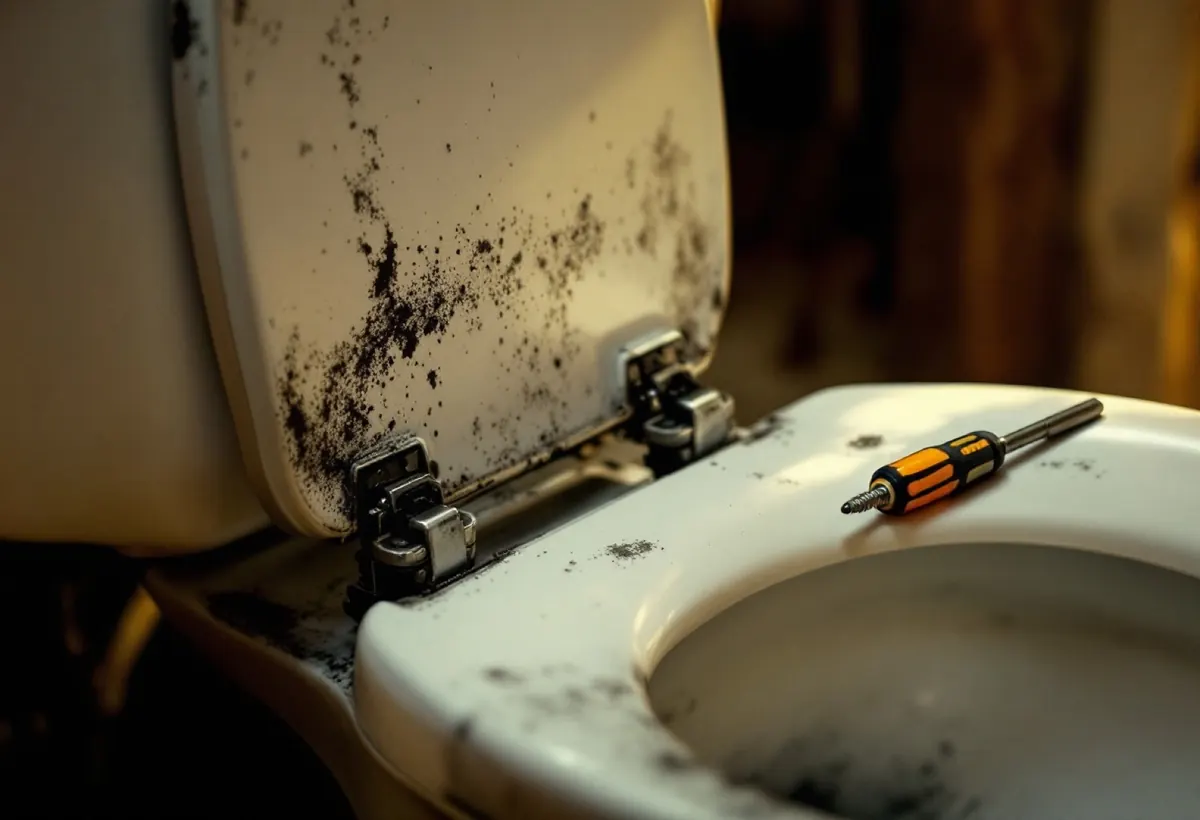
Mold under toilet seat bumpers and around the hinge posts sits in the area that is easiest to miss when wiping. The seat maker is strict: the Bemis seat care FAQ limits cleaning to antibacterial wipes, dish soap or antibacterial hand soap, and says to dry the cover and ring thoroughly with paper towel.
| Product | Bemis position | Reason given |
|---|---|---|
| Antibacterial wipes, dish soap or antibacterial hand soap | Recommended | Wipe both sides of the ring and cover, then dry |
| Bleach, chlorine | Avoid | Harsh chemicals can dull plastic and corrode hinge finish |
| Vinegar, acid | Avoid | Listed with the products to avoid |
| Pine or essential oils | Avoid | Listed with the products to avoid |
| Scouring powders, detergents, disinfectants, aerosols | Avoid | Abrasives rub away paint on enamelled wood |
| Toilet bowl cleaner splashed on the seat | Damage risk | Bemis says resulting staining, fading or scratches are permanent |
To reach the hinges, take the seat off. Bemis says a seat comes off with a screwdriver or a wrench, warns that tools can chip the porcelain, and suggests a rust penetrant left five or ten minutes on stuck bolts. Clean and dry the hinge posts, then refit. Not every dark mark is growth: Bemis notes that substances on skin can react with a seat and discolour it, which no cleaner reverses.
Signs it is bigger than the toilet
| What you see | What it usually means | Next step |
|---|---|---|
| Water or mold on the floor at the base | Wax ring or flange leak | Plumbing repair, then dry the floor |
| Stain on the ceiling below the bathroom | Leak reaching the structure | Water damage ceiling |
| Soft or dark flooring around the toilet | Subfloor wetting | Subfloor water damage |
| Mold on the wall behind the tank | Condensation or a supply leak | Dry the area; insulate or ventilate |
| Musty smell with nothing visible | Possible hidden mold | Investigate before opening walls |
| Black stain on every fixture in the house | Manganese in the water | Water test, then treatment |
A toilet leaking at the base is a seal problem; the repair is covered in The Plumbing Brief's toilet leaking at base guide. Once the leak is fixed, EPA's Brief Guide to Mold, Moisture and Your Home says water-damaged areas should be dried within 24 to 48 hours to prevent mold growth, places hidden mold on the back of drywall and in walls around pipes, and advises covering cold surfaces such as cold water pipes with insulation to limit condensation; a sweating tank is one. The wider room is covered on mold in bathroom.
For contractors
A dark ring in a bowl is a cleaning task; quoting remediation for it overstates the scope. The work starts when water has escaped: under vinyl at the base, into the subfloor, or through the ceiling below. Overflow water has its own category rules, covered on IICRC water categories. If a lab result is needed to name the growth, mold testing covers when sampling is worth the fee.
| Document | Why it belongs in the file |
|---|---|
| Photos: bowl ring, tank interior, seat hinges, floor at the base | Separates a cleaning call from a leak |
| Water source and any test results for iron and manganese | Rules mineral staining in or out |
| Moisture readings at the base, wall and ceiling below | Shows whether water has left the fixture |
| Condition of flapper, fill valve and supply line | Documents a running or leaking tank |
| Water category if the bowl overflowed | Sets the cleanup protocol |
Adjusters work from policy wording. The ISO HO 00 03 sample form hosted by the Insurance Information Institute excludes mold, fungus or wet rot, but gives back loss from mold hidden within walls or ceilings or beneath floors when it results from accidental discharge or overflow from a plumbing system or household appliance on the residence premises. A ring inside a bowl is not hidden. Whether any given loss fits that wording depends on the policy form and endorsements, so the owner’s policy, their state insurance department and a licensed professional decide.
What this page does not cover. Health effects of mold or bacteria in a toilet are outside our scope; CDC and NIH publish that guidance, and anyone worried should ask a doctor.
Questions people actually ask
What is the black ring in my toilet bowl?
Usually one of three things. A slimy grey to black ring that smears is a film of mold and bacteria. A dense black stain that resists scrubbing, especially on well water, is often manganese, which EPA links to black staining above 0.05 mg/L. A rough crust is hard water or urine scale holding grime, and needs a descaler.
Why does my toilet keep getting black mold?
Because still water loses its chlorine, according to NDSU Extension, and because the tank refills the bowl after every flush. Seldom-used toilets, a tank that is never cleaned, rough scale at the waterline and a humid room all speed regrowth. If the stain returns within days on well water, test for manganese.
Is black mold in toilet dangerous?
This page does not assess health effects; CDC and NIH publish that guidance, and a doctor can answer personal questions. For the fixture itself, a ring inside the bowl is a cleaning job. Mold on the floor, the wall behind the tank or the ceiling below is the sign that water has escaped and the job has grown.
How do I clean mold in my toilet tank?
Close the supply valve, flush the tank nearly empty, and scrub the walls with mild detergent and a soft sponge, as Kohler recommends. NDSU Extension adds a short disinfecting dose of a quarter cup of bleach for 15 to 20 minutes, flushed out, but Kohler, American Standard, TOTO and Fluidmaster warn against chlorine cleaners in the tank.
Can I put bleach tablets in my toilet tank?
The manufacturers say no. Kohler warns that chlorine (calcium hypochlorite) products can seriously damage tank fittings, American Standard’s warranty excludes damage from in-tank cleaners, and Fluidmaster says drop-in bleach or chlorine cleaners damage tank components, may cause flooding and void its warranty. Clean the bowl by hand instead.
How do I get rid of mold under the toilet seat?
Remove the seat with a screwdriver or wrench, taking care not to chip the porcelain, and clean the hinge posts and bumpers. Bemis recommends antibacterial wipes, dish soap or antibacterial hand soap only, and says to avoid bleach, vinegar, acids and disinfectants, which can dull plastic and corrode hinge finishes.
Is it mold or manganese?
Mold film smears and comes off with a brush; manganese leaves a dense black stain that Penn State Extension says also appears as a solid. If the house is on a private well and other fixtures or laundry stain too, a laboratory water test for iron and manganese answers the question.
Sources
- North Dakota State University Extension, Red Substance in Tub, Toilet Is Bacteria, 9 August 2010. Retrieved 31 October 2026.
- EPA's secondary drinking water standards, Secondary Drinking Water Standards: Guidance for Nuisance Chemicals, updated 26 May 2026. Retrieved 31 October 2026.
- Penn State Extension, Iron and Manganese in Private Water Systems, updated 29 May 2025. Retrieved 31 October 2026.
- Minnesota Department of Health, Iron Bacteria in Well Water, updated 7 January 2026. Retrieved 31 October 2026.
- USGS Water Science School, Hardness of Water, 24 August 2026. Retrieved 31 October 2026.
- Kohler homeowners guide, K-3444 and K-3461 close-coupled toilets, 2006, and Kohler installation guide 1346513, 2025. Retrieved 31 October 2026.
- American Standard 2025 toilet warranty; TOTO limited warranty; Fluidmaster 500 flapper instructions, P/N 5-3240, February 2013. Retrieved 31 October 2026.
- Bemis seat care FAQ, Bemis Manufacturing via ToiletSeats.com. Retrieved 31 October 2026.
- CDC, Mold, dated 26 September 2024. Retrieved 31 October 2026.
- EPA's Mold Cleanup in Your Home (updated 4 June 2026) and EPA's Brief Guide to Mold, Moisture and Your Home (updated 18 February 2026), EPA. Retrieved 31 October 2026.
- ISO HO 00 03 sample form hosted by the Insurance Information Institute, form HO 00 03 10 00, ISO 1999. Retrieved 31 October 2026.
- Real photographs are Wikimedia Commons files under the licences in their captions; scene illustrations are generated. Nothing here was tested or inspected by us. See our methodology and the mold hub.
Identification from colour and texture is provisional. A water test or a laboratory sample is the reliable answer.