The short answer
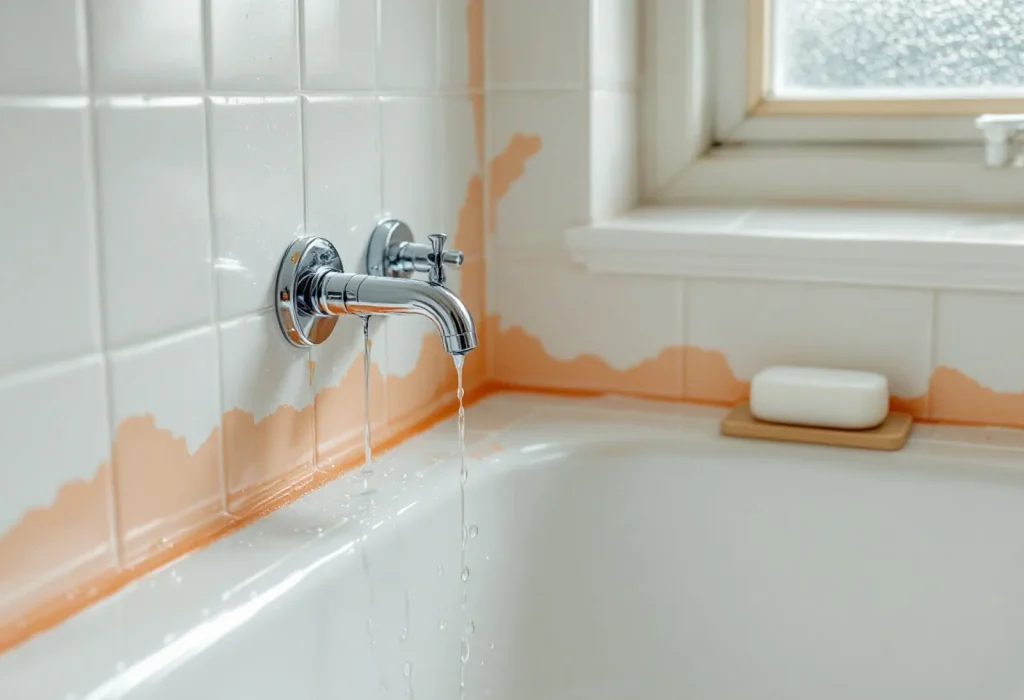
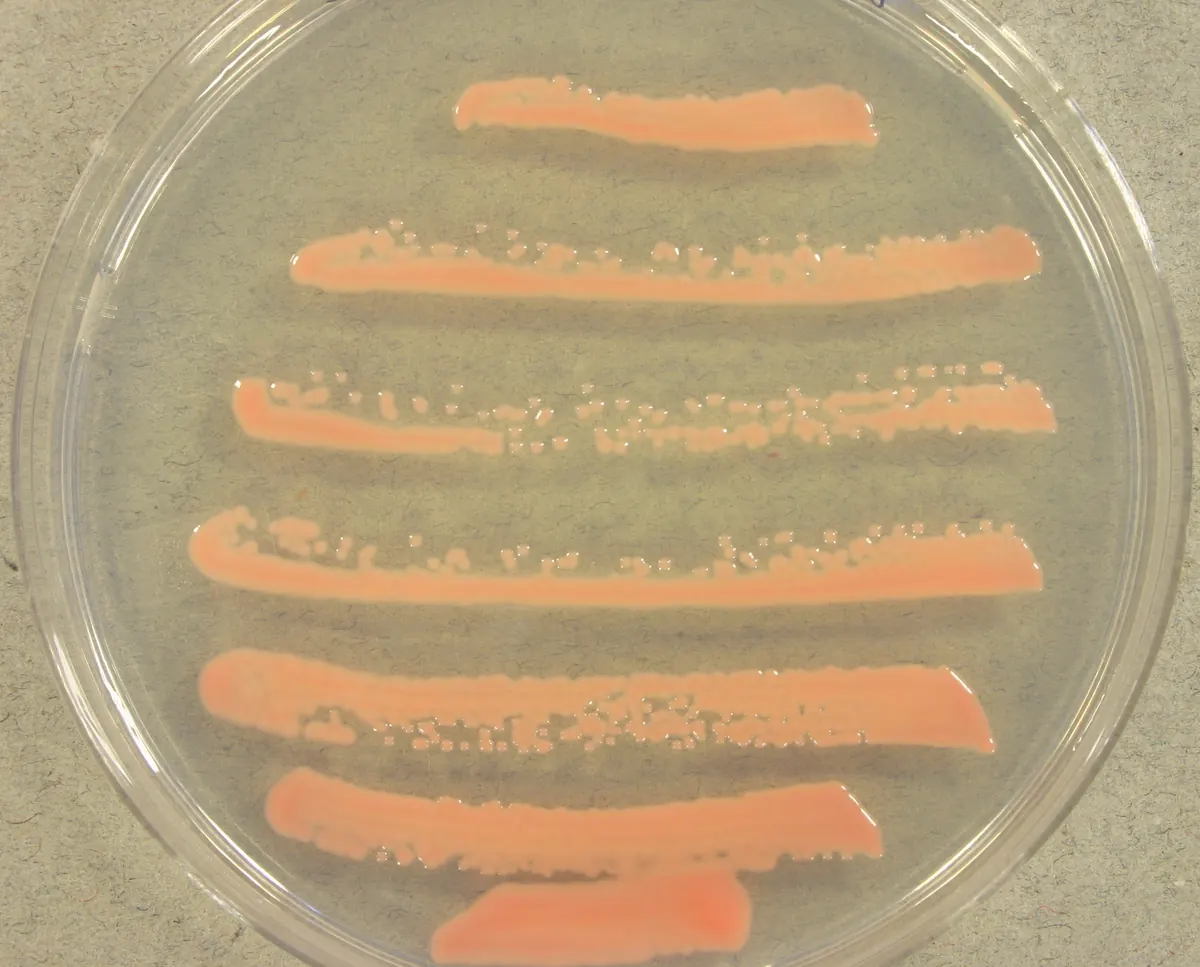
Pink mold is usually not a mold at all. The pink to orange-red slime on shower grout, sink drains and toilet bowls is most often the bacterium Serratia marcescens, feeding on soap and body residue in water that sits. Scrub it off, disinfect, then keep the surface dry. A pink yeast, a few true molds and some non-living stains can look the same.
Key takeaways
- North Dakota State University Extension identifies the pink film in toilets, sinks, tiles and shower stalls as Serratia marcescens, a bacterium that feeds on soap or feces residue where water sits until its chlorine dissipates.
- For a toilet tank, NDSU says 1/4 cup of bleach for 15 to 20 minutes, then flush several times, and never leave bleach in the tank because it damages rubber valves and seals.
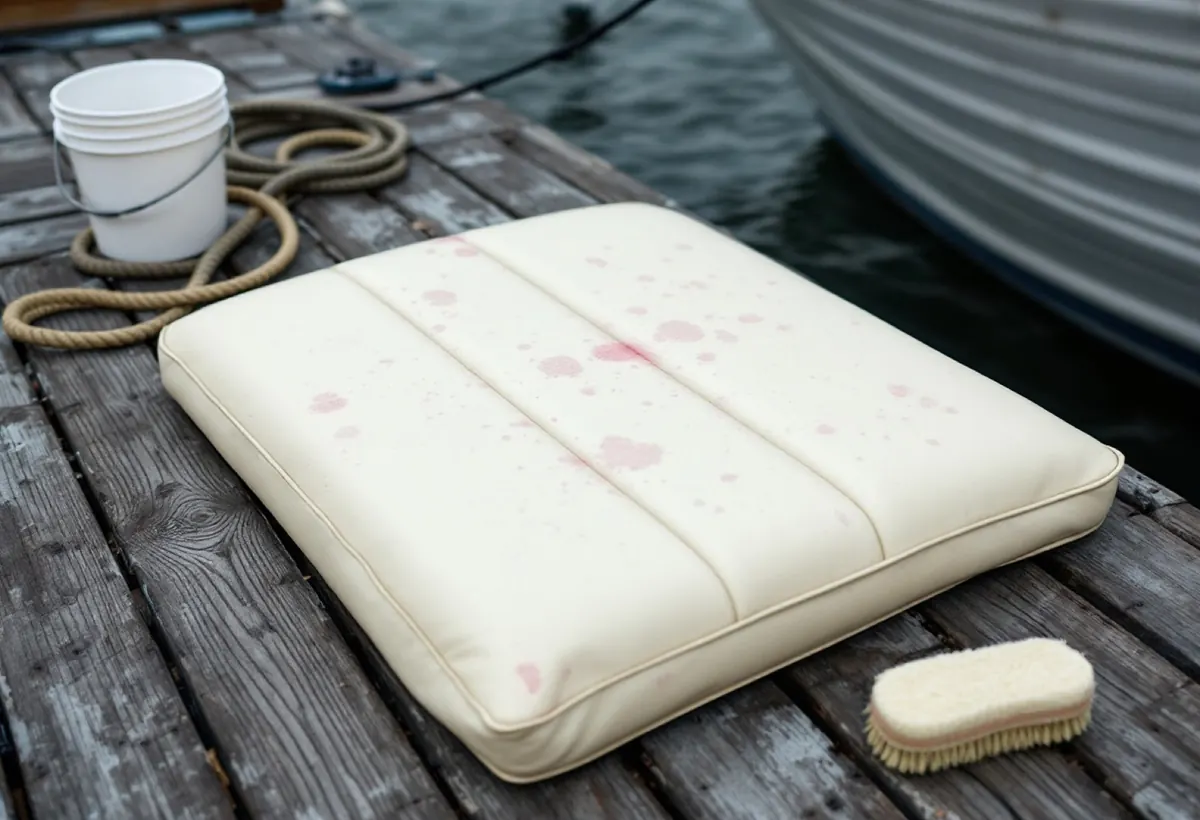
- Pink stain inside vinyl boat seats and outdoor cushions is a different bacterium whose dye migrates into the plastic; PCI Magazine says there is no conventional way to clean it.
- Colour is a weak clue in both directions: a soil Serratia isolate stopped making pigment above 30 C in nutrient broth, according to Giri and colleagues in BMC Microbiology.
On this page
What you are looking at
Six different things turn up pink in a house, and only two are molds. Texture sorts them faster than shade: slime is bacterial or yeast film, fuzz is mold, a stain under a vinyl skin is a dye, and a tint in the water is chemistry.
| What you see | Most likely | Tell | Source |
|---|---|---|---|
| Slimy pink to orange-red film at drains, grout, bowl waterline | Bacterium: Serratia marcescens | Slimy; stains come off with a bleach cleanser | North Dakota State University Extension |
| Glossy coral to salmon spots on shower curtains, toothbrushes | Yeast: Rhodotorula | Smooth and shiny, not fuzzy | University of Adelaide mycology unit |
| Cream or pink colony that darkens to brown or black | Mold: Aureobasidium pullulans | Pink stage is temporary | University of Adelaide description of Aureobasidium pullulans |
| Pink or purple tinted growth from a drain | Mold: some Fusarium species | Only a lab can name it | University of Adelaide Fusarium page |
| Rose blotches showing through vinyl from below | Bacterium: Streptoverticillium reticulum dye | Does not wipe off; it is inside the vinyl | PCI Magazine |
| Pink or purplish water itself, no film | Chemical: potassium permanganate | Blades said it would pass in days | Town of Blades, Delaware |

Other colours: orange mold covers iron staining and slime molds; red mold covers red growth.
Which pink is it? Six questions
Stop at the first yes.
- Is the water itself pink, straight from the tap, with no film? Ask whether a greensand or permanganate iron filter serves the house or the town. Why this differs from generic advice: no cleaner is needed; Penn State Extension explains that greensand media is coated with potassium permanganate.
- Is it slimy, at a drain, a grout line low in the shower, or the toilet waterline? Treat it as Serratia. Why: drying matters as much as the product.
- Is it glossy coral or salmon spots on a shower curtain or a toothbrush? Likely Rhodotorula. Why: launder or replace the item.
- Is it fuzzy, or are pink spots turning brown or black? Treat it as mold. Why: young Aureobasidium colonies can be pink before they darken, and mold on porous material may have to be discarded.
- Is the pink under the surface of vinyl upholstery, never on top? Pink stain. Why: surface cleaners cannot reach a dye inside the plastic.
- Is it on food? Discard the food and clean the container. Why: food rules come from USDA, not from colour.
Serratia marcescens, explained
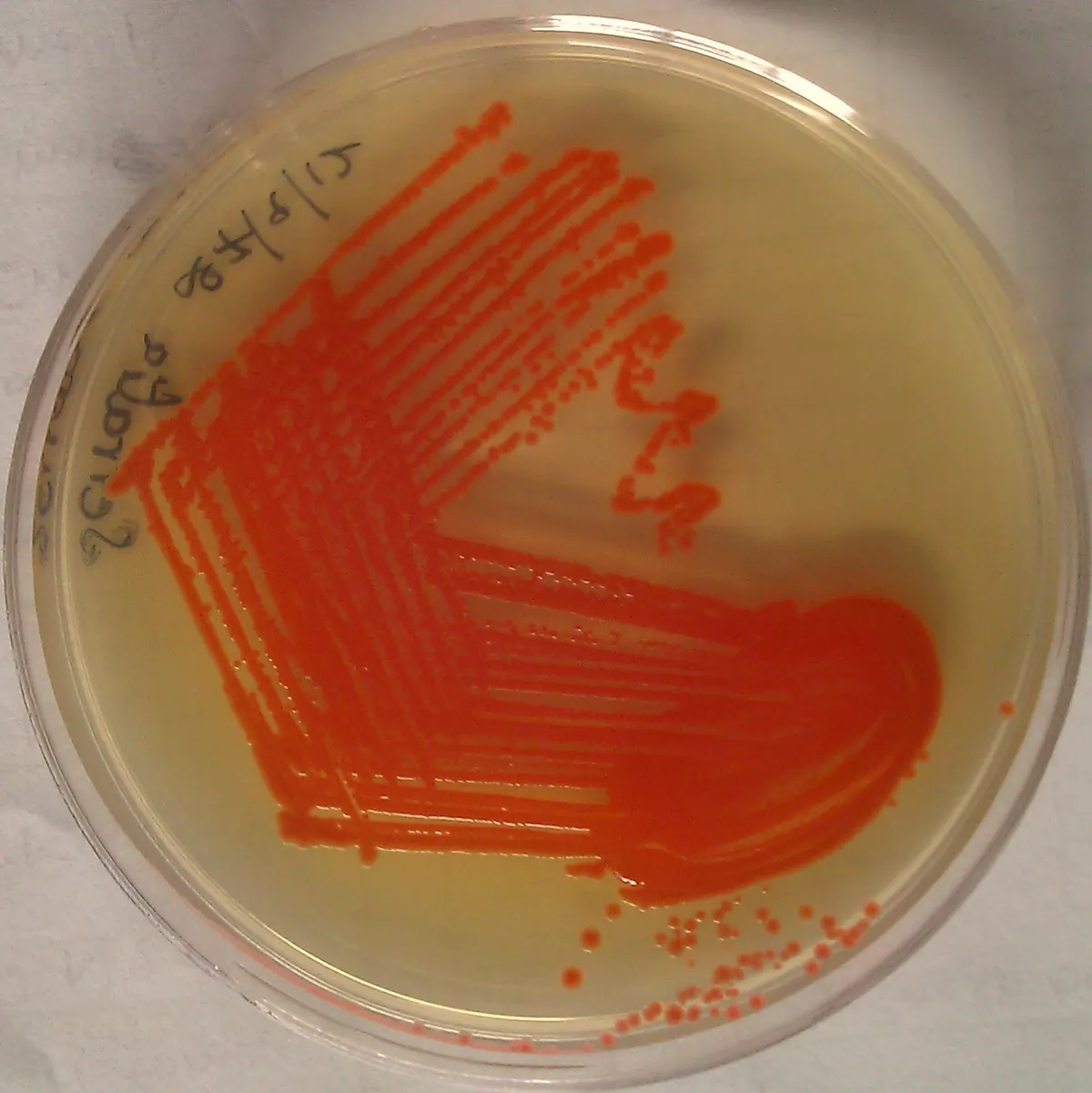
Giri and colleagues in BMC Microbiology describe Serratia species as Gram-negative bacteria noted for a cell-associated red pigment, prodigiosin, which is why North Dakota State University Extension calls the bathroom film a red substance and readers call it pink.
The pigment is not a fixed trait. In the same 2004 study, a soil isolate stopped producing it above 30 C in nutrient broth but kept producing it at 37 C on a peanut seed medium and up to 42 C on a fatty acid medium. So a colourless film beside the pink can be the same organism: clean the whole wet zone.
| Organism | Type | Colour as published | Published growth note | Source |
|---|---|---|---|---|
| Serratia marcescens | Bacterium | Red pigment, cell associated | Pigment blocked above 30 C in nutrient broth (one isolate) | Giri and colleagues in BMC Microbiology |
| Rhodotorula | Yeast | Coral red to salmon or slightly orange | 46 species in the genus | University of Adelaide mycology unit |
| Aureobasidium pullulans | Mold (black yeast) | Cream or pink, later brown or black | Optimum 25 C, maximum 35 to 37 C | University of Adelaide description of Aureobasidium pullulans |
| Fusarium | Mold | Pink in some species, purple in others | Mostly soil fungi | University of Adelaide Fusarium page |

What causes pink mold
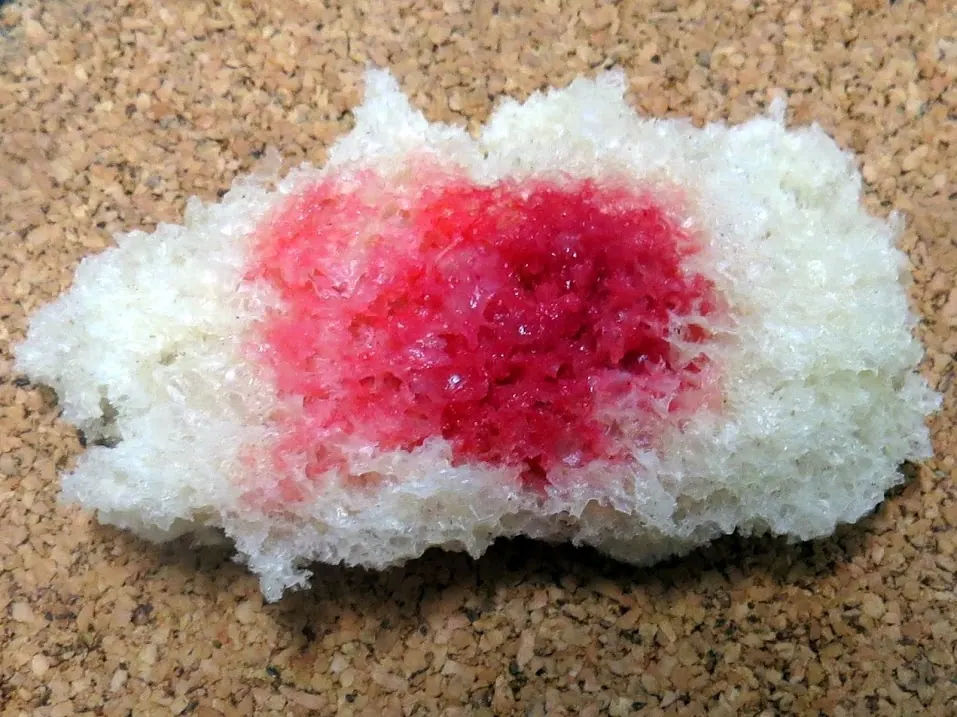
Every cause on North Dakota State University Extension‘s list comes back to food plus standing water, and NDSU ties growth to chlorine loss. Federal rules set both ends of the dose a utility delivers. Under 40 CFR 141.72, a covered public system’s residual entering the distribution system cannot be below 0.2 mg/L for more than 4 hours. Under 40 CFR 141.65, the ceiling for chlorine and for chloramines is 4.0 mg/L as Cl2.
Water standing in a trap or bowl is no longer topped up from the main, which is why NDSU’s chlorine remark matters most in a guest bathroom.
| Cause | What NDSU says | What to change |
|---|---|---|
| Soap, shampoo or feces residue | Food: phosphorus or fatty substances | Rinse residue off after use |
| Water that sits | Chlorine dissipates and the film settles in | Dry tubs and sinks; flush seldom-used toilets |
| Activated carbon filter on the line | Removes chlorine, which may support growth | Expect more cleaning downstream of the filter |
| Construction or remodelling | NDSU notes it appears during or after | Clean new fixtures early, before film builds |
| Summer with windows open | More common then, per NDSU | Run the fan; keep humidity in EPA’s range |
EPA's Brief Guide to Mold, Moisture and Your Home sets the humidity range: below 60 percent, ideally 30 to 50 percent, with the fan running during showers.
Pink mold in shower
Pink mold in shower stalls concentrates where water is last to leave: the drain, the bottom grout line, and anywhere a bottle sits in a puddle. The generic shower routine, from fans to regrouting, is on mold in shower.
| Spot | Usual cause | Specific step |
|---|---|---|
| Drain flange and the first inch of the drain | Serratia, often with soap scum | Pull the hair catcher; scrub the flange and the catcher, not only the tub floor |
| Lowest grout line and corners | Serratia in the last water to dry | Scrub, then dry with a towel or squeegee; check the sealer’s cleaner rules |
| Silicone bead at the tray | Serratia on top, or mold in the bead | Film wipes off; spots under the skin mean replace the bead |
| Curtain hem and liner folds | Serratia or Rhodotorula | Wash or replace; see shower curtain mold |

One conflict to resolve before scrubbing grout. NDSU advises a strong chlorine bleach solution on scrubbed surfaces, while Custom Building Products data sheet TDS-212 for Aqua Mix SameDay grout sealer (published 23 March 2023) says not to use cleaners containing ammonia, acids or bleach on sealed grout. If the grout is sealed, follow the sealer maker and use its neutral cleaner, then rely on drying.
Pink mold in toilet
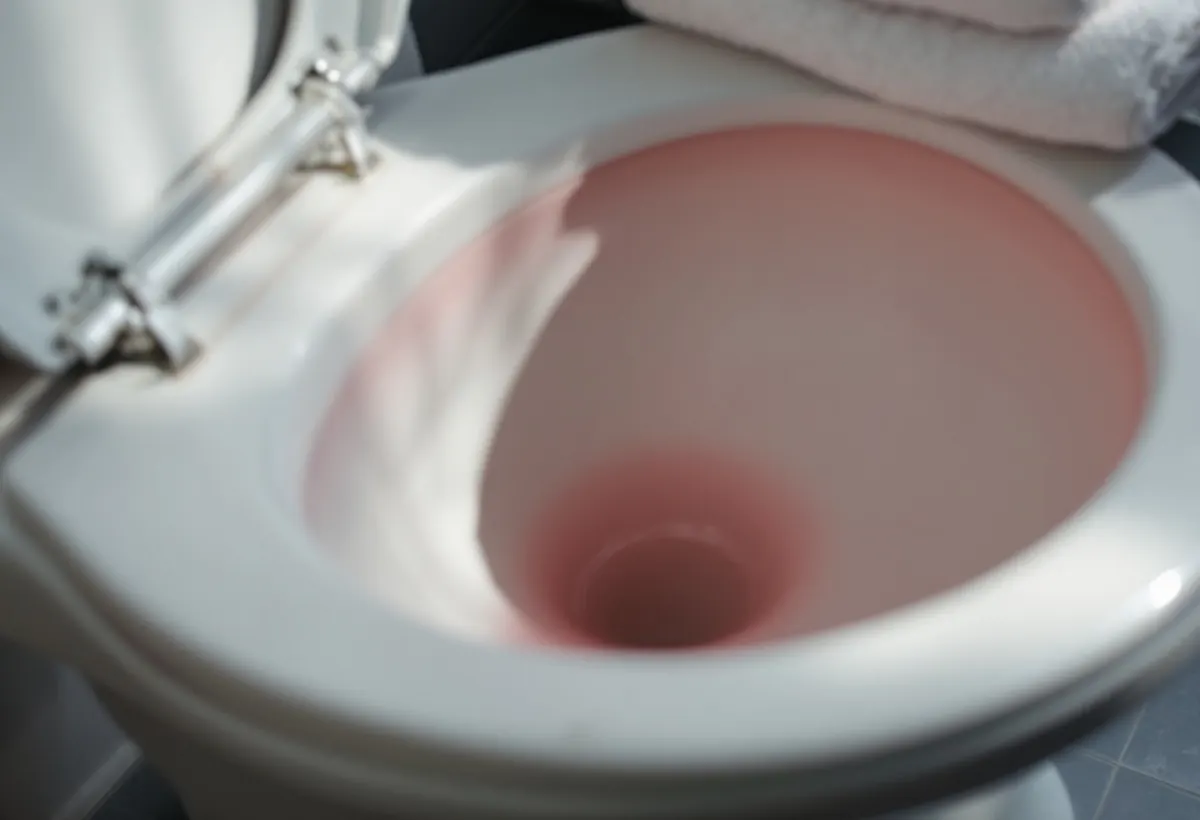
Pink mold in toilet bowls forms as a band at the still waterline and under the rim, and it favours a toilet that is flushed rarely. North Dakota State University Extension links it to feces residue, a phosphorus source, and to bowl water losing its chlorine. Brush the band and the rim jets with a bowl cleaner, flush, and flush a seldom-used toilet every few days.
If pink returns quickly, the tank may be seeding it. NDSU’s tank method is 1/4 cup of bleach, 15 to 20 minutes, then several flushes, never left standing. The Kohler homeowners guide and the Fluidmaster 500 flapper instructions go further and warn against in-tank chlorine cleaners, which they say damage tank parts. The full tank routine, and black rings, are on black mold in toilet.
The method, surface by surface
Serratia is not a mold, but the cleanup logic is the same one EPA's Mold Cleanup in Your Home gives for mold on hard surfaces: scrub with detergent and water, and dry completely. The surface decides what else is allowed.
| Surface | Method | Why this differs from generic advice |
|---|---|---|
| Acrylic or fibreglass tub and shower pan | Non-abrasive cleaner, soft brush, rinse, towel dry | Kohler prints the same warning for its fixtures: abrasives scratch or dull |
| Porcelain toilet bowl | Bowl cleaner and brush at waterline and rim jets; flush | Pink sits under the rim as well as at the waterline |
| Toilet tank | NDSU: 1/4 cup bleach, 15 to 20 minutes, flush several times | Bleach left standing harms rubber valves and seals |
| Sealed grout | Sealer maker’s neutral cleaner; scrub; dry | TDS-212 rules out bleach, ammonia and acids |
| Unsealed grout, ceramic tile | Scrub, then strong bleach solution 10 to 20 minutes per NDSU; rinse | Never mix bleach with ammonia or other cleaners (CDC) |
| Silicone caulk | Wipe film; replace if spots sit under the surface | A wipe cannot reach growth under the silicone skin |
| Vinyl cushions with pink under the skin | Not a cleaning job; replace or reupholster | PCI Magazine: no conventional way to clean pink stain |
CDC caps household bleach at 1 cup per gallon of water, never mixed with ammonia or other cleaners. Bleach on true mold is covered on does bleach kill mold; label claims on mildew remover.
Is pink mold dangerous to the house?
For the building, Serratia film is a cleaning problem: it sits on glazed, sealed and plastic surfaces and brushes off. The pinks that do lasting damage are not on the surface.
PCI Magazine explains that Streptoverticillium reticulum, a bacterium of soil and decaying vegetation, feeds on plasticizer and makes a soluble red dye that is absorbed into vinyl, so growth on the back of a cushion or in its foam shows through the top. The industry test for resistance is ASTM E1428, in which specimens sit on inoculated agar for 14 days. Specifying vinyl that has passed it is the preventive step; the stain itself is a replacement item.
The Town of Blades, Delaware said extra potassium permanganate entered its system while greensand filters were tested and that the colour would not cause any harm. On a private well, persistent pink water is a filter service call.
What this page does not cover. Health effects of Serratia, pink yeasts and molds are outside our scope; CDC and NIH publish that guidance, and anyone worried should ask a doctor.
Signs it is more than a film
| What you see | What it usually means | Next step |
|---|---|---|
| Pink returns within a day or two of cleaning | Residue or a reservoir (tank, drain, carbon filter) | Clean the tank and drain; review the filter |
| Pink spots turning brown or black on caulk | Mold colonising the bead | Replace the bead |
| Grout stays stained after scrubbing | Growth in porous grout | Seal or regrout |
| Film plus a musty smell from a wall | Possible hidden mold | Investigate behind the surround |
| Pink under vinyl in several cushions | Pink stain spread through the foam | Replace; specify ASTM E1428 |
| Pink tap water for days on a private well | Greensand filter overdosing or failing | Filter service |
EPA's Brief Guide to Mold, Moisture and Your Home says to suspect hidden mold when a space smells moldy with nothing visible; a leaking shower can do that. Fuzzy growth larger than about 10 square feet is past EPA’s homeowner scale; the line and steps are on DIY mold remediation.
Drains are a known reservoir. Short and colleagues in the Journal of Clinical Microbiology swabbed 471 drains in 131 US buildings, more than 95 percent of them bathroom sinks, and report Fusarium in 66% of sinks. Some Fusarium species are pink, per the University of Adelaide, so a pink tint inside a drain is not proof of Serratia.
For contractors
A pink film call is a cleaning visit; calling it mold remediation overstates the scope. Billable work appears when the pink points to something else: a failed caulk bead, a surround leaking behind tile, or vinyl contents with pink stain. Record the organism as provisional unless a lab named it; mold testing covers when sampling is worth the fee.
| Document | Why it belongs in the file |
|---|---|
| Photo of texture: slime, fuzz, or stain under vinyl | Separates cleaning, remediation and replacement |
| Water supply: municipal, well, carbon filter, greensand | Explains recurrence and pink water |
| Caulk and grout condition, sealed or not | Sets the cleaner (TDS-212) and the repair line |
| Moisture readings at the surround and floor | Rules a hidden leak in or out |
| Measured area of any true mold | Places it against EPA’s line |
Adjusters work from policy wording. The ISO HO 00 03 sample form hosted by the Insurance Information Institute excludes “mold, fungus or wet rot” with a give-back for such loss hidden within walls, ceilings or floors from accidental discharge of a plumbing, heating, air conditioning or sprinkler system or a household appliance. A bacterial film is not named either way, so the owner’s policy, their state insurance department and a licensed professional decide.
Questions people actually ask
What is pink mold?
Usually the bacterium Serratia marcescens, not a mold. North Dakota State University Extension identifies the pink film in toilets, sinks, tiles and shower stalls as Serratia, feeding on phosphorus or fatty residue such as soap. Less often the pink is a yeast called Rhodotorula, a young mold colony, a dye inside vinyl, or potassium permanganate in the water.
What causes pink mold?
Residue plus standing water. NDSU Extension says the film grows where water sits long enough for its chlorine to dissipate, feeds on soap or feces residue, appears more during remodelling and open-window summers, and may be helped by an activated carbon filter that removes chlorine. Drying surfaces after use removes the condition it needs.
Is pink mold dangerous?
This page does not assess health effects; CDC and NIH publish that guidance, and a doctor can answer personal questions. For the house, Serratia film is a cleaning issue on hard surfaces. The pinks that cause lasting damage are pink stain inside vinyl, which PCI Magazine says cannot be conventionally cleaned, and mold inside caulk.
How do I get rid of pink mold in the shower?
Pull the drain cover and scrub the flange, the lowest grout line and the caulk with a brush and cleaner. NDSU then advises a strong bleach solution for 10 to 20 minutes and a rinse, but a grout sealer maker’s sheet rules out bleach on sealed grout. Towel or squeegee the stall dry after every shower.
Why does pink mold keep coming back in my toilet?
Bowl water stops being refreshed with chlorine between flushes, and residue feeds the film, per NDSU Extension. Brush the rim jets as well as the waterline, flush seldom-used toilets every few days, and clean the tank with a short bleach dose that is flushed out, since Kohler and Fluidmaster warn against in-tank chlorine cleaners.
Can I just use vinegar on pink mold?
No published source opened for this page gives a vinegar contact time for Serratia. NDSU Extension’s advice is scrubbing plus a chlorine bleach solution, and EPA’s general rule for hard surfaces is detergent, water and complete drying. Whatever the product, the film returns unless the surface dries between uses; vinegar itself is covered on does vinegar kill mold.
Sources
- North Dakota State University Extension, Red Substance in Tub, Toilet Is Bacteria, source Roxanne Johnson, 9 August 2010. Retrieved 31 October 2026.
- Giri and colleagues in BMC Microbiology, prodigiosin medium study, 4:11, March 2004. Retrieved 31 October 2026.
- University of Adelaide mycology unit: Rhodotorula, Aureobasidium and Fusarium pages (University of Adelaide description of Aureobasidium pullulans; University of Adelaide Fusarium page), undated. Retrieved 31 October 2026.
- Short and colleagues in the Journal of Clinical Microbiology, Fusarium in plumbing drains, 49(12), December 2011. Retrieved 31 October 2026.
- PCI Magazine, Hugh Barrett, Pink Stain Damage on Vinyl Surfaces, 1 July 2018. Retrieved 31 October 2026.
- Town of Blades, Delaware, Experiencing Pink or Purplish Water?, posted 20 October 2016. Retrieved 31 October 2026.
- Penn State Extension, Iron and Manganese in Private Water Systems, updated 29 May 2025. Retrieved 31 October 2026.
- 40 CFR 141.65 and 40 CFR 141.72, Code of Federal Regulations, via Cornell Legal Information Institute. Retrieved 31 October 2026.
- CDC, Mold, dated 26 September 2024. Retrieved 31 October 2026.
- EPA's Mold Cleanup in Your Home (updated 4 June 2026) and EPA's Brief Guide to Mold, Moisture and Your Home (updated 18 February 2026), EPA. Retrieved 31 October 2026.
- Custom Building Products data sheet TDS-212, Aqua Mix SameDay Grout Sealer, published 23 March 2023. Retrieved 31 October 2026.
- Kohler homeowners guide, K-3444 and K-3461 close-coupled toilets, 2006. Retrieved 31 October 2026.
- Fluidmaster 500 flapper instructions, 500 series flapper, P/N 5-3240, February 2013. Retrieved 31 October 2026.
- ISO HO 00 03 sample form hosted by the Insurance Information Institute, form HO 00 03 10 00, ISO 1999. Retrieved 31 October 2026.
- Real photographs are Wikimedia Commons files under the licences in their captions; scene illustrations are generated. Nothing here was tested or inspected by us. See our methodology and the mold hub.
Identification from colour and texture is provisional. Only a laboratory can name the organism.