The short answer
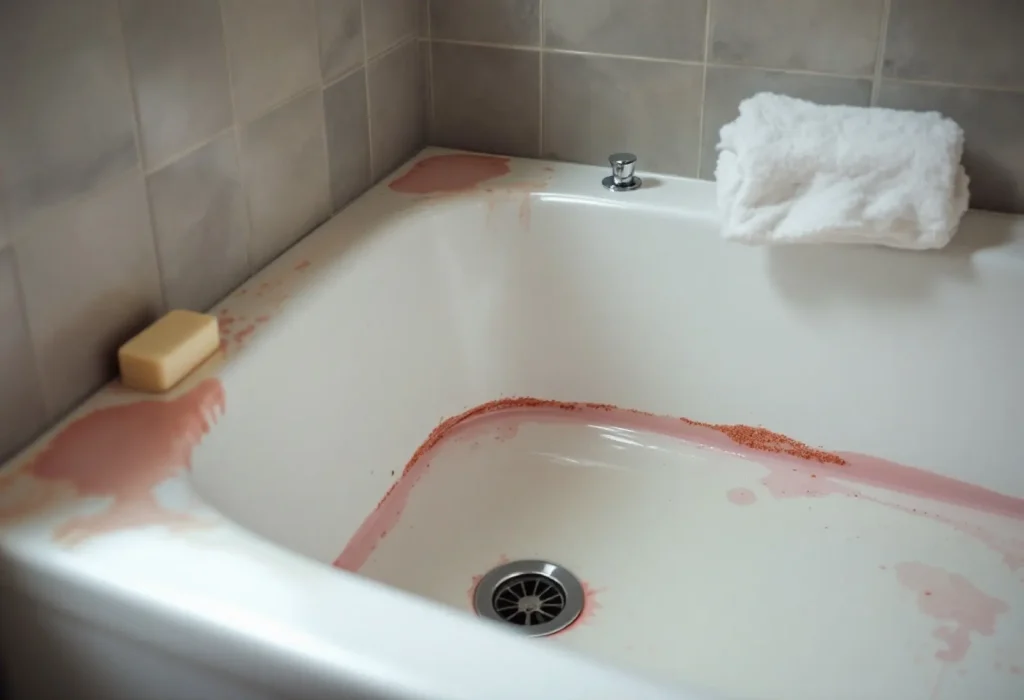
Red mold is a colour description, not a species. Indoors, the red or pink slime in a toilet, tub or shower is usually the bacterium Serratia marcescens, per NDSU Extension; rusty red-orange staining near water is usually iron; and genuine red-pigmented fungi, such as some Fusarium species and the yeast Rhodotorula, also exist. Location, texture and a bleach drop sort most cases in minutes.
Key takeaways
- NDSU Extension names Serratia marcescens, a bacterium, as the pink or red substance in toilets, sinks, tubs and shower stalls.
- Per the EPA secondary drinking water standards, iron above 0.3 mg/L causes reddish or orange staining: a water problem, not a cleaning one.
- The Wood Handbook, Chapter 16 gives a one-drop test: household bleach lightens mildew in seconds; dirt, extractive bleed and iron stain do not change.
- Reddish-brown bleed through paint on cedar or redwood is usually extractives; a stain-blocking primer stops it.
- Real red fungi exist: on lab media Fusarium can be pink, red or purple and Rhodotorula is coral red to salmon, per Mycology Online.
- CDC says you do not need to know the type of mold. Moisture, material and area set the scope, not colour.
On this page
Most pages ranking for this search treat red mold as one organism with one cleanup. Four unrelated things look red on a household surface, and two are not fungi at all. Identity first saves scrubbing a water stain for a month, or writing a remediation scope for a film a bathroom cleaner removes.
What you are looking at: four things that read as red
Start with where the red sits and how it feels, not its exact shade. Each cause has its own home turf and texture.
| What it is | Where it shows up | Texture and colour | Quick tell | Source |
|---|---|---|---|---|
| Serratia marcescens (a bacterium) | Toilet bowls, sinks, tiles, shower stalls, tubs, pet dishes | Pink or red slimy film, often a line at the water level | Wipes off; feeds on soap or fatty residue | NDSU Extension |
| Iron staining from water | Fixtures, toilet tanks, anywhere water dries | Rusty, reddish or orange stain, no fuzz | Follows the water path; bleach does not lighten it | EPA secondary drinking water standards |
| Iron bacteria | Well pipes, pumps, plumbing fixtures | Sticky rusty, yellow, brown or grey slime; oily sheen | Usually private wells; a lab water test confirms | Minnesota Department of Health |
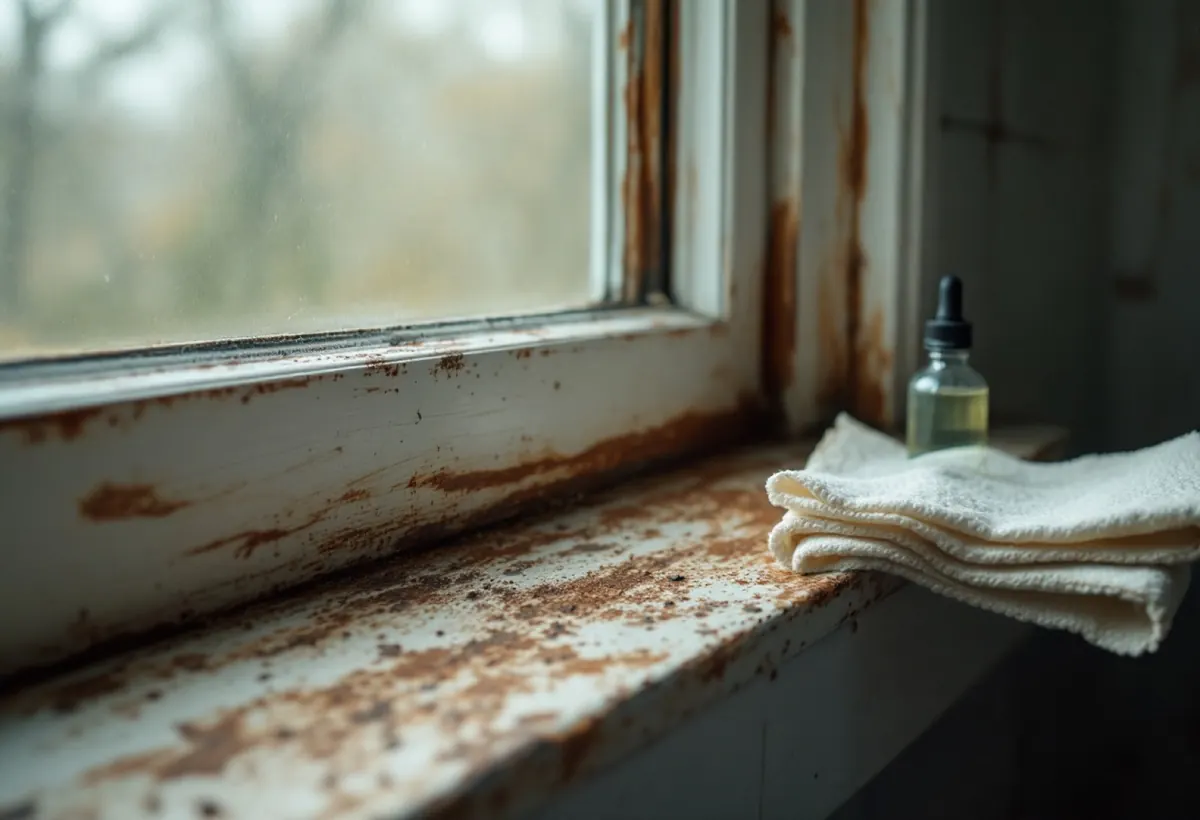
| Wood extractive bleed | Cedar, redwood, walnut, mahogany | Flat yellow to reddish-brown stain | Appears after rain, condensation or a leak | Wood Handbook, Chapter 16 |
| Red-pigmented fungi | Damp wood sapwood, other organic material, food | Fuzzy, powdery or (yeasts) glossy colonies | Raised growth, often mixed with other colours | USDA Forest Products Laboratory Wood Handbook, Chapter 14; Mycology Online's Fusarium description |
Bright orange powder on fire-charred wood is covered on our orange mold page.
The five-minute sort: which red is this?
Work through these in order.
- Is it at a water line on a fixture? A pink-red band in a toilet, tub, sink or shower is the textbook Serratia location, per NDSU Extension. Why this differs: generic advice sends you hunting for a leak; here the food is soap residue, so cleaning and drying habits are the fix.
- Does it smear? Slime that wipes off is a biofilm, a flat stain is chemistry, a raised fuzzy spot is more likely fungal. Why this differs: texture sorts causes faster than shade.
- Put one drop of household bleach on it. Per the Wood Handbook, Chapter 16, a drop or two of 5% sodium hypochlorite usually bleaches mildew in a few seconds, and discoloration that does not bleach is probably dirt, extractives bleed or iron stain. Why this differs: it is a test on a coin-sized spot, not a treatment; killing is covered on does bleach kill mold.
- Does the red follow the water? Iron above 0.3 mg/L gives reddish or orange staining under the EPA secondary drinking water standards. Why this differs: no cleaner fixes a water supply; a lab water test does.
- Is it on a porous building material? Red growth on drywall paper, ceiling tile or carpet is a mold question again, and EPA's Mold Cleanup in Your Home says absorbent materials may have to be thrown away. Why this differs: now the material decides the scope and colour stops mattering.
| Bleach drop result | Most likely | Next step | Source |
|---|---|---|---|
| Lightens within seconds | Mildew or other surface fungus | Clean, then find the moisture that fed it | Wood Handbook, Chapter 16 |
| No change, flat and rusty | Iron stain or iron in water | Water test; oxalic acid lifts iron stain on wood | Wood Handbook, Chapter 16; EPA secondary drinking water standards |
| No change, reddish-brown under paint on cedar | Water-soluble extractives | Stain-blocking primer, then topcoat | Wood Handbook, Chapter 16 |
| Slime lifts and the surface comes clean | Bacterial film such as Serratia | Chlorine-bleach cleanser; keep the surface dry | NDSU Extension |
Red mold vs pink mold: usually the same film
NDSU Extension calls the organism a pink or red slimy substance, so both searches usually point at Serratia marcescens, a bacterium that grows on phosphorus or fatty residue such as soap. Our pink mold page covers it in full.
| Question | Serratia film (pink or red) | Red-pigmented fungus |
|---|---|---|
| Kingdom | Bacterium | Fungus (mold or yeast) |
| Typical spot | Water lines, grout, drains, pet dishes | Damp organic material such as wood or food |
| Look and feel | Wet, slimy, smears | Fuzzy, powdery or glossy colony, raised |
| Published fix | Chlorine-bleach cleanser; dry after use | Moisture control and removal of the growth |
For a toilet tank, NDSU Extension says to add a quarter cup of bleach and let it sit 15 to 20 minutes, and not longer, because bleach damages rubber valves and seals. On other surfaces it suggests 10 to 20 minutes of contact.
Red mold in shower, toilet and sink
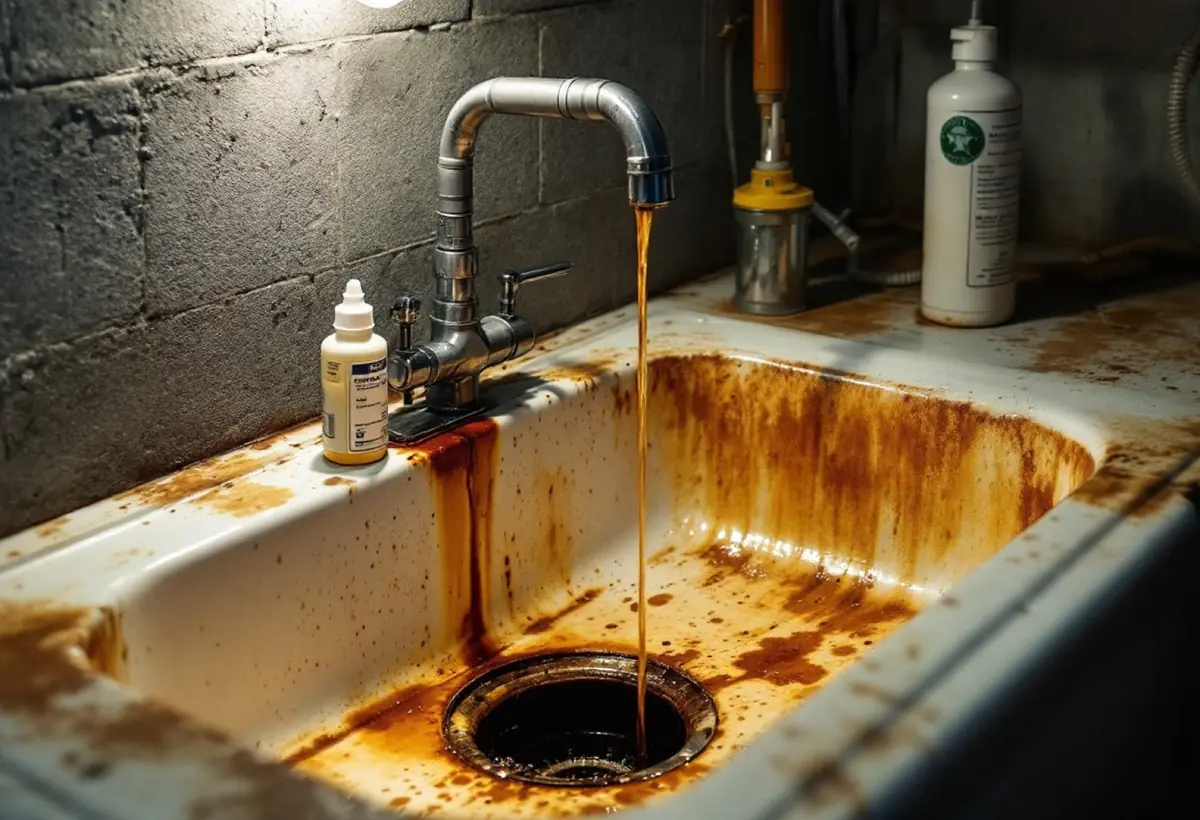
Two causes account for most bathroom red. Pink-red slime is the Serratia case. A rust-coloured stain running from a faucet or ringing a toilet tank is usually iron in the water. The EPA secondary drinking water standards sets federally unenforced levels for these nuisance effects, three of them by stain colour:
| Contaminant | Secondary level (mg/L) | Noticeable effect above that level, as EPA prints it |
|---|---|---|
| Copper | 1 | metallic taste; blue-green staining |
| Iron | 0.3 | rusty color; sediment; metallic taste; reddish or orange staining |
| Manganese | 0.05 | black to brown color; black staining; bitter metallic taste |
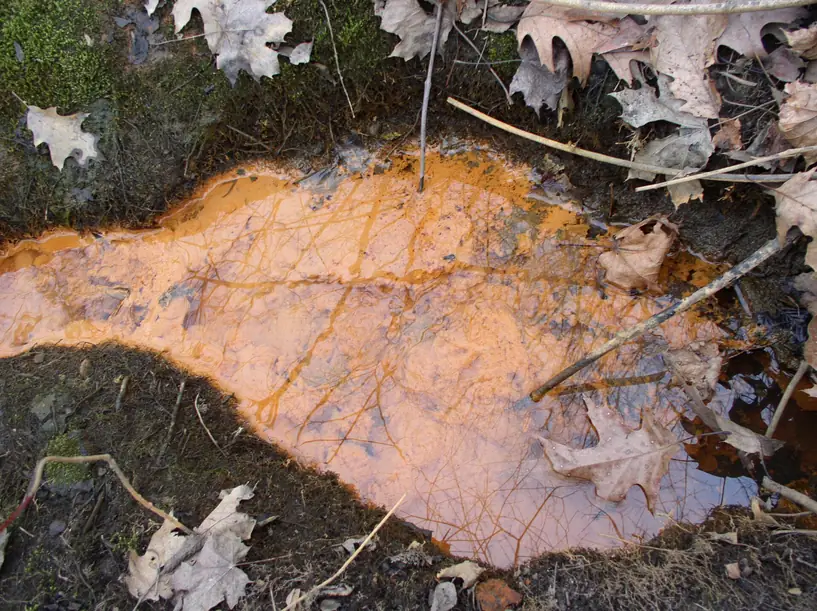

On a private well, the Minnesota Department of Health adds iron bacteria: yellow, orange, red or brown stains, an oil-like sheen and sticky rusty slime on pipes, pumps and fixtures, confirmed by a laboratory water test. That is water-treatment work, not mold work. Caulk and grout growth in general sit on our mold in shower page, and one rule carries over: EPA's Mold Cleanup in Your Home says do not paint or caulk over moldy surfaces.
Red mold on wood: stain, extractive or decay
Wood can turn red with no fungus involved. Per the Wood Handbook, Chapter 16, coloured extractives sit in the heartwood of western redcedar, redwood, walnut and mahogany. When a leak, rain or condensation wets the wood, water carries them to the surface and leaves a yellow to reddish-brown stain; the handbook names bathrooms among rooms where it bleeds through paint.
Fungal red is possible too: the USDA Forest Products Laboratory Wood Handbook, Chapter 14 says sapwood stains are mostly bluish to brown, but yellow, orange, purple and red are sometimes encountered. Sanding and depth are covered on mold on wood.
| Red on wood | How to tell | Fix the handbook gives | Why this differs from generic advice |
|---|---|---|---|
| Extractive bleed (cedar, redwood) | Flat, appears after wetting, does not bleach | Clean, stain-blocking primer, cure, topcoat | More coats of the same paint will not stop it |
| Red or orange fungal stain in sapwood | Colour inside the wood; brushing does not remove it | Dry the wood; a pigmented finish can hide it | Stain fungi affect strength only slightly; moisture is the defect |
| Surface mold with red tones | Fuzzy, brushes off softwood, lightens with bleach | Remove growth; dry to 20% or less per the handbook | On oak the stain may go too deep to sand out |
| Iron stain from fasteners | Blue-black on cedar or oak; brown rust halo on pine | Oxalic acid, then rinse | It returns unless the iron source goes |
Moisture is the number that matters. Per the USDA Forest Products Laboratory Wood Handbook, Chapter 14, fully air-dried wood usually does not exceed 20% moisture content, a reasonable margin against fungal damage, and serious decay needs wood above the fiber saturation point, an average of 30%. Per the same handbook, iron stain needs wood above about 16% to move. A pin meter tells you more than the colour does.
The genuine red fungi, and why the genus rarely matters
Mycology Online, run by the University of Adelaide, describes colony colour on laboratory media; a lab names a genus from structures under a microscope, not from shade.
| Organism | Colony colour as described | Type | Source |
|---|---|---|---|
| Fusarium | Whitish to yellow, pink, red or purple; one complex deep pink to red with a carmine red reverse | Mold | Mycology Online's Fusarium description |
| Rhodotorula | Coral red to salmon or slightly orange, glossy | Yeast | Mycology Online's Rhodotorula description |
| Aureobasidium | Cream or pink, later becoming brown or black | Mold (a so-called black yeast) | Aureobasidium description |
For the cleanup, the name changes nothing. CDC says you do not need to know the type of mold, and the EPA Mold Course, Chapter 3 says sampling is unnecessary in most cases when mold is visible. The generic method and EPA’s 10 square foot line live on DIY mold remediation.
Red on bread and food
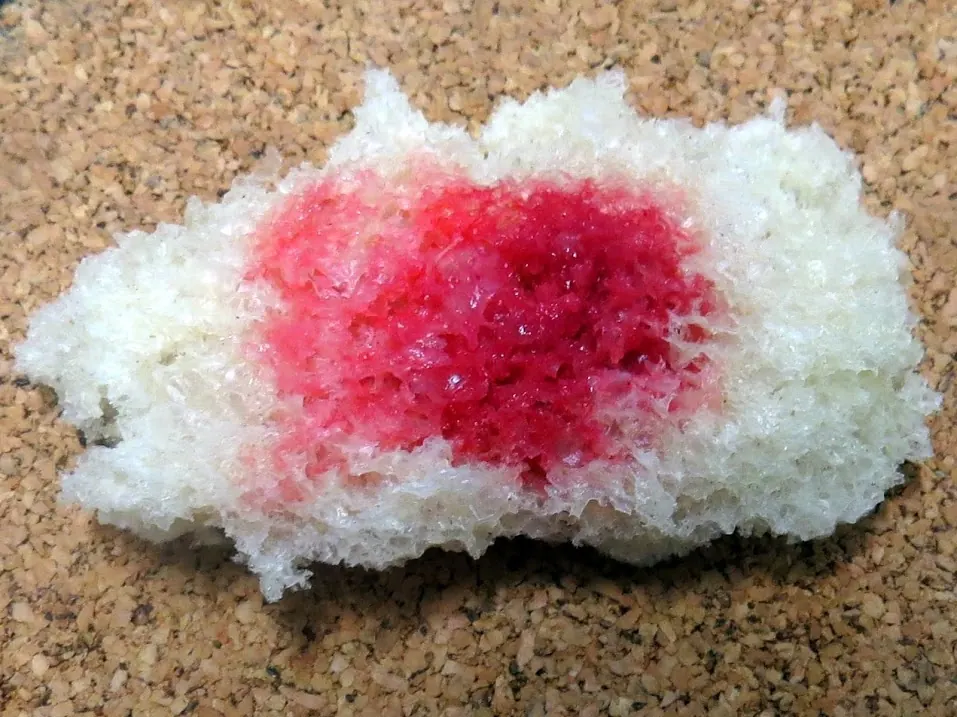

A red patch on bread can be Serratia rather than mold, as the photograph shows. For the kitchen decision it does not matter: the USDA FSIS ‘Molds on Food’ chart says to discard bread and baked goods because porous foods can be contaminated below the surface, and notes that moldy foods may carry invisible bacteria alongside the mold.
Confirming it, and what the lab charges
When the sort leaves doubt, the EPA Mold Course, Chapter 3 describes the cheap tool: clear tape pressed on the spot and examined under a microscope, which can also separate mold from soot or dirt. An iron-related bacteria test on water answers the other red question.
| Test | What it answers | EMSL code | Published price | Turnaround |
|---|---|---|---|---|
| Direct exam of tape lift, swab or bulk | Is this fungal, and roughly what genus | M041 | $68 to $328 | 2 weeks down to 3 hours |
| Iron related bacteria (IRB) | Is the slime iron bacteria | M121 | $105 | 2 weeks |
| Culturable fungi, genus ID from bulk or swab | Which genus grows from it | M007 | $113 | 2 weeks |
Per that list, speed is most of the price. Whether to sample at all is covered on mold testing.
Signs it is bigger than the spot
| Sign | What it suggests | Source |
|---|---|---|
| Red slime or stains on several fixtures, on a private well | Iron bacteria in the supply, not a cleaning problem | Minnesota Department of Health |
| Red or orange stain on every fixture the water touches | Iron above the secondary level; test the water | EPA secondary drinking water standards |
| Red growth on drywall paper, ceiling tile or carpet | Porous material that may need removal | EPA's Mold Cleanup in Your Home |
| Musty smell with no visible source | Hidden growth worth investigating | EPA Mold Course, Chapter 3 |
| Red wood above about 30% moisture content, or soft when probed | Conditions for decay, not just stain | USDA Forest Products Laboratory Wood Handbook, Chapter 14 |
| Patch larger than about 10 square feet | Beyond EPA’s homeowner guidance | EPA's Brief Guide to Mold |
The EPA Mold Course, Chapter 3 lists the back of drywall and the top of ceiling tiles among places mold grows unseen.
For contractors
On a red mold call, identity comes first: two of the four causes are not remediation scope. ANSI/IICRC S520 (fourth edition, 2024) is the procedural standard for mold remediation, and a 2024 Cal State LA mold assessment quotes its conditions: Condition 1 is normal fungal ecology, Condition 2 is settled spores or fragments from a Condition 3 area, and Condition 3 is actual growth, active or dormant, visible or hidden. A Serratia film or an iron stain is none of those.
| Item | What to record | Why an adjuster or owner asks |
|---|---|---|
| Identity | Location, texture, bleach drop result, photos | Shows whether the red was fungal before scope was written |
| Water source | Well or municipal; staining on other fixtures | Iron points to treatment, not remediation |
| Moisture readings | Pin meter on wood, mapped by location | Separates stain from active moisture and decay risk |
| Material class | Porous, semi-porous or non-porous per item | Drives remove-or-clean decisions under EPA guidance |
| Lab results, if taken | Tape lift or bulk with chain of custody | Answers ‘was it mold’ if the cause is disputed |
Write a bathroom Serratia clean as a cleaning line, not remediation; on wet porous drywall, record material, area, readings and cause, and drop the colour.
Questions people actually ask
Is red mold dangerous?
Colour does not tell you. CDC says mold can look like spots of many colours and that you do not need to know the type, so red growth gets the same treatment as any other: fix the moisture, then clean or remove by material and area. Much indoor red is Serratia or iron staining, not mold. See the scope note below.
What causes red mold in a shower?
Usually Serratia marcescens, a bacterium that NDSU Extension says forms pink or red slime where soap or fatty residue sits on a damp surface. Iron in the water gives a flat rusty stain instead. A chlorine-bleach cleanser and drying surfaces after use handle the first; a water test and treatment handle the second.
Is red mold the same as pink mold?
Usually, yes. NDSU Extension describes Serratia marcescens as a pink or red slimy substance, so both searches tend to mean the same bacterial film. Genuine red fungi exist, such as some Fusarium species and the yeast Rhodotorula, but they form fuzzy, powdery or glossy colonies on damp organic material, not a smear at a water line.
What does red mold on wood mean?
On cedar or redwood it is often water-soluble extractives, which the Forest Products Laboratory says leave a yellow to reddish-brown stain after the wood gets wet and do not bleach out. Red fungal stains in sapwood also occur. Measure moisture: per the same handbook, serious decay needs an average of 30% or more.
How do I get rid of red mold?
Match the fix to the cause. Serratia film: a chlorine-bleach cleanser and dry surfaces, per NDSU. Iron staining: test and treat the water. Extractive bleed on painted wood: a stain-blocking primer, per the Wood Handbook. Red fungal growth: remove it, dry the material, and replace porous items EPA says may need to go.
Should I test red mold?
Usually not for visible growth: EPA’s mold course says sampling is unnecessary in most cases when mold can be seen. A tape lift helps when you cannot tell mold from a stain or soot, and an iron-related bacteria test answers the water question. Per the EMSL 2026 list, a tape lift exam costs $68 to $328.
What this page does not cover. Health effects are out of scope here. For exposure questions see CDC, which notes that damp, moldy spaces may cause a variety of health effects, or none at all, and speak to a clinician. Iron treatment equipment is a plumbing topic, and pest problems belong to our sister site, The Pest Control Brief.
Sources
- NDSU Extension, ‘Red Substance in Tub, Toilet Is Bacteria’, North Dakota State University, 9 August 2010. Retrieved 31 October 2026.
- EPA secondary drinking water standards, US EPA, last updated 26 May 2026. Retrieved 31 October 2026.
- Minnesota Department of Health, ‘Iron Bacteria in Well Water’, updated 7 January 2026. Retrieved 31 October 2026.
- USDA Forest Products Laboratory Wood Handbook, Chapter 14, ‘Biodeterioration of Wood’, FPL-GTR-282, USDA Forest Service, 2021. Retrieved 31 October 2026.
- Wood Handbook, Chapter 16, ‘Finishing Wood’, FPL-GTR-282, 2021. Retrieved 31 October 2026.
- Mycology Online's Fusarium description, Mycology Online's Rhodotorula description and Aureobasidium description, Mycology Online, University of Adelaide. Retrieved 31 October 2026.
- EPA's Brief Guide to Mold, updated 18 February 2026. Retrieved 31 October 2026.
- EPA's Mold Cleanup in Your Home, updated 4 June 2026. Retrieved 31 October 2026.
- EPA Mold Course, Chapter 3, updated 1 December 2025. Retrieved 31 October 2026.
- CDC, ‘About Mold’, 26 September 2024. Retrieved 31 October 2026.
- USDA FSIS, ‘Molds on Food: Are They Dangerous?’, updated 22 August 2013, archive copy of 4 October 2026. Retrieved 31 October 2026.
- EMSL Analytical 2026 price list, EMSL Analytical, Revision 1.6, 9 January 2026. Retrieved 31 October 2026.
- ANSI/IICRC S520 page, fourth edition 2024. Retrieved 31 October 2026.
- a 2024 Cal State LA mold assessment, Terra Engineering, 26 February 2024, quoting S520 conditions. Retrieved 31 October 2026.
- Price ranges span one list’s turnarounds; nothing was estimated. See our methodology.
Lab prices change; confirm the rate and turnaround with the lab. Colour alone never identifies an organism.
More in our mold hub.