The short answer
Fire damage restoration is the work of returning a building and its contents to their pre-fire condition: removing what cannot be saved, cleaning soot matched to its residue type, cleaning the HVAC system if it ran, treating odour at its source, drying the water used to fight the fire, then rebuilding. Most of the scope is usually smoke and contents rather than the burned room itself.
Start here
- Smoke damage repair: the residue types, the methods that match them and the cost.
- How to get smoke smell out of a house: why odour work fails, and the order that holds.
- Smoke damage insurance claims: where the scope argument happens and what settles it.
On this page
What fire damage restoration covers
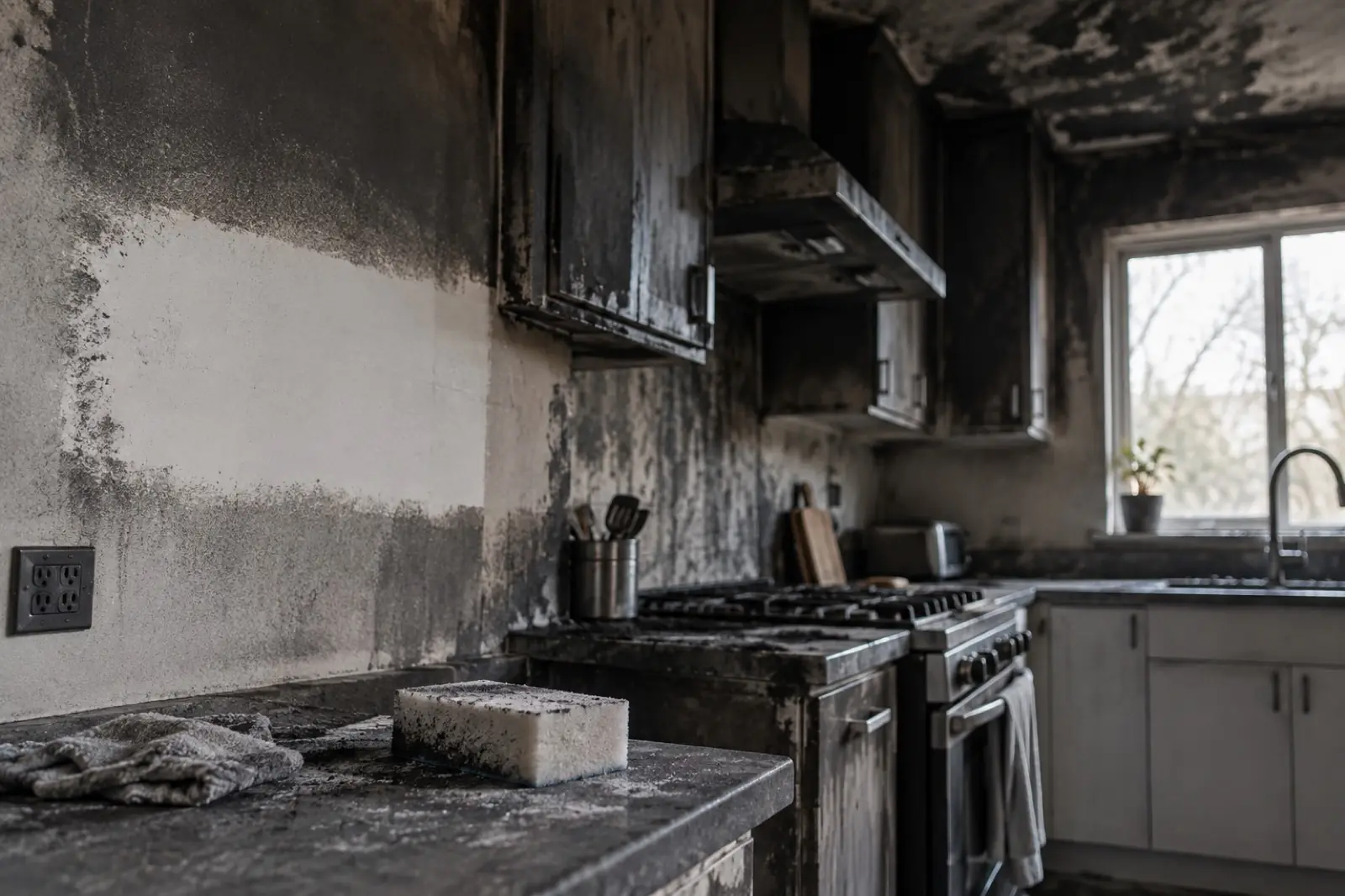
A fire leaves five problems behind, and only one of them is the burned room. Everyone agrees the charred kitchen needs rebuilding. The rest of the job is residue on every surface the smoke reached, odour held inside porous material and cavities, and the contents of every affected room, each needing its own clean, replace or dispose decision. The fifth arrives with the fire service: the water used to put it out.
Smoke goes where air goes. Heat drives it up stairwells and service risers, so the floor above a fire is often worse than the floor beside it. It moves through wall cavities from one outlet or light fitting to another, and a running heating or air conditioning system pulls it into the return and delivers it to every supplied room. That is why the argument on a fire file is almost never about the burned part. As our smoke damage insurance claim guide puts it, the dispute is about where the damage stops.
The professional reference is the IICRC’s S700, listed on the institute’s S700 page as the Standard for Professional Fire and Smoke Damage Restoration, First Edition, 2025. The IICRC describes it as covering “the principles, processes, and procedures for assessing the presence, intensity of impact and boundaries of fire residues and odors affecting a building, building systems” and contents. Its scope has one exclusion that matters most in the western states leading the federal fire record below: it applies to fires within or near a building, “other than wildfires”. Our standards hub explains what a standard can and cannot require.
Soot types, and why the residue decides the method
Smoke is what incomplete combustion leaves behind, and what it leaves depends on what burned, how hot, and with how much oxygen. Those three variables produce four residues with completely different physical behaviour, so the first job on site is identification, not cleaning. A technician runs chemical sponge test patches in several rooms and records which residue is where, and everything after that, including the price, follows from the answer.
| Residue | Fire that makes it | How it behaves | Method that suits it |
|---|---|---|---|
| Dry smoke | Fast, hot, well-ventilated fire burning paper and wood | Fine, powdery, sits loose | Dry sponge and HEPA vacuum first |
| Wet smoke | Slow, smouldering fire, often plastics and foam | Sticky, smeary, bonds to surfaces | Solvent cleaners, high replacement rate on porous material |
| Protein residue | Kitchen fire where food or fat burns | Thin, greasy, nearly invisible, severe odour | Degreasing on every surface, including ceilings |
| Fuel oil soot | Oil furnace puff-back | Oily, pushed through the whole duct network | Degreasers, with the HVAC system always in scope |
How bad a residue looks is a weak guide to what it costs to remove. Protein residue is the clearest case: a pan fire may barely mark a wall and still make the whole building the scope, because the film coats every surface and carries one of the most persistent odours in the trade. Our guide to smoke damage repair methods and cost walks through each residue and the six cleaning methods that match them.
Dry methods first, always
This single rule separates a competent smoke repair from an expensive failure. Loose dry soot can be lifted off and captured. The same soot wetted becomes a slurry that moves into paint film, grout and timber grain and dries there as a stain, which turns a cleaning line into a refinish or a replacement. Occupants trying to help before the contractor arrives are the usual cause. Do not wipe anything with a wet cloth, do not run the heating or air conditioning, and photograph every room before anything is touched.
Structural cleaning against replacement
Some material is removed rather than cleaned, and the reason is verification rather than preference: residue that has moved into the body of a material cannot be confirmed gone. Insulation, carpet underlay and heavily charred timber almost always come out. Glass, metal, glazed tile and sealed surfaces almost always clean. Between them sits the semi-porous zone, painted plasterboard, unfinished timber, hardwood floors and cabinet interiors, where substrate, residue type, labour against replacement cost and verifiability decide each item, and where most scope negotiation happens.
According to the published contractor and aggregator price guides compiled in our smoke damage repair guide, cleaning runs roughly $3 to $8 per square foot, with dry smoke at the bottom of that band and wet smoke at the top. According to the same compiled guides, a whole-house kitchen protein loss runs $3,500 to $9,000 for cleaning alone. Reconstruction of removed material is a separate trade at separate rates, and on losses with heavy demolition it commonly exceeds the cleaning figure.
The fire damage restoration sequence
A fire job runs in stages with dependencies that cannot be reordered without redoing work. The commonest scheduling error is booking the decorator before the odour has been signed off.
| Stage | Why it cannot move later |
|---|---|
| 1. Assessment and documentation | Once cleaning starts, the evidence of what was there is gone. |
| 2. Containment and safety | Without it, cleaning one area contaminates another. |
| 3. Demolition and removal | Cleaning around material that is coming out is wasted labour. |
| 4. Structural cleaning | Dry then wet, top down, matched to residue, before any air treatment. |
| 5. HVAC cleaning | Before air treatment, or the system recontaminates cleaned rooms. |
| 6. Odour treatment | Only meaningful once the source has been removed. |
| 7. Reconstruction | Closing a cavity before odour is resolved means opening it again. |
The HVAC question comes first
The first question on any smoke loss is whether the heating or air conditioning ran during the fire or in the days afterwards. If it did, the duct network holds residue and every room it supplies is part of the loss, however far from the fire. The IICRC publishes a separate standard for this assessment, listed on its S590 page as the Standard for Assessing HVAC Systems Following a Water, Fire, or Mold Damage Event. Filter replacement is not duct cleaning, and ducts are cleaned before any air treatment, not after.
Water from firefighting
Suppression puts a large volume of water into a building, and it soaks the floors below the fire as well as the fire room. That water is its own scope, with its own drying, and the longer it stands the more of it becomes a removal job rather than a drying job. Our guide to IICRC water categories explains how standing water degrades over time, and our water damage hub covers the drying side. On a renter’s claim, firefighting water damage to belongings is normally treated as part of the fire loss, as our renters fire cover guide sets out.
Smoke odour: remove, clean, treat, then seal
You cannot deodorise what you have not cleaned. A smell is molecules arriving from a source, and after a fire the source is residue on surfaces, in porous material and in cavities. Treating the air removes what is airborne at that moment and does nothing about the supply, which is why odour failures share a timing: the job is signed off in a cool ventilated building, and the smell is back in the first warm week.
Our guide to getting smoke smell out of a house sets the professional order out in four stages. Remove the source material that absorbed residue through its depth. Clean every surface, including cavities and the duct network. Treat the remaining absorbed odour with a hydroxyl or ozone generator. Then seal only what still off-gasses, on a substrate that has already been cleaned. Sealing first is the most expensive shortcut on a fire job, because the sealer has to come off again before the cleaning can happen.
| Hydroxyl generator | Ozone generator | |
|---|---|---|
| Occupied space | Can generally run with people present | No, the area must be vacated |
| Clearance afterwards | Not normally required | Ventilate and wait before re-entry |
| Speed | Slower, runs over days | Faster on a sealed space |
| Material effects | Gentler on most materials | Degrades rubber and some plastics |
Ozone is hazardous to breathe, which is why treatment happens with people, pets and plants out and a clearance period afterwards. For general indoor air material the federal source is EPA indoor air quality guidance. Light odour is a genuine do-it-yourself job: ventilate, replace the HVAC filters, wash every washable textile more than once, and clean hard surfaces dry-first. Bowls of vinegar or coffee grounds add a competing smell or absorb a trace near the bowl; neither touches the source. Check the result with the building closed and warm, walking in from outside, because cold suppresses release and produces a false pass.
Contents, pack-out and the inventory
Contents are routinely treated as the small half of a fire file, and on smoke losses they often are not. A wall is one surface with one method. A kitchen is several hundred objects across a dozen materials, each needing a clean, replace or dispose decision and a record of it. Hard goods such as glassware, metal and ceramics go through ultrasonic cleaning. Washable textiles usually recover with specialist laundering. Foam-cored furniture, mattresses, books and paper often do not, and food and opened consumables are discarded.
Pack-out means removing contents for off-site cleaning and storage, and it carries five cost centres: the item-by-item inventory, packing labour and materials, off-site cleaning, storage for the rebuild, and the return. Our smoke claim guide explains why the photographed, room-by-room inventory is the document you rely on if something goes missing or is written off, and why you should keep your own copy.
No public dataset separates fire contents from fire structure, so the nearest public measure comes from flood. Across 230,560 NFIP claims since 2015, median contents damage was 28% of building damage, according to FEMA NFIP data analysed in our contents restoration report. That is a flood ratio, not a fire one, and fire contents carry odour work that a flooded sofa does not, but it is the best public evidence that contents are a cost centre in their own right.
Building an inventory before a loss is worth far more than reconstructing one afterwards from memory. After a total loss there is nothing left to photograph, which is why our renters guide recommends photographing every room now.
Insurance pointers for a fire or smoke claim
This section describes how standard US policy forms are commonly structured. It is not advice on any policy: your wording governs, and complaints against a carrier go to the insurance department of the state where the policy was issued.
- Fire and smoke are named perils. On standard homeowners and renters forms, fire is among the most consistently covered causes of loss, and smoke from a hostile fire elsewhere in the building is generally treated as covered damage, even with nothing charred.
- Owners and tenants hold different halves. On a rental, the landlord’s policy covers the structure and the tenant’s covers belongings, loss of use and liability. Our guide to whether renters insurance covers fire damage has a scenario table of whose policy responds to what.
- Loss of use is a separate section. Additional living expense pays the above-normal cost of living elsewhere while the home is unfit. It runs alongside storage for packed-out contents, so a rebuild delay draws on both.
- Document before anything is cleaned. Photograph every room, including the ones that look clean, get the residue type named in writing, record whether the HVAC ran, and do not throw anything away before it is photographed. A disposed item with no record is a disputed item.
- Know the four recurring disputes. Which rooms are affected, cleanable against replace, whether odour treatment is part of the loss, and whether duct cleaning is in scope. Our smoke damage insurance claim guide sets out the evidence that settles each one.
The estimate itself is usually built in Xactimate, and our estimating hub explains line items and the overhead and profit argument. For fire incidence and prevention, the federal reference is the US Fire Administration.
Wildfire and the federal record
Most federal fire declarations are not disasters in the sense people assume. FEMA’s Fire Management Assistance Grant programme helps fund the cost of fighting a fire that threatens to become a major disaster, and it is designed to be issued while the fire is still burning. Of the 634 fire declarations FEMA made from 2015 to 2026, 594 were these grants and 32 were major disasters, according to OpenFEMA records (94% grants).
The two programmes run on different clocks. Fire Management Assistance grants had a median of 1 day from incident start to declaration across 593 declarations, while the 32 fires that became major disasters had a median of 47.5 days, per the FEMA data in our disaster declaration lag report. Reading the one-day figure as fast help for fire victims would be wrong: it measures how a firefighting cost programme is built.
The money follows the same split. Fire Management Assistance declarations carried $2.73 billion of Public Assistance and no household aid, while fire major disasters carried $11.75 billion of Public Assistance and $0.60 billion of household aid, according to FEMA summaries analysed in our FEMA spending by state report. One declaration distorts the fire line: DR-1391, the September 11 attacks, which FEMA records as a fire incident, holds $5.00 billion, or 29.8% of all fire dollars in the FEMA file. Wildfire spending is smaller than the fire total suggests.
| Declaration type | Declarations | Public Assistance | Household aid (IHP) | Mitigation (HMGP) |
|---|---|---|---|---|
| Fire Management Assistance (FM) | 1,082 | $2.73 billion | $0 | $0.14 billion |
| Major disaster (DR) | 57 | $11.75 billion | $0.60 billion | $1.15 billion |
| Emergency (EM) | 8 | $0.40 billion | $0 | $0 |
| Disaster | State | Year | Public Assistance | Household aid |
|---|---|---|---|---|
| DR-4407 Wildfires | California | 2018 | $1,893 million | $91 million |
| DR-4724 Wildfires and High Winds | Hawaii | 2023 | $754 million | $89 million |
| DR-4562 Wildfires and Straight-line Winds | Oregon | 2020 | $573 million | $39 million |
| DR-4344 Wildfires | California | 2017 | $486 million | $18 million |
| DR-4558 Wildfires | California | 2020 | $468 million | $23 million |
For restoration, wildfire produces a distinctive caseload. Far more homes are smoke-affected than burned, so the typical job is residue, odour and contents in a standing structure. The IICRC’s S700, by its own scope statement, does not comprehensively address wildfire, so on a wildfire smoke job the written work plan, not the standard, has to supply the definition of finished.
Every fire and smoke guide
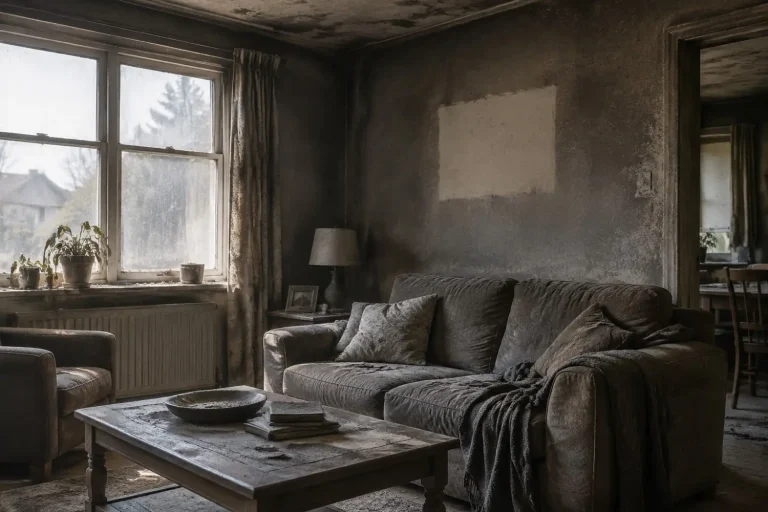 Smoke Damage Repair: Methods, Cost and What Cannot Be CleanedThe four residues, the cleaning sequence, what cannot be cleaned and what it costs.
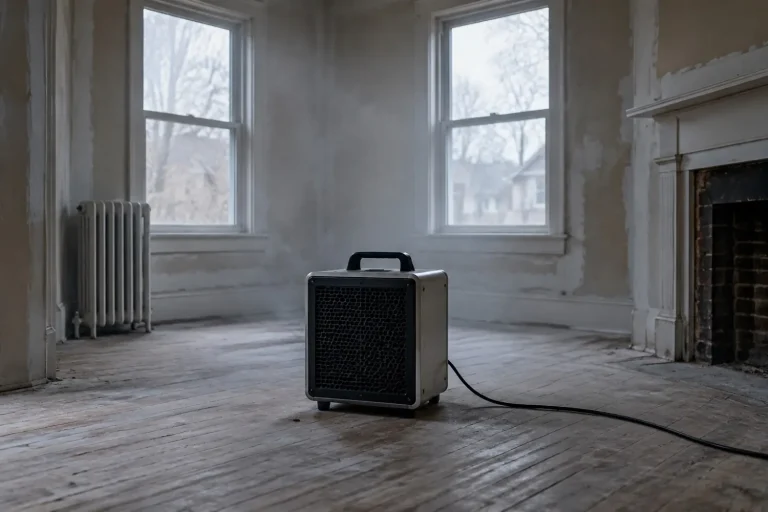 How to Get Smoke Smell Out of a HouseRemove, clean, treat, seal: the odour sequence and what DIY can do.
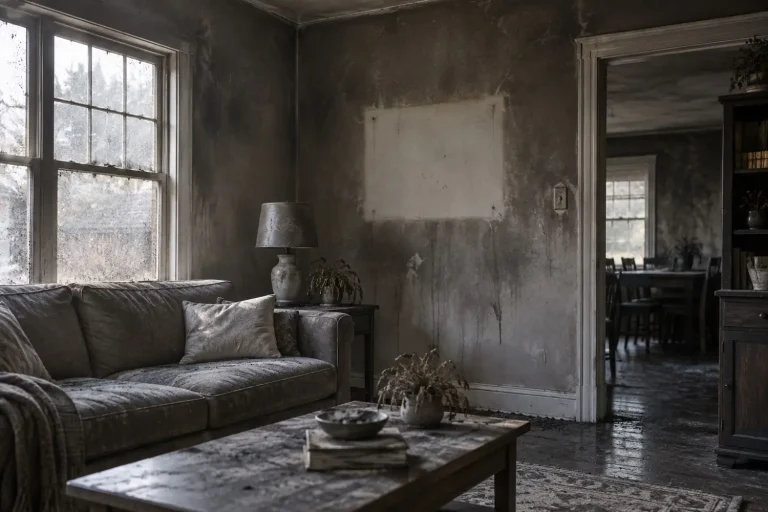 Smoke Damage Insurance Claims: Scope, Contents and OdourScope boundaries, contents pack-out and the four recurring disputes.
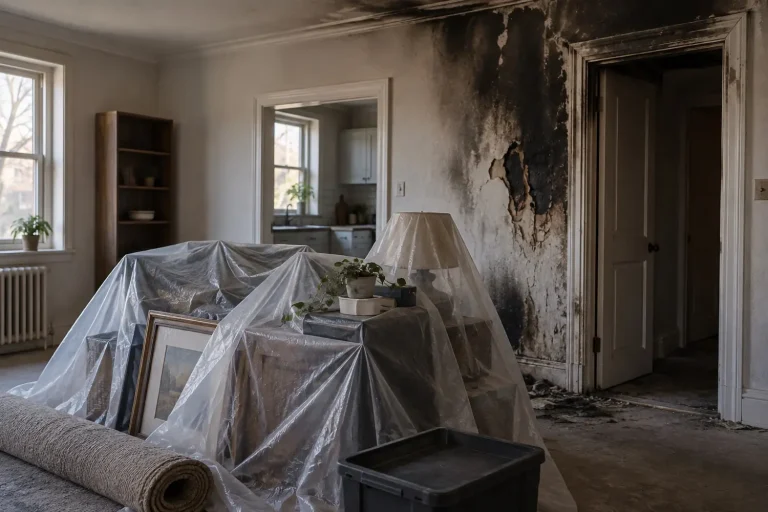 Does Renters Insurance Cover Fire Damage? What It Pays ForBelongings against the building, loss of use, liability and wildfire.
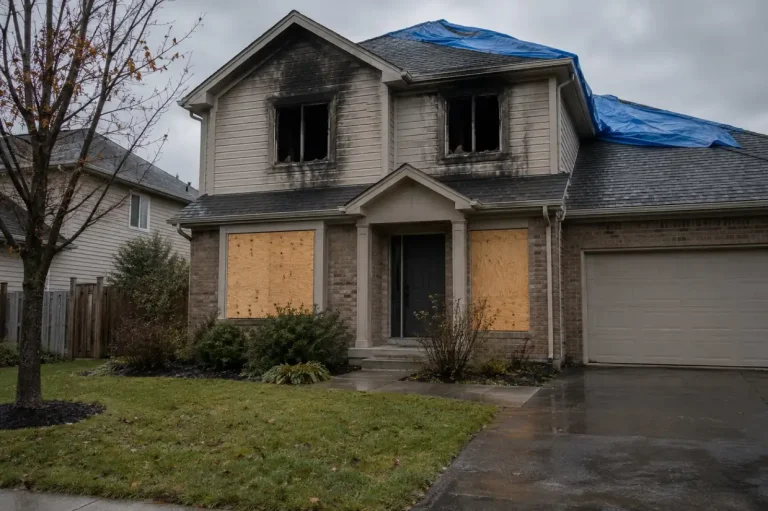 What to Do After a House Fire: Hour, Day, Week, MonthThe first hour, day, week and month, in the order it matters.
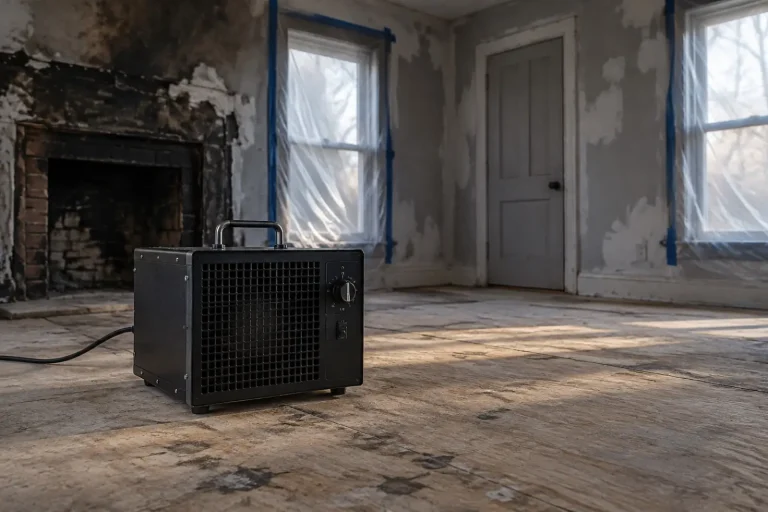 Ozone Generator: EPA, OSHA and CARB Rules for RestorationHow restorers use ozone, and the EPA, OSHA and CARB rules around it.
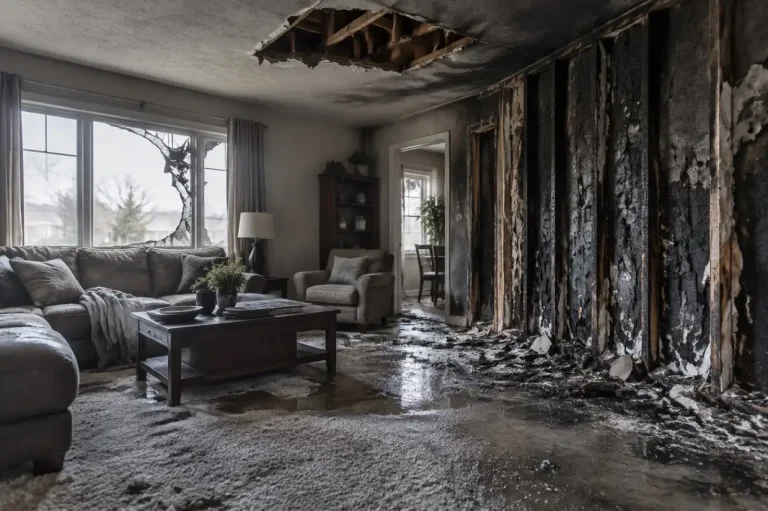 Fire Damage: What Flame, Heat, Smoke and Water Each DoWhat flame, heat, smoke and suppression water each do to a house.
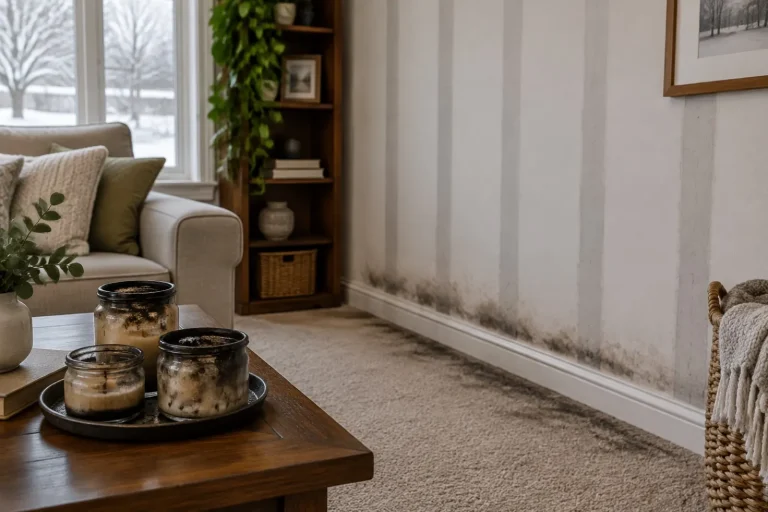 Candle Soot: Ghosting Lines, Cleaning Order and CoverageGhosting lines, the dry-first cleaning order and coverage disputes.
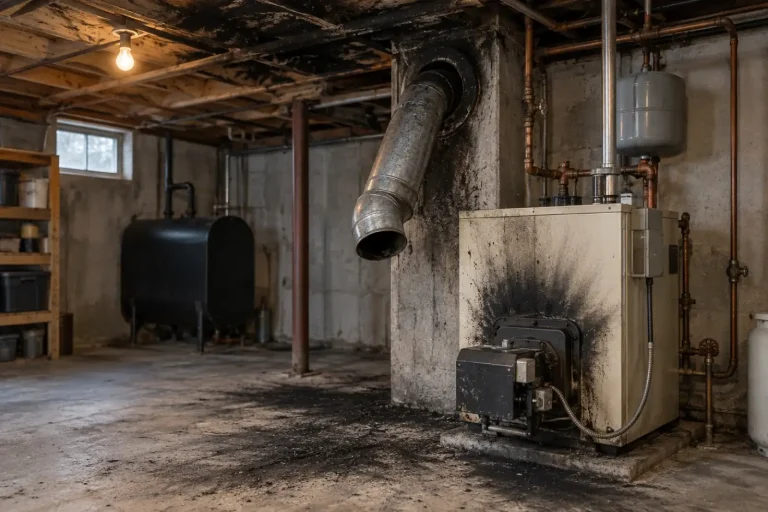 Puffback: Oil Burner Soot, Cleanup Order and HO-3 CoverageOil burner soot, the cleanup order and the HO-3 smoke peril wording.
 Skunk Smell in House: Gas Check, Chemistry and What Removes ItThiols, the neutraliser chemistry and where the smell hides.
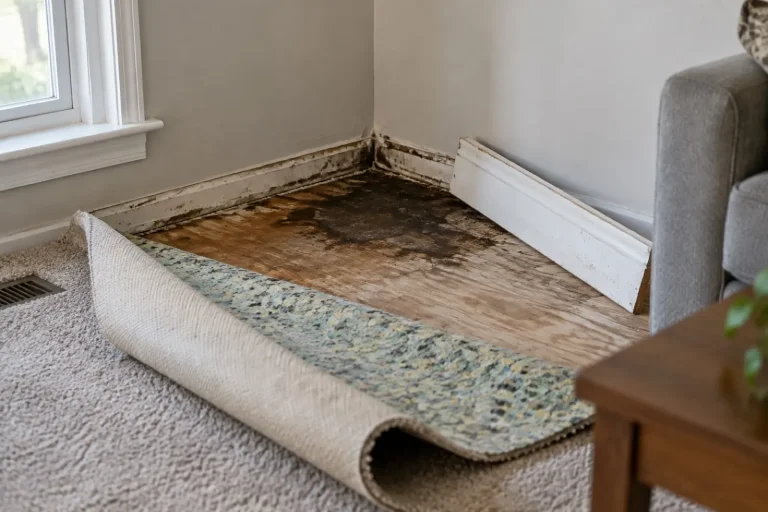 How to Get Rid of Cat Urine Smell: Chemistry, Depth, SealingEnzymes, UV tracing, subfloor sealing and when carpet goes.
 How to Get Smoke Smell Out of Clothes: Method by Fabric and LabelMethod by fabric and care label after a fire.
 Wildfire Smoke Damage: Tests, Cleanup and California’s 2026 LawTests, cleanup and California's 2026 law changes.
 How to Clean Up Fire Extinguisher Powder, by Agent and pHCleanup by agent type, and why ABC powder corrodes.
 Will Asbestos Burn? No, but a 600 °C House Fire Breaks It LooseHouse fire heat against asbestos mineral changes.
 Smoke Damage From Neighbor Fire: Whose Policy Pays First, 5 CasesWhose policy responds first, scenario by scenario.
 Grease Fire Cleanup: The 6 Step Order and 13 Surfaces, SourcedThe surface-by-surface order after a kitchen fire.
 Nicotine Stains on Walls: Wash, Rinse, Then Prime (Not TSP Last)Washing the film off and sealing it for good.
 Burnt Smell in House: 6 Sources and the One That Means Get OutA smell-by-source table and the first action for each.
 Smoke Smell in Car: 7 Places Residue Hides and the Order to CleanWhere smoke residue hides in a car, zone by zone.
 How Long Does Smoke Smell Last? 10 Hours to 6+ MonthsPersistence by smoke source, and what ends it.
 How to Get Rid of Mothball Smell: Why It Clings, What Clears ItWhy mothball chemicals linger, and how to remove them.
 Water Damage After Fire: 1,800 Gallons in 10 Minutes, Dry in 48 HoursHow much water firefighting leaves, and drying it.
 Fish Smell in House: Check the Outlets Before the KitchenWhy a fishy smell can mean overheating wiring.
 Gasoline Smell in House: First Steps, 8 Sources, Who to CallThe source table and the first action for each.
 Dog Smell in House: Where It Hides, Room by Room, and the FixWhere dog odor actually lives, room by room.
 New Carpet Smell: Why 4-PCH Still Lingered on Day 52What the smell is and how fast it fades.
 How to Get Rid of Paint Smell: What 336 Hours of Chamber Data ShowWhy paint smells and how ventilation clears it.
Related hubs
Questions people actually ask
What does fire damage restoration include?
Assessment and documentation, removal of what cannot be cleaned, structural cleaning matched to the residue type, HVAC cleaning if the system ran, odour treatment, contents pack-out and cleaning, drying of firefighting water, and reconstruction. Reconstruction is usually priced as a separate scope.
Can smoke damage be cleaned, or does everything have to be replaced?
Most hard, sealed and non-porous surfaces clean successfully. Porous material that absorbed residue, such as insulation and carpet underlay, is replaced because cleaning inside it cannot be verified. Semi-porous material is judged item by item.
What is the difference between wet smoke and dry smoke?
Dry smoke comes from a fast hot fire, is powdery and cleans most easily. Wet smoke comes from a slow smouldering fire, often burning plastics, bonds to surfaces and is the most expensive residue to clean.
How long does fire damage restoration take?
A single room with light dry residue can take days. A whole-building protein loss or a puff-back with ducts in scope commonly runs two to four weeks of cleaning and odour work before reconstruction starts, as our smoke damage repair guide sets out.
Why does the smoke smell come back?
Because residue was left somewhere, in cavities, insulation or the duct network, and it releases faster as temperature and humidity rise. Odour sign-off should happen with the building closed and warm.
Is ozone safe to use while living in the house?
No. Ozone treatment requires the area vacated, including pets and plants, with ventilation and a clearance period before re-entry. Hydroxyl generators can generally run in occupied space.
Does insurance cover smoke damage if the fire was next door?
Smoke from a fire elsewhere in a building is generally treated as damage from a covered peril under standard property forms, but your policy wording decides. Document the clean-looking rooms too, and take coverage questions to your agent or your state insurance department.
Sources
- IICRC, S700 Standard for Professional Fire and Smoke Damage Restoration. Quoted for its scope statement and edition. Retrieved 7 October 2026.
- IICRC, S590 Standard for Assessing HVAC Systems Following a Water, Fire, or Mold Damage Event. Retrieved 7 October 2026.
- FEMA, Fire Management Assistance Grant Program. Retrieved 23 September 2026.
- FEMA OpenFEMA, Disaster Declarations Summaries v2. Declarations from 1 January 2015, retrieved 23 September 2026.
- FEMA OpenFEMA, FemaWebDisasterSummaries v1. Retrieved 5 October 2026.
- US Fire Administration. Federal source for fire incidence and prevention. Retrieved 23 September 2026.
- EPA, Indoor air quality. Retrieved 23 September 2026.
- Residue classifications, cleaning sequence, odour stages and contents practice summarise our fire articles, which describe generally taught fire restoration practice. Cost bands are compiled from published contractor and aggregator price guides current in 2026 and are indicative, not survey results.
This product uses the Federal Emergency Management Agency’s OpenFEMA API, but is not endorsed by FEMA. The Federal Government or FEMA cannot vouch for the data or analyses derived from these data after the data have been retrieved from the Agency’s website(s).
How this page is maintained. This hub is reviewed whenever an article in its section is added or corrected, and its charts are rebuilt from the same data files as the research reports they link to, so a figure here never drifts from its source report. It was last reviewed on 7 October 2026. The standing rules for every figure are on our methodology page, and errors are logged on our corrections page.