The short answer
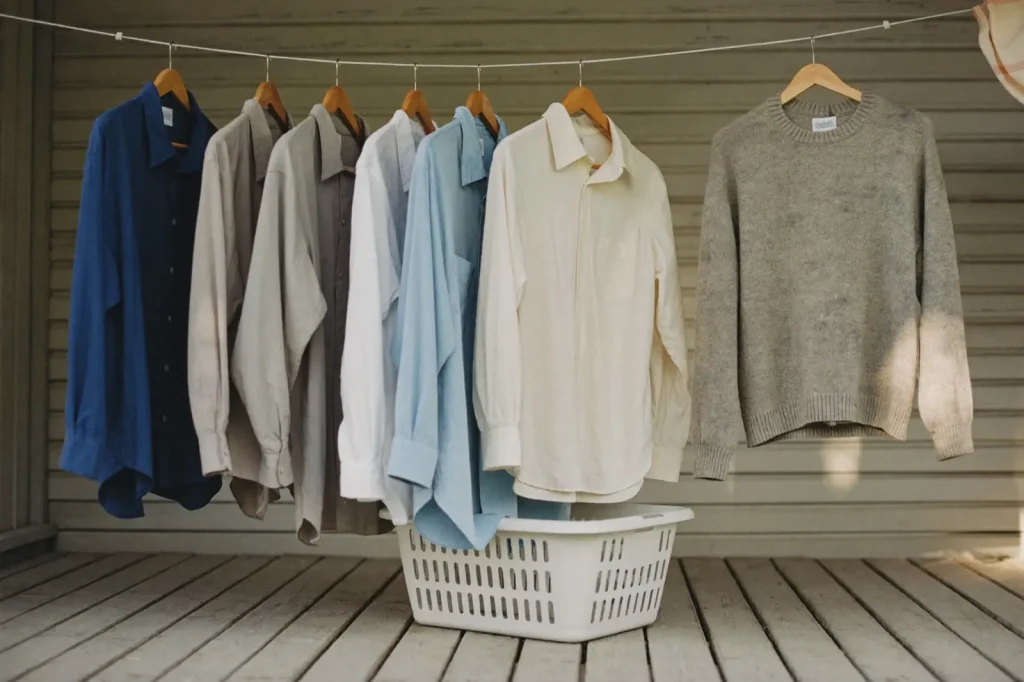
How to get smoke smell out of clothes depends on the care label. Shake or vacuum off soot outdoors, soak washable items overnight in detergent, then wash at the hottest temperature the label allows, adding chlorine bleach only where it permits. On a U.S. label, Hot means 112 to 145 °F. Take dry clean only, wool, silk and leather to a professional cleaner, and tell them it is smoke.
Key takeaways
- LA County Public Health (fact sheet dated 1 January 2025) says smoke odors stay in fabric until all the unburned chemicals are removed, and its laundry method is an overnight detergent soak, then a normal wash.
- A “Hot” wash on a U.S. care label means 112 to 145 °F under the FTC Care Labeling Rule, 16 CFR Part 423; “Warm” tops out at 111 °F.
- The U.S. Fire Administration's After the Fire guide (FA-46) formula, 4 to 6 tablespoons of TSP plus 1 cup of chlorine bleach per gallon of warm water, is only for clothing that can be bleached.
- EPA's page on ozone generators sold as air cleaners says ozone damages fabrics and is not effective at removing many odor-causing chemicals.
- After a fire you plan to claim, the California Department of Insurance claims guide says not to throw out damaged items until the adjuster tells you to.
Which clothes should you not wash yet after a house fire?
Anything you may claim. The California Department of Insurance Residential Property Claims Guide (updated 27 February 2025) tells policyholders not to throw out any damaged items until the adjuster has told them to, and to work through possessions room by room when listing them. Photograph closets and drawers before anything moves; a washed shirt still counts, but a discarded one is hard to prove.
Handle soot carefully. Los Angeles County Public Health smoke and soot fact sheet advises against touching items on the first walk through, because soot transfers from item to item, and recommends gloves and an N95 mask while cleaning. It also warns that fragranced products mask odors rather than remove them, so a spray of fabric freshener before an adjuster visit only hides what needs documenting.
Two groups should not go near a home washer at all. LA County says not to machine wash drapes or other materials that require dry cleaning, and the FTC glossary in 16 CFR Part 423, Appendix A defines “Leather clean” as cleaning only by a professional cleaner who uses special leather or suede care methods. Bag those separately for a dry cleaner or contents restorer. The wider first week after a fire, from utilities to temporary housing, is on our what to do after a house fire checklist.
What can each fabric and care label take?
Start from the label, not the fibre guess. Under the FTC Care Labeling Rule, 16 CFR Part 423, the care label must warn about any part of the normal washing or drycleaning procedure that would harm the garment, using words such as “Do not”, “No” or “Only”. That makes the label the legal upper limit for heat and bleach, and the table below works inside it.
| Fabric or care label | Wash setting ceiling | Oxidizer allowed | Next step if smell remains |
|---|---|---|---|
| White cotton and linen; label says “Bleach when needed” or is silent on bleach | Hot, 112 to 145 °F, if the label allows | Chlorine bleach, 10 minutes contact; or the USFA TSP formula | Overnight soak, then repeat washes |
| Colored cotton, polyester, nylon; label says “Only non-chlorine bleach, when needed” | The label’s setting (Warm is 87 to 111 °F) | Oxygen bleach soak, 1 to 6 hours, after a colorfastness test | No chlorine: the FTC term forbids it |
| Spandex and stretch blends (activewear, swimwear) | The label’s setting | No chlorine bleach (Clorox lists spandex to avoid) | Oxygen bleach only if the label permits bleach |
| Wool | Hand wash or dry clean, per label | No chlorine bleach (Clorox lists wool to avoid) | Dry cleaner or contents restorer; say it is smoke |
| Silk | Hand wash or dry clean, per label | No chlorine bleach (Clorox lists silk to avoid) | Dry cleaner or contents restorer |
| Anything labelled dry clean, plus drapes needing dry cleaning | Do not machine wash (LA County) | Not at home; the dryclean process allows tumble drying to 160 °F | Professional dry cleaner |
| Leather and suede | “Leather clean”: professional only (FTC) | None at home (Clorox lists leather to avoid) | Leather specialist |
| Scorched, melted or soot-caked items | Do not clean yet | None | Photograph, bag and hold for the adjuster (California Department of Insurance) |
The bleach column carries the most risk. Clorox's bleach product page tells users to avoid wool, silk, spandex and leather, and the FTC term “Only non-chlorine bleach, when needed” means chlorine bleach may not be used. OxiClean's product page prints a soak of 1 to 6 hours, says it works best in warm to hot water but never boiling, and tells users to test for colorfastness in an inconspicuous area first.
Household textiles follow the same logic. LA County’s 1 January 2025 fact sheet groups clothes and bedding under one instruction: soak overnight with detergent, wash normally, and add laundry bleach during the wash for items that can be bleached.
What order should you try the washing methods in?
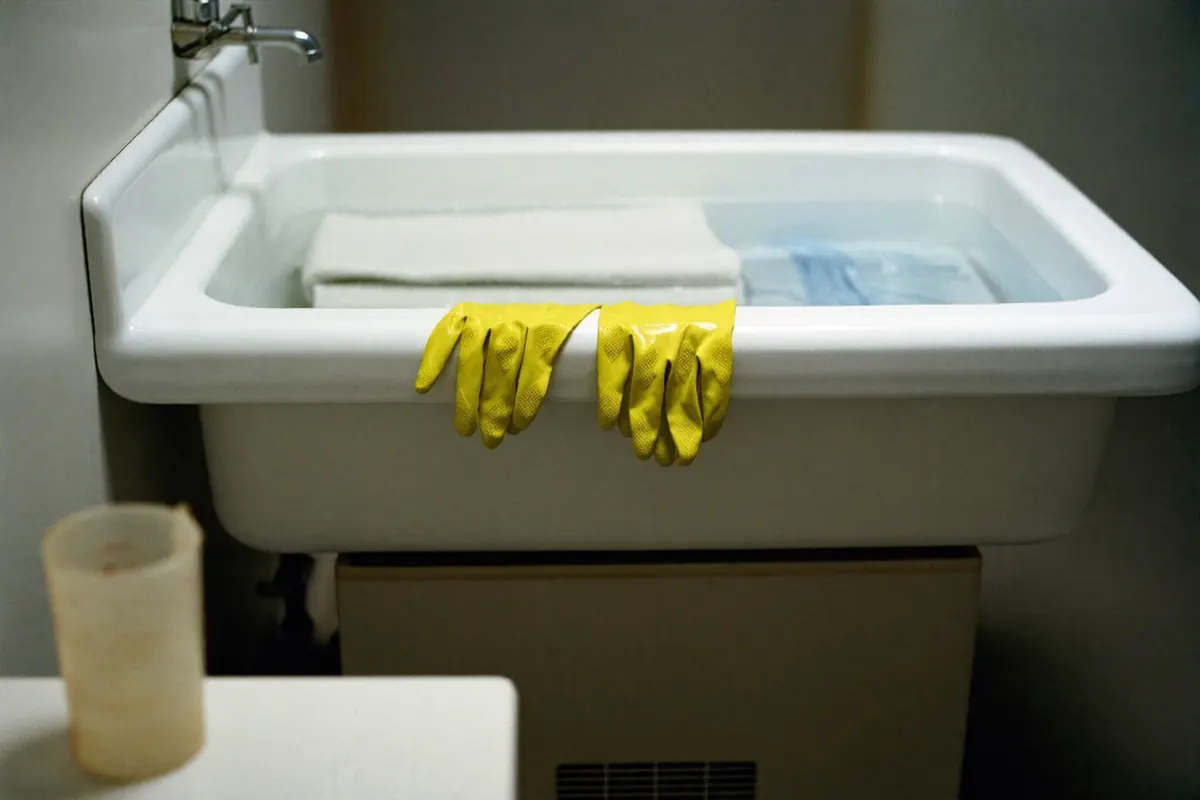
Mildest first, and stop when the smell is gone. Every step up adds heat or chemistry, and each one is a chance to set a stain or fade a dye, so the ladder only climbs for items that still smell after the step below. LA County Public Health says many of the unburned chemicals that carry the odor are invisible, so a garment can look clean and still smell.
Step 1 matters more than it looks. LA County Public Health describes soot as oily and says not to use upright vacuums or any attachment with brushes or beater bars on sooty fabric, because that forces soot into other possessions; hold the nozzle slightly above the surface instead. The same logic applies to the washer: soot shaken off outdoors is soot that cannot spread through a load.
Step 5 is the oldest published fire laundry formula. The U.S. Fire Administration's After the Fire guide (FA-46) (1998 edition, read from a 2008 archived copy) says smoke odor and soot can sometimes be washed from clothing with the TSP, bleach and warm water mix, followed by a clear rinse and thorough drying. It tells readers to test garments first, follow the manufacturer’s instructions, wear rubber gloves, and store TSP out of reach of children and pets because it is caustic.
How hot is a “hot” wash on your care label?
The words on a U.S. label are defined in 16 CFR Part 423, Appendix A. “Hot” means an initial water temperature of 112 to 145 °F (45 to 63 °C), “Warm” is 87 to 111 °F, and “Cold” is up to 86 °F. A machine wash label with no temperature allows hot water up to 145 °F.
Two practical points follow. The Hot band is wide, from 112 to 145 °F, so the word on a washer dial says less than the number, and the LA County method leans on an overnight soak rather than temperature alone. And the 160 °F tumble in the FTC definition of drycleaning is a professional process, not a setting to copy on a home dryer for a garment labelled dry clean.
Does ozone or a dry cleaner get smoke out of clothes?
The agencies point to professional cleaning, and EPA argues against ozone. USFA FA-46 says professional fire and water damage restoration businesses may be the best source of cleaning and restoring belongings, while EPA's page on ozone generators sold as air cleaners states that ozone is not effective at removing many odor-causing chemicals and that it can damage materials such as rubber, electrical wire coatings and fabrics, as well as artwork with susceptible dyes and pigments. Elastic often contains rubber, and dyed fabric is the item you are trying to save.
EPA also lists the exposure limits on that page: FDA caps indoor medical devices at 0.05 ppm of ozone and OSHA’s 8 hour worker average is 0.1 ppm. How restorers use ozone in empty buildings, and the re-entry questions it raises, are on our ozone generator page.
Professional cleaning has a standard behind it now. ANSI/IICRC S700, the Standard for Professional Fire and Smoke Damage Restoration, First Edition 2025, covers the restoration cleaning and fire odor management of buildings and contents. When you hand over a bag of smoke-damaged clothes, ask the cleaner three things: whether they process fire damaged textiles or only routine dry cleaning, whether they deodorize before cleaning, and whether they itemize each piece for an insurance claim. What contents work costs is laid out in our contents restoration report.
When are smoke damaged clothes an insurance claim rather than laundry?
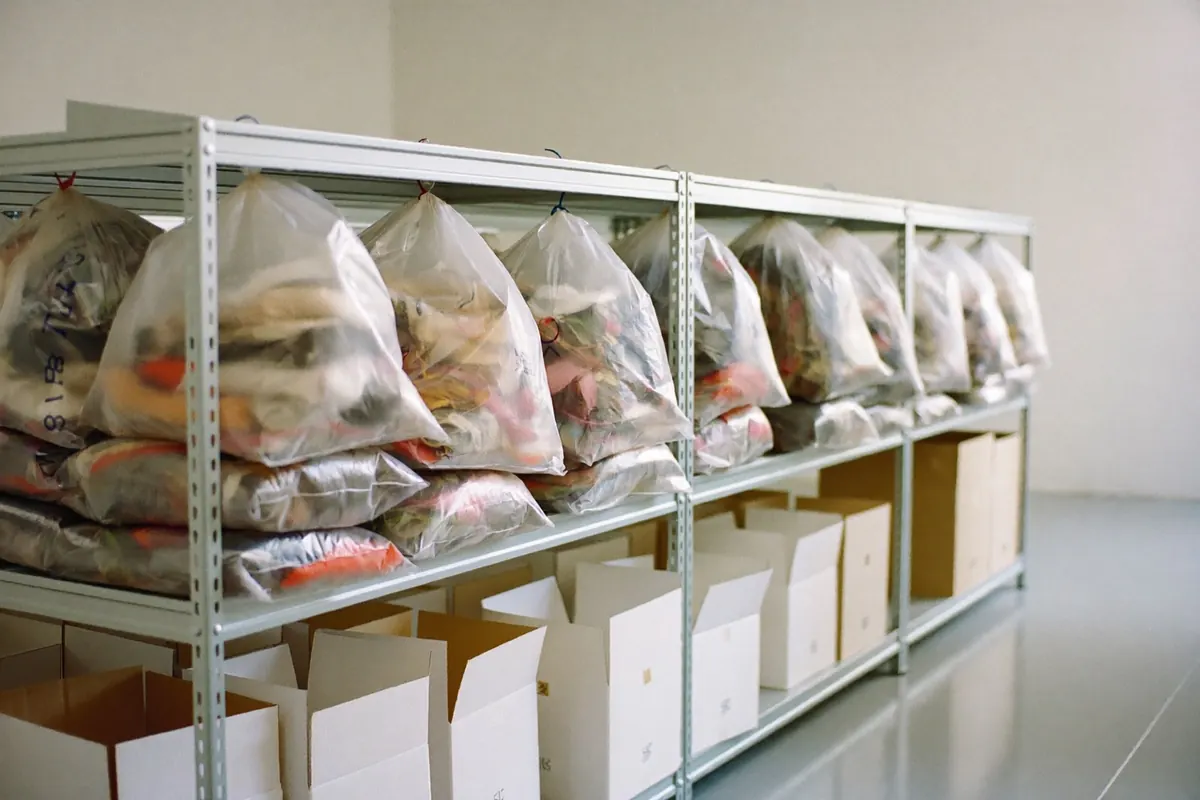
When the smoke came from a fire your policy may cover and you want the insurer to pay for cleaning or replacement. The California Department of Insurance claims guide explains the two ways personal belongings are paid: a replacement cost policy normally pays the full replacement cost after you replace the item, while an actual cash value policy pays a depreciated amount, and insurers generally allow several months from the cash value payment to replace. Which one applies is printed in your own policy’s personal property section, not in any guide.
The same guide says to keep receipts if the home is unsafe to live in, because emergency clothing can fall under the loss-of-use part of a policy. Before a contents company packs out a closet, ask the adjuster three things in writing: whether the insurer will pay for cleaning or for replacement of each category, who chooses the cleaner, and whether you must keep items that fail cleaning until they have been inspected. The claim steps themselves are on our smoke damage insurance claim page, and your insurance agent or your state insurance department can answer what your policy wording means.
Clothes are the easy part of a smoke loss. The odor in walls, ducts and soft furnishings is handled on our how to get smoke smell out of house page, and smoke that drifted in from a wildfire rather than an interior fire is covered on our wildfire smoke damage page. Both sit in the fire and smoke hub.
Questions people actually ask
Does vinegar or baking soda get smoke smell out of clothes?
Neither of the two agency fire sheets read for this page lists them for clothing. USFA FA-46 suggests baking soda, or one cup of vinegar per gallon of water, only for deodorizing a refrigerator or freezer. LA County’s January 2025 clothing method is an overnight detergent soak and a normal wash, with laundry bleach for bleachable items. Vinegar is not on either list for fabric.
How many washes does it take to get smoke out of clothes?
No agency publishes a count. LA County’s 2025 fact sheet says smoke odors can remain in fabric for a very long time until all the unburned chemicals are removed, and USFA FA-46 says odor and soot can only sometimes be washed out. Wash, smell the item once it is dry, and move one step up the ladder only if the odor is still there.
Should smoke damaged clothes be washed with other laundry?
Wash them as their own load. LA County warns that soot transfers from item to item on contact, and the FTC care label glossary uses “Separately” to mean washing an item alone. Keeping smoke damaged pieces out of everyday loads also stops oily soot redepositing on clean clothes and lets you track which items have reached which step.
How do you get cigarette or campfire smoke smell out of clothes?
Start at the bottom of the same ladder and stop when the smell is gone: air the item, then wash at the warmest setting the label allows, which under 16 CFR Part 423 means up to 145 °F for a Hot label and up to 111 °F for Warm. The agency sheets were written for fire damage, and chlorine bleach stays off wool, silk, spandex and leather per Clorox.
Is TSP safe to use on clothes?
Only on bleachable clothing and with care. USFA FA-46 describes trisodium phosphate as a caustic cleaning agent, sold under the generic name TSP, to be stored out of reach of children and pets and handled in rubber gloves. Its formula is 4 to 6 tablespoons of TSP with 1 cup of chlorine bleach in a gallon of warm water. Test a hidden seam first.
Sources
- Los Angeles County Public Health smoke and soot fact sheet, Los Angeles County Department of Public Health, Environmental Health Division, dated 1 January 2025. Retrieved 8 November 2026.
- U.S. Fire Administration's After the Fire guide (FA-46), U.S. Fire Administration, 1998 edition, read from the University of North Texas End of Term web archive capture of 21 September 2008. Retrieved 8 November 2026.
- FTC Care Labeling Rule, 16 CFR Part 423, including Appendix A, Glossary of Standard Terms, via eCFR. Retrieved 8 November 2026.
- Clorox's bleach product page, The Clorox Company. Retrieved 8 November 2026.
- OxiClean's product page, Church and Dwight. Retrieved 8 November 2026.
- EPA's page on ozone generators sold as air cleaners, United States Environmental Protection Agency, last updated 19 February 2026. Retrieved 8 November 2026.
- ANSI/IICRC S700, Standard for Professional Fire and Smoke Damage Restoration, First Edition 2025, IICRC scope page. Retrieved 8 November 2026.
- California Department of Insurance Residential Property Claims Guide, updated 27 February 2025. Retrieved 8 November 2026.
- The fabric table and the wash ladder arrange the published guidance above; no figure on this page was estimated or invented. Our methodology sets out the standing rules.
Follow each garment’s care label and each product’s label. Insurance terms vary by policy and state; this page describes regulator guidance, not what any policy pays.