The short answer
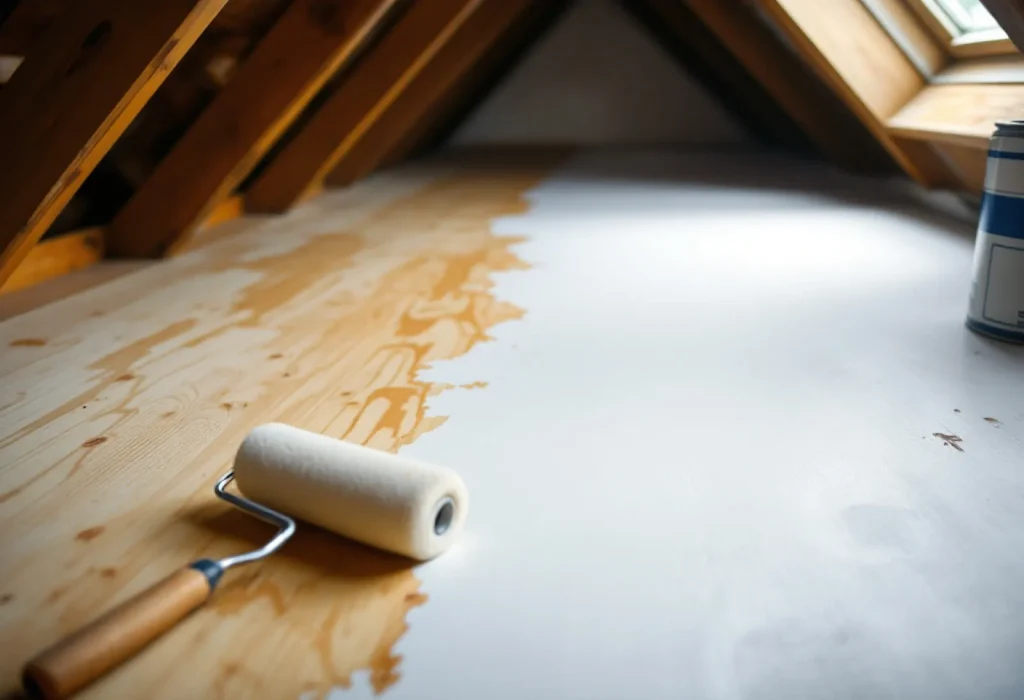
Mold encapsulation is a final coat, not a removal method: a sealant or EPA registered antimicrobial coating goes onto framing or sheathing only after visible growth is removed, the surface is cleaned and HEPA vacuumed, and the wood is dry. EPA says not to paint or caulk moldy surfaces, and one registered coating label requires surfaces free of mold before it is applied.
On this page
- What a coating can and cannot do
- Where the coat goes in the order of work
- How dry the wood must be
- Registered coating or treated paint
- Attics, crawl spaces, cavities and ducts
- What Texas rules require
- Why coated over mold draws complaints
- What to ask before the coating goes on
- Questions people actually ask
What can a mold encapsulant do, and what can it not do?
Guides online tend to treat encapsulation as either a cure or a scam. The primary documents are narrower than both. The EPA-accepted label for EPA Reg. No. 63836-2, accepted on 1 August 2007, lets that coating claim to kill residual mold and mildew remaining after pre-cleaning, and to protect the coated surface. It does not claim to treat growth that is still there, and its surface preparation line reads: apply only to surfaces free of all loose dirt, grease, mold or other contaminants.
| Job | Can a coating do it? | What the source says |
|---|---|---|
| Replace removal of visible growth | No | EPA: do not paint or caulk moldy surfaces; label: apply only to surfaces free of mold |
| Fix the leak or humidity that grew the mold | No | EPA Chapter 3 and 16 TAC 78.140(b): the moisture cause must be fixed |
| Save moldy drywall, ceiling tile or carpet | No | EPA: porous materials may have to be thrown away; Table 2 lists discard for wallboard |
| Restore rotted or structurally weak wood | No | EPA: consult a structural engineer; BSC: cut rotted wood out |
| Kill residual mold left after pre-cleaning | Only if the label says so | EPA accepted that claim for Reg. No. 63836-2 in 2007 |
| Protect the coated surface from new growth | Yes, surface only | Label: protects the surface of wood, drywall and OSB from fungal growth |
| Lock down loose fibres and residue | Yes | Label: locks down residual loose fibres and contaminants on duct liner |
| Hide stain left on cleaned wood | Yes | BSC: paint stained wood with latex if it bothers you; label: use a stain blocking primer |
| Stand in for a clearance check | No | 16 TAC 78.140(a): visual, procedural and analytical assessment by a licensed consultant |
Five of the nine rows are a no. EPA's home cleanup page puts it in two sentences: do not paint or caulk moldy surfaces, and paint applied over moldy surfaces is likely to peel. Coating is what happens to wood that has already been cleaned; for porous materials, Table 2 of the same EPA guide lists Method 3 (HEPA vacuum) and Method 4 (discard) for wallboard, never a coat.
Does encapsulant go on before or after clearance?
EPA’s EPA's mold remediation guide, Chapter 3 sets the first three steps. HEPA vacuums are for final cleanup after materials have been thoroughly dried and contaminated materials removed, and unsalvageable materials are double bagged in 6 mil polyethylene. Containment scales with area in Table 2 of the same EPA guide: limited between 10 and 100 square feet, full above 100.
Guidance splits on where the formal clearance test falls. The University of Florida EH&S mold remediation guidelines list sealing wood at item 8 and post remediation confirmation testing at item 12, and say that testing should happen before replacement components and finishes go in. That puts the coat ahead of the lab samples but after cleaning and a moisture check. Texas frames it from the other side: under 16 TAC 78.140 the consultant’s assessment must find the work area free from all visible mold and wood rot.
Both versions agree on one point the diagram makes: no coat goes on until someone has looked at bare, cleaned, dry wood and found no growth. Under the Texas rule, a passed clearance report must list temperature, humidity and material moisture readings, per 16 TAC 78.140(d)(3). Clearance testing itself, and what a pass looks like on paper, is covered on our mold clearance test page.
How dry must wood be before coating? Two reports say 12% and 15%
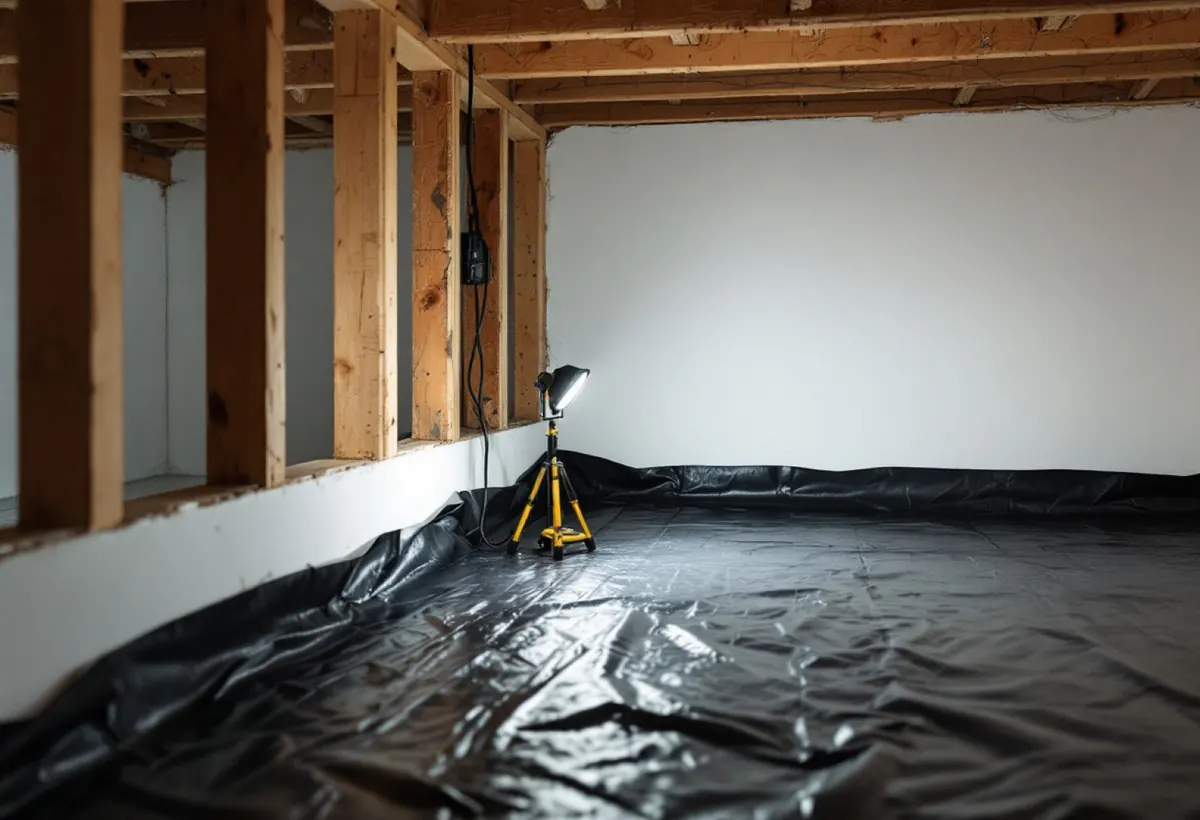
The tightest figure found for this page comes from the University of Florida EH&S mold remediation guidelines. According to that document, wood components should read below 12% moisture before an appropriate sealant goes on, and the sealant should not contain linseed oil. Per the same document, materials that are only water stained may be primed or painted below 20% MC or WME.
The Building Science Corporation report RR-0210, dated 15 January 2002, uses 15% by weight as the point at which wood is dry enough to close in, and says to clean before drying, since drying first can make mold airborne. The coating label adds a condition about the air: apply between 50 and 100 degrees F with less than 70% relative humidity maintained until dry, per the EPA-accepted label for EPA Reg. No. 63836-2.
EPA’s EPA's mold remediation guide, Chapter 3 explains why wet wood should not be sealed: moisture should not be trapped between two vapor barriers or mold may result. A film over damp framing is a second barrier on the wrong side of the water. The full sequence from containment to rebuild, step by step, is set out in our mold remediation process guide.
Is a mold encapsulant a pesticide? EPA Reg. No. versus treated article
Under federal law the answer turns on the claim. 40 CFR 152.25(a) exempts an article treated with a pesticide to protect the article itself, and its own example is paint treated to protect the paint coating. A product that claims to kill mold on the building surface needs its own registration. The 63836-2 coating lists barium metaborate at 6.39% and 3-iodo-2-propynyl butylcarbamate at 0.12% as active ingredients, according to its EPA accepted label.
| Product class | Registered with EPA? | What it may claim | Basis |
|---|---|---|---|
| Registered antimicrobial coating | Yes, an EPA Reg. No. on the label | Kill or inhibit claims on the coated surface, as the label states | EPA Reg. No. 63836-2 coating label |
| Mold resistant paint (treated article) | No; the preservative inside is registered | Protects the paint film itself | 40 CFR 152.25(a) |
| Ordinary primer or paint | No | Stain blocking only | EPA: likely to peel over mold |
The label also carries the line every registered product carries: it is a violation of federal law to use this product in a manner inconsistent with its labeling, per the EPA-accepted label for EPA Reg. No. 63836-2. That makes the coverage rate, the surface prep and the respirator line (a TC-21C dust and mist respirator or an organic vapor cartridge respirator when spraying) part of the legal use, not suggestions. Brand by brand label claims for primers and paints are compared on our mold killing paint page.
Where do remediators coat: attic sheathing, crawl space joists, wall cavities and ducts
The EPA-accepted label for EPA Reg. No. 63836-2 names its own sites: walls, ceilings, pipes, HVAC duct interiors and exteriors, wall cavities, crawl spaces, attics and basements. In wall cavities and unexposed surfaces it may go on without primer; on exposed surfaces where discoloration would be objectionable, the label says to prime with a stain blocking primer first.
| Surface | Minimum wet coverage, gallons per 100 sq ft |
|---|---|
| Wood, drywall, OSB | 0.33 |
| Galvanized metal | 0.75 |
| New duct liner | 1.0 |
| Old eroded duct liner | 1.5 |
By brush the label calls for two heavy coats applied at 90 degrees to each other; by airless spray, one coat from an electric pump of at least 2,800 psi with a 0.015 to 0.025 fluid tip, per the same label. Sheathing and rafter work, with the coverage maths by deck area, is on our attic mold removal page, and joist and sill work is on our crawl space mold remediation page.
Two other jobs share the word. Crawl space encapsulation is a vapor barrier and dehumidification system, not a coating, and its pricing is on our crawl space encapsulation cost page. Asbestos encapsulation is governed by EPA asbestos rules rather than FIFRA labels, and is covered on our asbestos encapsulation page.
What does Texas require before a remediator sprays an antimicrobial coating?
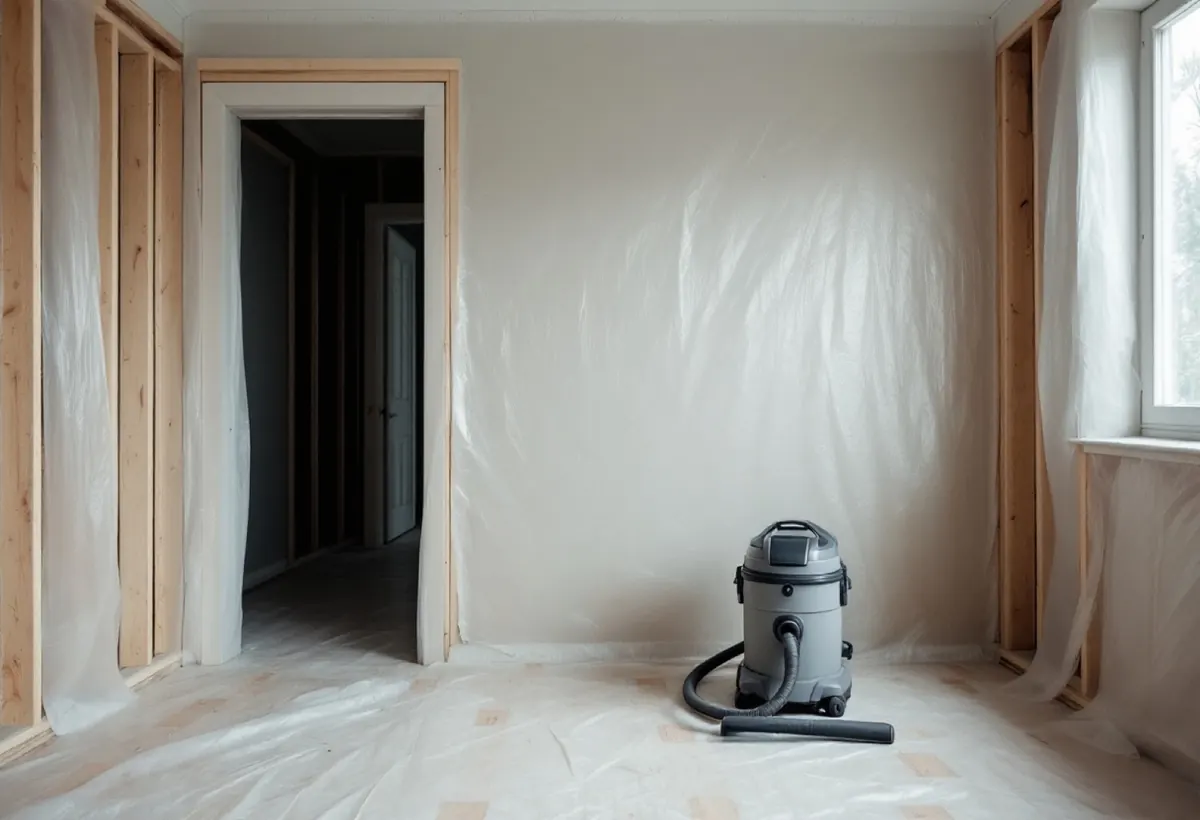
Texas is the clearest state rule text found for this page. 16 TAC 78.10(29) defines mold remediation to include preventive activities intended to prevent future mold contamination of a remediated area, including applying biocides or anti-microbial compounds. In Texas, coating a remediated joist is regulated remediation work, not painting.
16 TAC 78.120(h) then sets three conditions. A disinfectant, biocide or antimicrobial coating may be used only if its use is specified in a mold remediation protocol, it is registered by EPA for the intended use, and the use is consistent with the manufacturer’s labeling. If the protocol names no brand, the remediation contractor may pick one, and either party must take into account occupant sensitivities to chemicals off gassed from coated surfaces.
- Under 16 TAC 78.120(h)(3), a person who applies a biocide to wood to control a wood infesting organism must hold a Structural Pest Control license from the Texas Department of Agriculture unless exempt under Occupations Code Chapter 1951.
- Under 16 TAC 78.130(c), a coating in an HVAC system goes on only after the owner or manager has been given the safety data sheet, has agreed to the application, and has notified occupants in affected areas.
- Under 16 TAC 78.140, clearance requires the work area to be free from all visible mold and wood rot, and the consultant must, to the extent feasible, confirm the underlying cause has been remediated.
Per TDLR, Senate Bill 1255 was signed on 20 June 2025 and took effect on 1 September 2025; it removed mycotoxins from the statutory definition of mold, and the agency says all current rules stay in effect until new ones are adopted. The Chapter 78 sections quoted here were adopted effective 1 November 2017. The rest of our mold remediation coverage, by surface and room, sits in the mold hub.
Why does a white coat over moldy framing draw complaints?
A common complaint on renovation forums is opening a wall or crawl space and finding framing sprayed white with stains still showing through. The primary sources explain why that job is suspect. EPA's home cleanup page says paint over moldy surfaces is likely to peel, and the Reg. No. 63836-2 label requires a surface free of mold for adhesion, so a coat over growth fails its own label.
The second problem is evidence. Texas clearance under 16 TAC 78.140(a) is a visual, procedural and analytical check of the work area, and S520 practice, as quoted in a 2024 assessment filed by Cal State LA, defines Condition 3 as actual growth that is active or dormant, visible or hidden. Growth sealed under an opaque film is hidden growth: no one can see whether the wood underneath was cleaned, and a later inspector cannot tell a cleaned and coated joist from a coated dirty one without cutting into it.
The third is moisture. Coating does not change the leak, the vent or the humidity, and Chapter 2 of the EPA guide states the key to mold control is moisture control. If the cause is not fixed, 16 TAC 78.140(b) would not be met in Texas, and the coat only protects its own surface while the rest of the assembly stays wet.
What to ask before the coating goes on
These questions come straight from the documents above; each answer should be in writing in the scope, protocol or work plan.
- Which product, and what EPA Reg. No.? If there is none, it is a treated paint or a primer, and under 40 CFR 152.25(a) its claim covers its own film.
- Does the label claim to kill residual mold after pre-cleaning, or only to resist growth on the coating? The 2007 EPA acceptance letter for Reg. No. 63836-2 shows what an accepted claim reads like.
- What moisture reading will the wood show before coating, on what meter, and against which ceiling: 12% per the UF EH&S guidelines, or 15% per the Building Science Corporation report?
- Will the bare, cleaned wood be inspected, and photographed, before the coat? Texas passed clearance reports must include the consultant’s photographs, per 16 TAC 78.140(d)(5).
- What coverage rate and how many coats? Per the Reg. No. 63836-2 label, the minimum for wood is 0.33 gallons per 100 square feet, two heavy coats by brush.
- What fixed the moisture source, and who did that work?
What this page does not cover: health effects of mold exposure, which are outside our scope; for those, see EPA’s mold pages and the CDC.
Questions people actually ask
Does encapsulating mold kill it?
Only if the product is registered with EPA for that claim and the mold has already been cleaned off. The coating label for EPA Reg. No. 63836-2, was accepted in 2007 to kill residual mold remaining after pre-cleaning. A mold resistant paint without its own registration is a treated article under 40 CFR 152.25(a) and protects only its own film.
Is mold encapsulation the same as crawl space encapsulation?
No. Mold encapsulation is a coating brushed or sprayed onto cleaned wood, at label rates such as 0.33 gallons per 100 square feet. Crawl space encapsulation is a sealed vapor barrier, usually with a dehumidifier, that controls ground moisture. A crawl space job can include both, but the barrier is not a mold treatment.
Can you encapsulate moldy drywall instead of replacing it?
EPA’s mold remediation guide lists HEPA vacuum and discard for wallboard, not coating, and EPA’s home cleanup page says porous materials such as ceiling tiles and carpet may have to be thrown away because mold can fill their crevices. Moldy drywall is cut out and bagged in 6 mil polyethylene; a coat goes on the framing behind it after cleaning.
How many coats of mold encapsulant are needed?
Follow the product label, because the label is the legal use. The Reg. No. 63836-2 label, per EPA’s label system, calls for two heavy brushed coats at 90 degrees to each other, or usually one sprayed coat from a pump of at least 2,800 psi, with a second coat on very porous or irregular surfaces. Its minimum wet rate on wood is 0.33 gallons per 100 square feet.
What is the best way to prevent mold coming back after encapsulation?
Fix the water. EPA’s remediation guide says the key to mold control is moisture control, and Texas clearance under 16 TAC 78.140(b) requires the cause to be remediated to the extent feasible. A coating protects only its own surface, so a roof leak or damp crawl space air left unfixed will wet the wood around it again.
Sources
- EPA's mold remediation guide, Chapter 3, Mold Remediation in Schools and Commercial Buildings, United States Environmental Protection Agency, last updated 29 April 2026. Retrieved 21 November 2026.
- Table 2 of the same EPA guide, Table 2 Mold Remediation Guidelines, United States Environmental Protection Agency, last updated 14 April 2026. Retrieved 21 November 2026.
- Chapter 2 of the EPA guide, mold prevention, United States Environmental Protection Agency, last updated 8 September 2026. Retrieved 21 November 2026.
- EPA's home cleanup page, Mold Cleanup in Your Home, United States Environmental Protection Agency, last updated 4 June 2026. Retrieved 21 November 2026.
- 40 CFR 152.25(a), Exemptions for pesticides of a character not requiring FIFRA regulation, Legal Information Institute, Cornell Law School. Retrieved 21 November 2026.
- EPA-accepted label for EPA Reg. No. 63836-2, Fungicidal Protective Coating, Specialty Construction Brands, Inc., stamped accepted 1 August 2007, EPA Pesticide Product Label System. Retrieved 21 November 2026.
- 16 TAC 78.10(29), 16 TAC 78.120(h), 16 TAC 78.130(c) and 16 TAC 78.140, Texas Administrative Code Title 16 Chapter 78, Mold Assessors and Remediators, Legal Information Institute. Retrieved 21 November 2026.
- TDLR, TDLR Mold Program Update, Texas Department of Licensing and Regulation, 17 September 2025. Retrieved 21 November 2026.
- University of Florida EH&S mold remediation guidelines, Division of Environmental Health and Safety, University of Florida. Retrieved 21 November 2026.
- Building Science Corporation report RR-0210, Mold Remediation in Occupied Homes, Building Science Corporation, 15 January 2002. Retrieved 21 November 2026.
- a 2024 assessment filed by Cal State LA: Limited Mold Assessment, King Hall, California State University Los Angeles, 26 February 2024, quoting ANSI/IICRC S520 condition definitions. Retrieved 21 November 2026.
- The can and cannot table and the order of work diagram were built for this page from the sources above; no figure was estimated or invented. Our methodology sets out the standing rules.
Coating labels, state rules and guidance change. Read the current EPA accepted label for the exact product, and ask your state’s mold licensing agency whether its rules treat coating as regulated remediation work.