The short answer
Asbestos encapsulation means sealing asbestos-containing material in place with a coating that either forms a skin over it (a bridging encapsulant) or soaks in and binds it together (a penetrating encapsulant). EPA guidance limits it to material in good condition that is still well bonded. The asbestos stays in the building, so it needs a maintenance programme and must still be removed before demolition.
Key takeaways
- Federal law defines two encapsulants: bridging, a surface membrane, and penetrating, which binds the material inside.
- EPA’s 1985 Purple Book says encapsulation suits only granular, cementitious material in good condition, and never delaminated, deteriorated or water-damaged material.
- Ordinary latex paint can serve as a bridging sealant only at no more than 100 sq ft per gallon, with at least 60% vehicle and 25% vehicle resin by weight, per the Purple Book.
- Encapsulated material is still asbestos. The NESHAP list of materials that may stay in a building during demolition does not include encapsulated material.
- Three cost guides, This Old House, HomeAdvisor and Fixr, all report $2 to $6 per sq ft, but disagree on how much that saves over removal.
- ASTM E1494 is the field test standard: penetration, coverage and cohesion/adhesion on test patches.
On this page
- Bridging against penetrating
- What can and cannot be encapsulated
- Seal it, or not: the decision
- Asbestos encapsulation paint
- Floor tiles, siding, popcorn and pipes
- What the rules say for homeowners
- Why it is still asbestos at demolition
- Product standards: ASTM E1494
- The O&M programme that must follow
- Published costs
- Questions people actually ask
The useful question about encapsulating asbestos is narrow: is this material, in this condition, a candidate at all, and what does sealing commit you to afterwards? The federal texts answer most of it. Encapsulation is one of four response actions; the full sequence is on our asbestos abatement page, and related rules sit in our standards hub.
Out of scope. This page covers rules, standards and practice, not health effects; for those see the EPA’s asbestos pages.
Bridging against penetrating
The two types are defined in federal law. 40 CFR 763.83 defines encapsulation as treating ACBM with a material that surrounds or embeds the fibres in an adhesive matrix, either because the encapsulant creates a membrane over the surface (bridging) or because it penetrates the material and binds its components together (penetrating).
| Bridging encapsulant | Penetrating encapsulant | |
|---|---|---|
| How it works | Creates a membrane over the surface | Penetrates the material and binds its components together |
| Typical use named by the Puget Sound agency | Popcorn ceiling, furnace and heat duct insulation | Not named; little change in appearance |
| Coverage on the Fiberlock ABC sheet | 75 to 100 sq ft per gallon | 50 to 75 sq ft per gallon |
| Main risk | Added weight can pull loose material down | Spray can blow deteriorated material off |
What can and cannot be encapsulated
The EPA Purple Book, EPA’s 1985 Guidance for Controlling Asbestos-Containing Materials in Buildings, is still the most specific federal statement. Section 5.1.3 says encapsulation should be used only on granular, cementitious material, commonly known as acoustical plaster, and Section 4.2.1.3 calls it a primarily temporary measure until the ACM is removed. The reasons for refusal are mechanical: delaminated material is pulled down by the extra weight, deteriorated material may be blown off by the spray, and extensively damaged material keeps being abused.
| Material and condition | Encapsulate? | Why |
|---|---|---|
| Granular, cementitious acoustical plaster in good condition | Yes | The one use the Purple Book endorses |
| Pipe and boiler insulation with limited damage | As a stopgap | Repair is recommended; encapsulant is a temporary measure |
| Porous substrate after removal | Yes, as a lockdown | Purple Book Table 3; sold as lockdown sealant |
| Fibrous, fluffy sprayed material | Sources disagree | Purple Book says inappropriate; the Fiberlock ABC sheet gives a penetrant mix for it under 2 inches |
| Thick material | No | Encapsulant should not be applied to thick material |
| Delaminated, deteriorated or extensively damaged | No | Weight pulls it down, spray blows it off, abuse breaks the seal |
| Water damage evident, or poor bond to substrate | No | Listed as inappropriate in Purple Book Table 3 |
Where a 1985 guidance document and a current data sheet conflict, an accredited project designer chooses and an ASTM E1494 test patch settles it.
Seal it, or not: the decision
The Purple Book’s assessment table is the decision rule EPA published for surfacing material. Encapsulation appears in only one cell: good condition with a high potential for future disturbance. Good condition means no water damage, physical damage or deterioration.
| Current condition | Potential for future damage | Action |
|---|---|---|
| Good | Low | No action beyond the O&M programme |
| Good | High | Removal, enclosure or encapsulation, scheduled with other building work |
| Minor damage or deterioration | Either | Selective or complete removal as soon as possible |
| Poor | Either | Removal as soon as possible |
Seven checks before any sealant goes on
- Confirm asbestos, and which layers, from a lab result.
- Rule out delamination, deterioration, water damage and poor adhesion.
- Rule out thick or heavy material.
- Ask whether planned renovation will disturb it; if so, remove it first.
- Check your state and local rules, below.
- Run an ASTM E1494 test patch for penetration, coverage and adhesion.
- Record sealant, material and substrate, as the Purple Book directs.
Asbestos encapsulation paint
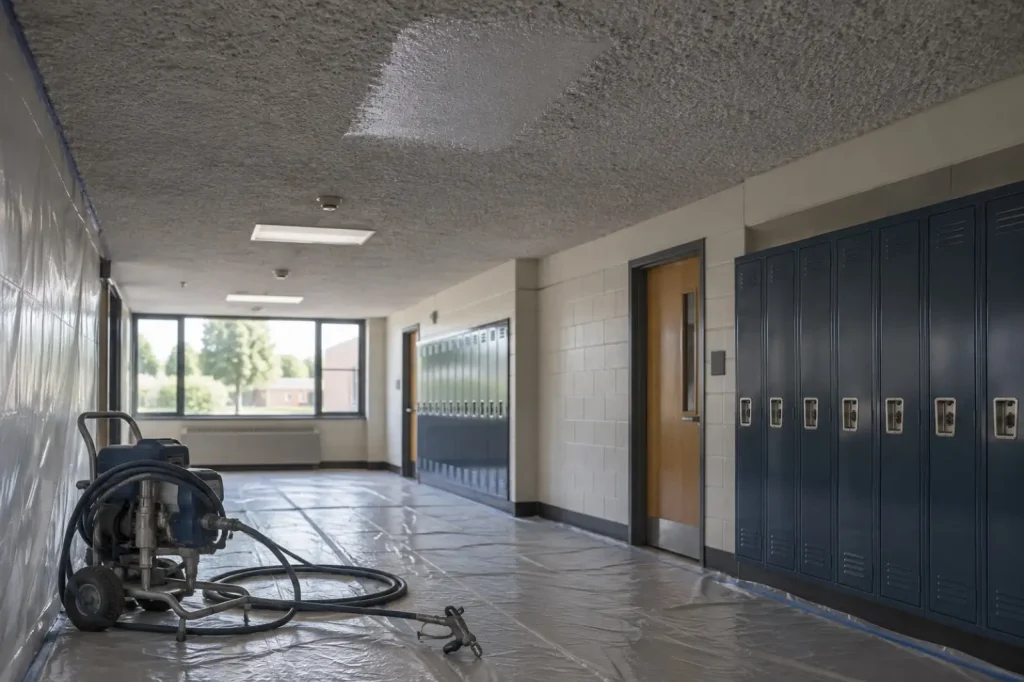
Paint is a bridging encapsulant only if it is applied as one. Per the EPA Purple Book, latex paint has been used on granular, cementitious material if the brand has a high vehicle content, at least 60 percent by weight, and at least 25 percent by weight vehicle resin. It must go on far thicker than normal painting, at no more than 100 square feet per gallon, as a continuous, unbroken coat, ideally by airless spray: a mist coat, then a full coat at 90 degrees to it.
Purpose-made encapsulants follow the same logic. The Fiberlock ABC data sheet for a professional product gives 75 to 100 square feet per gallon for bridging, yielding 6 to 10 mils of dry film on hard, cementitious ACM, and 50 to 75 for penetrating use. The Puget Sound Clean Air Agency adds the downside: painting to encapsulate may make future removal much more difficult and expensive.
Floor tiles, siding, popcorn and pipes
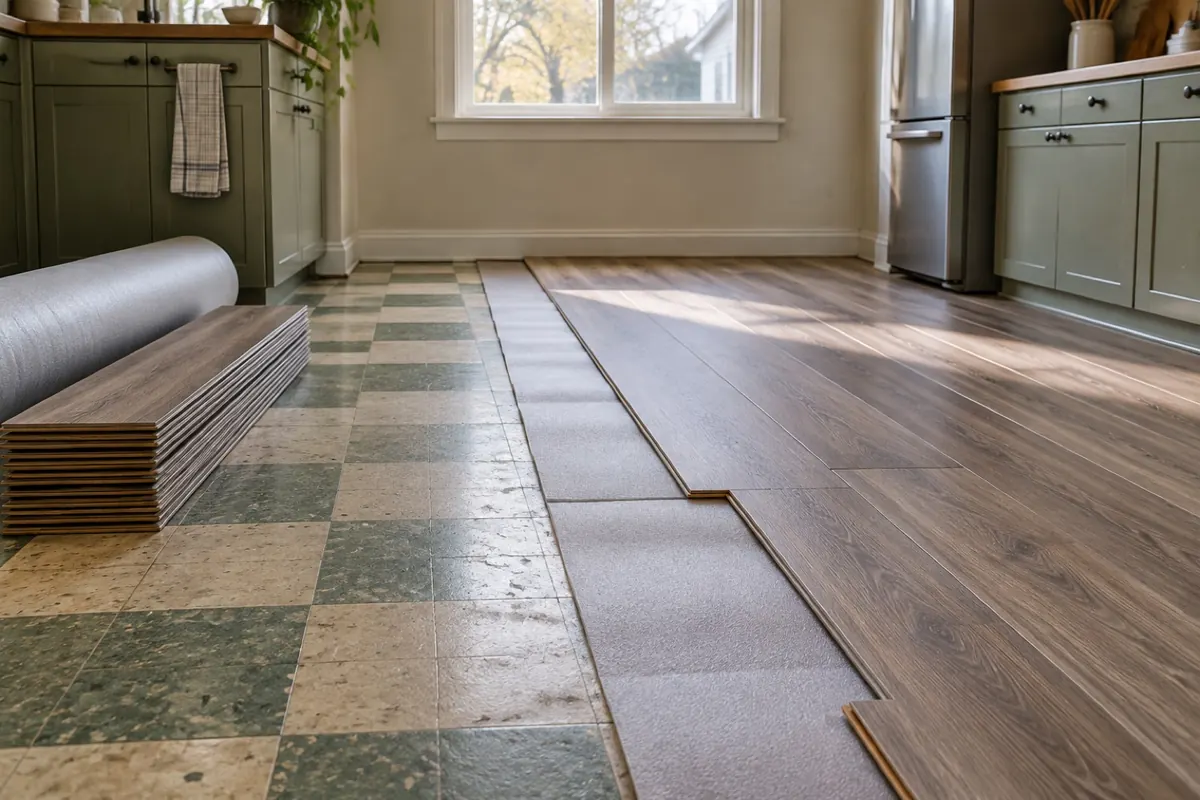
Floor tile is resilient floor covering, a Category I nonfriable material under 40 CFR 61.141, and it only becomes regulated asbestos-containing material (RACM) once it is friable or is sanded, ground, cut or abraded. That is why the maintenance rules matter more than any coating. 29 CFR 1926.1101(l)(3) prohibits sanding asbestos flooring and allows finish stripping only with low-abrasion pads below 300 rpm and wet methods. See how to tell if floor tiles contain asbestos.
Cement siding is cementitious, the material class the Purple Book treats as sealable, and 29 CFR 1926.1101(g)(8)(iii) bars cutting, abrading or breaking it where a lower-release method exists. On preparation, a 2018 WorkSafe Western Australia safety alert (Australian, not US law) states that high-pressure water on asbestos cement is prohibited there, that only non-abrasive cleaning washed off at low pressure is allowed, and that material in poor condition should be replaced rather than painted. See our asbestos siding page for identification.
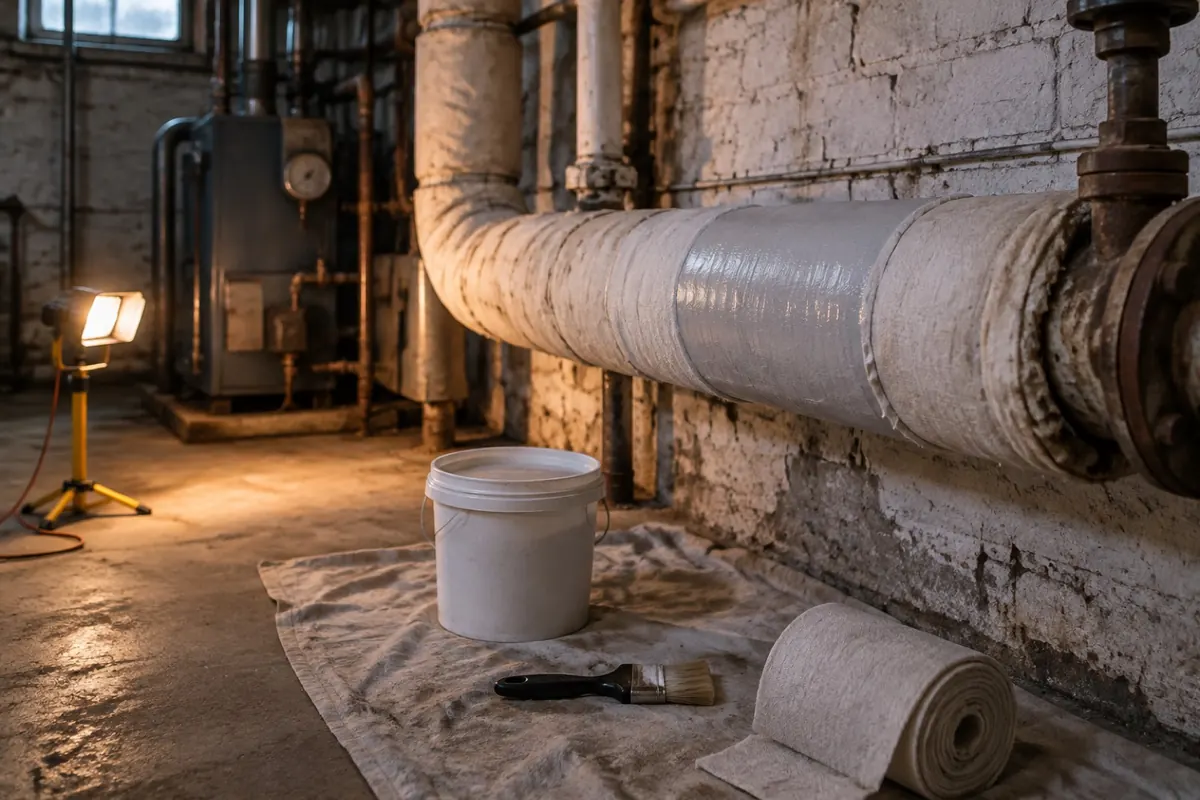
Popcorn texture is the classic bridging job, and the Puget Sound Clean Air Agency warns that a popcorn ceiling made too heavy by added encapsulant, or by water damage, may fall in clumps; our popcorn ceiling asbestos page covers that decision. For pipe and boiler insulation the Purple Book prefers repair with non-asbestos plaster and treats encapsulant as temporary; the asbestos pipe insulation page covers lagging and wraps.
What the rules say for homeowners
The EPA homeowner asbestos guidance sets the federal floor: no federal accreditation requirement for work in detached single-family homes, though some states and localities require it, and a clear statement that sealing should be done only by a trained professional. States then differ on whether sealing is regulated work at all.
| Jurisdiction | What the text says about encapsulation | Owner note |
|---|---|---|
| Federal (EPA) | Accreditation not required federally for detached single-family homes; EPA says sealing should be done only by a professional trained to handle asbestos safely | Guidance, not a ban |
| Washington, Puget Sound region | Owner may re-seal or encapsulate in place without notifying the agency if the material is not disturbed | Removal of friable ACM needs a notification |
| Minnesota | Encapsulation is asbestos-related work; residential friable work above 10 linear ft, 6 sq ft or 1 cubic ft needs a licensed contractor | A domiciled single-family owner is exempt |
| Georgia | A regulated project is removal or encapsulation of friable ACM by a contractor; floor tile is judged by its condition and the removal method | Chemical, dry ice and infrared tile removal are not treated as regulated |
| Any state, if you hire | OSHA 1926.1101 covers the contractor’s employees, and its repair definition includes encapsulation | Applies to employers |
As written, the Minnesota and Georgia triggers turn on friable material, so coating intact tile or siding appears to sit outside them; confirm with the state programme first.
Why it is still asbestos at demolition
40 CFR 61.145(c)(1) requires all RACM to be removed from a facility before any demolition activity that would disturb it, then lists four exceptions. 40 CFR 61.141 defines RACM to include friable asbestos material with no carve-out for treated material, and the exceptions do not mention encapsulation. The Purple Book warns that encapsulated ACM may then have to be removed dry.
| NESHAP exception to removal before demolition | May stay in place? |
|---|---|
| Category I nonfriable ACM not in poor condition and not friable | Yes |
| RACM on a component encased in concrete or similar hard material, kept wet when exposed | Yes |
| RACM not accessible for testing, found after demolition began | Yes, if it cannot be removed safely |
| Category II nonfriable ACM with low probability of being crumbled | Yes |
| Friable material that has been encapsulated | Not listed |
Product standards: ASTM E1494
The standard to name in a specification is ASTM E1494-25, active and last updated 21 February 2025 per ASTM. Its scope covers encapsulants intended to reduce or eliminate fibre release from friable spray- or trowel-applied surfacing material, through field determinations on projects where encapsulation is being considered or has been done. Section 4.1.1 calls for coverage, penetration and cohesion/adhesion tests during design, on test patches and at the end of the job.
Earlier editions, such as E1494-92 (R2010), were titled Encapsulants for Spray- or Trowel-Applied Friable Asbestos-Containing Building Materials and selected an encapsulant once the decision to encapsulate was made. The current edition warns, in Section 4.5, that meeting its criteria does not guarantee the job will pass visual inspection under E1368 or final air clearance.
Older federal guidance is thinner. The EPA Purple Book records that EPA evaluated over 100 sealants on five criteria: impact resistance, flame spread, smoke generation, toxic gas release in combustion and adhesive/cohesive strength. ASTM E2356 (E2356-26 is the active edition) covers the building survey that E1494 testing supports.
Clearance still applies. Under 40 CFR 763.90(i), encapsulation projects in schools need the same visual inspection and air clearance as removals, covered on our abatement page.
The O&M programme that must follow
Sealing commits you to managing the material. The EPA Green Book (1990) lists seven elements of a successful O&M programme. In schools, 40 CFR 763.91 makes O&M mandatory wherever friable ACBM is present or assumed.
| Element | What it involves |
|---|---|
| Notification | Tell workers, tenants and occupants where ACM is and why not to disturb it |
| Surveillance | Regular checks that note and document changes in condition |
| Controls | A work control or permit system for anything that might disturb ACM |
| Work practices | Methods that avoid or minimise fibre release |
| Recordkeeping | Documents every O&M activity, including what was sealed |
| Worker protection | Medical and respiratory programmes, as applicable |
| Training | For the programme manager and custodial and maintenance staff |
The AHERA school rules, 40 CFR 763.92 and 40 CFR 763.85, set longer intervals than the Purple Book’s monthly check. For contractors, the O&M record is the deliverable that outlasts the job: product, area, substrate and date sealed.
Published costs
Three named cost guides report the same encapsulation range and disagree on the saving. Fixr’s figure dates from August 2022; the other two were updated in 2026.
| Source (as reported) | Encapsulation per sq ft | Removal per sq ft | Saving the source reports |
|---|---|---|---|
| This Old House | $2 to $6 | $5 to $20 | 15% to 25% less than removal and disposal |
| HomeAdvisor | $2 to $6 | $5 to $20 | less than half the cost of removal |
| Fixr (2022) | $2 to $6 | $5 to $20 | 15% to 25% less than removal |
Arithmetic on those figures, per the This Old House range: a 200 sq ft ceiling works out at $400 to $1,200 to encapsulate against $1,000 to $4,000 to remove, before the O&M costs that only encapsulation carries. At the $115 per gallon This Old House reports and the Purple Book’s 100 sq ft ceiling, sealant alone costs at least $1.15 per sq ft. Removal pricing by material is on our asbestos removal cost page.
| Product, as listed | Listed price | Size | Per gallon (computed) |
|---|---|---|---|
| Fiberlock Fiberset PM, lockdown sealant | $89.50 | 5 gal | $17.90 |
| Fiberlock Lag-Kote II, bridging for pipe lagging | $108.99 | 2 gal | $54.50 |
Questions people actually ask
Does asbestos encapsulation work?
It reduces fibre release from material that is still sound. EPA’s Purple Book limits it to granular, cementitious material in good condition and calls it primarily temporary, because the asbestos stays. Federal school rules accept it as a response action but require clearance after the job and an O&M programme afterwards.
Is it safe to live in a house with encapsulated asbestos?
EPA’s homeowner guidance says the best thing is usually to leave asbestos material in good condition alone, and with any repair the asbestos remains in place. Encapsulated material therefore has to stay intact: check it for damage, do not sand, drill or scrape it, and tell anyone renovating where it is.
What can you encapsulate asbestos with?
A bridging encapsulant that forms a membrane, a penetrating encapsulant that binds the material from inside, or for pipe insulation a rewettable lagging cloth finished with a bridging coat. EPA’s Purple Book also allows latex paint with at least 60% vehicle by weight, applied at no more than 100 sq ft per gallon.
How much does it cost to encapsulate asbestos?
This Old House, HomeAdvisor and Fixr each report $2 to $6 per square foot, against $5 to $20 for removal. They disagree on the saving: This Old House and Fixr report 15% to 25% less than removal, HomeAdvisor reports less than half. Ongoing inspection is extra.
Can I encapsulate asbestos floor tile or siding myself?
It depends on the state. EPA does not require federal accreditation for detached single-family homes but says sealing should be done by a trained professional. The Puget Sound Clean Air Agency allows owners to re-seal undisturbed material without notice. Minnesota exempts a domiciled owner. Never sand it.
What brands manufacture asbestos encapsulation products?
Fiberlock Technologies is one: its ABC Asbestos Binding Compound, Fiberset PM lockdown sealant and Lag-Kote II pipe sealant appear on the data sheet and retailer listing read for this page. Other makers were not checked; ask any supplier for the data sheet.
Does encapsulated asbestos have to be removed before demolition?
Generally yes, for regulated material. The asbestos NESHAP, 40 CFR 61.145(c)(1), requires all RACM to come out before demolition and lists four exceptions, none of which is encapsulation. EPA’s Purple Book warns that sealed material may then have to be removed dry, which is harder.
Sources
- 40 CFR 763.83, 40 CFR 763.90, 40 CFR 763.91, 40 CFR 763.92 and 40 CFR 763.85, AHERA, via eCFR. Retrieved 18 October 2026.
- 40 CFR 61.141 and 40 CFR 61.145, asbestos NESHAP, via eCFR. Retrieved 18 October 2026.
- 29 CFR 1926.1101, OSHA asbestos construction standard, via eCFR. Retrieved 18 October 2026.
- EPA Purple Book, EPA 560/5-85-024, June 1985. Retrieved 18 October 2026.
- EPA Green Book, EPA 20T-2003, July 1990, via Texas DSHS. Retrieved 18 October 2026.
- EPA homeowner asbestos guidance, last updated 25 June 2026. Retrieved 18 October 2026.
- ASTM E1494-25, E1494-92 (R2010), ASTM E1368-23 and ASTM E2356, ASTM. Retrieved 18 October 2026.
- Puget Sound Clean Air Agency, Homeowner Renovation page. Retrieved 18 October 2026.
- Minnesota Department of Health encapsulation page, updated 30 October 2023; Minnesota Statutes 326.71 and 326.72. Retrieved 18 October 2026.
- Georgia EPD floor tile guidance, Georgia Environmental Protection Division. Retrieved 18 October 2026.
- WorkSafe Western Australia safety alert, 9 November 2018. Retrieved 18 October 2026.
- Fiberlock ABC data sheet, Fiberlock Technologies, hosted by Lowe’s. Retrieved 18 October 2026.
- Buy Insulation Products Store listing, retail prices. Retrieved 18 October 2026.
- This Old House, updated 1 April 2026; HomeAdvisor, updated 17 June 2026; Fixr, updated 18 August 2022. Retrieved 18 October 2026.
- No material was sealed or tested for this page. Our methodology sets out the rules.
Confirm current rules with your state asbestos programme.