The short answer
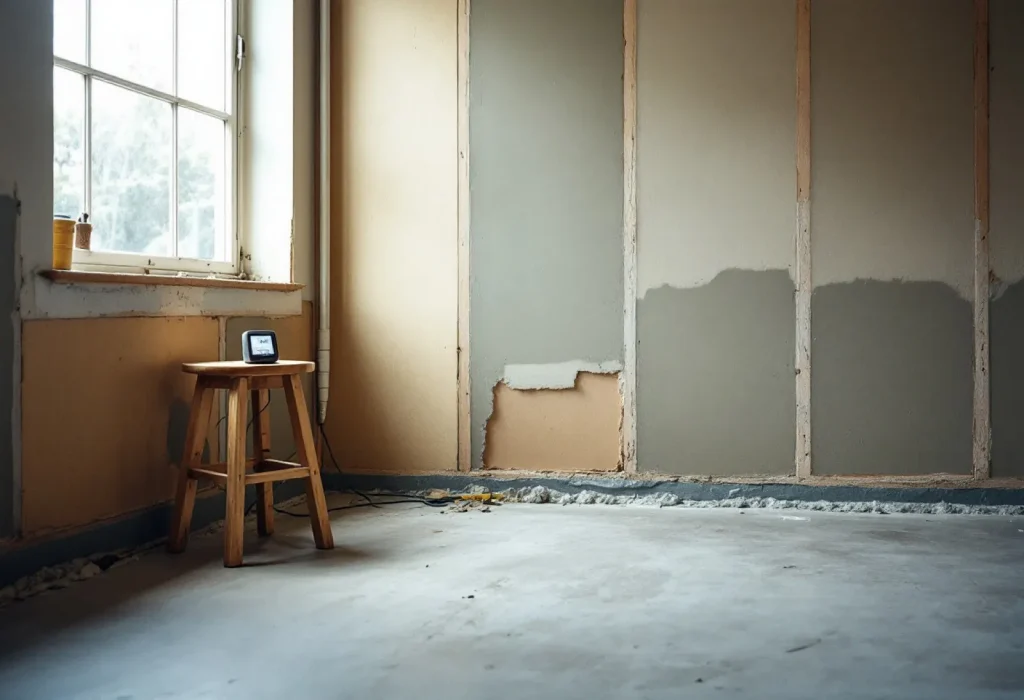
Does mold come back after remediation? Not on its own: EPA says a background level of spores always remains and those spores will not grow if the moisture problem has been resolved. Mold returns when the leak or humidity was never fixed, moldy porous material stayed in place, growth was painted over, or nobody independent checked the work before the plastic came down.
Which of these 8 failure modes brought your mold back?
Each row below is a separate way a remediation job can leave the door open, matched to the EPA guidance or state rule that covers it and to the question that exposes it. EPA’s own finish line, in its EPA's Brief Guide to Mold, Moisture and Your Home, has three parts: the water or moisture problem completely fixed, mold removal completed, and no visible mold or moldy odor left.
| Failure mode | How a homeowner can spot it | Rule or guidance that covers it | What to ask the contractor |
|---|---|---|---|
| 1. Moisture source never fixed | The stain returns in the same spot, often within one wet season | EPA: clean up but leave the water problem and the mold “most likely” comes back; NY §930(3) keeps leak repair out of the remediator’s scope | Who is fixing the leak, and is it named in the plan? |
| 2. Porous material cleaned, not removed | Moldy carpet, ceiling tile or drywall is still installed | EPA: ceiling tiles and carpet may have to be thrown away | Which materials were cut out, which were cleaned, and why? |
| 3. Visible growth left at handover | Flashlight check of the work area before containment is removed | NY §947(1)(a); 16 TAC §78.140(a): free from all visible mold | Can I walk the area before the plastic comes down? |
| 4. Paint or sealer over live growth | Fresh coating but no removal line on the invoice | EPA: do not paint or caulk moldy surfaces; NY §946(5) limits coatings to plan-listed, EPA-registered products | Is the coating in the plan, and what was removed first? |
| 5. HVAC ran during the job | System on while work happened; supply vents in the room not sealed | EPA: do not run a system you suspect is contaminated; seal supply and air vents inside containment | Was the system shut off and the vents sealed, and who checked the ducts? |
| 6. Containment taken down early | Plastic gone before any clearance paperwork arrived | NY §946(4): no removal before a clearance notice | Will the assessor’s clearance notice come before teardown? |
| 7. No independent post-remediation check | Same firm tested and removed; no written clearance report | NY §936, 16 TAC §78.140, Florida Statutes s. 468.8419 | Who is the separate assessor, and when do I get the report? |
| 8. Humidity left high afterwards | A hygrometer reads above 60% for days at a time | EPA: below 60% relative humidity, ideally 30% to 50% | What humidity should we hold, and what equipment keeps it there? |
Was the leak fixed, or only the mold? New York law splits the two jobs
The single most common reason growth returns is written into EPA’s homeowner guide: “If you clean up the mold, but don’t fix the water problem, then, most likely, the mold problem will come back.” EPA’s commercial guide explains why removal alone is not enough: a background level of spores stays in the air, roughly equal to or lower than outdoor air, and those spores grow again only if moisture returns, according to EPA's remediation guide for schools and commercial buildings, Chapter 3.
Here is the trap. New York Labor Law §930 defines mold remediation and then excludes “remediation of the underlying sources of moisture” that needs other expertise. A licensed New York remediator is not, by that definition, hired to fix the roof, the supply line or the grading. New York Labor Law §945(1)(h) instead makes the assessor name, when possible, the underlying moisture source and the type of contractor who would fix it.
So two invoices are normal: one from the remediation firm, one from whoever repairs the source. If only the first exists, ask who closed out item (h) of the plan. Texas uses the same logic: 16 TAC §78.140(b) has the assessor confirm, as far as feasible, that the source was fixed so the mold is reasonably unlikely to return. Finding a hidden plumbing leak is plumbing work; our sister site theplumbingbrief.com covers it.
The step order matters as well. The remediation sequence, from containment to disposal, is set out step by step in our guide to the mold remediation process.
Did moldy drywall, carpet or ceiling tile stay in the wall?
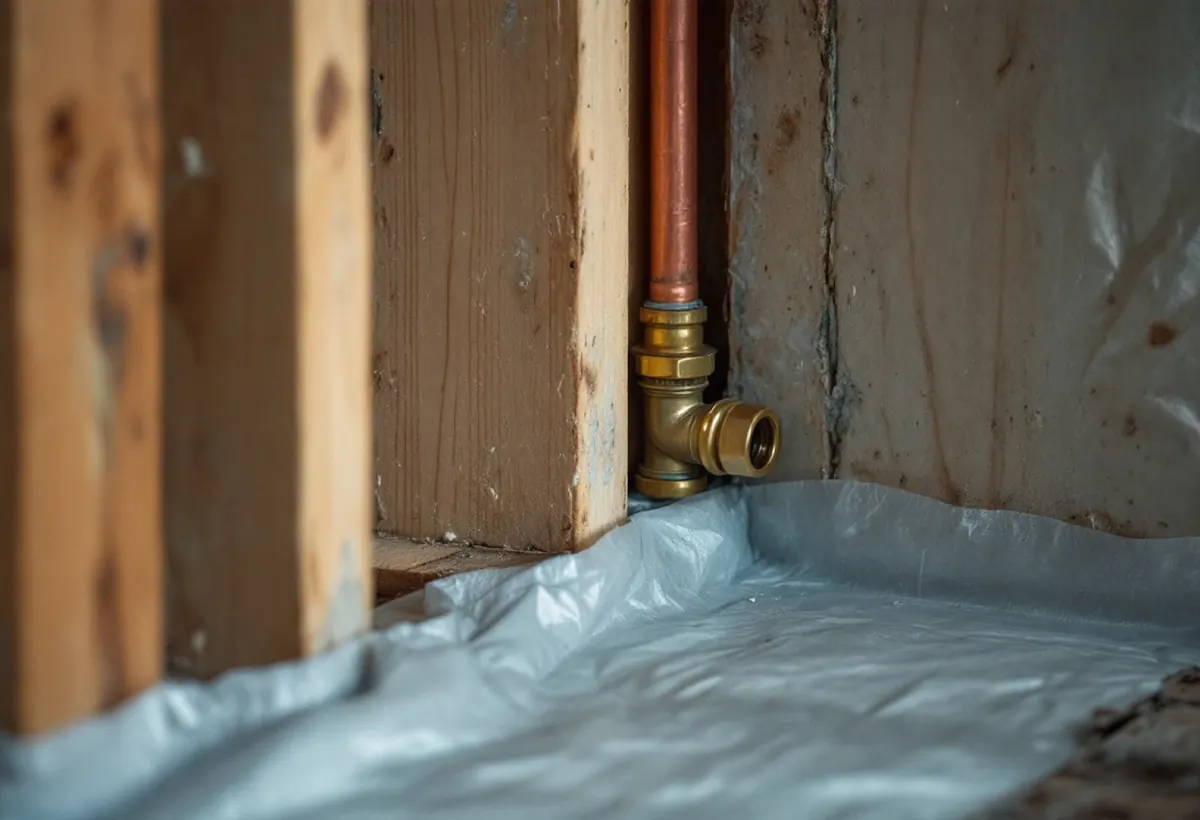
EPA states that absorbent or porous materials such as ceiling tiles and carpet may have to be thrown away once moldy, because mold can fill the empty spaces and crevices of those materials and be “difficult or impossible to remove completely”. The same EPA page notes that dead mold is still allergenic, so spraying a biocide on porous board and leaving it in place does not meet EPA’s standard of removal.
EPA’s Chapter 3 guide sets the disposal method for what cannot be saved: double-bag it in 6-mil polyethylene inside containment, then discard it as ordinary construction waste. A job with no bagged debris and no new drywall on the invoice, on a wall that was visibly moldy, is the pattern to question.
Whether a patch needed a professional at all is a separate question, answered by size and material in our page on when mold remediation is required.
Was mold-killing paint or sealer rolled over live growth?
EPA is blunt on this in both guides: “Do not paint or caulk moldy surfaces.” It adds that paint applied over moldy surfaces is likely to peel, and that surfaces should be cleaned and dried before any coating. A coating is a finish step after removal, never a substitute for it, per EPA's Brief Guide to Mold, Moisture and Your Home.
New York writes a paper trail around coatings. Under §945(3) an assessor may name a disinfectant, biocide or antimicrobial coating only if it is registered by the US EPA for the intended use, and under §946(5) a remediator may apply one only if the plan specifies it and the use follows the maker’s label. A coating that appears on the invoice but not in the plan is a red flag in any state.
What antimicrobial coatings can and cannot do on clean wood and drywall is covered in our review of mold-killing paint.
Did the furnace or AC run while the mold was being removed?
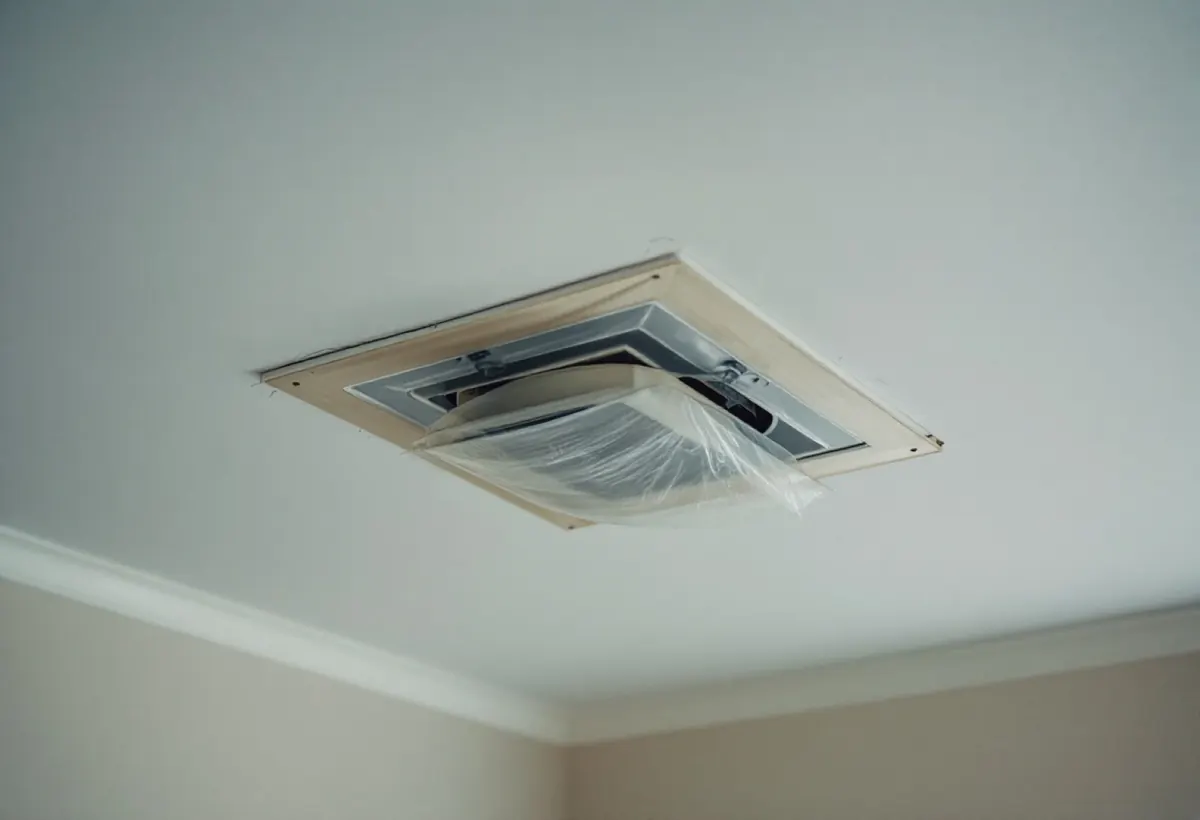
EPA’s homeowner guide says not to run the heating, ventilation and air conditioning system if you know or suspect it is contaminated, because it could spread mold through the building. EPA’s Chapter 3 guide adds that all supply and air vents inside the containment area must be sealed with polyethylene sheeting, and that filters in air handlers serving the area may need replacing once the work is finished.
A system that ran through demolition can carry disturbed spores and dust to rooms that were never part of the scope, which then grow wherever a second moisture source exists. Ask whether the system was off, which registers were sealed, and whether the filter was changed at the end. Duct inspection and cleaning are covered on our page about mold in air ducts.
Did anyone independent sign off? Post-remediation rules in New York, Texas and Florida
Two states write a post-remediation assessment into law, and both make the same promise in nearly the same words. New York Labor Law §947(2) and 16 TAC §78.140(b) each ask the assessor to confirm, to the extent feasible, that the underlying cause was fixed so the mold is reasonably unlikely, or in New York’s wording reasonably certain not, to return. That is the legal version of this page’s answer.
| State | Who does the post-remediation check | What clearance requires | Paperwork you receive | Size trigger or separation rule |
|---|---|---|---|---|
| New York | A licensed mold assessor, never the remediator (§936) | Free from all visible mold; work matches the plan and its clearance criteria; cause fixed so far as feasible (§947) | Passed clearance report, or a final status report to you and the remediator | Projects over 10 sq ft (§930(6)); owners on their own home exempt (§933) |
| Texas | A licensed mold assessment consultant who is not the remediator (16 TAC §78.140, TDLR's mold FAQ) | Free from all visible mold and wood rot; protocol criteria met; source fixed so far as feasible (16 TAC §78.140) | Passed clearance report with temperature, humidity and moisture data; Certificate of Mold Damage Remediation and photos within 10 calendar days (16 TAC §78.150) | Licensed remediator required at 25 contiguous sq ft or more (TDLR's mold FAQ) |
| Florida | Not set in Florida Statutes s. 468.8419 | Not set in that section | Not set in that section | Assessor may not remediate a structure it assessed within 12 months, and the reverse (Florida Statutes s. 468.8419) |
The Texas certificate carries a specific line worth reading. Under 16 TAC §78.150(b)(2), the consultant adds a statement that the underlying cause has been remediated only if the consultant determines it is reasonably certain the mold will not return. A Certificate of Mold Damage Remediation without that statement tells you the source question was left open.
Licensing differs state by state, and our state mold licensing tracker lists who must hold which license. How an assessor samples the air and surfaces for clearance is explained in our page on the mold clearance test.
What should you ask before the containment plastic comes down?
New York’s §946(4) bars anyone from removing containment before the remediator receives the assessor’s notice that the project achieved clearance. That order is the cheapest moment to catch a failure, because reopening a finished wall costs far more than extending a job still under plastic. The checkpoints run as follows.
- Ask for the assessor’s plan and find the line naming the moisture source, item (h) under NY §945(1). If it is blank, ask why.
- Ask which contractor fixed that source and when, since NY §930(3) leaves it outside the remediator’s scope.
- Walk the area with a flashlight before teardown: both NY §947(1) and 16 TAC §78.140(a) require it to be free from all visible mold.
- Ask for the written passed clearance report; in Texas it must list temperature, humidity and material moisture readings under 16 TAC §78.140(d).
- In Texas, expect the certificate and before and after photos within 10 calendar days of the stop date, per 16 TAC §78.150.
- Check that the assessor and the remediator are different companies with no shared owner, per NY §936.
EPA’s commercial guide adds one more step that no state form replaces: revisit the site shortly after remediation, when it should show no signs of water damage or mold growth, per EPA's remediation guide for schools and commercial buildings, Chapter 3. A hygrometer reading under 60% relative humidity, the EPA ceiling, is the simplest ongoing check.
How fast can mold come back if the area gets wet again?
Neither EPA guide gives a regrowth timeline in weeks or months, and no rule read for this page does either. What EPA does give is the clock for new water: dry water-damaged areas and items within 24 to 48 hours to prevent mold growth, and keep indoor humidity below 60%, ideally 30 to 50%, per EPA's Brief Guide to Mold, Moisture and Your Home.
That makes the answer conditional rather than a date. A remediated wall that gets wet from the same unrepaired leak faces the same 24 to 48 hour window it faced before the job, because EPA says the background spores remain in every building. A wall that stays dry under EPA’s 60% humidity ceiling gives those spores nothing to grow on.The mold hub groups related guides on drying and prevention.
Out of scope: this page covers why mold growth returns, not health effects. For those, start with EPA's Brief Guide to Mold, Moisture and Your Home.
Questions people actually ask
Is it safe to move back in after mold remediation?
The rule-based signal is paperwork, not a smell test. In New York, containment cannot come down until a licensed assessor issues a clearance notice under Labor Law §946(4), and a passed clearance report follows under §947(3). In Texas, 16 TAC §78.140(d) requires a written passed clearance report before the project counts as cleared. Ask for that report before furniture goes back.
Do I have to tell a buyer about past mold remediation in Texas?
Yes. Under 16 TAC §78.150(e), an owner who sells must give the buyer copies of every Certificate of Mold Damage Remediation issued for the property in the 5 years before the sale. The same rule makes the remediation company provide that certificate within 10 calendar days of the project stop date, so keep the copy with your closing papers.
Can the company that tested for mold also remove it?
Not in New York or Texas. New York Labor Law §936 bars any licensee from doing both assessment and remediation on the same property and bars shared ownership of the two firms. TDLR’s FAQ says the same for a Texas project, with a school district employee exception. Florida s. 468.8419 bars an assessor from remediating a structure it assessed within 12 months.
If mold comes back, is the remediation company at fault?
Not automatically. New York Labor Law §930(3) excludes leak and moisture repair from mold remediation, so the cause may sit with another trade. Check the assessor’s report: §947(2) requires a recommendation for the right contractor when the cause was not fixed, and a Texas certificate states the cause was remediated only if the consultant judged regrowth reasonably unlikely.
Does a mold test after remediation prove mold will not return?
No. A clearance check describes the room on the day it was done. EPA’s commercial guide says a background level of spores remains in the air after any cleanup, roughly equal to or lower than outdoors, and that those spores grow again only if the moisture problem returns. The test confirms removal; the dry building prevents regrowth.
Sources
- EPA's Brief Guide to Mold, Moisture and Your Home, United States Environmental Protection Agency, last updated 18 February 2026. Retrieved 16 November 2026.
- EPA's remediation guide for schools and commercial buildings, Chapter 3, United States Environmental Protection Agency, last updated 29 April 2026. Retrieved 16 November 2026.
- New York Labor Law Article 32, §930 Definitions, §933 Exemptions, §936 Licensee duties, §945 Assessment work standards, §946 Remediation work standards and §947 Post-remediation assessment and clearance, official text from the New York State Senate as reproduced by public.law (last modified 31 July 2015). Retrieved 16 November 2026.
- 16 TAC §78.140 Post-Remediation Assessment and Clearance and 16 TAC §78.150 Photographs; Certificate of Mold Damage Remediation; Duty of Property Owner, Texas Administrative Code, via Cornell Legal Information Institute. Retrieved 16 November 2026.
- TDLR's mold FAQ, Texas Department of Licensing and Regulation, Mold Assessors and Remediators Frequently Asked Questions. Retrieved 16 November 2026.
- Florida Statutes s. 468.8419, Prohibitions; penalties, 2026 Florida Statutes, Florida Legislature. Retrieved 16 November 2026.
- Size thresholds in the chart are the printed figures from the sources above, not calculations. Our methodology sets out the standing rules.
Statutes and rules change. Confirm the current text with the state agency, and ask a licensed assessor in your state which clearance criteria apply to your project.