The short answer
How to get rid of white mold starts with one check: mist the spot with plain water. On brick or concrete, most efflorescence is water-soluble salt, so it darkens and dissolves; mold stays put. If it is mold, fix the moisture first, scrub hard surfaces with detergent and water, brush or sand surface growth off softwood, and discard soaked porous items.
Key takeaways
- White is a stage, not a species. EPA mold course, chapter 1 says molds come in many colours including white.
- The most common white look-alike on masonry is efflorescence. The Brick Industry Association Technical Note 23A says most efflorescing salts are water-soluble, which is what the mist test exploits.
- On wood, white sheets, fans or strands point to a decay fungus. The USDA Forest Products Laboratory Wood Handbook, chapter 14 describes fresh decay growth as fan-shaped patches or strands, usually white or brown.
- Humid air alone can grow mold on joists but cannot rot them, per the Forest Products Laboratory.
- Garden “white mold” is Sclerotinia, a fungus that attacks plants. It is not the growth in your basement.
On this page
- What you are looking at
- The water test, done properly
- Where it grows and what it is telling you
- How to remove it, surface by surface
- The numbers that stop it coming back
- Signs it is bigger than the spot
- White mold in the garden
- What professional removal costs
- For contractors
- Questions people actually ask
What you are looking at
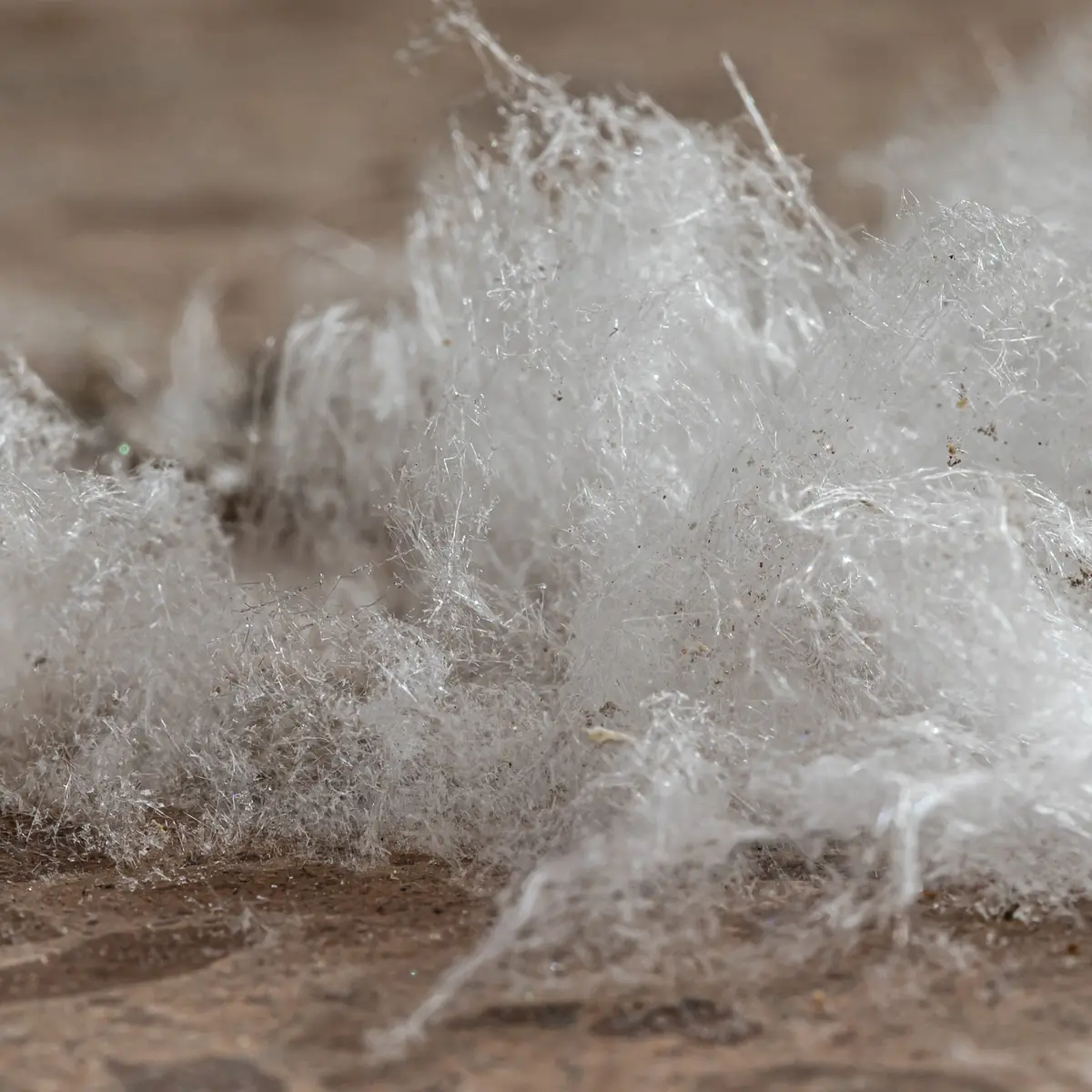
There is no species called white mold. The EPA mold course, chapter 1 says plainly that molds come in many colours including white, and the USDA Forest Products Laboratory Wood Handbook, chapter 14 describes mold on wood as fuzzy or powdery growth in colours from light shades to black. Penn State Extension describes Trichoderma green mold as dense white growth followed by green spore production, so a pale patch can be a young colony that darkens later.
The first job is ruling out white things that are not mold.
| Look-alike | Test | Result | What it is |
|---|---|---|---|
| Efflorescence (salt bloom) | Mist a small patch with plain water and watch for a minute | Darkens and dissolves; returns as white powder after it dries | Salts carried out by water moving through masonry |
| Early mold colony | Same mist test, then look again once dry | Stays put; nothing dissolves | Fungal growth on dust, wood or paper facing |
| Mildew | Note the surface: shower walls, sills, painted trim | Flat film on a damp surface | A flat growing mold, per EPA usage |
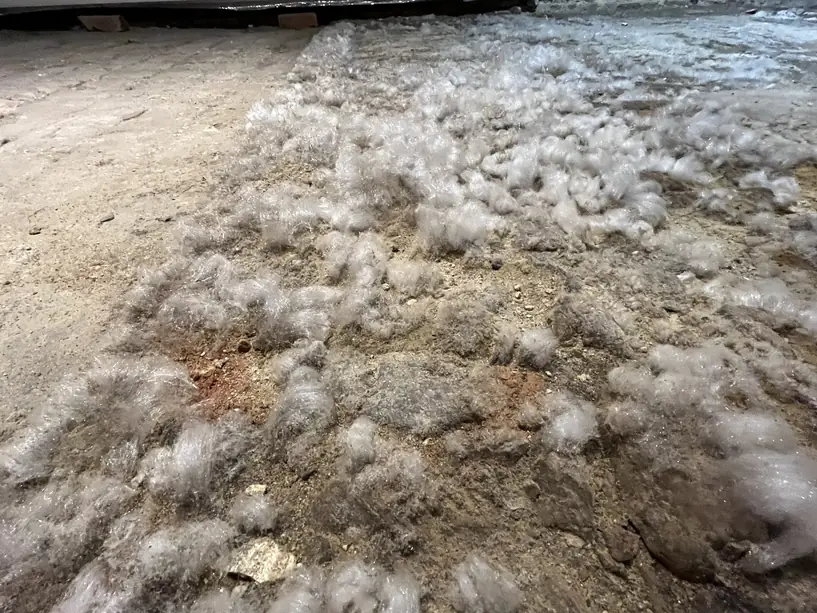
| Decay fungus (mycelium) | Look for fans, sheets or root-like strands on wood | Thick, spreading, often tinged yellow | Wood rot in progress; an escalation sign |
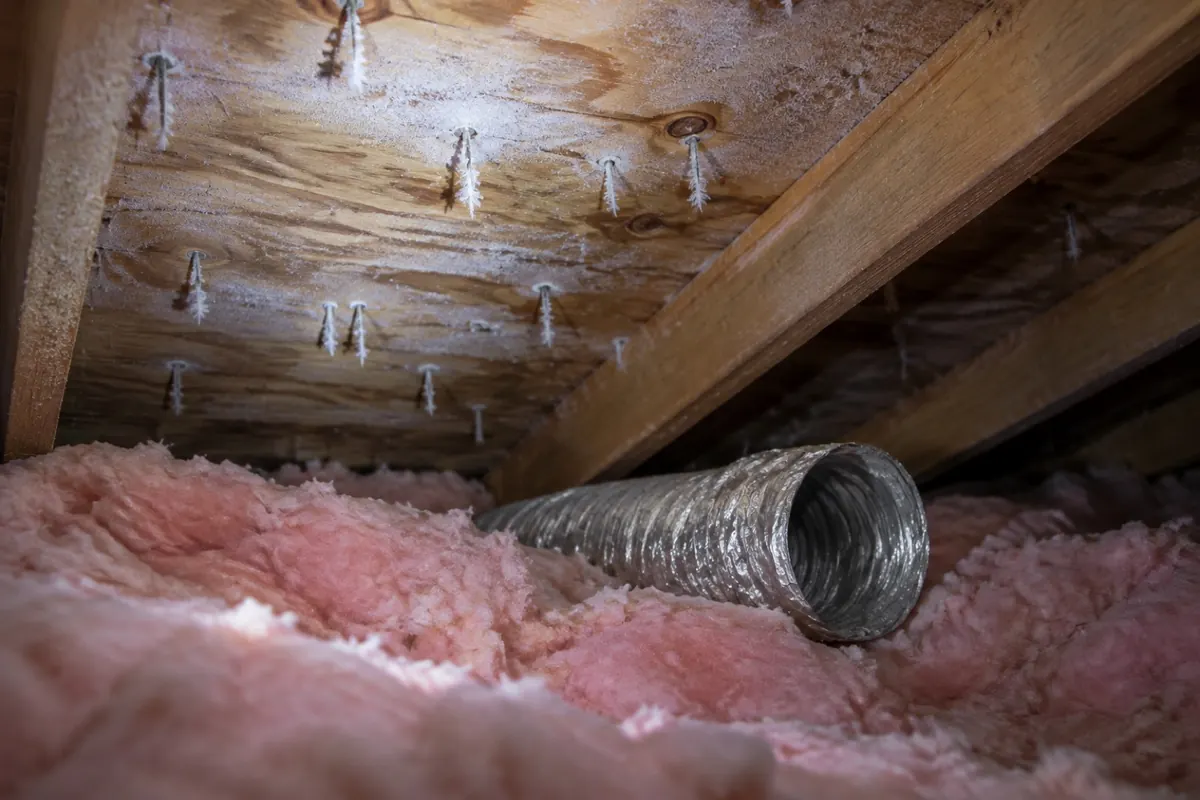
| Attic frost | Check in a cold snap; look at nail tips | Crystals melt to water drops when warmed | Indoor air leaking into the attic |
| Finish blush on furniture | Look at whether the haze is in the finish, not on it | Milky cloud under a smooth surface | Moisture trapped in lacquer or varnish |

White mold vs efflorescence
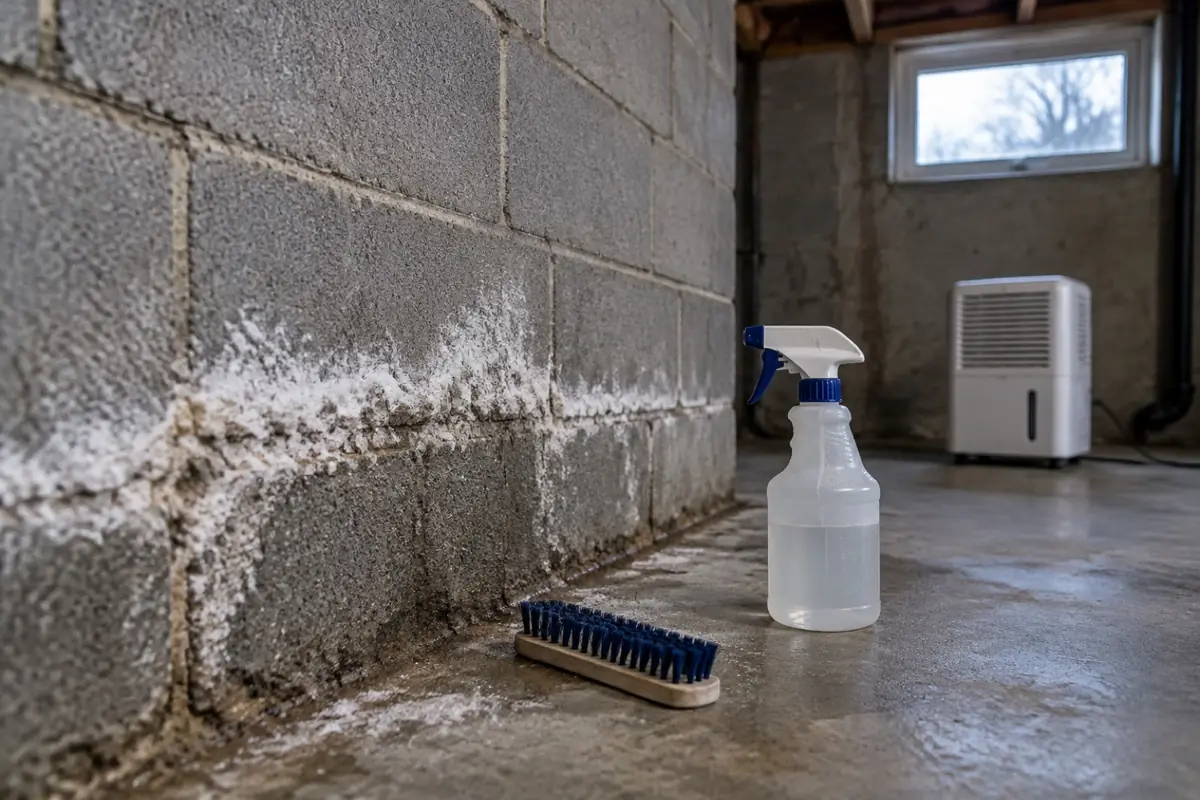
The Brick Industry Association Technical Note 23A explains the mechanism: water carrying dissolved salts reaches the surface of masonry, the water evaporates, and the salts stay behind, which is why it forms on masonry such as brick, block and concrete. Mold needs organic food, which EPA says it can find on virtually any organic substance.
White mold vs mildew
The EPA mold and mildew answer treats mildew as a kind of mold: the word usually means mold with a flat growth habit, often on shower walls and windowsills, and it is cleaned the same way. More on our mold vs mildew page.
The water test, done properly
This is the decision path. It takes five minutes and a spray bottle.
- Name the surface. Brick, block, concrete or stone: efflorescence is possible. Wood, drywall paper, fabric or leather: it is not, because there is no salt-bearing masonry to carry. Why this differs from generic advice: most guides start with the cleaner; the surface decides if one is needed.
- Mist one small patch, not the wall. Watch for a minute. Water-soluble salt dissolves into the wet surface; mold stays visible. Why small: the BIA warns that washing efflorescence adds moisture that can bring more salt to the surface.
- Look again when it has dried. Efflorescence usually reappears as powder in the same place. Why wait: one wet look can mislead.
- If nothing dissolved, do not assume mold. The BIA says most efflorescing salts are water-soluble, which means not all are. A deposit that survives misting on concrete may still be mineral. Why this matters: a fungicide on salt leaves the water problem alone.
- Still unsure: send a tape lift. A lab sample names fungus or crystal. On wood, check depth and soundness with the method on our mold on wood page rather than guessing.
The NIH Office of Research Facilities bulletin adds that efflorescence is not harmful in itself, but persistent or repeated efflorescence may indicate excessive internal moisture or rising damp worth investigating.
Where it grows and what it is telling you
Location narrows the answer faster than colour, because each place has a typical white thing and water source.
| Location | Usual white growth | Water behind it | First move |
|---|---|---|---|
| Crawl space joists | Surface mold on softwood framing | Humid crawl space air | Control the crawl space moisture; see crawl space mold remediation |
| Basement block or poured wall | Efflorescence, sometimes mold on dust | Water moving through the wall from soil | Mist test, then see mold on concrete |
| Basement sill plates and stored lumber | Surface mold; decay if it stays wet | Wood touching damp masonry | Break the contact, dry, then clean |
| Attic roof sheathing | Frost in winter; mold after repeated melts | House air leaking up through bypasses | Air seal first; see signs of mold in the attic |
| Wood furniture | Blush in the finish, or mold on raw wood | Damp room or contact with a damp wall | See mold on furniture |
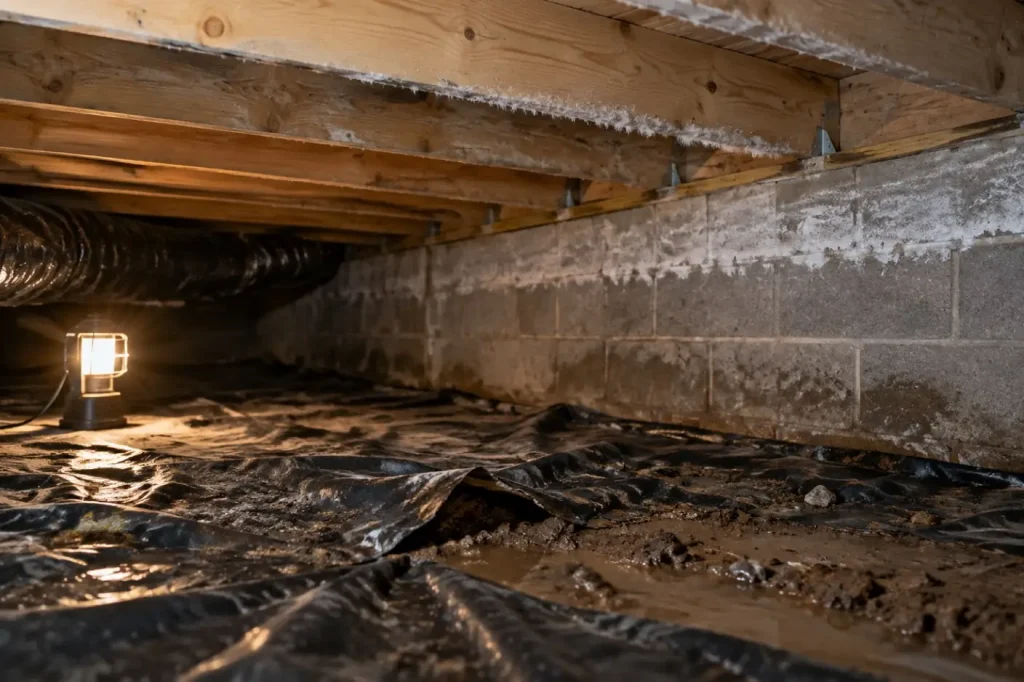
White mold on wood in crawl spaces and basements
The USDA Forest Products Laboratory Wood Handbook, chapter 14 draws a line that explains most white fuzz on joists. By itself, it says, water vapour in humid air will not wet wood enough for significant decay, but it will permit some mold fungi to develop. Serious decay needs the wood above its fiber saturation point, which according to the handbook averages 30%, and that only happens with liquid water from rain, condensation or wet ground. Pale fuzz along a whole run of joists says the air is damp; a soft patch under one spot says something drips.
Attic sheathing
In cold climates, Structure Tech explains that frost builds when moisture-laden house air leaks into the attic, and that once it melts the result can be mold on the roof sheathing. Its repair order is air sealing first, insulation after. Cleaning the sheathing without that step resets the clock.
On furniture, a milky haze inside a lacquered top is often not mold: Mohawk Finishing Products describes blush as cloudiness due to trapped moisture in the finish.
How to remove it, surface by surface
Once the growth is confirmed as mold, the colour stops mattering. White, green or black, the method follows the material. The EPA's mold cleanup page gives the baseline: scrub mold off hard surfaces with detergent and water and dry completely.
| Surface | Method | Why this differs from generic advice |
|---|---|---|
| Glass, metal, tile, sealed plastic | Scrub with detergent and water, then dry completely | EPA’s own instruction for hard surfaces. |
| Masonry with efflorescence | Dry brush; specialty masonry cleaner only for stubborn deposits, tested on a small area | It is salt. The BIA advises against washing except in warm, dry weather because water brings more salt out. |
| Masonry or slab with mold | Remove the organic film and dry the surface | EPA says mold grows on organic matter, so the target is the film on the masonry. See mold on concrete. |
| Softwood framing (pine, fir, spruce) | HEPA vacuum or brush, then wipe or lightly sand the surface | The FPL says surface growth on softwoods can often be brushed or surfaced off, even where the fungus penetrates. |
| Oak and other large-pored hardwoods | Expect staining below the surface after cleaning | The FPL notes the wood beneath is commonly stained too deeply to surface off. |
| Carpet, ceiling tile, upholstery, cardboard | Bag and discard if soaked and moldy | EPA says absorbent or porous materials may have to be thrown away. |
| Painted wall or trim | Clean and dry before any repaint | EPA says do not paint or caulk moldy surfaces; paint over mold is likely to peel. |
For protective gear, the EPA mold course, chapter 6 sets a minimum for small jobs under its 10 square foot line: gloves, goggles that keep out dust, and an N-95 respirator, which it says filters out 95 percent of airborne particulates. Whether a job is yours to do is covered in our DIY mold remediation guide. The University of Georgia Extension circular 1047-2 gives the same detergent method for hard-surfaced wood furniture.

The numbers that stop it coming back
Cleaning removes the growth. These thresholds decide whether it returns, and they are cheap to check with a pin meter and a hygrometer.
| Measure | Target | Source | What it means here |
|---|---|---|---|
| Wood moisture content | 20% or less | USDA FPL Wood Handbook | Per the FPL, a reasonable safety margin against fungi. |
| Wood moisture content | Above about 30% | USDA FPL Wood Handbook | Per the FPL, serious decay becomes possible. |
| Indoor relative humidity | 30 to 50% | EPA | EPA’s ideal range for homes. |
| Indoor relative humidity | Below 60% | EPA | EPA’s upper limit for indoor humidity. |
| Wet materials | Dry within 24 to 48 hours | EPA | EPA’s window to prevent mold growth after a leak. |
The EPA mold course, chapter 2 repeats the 24 to 48 hour drying window for building materials. For wood, the USDA Forest Products Laboratory Wood Handbook, chapter 14 adds the reassuring half: wood kept air dry will not decay, and decay already present will not progress.
Signs it is bigger than the spot
Most white growth is a surface event. These signs say it is not.
| What you see | What it usually means | Next step |
|---|---|---|
| White sheets, fans or strands spreading across wood | A decay fungus, per the FPL description of fresh decay growth | Find the water source; assess the wood’s strength |
| Wood that looks bleached and feels spongy | White rot: the FPL says both lignin and cellulose are removed | Probe it; structural members need assessment |
| Efflorescence returning more than a year after construction | The BIA links this to excessive water penetration or poor drainage | Treat as a water problem, not a cleaning problem |
| Brick or block cracking beneath the white deposit | The BIA says crystals forming inside units can cause cracking | Masonry assessment; stop the water first |
| Growth back within weeks of cleaning | Moisture source still active | Measure humidity and wood moisture before re-cleaning |
| Growth over more than about 10 square feet | Beyond EPA’s homeowner-scale guidance | Professional assessment and scope |
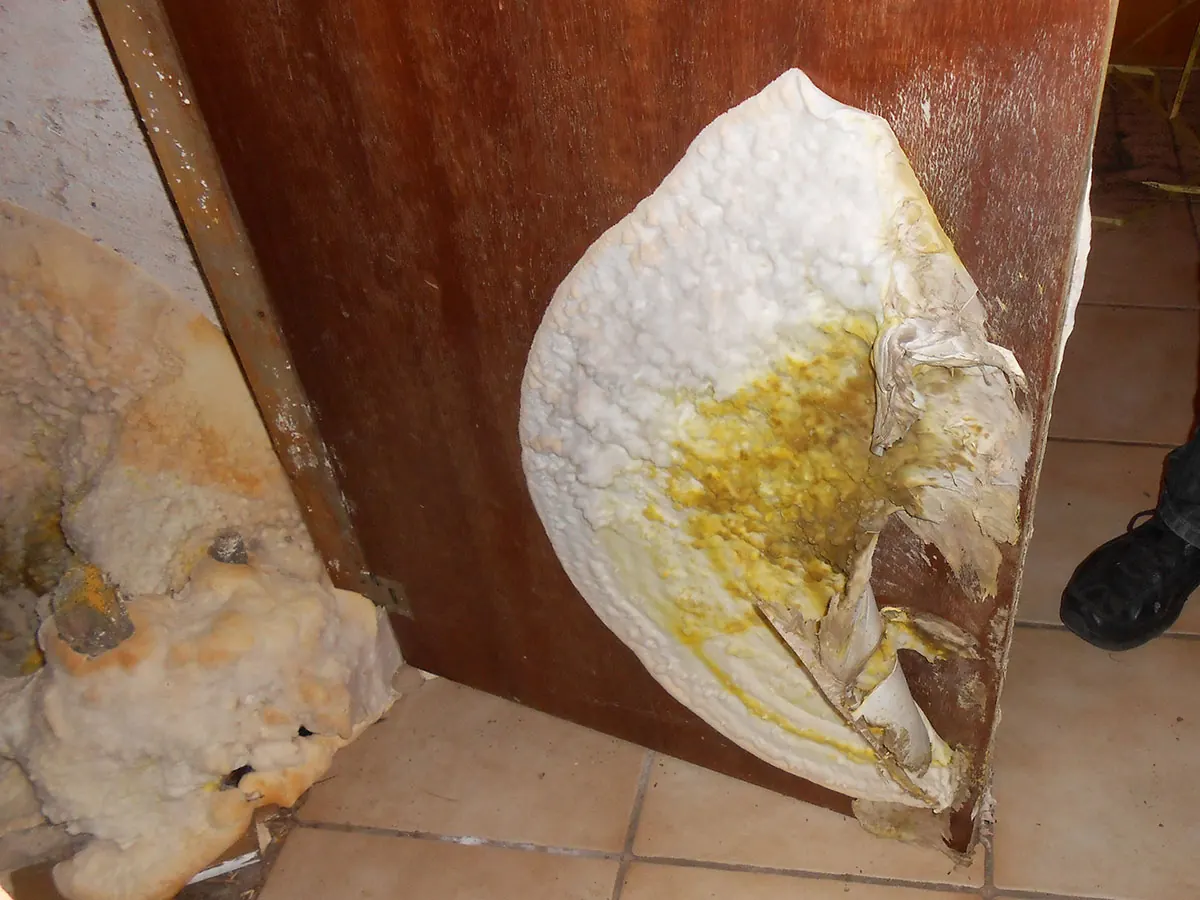

Take the first row seriously. The USDA Forest Products Laboratory Wood Handbook, chapter 14 says fresh decay growth may appear as fan-shaped patches, strands or root-like structures, usually white or brown but sometimes strikingly yellow or orange, and that some rot fungi form strands that carry water from the soil into otherwise dry wood.
White mold in the garden is a different organism
In the garden, white mold is a plant pathogen. University of Wisconsin Extension says it is caused by species of the fungus Sclerotinia, most commonly Sclerotinia sclerotiorum, and infects over 400 plant species, including beans, tomatoes, potatoes and squash. Signs are cottony threads on stems and hard sclerotia that turn dark and resemble mouse droppings, which the same source says can persist for at least 5 years. Its advice is to remove infected plants and not compost them. None of it applies indoors.
What professional removal costs
Nobody prices white mold separately; guides price by location. The two published lists below agree on crawl spaces and disagree on attics, so both are shown rather than averaged.
HomeAdvisor also reports $10 to $25 per square foot. If the white growth is efflorescence, none of this applies: spend on the water entering the wall.
For contractors
White growth invites disputed scopes because some of it is not mold. A short screening step protects the estimate.
| Document | Why it belongs in the file |
|---|---|
| Photo of the mist test, wet and dry | Shows efflorescence was screened out before scoping |
| Moisture content readings on affected wood | Ties the scope to the FPL thresholds and sets the dry standard |
| Relative humidity reading in the space | Explains surface growth on sound framing in a crawl or basement |
| Lab result where the visual call is uncertain | Names fungus or mineral |
| Probe notes on any white sheets or strands | Separates surface mold from decay, a different line item |
| The moisture source and its fix, in writing | Without it, a callback is predictable and hard to defend |
On claims, expect the adjuster to read the policy’s mold language closely. The ISO HO 00 03 sample form hosted by the Insurance Information Institute excludes mold, fungus or wet rot, but gives back loss caused by mold hidden within walls, ceilings or floors when it results from an accidental discharge from plumbing, heating or air conditioning systems. Forms and endorsements vary, so the owner’s own policy and their state insurance department are the authorities, not the estimate.
What this page does not cover. Health effects of mold exposure are outside our scope; CDC and EPA publish that guidance.
Questions people actually ask
Is white mold harmful to you?
This page does not assess health effects; CDC and EPA cover them. EPA guidance is clear that colour does not identify a mold and that the response is the same for white growth as any other: fix the moisture, clean or remove the material, and wear gloves, goggles and an N-95 respirator for small cleanups.
Can white mold go away on its own?
Drying stops growth but does not remove it. The USDA Forest Products Laboratory says wood kept air dry will not decay and existing decay will not progress, yet the growth itself remains until cleaned. Efflorescence is different: the Brick Industry Association says many salts disappear with normal weathering, especially on new brickwork.
What kills white mold the best?
Removal matters more than killing. EPA’s instruction for hard surfaces is to scrub with detergent and water and dry completely, and porous items that are moldy may have to be discarded. On softwood, surface growth can often be brushed or sanded off. No product fixes growth on material that stays wet.
Is it okay to touch white mold?
EPA’s mold course recommends gloves for any cleanup, with long gloves reaching mid-forearm and ordinary household rubber gloves suitable when a mild detergent is used. Its minimum gear for small areas also includes dust-tight goggles and an N-95 respirator, so plan on covering hands, eyes and airway.
How do I tell white mold vs efflorescence?
Check the surface, then mist it. Efflorescence forms only on masonry such as brick, block and concrete, and the Brick Industry Association says most efflorescing salts are water-soluble, so a misted patch darkens and dissolves, then returns as powder when dry. Mold stays visible when wet. If neither result is clear, a lab tape lift settles it.
Is white mold on wood the same as rot?
Not usually. Thin fuzz that brushes off sound wood is surface mold. The USDA Forest Products Laboratory describes fresh decay fungus growth as fan-shaped patches, strands or root-like structures, and white rot as wood that looks bleached and feels spongy. Either of those means the wood needs assessment, not just cleaning.
Sources
- EPA mold course, chapter 1, EPA, updated 18 February 2026. Retrieved 19 October 2026.
- EPA mold course, chapter 2 and EPA mold course, chapter 6, EPA, updated 1 December 2025. Retrieved 19 October 2026.
- EPA's mold cleanup page, EPA, updated 4 June 2026. Retrieved 19 October 2026.
- EPA brief guide to mold and moisture, EPA, updated 18 February 2026. Retrieved 19 October 2026.
- EPA mold and mildew answer, EPA, updated 23 June 2026. Retrieved 19 October 2026.
- USDA Forest Products Laboratory Wood Handbook, chapter 14, Biodeterioration of Wood, USDA Forest Service, 2021. Retrieved 19 October 2026.
- Penn State Extension, Green Mold of Mushrooms, updated 23 December 2025. Retrieved 19 October 2026.
- University of Georgia Extension circular 1047-2, Removing Mold in Your Home, revised 1 March 2023. Retrieved 19 October 2026.
- University of Wisconsin Extension, White Mold, revised 2 March 2024. Retrieved 19 October 2026.
- Brick Industry Association Technical Note 23A, Efflorescence: Causes and Prevention, June 2019. Retrieved 19 October 2026.
- NIH Office of Research Facilities bulletin, Efflorescence in Masonry Walls, December 2017. Retrieved 19 October 2026.
- Structure Tech, Frost in attics, 4 February 2025. Retrieved 19 October 2026.
- Mohawk Finishing Products, Super Blush Retarder product page. Retrieved 19 October 2026.
- Fixr, mold remediation cost guide, updated 29 August 2025, and HomeAdvisor, mold removal cost guide, updated 19 June 2026. Retrieved 19 October 2026.
- ISO HO 00 03 sample form hosted by the Insurance Information Institute, form HO 00 03 10 00, ISO 1999. Retrieved 19 October 2026.
- Real photographs are Wikimedia Commons files under the licences in their captions; scene illustrations are generated. Nothing here was tested or inspected by us. See our methodology and the mold hub.
Identification from appearance is provisional. When in doubt, a laboratory sample is the reliable answer.