The short answer
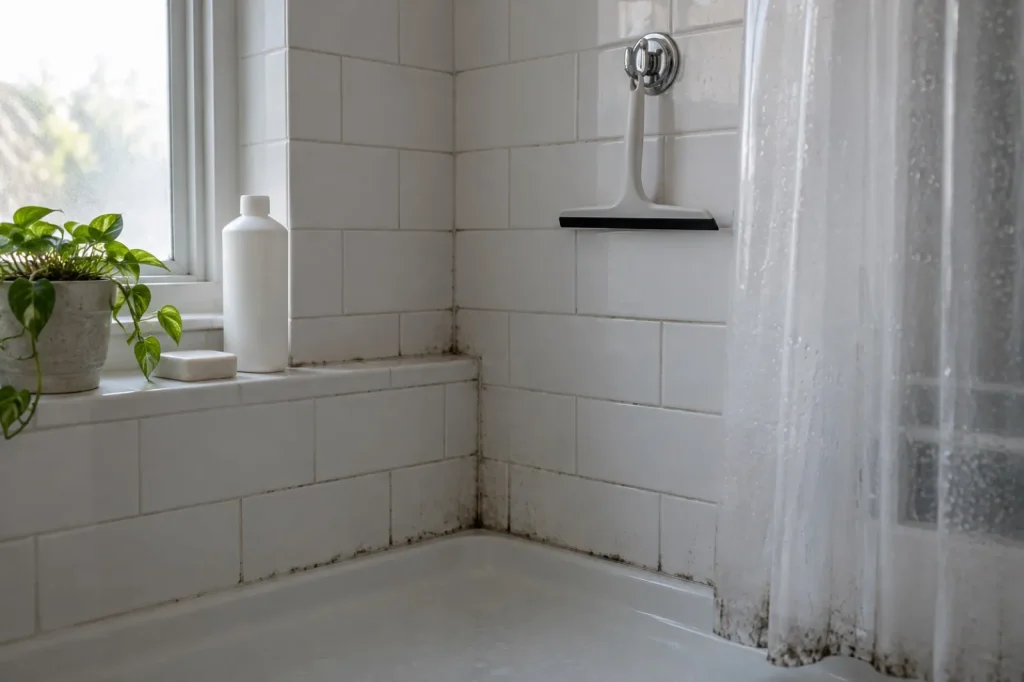
Mold vs mildew is mostly a question of vocabulary. EPA says mildew refers to certain kinds of mold, usually flat growth on surfaces such as shower walls and windowsills. The powdery and downy mildews of plant pathology are different organisms that need living plants. What changes the cleanup is the material: growth on tile wipes off, while growth inside drywall or carpet usually means removal.
Key takeaways
- EPA does not treat mildew as a separate organism: it says mildew refers to certain kinds of mold or fungus.
- The garden mildews are different organisms. UC IPM says powdery mildews need living plant tissue, and Penn State says downy mildews are not closely related to true fungi.
- The paint-trade bleach test separates mildew from dirt. It was never a mildew against mold test.
- EPA does not recommend bleach as a routine practice, and says dead mold must still be removed.
- Depth follows the material: EPA says molds infiltrate porous materials.
- Area sets the scope line: about 10 square feet in EPA’s home guide, with a large tier above 100 square feet in EPA Table 2.
On this page
Most pages answer this as if mold and mildew were two species you can sort by colour and texture. The agencies that write cleanup guidance do not. Mildew is a word for a particular look of growth, and what matters is where the growth is and what it is growing in.
What this page does not cover: health effects, which are outside our scope; for those, see EPA’s mold pages, the National Institutes of Health and CDC. Colour and species are covered on our page on black mold vs regular mold.
Two words, one kingdom
EPA's mold and mildew answer settles most of the argument in three sentences. Mildew refers to certain kinds of mold or fungus, and the term is often used generically for mold growth with a flat growth habit. Molds include all microscopic fungi that grow as filaments called hyphae, and mildew often lives on shower walls, windowsills and other damp places. The EPA Mold Course, Chapter 1 uses the words as synonyms: molds are also called fungi or mildew. a 2024 Cal State LA mold assessment, written against the ANSI/IICRC S520 conditions, lists mildews alongside molds, rusts and yeasts as fungi, then rates the building by condition, not by name.
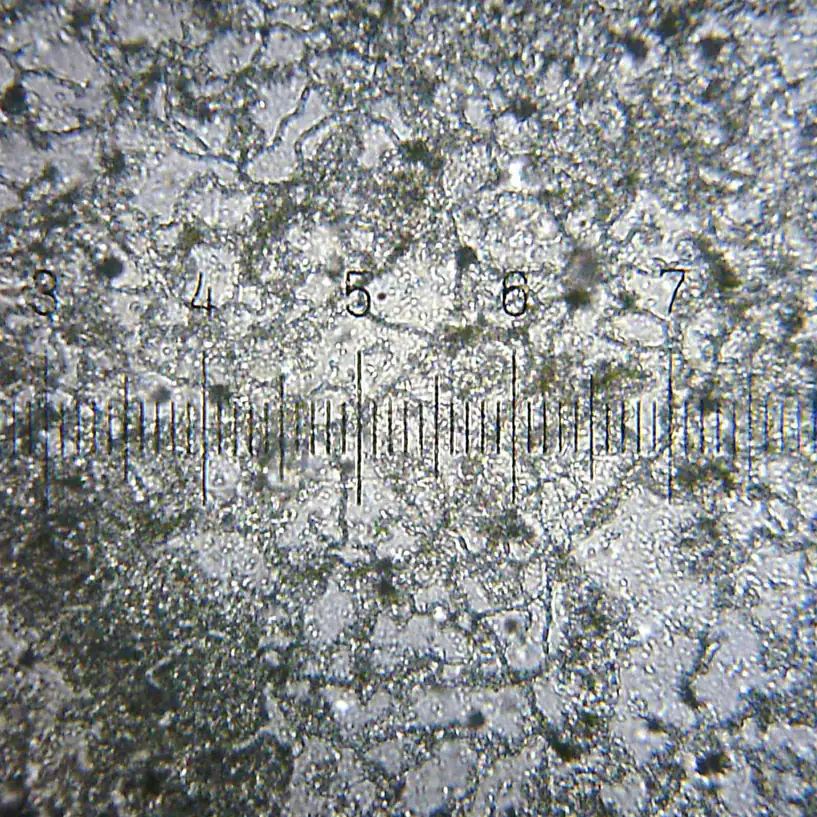

So household mildew is mold described by its appearance. People say mildew when growth is thin and flat on a surface, which does track an easier cleanup. The trap is treating the word as a verdict on the material underneath.
| Who uses the word | What they mean by mildew | What it tells you about cleanup |
|---|---|---|
| EPA | Certain kinds of mold, usually flat growth on damp surfaces | Nothing separate: same mold guidance |
| Plant pathology, powdery | Fungi living on live leaves and shoots | A garden issue, not a building one |
| Plant pathology, downy | Oomycetes, not true fungi | A garden issue, not a building one |
| Paint manufacturers | Dark spots on damp or shaded paint | Wash before repainting |
| S520 practice | Not a category: growth is Condition 1, 2 or 3 | Scope follows condition, area, material |
The mildews on your plants are not the mildew in your shower
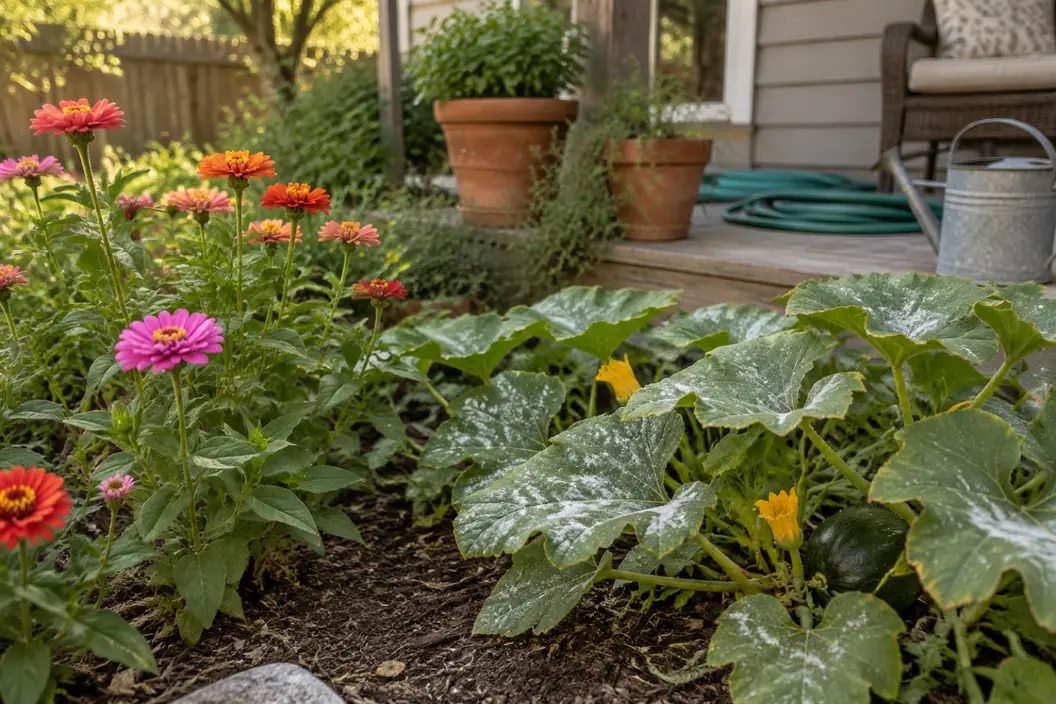
In plant pathology the word is precise. Powdery mildew is the white dusting on squash, roses and maples, and UC IPM Pest Note 7493, revised February 2026, says all powdery mildew fungi require living plant tissue to grow. It also says powdery mildew does not need moist conditions, and that water on plant surfaces for long periods kills the spores.
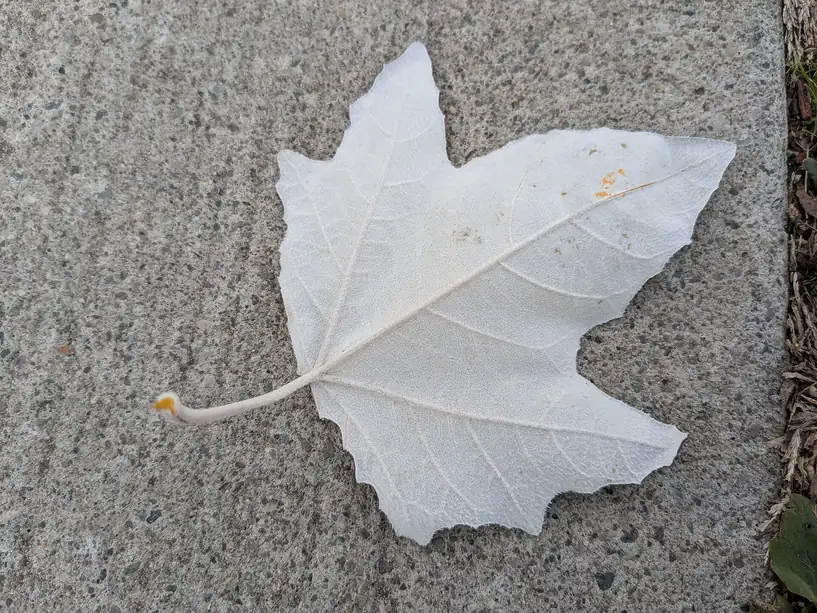

Downy mildew is further removed. Penn State Extension says these organisms, like Phytophthora and Pythium, are now not believed to be closely related to true fungi, and Cornell's hop program calls them oomycetes. None of this transfers to a wall: an organism that needs a living leaf cannot colonise grout or drywall. When a page calls mildew a less invasive mold, it is using the household meaning, not the botanical one.
Mold vs mildew, side by side
Setting the garden meaning aside, here is the building comparison, limited to what the sources support. Where a popular claim is unsupported, the row says so.
| Question | What people call mildew | What people call mold | Basis |
|---|---|---|---|
| Different organism? | No: a kind of mold, flat habit | Umbrella term for filamentous fungi | EPA |
| Typical look | Thin, flat, powdery or speckled | Often raised or fuzzy, any colour | EPA; FPL Wood Handbook |
| Typical place | Shower walls, sills, shaded paint | Framing, drywall, carpet, contents | EPA; UGA Extension |
| Depth | Usually on a sealed or hard surface | On the surface or through porous material | EPA Chapter 3; FPL |
| Tell apart by colour? | Not reliably | Not reliably | EPA Mold Course |
| Bleach lightening proves mildew? | No: it separates mildew from dirt | Mold pigment can lighten too | Paint makers’ test |
| Mildew turns into mold? | No source supports a stage | Growth spreads while it is damp | EPA has no stage language |
| Hard surface cleanup | Detergent, water, dry | Same | EPA home guide |
| Porous material cleanup | Same as mold | May have to be discarded | EPA home guide |
The early-stage claim is widely repeated and sometimes attributed to EPA, but EPA’s answer contains no such language. Colour fails for the reason it fails with black mold: the EPA Mold Course, Chapter 1 says no one can tell whether a mold is producing mycotoxins just by looking at it.
On the surface or inside the material
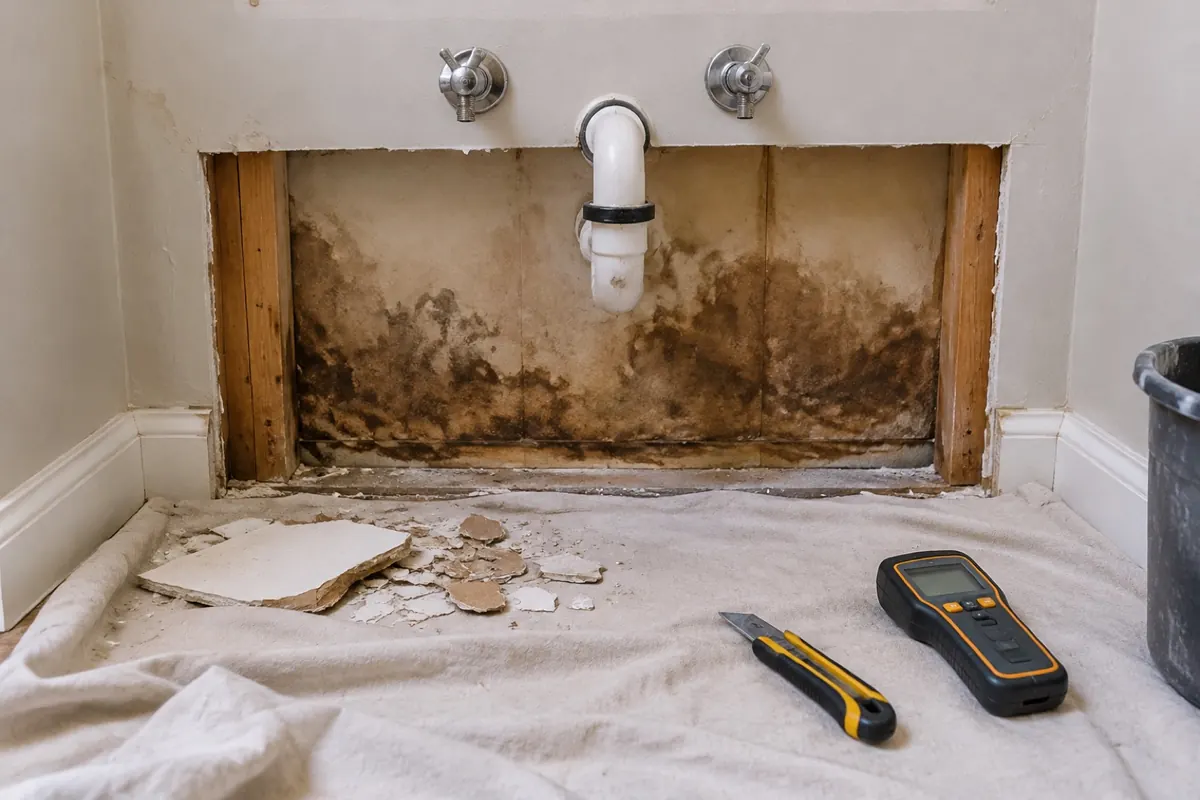
The difference people reach for with mildew versus mold is real, but it belongs to the material. EPA commercial guide, Chapter 3 says molds infiltrate porous substances and grow on or fill in empty spaces or crevices, so the mold can be difficult or impossible to remove completely, while on non-porous hard surfaces it can generally be removed by wiping or scrubbing with water and detergent.
Wood sits in between. The USDA Forest Products Laboratory Wood Handbook says that on softwoods, though the fungus may penetrate deeply, the surface growth often can easily be brushed or surfaced off, while on large-pored hardwoods such as oak the wood beneath is commonly stained too deeply to surface off. A clean-looking board is not a board with no fungus in it, which is why the moisture fix matters more than the scrub.
| Material (EPA Table 2 row) | EPA cleanup methods |
|---|---|
| Non-porous hard surfaces (plastics, metals) | 1, 2, 3 |
| Hard surface porous flooring (vinyl, ceramic tile, linoleum) | 1, 2, 3, 4 |
| Wood surfaces | 1, 2, 3, 4 |
| Concrete or cinder block | 1, 3 |
| Carpet and backing | 1, 3, 4 |
| Upholstered furniture and drapes | 1, 2, 4 |
| Wallboard (drywall and gypsum board) | 3, 4 |
Read it from the bottom. Wallboard gets no damp wipe at all, only HEPA vacuuming or removal, and EPA's Mold Cleanup in Your Home says porous materials such as ceiling tiles and carpet may have to be thrown away if they become moldy. That line separates a weekend clean from a remediation scope, whatever the growth is called.
The bleach spot test, and what it actually tells you
The popular home test comes from the paint trade. Sherwin-Williams says to apply a few drops of household bleach: if the spot is bleached away it is probably mildew, and if it does not disappear it is probably dirt. Benjamin Moore adds that mildew will lighten or disappear within a few minutes, while dirt will remain.
That is a mildew against dirt check for painters deciding whether a film needs washing before repainting. Neither manufacturer, nor EPA, presents it as a way to tell mildew from mold. A spot that lightens has shown only that its pigment bleaches, not that it is shallow, dead or gone.
| Claim about the spot test | Supported? | Why |
|---|---|---|
| Lightening means organic growth, not dirt | Roughly, on paint | This is the test as the paint makers describe it |
| Lightening means mildew, not mold | No | EPA treats mildew as a kind of mold |
| Lightening means it is only on the surface | No | Colour at the face says nothing about hyphae inside |
| Lightening means it is dead | No | Decolouring is not a kill claim, and killing is not enough |
| No change means dirt | Probably, on paint | Could also be water staining: look for the source |
| It can replace an assessment | No | EPA area and material rules set scope |
Why bleach is not the cleanup, either
EPA's answer on bleach, updated September 2026, says a biocide such as chlorine bleach is not recommended as a routine practice during mold cleanup, and that it is not enough to kill the mold: it must also be removed. EPA and CDC both warn never to mix bleach with ammonia.
Published strengths also differ. CDC's About Mold page gives 1 cup of laundry bleach in 1 gallon of water, and according to that ratio the bucket is about 5.9% bleach. According to the paint makers’ one part bleach to three parts water, it is 25%, about 4.2 times stronger, and Sherwin-Williams says to leave it on for 10 minutes. That mix prepares sound paint; it is not a method for porous material. Our page on whether bleach kills mold covers the chemistry.
The shared cause: humidity and damp surfaces
Whatever it is called, the growth wants the same thing. University of Georgia Extension, in a January 2015 article, says mildew usually begins to grow when relative humidity remains at 60 percent and the temperature is 60 degrees Fahrenheit or higher, and returns when dampness does. EPA's Brief Guide to Mold sets the indoor target below 60 percent, ideally 30 to 50 percent.
EPA’s Brief Guide adds that if you clean up the mold but don’t fix the water problem, the mold problem will most likely come back. Recurring shower speckles point to ventilation. Our page on mold in the shower covers the bathroom case.
How cleanup scope actually changes
Three facts set the scope: affected area, material and whether the moisture source is fixed. EPA's Mold Cleanup in Your Home says that under about 10 square feet, roughly a 3 foot by 3 foot patch, you can in most cases handle the job yourself. EPA Table 2 keeps that small tier, adds a medium tier up to 100 square feet and a large tier above it, with containment rising at each step.
| Situation | Likely scope | Why |
|---|---|---|
| Speckles on shower grout or caulk | Clean, dry, fix ventilation | EPA: scrub hard surfaces |
| Spots on shaded exterior paint | Wash, rinse, dry, repaint | Paint makers’ guidance |
| Condensation growth on a painted sill | Clean, dry, fix condensation | EPA lists damp wipe for wood |
| Painted drywall, under 10 square feet | Owner can usually handle; check the back if it recurs | EPA size line; wallboard methods |
| Drywall or carpet, over 10 square feet | Professional assessment, likely removal | EPA: porous materials may be discarded |
| Growth after sewage or contaminated water | Professional scope | EPA home guide |
See our DIY mold remediation and mold remediation process pages, mold inspection cost for assessments, and our mold hub.
What you are looking at: a decision path
Stop at the first step that applies. The word mildew is not one of the deciding facts.
- On a living plant? A powdery or downy mildew and a garden question. UC IPM says powdery mildews need living plant tissue, so it cannot move onto the house.
- A bleach drop on paint leaves it unchanged? Probably dirt, per the paint makers. Wash it and watch.
- Active leak, flood or sewage? Fix the water first. EPA says to call an experienced professional where sewage or contaminated water caused the damage.
- On tile, glass, metal or sound paint? Scrub with detergent and water, dry, then fix the humidity.
- On drywall, ceiling tile, carpet or upholstery? Assume it is in the material. EPA lists HEPA vacuum or removal for wallboard.
- Over about 10 square feet in total? EPA’s line for homeowner work. Above it, get an assessment.
- Back within weeks? The moisture source is still there. Find it before cleaning again.
For contractors
Owners use the word mildew to argue a job is smaller, and some estimates use it as a lighter line item. EPA has no mildew category, S520 rates condition, and EPA Table 2 sets method by material and area.
- Scope by material and area. Record material, measured area and condition, and let the method follow. Avoid mildew treatment as a line item.
- Do not sell the spot test. It is a painter’s mildew or dirt check, not evidence of depth, kill or clearance.
- Antimicrobials follow the label. EPA’s label guidance quotes the standard statement that use inconsistent with the labeling violates federal law.
- Respirators are an employer duty. Under 29 CFR 1910.134, OSHA requires a written program, medical evaluation and fit testing where respirators are necessary.
| What the file should show | Why an adjuster or client asks |
|---|---|
| Material and measured area per location | Sets the EPA tier and method |
| Moisture source and the fix | Otherwise the growth and the claim return |
| Before, during and after photos | Shows removal, not colour change |
| Products used, with label use | Federal label law |
| Post-cleaning visual check | EPA: no visible mold or moldy odours should remain |
Questions people actually ask
How do I know if it’s mildew or mold?
In a building it is always mold: EPA says mildew refers to certain kinds of mold, usually flat growth on damp surfaces. The useful question is whether it sits on a hard surface, where it wipes off, or in a porous material such as drywall or carpet, where it may need removal.
Is mildew or mold worse for you?
Health comparisons are outside this page’s scope; the note near the top says where to read about them. For cleanup the agencies make no distinction: EPA calls mildew a kind of mold, and CDC says you do not need to know the type of mold to remove it.
Which comes first, mold or mildew?
Neither. The claim that mildew is early-stage mold is not in EPA’s definition, which describes mildew as certain kinds of mold with a flat growth habit. Growth spreads for as long as the material stays damp, and the word people choose follows how it looks, not its age.
Is mildew easier to get rid of than mold?
Usually, because of where it grows. What people call mildew is mostly on hard or sealed surfaces, which EPA says can be scrubbed with water and detergent. The same growth in drywall or carpet is harder, because EPA says molds infiltrate porous materials and can be impossible to remove completely.
Is there a reliable mold vs mildew test?
No. The paint makers’ bleach test tells mildew from dirt: a spot that lightens within a few minutes is probably mildew, one that does not is probably dirt. It cannot separate mildew from mold, which EPA treats as the same thing, and lightening shows neither depth nor kill.
Is the white powder on my plants the same as mildew in the house?
No. UC IPM says powdery mildew fungi require living plant tissue, and Penn State says downy mildews are not closely related to true fungi. Neither can grow on a wall, grout or drywall. The household growth people call mildew is ordinary mold, and EPA’s mold guidance applies to it.
Sources
- EPA's mold and mildew answer (updated 23 June 2026) and EPA Mold Course, Chapter 1 (18 February 2026), EPA. Retrieved 13 October 2026.
- EPA's Mold Cleanup in Your Home (4 June 2026) and EPA's answer on bleach (8 September 2026), EPA. Retrieved 13 October 2026.
- EPA's Brief Guide to Mold, EPA, updated 18 February 2026. Retrieved 13 October 2026.
- EPA commercial guide, Chapter 3 and EPA Table 2, EPA, Mold Remediation in Schools and Commercial Buildings, updated April 2026. Retrieved 13 October 2026.
- EPA's pesticide label guidance, EPA, updated 2 June 2026. Retrieved 13 October 2026.
- CDC's About Mold page, CDC, last reviewed 26 September 2024. Retrieved 13 October 2026.
- UC IPM Pest Note 7493, UC Agriculture and Natural Resources, Downer, de la Fuente and Messenger-Sikes, revised February 2026. Retrieved 13 October 2026.
- Penn State Extension, Downy Mildew, G.W. Moorman, updated 16 November 2023. Retrieved 13 October 2026.
- Cornell's hop program, Weldon, Gent and Gadoury, November 2017. Retrieved 13 October 2026.
- University of Georgia Extension, Frank M. Watson, 27 January 2015. Retrieved 13 October 2026.
- USDA Forest Products Laboratory Wood Handbook, Chapter 14, Biodeterioration of Wood, C.A. Clausen, FPL-GTR-190, 2010. Retrieved 13 October 2026.
- Sherwin-Williams and Benjamin Moore mildew guidance; both undated. Retrieved 13 October 2026.
- a 2024 Cal State LA mold assessment, Terra Environmental Services, 26 February 2024. Retrieved 13 October 2026.
- 29 CFR 1910.134, via the Legal Information Institute. Retrieved 13 October 2026.
- Bleach shares are arithmetic on each printed ratio. Our methodology sets out how we source every figure.
This page describes published guidance, not any particular building or product.