The short answer
Mold in car interiors almost always means water is still getting in or never left: a blocked sunroof drain, a leak, a spill or a flood. Stop the source, dry the cabin with a dehumidifier, HEPA vacuum the dry growth, wipe hard trim with detergent and water, and replace soaked pad or seat foam. A flooded cabin is a title and insurance question first.
Key takeaways
- EPA 402-K-01-001 Table 1 says the subfloor under carpet must also be dried. In a car that is the pad and the metal floor pan.
- Kia's interior care section says never let water or other liquids contact the cabin’s electrical or electronic parts, so seats are never soaked.
- EPA's ozone generator page says ozone within public health limits does not effectively remove mold.
- Under Louisiana R.S. 32:707.3, a flood-totaled car gets a certificate of destruction and can never be titled for the road again.
- According to CARFAX's August 2025 release, up to 482,000 water-damaged cars were on US roads at the start of 2025.
- The only itemised published price found, from Westchester Detailing, reports moderate jobs at $1,000 to $1,500.
On this page
- Which car are you dealing with
- What you are looking at in a cabin
- Where the water came from
- EPA’s tables, applied to a car
- Mold in car carpet from water damage
- Mold in car seats
- How to get rid of mold in car interiors
- Ozone, vinegar and the sun
- Mold in car after flood: the title
- What removal costs, honestly
- Insurance language
- Bigger than the spot
- For contractors
- FAQ
Which car are you dealing with?
Match how the water got in, not the colour of the spots.
| Your situation | What it usually means | First move |
|---|---|---|
| Spots after a spill, cabin otherwise dry | Local growth | Dry, HEPA vacuum, wipe |
| Wet footwell after every rain | Active leak, often a blocked drain | Find the leak before cleaning |
| Car stored closed in humid weather, bloom everywhere | Cabin humidity | Dehumidify, then clean |
| Carpet soaked, pad squelches | Pad and floor pan wet | Lift carpet, replace pad |
| Floodwater reached the cabin | Possible total loss and title brand | Call the insurer before tear-out |
| Used car for sale smells musty | Possible hidden flood history | NMVTIS check and inspection |
EPA's mold cleanup page puts it in order: fix leaks and water problems as soon as possible and dry all items completely. Cleaning a surface that stays damp resets the clock.
What you are looking at inside a car
Flood silt, corrosion and water rings all get called mold in a car, and two of them are evidence of a flood rather than a cleaning problem.
| What you see | Most likely | Named by |
|---|---|---|
| Fuzzy spots, musty smell that stays after drying | Mold | NAIC |
| Mud or silt under seats or in the glove box | Floodwater residue | CARFAX |
| Rust on pedals, seat rails, under the dash | Water on metal | CARFAX, NAIC |
| Fog inside lamps or the instrument panel | Water in sealed parts | CARFAX |
| New carpet in an older car | Replaced after water | NAIC |
| White haze on leather seats | Mold or a wax bloom | See the leather test |
For a white haze on leather, the swab test on our mold on leather page separates a wax bloom from growth.
Where the water came from
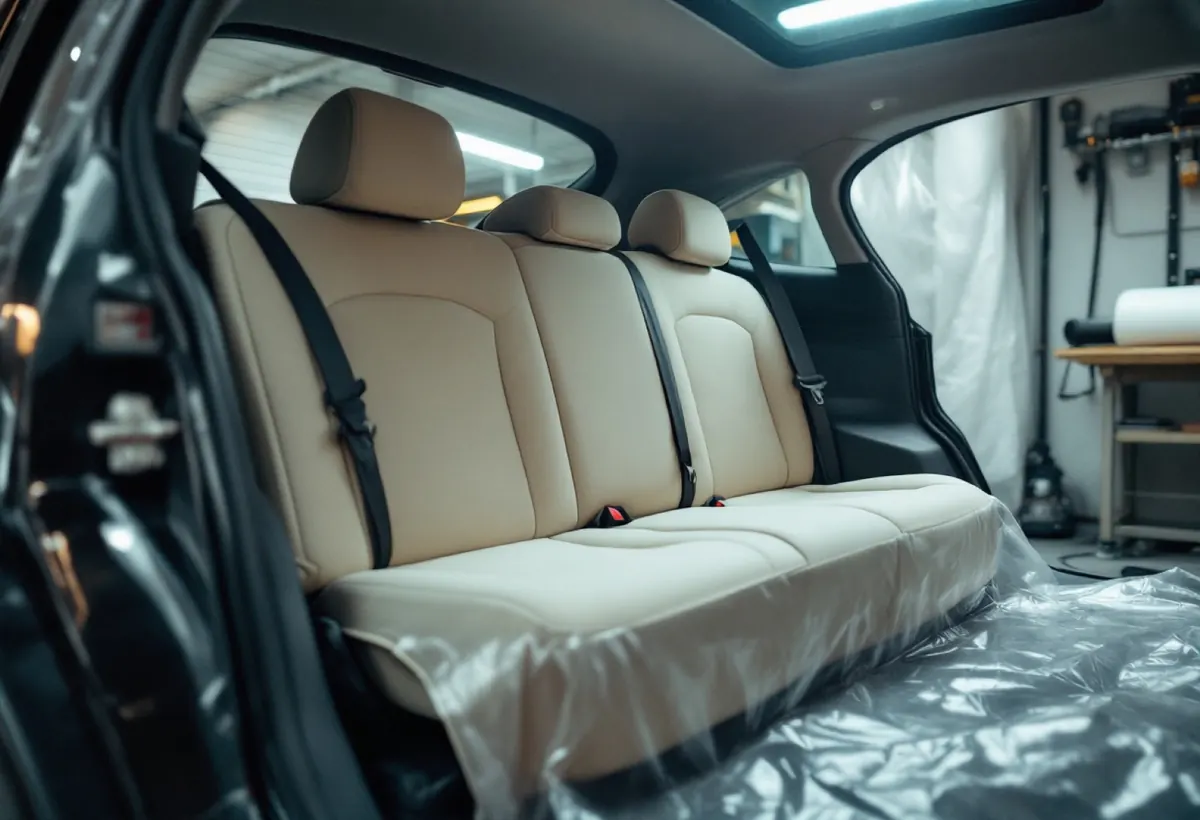
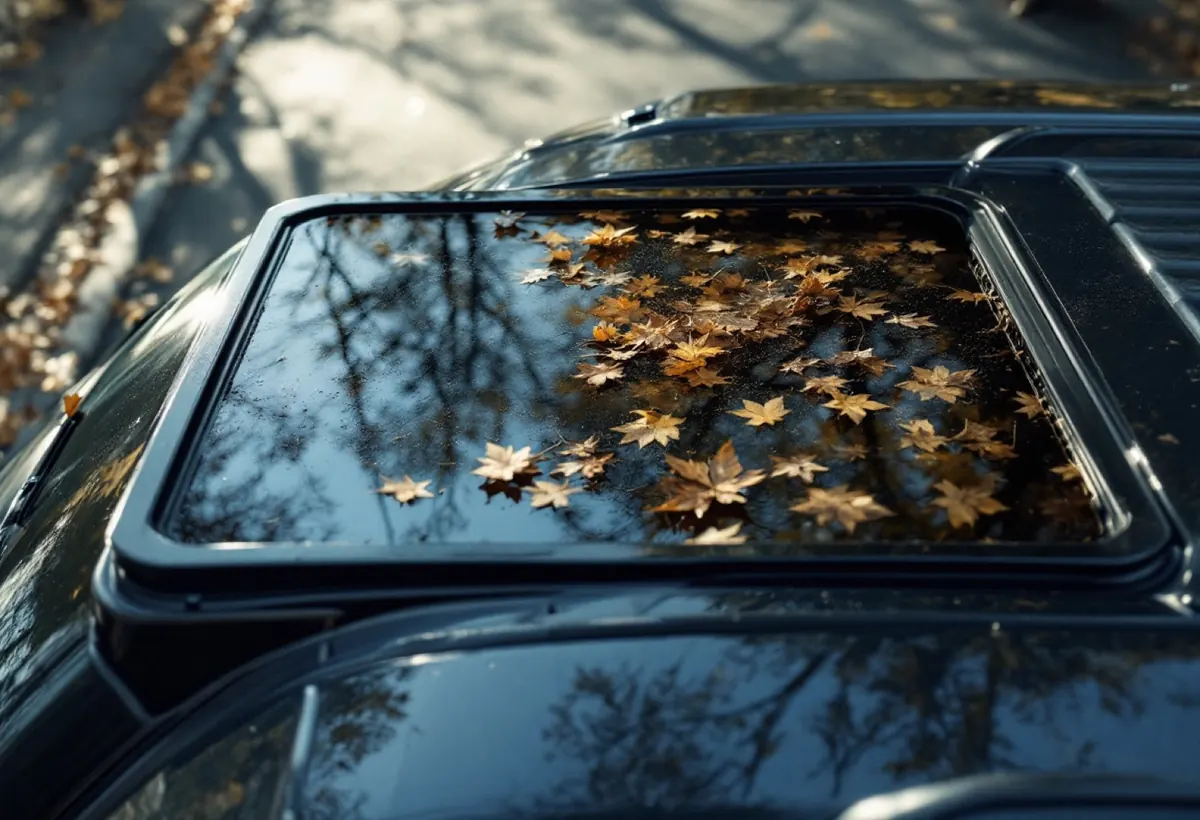
Drains and seals. Kia's sunroof care sheet says the sunroof has drainage holes and channels at the corners of its frame leading to the lower body, to be checked regularly for leaves and debris. A blocked drain usually wets one headliner edge or one footwell, so one-sided growth is a leak clue. A musty smell that comes only with the air conditioning, the mold in car AC complaint, belongs to that system: see mold in air ducts.
Spills and wet gear. A drink, gym kit or a snow-soaked mat gives local growth. EPA says to dry water-damaged items within 24 to 48 hours, and nobody runs a fan in a parked car.
The sealed parked car. EPA’s Brief Guide says keep humidity below 60 percent, ideally 30 to 50. A car stored closed through a humid season grows bloom on many surfaces at once, steering wheel included: humidity, not a leak.
EPA’s tables, applied to a car cabin
EPA has no vehicle guidance, but EPA 402-K-01-001 rates materials by type, and a cabin is built from those types. Table 1 covers clean water caught within 48 hours; Table 2 covers growth, with Method 1 wet vacuum, 2 damp wipe, 3 HEPA vacuum after thorough drying and 4 discard.
| Cabin part | EPA class | Table 1, wet under 48 h | Table 2, small area |
|---|---|---|---|
| Carpet face and pad | Carpet and backing | Extraction vacuum, dehumidifier, fans; dry the subfloor too | 1, 3 |
| Floor pan, seat rails | Non-porous hard (metals) | Damp wipe, water and mild detergent | 1, 2, 3 |
| Dash, door panels, console | Non-porous hard (plastics) | Damp wipe, water and mild detergent | 1, 2, 3 |
| Seat foam and fabric | Upholstered furniture | Extraction; may be hard to dry in 48 h | 1, 3 |
| Headliner | No direct class | Treat as upholstery | Judgement |
In a car, EPA’s subfloor is a steel pan that cannot breathe, so the pad holds water against it.
EPA’s size rule, about 10 square feet, rarely decides a car job because most cabins are small. Water source and material do. The general rule is on our DIY mold remediation page.
Mold in car carpet from water damage
Car carpet is a moulded face over a foam or fibre pad, and the pad does the damage. The face can feel dry while the pad stays wet on the steel for weeks, which is why mold in car carpet returns after a shampoo. Lift the carpet at the sill plate and press the pad. If it is damp, dry or replace the pad and wipe the pan before touching the face.
Why this differs from house carpet: a room has open air above and often wood below; a car has a closed cabin above and sheet metal below, so top drying rarely reaches the pad. House carpet is on mold on carpet.
Mold in car seats
Seats hold thick foam that dries slowly and wiring for heaters, sensors and airbags. The carmakers’ manuals are stricter about water than cleaning blogs, and they govern.
| What each manual reports | Kia | Mazda CX-3 | Honda Jazz |
|---|---|---|---|
| Liquids and electronics | Never let liquids contact electrical parts | Not on leather page | Liquids may make electrical devices malfunction |
| Leather cleaner | Neutral detergent or low alcohol solution | Suitable special cleaner, wipe residue | 90% water, 10% neutral soap |
| Wet leather | Avoid a wet cloth | Dry cloth at once; damp hardens and shrinks it | Remove dirt at once |
| Drying | Not stated | Shaded, ventilated area | Not stated |
| Avoid | Perfume, sun cream, hand cleaner, air freshener | Vinyl left on leather | Alkali or organic solvents |
| Mentions mold | No | Yes, if left uncleaned | No |
Sources: Kia's interior care section, Kia's 2024 interior care page, Mazda's CX-3 interior care page and Honda's Jazz owner's manual. Leather Naturally's care fact sheet adds that car interiors are usually pigmented leather and warns against too much water on perforated leather, the seats most likely to wick liquid into the foam.
Why this differs from sofa advice: a sofa has no airbag or occupant sensor. Put cleaner on the cloth, not the seat, and if the foam itself is wet or growing, the cushion comes out or is replaced.
How to get rid of mold in car interiors
For clean-water damage or humidity bloom. Floodwater, sewage or a fuel smell goes to the flood and contractor sections.
- Stop the water. Clear drains, fix seals, remove wet gear. Why it differs: cleaning before the leak is fixed guarantees regrowth.
- Open up and protect yourself. Doors open, work outside, gloves, N95 and goggles, EPA’s minimum kit for a small area. Why it differs: a cabin is a confined space that holds loosened spores.
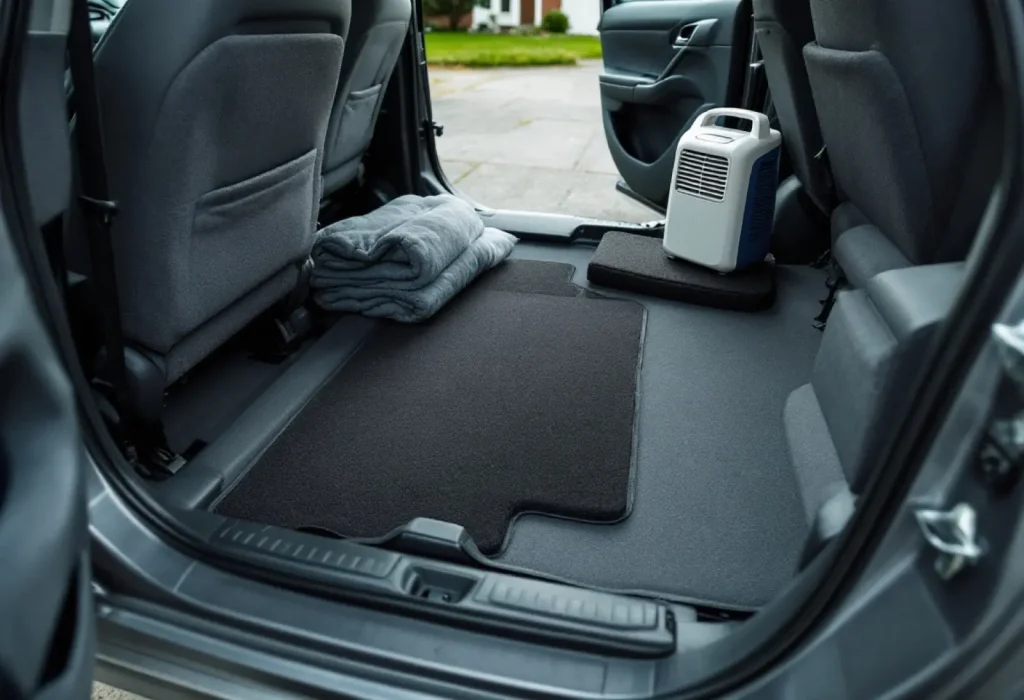
- Dry before you clean. Dehumidifier inside with doors shut, or a fan through open doors on a dry day. Why it differs: EPA Method 3 vacuums only after thorough drying; wet growth smears.
- Lift the carpet where it was wet. Pull sill plates, dry or replace the pad, wipe the floor pan. Why it differs: EPA wants the subfloor dried, which a shampoo cannot reach.
- HEPA vacuum soft surfaces. Seats, carpet, headliner edges, seat tracks, trunk. Why it differs: a shop vacuum without HEPA blows fines back into a small cabin.
- Damp wipe hard trim. Water and mild detergent, then dry. Why it differs: this is EPA Method 2, and carmakers bar organic solvents.
- Clean seats by the manual. Cleaner on the cloth, never sprayed into the seat. Why it differs: seats carry wiring Kia keeps dry.
- Replace what cannot dry. Soaked foam, pad, a stained headliner, the cabin air filter. Why it differs: EPA says porous items such as carpet may have to go.
- Recheck in a week. Close the car for a day, then smell it. Why it differs: a musty smell after full drying means water or growth remains.
Product choice matters least; vinegar is covered on does vinegar kill mold, and the manual’s cleaner rule outranks any of them on a seat.
Ozone, vinegar sprays and the sun
Ozone. EPA's ozone generator page says ozone within public health standards does not effectively remove mold, that stopping regrowth would take levels 5 to 10 times higher than those standards allow, and that even high levels may not affect growth inside porous material such as seat foam. More on the ozone generator page.
Sprays. A spray bottle pushes liquid into the foam and pad that were already too wet.
The sun. Sun with doors open dries; sun on a closed car heats trapped moisture. Mazda's CX-3 interior care page says dry leather upholstery in a shaded, ventilated area.
Mold in car after flood: the title comes first
the Bureau of Justice Assistance NMVTIS bulletin says severe water damage can make a vehicle’s electrical systems, including airbag sensors, prone to failure, and recalls that after Katrina flooded cars were trucked as far as the upper Midwest, dried, cleaned and sold. the Texas Department of Insurance says to have a mechanic look at a flooded car before starting it, and that the insurer weighs actual cash value against repair cost to decide whether it is totaled. After that, title law takes over.
| Jurisdiction | Trigger | What it requires |
|---|---|---|
| Federal, 28 CFR 25.52 to 25.56 | Insurer or yard takes a junk, salvage (flood included) or total loss vehicle | Insurers report monthly, current model year plus 4 prior; yards report monthly |
| Florida, 319.14 | Total loss caused by water | Title stamped, written disclosure, flood wording in every advert, brand for life |
| Minnesota, 325F.6642 | Total loss from water or flood | ‘Flood damaged’ on this and every later title |
| Minnesota, 325F.6641 | Flooded above the bottom of the dashboard on a dealer’s lot | Written disclosure at each resale |
| Louisiana, 32:702 and 32:707.3 | Flood damage to power train, computer or electrical system, plus total loss | Certificate of destruction within 30 days; parts or crusher only |
Texts: 28 CFR Part 25, Subpart B, Florida Statutes 319.14, Minnesota Statutes 325F.6642, Minnesota Statutes 325F.6641, Louisiana R.S. 32:702, Louisiana R.S. 32:707.3. Per the Louisiana statute, violations carry up to 6 months or a $500 to $5,000 fine.
NICB's October 2017 release reports more than 422,000 Harvey vehicles taken for processing, against about 300,000 Katrina claims.
CARFAX's Helene estimate, reported by Auto Remarketing on 17 October 2024, put Helene at upwards of 138,000 vehicles; the state figures sum to 137,700, and Florida is 44 percent of them, according to CARFAX.
Buyers: the NAIC's used car guide says NMVTIS is the one database where all insurers, salvage yards and auctions report total losses, while NICB VINCheck covers only participating companies. A clean report on a musty, re-carpeted car still needs an inspection.
What car mold removal costs, honestly
| Job size | Published figure |
|---|---|
| Minor surface mold, DIY kit | Under $200 |
| Moderate professional job | $1,000 to $1,500 average |
| Severe, with part replacement | Over $2,000 |
No agency publishes vehicle mold prices. Westchester Detailing says seats, carpet and trim may need removal, especially where flooding saturated the carpet, and that is the cost driver: vacuuming is a detail, replacing pad and foam is a repair. Ask each quote which parts come out.
Insurance language
the Texas Department of Insurance says comprehensive auto coverage covers flood damage to a car. the Louisiana Department of Insurance says comprehensive is not required by law and that with only liability, or liability and collision, it is highly probable flood damage will not be covered. Mold from a slow leak is worded differently. This page does not say what your policy pays: read it, and ask your agent or state insurance department.
Signs it is bigger than the spot
| Sign | What it suggests |
|---|---|
| Musty smell back within a week | Wet pad or foam left in |
| Footwell wet again after rain | Active leak |
| Growth on the headliner | Roof or sunroof drain leak |
| Silt in the glove box | Flood history |
| Fogged lamps, brittle wiring, warning lights | Water in electrics; mechanic first |
| Fuel or sewage smell | Contaminated water; professional with PPE |
For contractors
| Item | What to do | Why |
|---|---|---|
| Authorisation | Insurer or owner sign-off before tear-out | TDI: the insurer may total it |
| Water category | Record clean, grey or floodwater | EPA: no fans until water is known clean; OSHA PPE if not |
| Photos | Water line, footwells, under carpet, VIN | TDI asks for photos |
| Scope | List pad, carpet, foam, headliner, filter | Separates detail from repair |
| Title | Note any brand on the work order | Florida and Minnesota brands follow the car |
| Close-out | Dry pad, no odour, leak fixed | Regrowth claims start with a missed source |
NMVTIS reporting falls on insurers, yards and recyclers, not cleaners. Your exposure is cleaning a flood car so well that the next buyer cannot tell, the pattern the BJA bulletin describes. Keep the paper trail.
What this page does not cover. Health effects of mold are outside our scope; see CDC's mold page and EPA's Brief Guide to Mold, Moisture and Your Home, and ask a physician. Engine, electrical and airbag repair belong with a mechanic.
Questions people actually ask
Can you get mold out of a car?
Usually, if the water source is fixed and soaked parts are replaced. Dry the cabin, HEPA vacuum the dry growth, wipe hard trim with water and mild detergent, and replace wet pad or seat foam. EPA notes porous materials such as carpet may have to be thrown away. A smell that returns after drying means something is still wet.
Will mold in a car go away on its own?
No. Growth stops spreading once the cabin dries, but the growth and stain stay and restart when humidity rises. EPA says dry wet items within 24 to 48 hours and keep humidity below 60 percent, which in a parked car means a dehumidifier or open doors on dry days, then cleaning.
Does parking in the sun kill mold in a car?
Not reliably. Sun with the doors open helps drying, but sun on a closed car mostly heats trapped moisture. Mazda tells owners to dry leather upholstery in a shaded, ventilated area, so baking leather seats runs against at least one carmaker’s manual. Drying and removal do the work.
Is it safe to drive a car with mold?
Health questions are outside this publication’s scope; CDC’s mold page and EPA’s Brief Guide are the federal references, and a physician is the person to ask. Separately, a flooded car can have electrical faults, and the Texas Department of Insurance says to have a mechanic check it before starting it.
Does car insurance cover mold?
It depends on cause and wording. The Texas Department of Insurance says comprehensive coverage covers flood damage to a car, and Louisiana’s regulator says liability-only drivers are probably not covered for flood. Mold from a slow leak is worded differently. Read your policy and ask your agent or state insurance department.
Should I buy a used car that had mold?
Find out why first. Run the VIN through NMVTIS, which the NAIC calls the one database where insurers and salvage yards report total losses, and check NICB VINCheck. Look for silt, rust, fogged lamps and new carpet. A flood-branded or musty, re-carpeted car needs an independent inspection before you pay.
Sources
- US EPA: EPA's Brief Guide to Mold, Moisture and Your Home (updated 18 February 2026), EPA's mold cleanup page (4 June 2026), EPA 402-K-01-001 Tables 1 and 2, and EPA's ozone generator page (19 February 2026). Retrieved 31 October 2026.
- CDC's mold page, 26 September 2024. Retrieved 31 October 2026.
- Kia's interior care section, Kia's 2024 interior care page and Kia's sunroof care sheet, Kia. Retrieved 31 October 2026.
- Mazda's CX-3 interior care page, Mazda. Retrieved 31 October 2026.
- Honda's Jazz owner's manual, Honda Cars India, 2016. Retrieved 31 October 2026.
- Leather Naturally's care fact sheet, May 2023. Retrieved 31 October 2026.
- the Bureau of Justice Assistance NMVTIS bulletin, US Department of Justice, November 2012. Retrieved 31 October 2026.
- 28 CFR Part 25, Subpart B, via eCFR. Retrieved 31 October 2026.
- the NAIC's used car guide, 2020, modified 11 June 2024. Retrieved 31 October 2026.
- Florida Statutes 319.14; Minnesota Statutes 325F.6642 and Minnesota Statutes 325F.6641; Louisiana R.S. 32:702 and Louisiana R.S. 32:707.3. Retrieved 31 October 2026.
- the Louisiana Department of Insurance flood tips and the Texas Department of Insurance (updated 8 October 2025). Retrieved 31 October 2026.
- NICB's October 2017 release, 19 October 2017. Retrieved 31 October 2026.
- CARFAX's Helene estimate, Auto Remarketing, 17 October 2024; CARFAX's August 2025 release, The Auto Channel, 6 August 2025. Retrieved 31 October 2026.
- Westchester Detailing, 13 October 2023. Retrieved 31 October 2026.
- Sums and shares are arithmetic on the figures above. No vehicle was inspected. See our methodology and the mold hub.
Title law and policy wording change. Check your state’s current statute, your policy and your owner’s manual.