The short answer
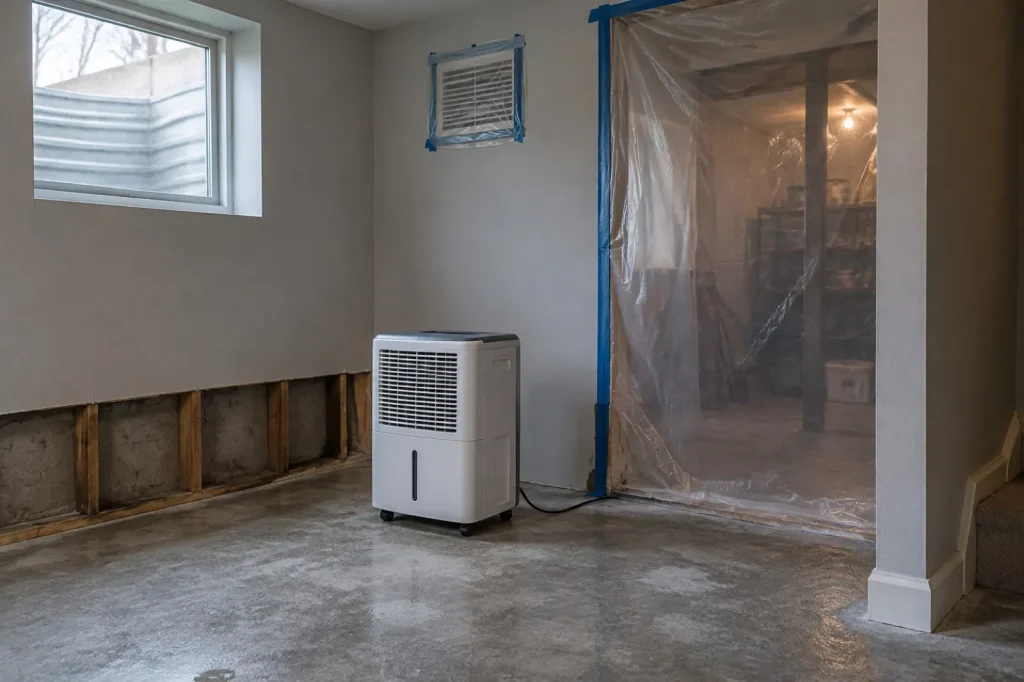
Mold mitigation means controlling the moisture and stopping mold from spreading while the real fix is arranged: stopping the leak, drying, isolating the area and shutting down air handling that serves it. Remediation is the removal work itself. Texas, New York and Florida define remediation, not mitigation, and the Texas and Florida definitions include preventive activities, so the label does not avoid licensing.
Key takeaways
- None of the Texas, New York or Florida mold statutes defines mitigation. All three define remediation, and that is the word a license attaches to.
- Texas and Florida put preventive activities inside the legal definition of mold remediation. Calling a treatment mitigation does not move it outside the statute.
- New York goes the other way on moisture: its definition excludes fixing the underlying sources of moisture, which needs other trades.
- EPA’s 56-page remediation guide uses remediate or remediation 200 times and mitigate zero times, by our count.
- Mold abatement is a defined term in New York: the same work as remediation, done by an individual, under a separate abater license.
- Policy wording uses every verb at once: one fungi endorsement’s liability exclusion lists testing, monitoring, abating, mitigating, removing, remediating or disposing of fungi.
On this page
- Five words for one problem
- What the statutes actually say
- Mold mitigation vs remediation, task by task
- Mold abatement
- Moisture control: mitigation that lasts
- Interim containment
- What a mitigation invoice should show
- How policy language treats it
- The decision path
- For contractors
- Questions people actually ask
Search results treat mitigation, remediation and removal as synonyms, and franchise pages use whichever sells. The documents that decide licensing, scope and payment are more precise. This page reads them directly: three state statutes, EPA’s guidance, the IICRC standard’s published summary and two policy forms.
Out of scope. Health effects of mold, including questions about mold toxicity, are not covered; see EPA’s mold pages and CDC. Insurance passages describe published policy wording only. Your own policy, your state insurance department and a licensed professional decide what applies to you.
Five words for one problem
Mitigation is borrowed from water losses, where it names the emergency stage, and from radon work; our pages on water mitigation and radon mitigation cover those. For mold, the regulatory vocabulary is remediation and assessment, with abatement in New York.
| Term | What it covers | Who defines it | In practice |
|---|---|---|---|
| Mitigation | Control moisture, limit spread, interim containment | No statute reviewed defines it | Leak stopped, area dried and isolated |
| Remediation | Removal, cleaning, sanitizing, demolition or other treatment | TX, NY and FL statutes | Licensed above each state’s threshold |
| Removal | Physically taking growth or material out | EPA cleanup Methods 1 to 4 | The core task inside remediation |
| Abatement | Remediation acts done by an individual | New York Labor Law 930(5) | Worker level, abater license |
| Assessment | Inspection, plan or protocol, sampling | TX, NY and FL statutes | Separate license; conflict rules |
| Prevention | Moisture control so growth does not start | EPA prevention guidance | Leak repair, humidity, ventilation |
What the statutes actually say
Under Texas Occupations Code 1958.001, mold remediation means the removal, cleaning, sanitizing, demolition, or other treatment, including preventive activities, of mold or mold-contaminated matter that was not purposely grown at that location. Florida Statutes 468.8411 uses nearly the same words, limited to more than 10 square feet. Neither statute uses the word mitigation, and neither do the New York definitions.
New York Labor Law 930 draws two lines the others do not. Remediation explicitly includes mold containment and waste handling, so interim containment by a business on a project counts. And it excludes remediation of the underlying sources of moisture that needs expertise outside the article: the plumber’s repair is not mold remediation.
| State | Remediation means | Threshold | Separation rule |
|---|---|---|---|
| Texas | Removal, cleaning, sanitizing, demolition, or other treatment, including preventive activities | License needed at 25 contiguous sq ft or more | No assessment and remediation on the same project |
| New York | Removal, cleaning, sanitizing or surface disinfection, mold containment and waste handling, by a business | A project is over 10 sq ft | Assessor writes the plan; remediator follows it |
| Florida | Removal, cleaning, sanitizing, demolition, or other treatment, including preventive activities | Definition covers over 10 sq ft | No remediation within 12 months of own assessment, Division I contractors excepted |
Mold mitigation vs remediation, task by task
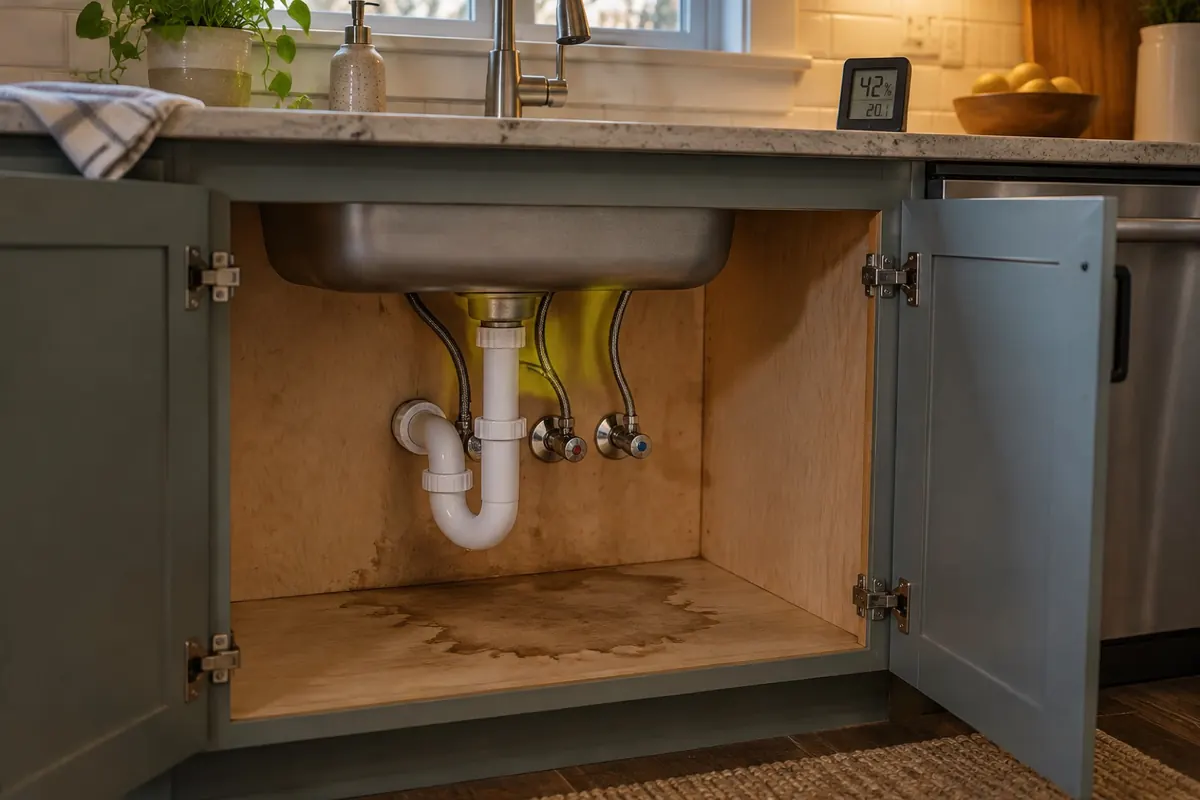
Mitigation acts on the conditions; remediation acts on the mold. The line matters because remediation above the thresholds is licensed work in these three states, and because insurers and assessors read invoices by task, not by heading.
| Task | Which bucket | Basis |
|---|---|---|
| Stopping the leak or condensation | Mitigation | NY excludes moisture-source repair from remediation |
| Drying wet material within 24 to 48 hours | Mitigation | EPA: quick drying avoids the need for remediation |
| Shutting down HVAC serving the area | Mitigation, interim | EPA: do not run a system suspected of contamination |
| Plastic isolation of the moldy area | Mitigation; remediation in NY on a project | NY lists mold containment in remediation |
| Spraying a preventive treatment on growth | Remediation in TX and FL | Both include preventive activities and other treatment |
| HEPA vacuuming, cleaning, cutting out drywall | Remediation | Removal and cleaning in all three definitions |
| Post-work check and clearance | Assessment | NY 947 clearance; TX certificate |
Mold abatement: New York’s word for the worker
New York Labor Law 930 defines mold abatement as removal, cleaning, sanitizing or surface disinfection of mold, mold containment and waste handling, by an individual. Remediation is the same work by a business. New York Labor Law 931 makes it unlawful to engage in abatement on a project without a mold abater’s license, and requires a copy of the remediation license displayed at the site.
Outside New York the word is most familiar from asbestos work; see our asbestos abatement page. Read a mold abatement quote as a remediation quote.
Moisture control: the mitigation that lasts
EPA's mold prevention chapter states the principle: the key to mold control is moisture control. Its humidity target is below 60% relative humidity, ideally 30 to 50%, per EPA. EPA's A Brief Guide to Mold, Moisture and Your Home adds that if wet materials are dried within 24 to 48 hours, in most cases mold will not grow, and that a humidity meter costs $10 to $50 according to the same EPA booklet.
| EPA prevention action | Why |
|---|---|
| Fix plumbing and envelope leaks | The water source feeds the growth |
| Watch for condensation and wet spots | Early sign of high humidity |
| Insulate or raise surface temperature | Stops condensation |
| Keep drip pans clean and draining | Standing water in equipment |
| Vent dryers and similar appliances outdoors | Removes moisture at the source |
| Clean and dry damp spots within 48 hours | Before growth starts |
| Slope ground away from the foundation | Keeps foundations dry |
Interim containment: what to do before remediation
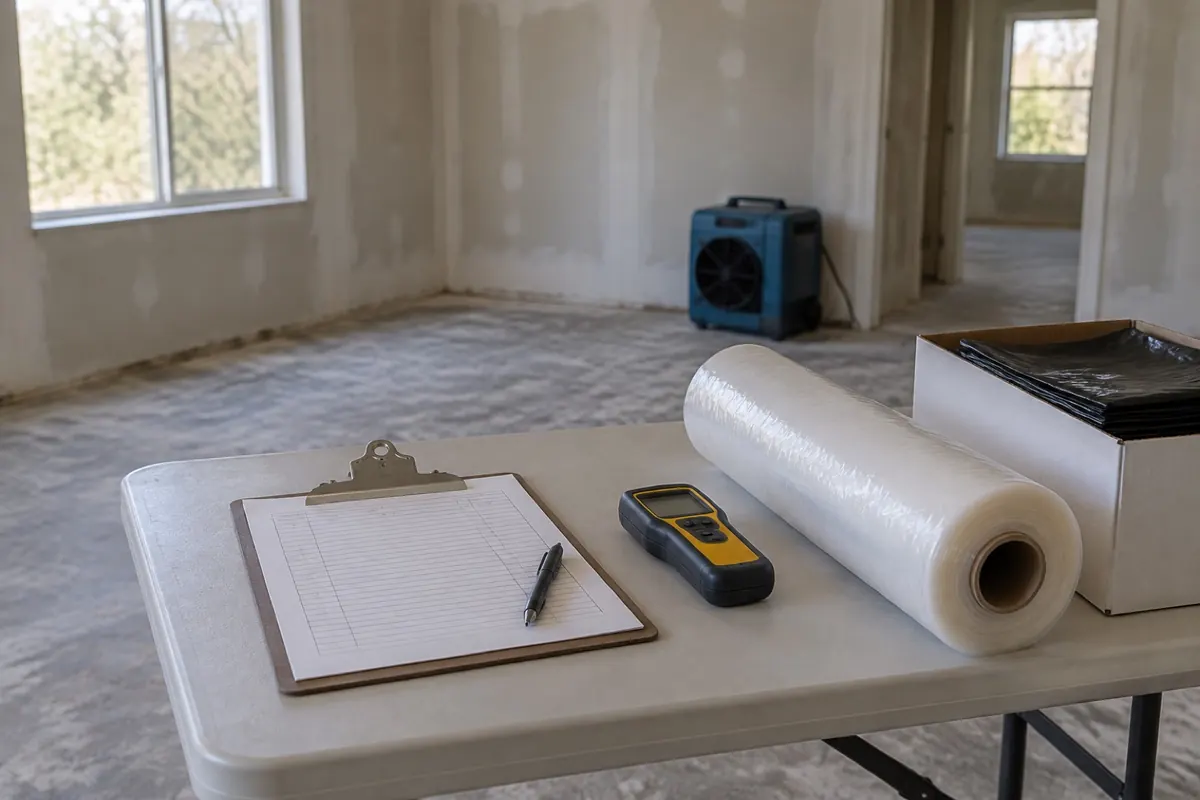
This is the gap mitigation fills: growth found, remediator booked, people still living there. EPA's remediation chapter supplies the rules. Do not run an HVAC system you suspect is contaminated. Avoid the actions likely to put spores in the air: breaking up moldy wallboard, opening wall cavities, stripping wallpaper and drying with fans. The notes to EPA 402-K-01-001 add: do not use fans before determining that the water is clean.
Two common shortcuts work against you. EPA says not to paint or caulk moldy surfaces. And a preventive spray is, in Texas and Florida, remediation by definition. Interim work is isolation and drying, not treatment.
What a mold mitigation invoice should show
No statute prescribes a mitigation invoice, but New York Labor Law 945 lists what a mold remediation plan must specify, and it is the clearest published checklist for any mold paperwork. The homeowners form ISO HO 00 03 05 11 (Maine Bureau of Insurance copy) adds the policyholder’s side: keep an accurate record of repair expenses.
| Line | What it should show | Basis |
|---|---|---|
| Moisture source and repair | What caused it and who fixed it | NY 945(1)(h); NY 930(3) |
| Areas and quantities | Rooms, measured square feet, materials | NY 945(1)(a) and (b) |
| Methods per area | Clean, HEPA vacuum or remove, by area | NY 945(1)(c) |
| Containment and protection | Type of containment and PPE | NY 945(1)(d), 945(2) |
| Products used | Brand, EPA registration, label use | NY 945(3), 946(5) |
| Clearance criteria and result | How done was judged, and by whom | NY 945(1)(e), 947 |
| Cost and time frame | Estimate against actual | NY 945(1)(g) |
| Repair expense records | Dated, itemized costs to protect the property | ISO HO 00 03 duties after loss |
Price guides use the words loosely. According to Fixr (updated 29 August 2025), mold remediation runs $1,500 to $9,000, average $3,500, and the same guide reports ServiceMaster at $1,200 to $4,500 for mold mitigation. Our mold remediation cost page and the cost calculator break those figures down.
How policy language treats mold mitigation
Policy forms use the verbs side by side. The fungi exclusion wording below comes from an Indiana endorsement that carries ISO copyright; the base form is the ISO HO 00 03 05 11 (Maine Bureau of Insurance copy). These are two published forms, not a survey of the market, and they say nothing about any particular claim.
| Clause | Wording, paraphrased closely | Why it matters |
|---|---|---|
| Mold exclusion (ISO HO 00 03) | Excludes mold, fungus or wet rot, but insures it when hidden in walls, ceilings or floors and caused by an accidental discharge from plumbing, heating, cooling, sprinkler or appliance systems | Sudden plumbing leaks are the carve-back |
| Reasonable Repairs (ISO) | Pays the reasonable cost of necessary measures taken solely to protect covered property from further damage | Mitigation of a covered loss is named |
| Duties after loss (ISO) | Protect the property from further damage; keep an accurate record of repair expenses | Mitigation is a policyholder duty |
| Fungi definition (AAA) | Any type of fungus, including mold or mildew, and any mycotoxins, spores, scents or by-products | Broader than the word mold |
| Limited fungi coverage (AAA) | Remediation, access tear-out and testing, up to $10,000 in total, per the endorsement | Only if reasonable means were used to save the property |
| Liability exclusion (AAA) | Testing, monitoring, abating, mitigating, removing, remediating or disposing of fungi | Every term on this page, in one list |
The AAA endorsement pays for testing only to the extent there is reason to believe fungi are present, and requires prompt notice of the covered cause of loss. Document the reason for any test.
The decision path
- Wet but no visible growth, under 48 hours? That is water mitigation: extract, dry and measure. Mold work may never be needed.
- Is the moisture source stopped? If not, that comes first, and in New York it is not mold remediation at all.
- Measure the growth. Under about 10 square feet is owner territory in EPA guidance; see our DIY page and the surface method.
- Check the state threshold. Over 10 square feet in New York or Florida, or 25 contiguous in Texas, hire a licensed remediator, unless an owner exemption applies.
- Get the assessment from someone else. Texas bars one license holder doing both on a project; Florida bars a 12-month crossover.
- Hold the line meanwhile. HVAC off for that area, no fans on unknown water, no paint, no spraying, door closed.
- Insurance claim? Give prompt notice, photograph before work, keep every receipt.
- Finish with clearance. Get the clearance report or Texas certificate in writing.
Testing has a role in disputes and clearance; the sibling mold testing page covers it.
For contractors: label the scope the way the law reads it
Write mitigation lines for what they are: source stopped, drying, isolation, HVAC shutdown. Anything that removes, cleans or treats mold is remediation in the statutes, whatever the line is called, and in licensed states it needs the license.
Paper trail duties differ. Under Texas Occupations Code 1958.154, the remediator gives the owner a certificate within 10 days of completion, with a mold assessment license holder’s statement; a seller must hand buyers certificates from the past 5 years. In New York, New York Labor Law 946 requires the work plan before site preparation, signs at entrances, and containment left up until clearance under New York Labor Law 947. New York Labor Law 933 lists owner exemptions.
The IICRC's S520 page lists the 2024 fourth edition’s components, including mold cleaners, antimicrobial chemicals and coatings as remediation tools, and post-remediation verification. Chemicals are tools inside remediation, not a substitute for it.
Questions people actually ask
What is the difference between mold mitigation and remediation?
Mitigation controls conditions: stopping the leak, drying, isolating the area and shutting down air handling. Remediation is removal, cleaning or treatment of the mold itself. Texas, New York and Florida define only remediation, and Texas and Florida include preventive activities in it, so a treatment called mitigation can still be licensed remediation.
Can I mitigate mold myself?
Usually, yes. Stopping a leak, drying and isolating a room need no mold license. Owner exemptions exist too: New York exempts a residential owner working on their own property, and Texas exempts owners of residential property with fewer than 10 units. EPA suggests owners handle cleanup under about 10 square feet.
How expensive is it to remediate mold?
According to Fixr, updated 29 August 2025, mold remediation runs $1,500 to $9,000 with an average of $3,500, or $10 to $30 per square foot. Fixr also reports ServiceMaster at $1,200 to $4,500 for mold mitigation. Area, access and how much material comes out drive the spread.
Can mold truly be remediated?
Yes, judged against clearance criteria rather than zero spores. EPA says sterilizing an area is usually neither possible nor desirable; background spores remain and will not grow once the moisture problem is resolved. New York clearance requires the work area free from all visible mold and work done to the plan.
What is mold abatement?
In New York it is a defined term: removal, cleaning, sanitizing or surface disinfection of mold, containment and waste handling, done by an individual, who needs a mold abater’s license. The same work by a business is remediation. Elsewhere it is used loosely for remediation.
Does homeowners insurance pay for mold mitigation?
This page cannot say what your policy pays. The ISO form reviewed here pays reasonable costs to protect covered property from further damage and makes protecting it a policyholder duty, while excluding most mold. Read your policy, ask your state insurance department and see our mold insurance page.
Sources
- Texas Occupations Code 1958.001, Texas Occupations Code 1958.102, Texas Occupations Code 1958.154 and Texas Occupations Code 1958.155, Texas Occupations Code chapter 1958, via the Texas.Public.Law mirror. Retrieved 18 October 2026.
- New York Labor Law 930, New York Labor Law 931, New York Labor Law 933, New York Labor Law 945, New York Labor Law 946 and New York Labor Law 947, New York Labor Law article 32, via the NewYork.Public.Law mirror. Retrieved 18 October 2026.
- Florida Statutes 468.8411 and Florida Statutes 468.8419, Florida Statutes 2025, Online Sunshine. Retrieved 18 October 2026.
- EPA 402-K-01-001, Mold Remediation in Schools and Commercial Buildings, reprinted September 2008; term counts computed from it. Retrieved 18 October 2026.
- EPA's mold prevention chapter, US EPA, updated 8 September 2026. Retrieved 18 October 2026.
- EPA's remediation chapter, US EPA, updated 29 April 2026. Retrieved 18 October 2026.
- EPA's A Brief Guide to Mold, Moisture and Your Home, US EPA, updated 18 February 2026. Retrieved 18 October 2026.
- IICRC's S520 page, ANSI/IICRC S520 Standard for Professional Mold Remediation, fourth edition 2024, published summary. Retrieved 18 October 2026.
- ISO HO 00 03 05 11 (Maine Bureau of Insurance copy), Homeowners 3 Special Form. Retrieved 18 October 2026.
- Auto Club Indiana fungi endorsement CO 00 12 07 05, Auto Club Family Insurance Company. Retrieved 18 October 2026.
- Fixr, mold remediation cost, updated 29 August 2025. Retrieved 18 October 2026.
- Our methodology sets out how we read statutes and policy forms; the mold hub lists related guides.
Statutes and policy forms change. Check the current text with your state licensing agency and insurance department before relying on any definition here.