The short answer
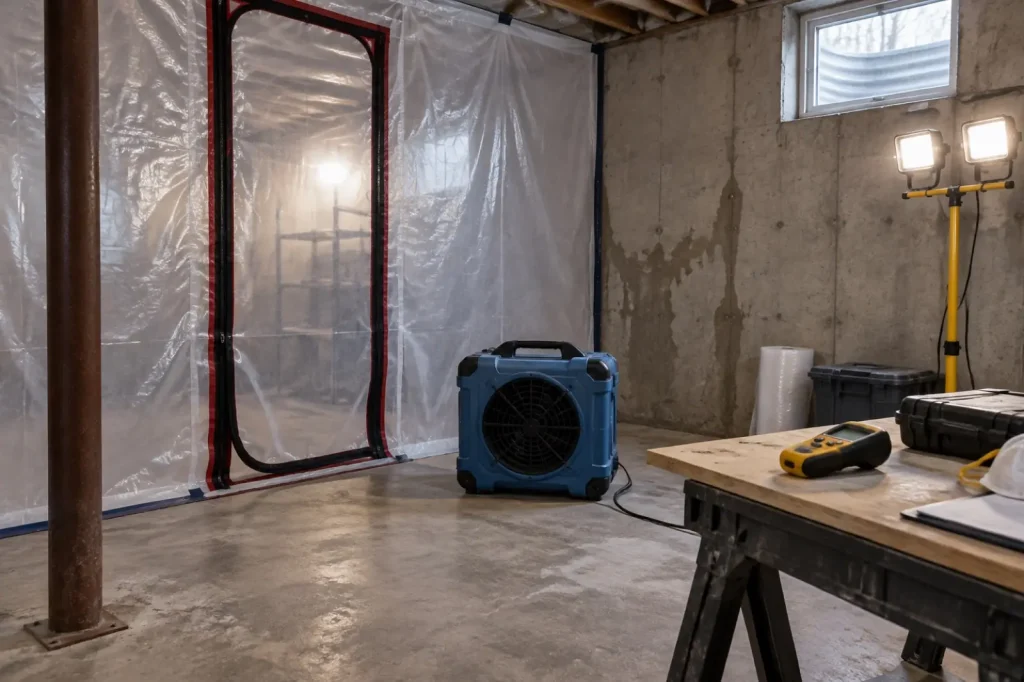
What is remediation? It is the act of correcting a problem, and in property and environmental work it means removing, cleaning up or containing contamination so it stops causing harm. Each field defines it its own way: Superfund law contrasts remedial action with removal, state statutes define mold remediation, asbestos rules say response action, lead rules say abatement and radon work says mitigation.
Key takeaways
- The general meaning is correcting a situation. Cambridge Dictionary gives that sense plus an environmental one: removing dangerous substances or limiting their effect.
- In federal cleanup law remedial action means a permanent remedy, as opposed to a short-term removal action, per 40 CFR 300.5.
- Texas, New York and Florida each define mold remediation in statute. Florida and New York regulate above 10 square feet; Texas exempts work under 25 contiguous square feet from licensing.
- Asbestos school rules never say remediation. They say response action: removal, encapsulation, enclosure, repair, or operations and maintenance.
- Lead law says abatement, meaning measures designed to permanently eliminate the hazard, and HUD defines permanent as an expected design life of at least 20 years.
- Remediation removes or neutralises a contaminant; mitigation reduces exposure or damage; restoration puts the property or habitat back.
On this page
- Remediation definition, the general sense
- Environmental remediation under Superfund
- RCRA corrective action
- Mold remediation in state law
- Asbestos: the law says response action
- Water damage: three words, three jobs
- Lead says abatement, radon says mitigation
- Remediation in IT security
- The terminology table
- The remediation process in phases
- Which word belongs on the contract
- Questions people actually ask
Remediation definition, the general sense
To define remediation, start with the root: remedy. Cambridge Dictionary defines remediation as the process of improving or correcting a situation, with the example of reading problems, and gives a separate environmental sense: the process of removing dangerous or poisonous substances from the environment, or limiting the effect they have on it. Those two senses already contain the split that matters in practice: taking the problem away, or containing it.
| Context | What remediation means | Who says so |
|---|---|---|
| General English | Improving or correcting a situation | Cambridge Dictionary |
| Education | Correcting a skill gap, as in remediation of reading problems | Cambridge Dictionary |
| Environment | Stopping or reducing pollution threatening people or wildlife | NOAA's Office of Response and Restoration |
| Federal cleanup law | Permanent remedy, as against a removal action | 40 CFR 300.5 |
| Mold, by statute | Removal, cleaning, sanitizing, demolition or other treatment of mold | Tex. Occ. Code 1958.001, Fla. Stat. 468.8411 |
| IT security | Mitigating or eliminating a vulnerability | NIST CSRC glossary |
So the remediation meaning shifts with the field. In a classroom it is extra teaching. On a contaminated site it is a cleanup with a legal definition. In a house it is often a licensed trade. The rest of this page takes each field in turn.
What this page does not cover. It explains terms and rules, not health. For health questions about mold or asbestos, start with EPA's mold pages and EPA’s asbestos pages, and speak to a doctor about any specific exposure.
Environmental remediation under Superfund
Congress passed CERCLA, informally Superfund, in 1980 after contaminated sites such as Love Canal drew national attention, according to EPA's What is Superfund page. Its regulation, the National Contingency Plan, defines the words precisely in 40 CFR 300.5, and the definitions separate two kinds of work that ordinary speech lumps together.
| Term | Definition (40 CFR 300.5, paraphrased closely) | Character |
|---|---|---|
| Removal action | Cleanup or removal of released hazardous substances, and actions taken when a release is threatened | Short term; can be immediate |
| Remedial action (remedy) | Actions consistent with permanent remedy, taken instead of or in addition to removal, so substances do not migrate | Long term; follows study and a decision |
| Response | Remove, removal, remedy or remedial action, including related enforcement | The umbrella term |
NOAA's Office of Response and Restoration draws the next line: remediation stops or reduces pollution, while restoration is the enhancement, creation or re-creation of habitats once pollution is controlled. Dredging contaminated sediment is remediation; planting a wetland afterwards is restoration.
RCRA corrective action
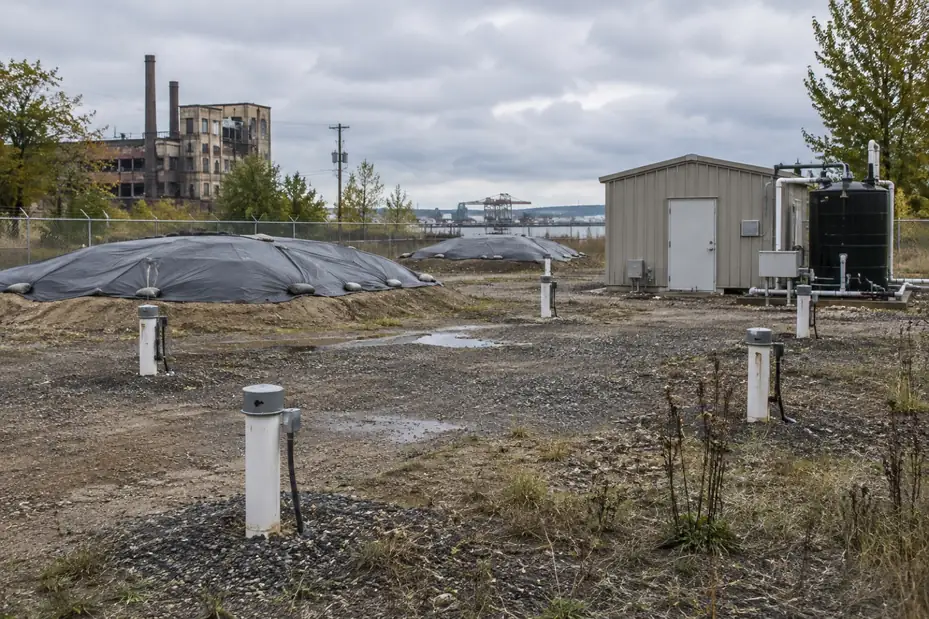
Sites still operating under hazardous waste permits are cleaned up under a second program. Per EPA's corrective action page, cleanup, known in the regulations as corrective action, requires facilities that treat, store or dispose of hazardous wastes to investigate and clean up releases to soil, ground water, surface water and air. The Hazardous and Solid Waste Amendments of 1984 gave EPA that authority.
EPA’s page reports that the program oversees almost 4,000 cleanups, that 44 states and territories are authorized to run it, and that the first cleanup baseline, finalized in July 1999, listed 1,714 facilities. Its process is deliberately flexible, built on five elements shown in the process table below.
Mold remediation in state law
There is no federal mold remediation statute. Where the word has legal force, it comes from a state licensing law, and the three most cited define it in nearly the same words. The difference is the size of job they reach.
| Jurisdiction | Definition of mold remediation | Size threshold | Source |
|---|---|---|---|
| Texas | Removal, cleaning, sanitizing, demolition or other treatment, including preventive activities, of mold not purposely grown there | No license needed under 25 contiguous sq ft | Tex. Occ. Code 1958.001; Tex. Occ. Code 1958.102 |
| New York | The business of removal, cleaning, sanitizing or surface disinfection of mold, with containment and waste handling | Projects are areas greater than 10 sq ft | New York Labor Law section 930 |
| Florida | Removal, cleaning, sanitizing, demolition or other treatment of mold or mold-contaminated matter | Defined as greater than 10 sq ft | Fla. Stat. 468.8411 |
| Federal guidance (EPA) | No statutory definition | Under about 10 sq ft, most people can clean it themselves | EPA's mold cleanup guidance |
Texas adds a separation rule: under Tex. Occ. Code 1958.155, a license holder may not perform both mold assessment and mold remediation on the same project. Licensing state by state is on our state mold licensing guide, and the line between mold mitigation and remediation belongs to our mold mitigation page. ANSI/IICRC S520, now in its 2024 fourth edition, is the trade’s procedural standard for the remediation of mold damaged structures and contents; our mold remediation process page walks through it.
Asbestos: the law says response action
People search for asbestos remediation, but federal asbestos rules avoid the word. The school rule, 40 CFR 763.83, uses response action: a method, including removal, encapsulation, enclosure, repair, operations and maintenance, that protects people and the environment from friable asbestos-containing building material. Removal there means taking out substantially all of the material from an area. The demolition rule, 40 CFR 61.145, speaks of stripping and removal during renovation, and the trade calls the whole job abatement.
The practical point: an asbestos contract that says remediation should name the response action, because encapsulation and removal are different scopes with different rules. Our asbestos abatement guide covers the process, and the asbestos regulations map covers which rule applies.
Water damage: three words, three jobs
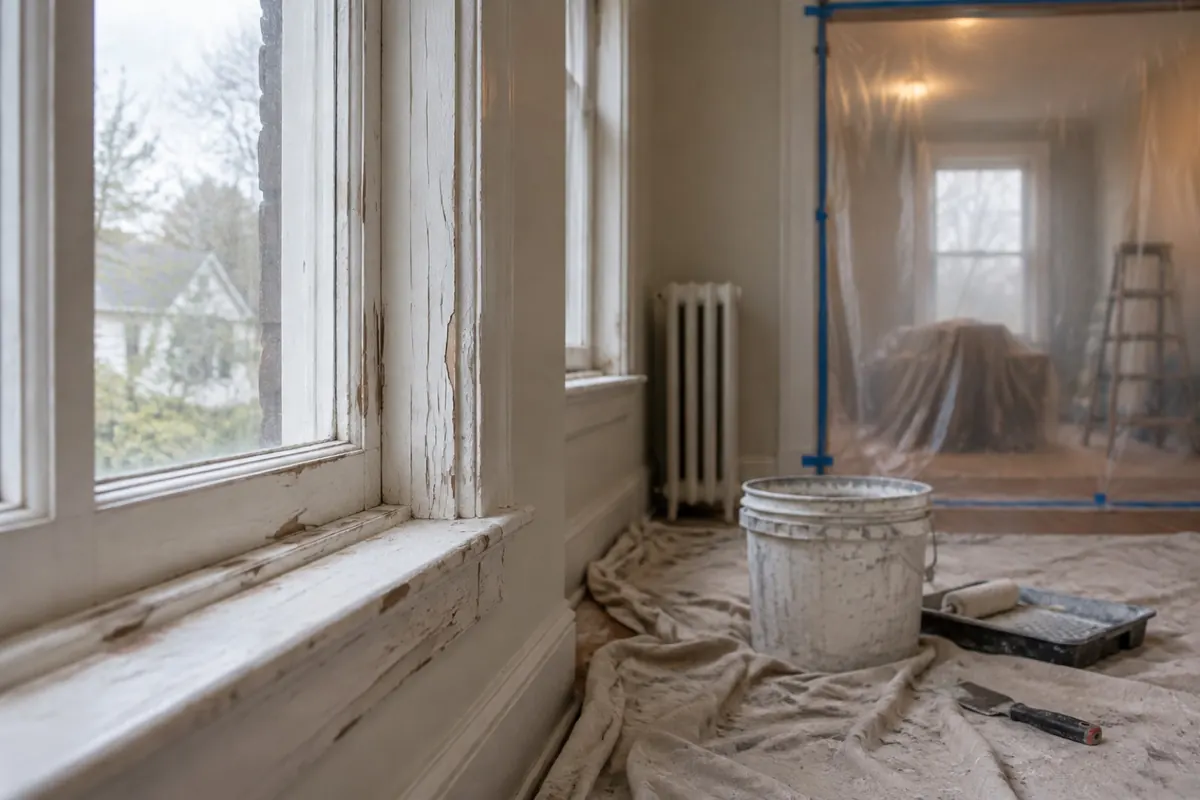
Water losses use all three words, and the standards keep them apart. ANSI/IICRC S500, in its 2021 fifth edition, is written for water damage restoration and states that fixing the water source is the owner’s responsibility. Mitigation is the emergency phase that stops damage from growing; restoration is the rebuild. Remediation appears when the water has created a contaminant, usually mold, at which point the mold standard governs. Where mitigation ends and rebuild begins is set out on our water mitigation page.
Lead says abatement, radon says mitigation
Lead work has its own vocabulary, defined in 40 CFR 745.223, and it turns on permanence. Lead-based paint itself is defined there as paint with at least 1.0 milligram of lead per square centimeter or more than 0.5% by weight, per EPA’s rule.
| Lead term | Definition | Source |
|---|---|---|
| Abatement | Measures designed to permanently eliminate lead-based paint hazards, with preparation, cleanup, disposal and testing | 40 CFR 745.223 |
| Interim controls | Measures to temporarily reduce exposure: cleaning, repairs, painting, containment, monitoring | 40 CFR 745.223 |
| Renovation | Modifying a structure in a way that disturbs painted surfaces, unless done as abatement | 40 CFR 745.83 |
| Permanent | An expected design life of at least 20 years | 24 CFR 35.110 |
The renovation rule’s minor repair exemption in 40 CFR 745.83 covers work disturbing 6 square feet or less of painted surface per room inside, or 20 square feet outside, which is why those two figures appear in the chart above.
Radon is reduced, not removed, so the trade word is mitigation: the AARST standards index lists ANSI/AARST SGM-SF-2023, Soil Gas Mitigation Standards for Existing Homes. EPA's radon health risk page itself says fix: act at 4 pCi/L or more, and consider fixing between 2 and 4. Systems and costs are on our radon mitigation page.
Remediation in IT security
For completeness, because it ranks for the term: the NIST CSRC glossary gives three definitions, the act of mitigating a vulnerability or a threat, actions taken to correct known deficiencies once a vulnerability is identified, and the neutralization or elimination of a vulnerability or the likelihood of its exploitation. The idea is the same as on a job site: find the defect, then remove it or reduce what it can do.
The terminology table
This is the table to keep. Each word has a field where it is the legal or standard term, and using the wrong one on a contract can change what the client thinks they bought.
| Word | Core meaning | Where it is the formal term | Removes the source? |
|---|---|---|---|
| Remediation | Remove, clean or treat a contaminant | Mold statutes (TX, NY, FL); Superfund remedial action | Usually yes, removal of the source |
| Mitigation | Reduce damage or exposure | Radon standards; water losses; IT security | No, it limits effect |
| Abatement | Eliminate a hazard, by rule permanently for lead | Lead (40 CFR 745.223); asbestos trade usage | Eliminates the hazard, not always by removal |
| Restoration | Return property or habitat to its prior state | Water damage (S500); NOAA habitats | Follows cleanup |
| Response action | Removal, encapsulation, enclosure, repair or O&M | Asbestos in schools (40 CFR 763.83) | Only if removal is chosen |
The remediation process in phases
Every remediation program, from a Superfund site to a basement, runs the same logic: find it, measure it, stop it spreading, decide, do, verify. The names differ. EPA's Superfund cleanup process page lists the federal phases, and EPA's corrective action page describes five flexible elements rather than fixed steps.
| General phase | Superfund | RCRA corrective action | Building work (mold, asbestos) |
|---|---|---|---|
| 1. Assess | Preliminary assessment and site inspection | Initial site assessment | Inspection or survey; mold assessment |
| 2. Characterize | Remedial investigation | Site characterization | Sampling and mapping the affected area |
| 3. Contain now | Removal action, if urgent | Interim actions | Isolation and emergency mitigation |
| 4. Choose | Feasibility study, Proposed Plan, Record of Decision | Evaluation of remedial alternatives | Written protocol or scope |
| 5. Do the work | Remedial design and remedial action | Implementation of the selected remedy | Removal, cleaning or response action |
| 6. Verify and keep watch | Construction completion, post construction, deletion | Tracking progress and long-term care | Clearance or post-remediation verification |
Two habits carry across all of them. The person who assesses should not be the person who profits from the scope, which is why Texas bars one license holder from doing both on a project. And the job is not finished when the work stops; it is finished when someone measures the result.
Which word belongs on the contract
Use this when writing a scope, reading an estimate or checking what a policy covers. Find the hazard, use the word in the second column, and check the rule in the third.
| What you are dealing with | The right word | Rule that defines it | Read next |
|---|---|---|---|
| Mold growth in a building | Mold remediation | State licensing law where one exists | mold mitigation page |
| Asbestos material to be removed, sealed or enclosed | Response action, or abatement | NESHAP, OSHA, AHERA in schools | asbestos abatement |
| Lead-based paint to be eliminated | Abatement, or interim controls if temporary | 40 CFR 745 and state lead programs | Your state lead program |
| Radon above EPA’s 4 pCi/L | Mitigation | State radon rules; ANSI/AARST standards | radon mitigation |
| Clean water loss, first days | Mitigation, then restoration | IICRC S500; the policy | water mitigation |
| Contaminated soil or groundwater | Remedial action or corrective action | CERCLA or RCRA | EPA region or state program |
For contractors
- Write the statutory word into the scope. In Texas, Florida and New York, mold remediation above the threshold is licensed work, and the word on the invoice tells an adjuster which rule applies.
- Split the line items: mitigation (stop the damage), remediation (remove the contaminant), restoration (rebuild). Adjusters ask for that split because policies and standards draw it.
- Keep the assessor separate where the law requires it, and keep the clearance or post-remediation verification record in the job file.
- Certification is separate from licensing; see our mold remediation certification guide.
Questions people actually ask
What is the meaning of remediation?
Remediation means correcting a problem. In environmental and building work it means removing, cleaning up or containing contamination so it no longer causes harm. Cambridge Dictionary gives both senses. In law the word is narrower: Superfund regulations define remedial action as a permanent remedy, and Texas, New York and Florida define mold remediation in statute.
What is an example of remediation?
Dredging contaminated sediment from a river, which NOAA uses as its example; removing mold-damaged drywall and cleaning the framing behind it; or pumping and treating polluted groundwater at a Superfund site. In each case the contaminant is taken away or neutralized, which is what separates remediation from mitigation or restoration.
What does remediation mean in work?
On a job site it is the phase where the contaminant itself is dealt with, after the emergency is controlled and before rebuilding. In regulated trades it can be licensed work: Florida defines mold remediation as work on more than 10 square feet. In IT, it means fixing or neutralizing a security vulnerability, per NIST.
What is a remediation process?
Most programs follow six phases: assess, characterize, contain anything urgent, choose a remedy, carry it out, and verify. Superfund names them site assessment, remedial investigation, Record of Decision, remedial design and action, and construction completion. A mold or asbestos job compresses the same steps into inspection, protocol, removal and clearance.
How do I find certified mold remediation experts or compare quotes?
Check your state’s license first: Texas licenses mold remediation from 25 contiguous square feet, and New York and Florida above 10. Ask each firm for its license number, a written protocol and independent post-remediation verification. Be wary of guaranteed results. EPA says areas under about 10 square feet are usually a do it yourself job, so small patches may not need a firm at all.
How do I hire asbestos remediation experts for an industrial site?
Ask for state accreditation built on EPA’s Model Accreditation Plan, including a contractor/supervisor on site, and OSHA 1926.1101 compliance for the crew. Industrial buildings are regulated facilities under the asbestos NESHAP, so an inspection and, above the thresholds, a written notice to the state come before any removal. Our asbestos regulations map lists each rule.
How do I choose a biohazard remediation service, and what certification do technicians need?
There is no single federal license. OSHA’s bloodborne pathogens standard, 29 CFR 1910.1030, requires employers to train exposed employees at assignment and at least annually, so ask for that training record, the firm’s waste disposal arrangements and references. Our pages on what counts as a biohazard and on biohazard cleanup jobs cover the trade.
Related: what is a biohazard, biohazard cleanup jobs, and the standards hub.
Sources
- Cambridge Dictionary, entry for remediation. Retrieved 18 October 2026.
- NOAA's Office of Response and Restoration, Remediation vs. Restoration: A Tale of Two Terms, 27 December 2016, updated 8 November 2022. Retrieved 18 October 2026.
- 40 CFR 300.5, National Contingency Plan definitions, eCFR. Retrieved 18 October 2026.
- EPA's What is Superfund page and EPA's Superfund cleanup process page, US EPA, updated 28 August 2026. Retrieved 18 October 2026.
- EPA's corrective action page, US EPA, updated 4 September 2026. Retrieved 18 October 2026.
- Tex. Occ. Code 1958.001, Tex. Occ. Code 1958.102 and Tex. Occ. Code 1958.155, reproduction of the official code at statutes.capitol.texas.gov. Retrieved 18 October 2026.
- New York Labor Law section 930, New York State Senate. Retrieved 18 October 2026.
- Fla. Stat. 468.8411, Florida Legislature. Retrieved 18 October 2026.
- EPA's mold cleanup guidance, US EPA, updated 4 June 2026. Retrieved 18 October 2026.
- ANSI/IICRC S520 and ANSI/IICRC S500 pages, IICRC. Retrieved 18 October 2026.
- 40 CFR 763.83, asbestos in schools definitions, eCFR. Retrieved 18 October 2026.
- 40 CFR 745.223, 40 CFR 745.83 and 24 CFR 35.110, lead definitions, eCFR. Retrieved 18 October 2026.
- 40 CFR 61.145, asbestos NESHAP thresholds, eCFR. Retrieved 18 October 2026.
- EPA's radon health risk page, US EPA, updated 24 June 2026, and the AARST standards index. Retrieved 18 October 2026.
- NIST CSRC glossary, NIST Computer Security Resource Center. Retrieved 18 October 2026.
- 29 CFR 1910.1030, OSHA bloodborne pathogens standard, eCFR. Retrieved 18 October 2026.
- Definitions are quoted or closely paraphrased from the text cited. Our methodology sets out the standing rules.
Definitions and thresholds change. Confirm the current rule with your state agency before relying on any term in a contract.