The short answer
US asbestos regulations are not one law but seven main federal rule sets, each protecting a different group. EPA’s NESHAP controls demolition and renovation emissions, AHERA covers schools, TSCA section 6 restricts products, OSHA protects workers, CPSC bans two consumer products, the Safe Drinking Water Act caps fibers in tap water and DOT governs transport. States run most of the day to day enforcement.
Key takeaways
- Full NESHAP work practices start at 260 linear feet of regulated material on pipes or 160 square feet on other components, per 40 CFR 61.145. Any demolition needs written notice, even with no asbestos.
- Houses of four or fewer units fall outside the NESHAP facility definition, so state rules usually decide.
- OSHA holds every worker to 0.1 fiber per cubic centimeter over 8 hours and 1.0 over 30 minutes, in 29 CFR 1926.1101 and 29 CFR 1910.1001.
- The 2024 chrysotile rule at 40 CFR part 751 Subpart F restricts six product uses. It orders no one to remove installed asbestos.
- Twelve states hold an AHERA waiver and run their own school rules, according to EPA's state asbestos contacts page.
On this page
- Seven rule sets, seven protected groups
- Which rule applies to my job
- EPA NESHAP: demolition and renovation
- AHERA and the accreditation plan
- TSCA section 6 and the 2024 chrysotile rule
- OSHA: worker classes and limits
- CPSC, drinking water and transport
- The key numbers on one chart
- State delegation and finding your program
- For contractors: the paper trail
- Questions people actually ask
Each agency regulated only the slice its statute reached. To make sense of asbestos and the law, this page sorts asbestos laws by who they protect and who checks them.
What this page does not cover. It describes regulations, not health; for that, start with EPA's Learn About Asbestos page. It is not legal advice, and your state agency is the authority on your project.
Seven rule sets, seven protected groups
EPA's asbestos laws and regulations page lists the federal rules that touch asbestos. Grouped by the person each protects, they reduce to this table.
| Rule set | Who it protects | Who enforces it | Text |
|---|---|---|---|
| EPA asbestos NESHAP | The public outside the work area | EPA, usually delegated to a state or local air agency | 40 CFR 61.145 |
| AHERA | Occupants of K to 12 schools | EPA, or a state holding an AHERA waiver | 40 CFR part 763 Subpart E |
| TSCA section 6 | Anyone exposed to ongoing product uses | EPA | 40 CFR part 751 Subpart F |
| OSHA construction | Employees in demolition, renovation, repair and cleanup | OSHA or an approved State Plan | 29 CFR 1926.1101 |
| OSHA general industry | Employees in all other industries | OSHA or an approved State Plan | 29 CFR 1910.1001 |
| EPA Worker Protection Rule | Public employees outside a State Plan | EPA | EPA Asbestos Worker Protection Rule (40 CFR 763 Subpart G) |
| CPSC bans | Consumers | Consumer Product Safety Commission | 16 CFR part 1304, 16 CFR part 1305 |
| Safe Drinking Water Act | Public water system customers | EPA and state drinking water programs | 40 CFR 141.62 |
| DOT hazardous materials | Carriers and the public on freight routes | PHMSA | 49 CFR 172.101 |
The rules attach to different people: NESHAP to the owner or operator of a demolition or renovation, OSHA to the employer, AHERA to the school district. They share one line: material is asbestos-containing above 1% asbestos, per EPA’s 40 CFR 61.141 and 40 CFR 763.83 and OSHA’s 29 CFR 1926.1101.
Which rule applies to my job
| Your situation | Rules that usually apply | Who to call |
|---|---|---|
| Homeowner doing own work on a house | Usually no federal air rule (four or fewer units excluded) | Local permit office and state asbestos program |
| Contractor in any building | OSHA 1926.1101 for employees, always; NESHAP if the building is a regulated facility | OSHA or State Plan; delegated air agency |
| School, K to 12 | AHERA plan, 3-year reinspection, 6-month surveillance; NESHAP and OSHA on projects | EPA region or AHERA waiver state |
| Commercial or apartment owner (5 or more units) | NESHAP inspection before work; OSHA duty to identify and notify bidders | Delegated air agency; OSHA |
| Demolition of a regulated facility | NESHAP notice 10 working days ahead even with no asbestos; full removal first above thresholds | Delegated air agency |
| Hauler or landfill | NESHAP labels and shipment records; DOT packaging unless bound in a binder | Air agency; PHMSA; state solid waste program |
The four questions, in order
- Is it a regulated facility? Anything but a residential building of four or fewer units is, per 40 CFR 61.141, and EPA's asbestos NESHAP page says houses cleared for a highway or urban renewal project are not exempt.
- Employees doing the work? OSHA applies.
- Is it a school? Then AHERA governs inspection, the plan and who may design and supervise the work.
- Will waste leave the site? Then NESHAP labelling and records apply to regulated jobs, and DOT packaging to loose asbestos.
How a removal is run once the rules are known is on our asbestos abatement guide.
EPA NESHAP: demolition and renovation
Under 40 CFR 61.145(a), the owner or operator must thoroughly inspect the affected part of a facility for asbestos, including nonfriable material, before any demolition or renovation. That duty comes before the size of the job is known. Our asbestos inspection guide explains the survey.
The trigger is regulated material, RACM, which 40 CFR 61.141 defines as friable material plus nonfriable material that has become friable, will be sanded, ground, cut or abraded, or is likely to be crumbled during the work. Category I nonfriable covers packings, gaskets, resilient flooring and asphalt roofing; Category II is the rest.
| Situation | Amount of RACM | What NESHAP requires |
|---|---|---|
| Demolition at or above threshold | 260 linear ft on pipes, 160 sq ft on other components or 35 cu ft off components | Notice 10 working days ahead; remove RACM first |
| Demolition below threshold or no asbestos | Less than all three amounts | Notice 10 working days before demolition |
| Renovation at or above threshold | Same amounts disturbed | Notice, emission controls and waste rules |
| Emergency renovation | Amount from the sudden event | Notice no later than the following working day |
40 CFR 61.141 excludes residential buildings with four or fewer dwelling units from the facility definition. Notices must be updated when the asbestos amount changes by 20% or more, per EPA’s 40 CFR 61.145(b), and no RACM may be removed without an on-site representative trained in the rule, refreshed every 2 years.
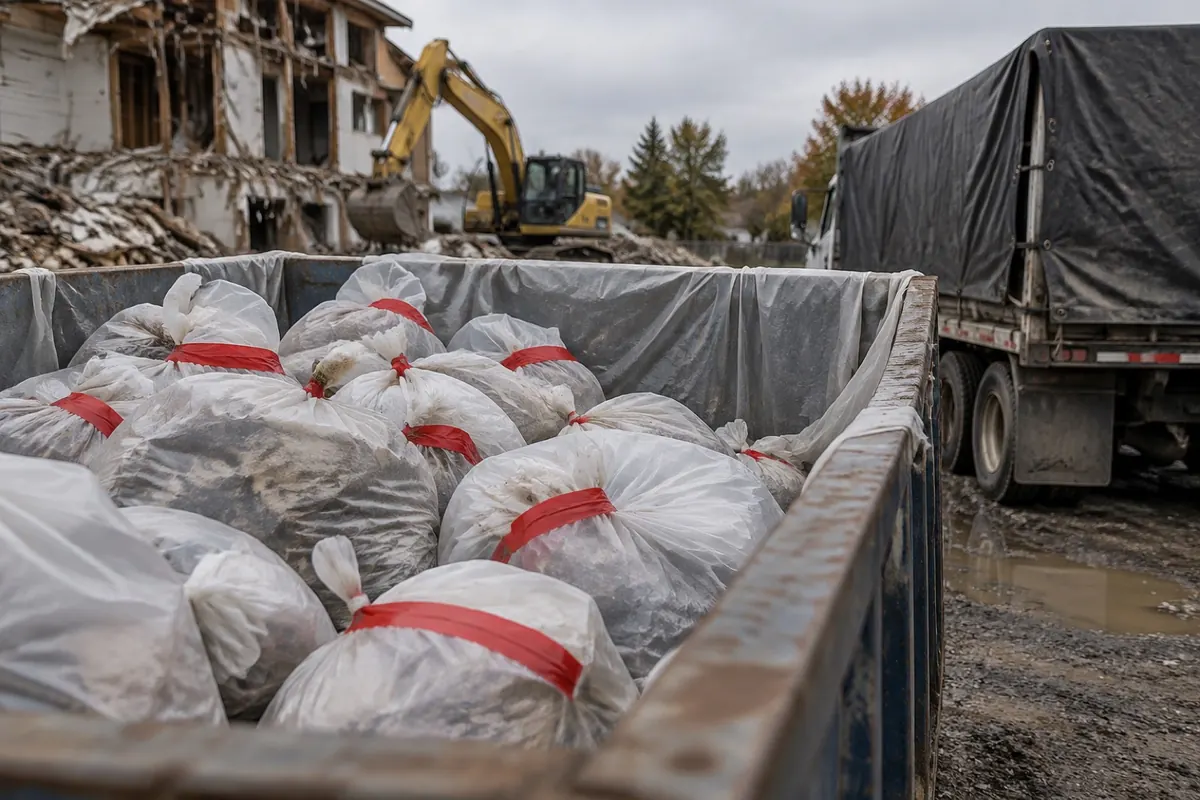
Waste falls under 40 CFR 61.150: adequately wet, sealed while wet in leak-tight labelled containers, with a waste shipment record. If the landfill’s signed copy is not back within 35 days the generator must chase it, and at 45 days report it in writing.
AHERA and the accreditation plan
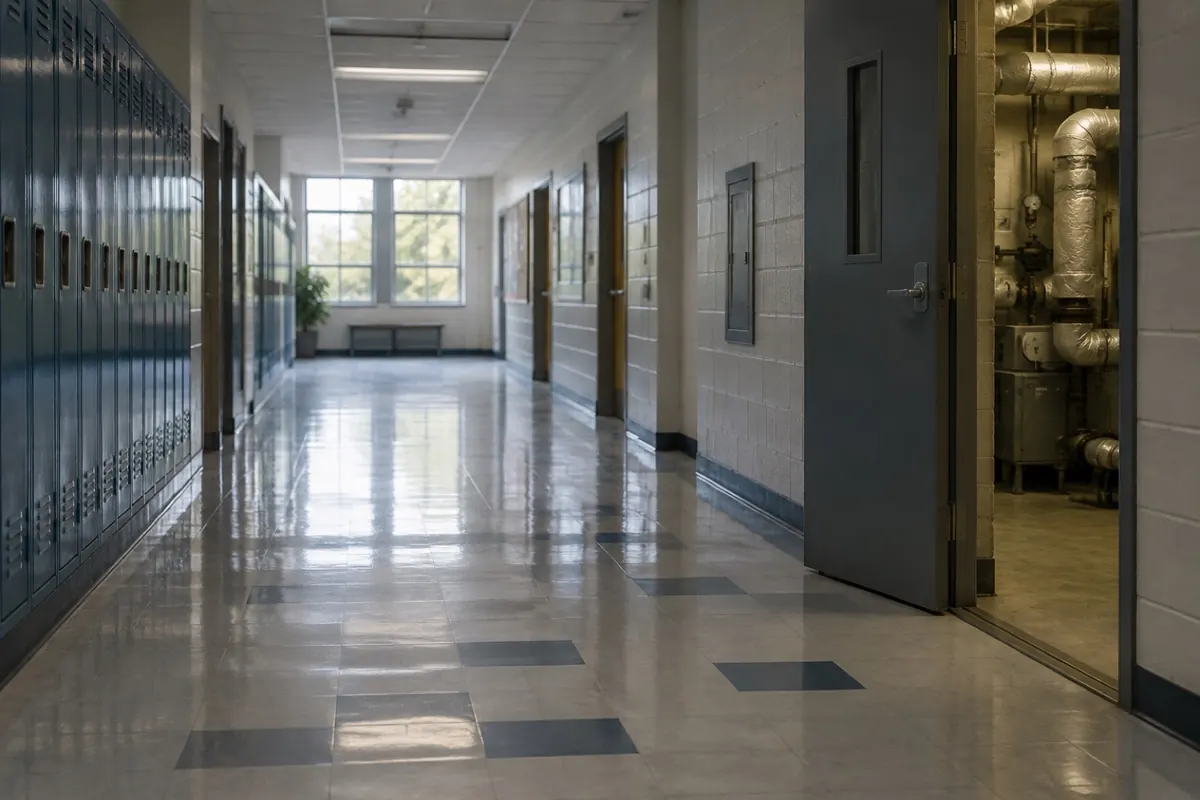
AHERA’s rule, 40 CFR part 763 Subpart E, binds local education agencies: public districts and owners of nonpublic, nonprofit schools, per 40 CFR 763.83. It is a management rule, not a removal mandate. Schools find their asbestos, keep a plan, and choose a response action: removal, encapsulation, enclosure, repair, or operations and maintenance.
| AHERA duty | Minimum | Section |
|---|---|---|
| Inspection by an accredited inspector | Before use as a school building | 40 CFR 763.85(a) |
| Reinspection of known or assumed ACBM | Every 3 years | 40 CFR 763.85(b) |
| Periodic surveillance | Every 6 months | 40 CFR 763.92(b) |
| Awareness training, custodial and maintenance staff | 2 hours | 40 CFR 763.92(a)(1) |
| Training for staff who disturb ACBM | Awareness plus 14 hours | 40 CFR 763.92(a)(2) |
| Bulk samples of surfacing material | 3, 5 or 7 by area | 40 CFR 763.86 |
The Model Accreditation Plan (Appendix C to Subpart E) sets training for five disciplines and reaches public and commercial buildings, defined to exclude detached houses and apartment buildings of fewer than 10 units. State programs must be at least as stringent, so cards are state issued; see our asbestos accreditation map.
TSCA section 6 and the 2024 chrysotile rule
TSCA section 6 lets EPA restrict a chemical presenting an unreasonable risk. The March 2024 chrysotile rule, codified at 40 CFR part 751 Subpart F (89 FR 22005), regulates product uses, not installed asbestos.
| Use | What the rule does |
|---|---|
| Chlor-alkali diaphragms | Import banned after 28 May 2024; use ends 2029, certified extensions to 2032 and 2036 |
| Sheet gaskets, chemical production | After 27 May 2026; titanium dioxide and nuclear to 2029, Savannah River Site to 2037 |
| Brake blocks, aftermarket brakes, other vehicle friction products, other gaskets | Prohibited after 25 November 2024 |
| Workplaces in a phase-out | Interim limit 0.005 f/cc, 8 hours |
For contractors the line that matters is disposal, which must follow the OSHA standards. The history of what was banned when is on our when was asbestos banned timeline. In June 2025 EPA asked the Fifth Circuit to pause Texas Chemistry Council v. EPA, No. 24-60193, to reconsider the rule, then on 7 July 2025 dropped that plan, per Bergeson & Campbell's July 2025 case update. The eCFR text is unchanged as of 18 October 2026.
OSHA: worker classes and limits
29 CFR 1926.1101 covers construction, including demolition, removal, renovation, repair and spill cleanup. 29 CFR 1910.1001 covers other industries, brake and clutch shops included. Both cap exposure at 0.1 f/cc over 8 hours and 1.0 f/cc over 30 minutes.
Per OSHA's 1994 asbestos final rule, the limit fell from 12 f/cc in May 1971 to 0.1 f/cc in 1994, a 120-fold cut. The 30-minute limit dates from September 1988.
| Class | Definition in 1926.1101(b) | Minimum worker training |
|---|---|---|
| Class I | Removal of thermal system insulation and surfacing ACM or PACM | Equal to the EPA MAP worker course |
| Class II | Removal of other ACM: wallboard, floor tile, shingles, mastics | 8 hours for roofing, flooring, siding, tile, transite |
| Class III | Repair and maintenance likely to disturb ACM or PACM | 16 hours, hands-on |
| Class IV | Custodial contact without disturbing; cleanup of Class I to III debris | 2 hours |
Two 29 CFR 1926.1101 rules shape every bid. Insulation and surfacing material in buildings built no later than 1980 is presumed asbestos-containing (PACM) until rebutted, as is asphalt and vinyl flooring installed by then. And building owners must locate ACM or PACM before work and tell bidding employers.
OSHA's State Plans page lists 22 State Plans covering private and public employers and 7 covering only public workers. Other public employees fall under the EPA Asbestos Worker Protection Rule (40 CFR 763 Subpart G).
CPSC, drinking water and transport
| Agency | What is regulated | The rule | Citation |
|---|---|---|---|
| CPSC | Consumer patching compounds | Banned if made after 16 January 1978; all after 11 June 1978 | 16 CFR part 1304 |
| CPSC | Artificial fireplace ash and embers | Ban issued 15 December 1977 | 16 CFR part 1305 |
| EPA, drinking water | Public water systems | 7 million fibers per liter longer than 10 micrometers | 40 CFR 141.62 |
| DOT | Asbestos, amphibole | Class 9, UN2212, packing group II | 49 CFR 172.101 |
| DOT | Asbestos, chrysotile | Class 9, UN2590, packing group III | 49 CFR 172.101 |
| DOT | Packaging | Rigid leaktight, or bags in closed exclusive-use vehicles | 49 CFR 173.216 |
Special provision 156 in 49 CFR 172.102 exempts asbestos fixed in a binder such as cement, plastic or asphalt, or in manufactured products, from the hazardous materials rules, though air shipments must say “not restricted”. Water systems test for asbestos once per nine-year cycle under 40 CFR 141.23, at a tap served by asbestos-cement pipe where pipe is the risk; see our asbestos cement pipe page.
The key numbers on one chart
The rules measure different things: a job under 160 square feet can still be a full OSHA Class II job.
State delegation and finding your program
Federal law sets a floor. EPA's asbestos NESHAP page tells owners to notify “the appropriate delegated entity (often a state agency)”, and many states add licensing, fees and rules for houses the federal rule excludes. EPA's state asbestos contacts page names the twelve AHERA waiver states: Connecticut, Colorado, Illinois, Kentucky, Louisiana, Massachusetts, Maine, New Hampshire, Oklahoma, Rhode Island, Texas, Utah.
Find your state’s rules in five minutes
- Open EPA's state asbestos contacts page for your state’s NESHAP and AHERA contacts.
- Ask the NESHAP contact whether notice, a fee or a licensed abater is required for your building type.
- Check your crew’s cards on our accreditation map.
- See OSHA's State Plans page for whether a State Plan sets its own standard.
- Ask the building department whether a survey is a permit condition; our asbestos survey page covers what one should contain.
For contractors: the paper trail each rule expects
Inspectors and adjusters ask for the same file. The notice, survey and waste record also support the asbestos line item on an estimate.
| Document | Rule | Clock or retention |
|---|---|---|
| Inspection or survey report | 61.145(a); 1926.1101(k) | Before any disturbance |
| NESHAP notice and updates | 40 CFR 61.145(b) | 10 working days ahead |
| Trained on-site representative | 40 CFR 61.145(c)(8) | Refresher every 2 years |
| Exposure monitoring records | 29 CFR 1926.1101(f) and (n) | Keep at least 30 years |
| Training and accreditation cards | 1926.1101(k)(9); MAP | Annual refresher |
| Signed waste shipment record | 40 CFR 61.150(d) | Chase at 35 days, report at 45, keep 2 years |
Scope to the strictest rule that applies: a homeowner can be exempt from NESHAP while your crew is fully covered by OSHA in the same room. Our asbestos testing cost guide prices the survey, and the standards hub collects related rules.
Questions people actually ask
What are the most current asbestos regulations?
The newest federal rule is EPA’s 2024 chrysotile rule, 40 CFR part 751 Subpart F, restricting six product uses with deadlines to 2037. The core building rules are older: OSHA’s 0.1 f/cc limit is from 1994, AHERA from 1987 and the current NESHAP text from 1990.
What are the OSHA regulations for asbestos?
29 CFR 1926.1101 for construction and 29 CFR 1910.1001 for general industry. Both cap exposure at 0.1 fiber per cubic centimeter over 8 hours and 1.0 over 30 minutes. The construction standard sorts work into Classes I to IV and presumes insulation and surfacing material in pre-1981 buildings contain asbestos.
What is the 3-5-7 rule for asbestos testing?
It is EPA’s AHERA minimum sampling schedule for friable surfacing material in schools, 40 CFR 763.86: at least three bulk samples for an area of 1,000 square feet or less, five for over 1,000 up to 5,000, and seven above 5,000. It binds only schools.
What are the federal regulations regarding asbestos?
Seven main sets: EPA’s NESHAP for demolition and renovation, AHERA for schools, TSCA section 6 for products, OSHA’s construction and general industry standards, CPSC’s bans on patching compound and fireplace embers, the drinking water limit of 7 million fibers per liter, and DOT rules for transport.
What legal regulations do asbestos removal companies have to follow?
OSHA 1926.1101 for their employees on every job; the NESHAP for regulated facilities at or above 260 linear feet, 160 square feet or 35 cubic feet of regulated material; and their state’s licensing and accreditation rules built on EPA’s Model Accreditation Plan. Schools add AHERA.
What are the regulations for asbestos disposal in residential projects?
For a house of four or fewer units, federal NESHAP waste rules usually do not apply, so state and local rules decide. Where NESHAP applies, waste is wetted, sealed in leak-tight labelled containers and taken to a disposal site meeting 40 CFR 61.154 with a waste shipment record. Ask the landfill and your state agency first.
Did the Trump administration change asbestos regulations?
In June 2025 EPA told the Fifth Circuit it planned to reconsider parts of the 2024 chrysotile rule. On 7 July 2025 it withdrew that motion and said it would explore guidance instead of new rulemaking. The eCFR text is unchanged as of October 2026.
Sources
- 40 CFR 61.141, 40 CFR 61.145 and 40 CFR 61.150, eCFR, with EPA's asbestos NESHAP page (updated 22 December 2025). Retrieved 18 October 2026.
- 40 CFR part 763 Subpart E (40 CFR 763.83, 40 CFR 763.85, 40 CFR 763.86, 40 CFR 763.92) and the Model Accreditation Plan (Appendix C to Subpart E), eCFR. Retrieved 18 October 2026.
- 40 CFR part 751 Subpart F, eCFR, and EPA's Part 1 chrysotile rule page, updated 5 May 2026. Retrieved 18 October 2026.
- Bergeson & Campbell's July 2025 case update, Bergeson & Campbell, P.C., 10 July 2025. Retrieved 18 October 2026.
- 29 CFR 1926.1101, 29 CFR 1910.1001 and the EPA Asbestos Worker Protection Rule (40 CFR 763 Subpart G), eCFR. Retrieved 18 October 2026.
- OSHA's 1994 asbestos final rule (59 FR 40964) and OSHA's State Plans page. Retrieved 18 October 2026.
- 16 CFR part 1304 and 16 CFR part 1305, eCFR. Retrieved 18 October 2026.
- 40 CFR 141.62 and 40 CFR 141.23, eCFR. Retrieved 18 October 2026.
- 49 CFR 172.101, 49 CFR 172.102 and 49 CFR 173.216, eCFR. Retrieved 18 October 2026.
- EPA's asbestos laws and regulations page, updated 11 December 2025. Retrieved 18 October 2026.
- EPA's state asbestos contacts page, updated 1 October 2026. Retrieved 18 October 2026.
- Every threshold and date here is quoted from the regulation text, not a summary. Our methodology sets out the standing rules.
States can be stricter than every federal rule here. Confirm requirements for a specific project with your state asbestos program before work begins.