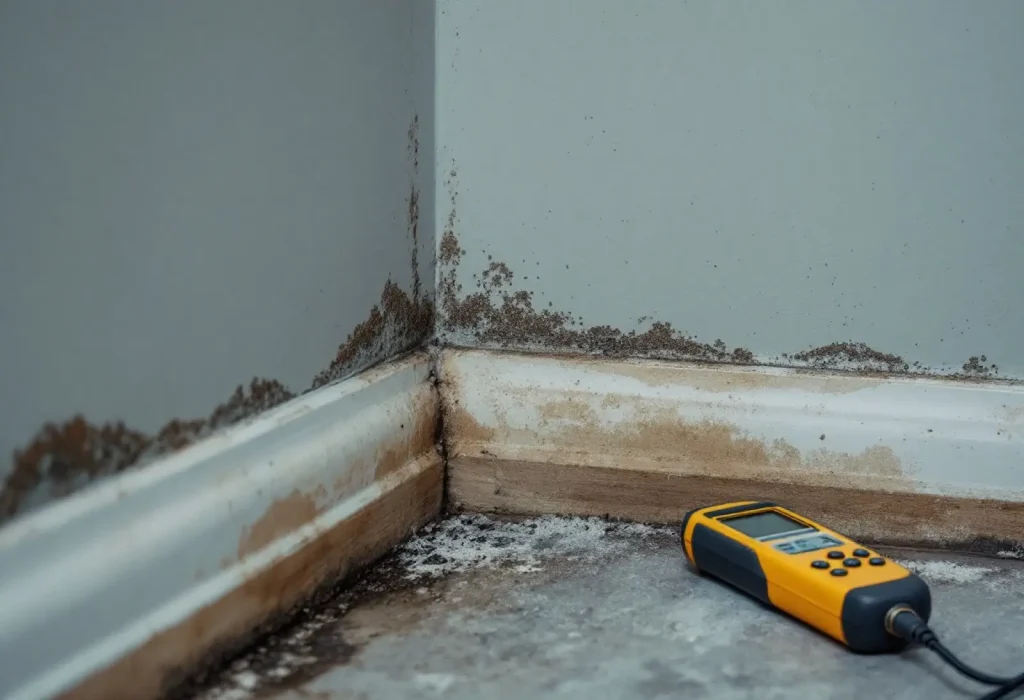
The short answer
Purple mold is rare, and most purple marks in a house are something else. When it is real growth, it may be a fungus such as Fusarium, whose colonies can turn purple, or a purple fungal stain in wood. Before treating it as mold, rule out purple drywall paper, dye or ink, purplish water from a well filter, and slime molds on rotting wood.
Key takeaways
- There is no purple mold species. The University of Adelaide description of Fusarium says its colonies range from whitish to yellow, pink, red or purple shades.
- The USDA Forest Products Laboratory Wood Handbook, chapter 14 says fungal stains in wood are mostly blue, but that purple shades are sometimes encountered.
- Purple face paper on new walls is a product: according to the Gold Bond XP Hi-Abuse submittal sheet, the board has purple face paper and a mold test score of 10.
- Purplish water on a filtered well can be potassium permanganate, as the Town of Blades, Delaware found in 2016.
- According to Fixr, Fusarium removal runs $800 to $8,000, and the guide lists no purple category.
- CDC says you do not need to know the type of mold to remove it.
On this page
How rare is purple mold? What the sources say
Purple is the thinnest colour in the sources we read. We checked the federal, extension, mycology and pricing sources used on this site and recorded whether each names purple. Two do, one describes a purplish brown slime mold, and the rest do not.
| Source | Colours it describes | Names purple? |
|---|---|---|
| EPA mold course, chapter 1 | Molds come in many colours | No |
| CDC, Mold | Spots of many different colours | No |
| Adelaide, Fusarium | Whitish to yellow, pink, red or purple; some complexes pink or vinaceous to violet | Yes |
| Adelaide, Penicillium | Green tones, sometimes white | No |
| USDA FPL Wood Handbook ch. 14 | Blue stains most common; yellow, orange, purple and red sometimes | Yes, in wood |
| Arkansas Extension, slime mold | Orange, yellow, green and even blue | No |
| Stemonitis splendens entry | Sporangia dark purplish brown | Purplish brown |
| Fixr cost guide | Ten priced types, none purple | No |
So purple on a wall is more likely a look-alike than a mold, and when it is mold, colour does not say which. Only a lab can name it; mold testing explains when that is worth paying for.
What you are looking at
The EPA mold course, chapter 1 says molds come in many colours, and the first test for purple is texture. Growth is fuzzy, cottony or powdery and lifts onto a damp towel; product colour, dye and mineral tints are flat.
| What you see | Usually | Where | Next step |
|---|---|---|---|
| Fuzzy or cottony growth with a purple or violet tint | Fungus, possibly Fusarium | Damp organic material | Treat as mold |
| Purple streaks inside sapwood that do not sand off | Fungal stain | Lumber, framing | Cosmetic if dry |
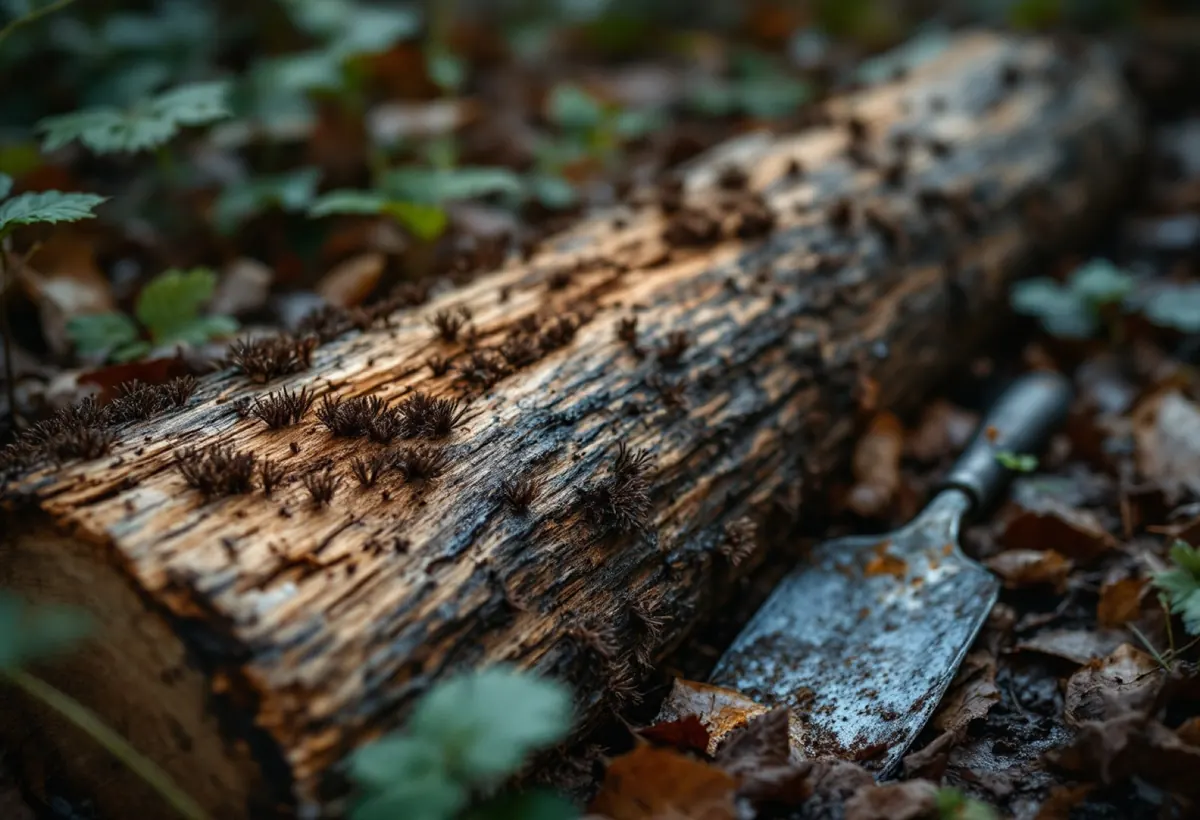
| Tufts of tiny dark purplish brown stalks on rotting wood | Slime mold (Stemonitis) | Logs, wet wood outdoors | Remove; see orange mold |
| Flat, even purple paper face on new walls | Mold-resistant drywall | New construction, basements | Leave it |
| Pink to purple tint in water or a ring in the bowl | Potassium permanganate | Filtered well water | Call the water treatment service |
| Sharp-edged purple blot, no texture | Dye, ink or wine | Near clothing, toys, spills | Stain removal, not mold work |
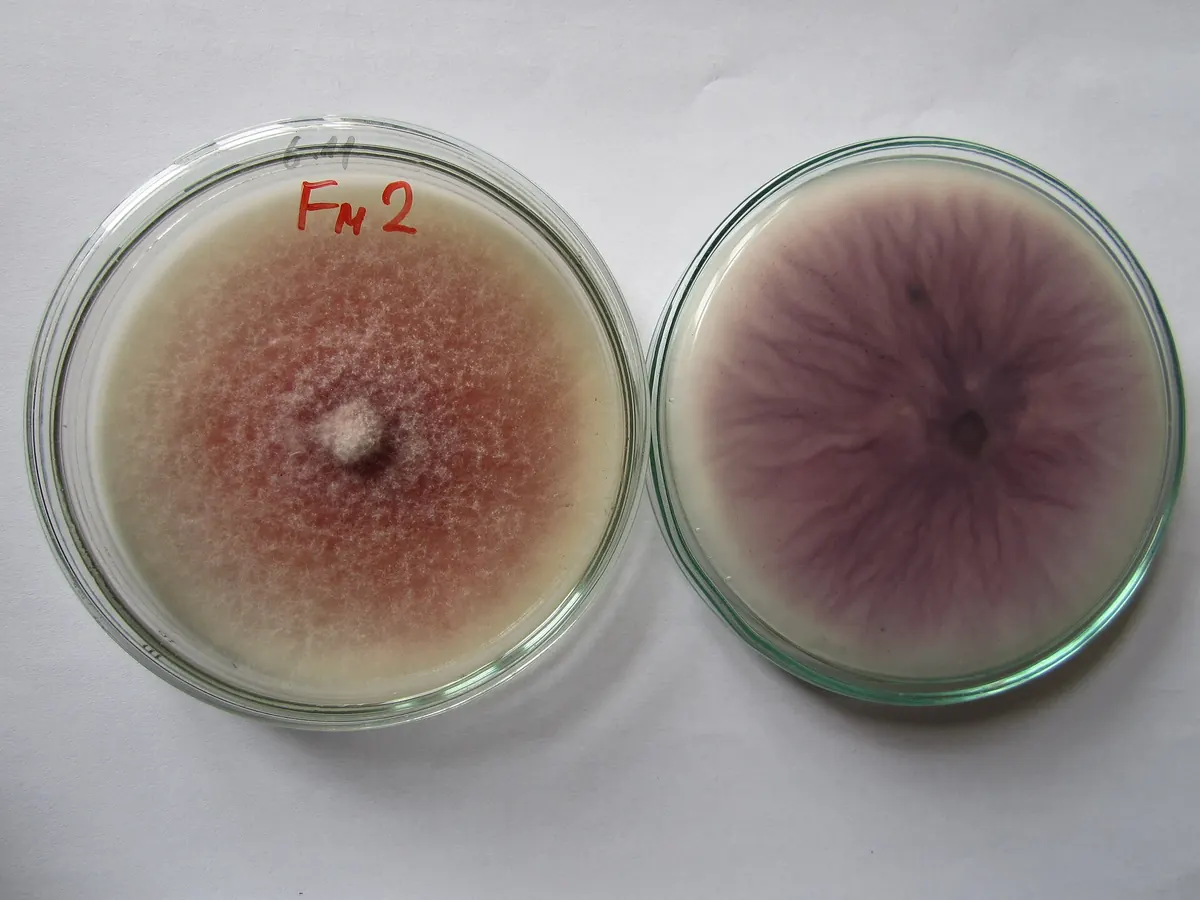

On the fungus itself, the University of Adelaide description of Fusarium says most species are soil fungi with a worldwide distribution and some are plant pathogens. It records Fusarium oxysporum complex growth as white becoming purple, with a reverse from hyaline to dark blue or dark purple. By contrast, the Adelaide description of Penicillium describes green tones and sometimes white, not purple. The USDA FSIS fact sheet Molds on Food lists Fusarium among molds on foods; its rule is to discard moldy soft foods.
Which purple is this? Six questions
- Does it have texture? Fuzz or powder that transfers to a damp towel is growth. Why this differs from generic advice: most purple marks indoors are flat, and no mold product removes dye or product colour.
- Is the whole board face evenly purple? It is drywall paper. Why: National Gypsum’s purple line is purple by design; check the back paper, which its sheet lists as gray.
- Is it in water from a filtered well? Think permanganate. Why: the fix belongs to the treatment system, not a cleaner.
- Is it inside wood rather than on it? Purple fungal stain. Why: the FPL says sap stain cannot be removed by surfacing, so sanding chases it through the board.
- Is it a cluster of tiny stalks on rotting wood? A slime mold. Why: it is not a fungus; it signals wood that stayed wet.
- None of the above, and the area is damp? Treat it as mold. Why: CDC says the type does not matter for removal.
Purple mold on wall surfaces
Purple mold on a wall is most often not mold, and each surface has a different likely answer. EPA's brief guide to mold and moisture adds that mold may hide behind drywall, wallpaper or paneling.
| Wall surface | What you see | What to do | Why |
|---|---|---|---|
| Painted drywall | Purple-tinted fuzz near a leak | Scrub if small and sound; replace soft paper | Colour changes nothing; moisture does |
| Unfinished drywall, even purple face | Flat colour, printed guide marks | Nothing | Purple face paper is the product |
| Wallpapered wall | Purple or dark spots coming through | Do not peel casually | EPA warns of a massive spore release |
| Child’s room, laundry, near fabric | Hard-edged blot | Treat as a dye stain | No growth means no remediation |
The Gold Bond XP Hi-Abuse submittal sheet describes a mold and moisture resistant core in purple face paper with gray back paper, and says no material can be considered mold proof. Purple paper is no sign of mold, and a wet purple board can still grow it. Likewise, the USG technical bulletin PM4 says a blue dye identifies plaster base paper.
| Spec, according to each maker | Gold Bond XP Hi-Abuse (purple face) | USG Imperial gypsum base (blue face) |
|---|---|---|
| Face paper colour | Purple, 100% recycled | Blue (dyed for identification) |
| Back paper | Gray, mold and moisture resistant | Not stated in bulletin |
| Mold test (ASTM D3273) | Score of 10, best possible | Not stated |
| Fungal test (ASTM G21) | Score of 0, best possible | Not stated |
| Water absorption | Below 5% of weight | Not stated |
| Colour change in sunlight | Not stated | Fades to grey or yellowish |
| Manufacturer caveat | No material can be considered mold proof | Avoid excessive moisture |
General wall method is on mold on walls; why colour does not mean hazard is on black mold vs regular mold.
Purple mold on wood
The USDA Forest Products Laboratory Wood Handbook, chapter 14 says the so-called blue stains are the most common fungal stains in wood, although various shades of yellow, orange, purple and red are sometimes encountered, and that the exact colour depends on the organism and the species and moisture condition of the wood. Like blue stain, the FPL says typical sap stain penetrates the sapwood and cannot be removed by surfacing.
| On the wood | Likely cause | Check | Action |
|---|---|---|---|
| Purple streaks or wedges inside sapwood | Fungal stain | Sand a corner: colour continues | Cosmetic if kept dry |
| Purple-tinted fuzz on the surface | Mold | Wipes or brushes off | Clean and dry; see mold on wood |
| Tufts of stalks 10 to 20 mm tall on rotting wood | Slime mold (Stemonitis) | Touch releases brown spores | Remove; fix the wet wood |
| Pink patch on oak after oxalic acid | Chemical stain from the treatment | Appears after bleaching | Rinse promptly next time |
| Blue-black or grey halo at nails | Iron stain | Oxalic acid clears it | See blue mold |
| Soft wood under any colour | Decay | Probe with an awl | Structural review |
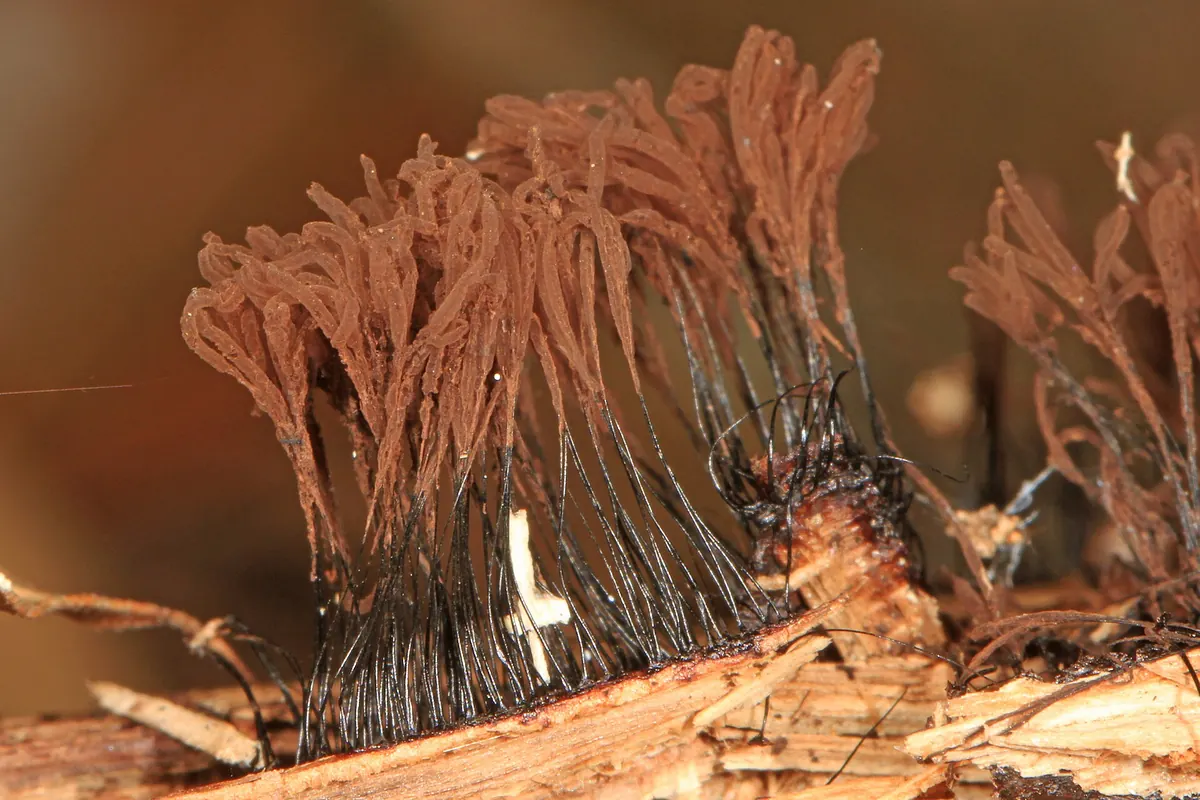
The slime mold row is the purple most likely to be found on wet wood outdoors. Wikipedia's Stemonitis splendens entry, citing Young's Field Guide to the Fungi of Australia describes the chocolate tube slime as clusters on sheltered, decaying wood, with sporangia dark purplish brown, 10 to 20 mm tall and 1 to 2 mm across, on black stems. Washington State University Extension advises scooping slime mold into a bag rather than hosing it; handling is on orange mold.

One pink look-alike is self-inflicted. According to the FPL note Iron Stain on Wood, oxalic acid clears iron stain but can leave a pink stain on oak if left too long; it calls for at least 5% by weight and a warm water rinse. Moisture decides whether a fungus spreads: according to the USDA Forest Products Laboratory Wood Handbook, chapter 14, the fiber saturation point averages 30%, and air-dried wood at 20% or less has a reasonable margin of safety.
Purple in sinks and toilets
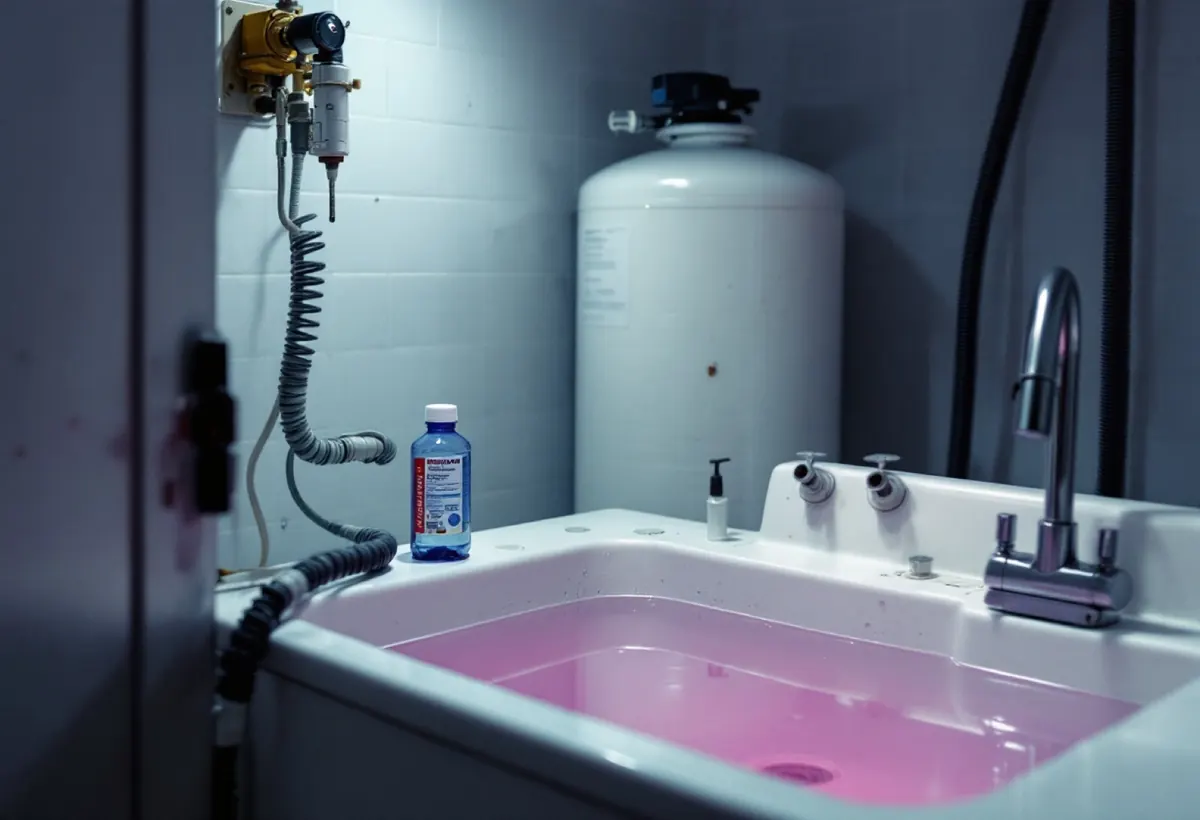
A purple ring in a toilet or sink on a private well is usually chemistry. Penn State Extension describes manganese greensand filters that need frequent regeneration with a potassium permanganate solution. The Town of Blades, Delaware warned residents in October 2016 of light pink or purplish water for a few days after filter testing sent extra permanganate into the supply. If the colour follows a filter service, call the treatment company.
Minerals give other colours, and EPA's secondary drinking water standards name them. Copper above its secondary level causes blue-green staining, iron causes reddish or orange staining, and manganese causes black to brown colour and black staining; EPA does not enforce these levels. Pink film is a separate question, answered on pink mold and red mold.
What to do for each
| Cause | Method | Why this differs from generic advice |
|---|---|---|
| Purple-tinted mold on hard surfaces | Detergent and water, dry completely, per EPA | The colour does not change the method |
| Purple-tinted mold on porous materials | Bag and remove | EPA says porous materials may have to be thrown away |
| Purple fungal stain in wood | Dry it; seal or leave | Sanding chases a stain the FPL says goes into the sapwood |
| Slime mold on wet wood or mulch | Scoop into a bag, per WSU; dry the area | Not a fungus; mold products are beside the point |
| Purple drywall face | Nothing | It is the product |
| Permanganate tint in water | Treatment company service | The source is the filter, not the fixture |
| Dye, ink or wine | Stain removal for that material | No growth, no remediation |
For true mold, the EPA's brief guide to mold and moisture treats areas under about 10 square feet as a do-it-yourself job, says to dry wet items within 24 to 48 hours and keep humidity below 60 percent. Steps are on DIY mold remediation.
Signs it is bigger than the spot
| What you see | What it usually means | Next step |
|---|---|---|
| Purple growth back within weeks of cleaning | The moisture source is still active | Find and fix the water |
| Purple spots showing through wallpaper | Growth on the paper back or drywall | Scope containment first |
| Slime mold indoors on framing or a subfloor | Wood wet long enough to decay | Probe; moisture readings |
| Purple drywall that is soft, stained or swollen | Water damage despite the mold-resistant board | See mold on walls |
| Purple tint that returns after every filter service | Permanganate feed or rinse problem | Water treatment provider |
| Growth larger than about 10 square feet | Beyond EPA homeowner scale | Professional scope |
For contractors
Purple is a scoping trap both ways. A purple board face can be logged as growth, and real growth on it dismissed because the board is mold resistant. Document the board, the water and the texture.
| Document | Why it belongs in the file |
|---|---|
| Wipe test and close-up photo | Separates growth from dye and product colour |
| Board make and face colour | Purple face paper is not a finding |
| Water source and any treatment system | Routes permanganate to the treatment trade |
| Moisture content of stained wood | Against the FPL 30% and 20% lines |
| Lab result, if the owner wants a name | Colour cannot identify the organism |
| Measured area of true growth | Against EPA’s 10 square foot line |
According to Fixr, remediation averages $3,500 nationally; see mold remediation cost. On claims, the ISO HO 00 03 sample form hosted by the Insurance Information Institute excludes mold, fungus or wet rot, with a give-back for such loss hidden within walls or ceilings or beneath floors when it results from accidental discharge or overflow from a plumbing, heating, air conditioning or sprinkler system, or a household appliance. An adjuster asks for the water source and timeline. What a given policy pays depends on its form and endorsements, so the owner’s policy, their state insurance department and a licensed professional decide.
What this page does not cover. Health effects of molds, slime molds or water treatment chemicals are outside our scope; CDC, EPA and NIH publish that guidance. Other colours: blue mold, pink mold.
Questions people actually ask
What is purple mold?
A colour description, not a species. The University of Adelaide says Fusarium colonies can range from whitish to yellow, pink, red or purple, and the USDA Forest Products Laboratory says fungal stains in wood are sometimes purple. Many purple marks indoors are not mold: drywall paper, dye, ink or well filter permanganate.
Is purple mold dangerous?
This page does not assess health effects; CDC, EPA and NIH publish that guidance. EPA says no one can tell whether a mold is producing mycotoxins just by looking at it, and CDC says you do not need to know the type to remove it.
Why is there purple mold on my wall?
First check it is mold. If the whole board face is evenly purple, it is likely mold-resistant drywall; Gold Bond’s XP sheet describes purple face paper. If it is fuzzy and near a leak, it is growth on damp paper or paint. EPA notes mold can also hide behind wallpaper.
What is purple mold on wood?
Usually a fungal stain or a slime mold. The USDA Forest Products Laboratory says sap stains are mostly blue but sometimes purple, and that they penetrate the sapwood and cannot be surfaced off. Tiny dark purplish brown stalks in clusters on rotting wood are likely a slime mold such as Stemonitis.
Is purple mold rare?
Yes, by the published record. Of the federal, extension, mycology and pricing sources checked for this page, only the Adelaide Fusarium description and the USDA Forest Products Laboratory name purple directly. Fixr prices ten mold types and none is purple. Most purple sightings indoors turn out to be look-alikes.
How do I get rid of purple mold?
Identify it first. For real mold, EPA says scrub hard surfaces with detergent and water and dry completely, discard moldy porous materials, and fix the water within 24 to 48 hours. Leave purple drywall paper alone, call the water treatment provider about purplish water, and scoop slime molds into a bag.
Why is my water purple or pink?
On a filtered well, the usual cause is potassium permanganate, the chemical used to regenerate greensand filters. The Town of Blades, Delaware traced light pink or purplish water to extra permanganate during filter testing in 2016. It is not mold. Call the treatment provider, and see our pink mold page for pink film.
Sources
- University of Adelaide description of Fusarium, Fusarium. Retrieved 31 October 2026.
- Adelaide description of Penicillium, Penicillium. Retrieved 31 October 2026.
- USDA Forest Products Laboratory Wood Handbook, chapter 14, Biodeterioration of Wood, FPL-GTR-282. Retrieved 31 October 2026.
- FPL note Iron Stain on Wood, Mark Knaebe, revised July 2013. Retrieved 31 October 2026.
- Wikipedia's Stemonitis splendens entry, citing Young's Field Guide to the Fungi of Australia, citing Young, A Field Guide to the Fungi of Australia (UNSW Press, 2005). Secondary source. Retrieved 31 October 2026.
- Washington State University Extension, Dog Vomit Slime Mold, 27 July 2016. Retrieved 31 October 2026.
- University of Arkansas Cooperative Extension, slime mold entries, 2010 to 2018. Retrieved 31 October 2026.
- Gold Bond XP Hi-Abuse submittal sheet, Gold Bond Building Products, document 110958 rev. 10/25. Retrieved 31 October 2026.
- USG technical bulletin PM4, Sun-Faded Imperial Gypsum Base, 2010. Retrieved 31 October 2026.
- Town of Blades, Delaware, Experiencing Pink or Purplish Water?, 20 October 2016. Retrieved 31 October 2026.
- Penn State Extension, Iron and Manganese in Private Water Systems, updated 29 May 2025. Retrieved 31 October 2026.
- EPA's secondary drinking water standards, updated 26 May 2026. Retrieved 31 October 2026.
- EPA's brief guide to mold and moisture and EPA mold course, chapter 1, both updated 18 February 2026. Retrieved 31 October 2026.
- CDC, Mold, 26 September 2024. Retrieved 31 October 2026.
- USDA FSIS fact sheet Molds on Food, undated, Internet Archive capture of 4 October 2026. Retrieved 31 October 2026.
- Fixr, updated 29 August 2025. Retrieved 31 October 2026.
- ISO HO 00 03 sample form hosted by the Insurance Information Institute, form HO 00 03 10 00. Retrieved 31 October 2026.
- Real photographs are Wikimedia Commons files under the licences in their captions; scene illustrations are generated. Nothing here was tested or inspected by us. See our methodology and the mold hub.
Identification from colour is provisional, and purple is the least documented mold colour. A wipe test, a water test or a laboratory sample is the reliable answer.