The short answer
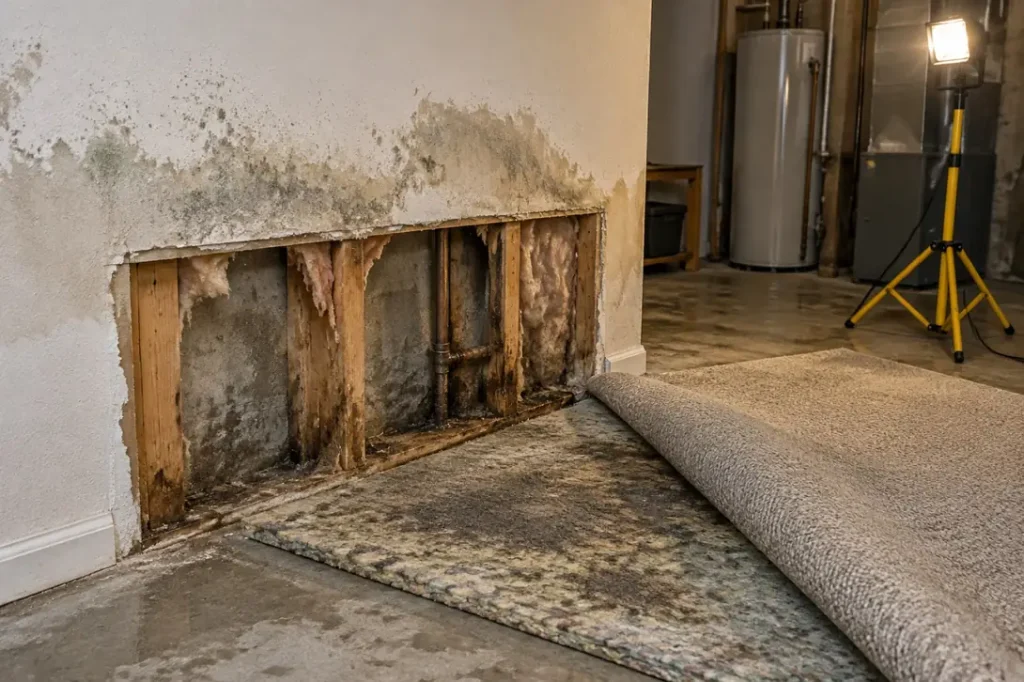
Mold damage is the physical harm fungi do to the materials they feed on. On gypsum paper, carpet, insulation, fabric, leather and books it means stains, odor and weakened fibers that cleaning often cannot reverse. On wood, mold is mostly a surface stain; the structural damage comes from decay fungi, which need wood wetter than its fiber saturation point, about 30 percent moisture.
Key takeaways
- Mold eats what it grows on: OSHA says molds digest whatever they land on, and EPA says longer growth means more damage.
- Mold on wood is usually cosmetic. The Forest Products Laboratory says mold and stain fungi affect strength only slightly; decay fungi are the ones that eat the wood.
- Decay is fast and hidden: per the Wood Handbook, toughness losses of 6% to more than 50% occur by 1% weight loss, when decay is visible only under a microscope.
- Porous materials are the casualties: EPA’s tables discard wet insulation and ceiling tiles, and moldy wallboard and carpet beyond small areas.
- Wet or moldy duct insulation cannot be effectively cleaned and should be removed and replaced, according to EPA.
- Leather, paper and textiles are stained and weakened by mold, according to the National Park Service.
- New York’s seller disclosure form asks about mold testing, and Texas sellers must hand over five years of remediation certificates.
On this page
Most pages ranking for this phrase are about bodies. This one is about the building: what mold does to drywall, framing, insulation, carpet, ducts and contents, for the contractor scoping the job and the owner reading the scope.
What mold damage actually is
Mold is a feeding organism. OSHA's SHIB 03-10-10 bulletin says spores that land on a damp spot digest whatever they land on, including wood, paper, carpet, insulation and plain household dust. The National Park Service Conserve O Gram 3/4 lists what that feeding leaves behind: pigments that stain, enzymes that digest organic materials, organic acids that corrode and etch metals, and odors.
EPA's Brief Guide to Mold, Moisture and Your Home adds time: the longer mold grows, the more damage it can cause, and materials dried within 24 to 48 hours in most cases do not grow mold at all. That is why a two day leak and a two month leak produce different scopes.
What does mold damage first?
Food and water set the order. Paper and cellulose go first because they feed mold and wick water: drywall facing, cellulose insulation, carpet backing and pad, books. Wood follows, mostly as surface staining until it is wet enough for decay fungi. Metal, glass and plastic carry growth on surface dirt and usually clean up.
So mold damage to a house comes in two kinds. Cosmetic damage is staining, odor and surface loss, sometimes permanent, that does not change how a member carries load. Structural damage is strength loss, and in a wood frame house that means decay fungi, not the surface molds people photograph.
Mold damage by material
The table combines EPA's Mold Remediation in Schools and Commercial Buildings (Tables 1 and 2), the Forest Products Laboratory and the National Park Service.
| Material | What mold physically does | Usual outcome | Damage type |
|---|---|---|---|
| Gypsum board paper facing | Paper is food: growth stains and consumes the facing, and wet gypsum loses strength. | Dry in place only if not swollen and seams intact; moldy board is HEPA vacuumed or discarded (EPA Tables 1 and 2). | Cosmetic, replaceable |
| Wood framing and sheathing | Mold and stain discolor and raise absorbency; decay fungi digest the wood. | Clean mold; replace decayed wood with dry lumber (FPL ch. 14). | Structural only if decayed |
| Fiberglass and cellulose insulation | Holds water against framing; growth fouls fibers and facing. | Discard and replace, even when only wet (EPA Table 1). | Never cleaned |
| Carpet and pad | Growth hides on the underside and in the pad. | Dry within 24 to 48 hours; discard added for medium and large moldy areas (EPA Table 2). | Often discarded |
| Upholstery and textiles | Stained, with decreased fiber strength (NPS). | Wet vacuum and HEPA vacuum; discard on larger areas (EPA Table 2). | Cosmetic, can be permanent |
| Leather | Particularly susceptible; stained and weakened (NPS). | Conservator for anything valuable. | Material loss |
| Paper and books | Foxing, lost sizing, more porous and fragile pages (NPS). | Discard, photocopy or freeze (EPA Table 1). | Material loss |
| HVAC ducts and liner | Spreads spores; internal insulation holds moisture. | Wet or moldy duct insulation is removed and replaced (EPA). | System contamination |
Gypsum board and its paper facing
A PABCO Gypsum technical bulletin names paper faced drywall among mold’s food sources. According to PABCO, gypsum can absorb about 10% of its weight in moisture before the panel becomes structurally unsound, and mold-resistant panels are not mold-proof. Drywall suffers twice: water softens the core and mold consumes the paper. Our guide to mold on walls covers reading the pattern and the D3273 rating of replacement board.
Wood
Mold on joists and sheathing is mostly surface; sap stain penetrates. The structural risk is decay, covered below, and our page on mold on wood takes the identification further.
Insulation, carpet and pad
EPA tells you to discard cellulose and fiberglass insulation once wet, before mold appears, and PABCO notes that insulation and framing absorb large amounts of water. Carpet damage is hidden: EPA lists the underside of carpets and pads among the places hidden mold grows.
HVAC
Ductwork does not rot, but it moves contamination. EPA's air duct guide says wet or moldy duct insulation cannot be effectively cleaned and calls cooling coils a major moisture source. Equipment choices belong with an HVAC contractor; according to Fixr's mold remediation cost guide, HVAC mold removal runs $3,000 to $10,000.
Wood: mold stains, decay destroys
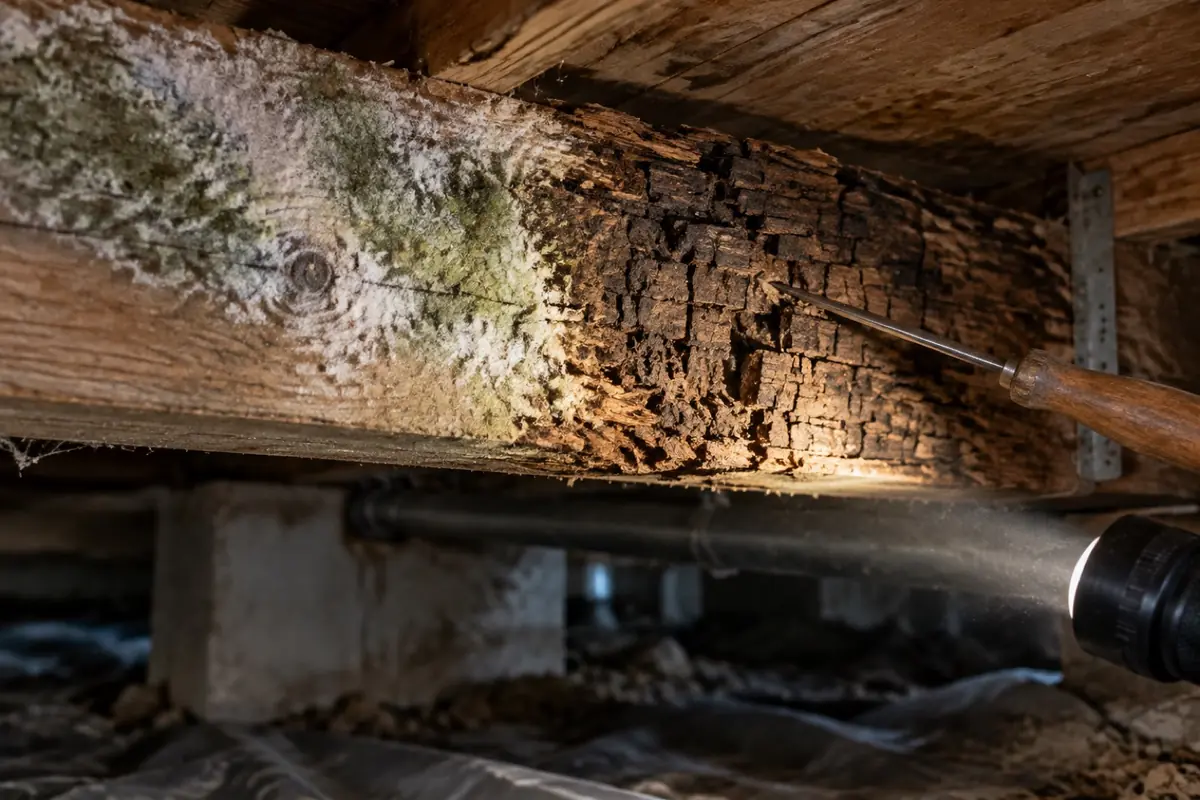
The Forest Products Laboratory’s Wood Handbook chapter 14 draws the line most mold damage scopes blur. Mold and stain fungi affect wood strength only slightly, mainly toughness and appearance. They do raise absorbency, which over-absorbs paint or glue and makes the wood easier for decay fungi to colonize later.
| Fungus type | How it looks | Depth | Strength effect |
|---|---|---|---|
| Mold | Fuzzy or powdery growth, light to black | Surface on softwood; on oak the stain beneath is often too deep to plane off | Slight; mainly toughness |
| Sap stain (blue stain) | Blue to black wedges following the rays | Penetrates sapwood; surfacing does not remove it | Slight; mainly toughness |
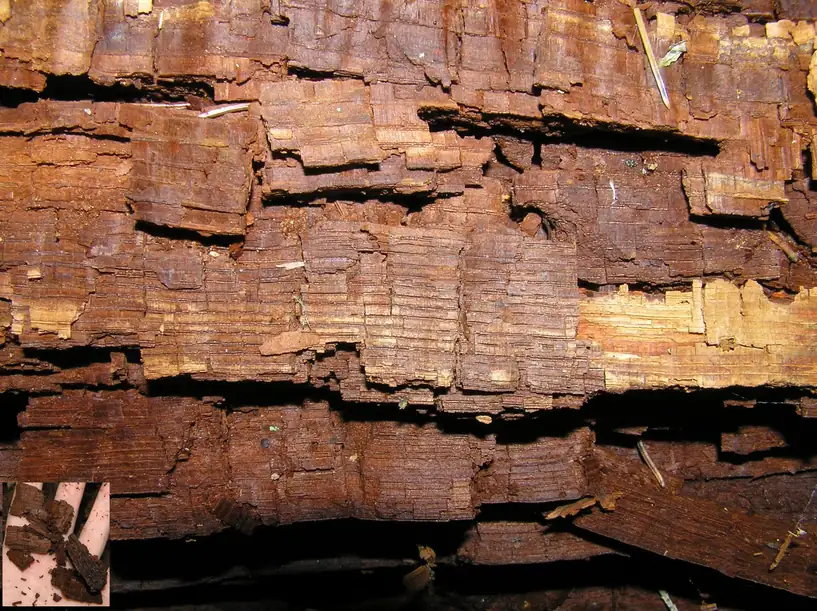
| Brown rot | Brown, cracks across the grain into cubes, crushes to powder | Through the member | Severe, fastest early loss |
| White rot | Bleached look, spongy feel, keeps its shape until late | Through the member | Severe |
| Soft rot | Shallow, soft when wet, firm wood beneath | Outer surface | Damaging to thin pieces |
Decay needs more water than mold. According to the Wood Handbook, serious decay occurs only above the fiber saturation point, an average of 30%, which takes liquid water; humid air alone permits some mold but not significant decay. According to the same chapter, air-dried wood at 20% or less has a reasonable margin of safety, and existing decay does not progress while wood stays dry.
The strength numbers are the reason to take decay seriously. Per the Wood Handbook, laboratory toughness losses ranged from 6% to more than 50% by the time 1% weight loss had occurred, and by 10% weight loss most strength losses exceed 50%. Decay at those levels is visible only under a microscope, so wood with visible decay should be assumed to be greatly weakened.
Temperature explains why a wet wall cavity in a heated house is good decay territory: the handbook puts most decay fungi at an optimum of 77 F, with growth between 41 F and 104 F.
Cosmetic or structural: the decision path
Work through these in order on each damaged area.
- Is the source still wet? Stop it first; EPA says mold returns if the water problem is not fixed.
- Is the material porous and visibly moldy? Insulation, ceiling tile, pad and most wallboard follow EPA’s discard guidance: replacement, not structure.
- Is it wood, and does the growth sit on top? Sound, hard wood under fuzzy growth is cosmetic mold damage.
- Is the wood brown and cracked into cubes, bleached, spongy or soft? Those are the FPL descriptions of decay. Treat the member as structurally reduced.
- Has the moisture reading stayed above the fiber saturation point? Wood held above roughly 30 percent moisture is in decay range even where nothing is visible yet.
- Is a load path involved, or is anything sagging? EPA and OSHA both say to consult a structural engineer or other qualified professional if mold may have damaged building integrity.

| What you see | What it usually is | Classification |
|---|---|---|
| Fuzzy growth that brushes off, sound wood beneath | Mold on the surface | Cosmetic: clean and dry |
| Blue to black streaks that do not plane off | Sap stain | Cosmetic: appearance only |
| Brown, cube cracked, shrunken or crumbly wood | Brown rot | Structural: replace the member |
| Bleached, spongy, stringy wood | White rot | Structural: replace the member |
| Fan shaped patches, strands or mushrooms on wood | Decay fungus | Probe and assess |
| Sagging floor, soft subfloor, fasteners pulling | Strength loss | Structural engineer |
| Drywall soft, swollen or with open seams | Water damaged core | Replace the board |
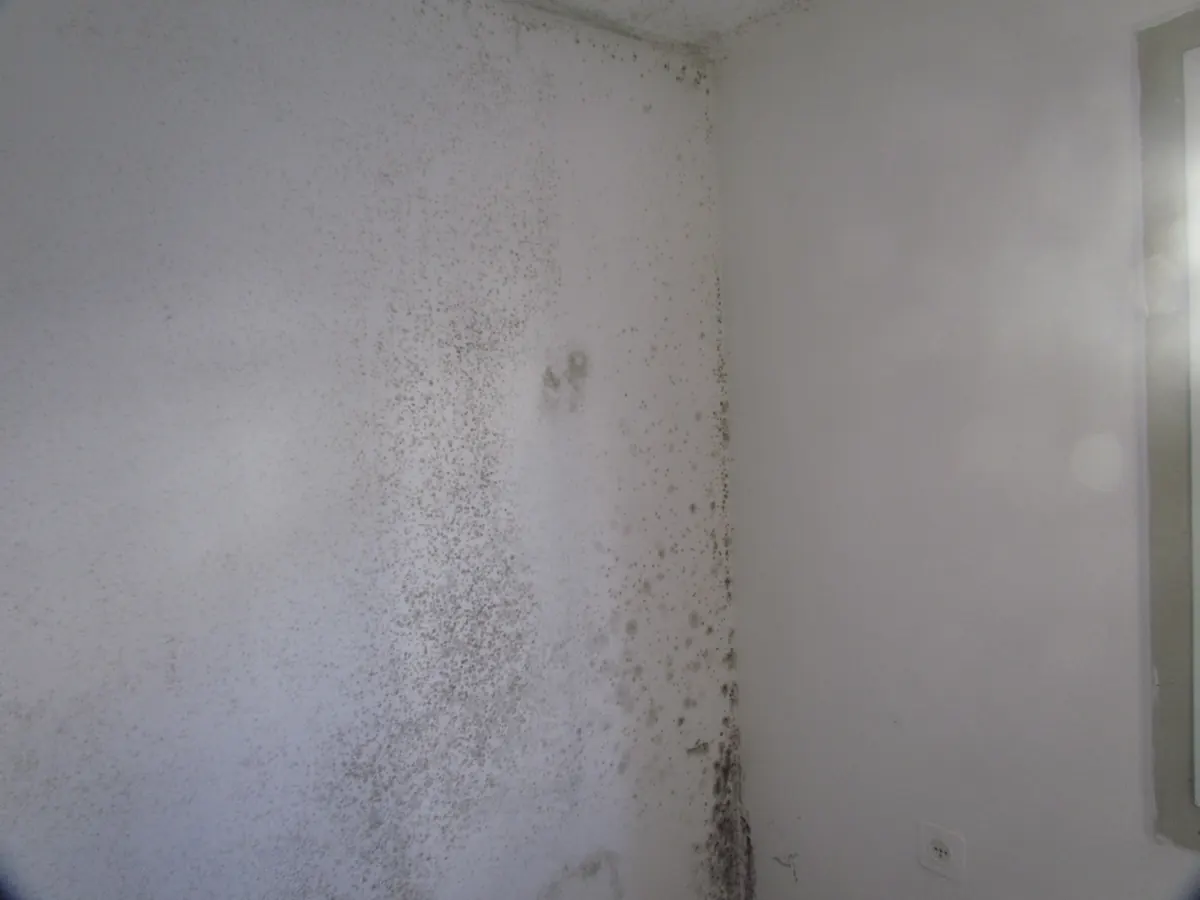

Removal follows the steps on our mold remediation process page, and putting the building back together is covered in mold damage restoration.
Contents: paper, leather, textiles
Conservators know this damage best. The National Park Service Conserve O Gram 3/4 says mold can permanently damage the materials supporting it, and names cellulose (cotton, linen, paper, wood) and protein materials (leather, parchment, adhesives) as particularly susceptible.
| Item | Damage described by NPS | First handling step |
|---|---|---|
| Paper, prints, books | Foxing spots; loss of protein or starch sizing so paper absorbs water more easily; more porous and fragile | Isolate, dry, vacuum only when the mold is dry and powdery |
| Leather | Stained and weakened; particularly susceptible | Conservator for anything valuable |
| Cotton, linen, wool, upholstery | Stained, with decreased fiber strength | Isolate; HEPA vacuum after drying |
| Wood furniture | Stained; surface growth | Dry, then clean |
| Metals | Organic acids from fungi can corrode and etch | Dry; conservator for valuable pieces |
The National Park Service collections guidance adds two limits: alcohol and bleach can permanently damage collections, and complete mold removal is typically unachievable. Its rule carries over to household contents: replace mass produced items, and take rare ones to a conservator.

How insurers treat mold damage
The standard ISO HO 00 03 homeowners form excludes mold, fungus or wet rot but gives back loss from mold hidden in walls, floors or ceilings that results from an accidental discharge of water from a plumbing, heating, air conditioning or sprinkler system or an appliance; endorsements and state forms change that wording, so read your own policy and our guide to whether homeowners insurance covers mold remediation, and ask your state insurance department or a licensed professional about your claim.
Property value and disclosure
This page does not quote a price discount for mold damage, because none of the primary sources it relies on measures one. What can be documented is the paper trail two states attach to a sale.
| State | Law | What the seller must do | When |
|---|---|---|---|
| New York | Real Property Law 462, property condition disclosure statement | Asks whether the property has been tested for indoor mold; if yes, attach a copy of the report | Before the buyer signs a binding contract |
| Texas | Occupations Code 1958.154 | Seller provides the buyer a copy of each certificate of mold remediation issued for the property in the 5 years before the sale | On sale |
Under New York Real Property Law 462, the seller delivers the disclosure statement before the buyer signs a binding contract. Under Texas Occupations Code 1958.154, the license holder issues a certificate of mold remediation within 10 days of finishing, so a closed out job becomes a document the next buyer reads. Rules vary by state; check yours with a real estate attorney.
For contractors: documenting mold damage
An adjuster reviewing a mold damage scope wants to see why each material is cleaned, removed or replaced, and why any structural line item exists.
| Record | Why it matters |
|---|---|
| Moisture readings per material, with a dry reference | Separates active damage from old staining (OSHA: meters work on carpet, wallboard, wood and concrete) |
| Area of visible growth, in square feet | EPA uses about 10 square feet as the line between a homeowner job and professional guidance |
| Material type for each area | Drives the EPA method: clean, HEPA vacuum or discard |
| Probe results on wood, with photos | The FPL signs of decay are the evidence for a structural line item |
| Cause of the moisture | EPA and OSHA both say remediation includes correcting the cause |
| Contents list with salvage call per item | Cleanable against discard, before the adjuster visits |
The regulatory duty depends on the state; some license assessment and remediation separately and bar one firm from doing both (see state mold licensing). After a fire, suppression water starts the same clock (see fire damage).
What this page does not cover. Health effects of mold are out of scope here; for that, see the EPA, CDC and NIH resources and a health professional, since mold-related symptom and disease questions need a clinician, not a restoration publication.
Questions people actually ask
Can mold cause structural damage to a house?
Yes, mostly through decay fungi rather than surface mold. The FPL Wood Handbook says mold and stain fungi affect wood strength only slightly, while decay needs wood above its fiber saturation point, about 30 percent moisture. OSHA and EPA recommend a structural engineer if integrity is in doubt.
What kills mold effectively?
EPA’s guidance is that killing is not the goal: mold must be removed, not just killed, and biocides such as bleach are not recommended as routine practice. Hard surfaces are scrubbed with detergent and water; porous materials that cannot be cleaned are discarded, and the moisture source is fixed.
What cleaning products do professionals use for water damage mold?
EPA’s remediation guide describes four methods: wet vacuum, damp wiping with water and detergent, HEPA vacuuming after drying, and discarding what cannot be cleaned. Where a biocide or antimicrobial is used, it should be registered for that use and applied per its label.
Is there a company that does mold removal and air testing together?
In some states that combination is restricted. Texas and New York bar a license holder from performing both mold assessment and remediation on the same project or property, and Florida bars an assessor from remediating a structure it assessed within 12 months. Expect testing and removal to come from separate firms in those states.
Where can I buy a mold remediation kit for water damage?
Hardware stores sell cleaners and test kits, but no kit fixes mold damage to porous materials, which EPA says may need to be discarded. EPA suggests a homeowner can usually handle areas under about 10 square feet; beyond that, or after a lot of water damage, it points to its professional remediation guidance.
Can I book mold remediation with guaranteed results?
No honest firm can guarantee mold will never return, because that depends on the moisture source. What you can require is a defined finish: EPA says the water problem must be fixed and visible mold and moldy odors gone. In New York the assessor issues a passed clearance report, and in Texas a certificate of mold remediation.
How do you prevent mold after a fire?
Treat fire suppression water like any other water loss. EPA says drying wet materials within 24 to 48 hours prevents mold growth in most cases, and its tables list insulation and ceiling tiles as discard and replace once wet, so extraction and drying start at once.
Sources
- EPA's Brief Guide to Mold, Moisture and Your Home, US Environmental Protection Agency. Retrieved 18 October 2026.
- EPA's Mold Remediation in Schools and Commercial Buildings, EPA 402-K-01-001, September 2008 reprint. Tables 1 and 2 and cleanup methods. Retrieved 18 October 2026.
- OSHA's SHIB 03-10-10 bulletin, A Brief Guide to Mold in the Workplace. Retrieved 18 October 2026.
- Wood Handbook chapter 14, Biodeterioration of Wood, USDA Forest Products Laboratory Wood Handbook, FPL-GTR-282 (2021). Retrieved 18 October 2026.
- EPA's air duct guide, Should You Have the Air Ducts in Your Home Cleaned? Retrieved 18 October 2026.
- National Park Service Conserve O Gram 3/4, Mold: Prevention of Growth in Museum Collections, August 2007. Retrieved 18 October 2026.
- National Park Service collections guidance, Preservation Matters, last updated 29 September 2022. Retrieved 18 October 2026.
- PABCO Gypsum technical bulletin, Mold Growth in the Desert?, 2023. Retrieved 18 October 2026.
- ASTM D3273, D3273-21 summary page. Retrieved 18 October 2026.
- ISO HO 00 03 homeowners form, HO 00 03 05 11, Insurance Services Office 2010, filed with the Maine Bureau of Insurance. Retrieved 18 October 2026.
- Texas Occupations Code 1958.154; the official site renders by script, so the text was read at texas.public.law. Retrieved 18 October 2026.
- New York Real Property Law 462, New York State Senate, revised 4 July 2025. Retrieved 18 October 2026.
- Fixr's mold remediation cost guide, updated 29 August 2025. Retrieved 18 October 2026.
- Florida Statutes 468.8419, New York Labor Law 936 and New York Labor Law 947, assessor and remediator separation and clearance reports. Retrieved 18 October 2026.
- No figure here was estimated or invented. See our methodology and the mold hub.
This page describes materials, published guidance and statute text, not engineering, legal or insurance advice for a specific property.