The short answer
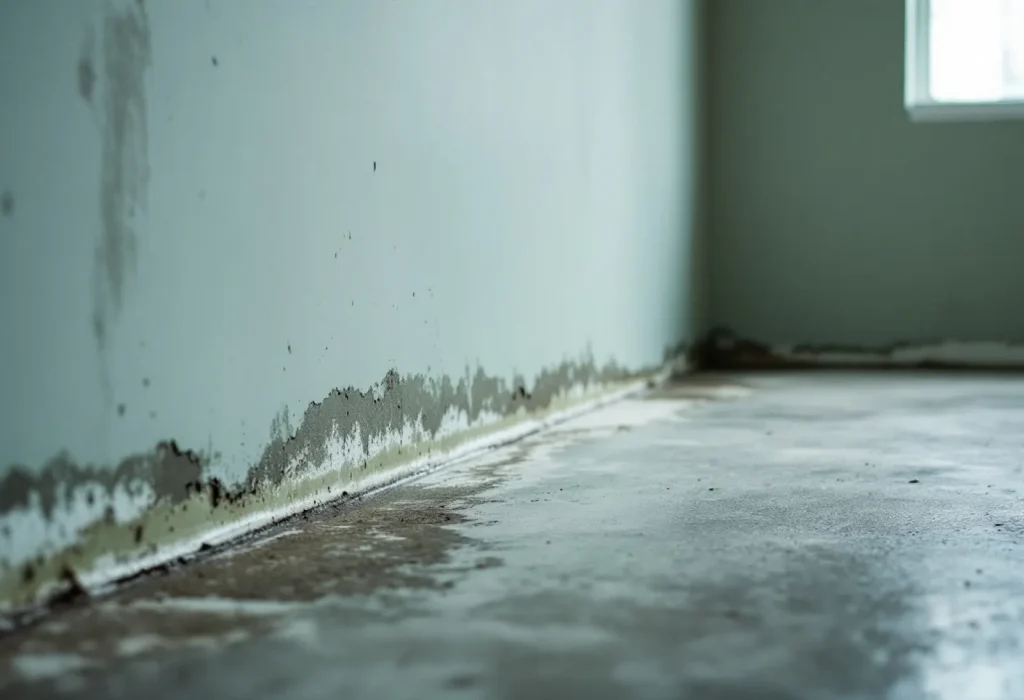
Not reliably: the evidence on does mold die when it dries out is that drying below a species’ minimum water activity stops growth, but spores survive in the residue and in house dust and can grow again when the surface is wetted again. EPA adds that dead mold may still cause allergic reactions, so it is not enough to simply kill the mold, it must also be removed.
What happens to a mold colony when its surface dries below 0.75 water activity?
Mold does not drink from the air. It uses the unbound water on the surface of the material it is growing on, and the measure of that water is water activity, a ratio from 0 to 1. The review by Loukou et al., Journal of Fungi, 2024 gives the conversion that makes it usable in a house: aw multiplied by 100 equals the relative humidity at equilibrium, so a surface at aw 0.80 behaves like air at 80 percent RH. The same review puts the optimum for most species at aw 0.90 to 0.99 and calls aw 0.75 in a material generally critical for growth.
When the surface falls below a species’ minimum, hyphae stop extending and the colony stops producing new spores. That is a halt, not a sterilisation. The 2024 review reports that conidia may adapt to fluctuating temperature and humidity in order to survive, and that spores which had adjusted to high moisture can lose viability after fast drying. Some fraction may die, but the review gives no rate that would let anyone count on it.
EPA's Brief Guide to Mold, Moisture and Your Home states the practical consequence in one line: there are many types of mold, and none of them will grow without water or moisture, yet it is impossible to get rid of all mold and mold spores indoors because some float in the air and settle in house dust. Dry conditions keep that background population inert; they do not remove it, and the agency’s last update to the page is dated 18 February 2026.
Which molds keep growing at which humidity? Minimum water activity for 14 indoor species
The table copies Table 1 of Loukou et al., Journal of Fungi, 2024, which lists minimum aw for growth under normal indoor conditions of 22 C plus or minus 3 C. The equilibrium RH column is our arithmetic, aw times 100, and the last column compares the lowest reported value with the 60 percent ceiling in EPA's Brief Guide to Mold, Moisture and Your Home.
| Species | Moisture group | Minimum aw | Equivalent ERH, % | Lowest value vs EPA ceiling |
|---|---|---|---|---|
| Acremonium charticola | Hydrophilic | 0.95 | 95 | Above EPA 60 ceiling |
| Stachybotrys chartarum | Hydrophilic | 0.94 to 0.95 | 94 to 95 | Above EPA 60 ceiling |
| Chaetomium globosum | Hydrophilic | 0.94 | 94 | Above EPA 60 ceiling |
| Trichoderma viride | Hydrophilic | 0.90 to 0.95 | 90 to 95 | Above EPA 60 ceiling |
| Alternaria alternata | Mesophilic | 0.85 to 0.89 | 85 to 89 | Above EPA 60 ceiling |
| Cladosporium herbarum | Mesophilic | 0.85 to 0.88 | 85 to 88 | Above EPA 60 ceiling |
| Cladosporium cladosporioides | Mesophilic | 0.84 to 0.87 | 84 to 87 | Above EPA 60 ceiling |
| Aspergillus fumigatus | Mesophilic | 0.82 to 0.85 | 82 to 85 | Above EPA 60 ceiling |
| Penicillium corylophilum | Mesophilic | 0.80 | 80 | Above EPA 60 ceiling |
| Penicillium chrysogenum | Xerotolerant | 0.78 to 0.85 | 78 to 85 | Above EPA 60 ceiling |
| Aspergillus niger | Xerotolerant | 0.77 to 0.78 | 77 to 78 | Above EPA 60 ceiling |
| Aspergillus versicolor | Xerotolerant | 0.74 to 0.79 | 74 to 79 | Above EPA 60 ceiling |
| Wallemia sebi | Xerophilic | 0.69 | 69 | Above EPA 60 ceiling |
| Aspergillus penicillioides | Xerophilic | 0.59 | 59 | Below EPA 60 ceiling |
Three things stand out. First, 13 of the 14 species need a surface at or above 60 percent ERH, and all 14 need more than the 50 percent top of EPA’s ideal band, which is why EPA’s humidity advice works as a growth stop. Second, the single exception is the xerophile Aspergillus penicillioides at aw 0.59, and the review notes that some species grew in museum stores held below 60 percent RH. Third, the spread is wide: Stachybotrys chartarum needs aw 0.94 while Penicillium chrysogenum can start at 0.78, a gap of 16 RH points.
That gap explains a pattern people notice after a leak dries. The dark, slow hydrophilic growth stops first as the material passes down through aw 0.94, while xerotolerant Penicillium and Aspergillus species can keep spreading until the surface falls below about 0.74 to 0.80. The same review names P. chrysogenum and A. versicolor as the two most reported building fungi across all materials, and it says the old primary, secondary and tertiary colonizer grouping is now considered obsolete because water damage is not necessarily a progression.
Why can drywall stay wet enough for mold when the room reads 45 percent RH?
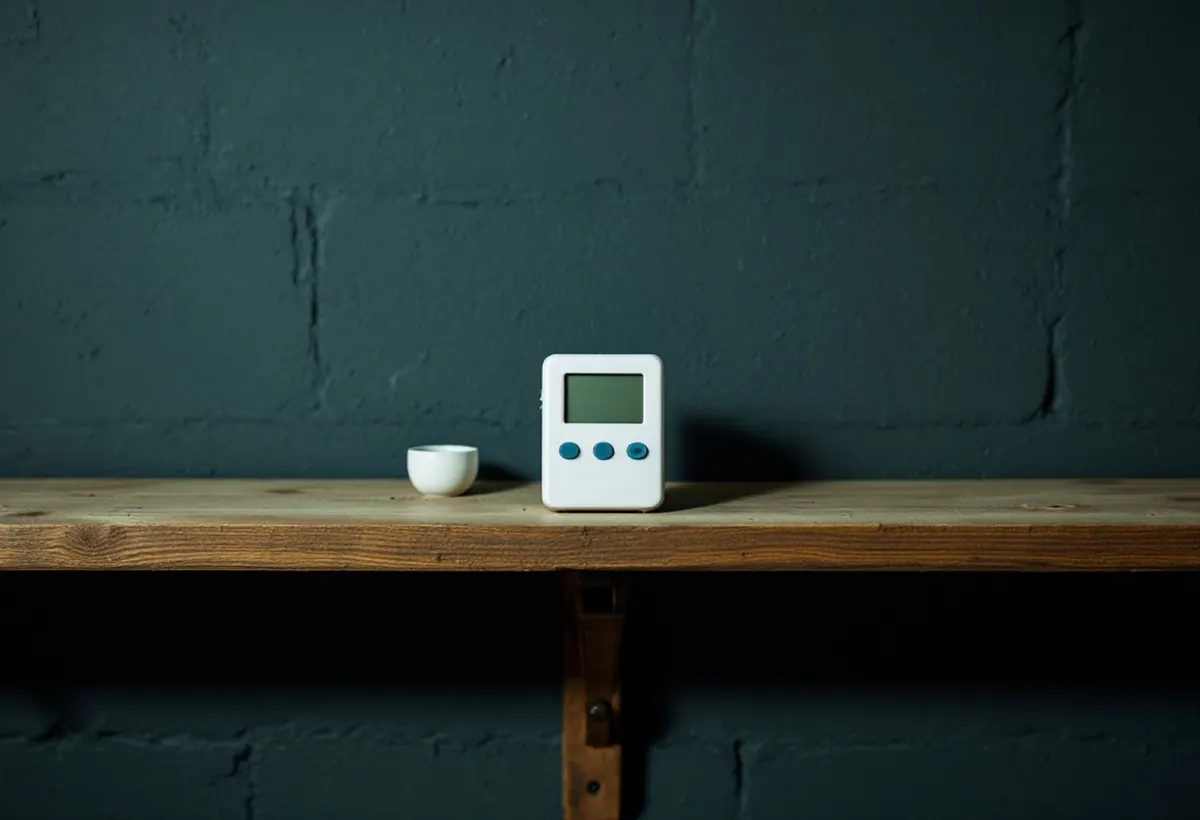
A hygrometer of the $10 to $50 kind EPA's Brief Guide to Mold, Moisture and Your Home describes reads the air in the middle of the room. The table above is about the surface. Loukou et al., Journal of Fungi, 2024 says room RH affects material moisture only indirectly, and that porous materials need more than 80 percent RH before water becomes readily available at the surface. The reverse also holds: a gypsum board soaked from behind, or a wall cavity with no air movement, can sit above aw 0.80 while the room reads comfortably dry.
So the question of whether drying has stopped growth is answered inside the material. EPA 402-K-01-001, Mold Remediation in Schools and Commercial Buildings allows wallboard to be dried in place only if there is no obvious swelling and the seams are intact, and tells crews to ventilate the wall cavity where possible. How a moisture meter reading maps onto those conditions is covered in what a drywall moisture reading means.
The review adds one more twist from building physics: some materials cannot support growth while saturated and only start to grow as they dry, and work on wood suggests a liquid water source may be needed to start growth there at all. A surface passing slowly down from saturation through aw 0.95 to 0.75 therefore passes through the growth band of most species in the table on its way down, which is why the drying rate matters as much as the end point.
What does the wet, dry, rewet cycle look like against the RH thresholds?
The diagram follows one surface through a leak. Water pushes it to aw 0.99, inside the 0.90 to 0.99 optimum. Drying carries it down through each species’ minimum in turn, from 0.94 for Stachybotrys to 0.75, the level the review calls generally critical. A second wetting returns it to the growth band, and the colony restarts from what survived instead of from scratch.
The review reports that contamination under fluctuating condensation develops much more slowly than the fast growth that follows capillary soaking in a flood. EPA’s practical target sits at the left of the curve: dry wet materials within 24 to 48 hours, the window in which, per the agency, mold will in most cases not grow. How that clock runs after a leak has its own page, how long it takes mold to grow after water damage.
How long do dried mold spores stay alive in dust?
EPA's Brief Guide to Mold, Moisture and Your Home says some mold spores will always be found floating in the air and in house dust, and that they will not grow if moisture is not present. Read the other way, that is the reason a dried stain is not a solved problem: the spores on it, and in the dust around it, are held in check by the moisture level, not removed, and the next leak or condensation event above the species minimum in the table restarts them.
Loukou et al., Journal of Fungi, 2024 adds a laboratory example. It cites work showing that high pH stops growth of Aspergillus versicolor, yet its spores survive those harsh conditions for extended periods and germinate again when conditions improve. The review does not give a single survival time for dry spores of any species, and no figure in years is given here for that reason.
EPA 402-K-01-001, Mold Remediation in Schools and Commercial Buildings sets the expectation for after cleanup: a background level of spores will remain in the air, roughly equal to or lower than outdoor air, and these spores will not grow if the moisture problem has been resolved. Air counts and how to read them are on the mold spores in air page.
Why does EPA guidance target removal instead of killing mold?
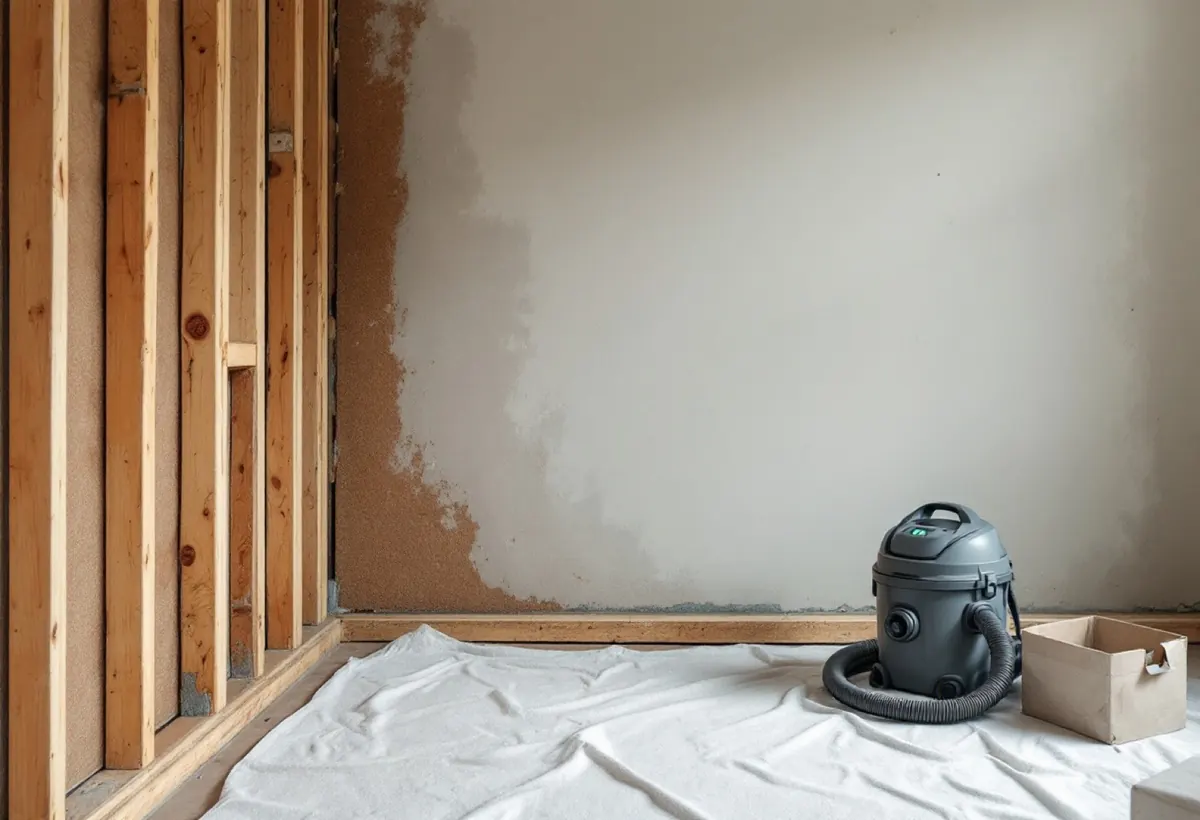
EPA 402-K-01-001, Mold Remediation in Schools and Commercial Buildings, published in September 2008, is direct: the purpose of mold remediation is to remove the mold to prevent human exposure and damage to building materials and furnishings, and it is necessary to clean up mold contamination, not just to kill it. Drying out is a form of killing at best, so by that standard it is never the finish line.
The same document says a biocide such as chlorine bleach is not recommended as a routine practice, that in most cases it is not possible or desirable to sterilize an area, and that some states require only registered pesticide applicators to apply biocides in schools. EPA's Brief Guide to Mold, Moisture and Your Home repeats the bleach position for homes and lists the finish condition: the water or moisture problem must be completely fixed before cleanup can be considered finished, and mold removal must be complete.
Health effects are outside the scope of this page. For what mold exposure means for health, see the EPA guide linked above or the CDC’s mold pages, and ask a clinician.
What should happen to mold that has already dried out, material by material?
EPA 402-K-01-001, Mold Remediation in Schools and Commercial Buildings Table 1 and its cleanup methods give the sequence, and drying comes before removal, not instead of it. Wet vacuums are for materials that are still wet, because the document warns they may spread spores if sufficient liquid is not present. HEPA vacuums are recommended for final cleanup after materials have been thoroughly dried and contaminated materials removed.
| Material (EPA 402-K-01-001) | What EPA says to do | Why drying alone is not enough |
|---|---|---|
| Non-porous hard surfaces (plastics, metals) | Damp wipe or scrub with water and detergent, then dry quickly | Dry growth stays on the surface until wiped off |
| Ceiling tiles, cellulose and fiberglass insulation | Discard and replace | Porous; mold fills crevices and is difficult or impossible to remove |
| Wallboard (drywall, gypsum board) | Dry in place only with no swelling and intact seams; otherwise remove and replace | Paper facing is a strong substrate per Loukou et al. 2024 |
| Wood surfaces | Remove moisture immediately; dehumidifiers, gentle heat, fans | Wet paneling should be pried away to dry behind it |
| Any moldy surface to be painted | Clean and dry before painting; do not paint or caulk over mold | EPA notes paint over moldy surfaces is likely to peel |
Disturbing dry growth releases it. EPA's Brief Guide to Mold, Moisture and Your Home warns that removing wallpaper can lead to a massive release of spores if mold is growing on the underside, which is why dry, dusty growth is handled with the damp wipe and HEPA methods above rather than a dry brush. The full order of containment, removal and checks is laid out in the mold remediation process.
The drying side is equipment and targets. EPA’s humidity advice is below 60 percent and ideally 30 to 50 percent; how restorers reach and verify that in a structure is covered in structural drying, and sizing a unit for a damp room in choosing a water damage dehumidifier. More on species, cleanup and costs sits in the mold hub.
Questions people actually ask
Does dry mold need to be removed?
Yes. EPA’s home guide says it is not enough to simply kill the mold, it must also be removed, and EPA 402-K-01-001 says the purpose of remediation is removal. That document recommends HEPA vacuuming after materials are thoroughly dried and contaminated materials removed, and discarding moldy ceiling tiles and insulation rather than drying them.
How long does it take mold to dry out?
No published source gives a drying time for a colony itself. What EPA publishes is a target for the material: dry wet items within 24 to 48 hours to prevent growth. A surface stops supporting the hardiest common indoor species only once it falls below about aw 0.74 to 0.80, the minimum range Loukou et al. report for Aspergillus versicolor.
What kills mold immediately?
EPA’s guidance treats that as the wrong goal. Its schools guide says a biocide such as chlorine bleach is not recommended as a routine practice, that sterilizing an area is in most cases neither possible nor desirable, and that cleanup must remove mold rather than only kill it. Non-porous surfaces are wiped with water and detergent; porous ceiling tiles and insulation are discarded.
How long can black mold live without moisture?
Stachybotrys chartarum needs a surface at aw 0.94 to 0.95, about 94 to 95 percent equilibrium RH, to grow, per Loukou et al. 2024, so it stops early as a wall dries. No species-specific survival time for its dry spores was found in the sources used here. EPA’s point still applies: spores held dry are not removed, and they grow again once moisture returns above the species minimum.
Does mold die when it dries out inside walls?
Growth stops once the inside surface drops below the species minimum, but Loukou et al. 2024 note that room RH affects material moisture only indirectly, so a cavity can stay wetter than the room reading suggests. EPA allows drywall to be dried in place only with no obvious swelling and intact seams, and asks for the cavity to be ventilated where possible; otherwise the board is removed and replaced.
Does mold die when it dries out on wood?
No: drying halts it and the residue stays. EPA 402-K-01-001 says to remove moisture from wood immediately with dehumidifiers, gentle heat and fans, to clean treated or finished wood with mild detergent and water, and to pry wet paneling away from the wall to dry it. Loukou et al. 2024 report that sapwood, high in free sugar, is more prone to mould than heartwood.
Sources
- EPA's Brief Guide to Mold, Moisture and Your Home, United States Environmental Protection Agency, last updated 18 February 2026: killing versus removal, 24 to 48 hour drying, 60 percent and 30 to 50 percent RH, background spores, biocides, wallpaper. Retrieved 16 November 2026.
- EPA 402-K-01-001, Mold Remediation in Schools and Commercial Buildings, United States Environmental Protection Agency, September 2008: purpose of remediation, biocides, Table 1 material actions, cleanup methods 1 to 3. Retrieved 16 November 2026.
- Loukou et al., Journal of Fungi, 2024: E. Loukou, N. F. Jensen, L. Rohde and B. Andersen, “Damp Buildings: Associated Fungi and How to Find Them”, J. Fungi 2024, 10, 108, section 2.1.2 and Table 1. Retrieved 16 November 2026.
- Equilibrium RH values are arithmetic on the published aw values (aw x 100, the conversion given by Loukou et al.), computed when this page was built. Nothing was estimated or invented. Our methodology sets out the standing rules.
Minimum water activity values come from laboratory conditions near 22 C and shift with temperature and nutrients. They describe when growth is possible, not whether a given wall is safe.