The short answer
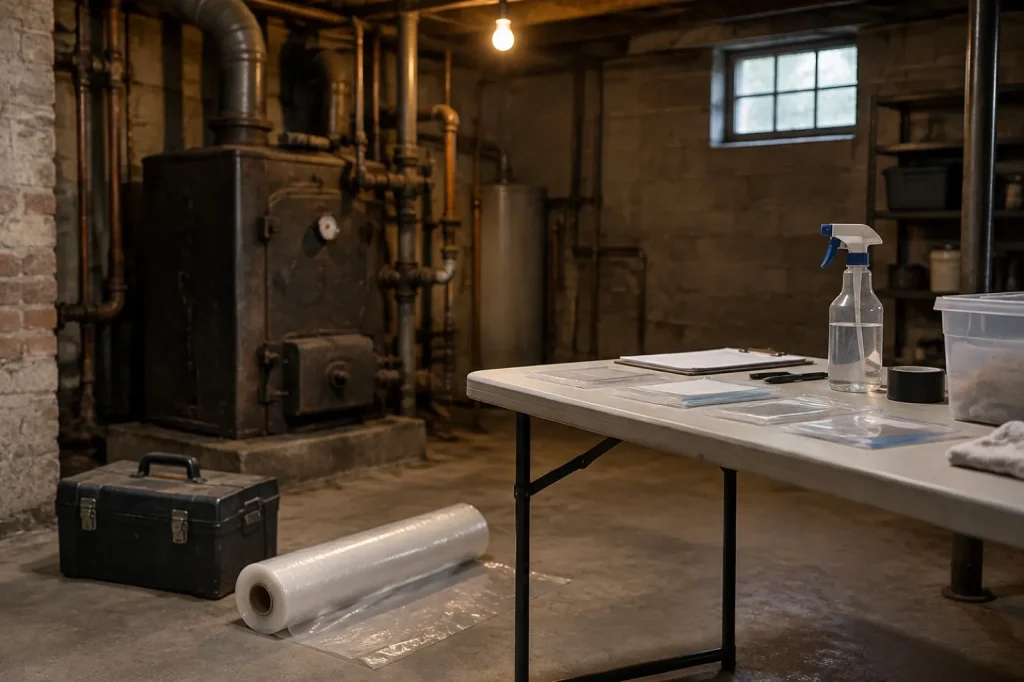
What does asbestos look like? In a building, usually like nothing in particular: it hides inside ordinary products such as pipe lagging, popcorn ceiling, vinyl tile, cement siding and vermiculite. EPA and CPSC both say you cannot tell by looking unless the material is labelled. Product type and installation date tell you what to suspect; only laboratory analysis by polarized light microscopy confirms it.
Key takeaways
- Sight cannot settle it. EPA and CPSC both say you cannot tell whether a material contains asbestos by looking, unless it is labelled.
- Suspicion comes from product type, installation date and condition. None of them is proof.
- Date carries real weight. According to USGS data, 93% of all asbestos consumed in the United States from 1900 to 2022 was used before 1980.
- OSHA presumes that pipe and boiler insulation, sprayed or troweled surfacing, and asphalt or vinyl flooring installed no later than 1980 contain asbestos until an inspection says otherwise.
- Vermiculite is the exception: EPA says to assume it is contaminated and leave it alone, because testing may give erroneous results.
- Layers matter. Tile and its mastic are separate results, while EPA analyses wallboard and joint compound together as one wall system.
On this page
Search results for this question are full of close-ups of white fluff and grey board, with an unspoken promise: compare your ceiling to the picture and you will know. The regulators say the opposite. This page takes them seriously and still answers the practical question: what to suspect, and from which decades.
What this page does not cover. It describes materials, dates and rules, not health. For health effects and exposure questions see the National Cancer Institute fact sheet, EPA's Learn About Asbestos page and your doctor. For decisions about a specific building, the authority is your state asbestos programme, listed in the EPA state asbestos contacts.
Why your eyes cannot settle it
The EPA homeowner guidance puts it in one line: generally, you cannot tell whether a material contains asbestos simply by looking at it, unless it is labelled. CPSC's Asbestos in the Home guide uses almost the same words and adds the working rule: treat the material as if it contains asbestos, or have it sampled and analysed by a qualified professional.
Three things make sight unreliable. Asbestos in buildings is usually a minor ingredient, so a cement shingle or a bag of joint compound looks like cement or plaster. Colour misleads: the NSW Government asbestos guidance notes that natural asbestos can be blue, brown, green or white, and that mixing or painting changes it. And each suspect product family also exists without asbestos; the EPA asbestos FAQ notes that not all siding or roofing contains it.
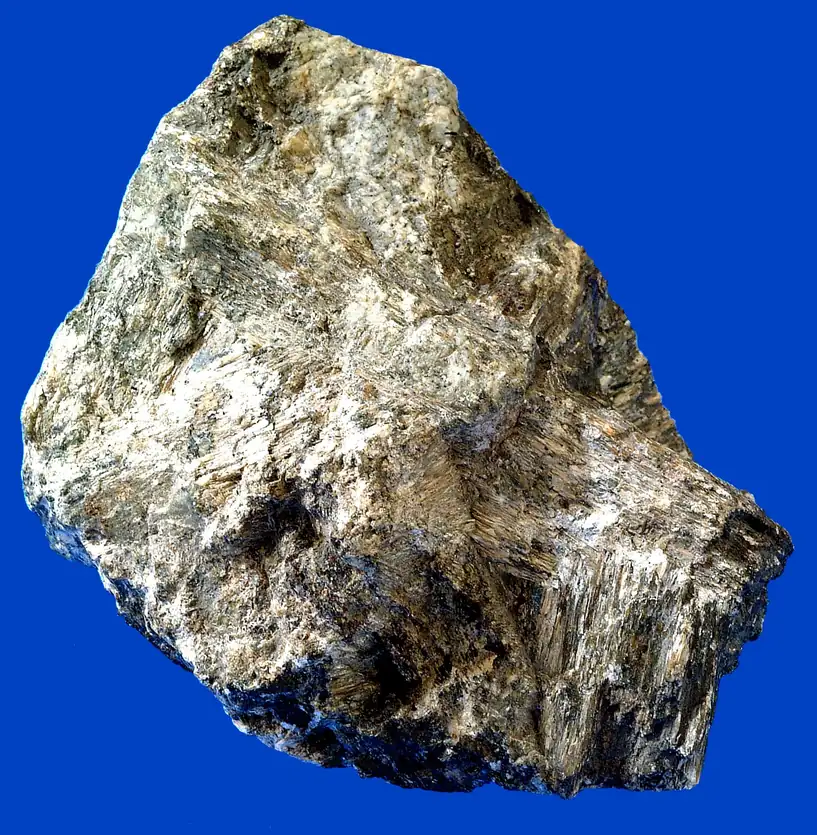

The regulated forms, as listed in ATSDR's 2008 Libby summary report, are chrysotile, crocidolite, amosite and the fibrous varieties of tremolite, actinolite and anthophyllite. In rock they can look silky, as in the specimen above. Bound into a product, that look is gone.
| What you can see | Why it raises suspicion | Why it cannot confirm |
|---|---|---|
| Product type (lagging, cement sheet, old vinyl tile) | It appears on EPA and CPSC suspect lists | EPA notes not every product of the type contains asbestos |
| Installed before 1980 | OSHA presumes several material classes from then contain it | EPA Region 2 warns later buildings may contain it too |
| Fibrous, fluffy or chalky texture | Friable material releases fibre when disturbed | Fibreglass, rock wool and cellulose are fibrous too |
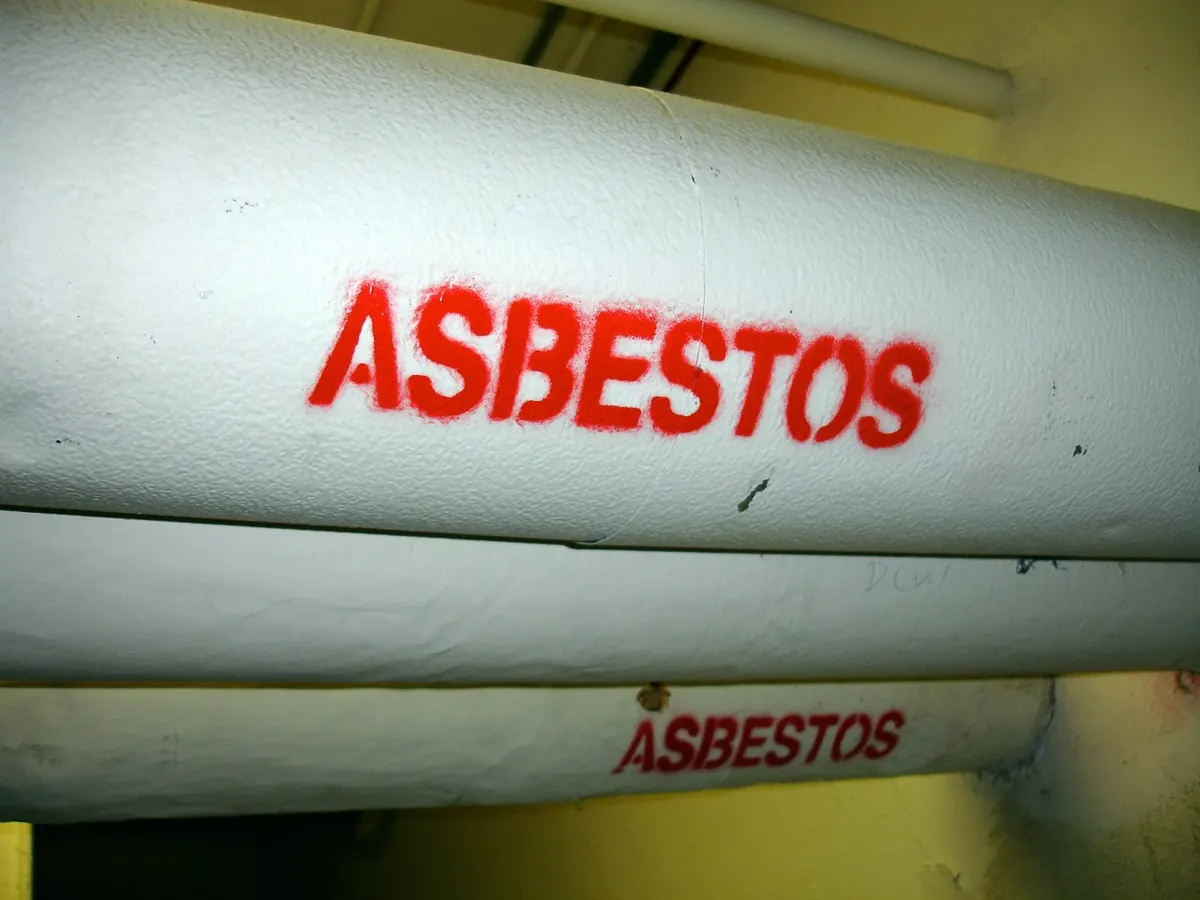
| A printed label or stencil | The one visual clue EPA and CPSC accept | No label proves nothing, NSW guidance warns |
| Colour | Raw fibre colour differs by mineral | Binders, paint and age change it |
The ten suspect materials, one by one
The list draws on EPA's Learn About Asbestos page, the EPA Region 2 renovation fact sheet, CPSC's Asbestos in the Home guide and the definitions in OSHA 29 CFR 1926.1101. Appearance descriptions are typical, not proof of content.
| Material | What it usually looks like | Date marker and source | Deep dive |
|---|---|---|---|
| Vermiculite loose-fill (attics, walls) | Pebble-like granules, grey-brown or silver-gold | Libby supplied over 70% of US vermiculite, 1919 to 1990 (EPA) | Insulation |
| Pipe and boiler lagging | White or grey wrap, block or cast elbows, often cloth-jacketed | Installs banned 1975; presumed if built by 1980 (EPA, OSHA) | Pipe insulation |
| Popcorn and sprayed ceilings | Lumpy, cottage-cheese texture | Spray-on bans 1973 and 1978 (EPA) | Popcorn ceiling |
| Ceiling tiles | Square fibreboard, often pinholed | Listed for pre-1975 buildings (EPA Region 2) | Ceiling tiles |
| Vinyl and asphalt floor tile | Hard, thin square tiles | Presumed if installed by 1980 (OSHA) | Floor tiles |
| Floor tile mastic | Black or dark brown adhesive | Listed with flooring adhesives (EPA) | Floor tile page |
| Joint compound and plaster | Any smooth or skimmed wall | Patching compounds banned 1977 (CPSC) | This page |
| Cement siding | Rigid, flat shingles, often pressed grain | Listed by EPA and CPSC | Siding |
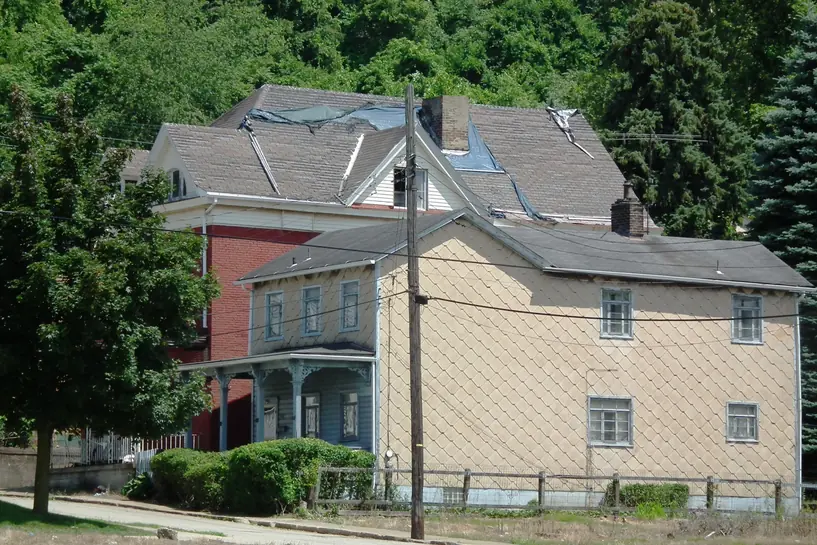
| Cement roof shingles | Rigid, slate-like shingles | Listed by EPA and CPSC | Shingles |
| Stove and furnace parts | Grey millboard, paper, gaskets | Listed by CPSC | This page |
Loose-fill vermiculite insulation
The EPA vermiculite guidance describes a pour-in product in pieces up to nearly an inch long, and it is the one material where EPA says to assume contamination rather than test. Our asbestos insulation guide covers it in full.
Pipe lagging and boiler insulation
OSHA 29 CFR 1926.1101 defines thermal system insulation as material on pipes, fittings, boilers, breeching, tanks and ducts. It turns friable once damaged. See asbestos pipe insulation.

Popcorn and other sprayed ceilings
The spray-applied bans of 1973 and 1978 that EPA records stopped new application, not existing ceilings. The popcorn ceiling page covers testing and removal.
Ceiling tiles
The EPA Region 2 renovation fact sheet names ceiling tiles among materials typical of large pre-1975 structures. A pinhole pattern says nothing about content. See asbestos ceiling tiles.
Vinyl and asphalt floor tile
Tile size is the most quoted clue and only a clue. Our floor tile guide weighs size, date and adhesive in turn.
Mastic under the floor
The adhesive under old tile is a separate material on EPA’s list, and labs report it as its own layer. It is covered on the floor tile page.
Joint compound, texture and plaster
CPSC's Asbestos in the Home guide records that textured paint and patching compounds were banned in 1977. On a wall they look like any skim coat, and EPA samples them with the wallboard as one system (see below).
Cement siding
Rigid, brittle and usually laid as flat rectangular shingles. See asbestos siding.

Cement roof shingles
The roofing version is a stiff, slate-like shingle on older houses and outbuildings. See asbestos shingles.
Stove, furnace and fireplace parts
CPSC's Asbestos in the Home guide lists millboard and paper behind wood stoves, furnace door gaskets and artificial fireplace embers, which it banned in 1977.

Reading the age of a building
If appearance is weak evidence, date is the strongest evidence you can gather without a sample. According to USGS Data Series 140, US apparent consumption peaked in 1973 at 803,000 metric tons and had fallen to 290 tons by 2022. Per the same USGS data, 93% of all the asbestos the country consumed was used before 1980. The series covers every use, not only building products, so read it as a timing signal.
Federal rules add sharper markers. They are not the end of asbestos in buildings: the EPA Region 2 renovation fact sheet warns that later structures may also contain it, and our ban timeline explains why the 1989 general ban mostly did not survive.
| Year | Rule or record | What it covers | Source |
|---|---|---|---|
| 1919 to 1990 | Libby vermiculite sales window | Over 70% of US vermiculite came from Libby | EPA vermiculite guidance |
| 1973 | Clean Air Act ban | Spray-applied fireproofing and insulation | EPA's record of federal asbestos bans |
| 1975 | Clean Air Act ban | Installing pipe and block insulation | EPA's record of federal asbestos bans |
| 1977 | CPSC bans | Patching compounds, fireplace embers | CPSC's Asbestos in the Home guide |
| 1978 | Clean Air Act ban | Other spray-applied surfacing | EPA's record of federal asbestos bans |
| 1980 | OSHA presumption date | TSI, surfacing, asphalt and vinyl flooring | OSHA 29 CFR 1926.1101 |
| 1989 and 1991 | TSCA ban, then vacatur | Flooring felt, rollboard, some papers stayed banned | EPA's record of federal asbestos bans |
| 2024 | Chrysotile rule | Ongoing chrysotile uses | EPA's record of federal asbestos bans |
Condition beats appearance
Once a material is suspect, condition decides what happens next. The EPA homeowner guidance says material in good condition that will not be disturbed should be left alone; fibre is released when it is damaged, cut, sanded, drilled, scraped or removed improperly. OSHA 29 CFR 1926.1101 defines intact material as ACM that has not crumbled, been pulverised or otherwise deteriorated so that the asbestos is no longer likely to be bound with its matrix.
| What you see | What it means | What EPA guidance points to |
|---|---|---|
| Intact, painted, undisturbed | Fibre bound in its matrix | Leave it alone and check it now and then |
| Tears, abrasion, water staining | Starting to break down | Limit access; have it assessed |
| Crumbling, powdery, hanging | Friable and shedding | Keep people away; call a trained professional |
| Sound, but a renovation is planned | Disturbance is coming | Sample before work starts |
| Vermiculite in any condition | Assumed contaminated | Leave undisturbed; do not test or remove it yourself |
Repair is a real option. EPA describes encapsulation, a sealant that binds fibres or coats the surface, and enclosure, a cover placed over or around the material. Removal is for major renovation or extensive damage.
Which situation are you in?
Work down the list and stop at the first line that fits.
- It is vermiculite. Stop there. EPA says to assume it contains asbestos, not to store things on it and not to remove it yourself. Go to the insulation guide.
- It is labelled, or a survey report names it. Treat it as asbestos-containing and plan around it.
- It is damaged or crumbling. Keep people away, do not sweep or vacuum the debris, and get it assessed.
- You are about to renovate, drill or demolish. Have every suspect material in the work area sampled first. Prices are on our asbestos testing cost page.
- It is intact and nothing will disturb it. EPA says no testing is needed. Note it and check it now and then.
- You are not sure what it is. Treat it as suspect until a lab says otherwise.
| Material age | Condition | Work planned | Next step |
|---|---|---|---|
| Before 1980 | Intact | None | Leave it; monitor |
| Before 1980 | Intact | Renovation | Sample before work |
| Before 1980 | Damaged | Any | Restrict access; assess |
| 1980 or later | Intact | None | Low priority; note it |
| 1980 or later | Any | Renovation | Sample suspect material anyway |
| Unknown | Any | Any | Treat as pre-1980 |
How it actually gets confirmed
Confirmation means a bulk sample analysed by polarized light microscopy. The NIST NVLAP asbestos programme accredits laboratories for PLM bulk analysis under EPA Method 600/R-93/116 and 40 CFR 763, and for TEM analysis of air samples. A material counts as asbestos-containing when it holds more than 1% asbestos, per the definition in OSHA 29 CFR 1926.1101.
The EPA homeowner guidance says a trained, accredited professional should take the sample, not the homeowner, while noting that federal law does not require accreditation for work in detached single-family homes; some states do. Our state accreditation map shows which. Kits are compared on the asbestos testing kit page.
| Route | What it proves | Limits |
|---|---|---|
| Product label or survey record | Content, if the record matches the material | Only as good as the record |
| PLM bulk analysis at an NVLAP lab | Presence and estimated percentage by layer | EPA warns of false negatives on floor tile |
| TEM on floor tile or mastic | Low concentrations PLM misses | A separate analysis |
| Composite wall-system sample | Joint compound and wallboard together, as EPA recommends | Report the weighted result, not one layer |
| Testing vermiculite | Not recommended for homeowners | EPA says results may be erroneous |
The TEM and wall-system rows come from the EPA asbestos FAQ. After a positive result, see asbestos removal cost and does insurance cover asbestos removal.
For contractors: the presumption is the scope
On a water, fire or mould job in an older building, identification is a regulatory duty. Under OSHA 29 CFR 1926.1101, owners must determine the presence, location and quantity of ACM and PACM before work begins and notify employers and tenants. PACM is thermal system insulation and surfacing in buildings constructed no later than 1980; asphalt and vinyl flooring installed by then is treated the same way unless rebutted.
OSHA accepts rebuttal by an AHERA inspection or by samples taken under 40 CFR 763.86 and analysed by an accredited lab. Removing TSI or surfacing ACM or PACM is Class I work, other ACM such as flooring is Class II, and repair that disturbs ACM is Class III. A wet pre-1980 ceiling with sprayed surfacing is a Class I tear-out until a lab says otherwise.
| Item | Why it matters on the file |
|---|---|
| Build and renovation dates | Sets the PACM presumption |
| Suspect material list by room | Defines the sampling scope |
| Lab report naming NVLAP lab and layers | Rebuts or confirms the presumption |
| Photos before any demolition | Shows the material was intact or already damaged |
| Owner notification record | OSHA (k) duty to inform |
| Separate line item for sampling | Keeps testing out of the mitigation total |
More on the rules is on our standards hub.
Questions people actually ask
How do you tell if you have asbestos?
By sampling, not by looking. EPA says you generally cannot tell whether a material contains asbestos by sight unless it is labelled. Use product type and installation date to decide what is suspect, then have damaged material, or material you plan to disturb, sampled by a trained professional and analysed by PLM at an accredited laboratory.
Can you live in a house with asbestos?
EPA guidance says material in good condition that will not be disturbed should be left alone, and that no testing is needed in that case. The concern is disturbance: cutting, sanding, drilling, scraping or damage. Vermiculite attic insulation is handled separately: EPA says to leave it undisturbed and not to store items in that attic.
Where is asbestos most commonly found?
EPA and CPSC list attic and wall insulation, especially vermiculite, pipe and boiler insulation, textured paint and patching compounds, popcorn and sprayed ceilings, vinyl floor tiles with their backing and adhesive, cement roofing and siding shingles, and the board or paper around wood stoves and furnaces. Buildings put up before 1980 are the main concern.
Will 30 minutes of asbestos exposure hurt you?
That is a medical question this page does not answer; ask a doctor. Regulation is narrower: OSHA limits workers to 0.1 fibre per cubic centimetre over eight hours and 1.0 over a 30 minute sampling period. Those are workplace limits, not a safe threshold, and EPA says no level of exposure is known to be safe.
What does asbestos look like in a ceiling?
Usually like a sprayed popcorn or acoustic texture, or like square fibreboard tiles. EPA records bans on spray-applied surfacing in 1973 and 1978, and its Region 2 fact sheet lists ceiling tiles in pre-1975 buildings. Neither texture nor tile pattern proves content, so a ceiling you plan to scrape or remove needs a lab result first.
What does asbestos look like in walls?
Usually invisible. In walls it sits in joint compound, textured paint and plaster, which look like any other finish, or in vermiculite poured into cavities. CPSC records that patching compounds were banned in 1977. EPA recommends sampling joint compound and wallboard together as one wall system, and advises against opening walls to look for vermiculite.
What does asbestos look like to the human eye?
As a raw mineral it can look like silky fibre bundles in rock, and NSW guidance notes it can be blue, brown, green or white. In a building product the fibre is bound into cement, vinyl, plaster or insulation. DOE’s insulation guide notes that the most hazardous fibres are too small to see, so identification relies on microscopy.
Sources
- EPA's Learn About Asbestos page, US EPA, updated 13 July 2026. Retrieved 11 October 2026.
- EPA homeowner guidance, US EPA, updated 25 June 2026. Retrieved 11 October 2026.
- EPA vermiculite guidance, US EPA, updated 17 April 2026. Retrieved 11 October 2026.
- EPA's record of federal asbestos bans, US EPA, updated 21 January 2026. Retrieved 11 October 2026.
- EPA asbestos FAQ, US EPA (PDF, 2012). Retrieved 11 October 2026.
- EPA Region 2 renovation fact sheet, US EPA Region 2, November 2012. Retrieved 11 October 2026.
- EPA state asbestos contacts, US EPA, updated 1 October 2026. Retrieved 11 October 2026.
- CPSC's Asbestos in the Home guide, US Consumer Product Safety Commission, undated. Retrieved 11 October 2026.
- OSHA 29 CFR 1926.1101, construction asbestos standard: definitions, (c), (k)(1) and (k)(5). Retrieved 11 October 2026.
- NIST NVLAP asbestos programme, NIST, updated 17 July 2026. Retrieved 11 October 2026.
- USGS Data Series 140, asbestos statistics workbook modified 14 July 2023. Retrieved 11 October 2026.
- ATSDR's 2008 Libby summary report, ATSDR (CDC), 29 October 2008. Retrieved 11 October 2026.
- NSW Government asbestos guidance, Government of New South Wales. Retrieved 11 October 2026.
- DOE Building America insulation guide, US Department of Energy, Building America Volume 17, May 2012. Retrieved 11 October 2026.
- Photographs are public domain or Creative Commons files from Wikimedia Commons, licences checked on each file page. Shares and year counts are arithmetic on the figures above. Our methodology sets out the standing rules.
This page describes materials and published rules. It is not a survey of any building. Confirm requirements with your state asbestos programme before disturbing suspect material.