The short answer
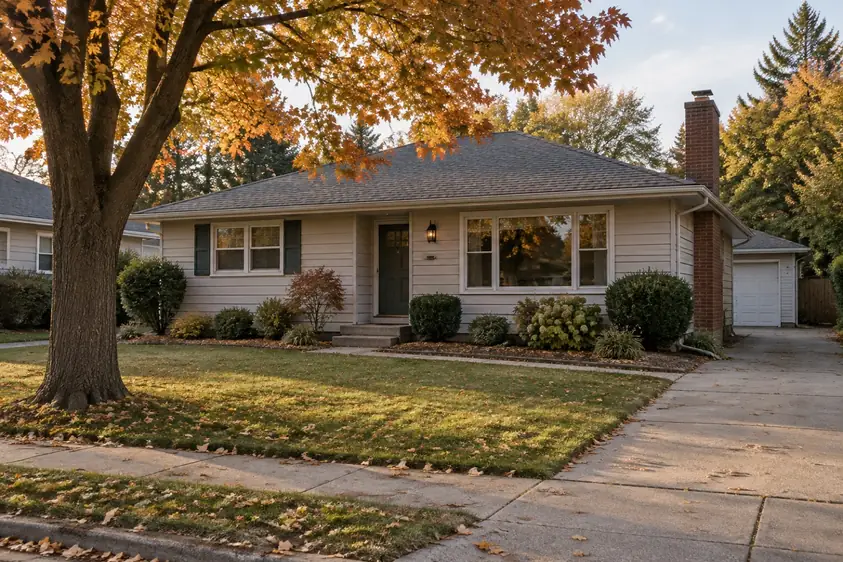
Houses with asbestos are, above all, houses built before 1980. OSHA presumes that pipe and boiler insulation, sprayed or troweled surfacing, and asphalt or vinyl flooring from that era contain it until tested, and Census survey data put 50% of US housing, about 73 million units, in that window. Flooring, textured walls, pipe wrap, vermiculite attics and cement siding are the usual places.
Key takeaways
- Half of US housing predates 1980: 73.1 million of 145.3 million units, according to Census AHS 2023 data, with a median build year of 1979.
- The 1950s to 1970s are the peak: those three decades took 64.3% of all US asbestos use from 1900 to 2022, per data from USGS, and hold 49.0 million homes today.
- Region matters. Per the Census data, 69% of Northeast housing predates 1980, against 38% in the South.
- OSHA’s 1980 line is a presumption, not a cutoff: 1980s homes can still contain it, and only a lab result clears a material.
- EPA says intact material that will not be disturbed is usually best left alone; renovation is what turns presence into a problem.
- The ‘built before 1978’ warning on listings is the federal lead paint rule, not an asbestos disclosure, per EPA.
On this page
The forums ranking for this search ask the same thing in a dozen ways: is the house I am looking at one of them? The honest answer is a probability, and it can be estimated from three public records: how much asbestos the country used in the decade a house was built, what the federal rules presume about that era, and where each material typically sits. What the word means is covered on our page what is asbestos.
What this page does not cover. Health effects are outside its scope; for exposure, disease and cancer questions, see the EPA’s Learn About Asbestos page or the National Institutes of Health fact sheet, and speak to a doctor.
Which homes: the construction era decides the odds
When was asbestos used in homes? Throughout the 20th century, but not evenly. The USGS consumption record shows a rise through the 1940s, a plateau from 1950 to 1979, and a collapse in the 1980s: from 356,000 tons in 1980 to 55,300 in 1989, according to USGS Data Series 140. The table matches that record against the number of homes of each age standing today, from the Census Bureau 2023 American Housing Survey.
| Built | US homes today (AHS 2023) | Avg US asbestos use per year, tons (USGS) | What the record says | Practical read |
|---|---|---|---|---|
| 1919 or earlier | 8.5 million | 66,020 (1900 to 1919) | Shell predates heavy use; CPSC flags pipe coverings and furnace insulation in older houses | Date the heating plant and floor layers, not the shell |
| 1920 to 1949 | 15.6 million | 170,550 to 420,200 | CPSC: houses built 1930 to 1950 may have asbestos insulation | Insulation, pipe wrap, cement siding |
| 1950 to 1979 | 49.0 million | 667,300 to 686,000 | Peak use; OSHA presumes TSI, surfacing and flooring from this era contain it; CPSC notes a 1977 ban on patching compounds | Presume until a lab clears it |
| 1980 to 1989 | 19.4 million | 188,800 | Use fell 84% across the decade; flooring was still 19.5% of 1980 use, per the USGS Circular | Outside the presumption, not proof of absence |
| 1990 to 1999 | 17.3 million | 26,360 | EPA’s Libby vermiculite figures run to 1990; roofing was the largest use, per the USGS Circular | Check the attic for vermiculite |
| 2000 or later | 35.6 million | 5,147 (2000s), 745 (2010 to 2022) | Remaining use mostly roof coatings; an unknown quantity arrives in imported products, per USGS | Low likelihood, not zero |
The 1980 line, and why it is a presumption
Under 29 CFR 1926.1101, thermal system insulation and sprayed or troweled surfacing in buildings constructed no later than 1980 are presumed asbestos containing material, and asphalt and vinyl flooring installed no later than 1980 must also be considered asbestos containing unless shown otherwise. That date is a regulatory convenience, not a manufacturing cutoff. CPSC says that until the 1970s many building products and insulation materials used in homes contained asbestos, and the USGS record shows use continuing at a lower level into the 1990s. Each product’s own ban history is on our page on when asbestos was banned.
Where in the house: the room by room checklist
Where is asbestos found in homes? CPSC's Asbestos in the Home guide and EPA's Learn About Asbestos page publish near identical lists. The checklist below sorts them by room. Use it to know where to look, not what to touch: EPA says you generally cannot tell whether a material contains asbestos by looking at it, unless it is labelled.
| Room | Material to check | Named by | Before you touch it |
|---|---|---|---|
| Attic | Vermiculite loose fill: pebble-like, gray-brown or silver-gold | EPA | Do not disturb; EPA says treat it as asbestos-containing without testing |
| Walls and ceilings | Textured paint; patching compound on wall and ceiling joints | CPSC, EPA | Test before sanding or scraping |
| Kitchen, bath and basement floors | Vinyl floor tiles, backing on sheet vinyl, adhesives | CPSC, EPA | Do not sand or power strip; EPA suggests covering over |
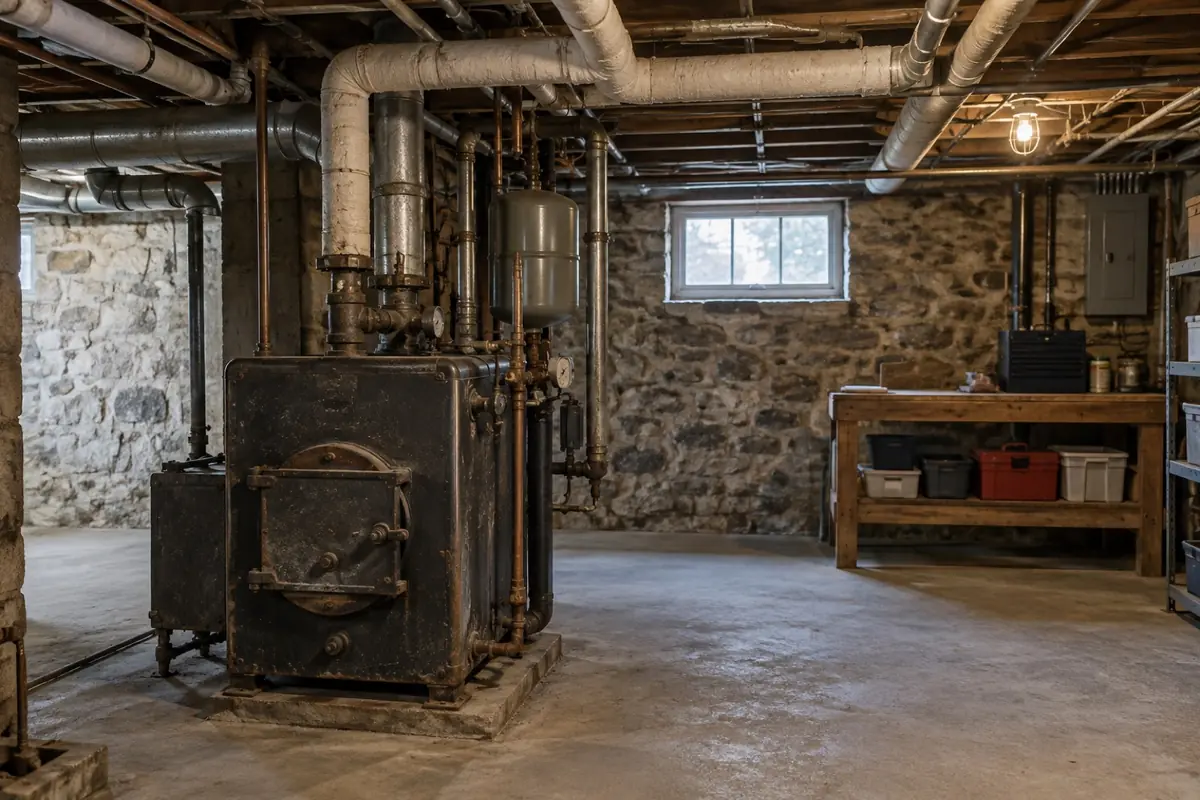
| Basement and utility room | Hot water and steam pipe coatings, blankets or tape; oil and coal furnace insulation and door gaskets | CPSC | Leave intact; repairs by an accredited professional |
| Living room | Asbestos paper, millboard or cement sheet around wood stoves; artificial embers in gas fireplaces | CPSC | Do not cut or drill the surround |
| Kitchen | Older stove-top pads | CPSC | Do not cut or sand |
| Exterior | Asbestos cement roofing and siding shingles | CPSC | Do not saw, sand, drill or break |
Three materials have pages of their own: old floor tiles, popcorn ceilings and vermiculite and other insulation. Joint compound and wallboard are covered on asbestos in drywall. On vermiculite, EPA is unusually direct: a mine near Libby, Montana supplied over 70 percent of US vermiculite from 1919 to 1990 and was contaminated with asbestos, so any vermiculite insulation should be assumed to be from Libby.
House age by region: where the old stock is
Because asbestos tracks build year, the age of the local housing stock is a fair proxy for how often a buyer or a crew will meet it. Computed from the weighted Census AHS 2023 file, the Northeast and Midwest hold the oldest housing and the South the youngest.
| Census region | All housing units | Built before 1980 | Share before 1980 | Share before 1950 |
|---|---|---|---|---|
| Northeast | 25.1 million | 17.4 million | 69.3% | 34.4% |
| Midwest | 31.1 million | 18.6 million | 59.9% | 23.1% |
| West | 32.0 million | 15.1 million | 47.2% | 11.6% |
| South | 57.2 million | 22.0 million | 38.4% | 8.0% |
| United States | 145.3 million | 73.1 million | 50.3% | 16.6% |
The pattern is a likelihood, not a verdict: a 1925 house in Phoenix and a 2005 house in Boston are judged on their own build dates and materials, not their region’s average.
Does my house have asbestos? A seven step decision path
This sequence is built only from EPA’s homeowner guidance and the OSHA presumptions above. It is the part of the page worth bookmarking.
- Find the build year, and the dates of later flooring, heating and insulation work. Built by 1980: OSHA’s presumptions describe your pipe insulation, surfacing and flooring, so go on to step 2. Built in the 1980s: possible, especially in flooring. Built after 1990: lower odds, so check the attic and test only what you plan to disturb.
- Walk the room checklist without touching anything. EPA advises looking for tears, abrasions or water damage on suspect material.
- Judge condition. EPA says slightly damaged material can sometimes be managed by limiting access; more than slight damage calls for repair or removal by an accredited professional.
- Planning work that will disturb it? EPA advises inspection by an accredited professional before remodeling. See our asbestos inspection guide and the published lab and visit fees on our asbestos testing cost page.
- Vermiculite in the attic? EPA says to assume it is from Libby and leave it alone; further testing is not necessary to take precautions.
- Hire the inspector and the remover separately. EPA says an assessor should not be connected with the firm that does the repair or removal.
- Selling or buying? Check your state’s disclosure form below and put any lab results in the file.
If materials are intact and nothing will be disturbed, the EPA homeowner guidance says you do not need to have the home tested. Telling suspect materials apart by eye is covered on our guide to what asbestos looks like, with its limits stated plainly.
Renovation triggers: when presence becomes a problem
Home asbestos is mostly a renovation question. CPSC says the mere presence of asbestos in a home is not hazardous; the danger is that materials become damaged over time. EPA lists remodeling and damaged building materials as the two reasons to have a home inspected.
| Job | What it can disturb | What to do first |
|---|---|---|
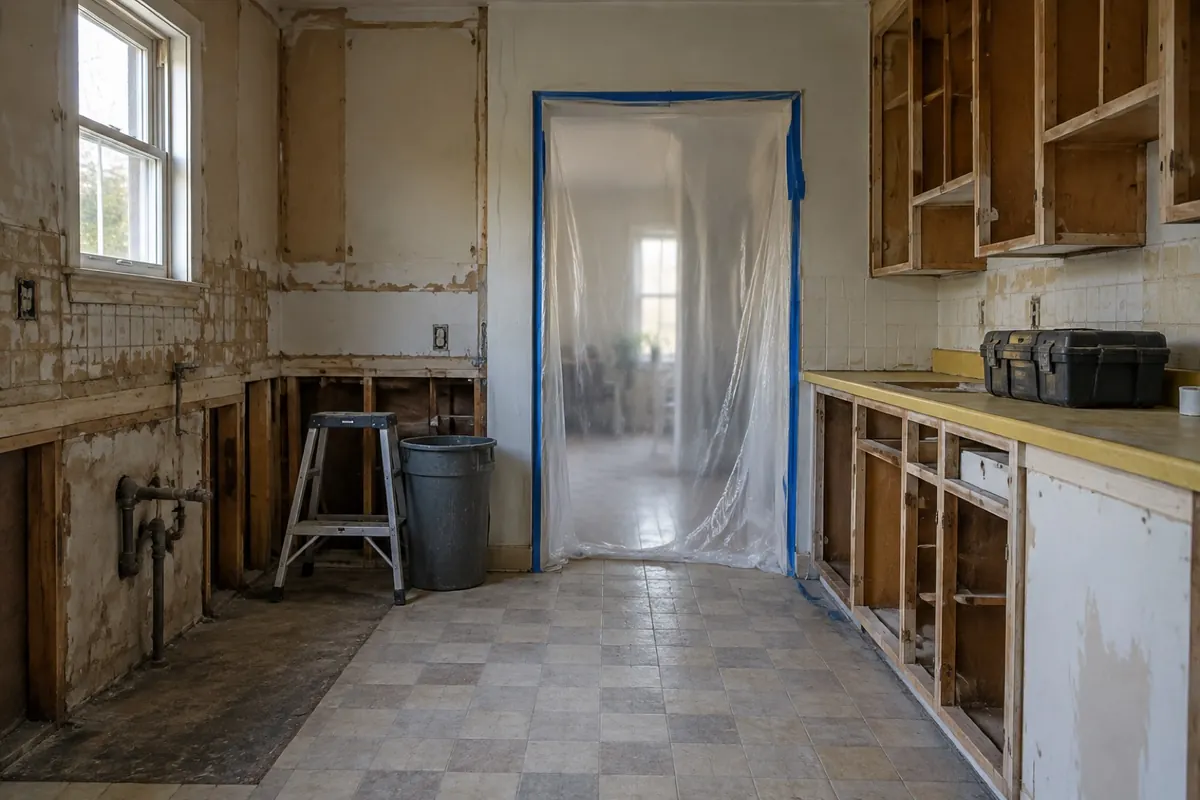
| Replacing a floor | Tile, sheet vinyl backing, mastic | EPA: do not sand or level asbestos flooring; lay new flooring over it if possible |
| Removing a wall or ceiling texture | Joint compound, textured paint, plaster | Sample first; EPA: no sawing, sanding or scraping |
| Running new wiring or plumbing | Wall and ceiling materials, pipe wrap | EPA: do not drill holes in suspect material |
| Replacing a boiler or furnace | Pipe and boiler insulation, door gaskets | Removal by a trained, accredited professional, per EPA |
| Attic insulation work | Vermiculite | EPA: do not disturb; use a trained professional if it must come out |
| Water, fire or impact damage | Any damaged suspect material | EPA: inspect when materials are damaged |
EPA also notes that federal law does not require people who inspect, repair or remove asbestos in detached single-family homes to be trained and accredited, though some states and localities do. Ask for proof of accreditation anyway; state agencies keep the lists.
Buying or selling a house with asbestos
The warning buyers see on pre-1978 listings is the federal lead rule, not an asbestos rule: the EPA lead disclosure rule page says sellers of most pre-1978 housing must disclose known lead-based paint and hazards, and that the rule does not apply to housing built after 1977. Asbestos disclosure, where it exists, comes from state law and forms, and the three states below show the spread.
| Jurisdiction | What the seller provides | Does it mention asbestos? | Source |
|---|---|---|---|
| Federal (most pre-1978 housing) | Lead-based paint disclosure, pamphlet and records before a sale or lease | None: the rule covers lead only | EPA lead disclosure rule page |
| Washington | Statutory seller disclosure statement for improved residential real property | Environmental item 7E asks about substances such as asbestos: Yes, No or Don’t know | RCW 64.06.020 |
| Texas | Seller’s Disclosure Notice prepared under Property Code 5.008(b) | Section 4 asks if the seller is aware of ‘Asbestos Components’ | TREC Seller's Disclosure Notice (OP-H) |
| Virginia | Buyer-beware disclosure statement | None: the owner makes no representations as to condition; buyers are told to do their own due diligence | Va. Code 55.1-703 |
Two cautions. A disclosure covers what the seller knows: the Texas form calls itself a disclosure of the seller’s knowledge and not a substitute for inspections. And a Don’t know answer is common in an older house. For a buyer, the useful document is a pre-purchase inspection report with lab results, which also helps a seller answer the form accurately. This page describes forms, not legal duties in your transaction; a real estate attorney in your state can say what applies.
For contractors: the duty starts before the first cut
In a 1960s house, the pipe insulation, surfacing and resilient flooring are asbestos until a lab says otherwise. 29 CFR 1926.1101 applies to construction, alteration, repair, maintenance and renovation of structures that contain asbestos, and its presumptions travel with the building’s age, not its use.
| Duty | What the rule says | Citation |
|---|---|---|
| Identify installed material | Employers and building owners must treat TSI and sprayed or troweled surfacing as asbestos-containing unless shown otherwise | 1926.1101(k)(1) |
| Flooring | Asphalt and vinyl flooring installed no later than 1980 is considered asbestos-containing unless the employer determines otherwise | 1926.1101(k)(1) |
| Before work starts | Building and facility owners must determine the presence, location and quantity of ACM or PACM at the work site | 1926.1101(k)(2) |
| NESHAP coverage | Residential buildings of four or fewer units are excluded, but houses demolished for a commercial or public project are covered, per EPA | 40 CFR 61.141; EPA |
Write the build year, the suspect materials and the sampling result into the scope before demolition. On an insurance job, the lab report and sample locations are the documents that support an asbestos line item. A pre-renovation survey, the formal version, is described on our asbestos survey page, and the standards hub collects the rest.
Questions people actually ask
Is it okay to live in a house with asbestos?
Usually, if the material is intact and left alone. EPA says asbestos-containing materials that are not damaged or disturbed are not likely to pose a health risk, and that the best course is often to leave them alone. CPSC says the mere presence of asbestos is not hazardous. Damage and renovation change that, so plan testing before any work.
What homes are most likely to have asbestos?
Homes built from 1950 to 1979, the decades that took 64.3% of all US asbestos use from 1900 to 2022 according to USGS data, then homes from the 1920s to 1940s and the 1980s. Census AHS data show the Northeast and Midwest have the largest shares of pre-1980 housing, at 69% and 60%.
How can I tell if my house contains asbestos?
Not by looking. EPA says you generally cannot tell whether a material contains asbestos by sight unless it is labelled, and that a trained and accredited professional should take samples for lab analysis, because sampling done badly can release fibres. Start with the build year and the room checklist, then test anything you plan to disturb.
Would a house built in 1976 have asbestos?
It is likely enough that the rules assume so. OSHA presumes pipe and boiler insulation and sprayed or troweled surfacing in buildings built by 1980 are asbestos-containing, and treats asphalt and vinyl flooring installed by 1980 the same way. Per the USGS, the 1970s averaged 667,300 tons of US asbestos use a year. Only a lab result settles a given material.
When did asbestos stop being used in homes?
There is no single date. CPSC says asbestos patching compounds and textured paint were banned in 1977. Data from USGS show use falling 84% during the 1980s, with roofing products dominating what was left by 2003. Raw fibre imports were fully banned in May 2024, but some still arrives inside imported products.
Do sellers have to disclose asbestos?
It depends on the state. Washington’s statutory disclosure statement asks about asbestos by name, and the Texas TREC form asks whether the seller is aware of asbestos components. Virginia uses a buyer-beware statement in which the owner makes no representations about condition. The federal pre-1978 rule covers lead paint only.
Does the ‘built before 1978’ warning mean a house has asbestos?
No. That language comes from the federal lead-based paint disclosure rule, which EPA says applies to most pre-1978 housing and not to housing built after 1977. It says nothing about asbestos. A house of that age may contain both, so a pre-renovation inspection should check for each.
How do I reduce asbestos exposure at home?
Follow EPA’s do’s and don’ts: leave undamaged material alone, limit activity near damaged material, do not dust, sweep or vacuum suspect debris, do not saw, sand, scrape or drill it, never power strip suspect flooring, and use a wet mop if you must walk through an area. Repairs and removal belong with an accredited professional.
Sources
- Census Bureau 2023 American Housing Survey, US Census Bureau, public use file (household.csv) and the Table Specifications and PUF Estimates for User Verification workbook; weighted computation by us. AHS Table Creator. Retrieved 18 October 2026.
- USGS Data Series 140: workbook ds140-asbestos-2022.xlsx, last modified 14 July 2023. Retrieved 18 October 2026.
- USGS Circular 1255-KK: R. L. Virta, Mineral Commodity Profiles: Asbestos, USGS, 2005, end-use shares. Retrieved 18 October 2026.
- USGS Mineral Commodity Summaries 2026: asbestos chapter, February 2026. Retrieved 18 October 2026.
- CPSC's Asbestos in the Home guide, US Consumer Product Safety Commission, undated. Retrieved 18 October 2026.
- EPA homeowner guidance, EPA's Learn About Asbestos page and EPA vermiculite guidance, US EPA. Retrieved 18 October 2026.
- EPA lead disclosure rule page, US EPA. Retrieved 18 October 2026.
- 29 CFR 1926.1101, eCFR, Title 29 issue of 14 October 2026; 40 CFR 61.141 and the EPA asbestos NESHAP overview. Retrieved 18 October 2026.
- RCW 64.06.020, Revised Code of Washington, Washington State Legislature. Retrieved 18 October 2026.
- TREC Seller's Disclosure Notice (OP-H), Texas Real Estate Commission, form dated 09-01-2019. Retrieved 18 October 2026.
- Va. Code 55.1-703, Code of Virginia, version effective until 1 January 2027. Retrieved 18 October 2026.
- Region and decade figures are our weighted computation on the Census file; national totals match the Census verification table. Our methodology sets out the standing rules.
This page describes public data, rules and forms. It is not legal advice or an assessment of any house. For a specific property, use an accredited inspector and, on disclosure, a real estate attorney in your state.