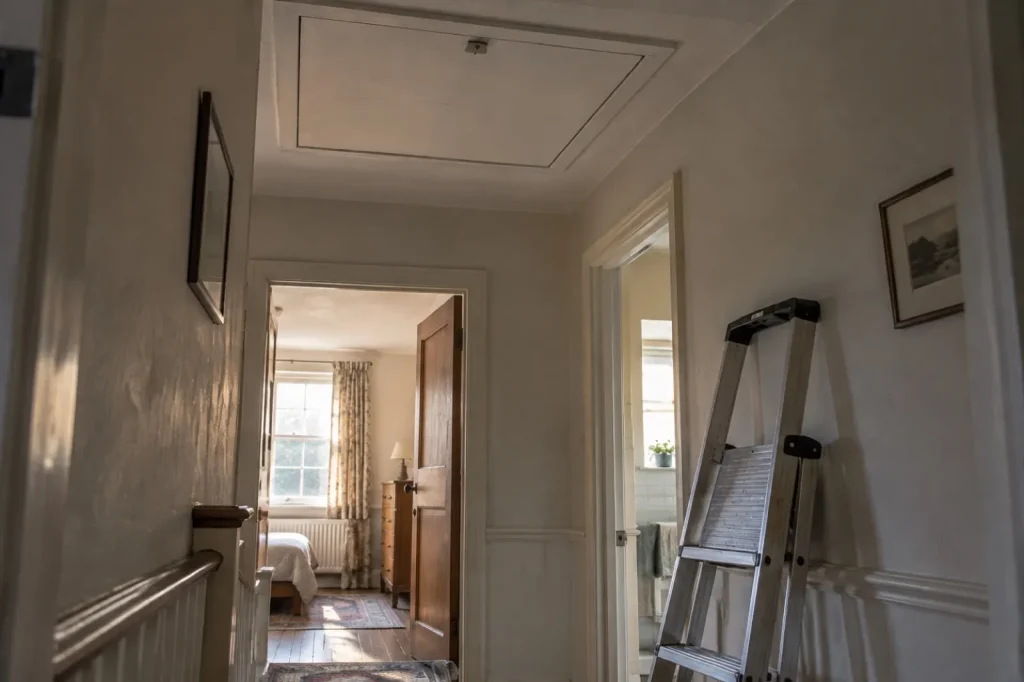
The short answer
Asbestos insulation in American homes is most often vermiculite: pebble-like, grey-brown or silver-gold loose fill that EPA says to assume is contaminated and leave undisturbed. It also turns up as pipe and boiler lagging and as block insulation. Pink, yellow or grey fluffy fibre is usually fibreglass, rock wool or cellulose, but only a laboratory can confirm content.
Key takeaways
- Vermiculite is the one insulation you can recognise by eye, and EPA’s advice is to treat it as asbestos-contaminated without testing.
- A Libby, Montana mine supplied over 70% of US vermiculite from 1919 to 1990, according to EPA, much of it sold as Zonolite.
- Look-alikes exist: DOE files vermiculite and perlite together as lightweight granules, so granules alone do not name the mineral.
- The ZAI Trust is still taking claims in 2026, but according to its 7 October 2026 notice, maximum reimbursement falls by about 35% for claims filed after 30 November 2026.
- To keep the current rate, a claim must be on file by 30 November 2026 and complete by 31 January 2027, per the Trust’s notice.
- Disturbing it is the risk. EPA says not to store boxes in a vermiculite attic and not to remove it yourself.
On this page
Most people who search this are looking at something in an attic or around a pipe and want a yes or no. Insulation is the one area where the federal answer is unusually direct for one material and unusually cautious for the rest, and there is a court-created trust that still pays part of the bill for one brand. This page takes those in order.
What this page does not cover. It covers identification, handling guidance and claim rules, not health. For health questions see the National Cancer Institute fact sheet or your doctor. For rules on a specific property, contact your state asbestos programme through the EPA state asbestos contacts.
Four forms asbestos insulation takes
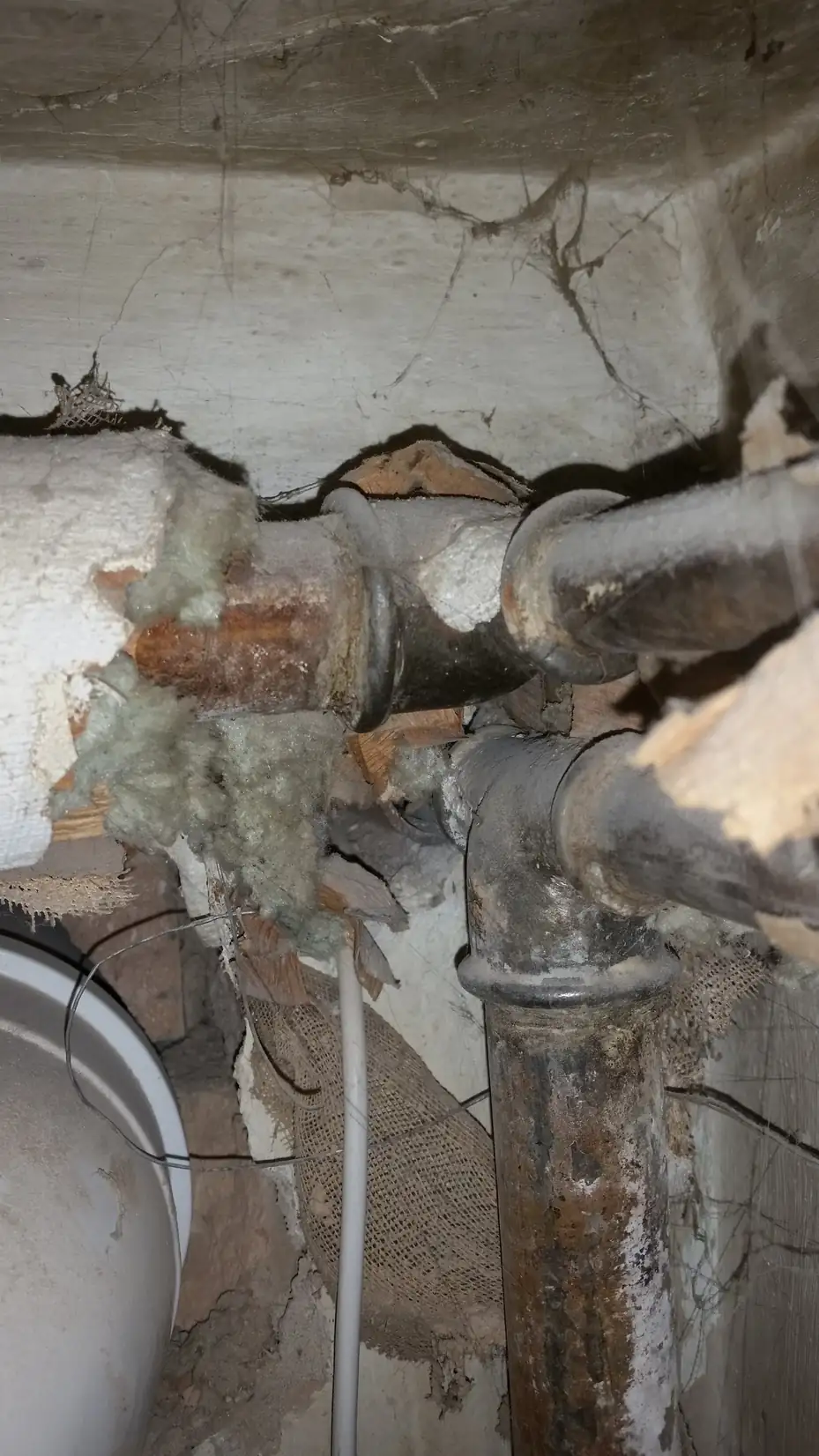
CPSC's Asbestos in the Home guide says houses built between 1930 and 1950 may have asbestos as insulation, and lists hot water and steam pipes coated or wrapped with asbestos material and oil and coal furnaces with asbestos insulation. EPA’s federal record adds the dates when new installation stopped for the sprayed and pipe forms.
| Form | Where | Typical look | Federal marker |
|---|---|---|---|
| Loose-fill vermiculite | Attic floors, wall cavities | Pebble-like granules, grey-brown or silver-gold | Libby supply 1919 to 1990 (EPA) |
| Pipe and boiler lagging (TSI) | Basements, boiler rooms | White or grey sleeves, cast elbows, cloth jackets | Installs banned 1975 (EPA) |
| Block and board insulation | Boilers, tanks, ducts | Rigid preformed sections | Installs banned 1975 (EPA) |
| Sprayed insulation and fireproofing | Structural steel, ceilings | Lumpy sprayed coating | Banned 1973 (EPA) |
OSHA 29 CFR 1926.1101 defines thermal system insulation as material applied to pipes, fittings, boilers, breeching, tanks, ducts or other components to prevent heat loss or gain. Lagging and block insulation have their own page: asbestos pipe insulation. The rest of this page concentrates on what sits on the attic floor.
Vermiculite and the Libby mine
The EPA vermiculite guidance describes vermiculite as a natural mineral of shiny flakes resembling mica that expand 8 to 30 times when heated. The expanded product is light, fire-resistant and odourless. In an attic it is a pebble-like, pour-in fill, usually grey-brown or silver-gold, in pieces from very fine to nearly an inch long.
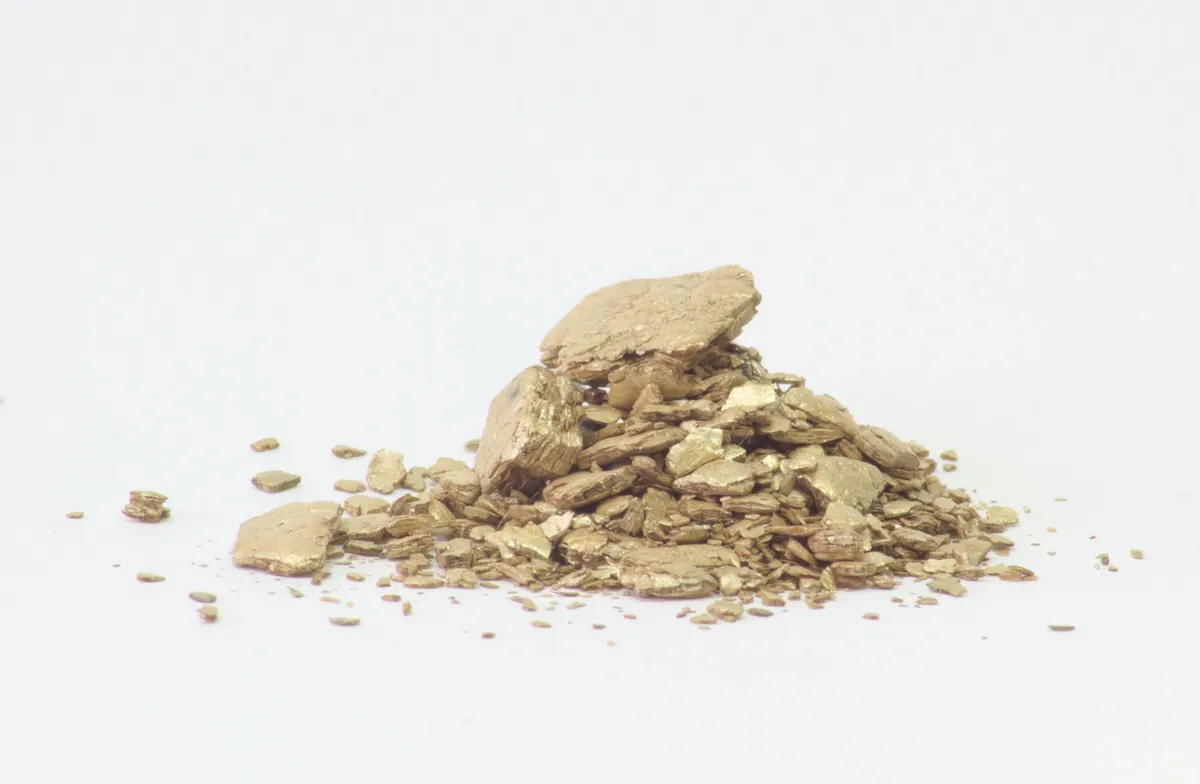

The problem is the source. According to EPA, a mine near Libby, Montana supplied over 70% of all vermiculite sold in the United States from 1919 to 1990, the mine also held a deposit of asbestos, and the product was often sold as Zonolite. ATSDR's 2008 Libby summary report identifies the contaminant as Libby amphibole, a mix that includes winchite, richterite and tremolite. The report cites EPA’s summary of the Grace company’s invoices: about 6,109,000 tons shipped to 245 sites from 1964 to the early 1990s for processing.
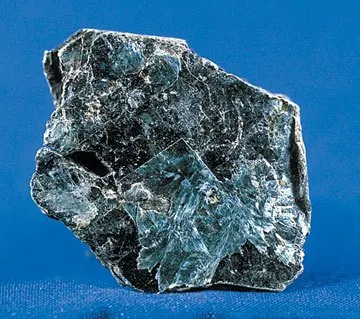

That is why EPA skips the usual testing advice. Its guidance says further testing is not necessary to take the right precautions, that professional testing may be expensive and, depending on the method, might give erroneous results, and that you should not open walls to look for vermiculite. The EPA asbestos FAQ adds a regulatory wrinkle: in schools, vermiculite under 1% asbestos by PLM is not ACM under AHERA, yet EPA still suggests treating it as asbestos-containing before disturbing it.
The look-alikes: what else is in the attic
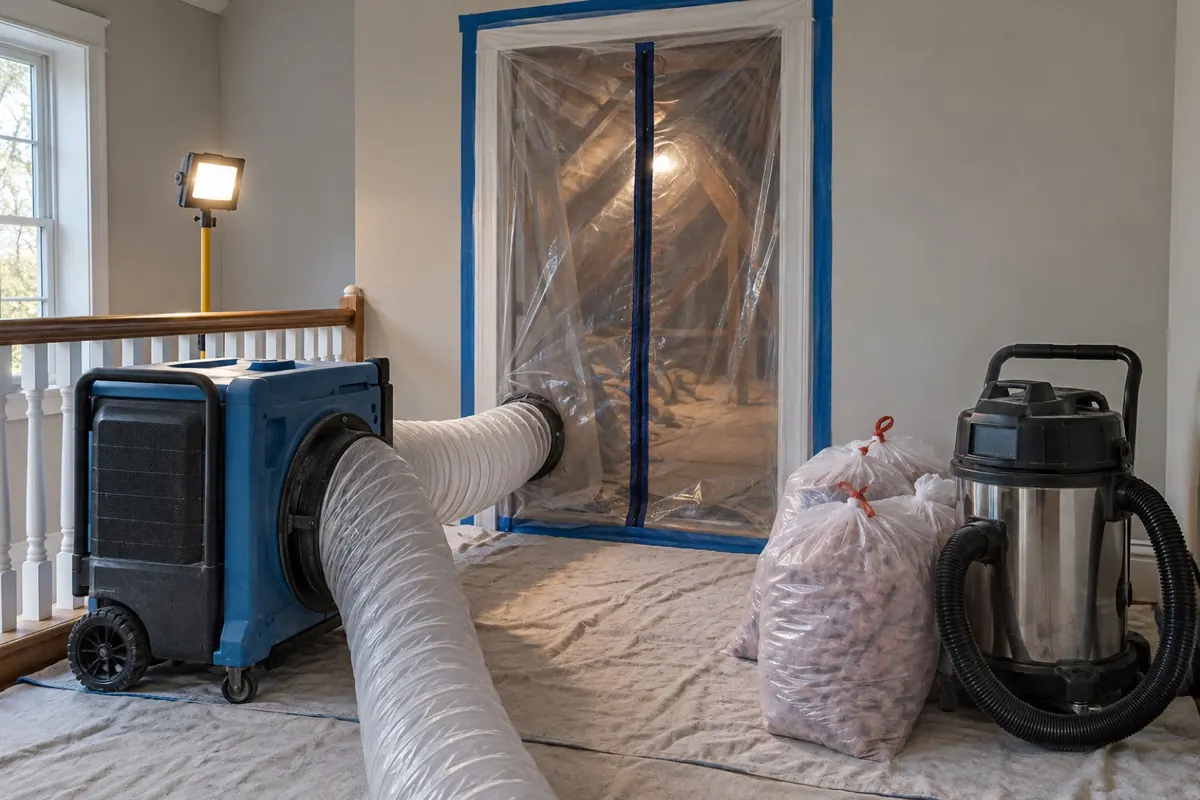
The DOE Building America insulation guide has a field table for identifying existing insulation by sight, reproduced below with the asbestos question added. Note the granule row: DOE files vermiculite and perlite together, so lightweight grey or white granules are not automatically one or the other. EPA’s advice is to treat vermiculite-type fill as vermiculite.
| If you see | DOE says it is probably | R per inch (DOE) | Asbestos question |
|---|---|---|---|
| Light yellow, pink or white loose fibres | Fibreglass | 2.5 | Glass fibre; not the Libby concern |
| Dense grey or near-white fibres, black specks | Rock wool | 2.8 | Rock or slag fibre, per DOE; sample if unsure |
| Small grey flat pieces or fibres | Cellulose | 3.7 | Shredded newsprint, per DOE |
| Lightweight grey or white granules | Vermiculite or perlite | 2.7 | Treat as vermiculite, per EPA |
| Yellow, pink or white batts | Fibreglass | 3.2 | Check what lies underneath |
DOE describes cellulose as recycled newsprint, finely shredded and treated to resist fire, corrosion, fungal growth and vermin; fibreglass as glass spun into fibres; and mineral wool as slag or rock melted and spun into fibres. None of those descriptions settles the content of a specific old attic, which is why anything ambiguous is a sampling question. The general visual guide is on our what does asbestos look like page.
Blown-in, batt or block: what the form tells you
The way insulation was installed narrows the field. DOE describes blown-in loose fill as small particles of cellulose, fibreglass or mineral wool, blown with a pneumatic hose, while EPA describes vermiculite as a pour-in product. Batts are blanket products, and block insulation is a rigid preformed section.
| Form | Common materials | Asbestos relevance | What to do before work |
|---|---|---|---|
| Poured loose fill | Vermiculite, perlite | High: Libby vermiculite | Leave undisturbed; get it assessed before any attic work |
| Blown-in loose fill | Fibreglass, rock wool, cellulose | Lower, unless mixed with or laid over vermiculite | Check underneath for granules |
| Batts and rolls | Fibreglass, mineral wool | Lower, but may cover older fill | Look at what is below |
| Block, board, lagging | Preformed rigid sections | Presumed if built by 1980 (OSHA) | Sample or presume |
Layering is the trap: a newer layer of batts or cellulose can sit on top of older vermiculite and hide it. The DOE guide tells homeowners to warn any contractor working in a vermiculite attic that they may be exposed and must avoid disturbing it.
What EPA says to do, and not do
The EPA vermiculite guidance is blunt: assume the vermiculite contains asbestos and do not disturb it. If you must go into the attic, limit the number and length of trips.
| EPA guidance | The reason given |
|---|---|
| Leave vermiculite undisturbed in the attic or walls | Disturbance can release fibres into the air |
| Do not store boxes or other items in the attic | Every trip and every move disturbs the fill |
| Do not let children play in the attic | Same reason |
| Do not remove it yourself | Hire a professional asbestos contractor |
| Hire a professional before remodelling | So it is handled and removed safely |
| Do not open walls to check for it | Opening the wall is the disturbance |
| Use an abatement firm independent of the assessor | EPA’s FAQ cites conflict of interest |
The EPA asbestos FAQ also notes that federal asbestos regulations do not apply to work you do in your own home, while strongly recommending an accredited contractor instead. State rules differ, and our asbestos accreditation map shows which states license whom. If removal is on the table, prices are on asbestos removal cost.

Which attic are you in?
- Granules, grey-brown or silver-gold. Treat it as Libby vermiculite. Stop storing things up there and plan any work around a professional.
- Fibre on top, unknown underneath. Do not dig to find out. Have an inspector look at an edge or the hatch area.
- Pink, yellow or grey fibre only, house after 1990. EPA’s Libby sales window closed in 1990, but still check the hatch surround and wall tops.
- Lagging on pipes or a boiler. That is a different material; go to asbestos pipe insulation.
- You already paid to remove Zonolite. You may still claim from the Trust; read the section below before 30 November 2026.
| What you see | Planned work | Next step |
|---|---|---|
| Vermiculite | None | Leave it; keep the attic closed |
| Vermiculite | Roofing, wiring, re-insulation | Professional assessment, then abatement first |
| Vermiculite | Selling the house | EPA’s FAQ: removal may not be needed if left undisturbed |
| Fibre insulation | Any | Check for granules beneath |
| Unknown grey fill | Any | Sample before disturbing |
Testing other suspect materials in the house is priced on asbestos testing cost, and our asbestos testing kit page explains why EPA does not recommend sampling yourself.
The Zonolite Attic Insulation Trust in 2026
The Zonolite Attic Insulation Trust was funded by W.R. Grace under a court-approved class settlement to reimburse part of the cost of removing or containing Zonolite attic insulation. It is still accepting claims. Its home page says it will run until at least 2034 and is likely to continue until 2039. To be paid, a claimant must prove the vermiculite is Zonolite brand (the Trust will test a sample at no cost) and prove what was paid for removal or containment.
What it pays changed this month. Per the ZAI Trust FAQ, the Trust first sets an Allowed Value for reasonable abatement and re-insulation costs, capped at a maximum that rises with inflation: $7,500 at inception in 2014 and $9,813.61 for fiscal year 2026, up 31%. Per the FAQ, claims were paid at 55% of that value. The Trust's 7 October 2026 notice cuts the payment to 65% of that amount, which according to the FAQ equals 35.75% of the Allowed Value, for claims filed after 30 November 2026.
| Claim | Allowed Value | Paid at 55% | Paid at new rate |
|---|---|---|---|
| Fiscal 2026 maximum | $9,813.61 | $5,397.48 | $3,508.36 |
| Trust’s worked example | $8,500 | $4,675 | $3,038.75 |
| 2014 maximum (for reference) | $7,500 | $4,125 | Not applicable |
| Date | What happens | Source |
|---|---|---|
| 7 October 2026 | Rate cut announced | Trust's 7 October 2026 notice |
| 30 November 2026 | Last day to file and keep the current rate | Trust's 7 October 2026 notice |
| 31 January 2027 | Every document must be in for the current rate | Trust's 7 October 2026 notice |
| After 30 November 2026 | New claims paid at the reduced rate | ZAI Trust FAQ |
| At least 2034, likely 2039 | Trust operating horizon | Zonolite Attic Insulation Trust |

The ZAI Trust Get Started page lists what the claim needs: before and after photos as original digital files (JPG or HEIC, not PDF or prints), the contractor’s proposal and invoice, and a cancelled check, bank or credit card statement. An invoice marked paid is not enough. The Trust does not pay for DIY labour, other asbestos materials such as pipe insulation or floor tile, upgrades beyond like-for-like re-insulation, lost property value, or personal injury, which another fund handles. According to the Trust, general contractor markups have ranged from none to 85% or more and urges direct quotes from abatement firms. Insurance is a separate question, covered on does insurance cover asbestos removal.
For contractors: scope, paperwork and the Trust
Vermiculite does not fit neatly into OSHA 29 CFR 1926.1101‘s presumption: PACM covers thermal system insulation and surfacing in buildings constructed no later than 1980, and loose fill is neither. EPA’s assume-it-is-contaminated position is the practical standard, so scope it as ACM unless a defensible analysis says otherwise, and confirm the state’s licensing and notification rules before mobilising.
The Trust has views on contractors. Its notice warns that not all contractors are familiar with its requirements. Abatement contractors may receive payment on a homeowner’s behalf when authorised on Part IV of the claim form, but general contractors and other businesses cannot file claims for homeowners.
| On the proposal and invoice | Why |
|---|---|
| Vermiculite removal as its own line | Only vermiculite abatement is reimbursable |
| Re-insulation matched to what was removed | Upgrades are deducted from the Allowed Value |
| Bath fans, baffles, hatches, wiring listed separately | The FAQ names these as upgrades |
| Before and after photos as original files | Prints and PDFs are rejected |
| Payment by check or card, not cash | Cash gets heightened scrutiny |
Wider standards context is on our standards hub, and the federal ban history on when was asbestos banned.
Questions people actually ask
How do you tell if insulation is asbestos?
Start with the form. Pebble-like, grey-brown or silver-gold loose fill is likely vermiculite, which EPA says to assume is contaminated. Pipe and boiler lagging installed by 1980 is presumed to contain asbestos under OSHA. Pink, yellow or grey fibre is usually fibreglass, rock wool or cellulose. Anything else needs a lab result, and EPA advises against sampling vermiculite yourself.
Can you live in a house with asbestos insulation?
EPA’s guidance assumes many people do. For vermiculite it says to leave the insulation undisturbed, keep stored items and children out of the attic, limit trips into it and hire a professional before any remodelling that would disturb it. EPA’s FAQ adds that removal may not be necessary if the material is confined and left alone.
Will 30 minutes of asbestos exposure hurt you?
This page does not give medical answers; that question is for a doctor. EPA’s vermiculite guidance says the degree of risk depends on how much and how often exposure occurred, and that if you do not go into the attic or disturb the insulation you are unlikely to be exposed from it. OSHA’s workplace excursion limit is measured over 30 minutes.
What does 1920s asbestos insulation look like?
In a house of that age the likely candidates are pipe and boiler lagging, white or grey sleeves and cloth-wrapped jackets on steam and hot water lines, which CPSC lists. Vermiculite could have been added later: EPA dates Libby sales from 1919 to 1990. CPSC notes houses built between 1930 and 1950 may have asbestos insulation.
When was asbestos insulation used?
Over a long window. EPA dates Libby vermiculite sales from 1919 to 1990, the ZAI Trust says Zonolite attic insulation was sold between the 1940s and mid-1980s, and EPA records bans on spray-applied insulation in 1973 and on installing pipe and block insulation in 1975. OSHA presumes thermal system insulation in buildings constructed no later than 1980 contains asbestos.
Is all vermiculite insulation asbestos?
Not all, but EPA says to treat it that way. According to the ZAI Trust FAQ, about 75% of vermiculite in homes is the Zonolite brand and the rest does not qualify for its payments. Because the Libby mine dominated supply, EPA says further testing is not necessary to take the right precautions.
Does the Zonolite trust still pay in 2026?
Yes. The ZAI Trust is accepting claims, but according to its 7 October 2026 notice, maximum reimbursement falls by about 35%. Claims on file by 30 November 2026 and complete by 31 January 2027 are paid at the current rate of 55% of the Allowed Value, capped at $5,397.48 for fiscal 2026; later claims receive 35.75%, per the Trust’s FAQ.
Sources
- EPA vermiculite guidance, US EPA, updated 17 April 2026. Retrieved 11 October 2026.
- EPA homeowner guidance, US EPA, updated 25 June 2026. Retrieved 11 October 2026.
- EPA asbestos FAQ, US EPA Asbestos Frequently Asked Questions (PDF, 2012). Retrieved 11 October 2026.
- EPA's record of federal bans, US EPA, updated 21 January 2026. Retrieved 11 October 2026.
- EPA state asbestos contacts, US EPA, updated 1 October 2026. Retrieved 11 October 2026.
- CPSC's Asbestos in the Home guide, US Consumer Product Safety Commission, undated. Retrieved 11 October 2026.
- ATSDR's 2008 Libby summary report, ATSDR (CDC), 29 October 2008. Retrieved 11 October 2026.
- DOE Building America insulation guide, US Department of Energy, Building America Best Practices Volume 17, May 2012, Table 2.2 and Section 4.2. Retrieved 11 October 2026.
- OSHA 29 CFR 1926.1101, construction asbestos standard, definitions and (k). Retrieved 11 October 2026.
- Zonolite Attic Insulation Trust, home page and About the Trust. Retrieved 11 October 2026.
- ZAI Trust FAQ, payment FAQs updated October 2026. Retrieved 11 October 2026.
- ZAI Trust Get Started page, claim steps and documents. Retrieved 11 October 2026.
- Trust's 7 October 2026 notice, Notice of Reimbursement Percentage Adjustment and Documentation Deadline (PDF). Retrieved 11 October 2026.
- Photographs are public domain or Creative Commons files from Wikimedia Commons, licences checked on each file page. Percentages and differences are arithmetic on the published figures above. Our methodology sets out the standing rules.
Trust rates and deadlines can change without notice, the Trust says. Confirm current terms on its site before relying on any figure here.