The short answer
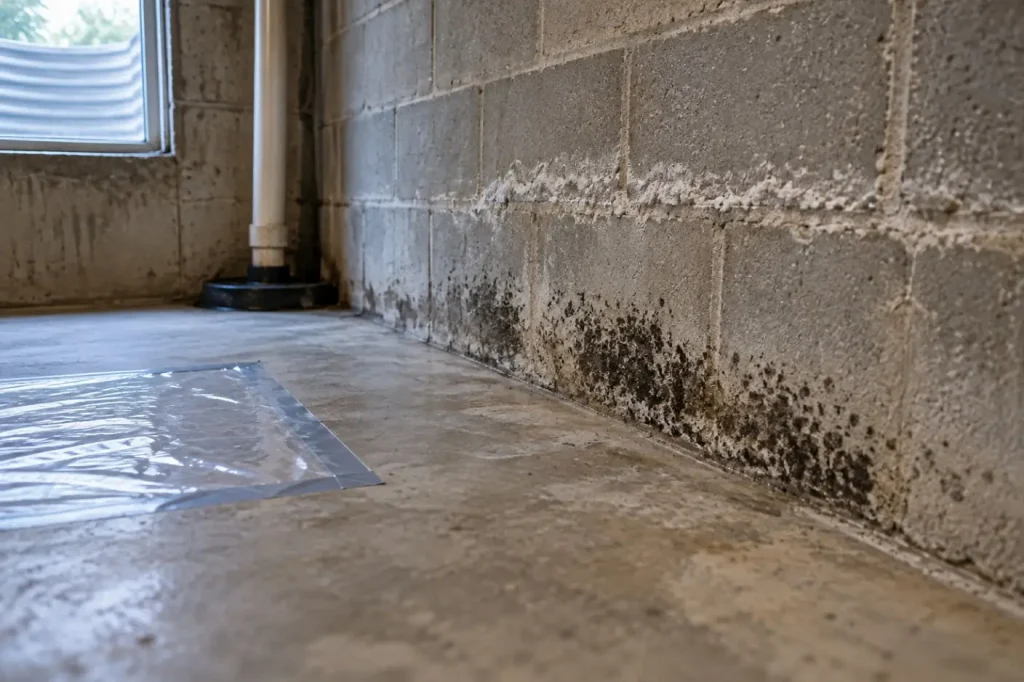
Mold on concrete is growing on what sits on the concrete: dust, soil, soap films, paint or sealer, kept wet by moisture moving through the slab or condensing on it. Scrub bare concrete with detergent and water, let it dry, HEPA vacuum it, and then find the water. First rule out efflorescence, a white salt deposit that dissolves when wetted and mold does not.
Key takeaways
- Concrete is a mineral, not a meal. Growth feeds on a film, so it scrubs off and returns only if the water is not fixed.
- EPA’s Table 2 never lists discard for concrete or cinder block at any size of mold problem, unlike carpet or drywall.
- White fluff on a basement wall is often efflorescence. EPA notes alkaline crystals on concrete are usually water soluble.
- Paint changes the job. EPA photographed mold growing on the paint film of a cold masonry wall, and ASTM F1869 cannot be run over coatings.
- The three ASTM slab tests answer different questions: D4263 indicates surface moisture, F1869 measures emission, F2170 measures humidity inside the slab.
- According to the installation guides compared here, flooring limits run from 75% to 99% internal slab RH.
On this page
- What you are looking at
- The water drop and vinegar tests
- Why concrete grows mold at all
- Where the water comes from
- Concrete moisture tests compared
- What flooring makers allow
- Cleaning by surface
- When it is a waterproofing problem
- Five minute triage at the slab
- For contractors
- Questions people actually ask
What you are looking at on the slab or wall
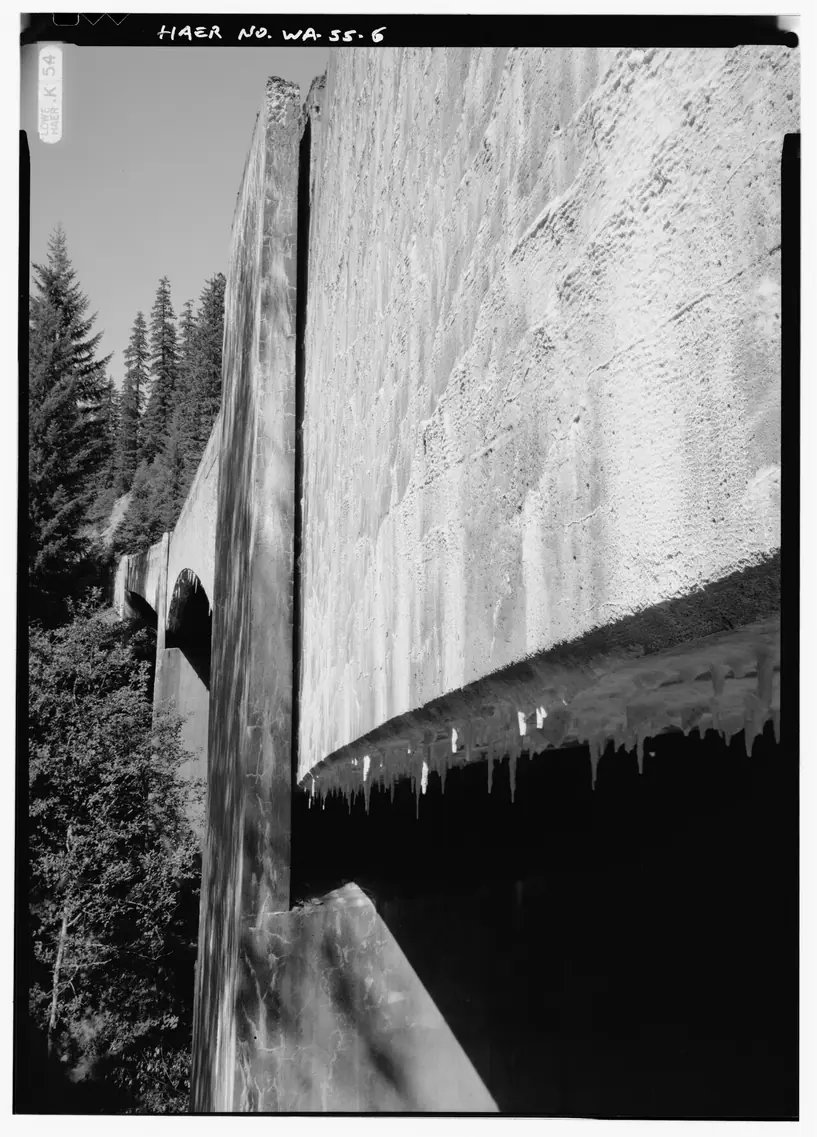
Not everything that looks like mold on concrete is mold. EPA mold course, chapter 3 says alkaline crystals on soil or concrete walls may look like mold but, unlike mold, they are usually water soluble. Those crystals are efflorescence, which BIA Technical Note 23 describes as a powdery, white, crystalline deposit left when water carrying soluble salts evaporates. The same note warns that lime run, a calcium carbonate deposit, is often mistaken for efflorescence.
| What it is | How it looks | Under water | Source |
|---|---|---|---|
| Mold growth | Fuzzy, velvety or slimy spots, any color, on dusty, dirty or painted areas | Smears but does not dissolve | EPA mold course, chapter 3 |
| Efflorescence | White, powdery, crystalline bloom on bare concrete or joints | Dissolves, then can return as the wall dries | BIA Technical Note 23; EPA mold course, chapter 3 |
| Lime run | White or gray crusty runs from cracks and joints | Insoluble once carbonated; may fizz under acid | BIA Technical Note 23; International Gem Society |
| Old stain | Flat gray or black marks, no texture | Partly lifts with detergent | EPA 402-K-01-001 |
| Dirt or tracked soil | Even gray film in traffic paths | Wipes off | EPA mold course, chapter 3 |
The two often appear together: a wall that blooms salt is moving water. EPA notes mold comes in many colors, and our black mold guide explains why color is not a species test. White growth on other materials is covered on our white mold page.
The water drop and vinegar tests, and their limits
Efflorescence is soluble salt, so water is the test. BIA Technical Note 20 says efflorescing salts are water soluble and that white efflorescence can often be removed by brushing with a stiff fiber brush and water. If a few drops make the deposit darken and dissolve, it is salt.
The vinegar test detects carbonate. According to the International Gem Society, acid reacts with calcium carbonate in a fizzing reaction, using white vinegar at 5% acetic acid. The Sika bulletin explains that lime bloom is calcium carbonate from curing cement, and lists sodium, potassium and magnesium salts too. No extension service or concrete body found for this page publishes the fizz as a stand alone identification method, so treat it as a hint.
| Test | How | What it means | Source |
|---|---|---|---|
| Water drop | A few drops, watch for a minute | Dissolves: efflorescence. Stays: mold or lime run | EPA mold course, chapter 3; BIA Technical Note 23 |
| Vinegar fizz | White vinegar on a dry deposit | Fizz points to carbonate. No fizz rules nothing out | International Gem Society; Sika bulletin |
| Dry brush | Stiff fiber brush | Light efflorescence brushes off as powder | BIA Technical Note 20 |
| Tape lift | Clear tape sent to a lab | Confirms whether it is mold at all | EPA mold course, chapter 3 |
Why this differs from generic advice: most mold pages say spray vinegar on anything fuzzy. On concrete that dissolves the evidence. Test and photograph first; a deposit that returns proves water is still moving.
Why concrete grows mold at all
Bowdoin College states the principle: mold on inorganic surfaces is growing on accumulated organic material such as dust, dirt, soap scum or food residue. Concrete is inorganic. EPA’s moisture guide shows the coated case: its Figure 1-2 is mold on the paint film of a cool masonry wall where humid classroom air condensed.
EPA 402-K-01-001 lists concrete or cinder block under cleanup methods 1 and 3 (wet vacuum, then HEPA vacuum once thoroughly dry) in all three size bands: under 10 square feet, 10 to 100, and over 100. Discard appears for carpet and wallboard, never for concrete. The slab stays; the film and the water go. Protective gear and containment by size are on our DIY mold remediation page. Concrete also brings its own salts: BIA Technical Note 23A reports concrete products can hold 2 to 7 times as much soluble material as fired clay.
Where the water comes from
EPA moisture control guidance (EPA 402-F-13053, December 2013) describes each path. Stand concrete in a quarter inch of water and it wicks up: capillary action. EPA adds that slabs are very porous and can hold a great deal of water.
Condensation is the summer version: EPA explains moisture condenses on any surface colder than the dew point of the air beside it, and a wall backed by soil is cold. EPA mold course, chapter 2 advises indoor RH below 60%, ideally 30 to 50%. Hydrostatic water is the spring version: EPA’s Figure 1-11 shows a water table just below a basement floor in dry weather that rises several inches above it in heavy rain, and the Sika bulletin names hydrostatic pressure as a force that moves salt solutions to the surface.
| Path | What happens | What you see | Fix named by EPA |
|---|---|---|---|
| Capillary rise | Liquid wicking up from wet fill | Damp band at the wall base, low efflorescence | Stone over 1/4 in with no fines, or plastic, under the slab |
| Vapor diffusion | Vapor moving through the slab | Damp under mats, failed flooring adhesive | Vapor barrier directly under the slab |
| Condensation | Humid air on concrete below its dew point | Summer beading, growth on painted walls | Room RH under 60% |
| Hydrostatic water | Groundwater pushed in as the water table rises | Water at cracks and the floor edge after rain | Grade falling 6 in per 10 ft, plus drainage |
Concrete moisture tests compared
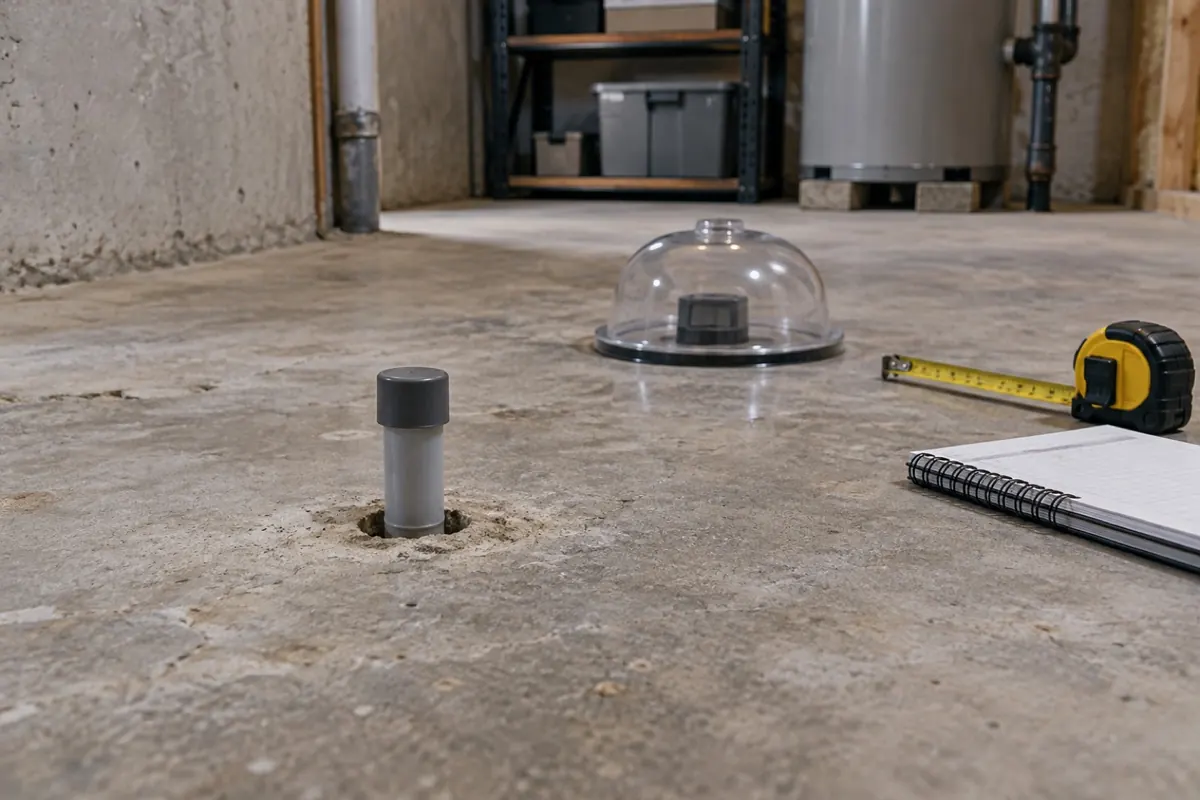
Once the growth is cleaned, the question is how wet the slab is. EPA moisture control guidance says floor covering makers specify a maximum vapor emission rate, that exceeding it may cause the covering to fail, promote mold growth and void the warranty, and that F1869 and F2170 are the two most common methods. It recommends testing whenever lifting tiles or blistered vinyl are found.
| Method | Measures | How and how long | Limits |
|---|---|---|---|
| ASTM D4263 plastic sheet | Capillary moisture at the surface | 18 in clear sheet taped down 16 hours; pass if sheet and slab dry to the touch | Reads about the top inch; not accepted by manufacturers alone |
| ASTM F1869 calcium chloride | Vapor emission from bare concrete, lb per 1,000 sq ft per 24 h | Dome over weighed desiccant, 60 to 72 hours | Not over coatings, sealers, patch or lightweight concrete |
| ASTM F2170 in situ probe | Relative humidity inside the slab | Probe at 40% depth (one side drying) or 20% (two); 24 h to equilibrate | Only the times and spots tested; 3 tests for the first 1,000 sq ft |
Why this differs from generic advice: “tape plastic to the floor” stops at D4263, which shows the surface is wet but not whether new flooring will survive. The Construction Specifier says the quantitative tests need trained technicians and calls 75 percent concrete RH a good point to start a floorcovering.
What flooring makers actually allow
A reading means nothing without the limit, and the limit belongs to the product, not to ASTM. The makers disagree widely, so the spread is shown, not averaged.
| Product or adhesive | F1869 limit, lb per 1,000 sq ft per 24 h | F2170 limit | Source |
|---|---|---|---|
| Carpets Inter ZeroFlow | 5 lb | 75% | Carpets Inter |
| Shaw EcoWorx ES backing | 5 lb | 85% | Shaw Contract |
| Shaw LokWorx tabs | 5 lb | 85% | Shaw Contract |
| Mats Inc. Multi-Bond | 5 lb | 86% | Mats Inc. |
| Greatmats with MI 1000 | 10 lb | 90% | Greatmats |
| Mohawk EcoFlex, Enpress | Not printed | 95% | Mohawk Group |
| Shaw 3000 adhesive | 10 lb | 95% | Shaw Contract |
| Shaw 5000 adhesive | 15 lb | 97% | Shaw Contract |
| Shaw 4151 adhesive | 12 lb | 99% | Shaw Contract |
Two caveats from the makers. According to Mohawk Group, its tabs are approved above 95% RH only where no visible moisture is present, over a Class B vapor barrier on or below grade. Shaw Contract says visible moisture or hydrostatic pressure needs additional steps. A slab that grew mold under the old floor is that case.
Cleaning, by the surface you actually have
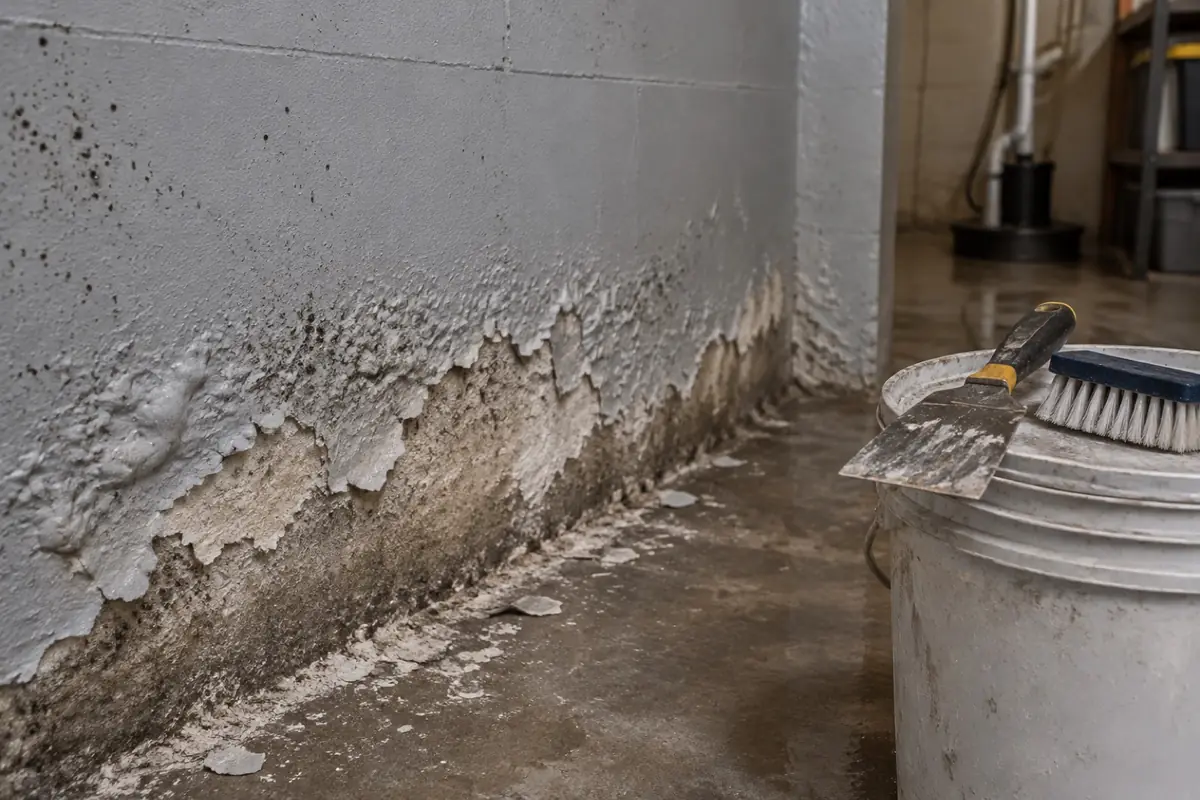
EPA's Brief Guide to Mold says to scrub mold off hard surfaces with detergent and water, dry completely, and never paint or caulk moldy surfaces. EPA 402-K-01-001 adds that wet vacuums belong on materials that are still wet. On concrete the order is extract, scrub, dry, then HEPA vacuum.
| Surface | Method | Why it differs |
|---|---|---|
| Bare, unsealed | Extract, scrub with detergent, dry, HEPA vacuum | Porous: rinse water soaks in, so extract fast instead of flooding it |
| Sealed or epoxy | Damp wipe with detergent, dry, check edges | Growth sits on the coating; bloom under it means water from below |
| Paint sound | Scrub the paint film, dry | The film itself was the food in EPA’s Figure 1-2 |
| Paint blistering | Scrape loose paint, clean beneath, dry | EPA: do not paint over mold; blisters are water pushing out |
| Efflorescence only | Brush with water; Sika uses diluted vinegar then rinse | Salt, not mold; BIA says fix the water first |
The method, step by step
- Screen with the water drop test. Why: a white deposit may be salt, which needs no mold scope at all.
- Stop the water first. Why: BIA says repair moisture sources before removing efflorescence; mold follows the same logic.
- Wet vacuum, then scrub with detergent and a stiff nylon brush. Why: porous concrete holds the film in its pores.
- Dry with dehumidifiers and fans. Why: EPA Table 1 pairs concrete with them; slabs stay wet after the face looks dry.
- HEPA vacuum once dry. Why: EPA method 3 comes after thorough drying, so fragments are not smeared into wet pores.
- Retest before covering. Why: EPA says concrete must be thoroughly dry before carpet, tile or paint goes on.
Biocides are a separate question for our kill versus remove page and vinegar page; coatings belong to our mold killing paint page.
When it means a waterproofing problem
A spot that keeps returning is a moisture finding, not a cleaning failure.

| Sign | Points to | Source |
|---|---|---|
| Efflorescence keeps returning | Water still moving through the wall | BIA TN 20 |
| Water at cracks or floor edge after rain | Groundwater, the Figure 1-11 pattern | EPA 402-F-13053 |
| Adhesive soft, tiles lifting, vinyl blistering | Water under the covering | EPA 402-F-13053 |
| Paint blistering in a band near the floor | Moisture pushing through the coating | EPA 402-F-13053 |
| Growth on wood, drywall or carpet touching the slab | Slab wetting organic material | EPA 402-K-01-001 |
| Musty odor after cleaning, or over 10 sq ft | Hidden or larger growth | EPA 402-K-01-001 |
Where liquid water gets in, the fix is drainage and waterproofing, priced on our basement waterproofing cost page. For finished walls and whole basements, start with our mold in basement guide. Sump hardware belongs to a plumber.
Five minute triage at the slab
Work down in order and stop at the first step that applies.
- Wet it. If the deposit dissolves, it is efflorescence: brush it off and go to step 4.
- Measure it. Over 10 square feet, or growth on materials touching the concrete, falls in EPA’s larger bands.
- Read the surface. Bare: scrub, dry, HEPA vacuum. Paint sound: clean the film. Blistering: scrape, clean, do not repaint yet.
- Find the path. Damp band low: capillary. Summer beads: condensation. Water after rain: hydrostatic. Damp under mats: vapor.
- Tape a sheet. An 18 inch square for 16 hours, the D4263 practice The Construction Specifier describes.
- Before new flooring, test to the maker’s own F2170 or F1869 limit.
- If it returns, price waterproofing.
Some deposits need a lab. EPA’s mold course says most labs need only a little material on clear sticky tape; our mold testing guide covers when sampling is worth it.
For contractors
On concrete the defensible scope is short: clean the film, dry the slab, prove it is dry, and hand the water problem to the right trade. Line items: extraction, detergent scrub, drying equipment days, HEPA vacuuming and, before reinstall, a slab test to the flooring maker’s specification. Record the method, spot, depth, reading and date, because ASTM says results hold only for the times and spots tested. An adjuster will ask what caused the moisture and when; point the owner to the policy wording rather than predicting coverage.
Carpet laid over the slab is a different scope; see our mold on carpet page and the mold hub.
What this page does not cover. Whether mold on concrete affects a particular person’s health is outside this page’s scope; see EPA, CDC and NIH. Coverage questions belong with your policy, your state insurance department and a licensed professional.
Questions people actually ask
How do you kill mold on concrete?
EPA’s approach on concrete is removal rather than killing: wet vacuum any water, scrub with detergent and water, dry completely, then HEPA vacuum. Concrete is not food, so the growth sits on a film of dust or paint that scrubs off. It returns only if the moisture source stays.
What does black mold look like on concrete?
Usually dark speckling on dusty corners, wall bases or painted areas, sometimes fuzzy. Color does not identify a species; EPA notes mold comes in many colors. White fluff that dissolves under a few drops of water is efflorescence, a salt deposit, not mold.
Does Dawn dish soap kill mold spores?
Dish soap is a detergent, and EPA’s advice for hard surfaces is to scrub mold off with detergent and water and dry completely. The aim is removal. EPA also says some spores will always be found indoors and will not grow without moisture, so drying matters more than the product.
Is mold on concrete bad?
For the building it is a moisture signal: something is wetting the slab or condensing on it. Concrete is not food, and EPA never lists concrete or cinder block for discard. Health effects are outside this page’s scope; EPA, CDC and NIH publish that information.
How do you tell efflorescence from mold?
Wet it. EPA’s mold course says alkaline crystals on concrete walls are usually water soluble, and the Brick Industry Association describes efflorescence as a powdery, white, crystalline salt deposit. If it dissolves, it is salt. If it stays, it may be mold or lime run, and a tape lift settles it.
How dry must a slab be before new flooring?
As dry as the maker specifies for that product. The guides compared here allow 75 to 99 percent internal RH under ASTM F2170 and 5 to 15 pounds per 1,000 square feet per 24 hours under ASTM F1869, according to each manufacturer’s installation document.
Sources
- EPA 402-K-01-001, US EPA: Tables 1 and 2, cleanup methods. Retrieved 19 October 2026.
- EPA moisture control guidance, EPA 402-F-13053, December 2013: moisture paths, Figures 1-2, 1-11, 1-13, Appendix C. Retrieved 19 October 2026.
- EPA mold course, chapter 3 and EPA mold course, chapter 2, US EPA. Retrieved 19 October 2026.
- EPA's Brief Guide to Mold, US EPA. Retrieved 19 October 2026.
- ASTM F1869 (F1869-23), ASTM F2170 (F2170-19a), ASTM D4263 (D4263-24), ASTM International scope pages; the standards are sold. Retrieved 19 October 2026.
- Wagner Meters and Wagner Meters manual, Wagner Meters. Retrieved 19 October 2026.
- The Construction Specifier, Paul Potts, 4 March 2016. Retrieved 19 October 2026.
- BIA Technical Note 23 and BIA Technical Note 23A (June 2019), BIA Technical Note 20 (August 2018), Brick Industry Association. Retrieved 19 October 2026.
- Sika bulletin, Sika Corporation, undated. Retrieved 19 October 2026.
- International Gem Society, acid fizz activity. Retrieved 19 October 2026.
- Bowdoin College. Retrieved 19 October 2026.
- Carpets Inter, Shaw Contract, Mohawk Group, Mats Inc. and Greatmats: limits as printed. Retrieved 19 October 2026.
- Remediation Insider took no measurements for this page. Limits and durations are quoted from the named documents. Our methodology sets out the rules.
Flooring limits change by product and revision; use the current document for the exact product.