The short answer
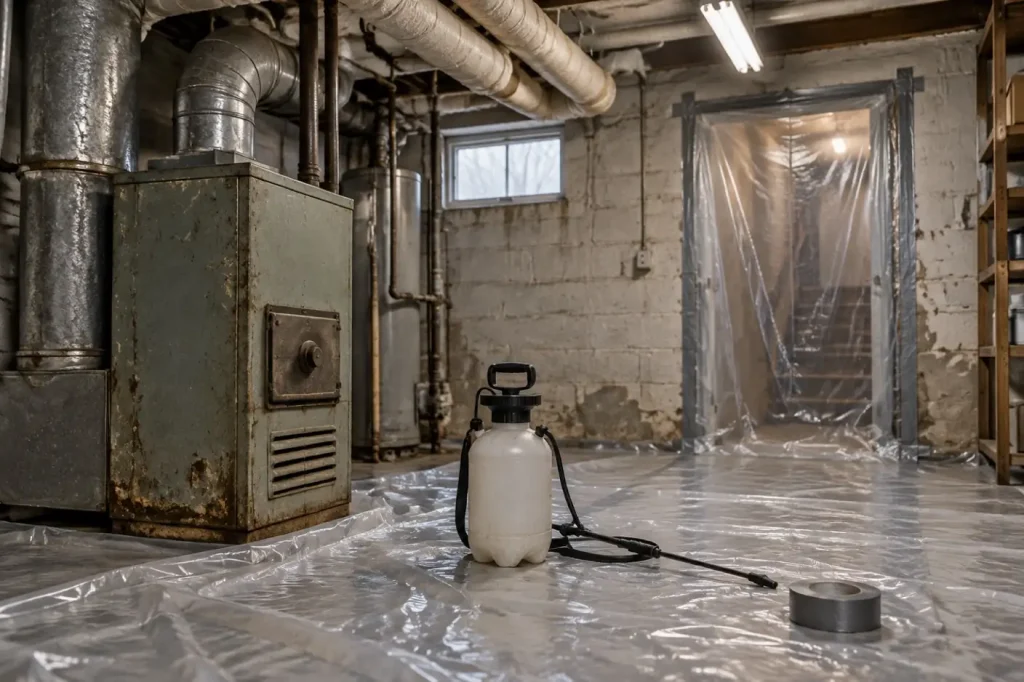
How to remove asbestos from a house starts with a legal question, not a tool list. The federal asbestos NESHAP excludes residential buildings with four or fewer dwelling units, so state and local agencies decide whether an owner may do the work. Where they allow it, the published method is consistent: keep material wet, use hand tools, isolate with plastic sheeting and bag waste for an approved landfill.
Key takeaways
- The federal asbestos NESHAP excludes residential buildings having four or fewer dwelling units, per 40 CFR 61.141. For most houses, state and local rules govern.
- The exclusion has edges: several small houses on one site, handled by one owner or operator as one project, are covered (EPA, 1995).
- Owner exemptions are personal. New York requires a single-family home, occupied by the owner, with the work done solely by the owner.
- Massachusetts limits its owner exemption to nonfriable material; New York, Minnesota, Oregon, Vermont, Colorado and PSCAA do not.
- Every agency owner method repeats the same controls: wet the material, no power tools, plastic sheeting, leak-tight labelled bags.
- PSCAA requires half-face, dual-cartridge respirators with HEPA filters, fit tested, one per person.
- Of 27 landfills on the MPCA’s 2019 list, 2 take nonfriable waste only and 7 take only their own county’s waste.
On this page
Ranking pages on this question split into forum threads that say wet it and go, and law-firm pages that say never touch it. Neither describes the rules. This page reads the federal regulation, the owner rules of eight state and regional agencies, and the method those agencies print. It does not recommend doing the work yourself: every agency quoted recommends a licensed or certified contractor.
Identification comes first: a lab result, or a presumption that the material is asbestos. Our asbestos inspection page covers sampling. Floor tile and its adhesive have their own page: how to remove asbestos floor tiles.
Why the federal rule usually stops at a house
The asbestos National Emission Standard for Hazardous Air Pollutants, the NESHAP, governs asbestos in demolition and renovation of a facility. 40 CFR 61.141 defines that as any institutional, commercial, public, industrial or residential structure “but excluding residential buildings having four or fewer dwelling units”. A house, a duplex and a fourplex all sit inside the exclusion.
EPA's NESHAP overview page adds that since 1990 EPA has treated houses demolished or renovated as part of a commercial or public project, such as urban renewal or a highway, as covered. The 1995 Clarification of Intent at 60 FR 38725 says an isolated small residential building handled by any entity is not covered, but several on one site under the same owner or operator are. EPA based the original 1973 exemption on a National Academy of Sciences finding that single-family structures contain only small amounts of asbestos insulation. The professional process, including OSHA classes and containment, is on our asbestos abatement page.
| Situation | Federal NESHAP applies? | Rule |
|---|---|---|
| One isolated house, renovated or demolished by its owner | No | 40 CFR 61.141 |
| One isolated house demolished by a city as a nuisance | No (“by any entity”) | 60 FR 38725 |
| Several houses on one site, same owner, one project | Yes | 60 FR 38725 |
| Houses cleared for a highway or commercial development | Yes | EPA, 1990 preamble |
| Five or more dwelling units | Yes | 40 CFR 61.141 |
| A building with a loft used as a dwelling | Yes, not treated as residential | 40 CFR 61.141 |
| Any building previously subject to the NESHAP | Yes, whatever its current use | 40 CFR 61.141 |
State by state: may an owner remove asbestos from their own home?
So “can I remove asbestos myself” is answered by the state, and sometimes a regional air agency. The table reads each agency’s page or rule text on 18 October 2026. It covers eight jurisdictions that publish a clear answer; local rules can be stricter. Our state asbestos accreditation map lists every state’s programme.
| Jurisdiction | Owner may do it? | Conditions | Source |
|---|---|---|---|
| New York (Dept. of Labor) | Yes | Single-family home occupied or to be occupied by the owner; work done solely by the owner; no limit on type or amount. Contractors and flippers are not owners; a house slated for demolition is not occupied. | NYSDOL P229 (1/26), Rule 56, 1.3(a) |
| Minnesota (Dept. of Health) | Yes | A domiciled owner of a single-family residence needs no license or permit fee. Anyone else needs an MDH-licensed contractor above 10 linear feet, 6 square feet or 1 cubic foot. | Minn. Stat. 326.72, 326.71 |
| Oregon (DEQ) | Yes | Homeowners may abate in the single unit private residence they live in, under OAR 340 Division 248. No notice or fee for an owner occupant removing nonfriable tile. | DEQ tile guidance |
| Puget Sound region, WA (PSCAA) | Yes | Live in and own the single-family house; new owners may remove before moving in. Rentals, condominiums and renters need a certified contractor. Friable work at 10 linear feet or 48 square feet a year needs notice and a $25 fee, according to PSCAA. | PSCAA homeowner page |
| Massachusetts (MassDEP) | Nonfriable only | Owner of an owner-occupied single-family home may abate solely nonfriable material without notice or survey, if it stays nonfriable and is not reserved to licensed contractors by 453 CMR 6.00. Excludes over 100 square feet of exterior cement siding. | 310 CMR 7.15 |
| Vermont (Dept. of Health) | Yes | Homeowners, not landlords, may remove it in their own home under the handling and disposal methods of Section 1.1.6. | Health Dept. owner page |
| Colorado (CDPHE) | Yes, primary residence | Certification rules do not apply to an individual in their own primary residence. CDPHE single-family triggers: 50 linear feet, 32 square feet or a 55-gallon drum. | C.R.S. 25-7-504(3); CDPHE |
| Texas (DSHS rules) | State chapter does not apply | 25 TAC Chapter 296 excludes a single private residence or a single apartment building of up to four units, unless the NESHAP applies. | 25 TAC 296.1(c) |
Read the numbers in context. Minnesota’s 6 square feet, per Minn. Stat. 326.71, is where work in a home needs a licensed contractor, and 326.72 exempts the resident owner. Colorado’s 32 square feet triggers notice or a permit, per CDPHE; ask whether an owner notice is still expected at your quantity. The NESHAP figure in 40 CFR 61.145(a) is shown for comparison only. The pattern across the exemptions: a single-family home, an owner who lives there and the owner doing the work. Rentals, condominiums and resale flips fall outside all of them.
Which situation are you in? A six-step decision path
The order follows the agencies’ own documents. If any step stops you, the answer is a licensed contractor.
- Confirm or presume. Oregon DEQ: a lab analysis, or presume it is asbestos.
- Ask whether it has to go. EPA says intact material that will not be disturbed should be left alone; see asbestos encapsulation.
- Check who you are. Rental, condominium, multi-unit or resale: no exemption applies.
- Friable or not. Friable means crumbled by hand pressure when dry (40 CFR 61.141). It is outside the Massachusetts owner exemption.
- Measure it against your trigger in the chart, and file any notice first.
- Find the landfill first. Oregon DEQ says some accept asbestos by appointment only.
| Your situation | What the agencies point to | Read next |
|---|---|---|
| Intact material outside the project area | Leave it alone (EPA) | Encapsulation |
| Owner-occupied home, nonfriable tile | Allowed under all seven owner exemptions, wet hand methods | Floor tiles |
| Owner-occupied home, friable texture or lagging | Allowed in NY, OR, VT, MN, CO and PSCAA (notice above 48 sq ft); not in Massachusetts | Popcorn ceilings |
| Rental, condominium or resale house | Certified or licensed contractor (NYSDOL, PSCAA) | Abatement |
| Whole-house demolition | No NY exemption; PSCAA requires an AHERA-certified survey | Abatement |
| Damaged material or a large contaminated area | Call an asbestos professional (EPA) | Inspection |
Asbestos removal: the method agencies publish for owners
Three documents are written for this: PSCAA's homeowner sheet vinyl guide, one of three PSCAA guides for owner-occupied single-family homes; Oregon DEQ's vinyl asbestos tile guidance; and EPA's homeowner asbestos page, which describes what trained professionals do. PSCAA’s guide opens by strongly recommending a state-certified contractor. The table records the rules; it does not make the work simple.
| Control | What the agency documents say | Source |
|---|---|---|
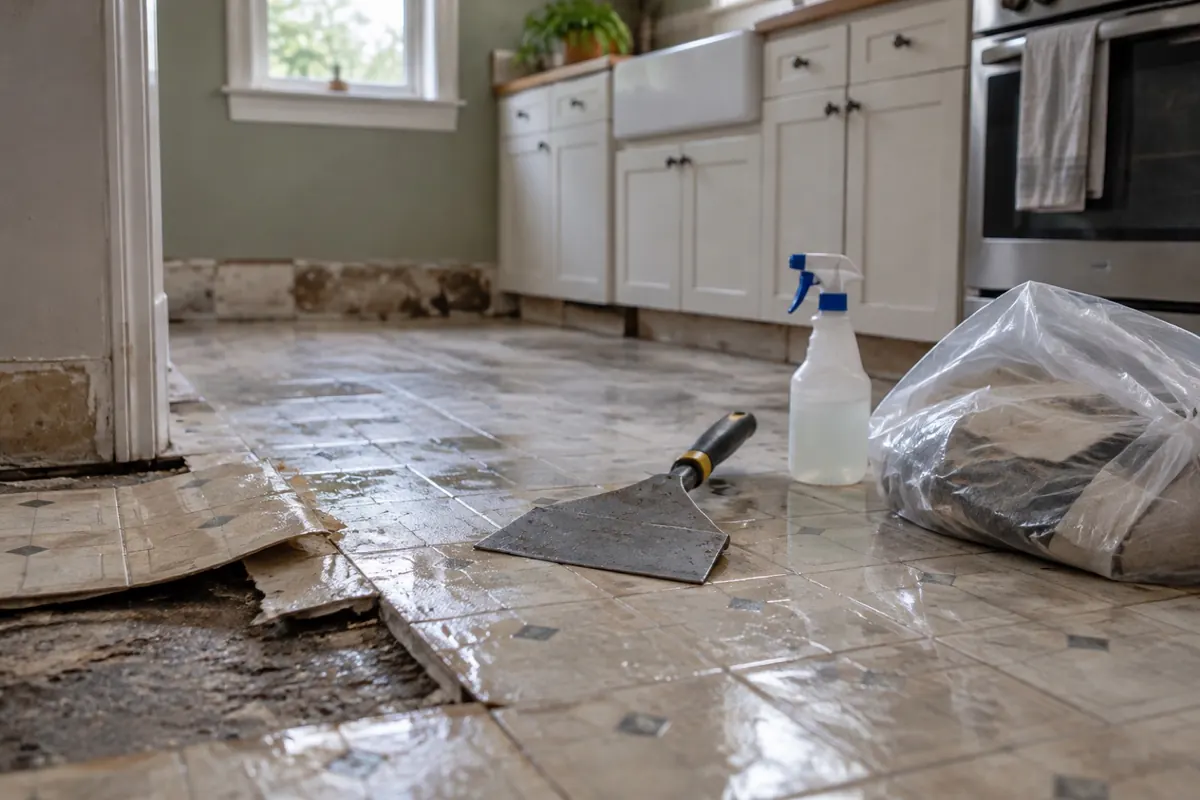
| Wet methods | PSCAA: tank sprayer, dish detergent at 1 cup per 5 gallons, debris wet until bagged. DEQ: wet through removal, packaging and disposal. EPA: a fine-mist hand sprayer. | PSCAA; DEQ; EPA |
| No power tools | DEQ: no sanding, sawing, grinding, chipping or power tools. PSCAA: no power cutting tools. EPA: do not saw, sand, scrape or drill. | DEQ; PSCAA Reg. III; EPA |
| Plastic sheeting | DEQ: six-mil sheeting over doorways, registers and vents. PSCAA: 6-mil polyethylene. EPA: plastic sheeting and duct tape. | DEQ; PSCAA; EPA |
| Air systems off | Turn off heating and air conditioning. | PSCAA; EPA |
| Keep pieces whole | Never break tile to fit the bag; if it cannot come up unbroken, friable rules apply. | DEQ |
| Package and label | Double 6-mil bags, labelled, with name and address. | PSCAA; DEQ |
The respirator the agency specifies
PSCAA’s guide is the most specific: “Half-face, dual-cartridge respirators, each equipped with a pair of HEPA filters are required,” one per person, fit tested by the vendor because a poorly fitted respirator gives little protection. People with beards often cannot be fitted and should not work inside. The same guide lists disposable coveralls with booties, renewed at every entry, rubber boots and gloves, non-fogging goggles, and 33 by 50 inch 6-mil bags, about a dozen per 100 square feet of flooring. Oregon DEQ names no respirator and refers owners to Oregon OSHA.
The wetting mixes differ by document. PSCAA’s 1 cup per 5 gallons is 1.6 ounces per gallon; RFCI's floor covering work practices specify 1 ounce per gallon for flooring, so PSCAA’s mix is 1.6 times as strong. Follow the document written for your material.
If debris is already loose: what EPA says not to do
EPA's homeowner asbestos page is direct for anyone asking how to remove asbestos dust from a house: do not dust, sweep or vacuum debris that may contain asbestos, and do not track it through the house. If you must walk through, have it wet mopped. If it came from damaged material, or a large area is affected, EPA says to call an asbestos professional.
Disposal: landfill acceptance and packaging
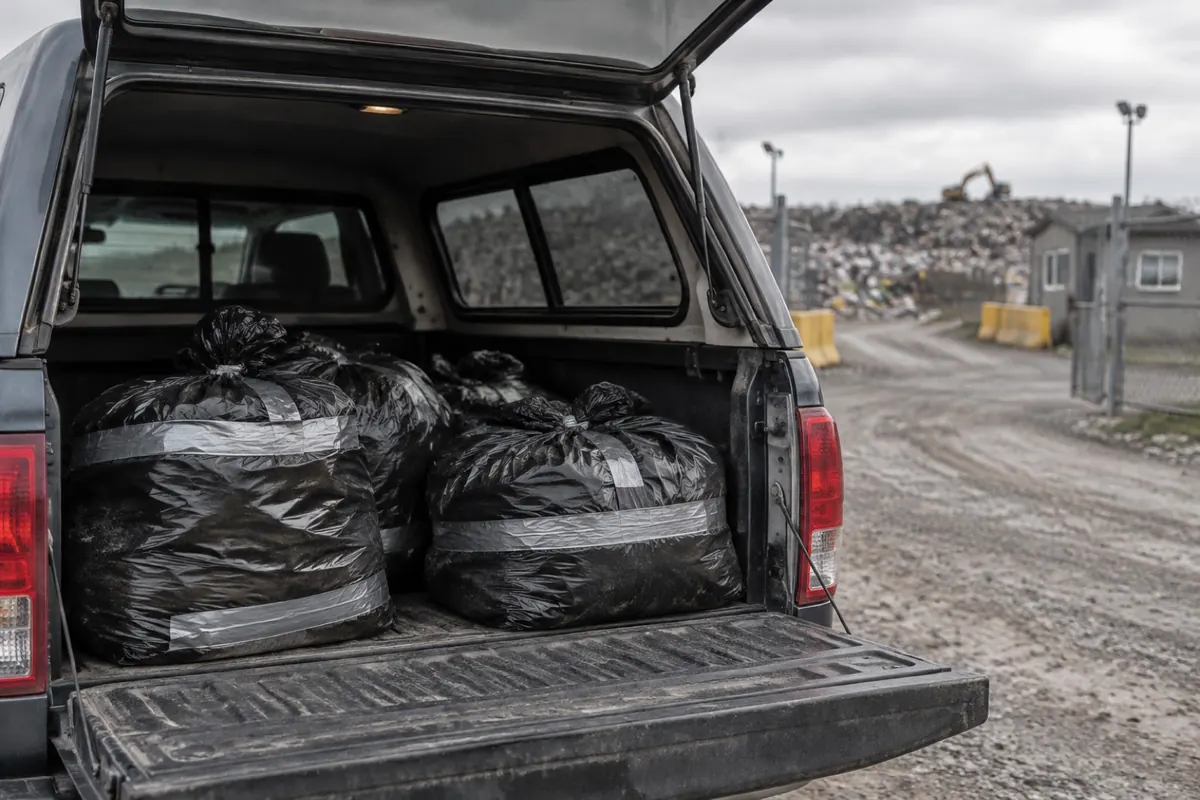
For regulated jobs, 40 CFR 61.150 requires waste sealed wet in leak-tight, OSHA-labelled containers marked with the generator’s name and site, and exempts nonfriable waste that was not crumbled or pulverized. Houses sit outside that rule, so the state and the landfill set terms. Three examples:
| Example | Packaging | Paperwork and timing | Where it can go |
|---|---|---|---|
| Oregon DEQ | Wet; two 6-mil labelled bags; generator name and address | ASN-4 shipment report; call the landfill first | Landfill permitted for asbestos |
| Puget Sound Clean Air Agency | Friable: double 6-mil pre-labelled bags. Nonfriable: container labelled “nonfriable asbestos waste” | Shipment record; within 10 calendar days, covered vehicle | Authorized sites; for nonfriable, ask the local hauler |
| Minnesota (MPCA list) | Set by each landfill | One site takes asbestos only on Tuesdays | 27 listed landfills, 2019 |
| New York | NYSDOL has no jurisdiction once waste leaves | NYS DEC and the landfill | As DEC directs |
| Colorado | Not specified by CDPHE | Not specified | Approved asbestos site, any quantity |
Per the MPCA list, 2 of 27 sites take nonfriable waste only, 7 take only their own county’s waste, 1 takes friable waste from contractors only and 1 only on Tuesdays. The MPCA calls the list voluntary and possibly incomplete, and it dates from 2019, so call before loading a vehicle.
When to hire a licensed abatement contractor
Any one row below ends the owner route. Contractor pricing is on our asbestos removal cost page.
| Trigger | Why | Source |
|---|---|---|
| You are not the owner-occupant | Outside every exemption read | NYSDOL; PSCAA |
| You want anyone’s help | Only a certified contractor may be hired to perform or assist | PSCAA |
| Tile breaks as it comes up | Broken tile is treated as friable | Oregon DEQ |
| Friable work in Massachusetts | Owner exemption is nonfriable only | 310 CMR 7.15 |
| The house is being demolished | Not occupied; certified survey needed | NYSDOL; PSCAA |
| You want air monitoring | Licensed contractors monitor during and after work | MDH |
| Damage is widespread | Call an asbestos professional | EPA |
For contractors: the owner exemption is personal
Crews meet this when an owner wants to do the asbestos part before the job, or asks the crew to help. PSCAA says the law prohibits hiring anyone but a certified contractor to perform or assist, and NYSDOL says contractors are not owners. Minnesota’s exemption is for a domiciled owner, Colorado’s for an individual in a primary residence. None travels to a crew.
Where an owner has already done the work, the records that show a lawful exemption are the agency ones: a lab result or survey, any required notification, and a waste shipment record with the landfill receipt. PSCAA lets an owner survey their own house for a remodel, but not for demolition, rentals or condominiums. Without those records, treat remaining material and debris as untested and scope the job accordingly.
What this page does not cover. Rules and published methods only. For questions about asbestos and the body, including searches on getting asbestos out of the body, see EPA, the National Institutes of Health or CDC, and a physician.
Questions people actually ask
Can I safely remove asbestos myself?
New York, Minnesota, Oregon, Vermont, Colorado and the Puget Sound Clean Air Agency let a resident owner remove asbestos in their own single-family home; Massachusetts allows nonfriable work only. Legal is not the same as safe: each agency recommends a licensed or certified contractor, and PSCAA calls owner removal difficult and dangerous if its procedures are not followed exactly.
Is it legal to remove asbestos yourself?
Federally, the NESHAP excludes residential buildings with four or fewer dwelling units, so state and local law usually decides. The common conditions are a single-family home, an owner who lives there and work done by the owner alone. Rentals, condominiums and resale flips do not qualify. Check your local agency first.
How easy is it to remove asbestos?
Agencies describe hard work. PSCAA says it means a respirator and non-breathable coveralls in high humidity on wet, slippery surfaces; Oregon DEQ adds electrical risk from the water used for wetting. Material must stay wet, come off whole and be bagged and labelled before it leaves the room.
Can asbestos be 100% removed?
Agencies define the end point by inspection, not promise. Massachusetts requires cleaning until no visible debris remains, and the Minnesota Department of Health says licensed contractors monitor air during and at the end of a job. The NESHAP itself anticipates material that was not accessible for testing and is found only once demolition starts.
Is it worth it to remove asbestos?
EPA says intact material that will not be disturbed should be left alone, and sealing or covering counts as repair. Removal makes sense when renovation or demolition will disturb it or it is damaged. For floors, EPA suggests laying new covering over old asbestos flooring where possible.
Where do I dispose of asbestos near me?
Only at a landfill or transfer station authorized to take it. Oregon DEQ requires a permitted landfill and an ASN-4 report; PSCAA requires friable waste at an authorized site within 10 calendar days. Minnesota’s MPCA lists accepting landfills, some of which take only nonfriable or only local waste. Call first.
How do I remove asbestos dust from my house?
EPA says not to dust, sweep or vacuum debris that may contain asbestos, because that spreads it. If you must walk through the area, have it wet mopped. If the debris came from damaged material, or a large area is affected, EPA says to call an asbestos professional.
Sources
- eCFR, 40 CFR 61.141, 61.145 and 61.150 (asbestos NESHAP). 61.141; 61.145; 61.150. Retrieved 18 October 2026.
- US EPA, Overview of the Asbestos NESHAP. epa.gov. Retrieved 18 October 2026.
- US EPA, Asbestos NESHAP Clarification of Intent, 60 FR 38725 (1995). govinfo.gov. Retrieved 18 October 2026.
- US EPA, Protect Your Family from Exposures to Asbestos. epa.gov. Retrieved 18 October 2026.
- NYSDOL, Asbestos Abatement Homeowner Exemption, P229. dol.ny.gov. Retrieved 18 October 2026.
- Minnesota Statutes 326.71 and 326.72. 326.71; 326.72. Retrieved 18 October 2026.
- Minnesota Department of Health, contractor and residential floor tile pages. contractors; floor tile. Retrieved 18 October 2026.
- Oregon DEQ, How to Remove Nonfriable Vinyl Asbestos Floor Tiles. oregon.gov. Retrieved 18 October 2026.
- Puget Sound Clean Air Agency, Homeowner Renovation; sheet vinyl owner guide (undated); Regulation III. page; guide; Reg. III. Retrieved 18 October 2026.
- Massachusetts, 310 CMR 7.15 (Cornell LII). law.cornell.edu. Retrieved 18 October 2026.
- Vermont Department of Health, requirements for property owners. healthvermont.gov. Retrieved 18 October 2026.
- C.R.S. 25-7-502 and 25-7-504; CDPHE asbestos guidance. 25-7-502; 25-7-504; CDPHE. Retrieved 18 October 2026.
- Texas, 25 TAC 296.1 (Cornell LII). law.cornell.edu. Retrieved 18 October 2026.
- MPCA, Landfills accepting asbestos, w-sw6-00 (July 2019). pca.state.mn.us. Retrieved 18 October 2026.
- RFCI, Recommended Work Practices for Removal of Resilient Floor Coverings (2018). rfci.com. Retrieved 18 October 2026.
Rules change and local agencies can be stricter. Confirm with the agency for your address. Research method: methodology. More on the standards hub.