The short answer
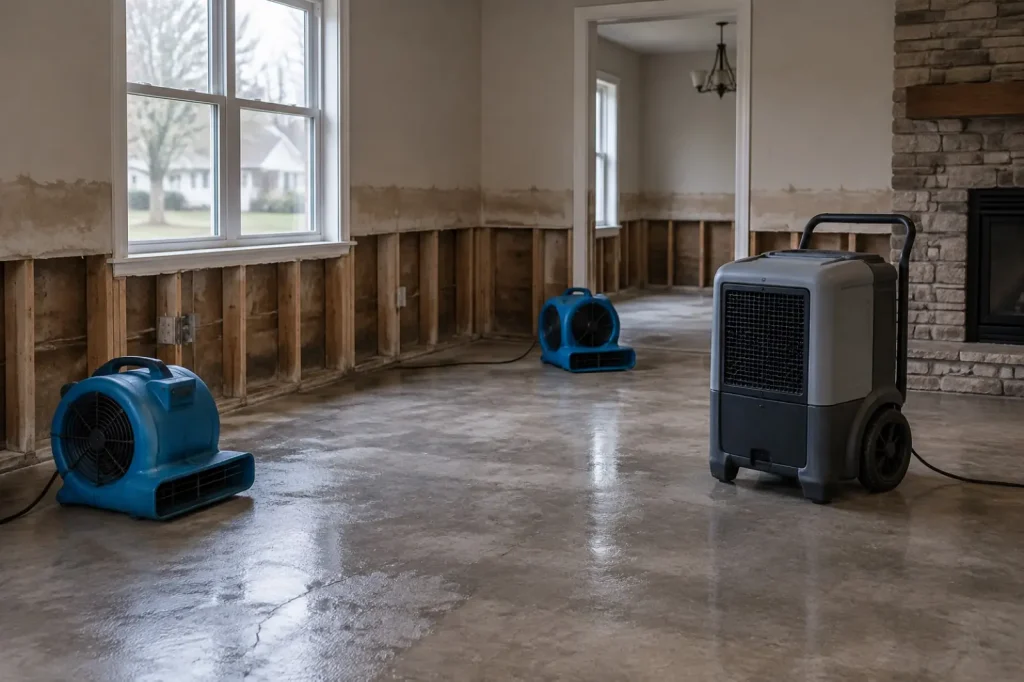
Flood damage restoration is the work of returning a building to service after rising surface water gets inside, and it runs in a fixed order: make the structure safe, document everything for the claim, pump out water and mud, cut out soaked porous materials, clean and dry the frame, prove it is dry, then rebuild under any permit or substantial damage ruling the local official makes.
Key takeaways
- IICRC S500 names rising river water and seawater flooding as Category 3 examples and puts remediation before drying.
- The NFIP Dwelling Form gives 60 days after the loss for a signed, sworn proof of loss. FEMA stretched it to 180 days for Hurricane Helene; extensions are event-specific.
- FEMA says Increased Cost of Compliance pays up to $30,000 toward elevation, floodproofing, relocation or demolition, after a substantial damage or repetitive loss finding.
- FEMA P-758 leaves cleaning and drying out of the substantial damage arithmetic, so itemize them separately.
- FEMA does not license or certify contractors, so FEMA-approved is not a credential.
- Median NFIP building damage climbs from $18,842 under one foot of water to $63,020 at two feet, per our FEMA claims analysis.
On this page
Scope. This page describes policy language and published regulator guidance, not what your own policy pays: read your policy, ask your state insurance department or a licensed professional. Health effects of floodwater and mold are out of scope; EPA and CDC publish that guidance. More guides sit on our water damage hub.
How a flood loss differs from a pipe leak
The NFIP Dwelling Form defines a flood as a general and temporary condition of partial or complete inundation of two or more acres of normally dry land, or of two or more properties, from overflow of inland or tidal waters, unusual and rapid runoff of surface waters, or mudflow. That is why a burst pipe is never a flood claim.
The water is classed differently too. The S500 definition of Category 3, quoted in the IICRC 2026 position statement, lists sewage, all flooding from seawater, rising water from rivers or streams, and other contaminated water. The statement adds that wind-driven rain is not automatically Category 3; the restorer decides after inspection. River and sea floods are named outright.
| Question | Flood | Plumbing leak |
|---|---|---|
| Source | Overflow of inland or tidal waters, or rapid surface runoff (SFIP definition). | A supply line, fitting or appliance. |
| Category | Rising river water and seawater are named Category 3 examples in S500. | The restorer’s preliminary determination decides; Category 1 needs no contamination controls. |
| What rides in | Silt and mud, which NDSU says trap moisture in siding. | Usually water alone. |
| Footprint | Two or more acres or two or more properties (SFIP). | Usually one property. |
| Policy | FEMA says most homeowners insurance excludes flood. | A homeowners or renters question. |
| Before rebuild | Possible substantial damage determination (FEMA P-758). | Ordinary permits. |
The decision path, in order
Work it from the top.
- Did water come from outside and reach neighbouring property? Then it is a flood. A pipe or appliance leak belongs in our water damage restoration cost guide.
- Is it safe to enter? Pump basements down slowly: the EPA flooded homes guidance warns fast removal can crack and collapse walls. See our basement flood cleanup guide.
- Photograph first. The FloodSmart claim guidance says to photo and video items before cleaning or discarding them and keep material samples. Notify the insurer in writing.
- Sewage in it? Add our sewage damage cleanup protocol.
- Start flood damage cleanup: muck out, then flood cut above the water line.
- Dry, then measure studs, sills and slab.
- Ask the floodplain office whether repairs could reach half the building’s pre-flood market value.
- File the proof of loss by day 60 unless FEMA extended it for your event.
- Uninsured or short, in a declared disaster? Apply for FEMA Individual Assistance now.
- Hire against the red-flag table, and never sign over an insurance check.
The flood restoration sequence
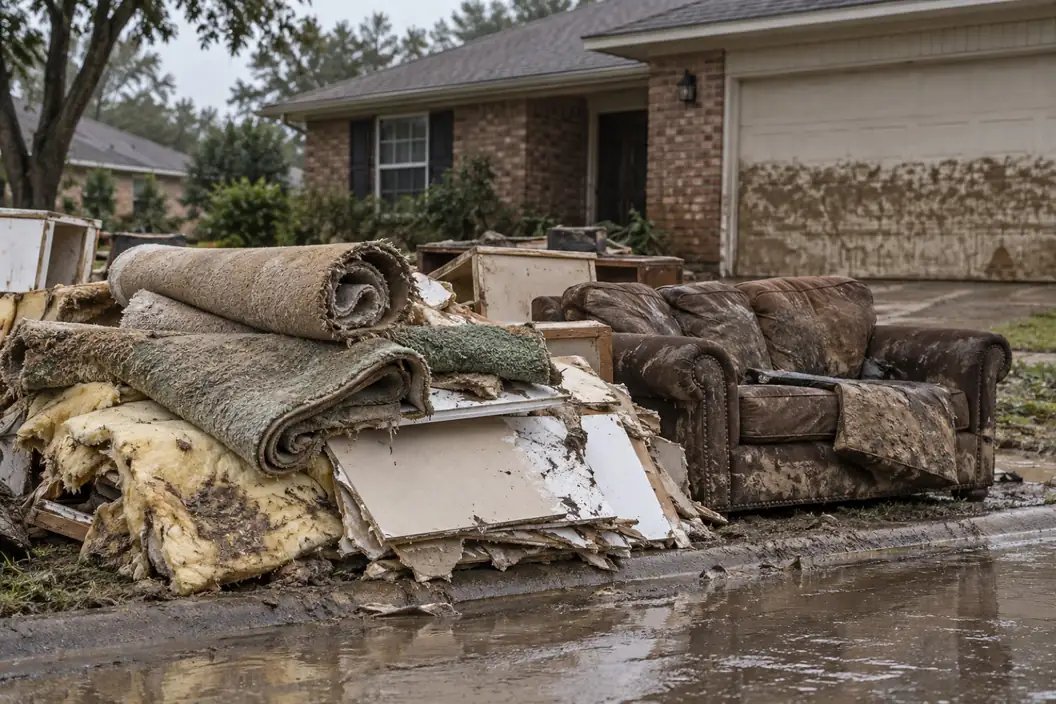
The ANSI/IICRC S500 sets the order. Section 10.6, reproduced in the IICRC position statement, lists the minimum initial response: safety survey, verifying the source, mapping migration, a preliminary category determination, pre-existing damage, and drying goals. Section 10.6.7 then says that with Category 2 or 3 water, remediation should occur before restorative drying, under contamination controls, so dirty material comes out before the dehumidifiers go in.
S500 also says an indoor environmental professional should be retained when occupants are high risk, the building is a care or public facility, or a contaminant needs identifying. In older buildings, the EPA flooded homes guidance says asbestos-containing material should be removed by an asbestos professional.
Flood cut heights: where to cut and why
A flood cut removes wet wallboard along a level line so the cavity can be emptied and dried. NDSU Extension says to remove drywall, paneling and plaster at least to the flood level, that warping above it often means more must go, and that wallboard soaked by dirty floodwater must be replaced. The Gypsum Association (March 2026, citing its GA-231 document) gives 12 to 24 inches above the water line for partial removal, and a cut near 4 feet when insulation must be replaced. Water wicks up gypsum, so the stain line is a minimum: meter above it before snapping the chalk line.
| Situation | Guidance | Source |
|---|---|---|
| Wallboard soaked by dirty floodwater | Replace; remove at least to flood level, more if warped above. | NDSU |
| Partial removal of gypsum board | Cut 12 to 24 inches above the water line. | Gypsum Association |
| Insulation wet or cavity must dry | A cut near 4 feet may be more practical. | Gypsum Association |
| Water-soaked insulation | Remove; it can hold water for months. | NDSU |
| Plaster | Sometimes drained by breaking out the bottom behind the baseboard. | NDSU |
| Clean rainwater only | Cut 4 to 12 inch strips at bottom and top for a chimney effect. | NDSU |
What NFIP flood insurance pays for
FEMA says most homeowners insurance does not cover flood and that an NFIP policy typically has a 30-day waiting period. What a flood policy pays is set by the NFIP Dwelling Form and summarized on the FloodSmart coverage page. This is policy language, not a ruling on any claim.
| Coverage | What the policy lists | Published limit |
|---|---|---|
| Building (A) | Structure, wiring, plumbing, water heaters, built-in appliances, installed flooring, cabinetry, foundation walls, detached garages. | $250,000 home, $500,000 business, per FEMA FloodSmart |
| Contents (B) | Clothing, furniture, electronics, laundry appliances, window air conditioners. Separate purchase and deductible. | $100,000 home; artwork and furs $2,500, per FEMA FloodSmart |
| Debris removal (C) | Debris of insured property, and non-owned debris on it. | Inside A or B limits, per the SFIP |
| Loss avoidance (C) | Sandbags, fill, pumps, sheeting, household labour at federal minimum wage. | Up to $1,000, per the SFIP |
| Removed to safety | Insured property moved away from the flood. | 45 days, per the SFIP |
| ICC (D) | Elevation, floodproofing, relocation, demolition. No separate deductible. | Up to $30,000, per the SFIP |
| Not covered | Basement contents, landscaping, septic, decks, fences, pools, temporary housing, business interruption. | Per FEMA FloodSmart |
Two clauses catch owners out. Per the SFIP, mold or mildew damage from conditions within the policyholder’s control, including failure to inspect and maintain the property after a flood recedes, is excluded, so slow drying is a coverage risk. And replacement cost settlement applies to a single-family principal residence insured to at least 80 percent of replacement cost or the maximum available. Our insured flood loss gap report found from FEMA data that the median NFIP building claim settles at 95.8% of assessed damage, and stresses a gap is not underpayment.
The proof of loss clock
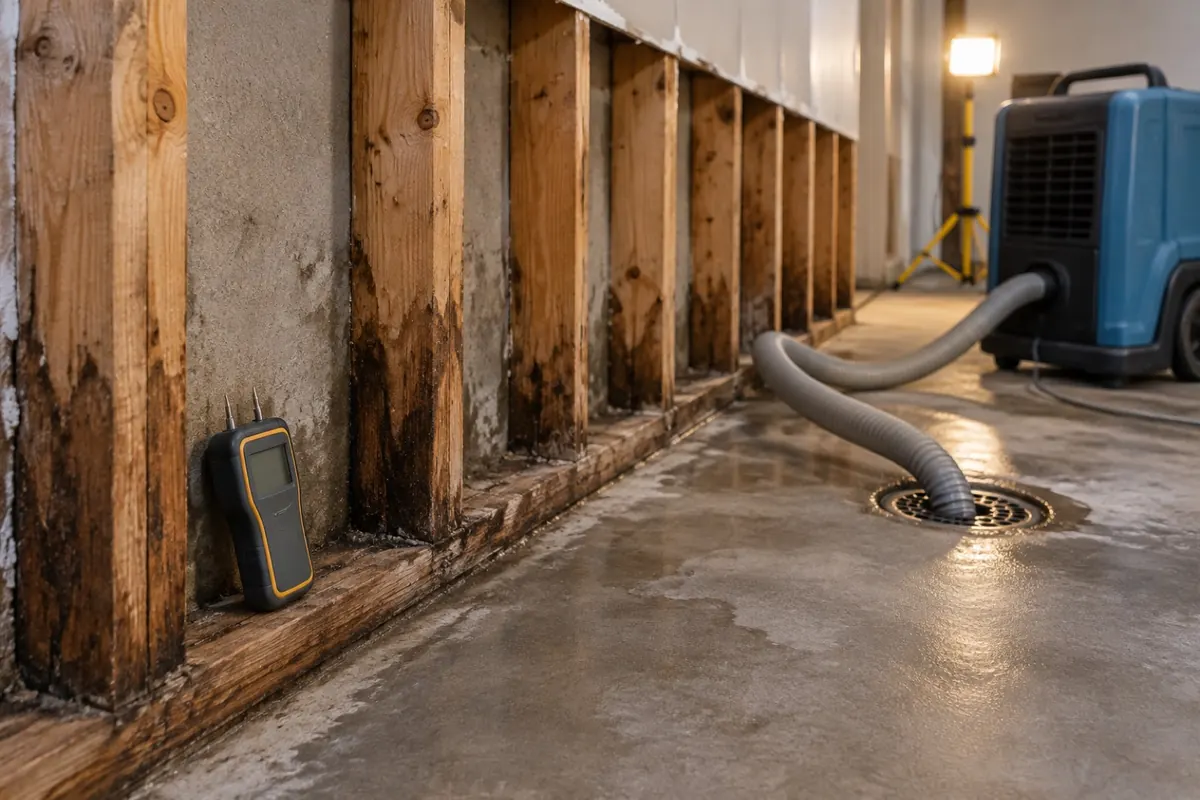
The NFIP Dwelling Form says: within 60 days after the loss, send a proof of loss, the policyholder’s signed and sworn statement of the amount claimed, with the date and cause of loss, other insurance, specifications of damaged buildings, detailed repair estimates and the contents inventory. An adjuster’s help with the form is a courtesy only. FEMA can extend it per event: FEMA Bulletin W-24018 (19 December 2024) gave Hurricane Helene claims 180 days after an earlier bulletin set 120.
Substantial damage and the 50 percent rule
The FEMA P-758 desk reference (May 2010) quotes the NFIP rule: substantial damage is damage of any origin where restoring the structure would cost 50 percent or more of its pre-damage market value, excluding land. Communities can set a stricter figure, and the local official makes the call. A substantially damaged building in a mapped flood hazard area must meet new-construction rules, including a lowest floor at or above base flood elevation, or be demolished and rebuilt or relocated.
That is what ICC is for. The FEMA ICC page says policyholders may receive up to $30,000; the FEMA ICC FAQ says ICC is on top of the repair payment, but total payout may not exceed $250,000 for a residential building. FEMA’s repetitive damage route is two floods in 10 years averaging 25 percent of market value.
| Cost item | In the 50 percent test? |
|---|---|
| Materials and labor, including donated or volunteer | Included |
| Demolition and construction debris disposal | Included |
| Finishes, cabinets, insulation, HVAC, plumbing, electrical | Included |
| Contractor overhead and profit | Included |
| Clean-up: draining, mud removal, cleaning, disinfecting, drying | Excluded |
| Trash removal and dumpster fees | Excluded |
| Permit fees, plans, plug-in appliances, outside improvements | Excluded |
FEMA Individual Assistance when insurance falls short
The FEMA IHP page describes money for temporary housing, repair of owner-occupied primary homes and other uninsured disaster needs, and says it is not a substitute for insurance. FEMA’s rule at 44 CFR 206.110 limits it to a major disaster or emergency and caps home repair aid at $25,000 per disaster, adjusted yearly for inflation.
The FEMA duplication fact sheet says no one may be paid twice for one loss, but tells survivors to apply even while an insurance claim is pending, then send the settlement or denial; help is at 1-800-621-3362. Under FEMA’s 44 CFR 206.113, insured households can qualify when a claim is denied, significantly delayed with a promise to repay, or insufficient. Apply at DisasterAssistance.gov.
Mold timing after a flood
The EPA mold guidance says to dry water-damaged items within 24 to 48 hours to prevent mold, and the FloodSmart claim guidance applies the same window to floods and says to finish mold cleanup before moving back in. On a flood that window is often gone before anyone can enter. Our guide to how long mold takes to grow after water damage covers the timeline.
What flood damage repair costs, by published source
No guide prices a flood as such, so set the two most-cited side by side. HomeAdvisor (updated 17 June 2026) reports an average water job of $3,868 and puts its severe class, tied to river flooding or storm surge, at $20,000 to $100,000. Fixr (updated 31 January 2025) reports the same severe range. Class here is each guide’s own severity label.
| Line | HomeAdvisor reports | Fixr reports |
|---|---|---|
| Typical water job | $1,383 to $6,369 | $1,200 to $5,000 |
| Most severe class | $20,000 to $100,000 | $20,000 to $100,000 |
| Black water, per sq ft | $7.50 average | $7 to $7.50 extraction |
| Drywall, per sq ft | Not itemized | $1.50 to $3 |
| Carpeting, per sq ft | Not itemized | $4.75 to $10.50 |
| Hardwood, per sq ft | Not itemized | $10 to $15 |
Claims data shows the flood side. Our water depth damage curve found from FEMA NFIP claims that median building damage rises from $18,842 under one foot of water to $63,020 at two feet, then flattens. Our flood claims by state report found from FEMA data that Florida, Texas and Louisiana hold 67.8% of NFIP building claims since 2015.
How to vet a flood restoration contractor
Floods put whole streets on the market for the same crews. The FEMA fraud fact sheet says FEMA does not license or certify contractors and recommends a local firm. The FTC flags being told to sign over an insurance check, a discount only if you sign now, and blank contracts. The North Carolina AG warns scammers start the job and leave town. The IICRC firm verification page confirms whether a firm employs IICRC Certified Technicians.
| Red flag | What the regulator says | Source |
|---|---|---|
| Claims FEMA approval | FEMA certifies no contractors. | FEMA |
| One estimate only | FEMA advises two or three in writing. | FEMA |
| Asks you to sign over the insurance check | A named scam sign. | FTC; Texas AG |
| Discount if you sign today, or a blank contract | Named scam signs. | FTC |
| Big money up front | Pay no more than half up front (FEMA, April 2026); no down payment until done (FEMA Texas, 2025). | FEMA |
| Cash, wire, gift card, app or crypto | Pay by credit card or check. | FTC; North Carolina AG |
| No written contract | New York requires dates, scope, materials and a three-day cancellation notice. | New York AG |
Report fraud at ReportFraud.ftc.gov, to your attorney general, or the FEMA hotline: 866-720-5721 in the FEMA April 2026 release, 866-223-0814 in the 2025 Texas fact sheet. Use your disaster’s number.
For contractors: scope, documents and the adjuster
The proof of loss is the owner’s, but its estimates come from your file. Per the SFIP mortgage clause, building claims are paid to the mortgagee and the insured as interests appear, so expect joint checks. FEMA P-758 lets officials demand itemized costs separating clean-up from repair; a lumped invoice can push a borderline building over the line.
| Produce | Why | Rule |
|---|---|---|
| Category call and its basis | S500 makes it the restorer’s job. | S500 10.6.7 |
| Photos before tear-out, samples | FloodSmart tells owners to keep both. | FloodSmart |
| Detailed repair estimate | Required in the proof of loss. | SFIP VII.G.4 |
| Clean-up itemized apart from rebuild | Officials may require it for the substantial damage test. | FEMA P-758 |
| Drying logs to goal | Rebuts a failure-to-maintain mold exclusion. | SFIP; S500 |
Questions people actually ask
Does insurance pay for flood restoration?
Rarely a homeowners policy: FEMA says most homeowners insurance does not cover flood. A separate NFIP or private flood policy pays on its own terms. FEMA’s NFIP Dwelling Form covers building and contents within published limits, plus up to $30,000 of Increased Cost of Compliance. Your declarations page decides what applies.
What is the difference between water remediation and restoration?
In IICRC S500 terms, remediation removes or treats contamination and unsalvageable material; restorative drying and repair return the building to service. For Category 2 or 3 water, which includes rising floodwater, section 10.6.7 says remediation should come before restorative drying, under contamination controls.
How long does flood restoration take?
EPA’s target is drying wet materials within 24 to 48 hours, but NDSU Extension says wall cavities can take weeks or months to dry and advises waiting four to six weeks or more before patching plaster. A substantial damage review adds permit time.
How do I choose a reliable flood damage restoration company?
Get two or three written estimates, as FEMA advises, and ignore claims of FEMA approval, since FEMA certifies no contractors. Never sign over an insurance check or a blank contract, per the FTC. Pay by card or check, hold the final payment until the work is done, and check IICRC credentials.
Do restoration companies accept insurance assignments on flood claims?
It depends on the policy and state. The NFIP Dwelling Form pays building claims to the insured and any mortgagee as interests appear, and Florida’s 2022 SB 2-A bars assigning post-loss benefits under residential and commercial property policies issued after a set date. Ask your insurer and state insurance department first.
Can I rent flood cleanup equipment, or buy eco-friendly products?
Pumps, wet vacuums, air movers and dehumidifiers can be rented, but rented gear does not replace moisture readings. For cleaners, EPA’s Safer Choice programme lists certified products, and EPA keeps a separate list of Design for the Environment certified disinfectants.
Do flood restoration companies also handle mold and air testing?
Many remediate, but IICRC S500 says an indoor environmental professional should be retained when occupants are high risk, the building is a public or care facility, or a contaminant needs identifying. Hiring a separate tester removes the obvious conflict of interest.
Sources
- ANSI/IICRC S500, Fifth Edition (2021); IICRC 2026 position statement, 10 February 2026, quoting S500 sections B, 10.6 and 10.6.7.
- NFIP Dwelling Form, 44 CFR Part 61 Appendix A(1), eCFR.
- FloodSmart coverage page and FloodSmart claim guidance, FEMA NFIP, undated.
- FEMA, flood insurance page, updated 2 January 2026.
- FEMA ICC page, updated 12 January 2026; FEMA ICC FAQ, updated 5 February 2020.
- FEMA Bulletin W-24018, 19 December 2024.
- FEMA P-758 desk reference, FEMA P-758, May 2010.
- FEMA IHP page, updated 28 July 2026; FEMA duplication fact sheet, updated 8 May 2026.
- 44 CFR 206.110 and 44 CFR 206.113, eCFR.
- EPA flooded homes guidance, updated 22 June 2026; EPA mold guidance, updated 18 February 2026; EPA Safer Choice, updated 22 September 2026.
- NDSU Extension, undated.
- Gypsum Association, Walls and Ceilings, 31 March 2026.
- FEMA fraud fact sheet, 9 September 2025; FEMA April 2026 release.
- FTC, September 2025.
- Texas AG, 21 October 2019; New York AG, 15 August 2018; North Carolina AG, 2025.
- HomeAdvisor, updated 17 June 2026; Fixr, updated 31 January 2025.
- IICRC firm verification page; Florida SB 2-A, Chapter 2022-271.
- All retrieved 18 October 2026. Research figures are quoted as published in our own reports. Our methodology sets out the standing rules.
Policy terms, limits and deadlines change and FEMA issues event bulletins. Confirm with your insurer, state insurance department and floodplain administrator.