The short answer
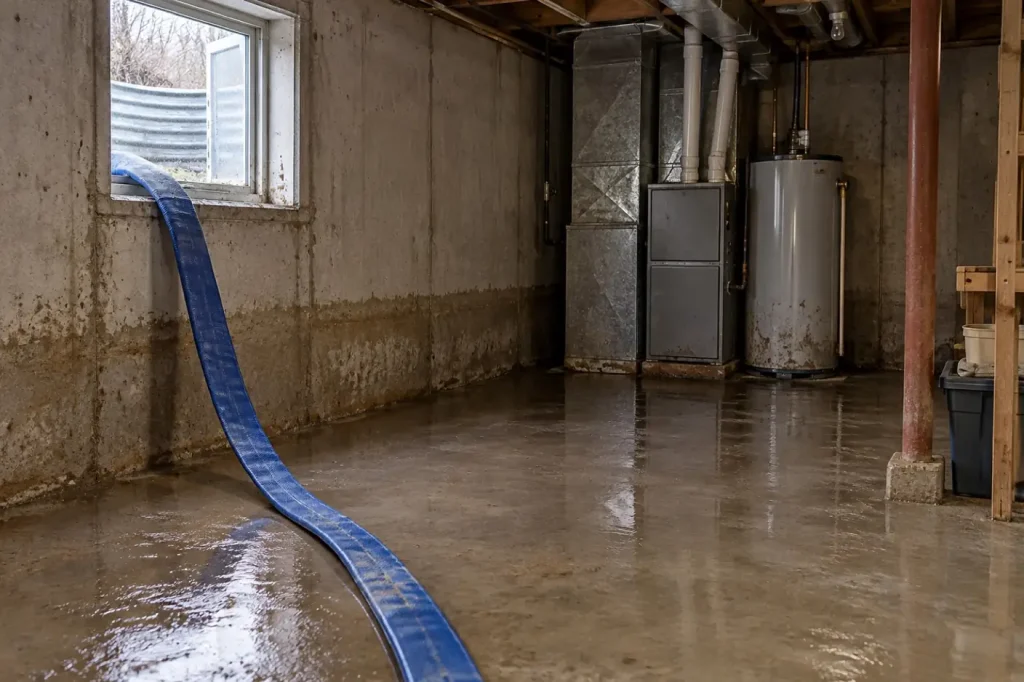
Basement flood cleanup starts with safety, not water: power and gas off without standing in the water, or by an electrician. Then name the source, because it sets the water category. Pump a flooded basement down slowly, about a third a day per extension guidance, so soil pressure does not push the walls in. Remove what cannot be cleaned and dry the rest within 24 to 48 hours.
Key takeaways
- Never switch power on or off while standing in water, per the CDC; if the panel is in the flooded space, an electrician turns it off.
- Per the CDC, no gasoline pump or generator indoors or within 20 feet of a door, window or vent. Only the hose comes in.
- Extension services advise removing about a third of the water a day. FEMA’s steps, 1 foot then 2 to 3 feet a day once the level holds, take 3 to 4 days at best for 6 feet of water.
- Per a university guideline that follows S500, a burst supply line is Category 1, seepage and sump failure Category 2, sewage and rising river water Category 3.
- Per the FEMA fact sheet, flood insurance in a basement covers listed building items and cleanup, not finished walls, floors, most belongings or removal of basement carpet.
- EPA says to dry water-damaged areas within 24 to 48 hours to prevent mold growth.
On this page
- Before you step in: the safety sequence
- Name the source, because it sets the category
- Pumping pace: why fast is dangerous
- What to keep and what to discard
- Mud, disinfection and drying
- Flood policy or homeowners policy
- What basement flood cleanup costs
- The timeline, start to claim
- For contractors: the basement file
- Questions people actually ask
A flooded basement differs from a wet kitchen in three ways: the panel, gas appliances and water heater may sit in the water; the walls hold back soil that may be saturated; and insurance for space below ground is narrower. General cleanup steps are in water damage clean up; this page covers what is specific to basements.
Before you step in: the safety sequence
The NDSU Extension checklist, republished by North Dakota’s emergency services department, comes before anyone goes down the stairs. The CDC adds the limits that matter when the panel is in the flooded space.
| Step | What to do | Why | Source |
|---|---|---|---|
| 1. Power | Shut off at the meter or main, never while standing in water. If reaching the switch means entering water, call an electrician. | Shock risk in standing water | NDSU; CDC |
| 2. Gas | Turn off gas or fuel valves. If you smell gas, turn off the main valve, open windows and leave immediately. | Ignition risk | NDSU; CDC |
| 3. Structure | Check outside walls for cave-ins or damage before going down. | Saturated soil loads the walls | NDSU |
| 4. Air | Open doors and windows or use blowers. | Fresh air before work | NDSU |
| 5. Engines outside | Gasoline pumps and generators stay outdoors, at least 20 feet from doors, windows and vents. | Carbon monoxide | CDC; Red Cross |
| 6. Gear | Rubber boots, heavy gloves, protective clothing; do not wade through floodwater. | Contaminated water and debris | CDC; Ready.gov; Red Cross |
Do not use the house’s own power for the pump
NDSU Extension and University of Wisconsin Extension say not to use an electric pump powered by your own electrical system; use a gas-powered pump or one on an outside line. With the CDC rule, the engine sits outdoors and only the suction hose enters.
Nothing gets re-energised until it is checked
A 2014 UL white paper says submerged breakers, receptacles and switches should be replaced, and that a qualified electrician or inspector should check equipment before it is energised. Furnaces and water heaters are on its list of items to be prepared to replace.
Name the source, because it sets the category
Cleanup scope follows the water category in ANSI/IICRC S500. The Northern Arizona University water damage guideline, written to follow S500, places each common basement source in a category and adds that grey water untreated for longer than 48 hours may become black water. The source also decides which insurance wording you read, so it is worth photographing before anything is moved.
| Source | Category, per NAU | What it means for cleanup | Policy wording to read |
|---|---|---|---|
| Burst supply pipe or appliance supply line | 1, clean | Dry in place where caught early | HO-3 named water peril; sump equipment is excluded from it |
| Groundwater seepage through walls or floor | 2, grey (seepage due to hydrostatic pressure) | Clean and sanitise; porous items judged on time | HO-3 exclusion for water below the surface of the ground |
| Sump pump failure | 2, grey | Clean and sanitise | HO-3 exclusion for sump overflow; backup endorsement |
| Sewer or drain backup | 3, black (sewage) | Porous materials removed; see sewage cleanup | HO-3 exclusion for backup through sewers or drains; backup endorsement |
| Surface flooding, rising rivers or streams | 3, black | Porous materials removed; mud and silt | Flood policy (SFIP); HO-3 flood exclusion |
Sewage work has its own page, sewage damage cleanup, and the category system is set out in IICRC water categories. If a sump pump failed, choosing or sizing a replacement is a plumbing question beyond this page.
Pumping pace: why fast is dangerous
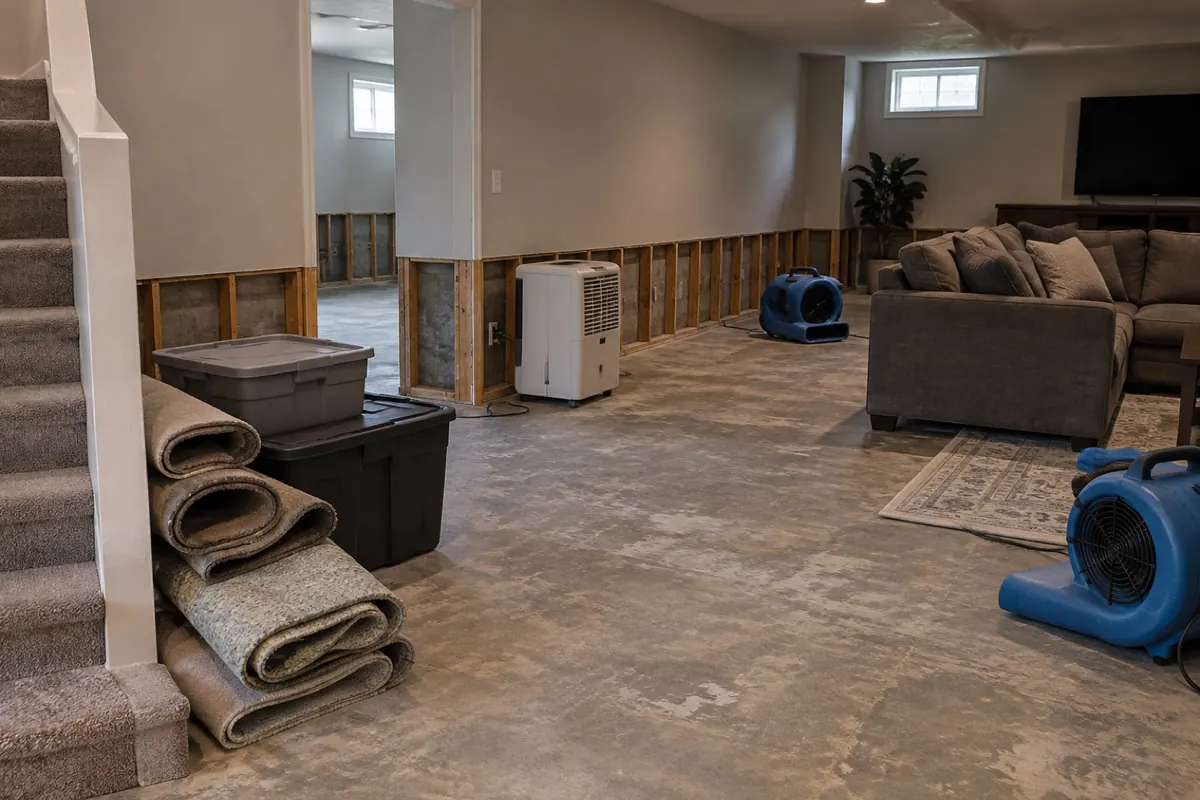
NDSU Extension and University of Wisconsin Extension publish the same rule: pumping a flooded basement too soon or too quickly can do more damage, because the water inside braces the walls against water-logged soil outside. Remove about a third of the water each day, watch for structural failure, and restart from the new line if the level rises overnight. Whatever is submerged, they note, will not be damaged further by waiting.
FEMA, in a 2019 release titled Don’t Pump Out Basements Too Early or Too Fast, gives a stepwise version, and EPA’s flooded homes guidance repeats the warning.
| Question | Extension rule (NDSU, UW) | FEMA sequence |
|---|---|---|
| When to start | Not stated beyond not too soon | When floodwater no longer covers the ground outside |
| Daily amount | About a third of the water | 1 foot until the level holds, then 2 to 3 feet |
| Test | Restart at the new line if it rises | Mark the level; if water covers it next day, wait 24 hours |
| Warning signs | Watch for structural failing | Water returning to the mark |
| Pump power | Gas pump or outside line, not house power | Not stated |
What to keep and what to discard
EPA's What Can I Keep? sheet sorts flooded belongings into three groups. The American Red Cross adds the general rule for anything that cannot be fixed: throw away wet materials that cannot be repaired or dried, and throw out food that got wet or warm. The CDC says food that may have touched floodwater should be thrown away.
| Keep and clean | Maybe | Best to remove |
|---|---|---|
| Metal furniture | Photos and books | Mattresses |
| Plastic furniture | Bedding and blankets | Cloth upholstered furniture |
| China, dishware, ceramics | Rugs | Leather furniture |
| Silverware and kitchen utensils | Solid wood furniture | Wood veneer furniture |
| Jewelry | Clothing | Cushions and pillows |
| Glass | Appliances and electronic devices | Medicine |
Building materials
EPA's flooded homes guidance has two warnings that apply to older basements: lead-based paint may be present in walls being removed, and vinyl floor tile may contain asbestos and should not be removed even when damaged; hire an asbestos professional instead. Our asbestos floor tiles guide covers identification. Under the Northern Arizona University water damage guideline, carpet wet with Category 3 water for any time is removed.
Mud, disinfection and drying
Once the water is out, NDSU Extension says to shovel out mud while it is still moist, hose silt off the walls before it dries, and sanitise floors and walls, particularly after sewage, with 1 cup chlorine bleach per gallon of water. Spilled heating oil can be neutralised with products from fuel-oil suppliers.
Drying is the clock that matters. EPA says to dry water-damaged areas and items within 24 to 48 hours to prevent mold growth; the Red Cross says that if you cannot, assume mold growth. Confirm dryness with readings, not touch: see structural drying, how long mold takes to grow and mold in basement.
Wells, septic and the structure
The EPA flooded homes FAQ says not to turn on a flooded well pump, because of shock risk, or use its water until tested, and not to use a septic system until water in the absorption field is lower than the water around the house. NDSU flags buckled walls (horizontal cracks, walls out of vertical) and heaved floors, and advises a professional survey before repairs.
Flood policy or homeowners policy: what the wording says
The cause decides which document applies. The Standard Flood Insurance Policy, Dwelling Form defines flood as a general and temporary inundation of two or more acres of normally dry land or of two or more properties, one of them yours, and a basement as any area with its floor below ground level on all sides. Coverage there is limited to listed items and cleanup, explained in the FEMA basement coverage fact sheet (January 2022 PDF).
Per the FEMA fact sheet, cleanup can include pumping out trapped floodwater, extracting spent cleaning solutions, mold and mildew treatment, and structural drying of salvageable interior foundation elements. The SFIP does not pay to remove items it does not cover, such as basement carpet, even when that helps the covered cleanup.
| Cause | ISO HO 00 03 05 11 wording | Where it points |
|---|---|---|
| Flood or surface water | Excluded (water exclusion A.3.a) | Flood policy, if one exists |
| Backup through sewers or drains; sump overflow | Excluded (A.3.b) | Water backup endorsement, if bought |
| Water below the ground seeping through a foundation | Excluded (A.3.c) | Read the policy and any endorsement |
| Accidental discharge from plumbing or an appliance | Named peril for personal property; sump equipment is not plumbing for this peril | Homeowners policy |
This page describes policy language, not your coverage. Read your declarations and endorsements, ask your agent or insurer, and if a claim is disputed contact your state insurance department or a public adjuster licensed in your state. See also does homeowners insurance cover water damage and water backup coverage.
What basement flood cleanup costs
According to Bob Vila, HomeAdvisor and Fixr, depth, category and finishes drive a very wide spread.
| Per the source | Scope described | Published figure | Updated |
|---|---|---|---|
| Bob Vila | Basement, one inch of clean water | $500 to $1,500 | 30 May 2023 |
| Bob Vila | Basement, two feet of black water | $2,800 or more | 30 May 2023 |
| HomeAdvisor | Removing one inch of clean water | $500 to $1,500 | 17 June 2026 |
| HomeAdvisor | Basement restoration, small leak to sewage | $500 to $80,000 | 17 June 2026 |
| Fixr | Flooded basement repairs | $2,000 to $85,000 | 31 January 2025 |
| Fixr | Extraction, clean / grey / black, per sq ft | $3.75 to $4.25 / $4.10 to $6.50 / $7 to $7.50 | 31 January 2025 |
The timeline, start to claim
| When | What happens | Per the source |
|---|---|---|
| Before entry | Power and gas off from a safe spot; walls checked from outside; air in | NDSU; CDC |
| First hours | Photograph and video everything before cleaning; keep small samples of carpet, drywall, insulation | FloodSmart |
| First hours | Give the insurer prompt written notice; separate damaged from undamaged property | SFIP |
| Days 1 to 5 or more | Pump down in stages once outside water has receded | FEMA; NDSU |
| As water leaves | Shovel mud while moist, hose walls, disinfect | NDSU |
| Within 24 to 48 hours of exposure | Remove what cannot be dried; start drying | EPA; Red Cross |
| Before power returns | Electrician checks the system; submerged devices replaced | CDC; UL |
| Before rebuilding | Structural check of walls and floor; everything dry | NDSU; EPA |
| Within 60 days | Signed and sworn proof of loss to the flood insurer | SFIP |
Per the Standard Flood Insurance Policy, Dwelling Form, personal property moved to safety stays covered at another location for 45 days, and the policy pays up to $1,000 for sandbags, pumps and similar costs when a flood is imminent and its conditions are met.
For contractors: the basement file
Basement flood jobs are scoped against the FEMA basement coverage fact sheet as much as against the water. The file should answer these first.
- Source and category, with photographs of the entry point, because seepage, backup and surface flood land under different policy wording.
- Make, model, serial number and capacity of the furnace, water heater, washer, dryer and freezers: FEMA says the NFIP requires the adjuster to provide this.
- Pumping log: depth before, depth after each day, and whether the level returned to the mark, which documents FEMA-paced pumping.
- Cleanup lines kept apart from removal of non-covered items such as basement carpet, which FEMA says the SFIP does not pay for.
- Drying records for salvageable foundation elements, the cleanup item FEMA names.
- Moisture readings against unaffected material before rebuild.
More basement and flood claim data is on the water damage hub.
Questions people actually ask
What is the best way to clean up a flooded basement?
Make it safe first: power and gas off without standing in water, and no gasoline engine indoors, per the CDC. Identify the source, photograph everything, then pump down in stages as FEMA and extension services advise. Remove what cannot be cleaned, shovel mud while moist, disinfect, and dry within 24 to 48 hours, per EPA.
How much does it cost to clean up a flooded basement?
Bob Vila reports $500 to $1,500 for a basement with an inch of clean water and $2,800 or more for two feet of black water. HomeAdvisor reports $500 to $80,000 for basement restoration, and Fixr reports $2,000 to $85,000 for flooded basement repairs. Depth, category and finishes explain the spread.
How much does it cost to have a basement cleaned out?
The guides found for this page price flood cleanup, not general clear-outs; HomeAdvisor reports $500 to $1,500 to remove an inch of clean water. For debris, EPA’s flooded homes FAQ suggests checking your community’s pickup first, or renting a dumpster or having a contractor haul it.
How fast does mold grow after a basement flood?
EPA says to dry water-damaged areas within 24 to 48 hours to prevent mold growth, and the American Red Cross says that if you cannot dry your home within that window, you should assume mold growth. Basements dry slowly, so remove wet porous materials early and measure moisture rather than guessing.
Should I pump out my flooded basement right away?
Not while the ground outside is saturated. FEMA says to begin when floodwater no longer covers the ground, pump 1 foot and wait overnight; extension services advise about a third of the water a day. At best, FEMA’s steps take 3 to 4 days for 6 feet of water, by that arithmetic.
Does flood insurance cover a basement?
Partly. Per FEMA’s fact sheet, NFIP basement coverage is limited to listed building items such as furnaces, water heaters, sump pumps, unfinished drywall and electrical boxes, plus cleanup. Finished walls and floors, most belongings and removal of basement carpet are excluded. Your policy and your agent are the authority on your claim.
Sources
- FEMA basement coverage fact sheet, FEMA, 21 October 2021, and its January 2022 PDF (hosted by the Utah flood hazards site). Retrieved 13 October 2026.
- FEMA, Don’t Pump Out Basements Too Early or Too Fast, 22 August 2019. Retrieved 13 October 2026.
- Standard Flood Insurance Policy, Dwelling Form, 44 CFR Part 61 Appendix A(1), via eCFR. Retrieved 13 October 2026.
- NDSU Extension, Cleaning and Repairing Flooded Basements, via North Dakota Department of Emergency Services, and University of Wisconsin Extension, same title. Retrieved 13 October 2026.
- EPA's flooded homes guidance (updated 22 June 2026), EPA's What Can I Keep? sheet and EPA flooded homes FAQ (updated 28 August 2026). Retrieved 13 October 2026.
- EPA, A Brief Guide to Mold, Moisture and Your Home, updated 18 February 2026. Retrieved 13 October 2026.
- CDC, Reentering Your Flooded Home, updated 24 August 2026, and CDC returning home guidance. Retrieved 13 October 2026.
- American Red Cross, Flood Safety, and Ready.gov, Floods, updated 27 August 2026. Retrieved 13 October 2026.
- UL, Considerations for flood immersed products, 2014. Retrieved 13 October 2026.
- Northern Arizona University water damage guideline, undated, uploaded March 2020. Retrieved 13 October 2026.
- ISO HO 00 03 05 11 homeowners form, via the Maine Bureau of Insurance. Retrieved 13 October 2026.
- FloodSmart, Document Flood Damage. Retrieved 13 October 2026.
- Bob Vila, updated 30 May 2023; HomeAdvisor, updated 17 June 2026; Fixr, updated 31 January 2025. Retrieved 13 October 2026.
- Pumping days and scenario totals are arithmetic on the published rules and prices above. Our methodology sets out the standing rules.
Safety guidance here summarises public agencies; follow local officials and your utility. Policy descriptions are not coverage advice; your policy governs.