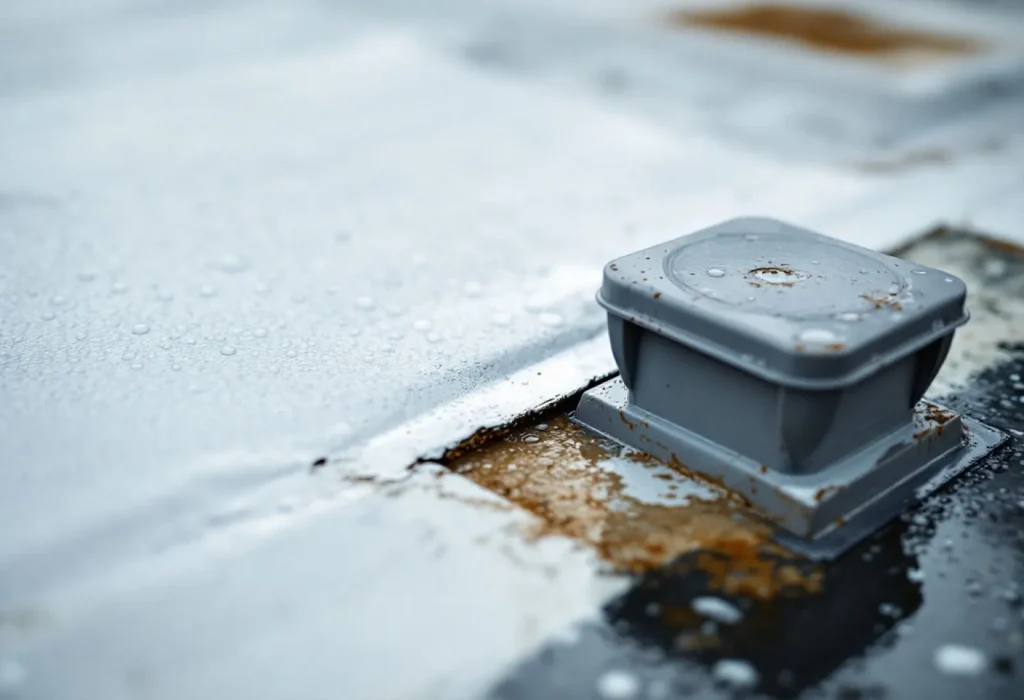
The short answer
Does RV insurance cover water damage? Usually only if you carry comprehensive, also called other than collision, and the water arrived through a sudden cause such as hail, windstorm or flood. Published forms exclude wear and tear and freezing, and Progressive classes deteriorated roof, window and door seals as wear and tear. Your own form and deductible decide the outcome.
What do five insurer documents say about water, word for word?
Three are policy contracts, one is a service plan written under a master policy and one is an insurer’s public explanation. The Ohio Mutual personal auto form A-10 (12-10) and Discovery Insurance form NC 00 01 06 05 are U.S. personal auto policies, the structure a motorhome can be written on: the published summary of ISO endorsement PP 03 23 shows that ISO’s Miscellaneous Type Vehicle Endorsement revises the Personal Auto Policy PP 00 01 for motor homes, including Part D exclusions. The BCAA Recreational Vehicle Insurance Policy, June 4, 2026 is a stand-alone trailer and camper form from British Columbia, included because it is the only dedicated RV contract we could open. It excludes motor homes and is not a U.S. form.
| Issue | Ohio Mutual A-10 and Discovery NC 00 01 | BCAA trailer and camper form | Good Sam service plan | Progressive guidance |
|---|---|---|---|---|
| How cover is framed | A list: loss from the listed events counts as "other than collision" | "ALL RISKS OF DIRECT PHYSICAL LOSS OR DAMAGE subject to the exclusions" | "Mechanical Breakdown" of a Covered Part | "may pay for water damage that’s beyond your control" |
| Hail, water, flood | Listed: "Hail, water, or flood" and "Windstorm" | Not named, so inside all risks unless an exclusion applies | Excluded: "windstorm; hail; water or flood" | Thunderstorm, flood, hail, tornado, blizzard and hurricane named as examples |
| Wear and tear | Excluded: "Damage due and confined to: Wear and tear" | Excluded: "caused by or comprising wear and tear", deterioration | Normal wear is not a Mechanical Breakdown | "deteriorated seals that can cause leaks in the roof, windows, and doors" |
| Freezing | Excluded under the same "due and confined to" wording | Excluded: "dampness of atmosphere, extremes of temperature" | Excluded: "freezing; rust or corrosion" | "Many insurance companies also exclude" it |
| Rot and rust | No rot or rust wording in Part D of either form | Excluded: "rust or corrosion" and "wet or dry rot" | Rust or corrosion excluded | Not addressed |
| Mold | Ohio Mutual excludes loss "due to fungi" plus testing and remediation; Discovery has no fungi wording | Excluded: "fungi" or "spore(s)" | Not named | Most insurers won’t pay unless "directly traced to a covered peril" |
| Seepage and seals | Neither word appears in Part D | Not named; compare the dampness and deterioration wording | "Seepage and/or buildup is considered normal"; "slide out room seals regardless of cause" excluded | Treated as wear and tear |
How this was read: each clause below comes from the document itself, opened on 2 November 2026. Three published RV forms refused our requests that day, so nothing is quoted from them: National General's Florida RV policy 12353, GEICO's A438NV in the Nevada Division of Insurance library and the Lloyd's wording published by Outdoorsy. If one of those is your insurer, read its form against the matrix.
Why can "water" be listed as covered and a leak still be excluded?
Because the Ohio Mutual personal auto form A-10 (12-10) and Discovery Insurance form NC 00 01 06 05 name the cause, not the substance. Item 6 under Other Than Collision reads "Hail, water, or flood", and Exclusion 2 then removes "Damage due and confined to" wear and tear, freezing, or mechanical or electrical breakdown. Water reaching the floor is the same in every lane below; what differs is the event that let it in.
"Due and confined to" is narrower than the BCAA form’s language, which defines "caused by" as "directly, indirectly or in any way caused by or resulting from" and applies the exclusion "regardless of whether other causes, covered or not, acted concurrently". Whether a reader’s adjuster treats a soaked floor beyond a split line as confined to freezing is a question for that insurer, in writing. No ranking page we read quotes either phrase, and none of the five documents defines "confined".
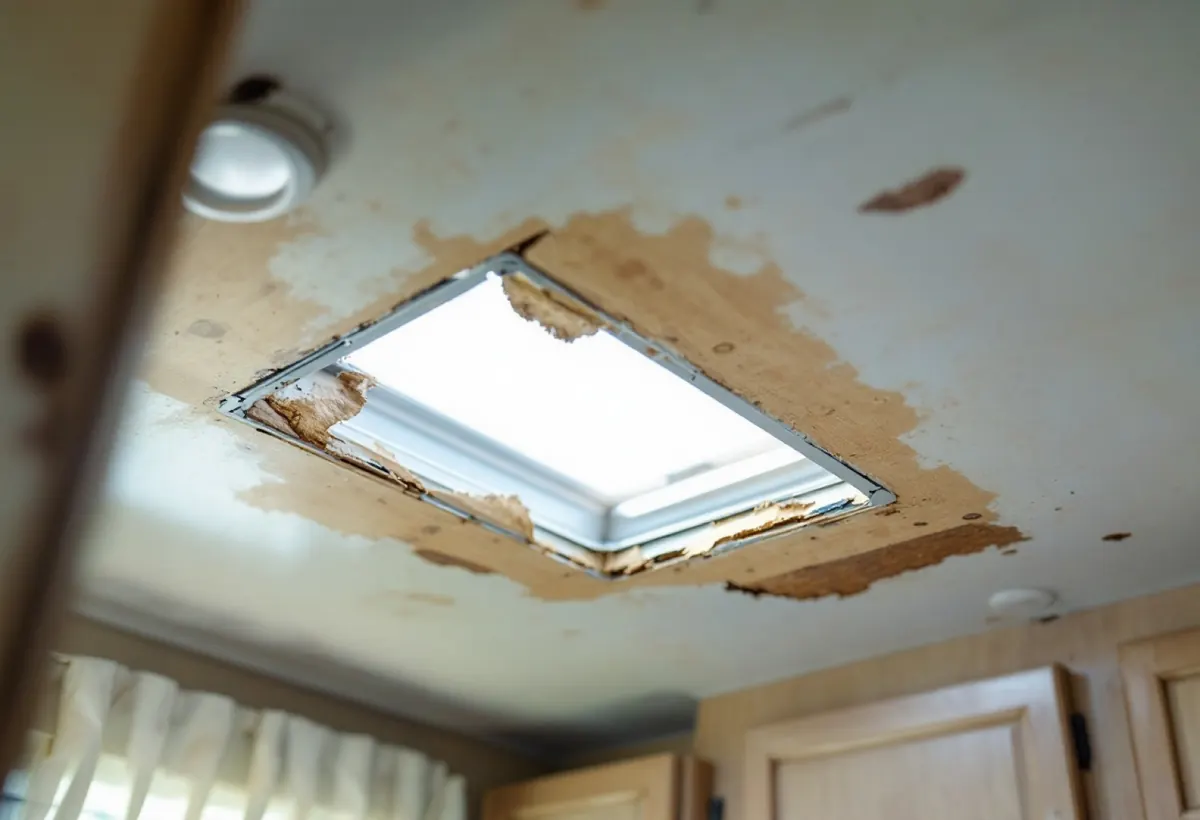
Roof seal, hail, flood, frozen line, slide seal: which words decide each one?
Read this table as a map of published wording, not as a prediction. The last column is what to put to your insurer. Sources are the five documents above plus Roadtrippers (December 7, 2023) and The Baldwin Group's RV water damage page (updated September 29, 2025). The repair side of each scenario is priced on our sibling page on RV water damage repair cost.
| Scenario | Wording pointing toward cover | Wording pointing away | Question to ask, in writing |
|---|---|---|---|
| Roof seal ages and leaks | None in the forms quoted; a sudden event such as hail moves it to the next row | Exclusion 2a in A-10; BCAA exclusion 6; Progressive’s "deteriorated seals" | What evidence would show the seal was torn, not aged? |
| Hail punctures the roof membrane | "Hail, water, or flood"; Progressive names hail; Roadtrippers says storm damage generally falls under comprehensive | Good Sam plan excludes hail | Does the deductible apply once, and is the ceiling below included? |
| Floodwater rises around a parked trailer | A-10 item 6; Progressive: comprehensive "may pay to repair or replace" after rising water, minus the deductible | Good Sam plan excludes "water or flood"; BCAA names no flood exclusion | Is flood inside my comprehensive, as Baldwin advises confirming? |
| Water line freezes and splits | None located in the forms quoted | Exclusion 2b in A-10; BCAA "extremes of temperature"; Progressive ties burst pipes to maintenance | Is damage beyond the split "confined to" freezing? |
| Slide out seal wears and rain gets under the floor | None in the forms quoted | Progressive’s seal language; Good Sam excludes "slide out room seals regardless of cause" and "all floors" | Is rain past a worn seal wear and tear, including the floor it reached? |
If no form sets a sealant interval, where does the 6 month standard come from?
From the maker. A text search of the Ohio Mutual personal auto form A-10 (12-10), Discovery Insurance form NC 00 01 06 05 and BCAA Recreational Vehicle Insurance Policy, June 4, 2026 finds no sealant or seal inspection interval at all. Progressive’s page says only that "RV ownership comes with an expectation of maintenance" and that neglect may defeat cover. So the written schedule an owner can be measured against sits in maker documents, and those differ by a factor of two.
| Source | Interval stated | What it ties the interval to | Date |
|---|---|---|---|
| Jayco, towables | "Inspect all sealants, a minimum of every six months." | Failure to maintain seals "disqualifies your unit" from the Towable Limited Warranty | March 22, 2012 |
| Winnebago Era manual | "Sealants must be inspected every 6 months and replaced if necessary." | Delayed roof repair damage "is not covered by the limited warranty" | Manual cites a 2012 warranty |
| Camping World | Many warranties expect cap sealant checks "before every trip or about every 90 days" | Points to the owner’s manual as the schedule | October 13, 2026 |
Keep dated records anyway. Coach Specialists of Texas writes that maintenance "supports your insurance claim by showing due diligence", a repair shop’s view rather than a policy term. The Good Sam Extended RV Service Plan terms, 07-25 V3.2 goes further for its own product: proof means records showing mileage, date, VIN and the work done, and self-performed service needs a log plus parts receipts. That rule belongs to the plan, not to an insurance form, but it is a usable template for a roof log.
Can a $250 roof add-on close the wear and tear gap?
On a roof, possibly. According to Progressive's RV coverages page, Roof Protection Plus has a $250 deductible, includes wear and tear to the roof and covers damage to the vehicle caused by a roof malfunction. Eligibility is stated two ways: that page says motorhomes and travel trailers less than six years old, while the Progressive's RV 101 page (January 23, 2025) says motorhomes under six. Ask which applies to your model year. Roamly's RV insurance page lists a Roof Breakdown Coverage for travel trailers described as covering unexpected mechanical roof failures beyond storm damage; we could not open the wording behind that line.
An Ohio Mutual form shows a second gap. Exclusion 9 in the Ohio Mutual personal auto form A-10 (12-10) removes "Awnings or cabanas" and other camping vehicle equipment unless the declarations show a premium for Camping Vehicles, Awning Coverage, and its list of facilities includes "plumbing". Exclusion 7 removes a "camper body" or trailer you own that is not on the declarations, with a 30 day window for one acquired during the policy period. Discovery’s exclusion 5 has similar wording, adding the policy period as a window. A trailer you assume rides on your auto policy may not.
If a covered leak leaves mold, does the form still pay to remove it?
Not under the Ohio Mutual personal auto form A-10 (12-10). Exclusion 16 removes loss "due to fungi" and adds that the insurer will "not pay for any testing or remediation" or added repair costs caused by fungi, with no exception written for a covered water loss. The BCAA Recreational Vehicle Insurance Policy, June 4, 2026 excludes "fungi" and "spore(s)" in exclusion 6, under the wide "caused by" definition. Progressive's water damage answer page is softer as guidance: most insurers will not pay for mold that cannot be directly traced to a covered peril, and rarely it may be treated as part of the water loss. Ask whether your form has a fungi clause covering mold in your RV, a dollar sublimit or neither. For comparison, our page on whether homeowners insurance covers mold remediation reads the home-policy version.
Mold in a vehicle cabin is its own cleaning problem, set out in our guide to mold in a car. Health questions are outside this page; EPA and CDC publish the guidance.
Is your RV water damage insurance claim deadline "promptly" or 90 days?
It depends on the form, so look it up before anything else. The BCAA Recreational Vehicle Insurance Policy, June 4, 2026 requires you to "promptly notify the insurer" and file a proof of loss within 90 days, and to protect the vehicle from further damage. The Ohio Mutual personal auto form A-10 (12-10) says the insurer must be notified promptly and requires reasonable steps to protect the vehicle after loss. Progressive's water damage answer page says an insurer may ask for images and written repair figures and that an adjuster may inspect the RV. Our guide to a proof of loss covers how that document works.
Questions worth sending to the agent or adjuster, in writing, before any wall is opened:
- Which form number and edition applies, and may I have the full text with endorsements? Form numbers such as A-10 (12-10) identify the wording.
- Which words are you relying on: wear and tear, seepage, deterioration, or freezing? Ask for the clause number.
- Is cost beyond the failed part, such as the floor under a split line, inside or outside the exclusion?
- Is there a fungi clause or dollar sublimit?
- Do you want the damage left open for inspection, and until what date?
If a denial reads wrong, a licensed agent, a public adjuster or an attorney can compare it to the form. Our page on public adjuster fees lists what those contracts charge. The state insurance department handles complaints against the insurer.
Does the answer change in Arkansas?
Our searches found no Arkansas rule specific to RV water damage, so start with the wording of the form. What differs is where a dispute goes: the Consumer Services Division of the Arkansas Insurance Department complaint page takes complaints online, by fax at (501) 371-2749 or by mail at 1 Commerce Way, Suite 102, Little Rock, AR 72202-2087. It asks for the insurer’s name, policy and claim numbers, the adjuster’s name, the date of occurrence and a brief reason. Complaints filed there are public records.
Questions people actually ask
Does Progressive RV insurance cover water damage?
Progressive’s page, updated July 17, 2025, says comprehensive may cover water damage from a covered peril such as a storm, flood, hail or vandalism. It says neglected maintenance, worn seals and some burst pipes may not be covered. That page is guidance rather than a contract, so the form and declarations issued with your policy control the result.
Can I add comprehensive after I find the water damage?
You can add it, but not for damage already there. The Baldwin Group’s page, updated September 29, 2025, says comprehensive can be added anytime yet will not cover pre-existing damage. Buying a used RV raises the same issue, so a moisture reading dated before the policy starts is worth having in the file.
Does homeowners insurance cover water damage to an RV?
Do not assume it. Virginia’s rule on homeowners forms, 14VAC5-342-60, lets insurers exclude motor vehicles, with listed exceptions, and flood. The Baldwin Group notes home policies are built around stationary property. Ask your home insurer whether a parked trailer counts, then compare our page on what homeowners insurance covers for water damage.
Does an extended service plan pay for water damage?
Not under the Good Sam plan terms dated 07-25. They exclude the coach body, walls, ceilings, all floors, windows and caulking, plus damage from hail, water or flood. Leaks of a covered part count only as an active leak to a drip, and seepage is treated as normal. A service plan and comprehensive answer different questions, so check which one you hold.
Is a full-time RV policy different for water damage?
On flood, Progressive says comprehensive may respond for both recreational and full-time policies. Its RV 101 page, updated January 23, 2025, says a full-time policy may add full-timer’s liability and loss assessment. Neither source says the wear and tear line moves. Ask whether a full-time form treats plumbing and seals any differently before you rely on it.
Are belongings ruined by the water covered?
Sometimes, as a separate line. Progressive’s coverages page describes replacement cost personal effects cover up to a specified amount for items inside the RV. BCAA’s Coverage B insures personal property carried in the trailer, subject to the same exclusions. Ask for the limit, and ask whether depreciation applies, using our page on recoverable depreciation.
Sources
- Ohio Mutual personal auto form A-10 (12-10), Ohio Mutual Insurance Group, Part D and Part F; includes copyrighted material of Insurance Services Office, Inc. Retrieved 2 November 2026.
- Discovery Insurance form NC 00 01 06 05, Discovery Insurance Company, Kinston, North Carolina; copyright North Carolina Rate Bureau, 2014. Retrieved 2 November 2026.
- BCAA Recreational Vehicle Insurance Policy, June 4, 2026, BCAA, British Columbia, Canada; sections 1.4, 1.5 and statutory conditions. Retrieved 2 November 2026.
- Good Sam Extended RV Service Plan terms, 07-25 V3.2, Good Sam Club master policy, insurer QBE UK Limited. Retrieved 2 November 2026.
- Progressive's water damage answer page, Progressive, updated July 17, 2025. Retrieved 2 November 2026.
- Progressive's RV coverages page and Progressive's RV 101 page, Progressive, the latter updated January 23, 2025. Retrieved 2 November 2026.
- Roamly's RV insurance page, Roamly. Retrieved 2 November 2026.
- published summary of ISO endorsement PP 03 23, Miscellaneous Type Vehicle Endorsement PP 03 23 revisions to PP 00 01. Retrieved 2 November 2026.
- The Baldwin Group's RV water damage page, The Baldwin Group, updated September 29, 2025. Retrieved 2 November 2026.
- Coach Specialists of Texas, RV water damage claim article, October 10, 2025. Retrieved 2 November 2026.
- Roadtrippers, Kerri Cox, RV roof replacement guide, December 7, 2023. Retrieved 2 November 2026.
- Jayco's sealing article, Jayco, March 22, 2012; Winnebago Era owner's manual, Section 10; Camping World's sealing article, Camping World, October 13, 2026. Retrieved 2 November 2026.
- 14VAC5-342-60, Virginia Administrative Code, homeowners policy exclusions. Retrieved 2 November 2026.
- Arkansas Insurance Department complaint page, Consumer Services Division. Retrieved 2 November 2026.
- Our methodology sets out how we read sources. More coverage questions sit on the insurance hub, including how condo insurance treats the same loss.
This page describes published policy language and regulator material. It does not say what your policy pays. Read your own form and declarations, and take the clause-level questions above to your insurer, your state insurance department or a licensed professional.