The short answer
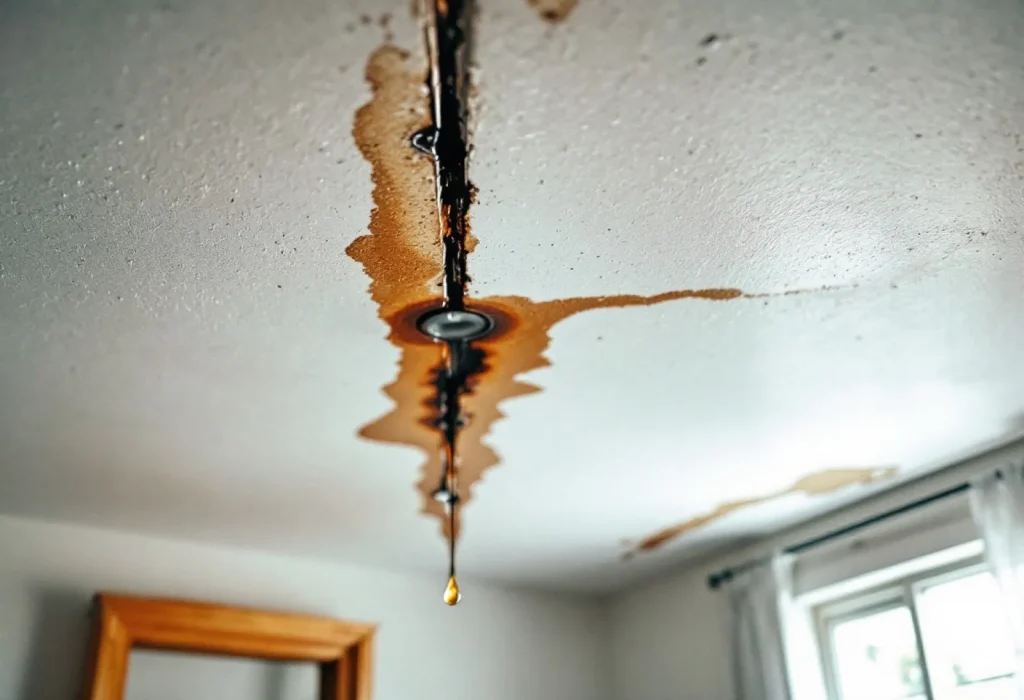
Does condo insurance cover water damage? The standard ISO HO-6 form covers sudden accidental discharge from plumbing and appliances for your finishes and belongings, but excludes flood and sewer backup. The master policy or state statute decides who insures the drywall, and Florida, Colorado, Texas and Maryland each draw that line differently.
Where does the master policy stop and your HO-6 start?
Two contracts cover one wet ceiling. The association’s master policy insures what the statute and declaration assign to it, and the ISO HO 00 06 10 00 form picks up the rest: Coverage A pays for alterations, appliances, fixtures and improvements in the unit, plus “property which is your insurance responsibility” under an association agreement. That phrase makes the HO-6 elastic, so the same form covers more in Florida than in Washington.
Florida draws the sharpest line. Under Fla. Stat. 718.111(11)(f), the association’s policy must exclude floor, wall and ceiling coverings, electrical fixtures, appliances, water heaters, water filters, built-in cabinets and countertops, and window treatments that serve one unit. Colorado excludes “the finished interior surfaces of the walls, floors, and ceilings” under C.R.S. 38-33.3-313(2). Washington goes the other way: RCW 64.90.470(2) includes the units and, unless the declaration says otherwise, all improvements and betterments. Older Washington condominiums may sit under RCW 64.34 instead, so check which chapter your declaration cites.
The base HO-6 is a named-peril form, not open-peril. It insures “direct physical loss” to Coverages A and C only from listed causes, and water reaches it through peril 12, accidental discharge or overflow from a plumbing, heating, air conditioning or sprinkler system or a household appliance. ISO lists HO 17 32 and HO 17 31 as special coverage endorsements for Coverage A and Coverage C, per the InsuranceXDate form index, and your declarations page shows whether either is attached. Personal property settles at actual cash value in the base form.
Edition note. Clause numbers here come from the 10 00 edition, the complete text available to read. The same index lists 05 11 and 03 22 editions, which could not be opened, and carriers file their own versions. Match each clause to the form number on your declarations page.
Who pays in 10 leak scenarios?
Rows below map the leak source to the clause that controls each payer. HO-6 cells paraphrase the HO-6 form filed with the Nevada Division of Insurance; master cells show statute defaults, not any one association’s policy. Treat each row as the question to put to your agent and board, since declarations and endorsements can move any cell.
| Leak source | Master policy default | ISO HO-6 wording | Who else |
|---|---|---|---|
| 1. Your supply line bursts in your wall, only your unit wet | Building items it insures, after its deductible | Peril 12 for finishes and belongings; not the failed pipe (12.b.(2)) | Deductible may land on you in MD, TX, CO |
| 2. Your dishwasher overflows into the unit below | Building items in both units | Peril 12 for your unit; Coverage E only if you are legally liable | $1,000 property of others applies without proving liability |
| 3. Unit above leaks, nobody at fault | Building items in your unit | Peril 12: same building, so 12.b.(4) does not remove it | Upstairs owner’s Coverage E applies only if legally liable |
| 4. Unit above left the tub running | Building items, then may charge that owner | Peril 12, then your insurer may pursue that owner | Charge rules: FL (j)1 and 2, CO (6), TX (l) |
| 5. Common riser bursts inside a chase | Riser and building items, as a common element | Finishes and belongings, Coverage C at actual cash value | Deductible is a common expense in FL, MD |
| 6. Rain through a failed roof | Roof and building items | Windstorm peril only if wind or hail opened the roof or wall first | Gutters and roof drains are not plumbing under 12.c |
| 7. Sewer or drain backs up into the unit | Read the master form; backup may be excluded | Excluded by Section I Exclusion 3.b | Ask whether a backup endorsement is attached |
| 8. Flood or surface water at ground level | Only if the board bought flood cover | Excluded by Exclusion 3.a | Separate flood policy; FL (e) lets the board buy it |
| 9. Slow leak found after weeks | Read the master form | 10 00 form has no seepage clause; hidden mold wording at 12.b.(5) | Filed versions may add a 14 day clause |
| 10. Pipe freezes in an empty building | Read the master form | Peril 14 needs reasonable care with heat or shutoff; 12.b.(1) ends after 60 days of building vacancy | Clock runs on the building, not your unit |
Rows 7 and 8 sit outside the water peril. Exclusion 3 removes flood, surface water and backup “through sewers or drains” regardless of cause, so a clean-looking claim from a floor drain sits outside peril 12 entirely. Flood is priced separately, and state-level premiums are in our flood insurance cost by state tables. Row 1 is the same mechanism as a house leak, which the homeowners water damage page walks through under the HO-3.
The condo above me leaked: can I make that owner pay?
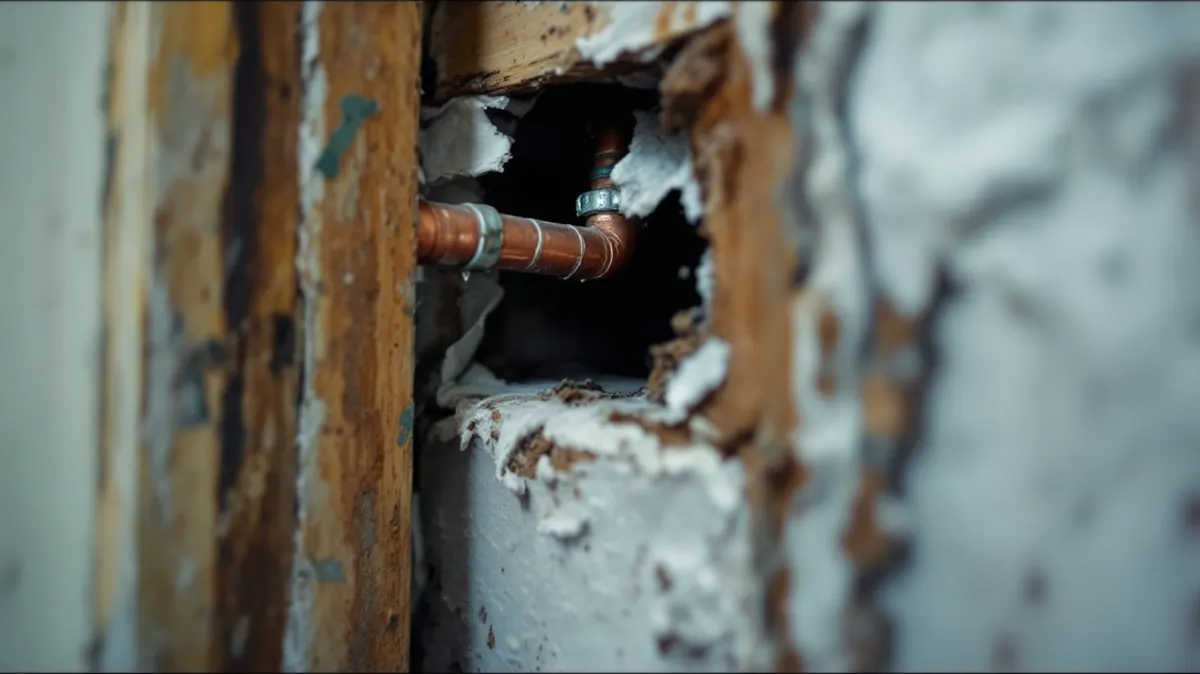
Only if that owner is legally responsible, and a leak alone does not prove it. Coverage E of the HO-6 form pays damages “for which an insured is legally liable”, and Florida’s statute is explicit: under Fla. Stat. 718.111(11)(j)1 and (j)2, a unit owner answers for repair costs insurance did not pay, and for other owners’ personal property, when damage comes from “intentional conduct, negligence, or failure to comply” with the declaration or rules. Hippo's condo guide says a neighbor’s policy “should cover damage starting in their unit”, which holds only when that liability exists.
Your first call therefore goes to your own carrier. Peril 12 does not ask where in the building the water began: 12.b.(4) removes only discharge “which occurs away from the building” holding your unit. Once your insurer pays, the form’s Subrogation condition lets it require an assignment of your rights against the upstairs owner. The master insurer often cannot follow: Tex. Prop. Code 82.111(d)(2), C.R.S. 38-33.3-313(4)(b), Md. Real Prop. 11-114(c)(2), RCW 64.90.470(4)(b) and NRS 116.31133 all require it to waive subrogation against unit owners. Those waivers bind the association’s insurer, and the statutes do not extend them to yours.
Photograph the source before the plumber repairs it, because the failed part is the evidence on negligence. The repair sequence is on our water damage ceiling page. One small clause helps neighbors when fault is unclear: Section II Damage To Property Of Others pays up to $1,000 per occurrence at replacement cost for property damage an insured causes, so ask the upstairs owner to put it to their carrier.
Who pays the association’s deductible when one unit causes the loss?
The answer changes at the state line. Md. Real Prop. 11-114(g)(2)(iii) charges the owner of the unit where the cause originated, capped at $10,000, with any excess a common expense, and requires annual written notice of the amount. Under Fla. Stat. 718.111(11)(j) the deductible stays a common expense unless the owner was negligent or broke the rules, although (k) lets owners opt out by majority vote. C.R.S. 38-33.3-313(6) lets the association assess negligent owners, or those “benefiting from” the repair, for all deductibles paid. Tex. Prop. Code 82.111(k) defers to the dedicatory instruments, then a board resolution, then common expense, and (l) permits assessment for an owner’s or guest’s act or omission.
The sums can outrun the HO-6. Per Fannie Mae Selling Guide B7-3-03, dated 5 August 2026, a project can carry a master deductible up to 5% of the coverage amount per occurrence, or $50,000 per unit. As a labelled illustration, not a real project: 100 equal units under a $20,000,000 policy at that ceiling carry a $1,000,000 deductible, or $10,000 per unit if spread evenly. Loss assessment in the base form stops at $1,000 per loss, leaving $9,000 uncovered on that arithmetic. Florida raises the floor to $2,000 with a deductible of no more than $250 under Fla. Stat. 627.714(1), leaving $8,000.
Loss assessment has a narrower trigger than its name. The form pays for an assessment “as a result of direct loss to property, owned by all members collectively”, from a covered peril, so ask your agent two things: does an assessment for the association’s deductible count, and does it count when the damaged property is another owner’s unit rather than a common element? The InsuranceXDate form index also lists HO 04 35, Supplemental Loss Assessment Coverage, and those two answers decide whether buying it would help.
What do seven state condo statutes actually say?
Each row paraphrases the statute’s text, retrieved 2 November 2026, not a summary from a law firm blog. Cal. Civ. Code 4775 allocates repair and does not mention insurance, so a California owner has to take the insurance split from the declaration. A cell that says “not in this section” means only that the section read is silent, and another part of that state’s code or your declaration may answer it.
| State and statute | What the association insures in the unit | Association deductible | Charge a negligent owner? | Other rule that matters |
|---|---|---|---|---|
| Florida, Fla. Stat. 718.111(11) | As originally installed, minus coverings, fixtures, appliances, water heaters, cabinets, counters, window treatments | Common expense unless owner at fault; opt-out by majority vote (k) | Yes: intent, negligence or rule breach, including tenants and guests (j)1 | HO-6 is excess, and may not subrogate against the association if the master waives against owners (Fla. Stat. 627.714(4)) |
| California, Cal. Civ. Code 4775 | Sets repair duty, not insurance: association for common area, owner for separate interest, unless the declaration differs | Not addressed in 4775 | Not addressed in 4775 | Association restores water, gas, heat or power failures that begin in common area, starting within 14 days; owner bears temporary relocation (c) |
| Washington, RCW 64.90.470 | Units and, by default, all improvements and betterments | Unpaid repair cost is a common expense (9) | Not in this section | Master waives subrogation and is primary (4) |
| Colorado, C.R.S. 38-33.3-313 | Units, except finished interior surfaces; owner improvements optional | Written policy; may assess pro rata if several units are damaged (6) | Yes: all deductibles, negligent or benefiting owners (6) | Master waives subrogation and is primary (4) |
| Maryland, Md. Real Prop. 11-114 | Units, except improvements installed by owners other than the developer | Unit-origin: that owner up to $10,000; common-origin: common expense | Origin rule applies without proof of fault | Master waives subrogation and is primary (c) |
| Texas, Tex. Prop. Code 82.111 | Units, need not include owner improvements | Below deductible: whoever owes the repair (j); above: instruments, board, then common (k) | Yes: act or omission of owner or guest (l) | Claim is adjusted with the association (e); master is primary (d) |
| Nevada, NRS 116.3113 | Units, need not include owner improvements | Excess over proceeds, deductibles and reserves is common (NRS 116.31135) | Not in these sections | Master waives subrogation and is primary (NRS 116.31133) |
Which five lines should you read before the next leak?
Each line below names the document and the exact question, because “ask your agent” is no help without one. The base form’s sublimits, such as $1,000 of loss assessment, are starting points that endorsements on your declarations page can change, so put these to your agent and your board in writing.
- Declaration, insurance article: does it name who insures drywall, flooring and cabinets, and does it allocate the deductible by origin of loss or by fault?
- Master certificate: what is the water damage deductible in dollars or percent, and is it per occurrence or per unit?
- HO-6 declarations: is HO 17 32 attached, and is Coverage A sized to what your state leaves to you, such as Florida’s excluded list?
- HO-6 endorsements: is there a limited water damage cap, a backup endorsement, or a seepage clause with a day count?
- Loss assessment: what limit applies, and does it respond to a deductible assessment? In Florida, confirm the $2,000 minimum in Fla. Stat. 627.714.
Slow leaks deserve their own question because the wording varies by filing. The 10 00 HO-6 text has no continuous-seepage clause, but other filed forms do, and in Hicks v. American Integrity a Florida appeals court in 2018 read a 14-day seepage clause as not excluding the first 13 days, on a contractor’s figure of $40,926.77 for that period. That policy was a home form, and a federal judge in Georgia refused the same result in 2019 where damage could not be separated by day, so ask how your form treats it. If a claim stalls on any of these, our page on public adjuster fees sets out that option, and the insurance hub collects the related claim pages.
For restoration contractors: who can authorize work in a condo?
Check before signing the unit owner alone. Fla. Stat. 718.111(11)(g)1 says all reconstruction after a property loss “must be undertaken by the association” unless the board gives prior written consent, which it may condition on repair method, contractor qualifications or the contract. Tex. Prop. Code 82.111(e) requires a master claim to be submitted by and adjusted with the association, and proceeds go to the association or a trustee rather than the owner. Maryland, Nevada, Colorado and Washington use the same proceeds structure.
Scope the invoice along the state’s line: a Florida job has separate payers for drywall and for the cabinets bolted to it, and billing both to one carrier invites a dispute. An owner can sign an assignment of benefits only over what that owner holds, and a master claim adjusted with the association is not that. Under the HO-6 form, the owner must also send a sworn proof of loss within 60 days of the insurer’s request, so keep moisture logs and photos dated.
Questions people actually ask
Does condo insurance cover water damage to other units?
Not under the property section, which insures your own unit. Damage to a neighbor’s unit reaches Coverage E only if you are legally liable, which the HO-6 form requires in plain terms. Section II also offers $1,000 per occurrence for property of others you damage, at replacement cost. Beyond that, the neighbor’s own HO-6 and the master policy are the likely payers, and their insurers decide whether to pursue you.
Is the HOA responsible for water damage inside my unit?
Only for what the statute and declaration assign to it. In California, Cal. Civ. Code 4775 makes the association repair common area and the owner repair the separate interest, unless the declaration differs. Florida’s association insures original drywall but not flooring, cabinets or water heaters. Read the insurance and maintenance articles together, since the two can name different parties. Your state insurance department can say which statute applies.
Can Florida condo insurance exclude water damage?
Nothing in Fla. Stat. 627.714 requires water coverage; that section governs loss assessment and other-insurance wording. In Koss v. Florida Insurance Guaranty Association, decided 9 April 2025 on a home policy, a limited water damage endorsement capped recovery at $10,000 per occurrence. Read your HO-6 endorsements for a similar cap, and ask whether full water coverage can be bought back and at what premium.
Does an HO-6 pay for the broken water heater itself?
Not under peril 12: the HO-6 form excludes loss “to the system or appliance from which the water or steam escaped”. The form covers resulting water damage and tear-out needed to reach the failed part, for property owned solely by you. Florida adds a wrinkle, since Fla. Stat. 718.111(11)(f) makes water heaters serving one unit the owner’s insurance responsibility rather than the association’s.
Does condo insurance cover mold after a leak?
The 10 00 form excludes loss caused by mold, fungus or wet rot under peril 12 “unless hidden within the walls or ceilings or beneath the floors or above the ceilings”. Visible growth on an open surface falls outside that exception on its face. Check your declarations page for a mold sublimit or endorsement, and ask your carrier whether the hidden-mold wording survives in the edition you hold, since 10 00 is an older form.
Does condo insurance pay for a hotel during water repairs?
Coverage D of the HO-6 form pays necessary increases in living expenses when a covered peril makes the unit “not fit to live in”, including loss to the building containing it. In California, Cal. Civ. Code 4775(c) puts temporary relocation during association repairs on the owner, so that bill reaches Coverage D only if a covered peril caused it. Ask your carrier for the Coverage D limit in dollars.
Sources
- Insurance Services Office, Homeowners 6 Unit-Owners Form, HO 00 06 10 00, Hartford filing with the Nevada Division of Insurance, retrieved 2 November 2026.
- InsuranceXDate, HO 00 06 form index and related endorsements, retrieved 2 November 2026.
- Florida Legislature, Fla. Stat. 718.111, Association powers and duties, 2026 statutes, retrieved 2 November 2026.
- Florida Legislature, Fla. Stat. 627.714, Residential condominium unit owner coverage, 2026 statutes, retrieved 2 November 2026.
- California Legislature via Public.Law, Civil Code 4775, retrieved 2 November 2026.
- Washington State Legislature, RCW 64.90.470, Insurance, retrieved 2 November 2026.
- Colorado General Assembly via Public.Law, C.R.S. 38-33.3-313, Insurance, retrieved 2 November 2026.
- Maryland General Assembly, Real Property 11-114, retrieved 2 November 2026.
- Nevada Legislature via Public.Law, NRS 116.3113, 116.31133 and 116.31135, retrieved 2 November 2026.
- Texas Legislature via Public.Law, Property Code 82.111, Insurance, retrieved 2 November 2026.
- Fannie Mae, Selling Guide B7-3-03, Master Property Insurance Requirements for Project Developments, dated 5 August 2026, retrieved 2 November 2026.
- Florida Third District Court of Appeal, Koss v. Florida Insurance Guaranty Association, No. 3D21-1904, 9 April 2025, retrieved 2 November 2026.
- Drew Eckl and Farnham, Seepage or Leakage: What Coverage Exists for the First 13 Days?, commentary on Hicks v. American Integrity and Landrum v. Allstate, a secondary source because the Hicks opinion would not load, retrieved 2 November 2026.
- Hippo, Does Condo Insurance Cover Water Damage?, retrieved 2 November 2026.
This page reads policy forms and statutes and is not legal or insurance advice. It does not say what your policy pays: your declarations, endorsements, condominium declaration and state law control. Your state insurance department and a licensed agent or attorney can answer for your unit, using the questions above. Method: how we source and check our figures.