The short answer
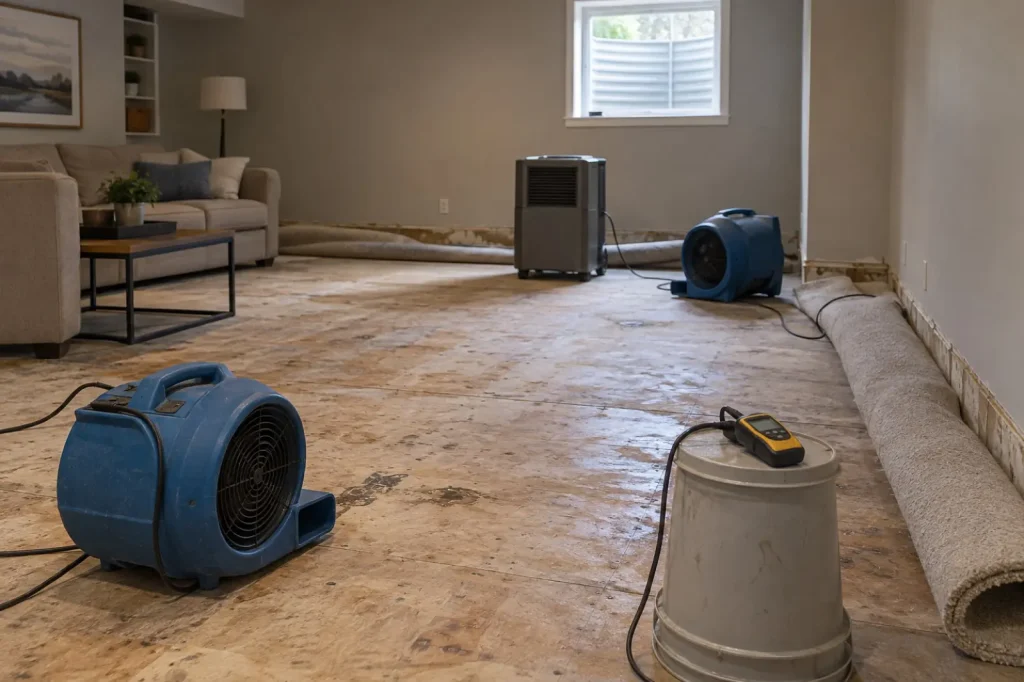
What is water mitigation? It is the emergency phase of a water loss: stopping the source, extracting standing water, removing wet materials that cannot be saved, and drying the structure to a measured dry standard so the damage stops growing. It ends when the building is dry. Rebuilding drywall, flooring and paint afterwards is restoration, a separate scope and usually a separate invoice.
Key takeaways
- Mitigation is defined by purpose, not trade: a line that stops the loss growing is mitigation; a line that puts something back is restoration.
- The standard ISO homeowners form makes protection the owner’s job. Duties After Loss in HO 00 03 05 11 says to “protect the property from further damage” and “make reasonable and necessary repairs to protect the property”.
- The same form pays for that work under Reasonable Repairs, without raising the policy limit.
- In Xactimate, WTR is “Water extraction & remediation” and DRY is “Drywall”, per the Xactware code list. DRY is a rebuild trade, not drying.
- Extraction prices run from $3 to $12 per square foot, according to Fixr, HomeGuide and Bob Vila, rising with water category.
- In Florida, an assignment of post-loss benefits under a residential or commercial property policy issued on or after 1 January 2023 is void, per s. 627.7152(13).
On this page
- The definition, precisely
- Why the policy splits the job
- How the estimate splits it
- Sequence and timing
- What mitigation companies bill
- Work authorisations and assignment of benefits
- Is this line item mitigation? Five questions
- For contractors: the file an adjuster asks for
- Questions people actually ask
The franchise pages that rank for this question define mitigation loosely as minimising damage. True, and not very useful. The useful definition is a boundary: where mitigation stops and restoration starts. That boundary decides which invoice a line lands on, which clause of a policy pays it, and in Florida whether a contractor can be assigned the claim at all.
Out of scope: this page describes standard policy wording, regulator guidance and statute text. It does not say what any particular policy pays. For your own claim, read your policy, contact your state insurance department and use a licensed professional.
The definition, precisely
SERVPRO defines water damage mitigation as “the act of minimizing the spread of water, or stopping it completely”, and restoration as returning the site to approximately its condition before the incident. Sharper: mitigation is whatever must happen before the structure is dry; restoration is whatever happens after.
Demolition sits on both sides. Removing wet material so a cavity can dry is mitigation; tearing out a dry kitchen for new cabinets is reconstruction. The question is why, not what.
| Mitigation | Restoration | |
|---|---|---|
| Purpose | Stop further loss | Return the property to pre-loss condition |
| Typical work | Source control, extraction, removal of wet materials that cannot dry, drying, contents moved, tarps | Drywall, insulation, flooring, trim, cabinets, paint |
| Starts | Immediately, often after hours | After drying is verified |
| Ends | At a documented dry standard | When the rebuild is complete |
| Priced by | Area extracted, equipment per unit per day, labour hours | Material and labour by trade |
| ISO HO-3 hook | Duties After Loss C.4; Reasonable Repairs E.2 | Dwelling coverage and loss settlement |
Remediation, removing contamination such as mould or sewage, sits inside or after mitigation; our guide to IICRC water categories explains why, and hands-on steps are on our water damage clean-up page.
Why the policy splits the job in two
The split is written into the standard ISO homeowners form. The HO 00 03 05 11 Special Form (ISO HO 00 03 05 11 homeowners form (Maine Bureau of Insurance copy)) puts mitigation in two places: a duty the policyholder owes, and a cost the insurer agrees to pay. Restoration is simply the claim, the cost to repair or replace under the dwelling coverage.
| Form and clause | Wording, quoted | What it means for mitigation |
|---|---|---|
| HO 00 03 05 11, Section I Conditions C.4 | “Protect the property from further damage. If repairs to the property are required, you must: a. Make reasonable and necessary repairs to protect the property; and b. Keep an accurate record of repair expenses” | The owner carries the duty to mitigate, and the receipts. |
| HO 00 03 05 11, Section I Conditions C | “we have no duty to provide coverage under this policy if the failure to comply with the following duties is prejudicial to us” | Skipping protection can cost coverage where it harms the insurer. |
| HO 00 03 05 11, Section I Property Coverages E.2 | “We will pay the reasonable cost incurred by you for the necessary measures taken solely to protect covered property that is damaged by a Peril Insured Against from further damage.” | Protective work is paid if the loss itself is covered. |
| HO 00 03 05 11, E.2.b | This coverage does not “Increase the limit of liability that applies to the covered property” | Mitigation spend sits inside the same limit. |
| NFIP Dwelling Form III.C.2, per the eCFR text | “We will pay up to $1,000 for costs you incur to protect the insured building from a flood or imminent danger of flood” | Sandbags, pumps and sheeting; the deductible does not apply. |
| NFIP Dwelling Form VII.G, per the eCFR text | “separate the damaged and undamaged property, putting it in the best possible order so that we may examine it” | Moving contents is a stated duty under flood cover. |
So the policyholder acts before an adjuster arrives, and the insurer has agreed in advance to pay for reasonable protective work. The California Department of Insurance claims guide puts it plainly: make temporary repairs to prevent further damage, because policies “may not cover ensuing damage” otherwise, and remember that “payments for temporary repairs are part of the total loss settlement”.
Whether a loss is covered at all turns on cause and exclusions; see does homeowners insurance cover water damage.
How the estimate splits it
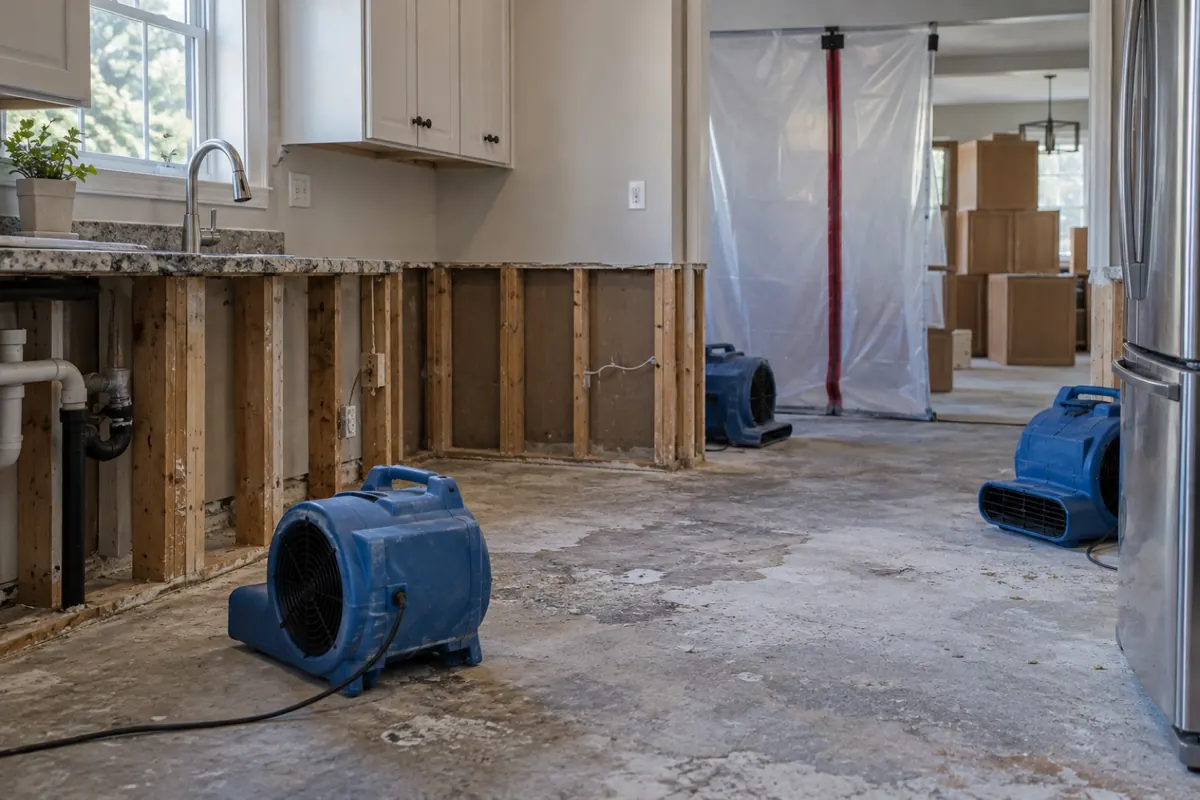
Where an estimate is written in Xactimate, the category codes make the split visible. Per the Xactware category code list, WTR is “Water extraction & remediation”, and the Xactware iOS category groups file it in a Remediation group with HMR, hazardous material remediation, and TCR, trauma and crime scene remediation. Rebuild trades sit in their own groups.
| Code | Xactware name | Xactware group | Side of the line (our reading) |
|---|---|---|---|
| WTR | Water extraction & remediation | Remediation | Mitigation |
| CON | Content manipulation | Contents Handling | Mitigation |
| TMP | Temporary repairs | Temporary | Mitigation |
| DMO | General demolition | Demolition | Either, by purpose |
| CLN | Cleaning | Cleaning | Either, by timing |
| DRY | Drywall | Wall, Ceiling, Finishes | Restoration |
| INS | Insulation | Insulation | Restoration |
| FCC | Floor covering (carpet) | Floor Covering | Restoration |
| PNT | Painting | Paint, Wallpaper | Restoration |
DRY means drywall, not drying
DRY is the Drywall category, under Wall, Ceiling, Finishes: a rebuild trade. The drying itself lives in WTR. DRY lines on a mitigation invoice mean rebuild work has crept in or a line is mislabelled, and a reviewer is entitled to ask which.
Separate estimates follow the policy’s logic: mitigation is billed first, on evidence of drying, and the rebuild is scoped once removal is known. Pricing is covered in how Xactimate pricing works.
Sequence and timing
The clock starts at discovery. EPA's Brief Guide to Mold, Moisture and Your Home sets the working target: dry water-damaged areas and items within 24 to 48 hours to prevent mold growth. Mitigation is the work of meeting it.
| Step | When | What happens | Why here |
|---|---|---|---|
| 1. Stop the source, make safe | First hour | Shut off water, isolate wet circuits, photograph everything. | No cause, no claim file. |
| 2. Inspect and map moisture | First visit | Readings on wet and unaffected material; category and class set. | Dry readings become the finish line. |
| 3. Extract | First visit | Pumps and extraction tools. | Lifting liquid beats evaporating it. |
| 4. Remove what cannot dry | Day 1 | Pad, saturated drywall, insulation; more on contaminated water. | Opens cavities to airflow. |
| 5. Dry and dehumidify | Day 1 onward | Air movers, dehumidifiers in a closed space, daily readings. | Average 3 to 5 days, per SERVPRO. |
| 6. Verify, pull equipment | When readings match | Final readings against the dry standard. | Mitigation ends. |
| 7. Rebuild | After verification | Drywall, flooring, finishes. | Restoration, own scope. |
Step 5 is what people ask about, and per SERVPRO's FAQ an average structure takes 3 to 5 days, longer with demolition, heavy contents or hazardous material. Detail is on our drying time guide, the science on structural drying, and air filtration on what an air scrubber does.
What mitigation companies bill
A mitigation bill has three parts: extraction, priced by area; equipment, by unit per day; and labour, by the hour, with an emergency premium after hours. None of the franchise pages ranking here publishes a price; three cost guides do, and they disagree.
| Per the guide | Dated | Clean water | Gray water | Black water |
|---|---|---|---|---|
| Fixr | 31 January 2025 | $3.75 to $4.25 | $4.10 to $6.50 | $7 to $7.50 |
| HomeGuide | 6 February 2026 | $4 to $6 | $6 to $9 | $9 to $12 |
| Bob Vila | 30 May 2023 | $3 to $4 | $4 to $6.50 | $7 to $7.50 |
The ordering holds even where the levels differ: in each guide, black water costs roughly twice clean water. HomeGuide reports the highest figures and is the most recent. Fixr supplies the other two parts: it reports $70 to $200 per hour for restoration labour and an extra $100 to $200 in fees for a crew to come out quickly.
These figures blend mitigation with repair; full-job pricing is on our water damage restoration cost page.
Work authorisations and assignment of benefits
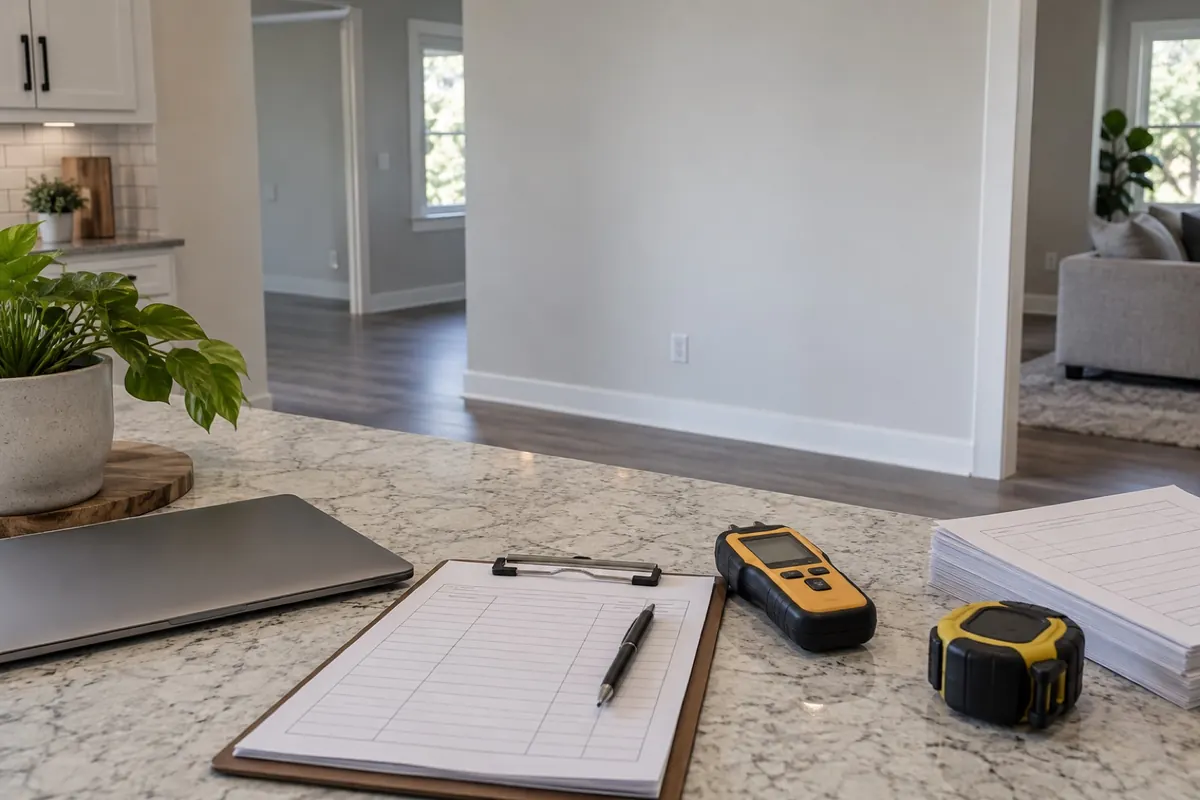
Every mitigation job starts with a signature. A work authorisation is a contract: the owner authorises the work and owes the bill. An assignment of benefits, or AOB, goes further, transferring the owner’s right to the insurance proceeds to the contractor, who then bills and can sue the insurer directly. Mitigation is signed for in an emergency, before any inspection, and Florida’s statute gives that moment its own cap.
First came CS/CS/HB 7065 (2019), chapter 2019-57, effective 1 July 2019, which created Florida Statutes s. 627.7152. Then SB 2-A (2022 Special Session A), chapter 2022-271, approved 16 December 2022, added the ban now in subsection (13).
| Florida policy issued | Rule on assigning post-loss benefits | Statute |
|---|---|---|
| Before 1 July 2019 | s. 627.7152 requirements do not apply; (2)(a) covers policies issued on or after 1 July 2019. | Ask a Florida attorney. |
| 1 July 2019 to 31 December 2022 | Allowed only in writing, with a 14 day rescission right, a copy to the insurer within 3 business days and an itemized, per-unit cost estimate. | s. 627.7152(2)(a), ch. 2019-57 |
| Same window, urgent or emergency work (per the statute) | Capped at the greater of $3,000 or 1 percent of Coverage A. | s. 627.7152(2)(c) |
| On or after 1 January 2023 | Policyholder “may not assign, in whole or in part, any post-loss insurance benefit”; an attempt is “void, invalid, and unenforceable”. | s. 627.7152(13), ch. 2022-271 |
Per the statute’s arithmetic, the $3,000 floor governs every dwelling insured for up to $300,000. On newer policies the assignment is void, leaving an ordinary contract while the owner claims from the insurer. Whether a given form is an assignment is a question for a Florida attorney; other states are not surveyed here.
An owner who hires a public adjuster instead faces separate fee rules, set out state by state on our sibling page on public adjuster fees.
Is this line item mitigation? Five questions
Run any estimate line through these in order and stop at the first clear answer.
- Was the structure already dry when the work was done? Then it is restoration. Mitigation cannot happen on a dry building.
- Did the work stop water, remove water or remove moisture? Extraction, pumping, air movement and dehumidification are mitigation by definition.
- Was material removed so something could dry, or so it could be replaced? A flood cut to vent a cavity is mitigation. Pulling dry cabinets to fit new ones is rebuild.
- Was it a temporary protective measure? Tarps, board-up, shut-offs and moving contents out of the wet area are mitigation, the reasonable repairs of the ISO form.
- Would skipping it have let the damage grow? Yes puts it on the mitigation invoice. No puts it on the rebuild.
Contaminated water moves more removal into mitigation. And a yes to question 5 is still paid only if the loss is covered.
For contractors: the file an adjuster asks for
A mitigation invoice is paid on evidence, and the evidence is the drying record. Each item below answers a question the claim file has to answer under the clauses and statute quoted above.
| Item in the job file | Why |
|---|---|
| Signed work authorisation, dated before work | Who ordered the work and who owes the bill. |
| Source photos before extraction | Cause comes before coverage. |
| Category and class, with reasons | Removal follows category under S500. |
| Moisture map, daily and reference readings | Proves drying ended at a dry standard. |
| Equipment log by unit and day | The evidence for per-day equipment lines. |
| Removal justification with photos | Separates removal-to-dry from tear-out. |
| Separate mitigation and rebuild estimates | Matches the policy and the category split. |
| Florida: policy issue date against 1 January 2023 | Decides whether an AOB is possible. |
The duty runs to the owner; the contractor’s estimate and drying log become the record of expenses the ISO form requires. More is in our water damage hub.
Questions people actually ask
What is the meaning of water mitigation?
Water mitigation means the emergency work that stops a water loss getting worse: shutting off the source, extracting water, removing wet materials that cannot be dried, and drying the structure to a measured dry standard. It ends when the building is dry. Replacing drywall, flooring and finishes afterwards is restoration, scoped and usually invoiced separately.
Can I do water mitigation myself?
On a small, clean, recent leak, often yes, and the standard ISO homeowners form expects you to protect the property from further damage and keep a record of what you spend. The limits are equipment and proof: without a dehumidifier and moisture readings you cannot show the structure is dry. Larger or contaminated losses need professional drying.
What is the average cost of water mitigation?
Published guides price extraction per square foot by water category. According to those guides, Fixr lists $3.75 to $7.50, HomeGuide $4 to $12 and Bob Vila $3 to $7.50, with black water roughly twice clean water in each. Fixr also reports $70 to $200 per hour for labour. Equipment days and removal are added on top.
Does homeowners insurance cover water mitigation?
The standard ISO HO-3 form has a Reasonable Repairs coverage that pays the reasonable cost of necessary measures taken solely to protect covered property from further damage, where the loss is covered. It does not raise the policy limit. Whether your loss is covered depends on your own policy, so read it and ask your state insurance department.
What is the difference between water mitigation and remediation?
Mitigation stops the loss and dries the structure. Remediation usually means removing contamination, such as mould growth or sewage residue, inside the mitigation phase or as a separate job later. Restoration is the rebuild that follows both, priced trade by trade.
Can a contractor take over my insurance claim in Florida?
Not through an assignment of benefits under a residential or commercial property policy issued on or after 1 January 2023: Florida Statutes s. 627.7152(13) makes any such assignment void. Policies issued from July 2019 to December 2022 allow assignments that meet strict written requirements, with a cap on emergency work.
Sources
- ISO HO 00 03 05 11 homeowners form (Maine Bureau of Insurance copy), Insurance Services Office, 2010, hosted by the Maine Bureau of Insurance. Retrieved 11 October 2026.
- Standard Flood Insurance Policy, Dwelling Form (44 CFR Part 61, Appendix A(1)), via eCFR. Retrieved 11 October 2026.
- California Department of Insurance claims guide, brochure file dated 2015. Retrieved 11 October 2026.
- Xactware category code list and Xactware iOS category groups, Xactware help (Verisk). Retrieved 11 October 2026.
- Florida Statutes s. 627.7152, Florida Legislature, 2026 text and history note. Retrieved 11 October 2026.
- Florida Senate pages for CS/CS/HB 7065 (2019) and SB 2-A (2022 Special Session A). Retrieved 11 October 2026.
- EPA's Brief Guide to Mold, Moisture and Your Home, EPA, updated 18 February 2026. Retrieved 11 October 2026.
- ANSI/IICRC S500, IICRC, 5th edition, 2021; description page only. Retrieved 11 October 2026.
- SERVPRO definitions page and SERVPRO's FAQ. Retrieved 11 October 2026.
- Fixr, updated 31 January 2025. Retrieved 11 October 2026.
- HomeGuide, dated 6 February 2026. Retrieved 11 October 2026.
- Bob Vila, updated 30 May 2023. Retrieved 11 October 2026.
- Computed chart values are arithmetic on the figures above. Our methodology sets out the standing rules.
Policy wording varies by edition, company and state. This page is not legal or coverage advice.