The short answer
Mold in refrigerator interiors usually starts in the door gasket folds, in spills under the crisper, or in a clogged defrost drain and the pan beneath. USDA’s Food Safety and Inspection Service says scrub visible mold on rubber casings with 3 teaspoons of bleach in a quart of water, but GE and Whirlpool say no bleach on gaskets, so check your manual. Discard moldy soft foods.
Key takeaways
- FSIS: clean the inside “every few months with 1 tablespoon of baking soda dissolved in a quart of water,” according to USDA FSIS, Molds on Food.
- FSIS’s gasket bleach step equals 4 tablespoons per gallon; GE and Whirlpool say no bleach on gaskets.
- Water under the crisper drawers is the most common sign of a clogged defrost drain on top freezer models, per GE's top freezer drain article.
- Whirlpool and Samsung say replace the water filter every 6 months.
- FSIS says a refrigerator submerged by floodwater, even partially, is unsafe to use and must be discarded.
- A scrapped fridge’s refrigerant must be recovered under 40 CFR 82.155.
On this page
- What you are looking at
- The USDA recipe, and who disagrees
- Which food to throw out
- Component by component
- The method, in order
- Mold in the ice maker and dispenser
- Drip pan and defrost drain
- After a power outage, flood or fire
- The water line leak behind the fridge
- Keep, clean or discard
- For contractors
- Questions people actually ask
What you are looking at inside the refrigerator
One door hides three problems: growth on food, growth on the appliance, and water from a failed drain or line.
| What you see | Where | What it usually is | Source |
|---|---|---|---|
| Fuzzy or coloured spots on food | Shelves, containers | Food mold; spores can spread to the fridge | USDA FSIS |
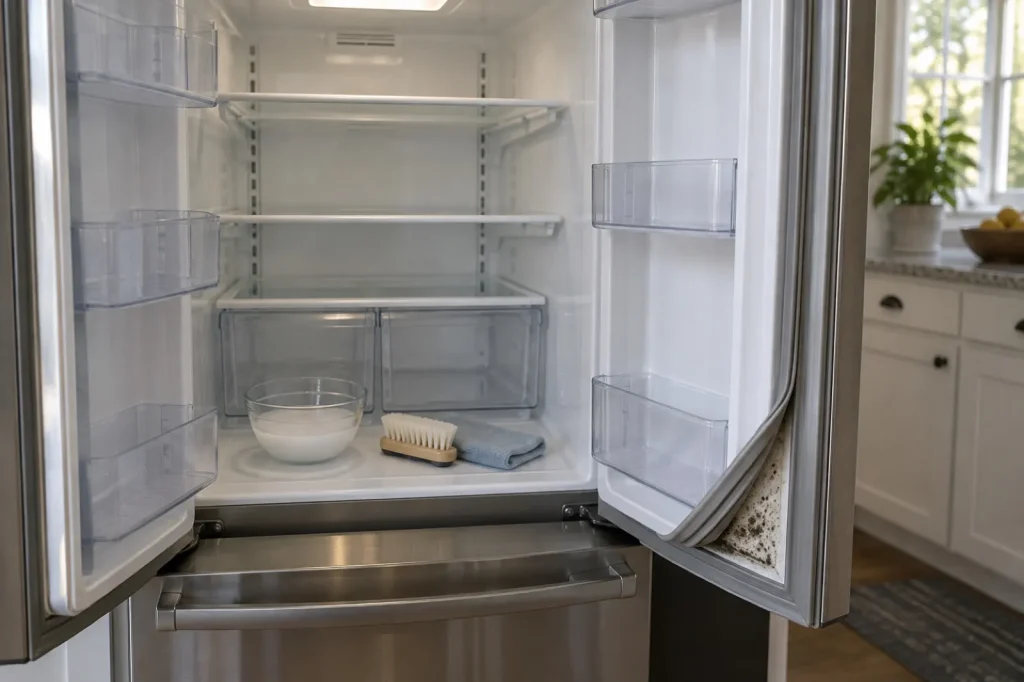
| Black specks in the folds | Door gasket | Mildew or mold on trapped crumbs and moisture | GE; LG UK |
| Water pooled under the vegetable pans | Crisper floor | Clogged defrost drain tube | GE top freezer article |
| Ice on the freezer floor | Under the bottom basket | Clogged defrost drain | GE side-by-side and bottom freezer articles |
| Dark particles in ice cubes | Ice bucket | Expired filter, dirt in supply, or damaged bucket; not normal | Samsung Canada |
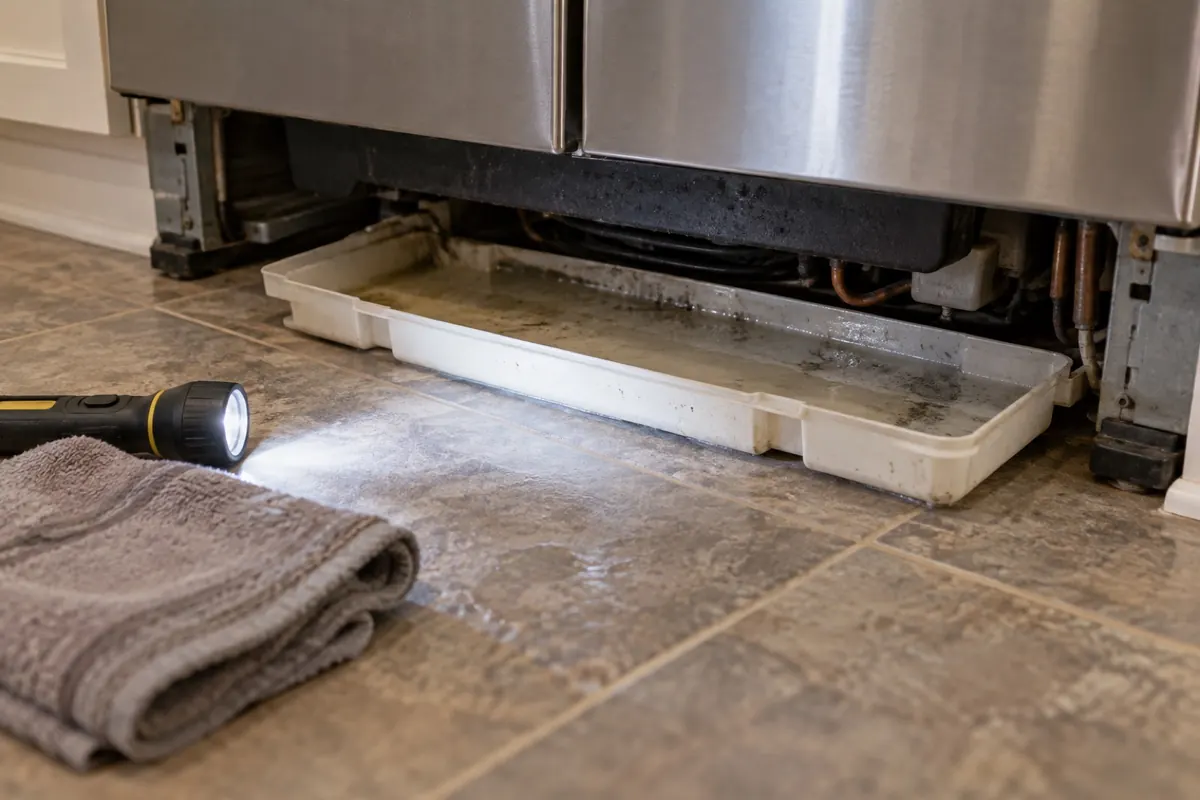
| Musty smell at floor level | Drain pan under the unit | Pan due a clean; LG UK says quarterly | LG UK |
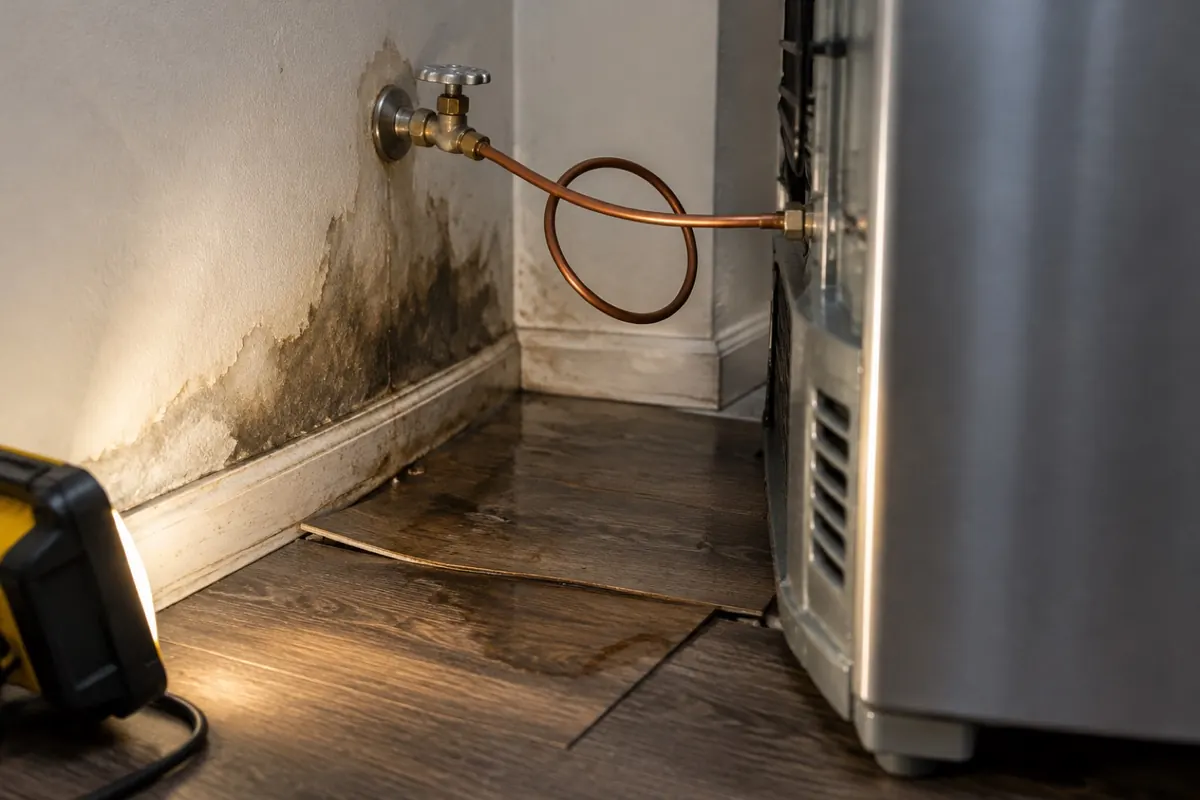
| Water on the floor behind or under | Supply line, valve | A leak, which is a water loss | GE water on floor |
Refrigerator gasket mold: the USDA recipe, and who disagrees
USDA FSIS, Molds on Food is the federal text most pages paraphrase. It reads: “Clean the inside of the refrigerator every few months with 1 tablespoon of baking soda dissolved in a quart of water. Rinse with clear water and dry. Scrub visible mold (usually black) on rubber casings using 3 teaspoons of bleach in a quart of water.” It adds that spores from affected food can build up in the refrigerator, dishcloths and other cleaning utensils, and that a musty smell means those cloths are spreading mold around.
The brands agree on baking soda and split on bleach: GE's interior and gasket article says no bleach or ammonia on the interior or gasket, Whirlpool's interior cleaning article rules out bleaches on liners and gaskets, and LG UK's fridge cleaning guide lists bleach under never use.
| Source | Solution | Where | Bleach position |
|---|---|---|---|
| USDA FSIS, Molds on Food | 1 tbsp baking soda per quart; rinse; dry | Inside, every few months | 3 tsp per quart for visible mold on rubber casings |
| USDA FSIS, emergencies | Hot water and baking soda; then 1 tbsp unscented bleach per gallon rinse | Interior, door and gaskets after an outage | Diluted sanitizing rinse |
| GE | 1 tbsp baking soda per quart warm water; rinse, dry | Interior and gasket | Do not use bleach or ammonia |
| Whirlpool | Mild soap; 1:1 white vinegar for odor; baking soda about 1 tbsp per quart | Interior, gaskets monthly | No bleaches on liners or gaskets |
| LG UK | Brush or cotton bud into folds; equal parts vinegar and warm water | Seals monthly | Never use bleach |
Start with the baking soda solution every source accepts; use the FSIS bleach step only where your manual allows it, and never mix bleach with vinegar or ammonia. For the chemistry, see does bleach kill mold.
Which food to throw out
FSIS sorts moldy food by moisture and density. Its handling column, condensed:
| Food | FSIS handling | FSIS reason |
|---|---|---|
| Luncheon meats, bacon, hot dogs, leftovers, casseroles, cooked grain and pasta | Discard | High moisture; contamination below the surface, possibly bacteria too |
| Hard salami, dry-cured country ham | Use; scrub mold off | Surface mold is normal on these |
| Hard cheese | Cut off at least 1 inch around and below the spot | Mold generally cannot penetrate deep |
| Soft or shredded cheese, yogurt, sour cream | Discard | High moisture, or contaminated by the knife |
| Jams and jellies | Discard | The mold could be producing a mycotoxin |
| Firm fruits and vegetables | Cut off at least 1 inch around and below | Dense food resists penetration |
| Soft produce, bread, peanut butter, nuts | Discard | Moist, porous or unpreserved |
FSIS also says wrap the moldy item in plastic, clean where it sat and check nearby items.
Component by component: why each part molds
| Component | Mold reason | Cleaning method | Source |
|---|---|---|---|
| Door gasket | Crumbs and moisture in the folds | Lift folds, baking soda or mild soap, dry; monthly | Whirlpool; GE; LG UK |
| Liners and shelves | Spills; spores from moldy food | 1 tbsp baking soda per quart, rinse, dry | USDA FSIS |
| Crisper floor | Defrost water backing up | Clear the drain; wash bins | GE |
| Defrost drain tube | Debris clogs it | Baking soda flush, side-by-sides | GE |
| Drain pan | Holds defrost water | Remove, wash in warm soapy water, dry; quarterly | LG UK |
| Ice maker and bin | Water and stored ice | Clean regularly; refresh bin every 2 to 4 weeks | Samsung; Whirlpool |
| Dispenser pad, chute | Splash and drip | Wipe weekly | Whirlpool |
| Water filter | Expired or clogged cartridge | Replace every 6 months, then flush | Whirlpool; Samsung |
| Supply line | Loose or split line wets wall and floor | Check copper and plastic lines; shut off | GE |
How to clean mold in a refrigerator, in order
| Step | What to do | Why this differs from generic advice |
|---|---|---|
| 1. Unplug, empty | GE says unplug first; Whirlpool says move perishables to a cooler with ice packs | FSIS gives a closed fridge about 4 hours of safe holding, so the job runs on a clock |
| 2. Triage food | Apply the FSIS table; bag and bin moldy items | Food decisions are not cleaning decisions |
| 3. Shelves and bins | Hand wash in mild soap; let cold glass warm first (Whirlpool) | Hot water on cold glass can crack it |
| 4. Liners | FSIS baking soda solution, rinse, dry | GE and Whirlpool rule out bleach on liners |
| 5. Gasket | Brush into the folds, then dry fully (LG UK, Whirlpool) | The fold, not the face, holds the growth |
| 6. Drain and pan | Flush where accessible (GE); wash the pan (LG UK) | A blocked drain refills the crisper |
| 7. Ice and dispenser | Empty and wash the bin; discard first batches after restart (Whirlpool, Samsung) | Old ice holds odors and residue |
| 8. Air out, restart | FSIS: door open about 15 minutes after an odor clean | Dry surfaces before cold air returns |
Mold in ice maker bins and water dispensers
Samsung's dual ice maker page says clean the ice maker and bucket regularly to prevent mold or odors. Whirlpool's odd tasting ice article is the most specific: filter every 6 months, ice bin emptied and refreshed every 2 to 4 weeks, dispenser pad, nozzle and chute wiped weekly. Before time away, turn the ice maker off and empty the bin; discard the first batches on return.
For a freestanding ice maker, Whirlpool's ice maker cleaning page adds a wash of the bin, gasket and scoop in 1 tablespoon (15 mL) of bleach per gallon (3.8 L) of warm water, then a rinse, at least every 9 months. Samsung's US filter page warns third-party filters may cause leaks.
Fridge drip pan mold and the defrost drain
Defrost water runs down a drain tube to a pan under the unit, per GE's side-by-side defrost drain article. A clog shows as ice under the freezer basket and floor water on side-by-sides, or water under the vegetable pans on top freezers. GE’s fix for accessible side-by-side drains: 1 tablespoon of baking soda in 2 cups of hot tap water, squeezed in with a turkey baster, repeated once or twice a year. Top and bottom freezer drains need disassembly and a service call, per GE.
GE's bottom freezer drain article says bottom freezer pans need no routine maintenance; LG UK's fridge cleaning guide says remove the pan via the front base panel or back, wash it in warm soapy water, dry and replace it, quarterly.
After a power outage, flood or fire
USDA FSIS emergency guidance sets the clocks. A refrigerator keeps food safe for up to 4 hours if the door stays closed; a full freezer holds about 48 hours, 24 if half full. Past 4 hours, FSIS lists perishables to discard, from meat, eggs and soft cheese to leftovers and cut fruit.
| Event | Food | The refrigerator | Source |
|---|---|---|---|
| Out up to 4 hours, door shut | Keep | Normal cleaning | USDA FSIS |
| Out over 4 hours | Discard listed perishables; never taste to test | Odor routine: wash parts, baking soda interior, 1 tbsp bleach per gallon rinse, air 15 minutes | USDA FSIS |
| Odor still there | n/a | Vinegar and water wipe, newspaper, coffee grounds; then, FSIS says, the unit may need to be discarded | USDA FSIS |
| Flood reached it, even partially | Discard anything not in a waterproof container | Unsafe to use; must be discarded | USDA FSIS |
| Before discarding after a flood | Photograph first | Record make, model and serial number | FEMA |
| Fire nearby | Discard food stored inside; seals are not airtight | Assess with the structure | USDA FSIS |
| Scrapping the unit | n/a | Refrigerant recovered before final disposal | 40 CFR 82.155 |
FEMA's Starting Your Recovery After a Flood says photograph before discarding, record appliance make, model and serial, and notes NFIP policyholders must limit mold growth after a flood. The wider job is on our flood damage restoration and what to do after a house fire pages.
The water line leak behind the fridge
An ice maker or dispenser means a pressurized line behind the fridge, and a slow drip there wets the wall base and floor under an appliance no one moves. GE's water on floor article lists what to check: a water valve stuck on, the copper line to the valve (call a plumber if it is split), and the plastic fill line to the icemaker. GE's icemaker leaking article says to shut off the saddle valve, usually under the kitchen sink or in the basement. Whirlpool's odd tasting ice article recommends a copper supply line or Whirlpool’s water installation kit.
NC State Extension counts a broken supply line as clean water, but EPA's brief guide to mold says wet materials should be dried within 24 to 48 hours to prevent mold growth, and a leak behind an appliance is easy to miss. Escalate when the drywall behind is stained or soft, floor seams have lifted, or the smell comes from the wall; see water damage in walls and subfloor water damage.
Keep, clean or discard: the decision path
- Mold on food only. Apply the FSIS food table, clean the shelf, check neighbours. Keep the fridge.
- Specks on the gasket or liner. Baking soda clean, dry the folds, monthly gasket wipe after. Keep.
- Water under the crisper or ice on the freezer floor. Defrost drain: flush on accessible side-by-sides, service call on top and bottom freezers.
- Odor after the full FSIS routine. Repeat it; FSIS says the unit may need to be discarded if odors remain.
- Water on the floor behind or under, stained wall base, lifted flooring. Shut the supply valve and treat it as a water loss.
- Submerged by floodwater, even partially. Photograph, record the serial number, discard; the refrigerant must be recovered at disposal.
For contractors
A moldy gasket is a cleaning call. Billable work starts when the fridge causes a water loss or sits in a flooded structure.
| Item | What to record | Why |
|---|---|---|
| Source | Line type (copper, plastic, braided), fitting, valve, photos before the unit moves | Separates a failed part from installation |
| Appliance | Make, model, serial | FEMA asks for it on flood claims |
| Category | Supply line: clean water per NC State; floodwater is not | Sets the drying and discard plan |
| Moisture map | Wall base behind, floor under, adjacent cabinets, subfloor | Defines the wet area |
| Disposal | Who recovered the refrigerant, and when | The final processor must recover it or get a signed statement |
| Line items | Pull and reset fridge, cap line, remove base, dry, replace | Each is a separate estimate line |
Home refrigerators are small appliances under 40 CFR 82.152, and under 40 CFR 82.155 the final processor (a scrap recycler or landfill) must recover remaining refrigerant or get a signed statement that it was recovered, and keep it three years. Owners should read their policy and ask their state insurance department or a licensed professional. The dishwasher is on mold in dishwasher; other appliances are in the mold hub.
What this page does not cover. Health effects of mold exposure or of eating moldy food are outside our scope; questions about a person belong with a doctor, starting from CDC's mold page and the USDA Meat and Poultry Hotline. Sealed system repairs are for a refrigeration technician.
Questions people actually ask
Is mold in the fridge dangerous?
For food, FSIS says high-moisture items can be contaminated below the surface and may carry bacteria too, so they go in the bin. On the appliance, mold on a gasket or liner is a baking soda cleaning job. Personal health questions belong with a doctor; CDC and USDA publish general guidance.
Can you still use a refrigerator that had mold in it?
Usually, yes. Clean it with FSIS’s 1 tablespoon of baking soda per quart, rinse, dry and work the gasket folds. FSIS draws two lines for discarding the unit: odors that remain after its full odor routine, and any floodwater contact, even partial.
How do I get mold off a refrigerator door gasket?
Lift the folds and work a soft brush through them with GE’s 1 tablespoon of baking soda per quart of warm water, rinse, then dry fully. FSIS adds a bleach step of 3 teaspoons per quart for visible mold on rubber casings, but GE and Whirlpool say no bleach on gaskets, so check your manual first.
How do I clean mold in an ice maker?
Turn the ice maker off, empty and wash the bin, and wipe the chute and dispenser. Whirlpool says refresh the bin every 2 to 4 weeks, wipe the dispenser weekly and change the filter every 6 months; its freestanding ice maker page adds a 1 tablespoon per gallon bleach wash. Discard the first batches after restarting.
Why is there water and mold under my crisper drawers?
On top freezer refrigerators, GE says water under the vegetable pans is the most common evidence of a clogged defrost drain tube: defrost water cannot reach the pan underneath and backs up inside. GE recommends a service call on those models; many side-by-side drains can be flushed by the owner.
What should I do with a refrigerator after a flood?
If floodwater reached it, even partially, FSIS says it is unsafe to use and must be discarded, along with food not in waterproof containers. FEMA says photograph it and record the make, model and serial number first. Federal rules require the refrigerant to be recovered before final disposal.
Sources
- USDA FSIS, Molds on Food, USDA FSIS; read in the Internet Archive capture of 4 October 2026. Retrieved 30 October 2026.
- USDA FSIS emergency guidance, USDA FSIS (last updated 7 August 2013); read in the capture of 4 September 2026. Retrieved 30 October 2026.
- FEMA's Starting Your Recovery After a Flood, fact sheet dated 17 June 2022. Retrieved 30 October 2026.
- 40 CFR 82.155, Safe disposal of appliances, and 40 CFR 82.152 definitions, via Cornell LII. Retrieved 30 October 2026.
- GE Appliances: GE's interior and gasket article, GE's mildew article, GE's side-by-side defrost drain article, GE's water on floor article, GE's icemaker leaking article, GE's top freezer drain article, GE's bottom freezer drain article. Undated. Retrieved 30 October 2026.
- Whirlpool Product Help: Whirlpool's water filter article, Whirlpool's maintenance schedule, Whirlpool's odd tasting ice article, Whirlpool's odor article, Whirlpool's interior cleaning article, Whirlpool's ice maker cleaning page. Undated. Retrieved 30 October 2026.
- Samsung: Samsung's US filter page, Samsung's dual ice maker page (UAE, updated 6 July 2026), Samsung Canada's dirty ice page (updated 26 November 2025). Retrieved 30 October 2026.
- LG UK's fridge cleaning guide, LG Electronics UK. Undated. Retrieved 30 October 2026.
- NC State Extension, Water Damaged Carpets and Rugs. Retrieved 30 October 2026.
- EPA's brief guide to mold (updated 18 February 2026). Retrieved 30 October 2026.
- CDC's mold page. Retrieved 30 October 2026.
- No refrigerator was tested; see our methodology.
Cleaning products and gasket materials vary by model. Check your owner’s manual before using bleach or vinegar.