The short answer
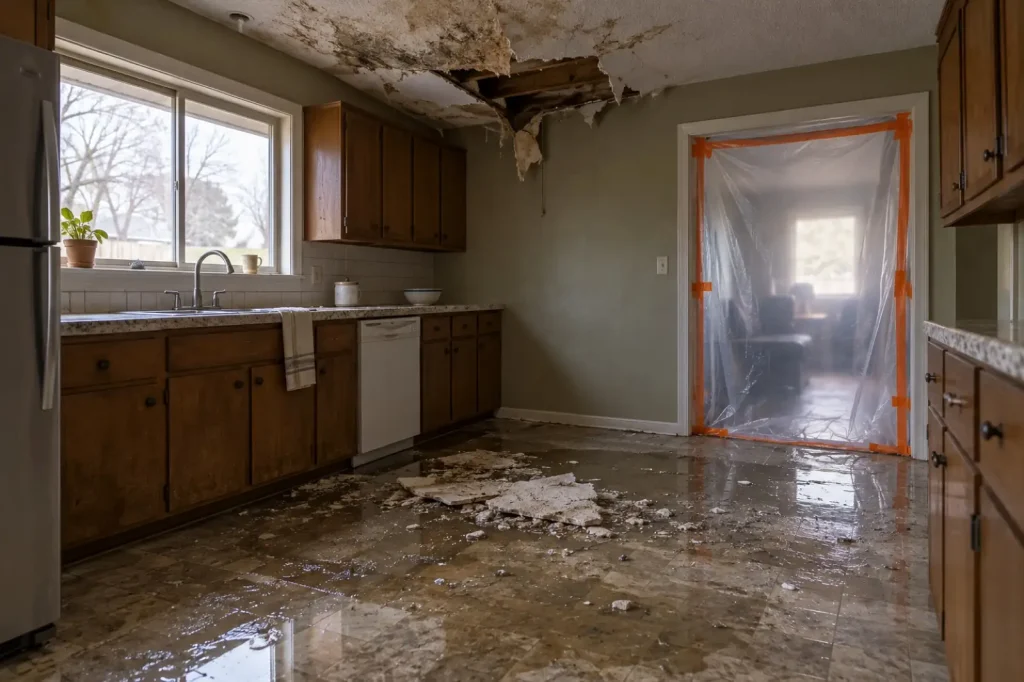
Does insurance cover asbestos removal? As a planned upgrade, almost never: standard homeowners forms exclude pollutants, and no loss has happened. The exception is asbestos disturbed by a covered peril such as a fire, a burst pipe or a fallen tree, where abatement can enter the claim as part of repairing covered damage, often subject to limits. Your own policy wording, not this summary, decides it.
Key takeaways
- The trigger is a loss, not the material. Intact asbestos is not damage, so there is nothing for a property policy to pay on.
- The ISO special form excludes a pollutant release unless one of the 16 perils named for personal property caused it, a list that includes fire, falling objects and accidental discharge of water.
- Ordinance or law is not the back door. Per the ISO form it allows up to 10% of Coverage A for code costs, then carves out any law requiring pollutant removal or cleanup.
- Contractors win these claims on paperwork: a dated survey of the damaged area, lab results on the damaged layer, and no elective removal in the scope.
- Houses with four or fewer units sit outside the federal NESHAP facility definition, but OSHA presumes pre-1981 insulation and surfacing material is asbestos.
On this page
- The trigger is a loss, not the material
- The clauses that decide it
- What insurers publish
- Decision matrix: nine scenarios
- A five-question path through any claim
- Ordinance or law, and why it rarely helps
- For contractors: getting abatement into scope
- The federal rules an adjuster will ask about
- What regulators tell consumers
- Questions people actually ask
An adjuster and a homeowner can look at the same crumbling pipe wrap and reach opposite conclusions, because the question is never whether asbestos is present. It is what happened to it, and which policy clause that event falls under.
This page describes standard policy language and published regulator guidance. It does not tell you what your policy pays. Your own form and endorsements govern; for a dispute, your state insurance department and a licensed professional are the next calls. Health effects of asbestos exposure are out of scope here; see EPA and CDC guidance.
The trigger is a loss, not the material
Property insurance pays for direct physical loss; the insuring agreement of the ISO HO 00 03 05 11 (Maine Bureau of Insurance copy) covers direct physical loss to the dwelling. A floor tile laid in 1965 that is still whole has suffered no loss, and removing it is a home improvement.
The EPA homeowner asbestos guidance makes the same point from the other side: it tells homeowners to leave undamaged asbestos-containing material alone, and says removal may be required when a remodel will disturb it or when it is damaged extensively and cannot otherwise be repaired.
The clauses that decide it
Three parts of the ISO Homeowners 3 special form do almost all the work: the pollutant exclusion, the wear and tear exclusion and the ordinance or law provisions, quoted from the ISO HO 00 03 05 11 (Maine Bureau of Insurance copy). Insurers can file their own wording, so treat this as the benchmark, not your contract.
| Clause and location | What the form says | What it means for asbestos |
|---|---|---|
| Pollutant exclusion, Coverage A and B perils, c.(6)(e) | "Discharge, dispersal, seepage, migration, release or escape of pollutants unless the discharge … is itself caused by a Peril Insured Against named under Coverage C." | A release caused by fire, a falling tree or a burst pipe escapes this clause. One caused by a remodel or by age does not. |
| Pollutants definition | "Any solid, liquid, gaseous or thermal irritant or contaminant, including smoke, vapor, soot, fumes, acids, alkalis, chemicals and waste." | Asbestos is not named; insurers treat it as a contaminant, as their FAQs show. |
| Wear and tear, c.(6)(a) | "Wear and tear, marring, deterioration" | Lagging that crumbles from age is a deterioration problem first. |
| Ordinance or law, E.11 and Exclusion A.1.c | No cover for "the costs to comply with any ordinance or law which requires any insured or others to test for, monitor, clean up, remove, contain … pollutants" | Abatement a law requires is carved out of the coverage built for legal requirements. |
Why the named-peril carve-back matters
The pollutant clause excludes a release unless a peril named under Coverage C caused it. Per the ISO form that list runs to 16 perils, including fire, windstorm, explosion, smoke, falling objects, weight of snow and accidental discharge of water. Those are the events that tear open ceilings, and the carve-back is the whole basis of the sudden-loss distinction.
The USAA HO-3 form on file with the Oklahoma Insurance Department, a 2008 edition, uses the same named-peril test and also excludes liability arising out of exposure to asbestos, so a later claim by a neighbour would get no help from that form’s liability section.
What insurers publish
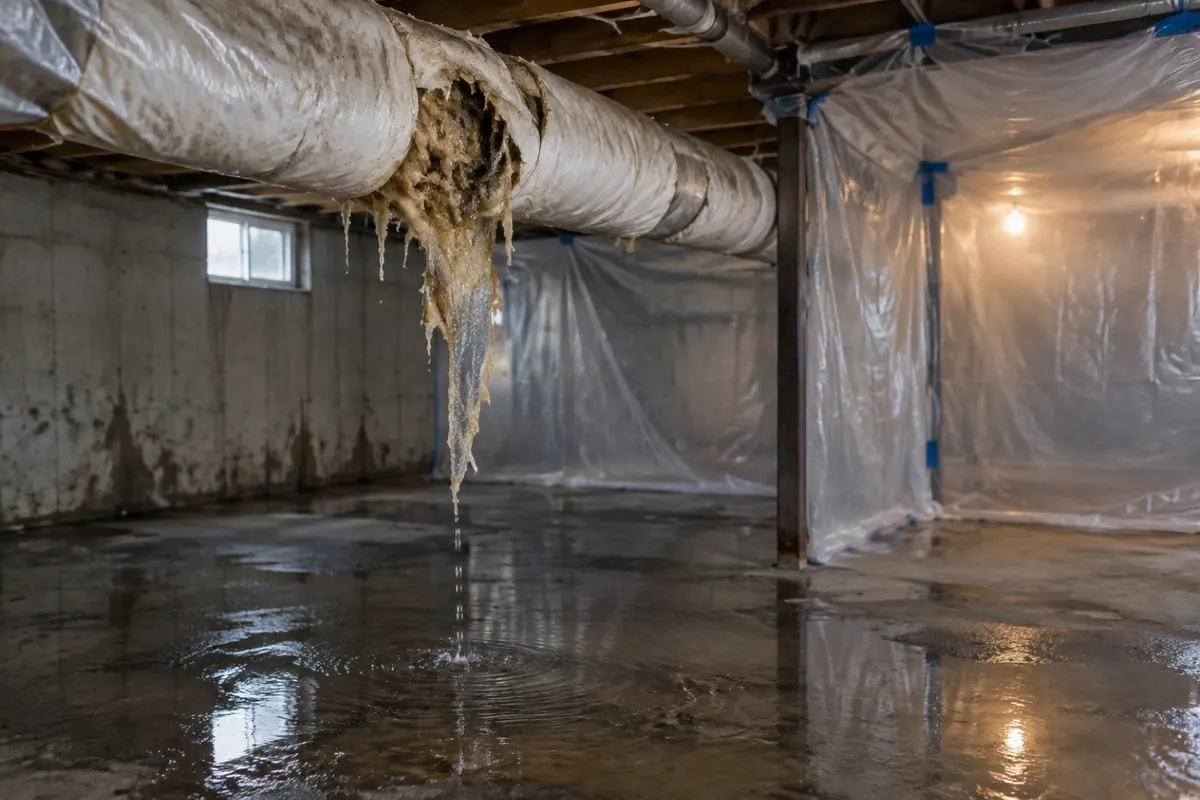
The ranking insurers agree on the line. Allstate alone mentions a dollar figure, framed as an example of a remediation limit. Progressive says a covered abatement is paid minus the deductible and up to policy limits. American Family explains its exclusion by noting that most asbestos materials in older homes pose no immediate threat until disturbed.
| Insurer | Page date | Per the insurer’s own page |
|---|---|---|
| Allstate | Updated July 2026 | "Asbestos removal by itself without a covered insurance loss is not covered." Some policies may cover remediation for a covered loss "up to a certain dollar limit such as $10,000". |
| Progressive | Updated 17 July 2025 | "Asbestos removal won’t be covered unless the asbestos was disturbed or exposed by a covered peril." Examples: a falling tree, snow on a roof, a burst pipe, vandalism. |
| American Family | Updated 14 May 2024 | "Most insurance companies don’t offer ‘pollution coverage,’ which includes asbestos removal and/or abatement." |
None promises cover after a loss: Progressive says its policy "may" pay, Allstate that remediation "might be covered". A covered loss opens the door; limits decide how far.
Decision matrix: nine scenarios
Find the row closest to your situation. The middle columns read the event against the ISO HO 00 03 wording and the insurer statements above; they are not a coverage decision.
| Scenario | How the event is classified | Likely treatment, standard wording | Why |
|---|---|---|---|
| Remodel planned; survey finds asbestos flooring | No loss | Not covered | Project cost |
| Intact popcorn ceiling, owner wants it gone | No loss | Not covered | Elective removal |
| Pipe lagging crumbling from age | Deterioration | Generally excluded | Wear and tear plus pollutant clause |
| Burst supply line collapses an asbestos textured ceiling | Accidental discharge (named peril) | May be part of repair | Watch for sublimits |
| Kitchen fire chars walls with asbestos joint compound | Fire (named peril) | May be part of repair | Clearest case |
| Tree falls into vermiculite attic insulation | Falling objects (named peril) | May be part of repair | Progressive’s example |
| Covered fire, but code forces abatement of undamaged rooms | Law-driven pollutant removal | Carved out of ordinance or law | Split damaged area from the rest |
| Contractor disturbs asbestos during unrelated work | Not a homeowner peril | Contractor’s own insurance | Outside this page |
| Neighbour alleges exposure from your demolition | Liability claim | Excluded on some forms | USAA form excludes it |
A five-question path through any claim
Use it in order; each answer is something an adjuster will want in writing.
- Did something happen, and when? Write down the event and its date. No event means no claim: budget the work.
- Is that event a named peril? Check the perils list in your form. Age, wear and a planned remodel are not on it.
- Did the event damage the asbestos material itself? A burst pipe two rooms away does not bring an untouched ceiling into the claim.
- Is the work repair of damaged property, or a legal requirement for undamaged property? The first is how abatement enters a scope; the second meets the ordinance or law pollutant carve-out.
- What limits apply? Read the declarations and every endorsement for a pollutant, remediation or debris sublimit, and ask the adjuster in writing which limit the abatement line falls under.
A yes at every step makes the claim about scope and limits rather than coverage, which is where disputes usually sit. Our public adjuster fees guide sets out what outside help costs.
Ordinance or law, and why it rarely helps
Ordinance or law coverage pays the extra cost of rebuilding to code after a covered loss, so it is where people look first for asbestos money. Per the ISO HO 00 03 05 11 (Maine Bureau of Insurance copy), the insured may use up to 10% of the Coverage A limit for increased costs from a law regulating repair of the damaged part of a building.
The same paragraph then excludes the cost to comply with any law requiring anyone to test for, remove, contain or clean up pollutants. Statute-driven abatement is exactly that. On ISO wording, ordinance or law can pay for a code-required electrical upgrade after a fire and still decline the abatement a state rule requires before the old wall comes down.
| Form and provision | Published limit, per the form | On an illustrative $300,000 dwelling limit | Condition |
|---|---|---|---|
| ISO HO 00 03 05 11, E.11 Ordinance or Law | Up to 10% of Coverage A | $30,000 | Pollutant compliance carved out |
| USAA HO-3R(02) (07-08), Building Ordinance or Law | Not more than 5% of Coverage A | $15,000 | Deductible applies |
| ISO HO 00 03 05 11, E.1 Debris Removal | Extra 5% once the limit is exhausted | $15,000 | Loss must be caused by an insured peril |
The California Department of Insurance residential insurance guide warns that some policies lack building code upgrade coverage, and the California Department of Insurance claims guide says it is sold as an endorsement for a small additional premium. Read any such endorsement for its own pollutant language.
For contractors: getting abatement into scope
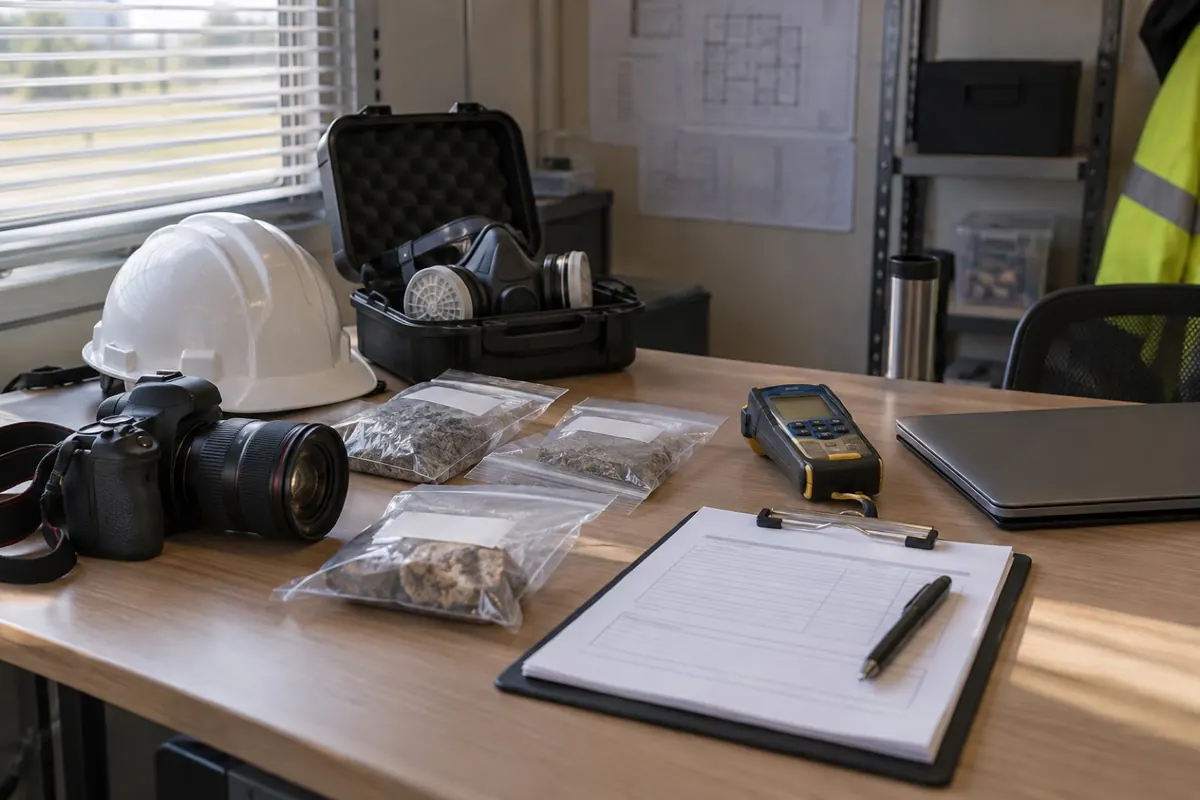
On a covered loss the contractor makes the causal chain obvious: this peril, on this date, damaged this asbestos-containing material in this area, and the abatement line covers that area and no more. On a loss, the pre-disturbance survey is a survey of the damaged area before demolition.
| Document | Why it matters | The adjuster’s question |
|---|---|---|
| Date-stamped photos before any disturbance | Ties the damage to the event | Was it damaged by the peril, or already failing? |
| Survey of the affected area with sample locations | Shows what is asbestos and where | Which materials, how much? |
| Accredited lab results, per layer, on the damaged material | Turns suspicion into a priced line | Is this the damaged layer? |
| Independent assessor, separate from the abatement firm | EPA advises against one firm doing both | Is the scope inflated? |
| Scope split: covered repair zone versus elective work | Keeps elective work off the claim | Which area did the peril hit? |
| NESHAP or state notification, where it applies | Proves the job was regulated, and when | Was this an emergency, and why? |
| Waste manifests and clearance results | Closes out disposal | Was the work finished to a standard? |
The line items, and where they belong
Keep containment, removal, disposal and clearance as separate lines rather than burying them in demolition, because any remediation sublimit will be applied to exactly those lines. OSHA 29 CFR 1926.1101 classifies the work: Class I is removal of thermal system insulation and surfacing material; Class II covers other material such as wallboard, floor tile, roofing and siding shingles and mastics. Naming the class tells the adjuster which controls the price reflects. Prices by class are on our asbestos removal cost guide.
Price undamaged rooms on a separate contract, and record the emergency in writing the day it happens: that is the best evidence a named peril caused the release.
The federal rules an adjuster will ask about
The EPA asbestos NESHAP and OSHA’s construction standard do not decide coverage, but they generate the records that do.
| Rule | Citation | What it says | Why it matters |
|---|---|---|---|
| NESHAP scope | 40 CFR 61.141 | Facility excludes residential buildings with four or fewer dwelling units | Most single-family claims fall outside the federal notice rule |
| Pre-work inspection | 40 CFR 61.145 | Thoroughly inspect the affected part of a facility before demolition or renovation | The survey is a legal duty on covered buildings |
| Quantity thresholds | 40 CFR 61.145 | 260 linear ft on pipes, 160 sq ft on other components, 35 cu ft off components | Above these, full work practices apply |
| Planned notice | 40 CFR 61.145 | At least 10 working days before work begins | A planned job cannot skip it |
| Emergency notice | 40 CFR 61.145 | Not later than the following working day | Must describe the sudden, unexpected event |
| Presumed asbestos | OSHA 29 CFR 1926.1101 | Thermal system insulation and surfacing material in buildings constructed no later than 1980 | Treated as asbestos unless rebutted |
The emergency rule is the useful one. Per 40 CFR 61.141, an emergency renovation is unplanned and results from a sudden, unexpected event, and notice under 40 CFR 61.145 must give the date and hour of the emergency and describe that event. On a covered building, the regulatory record of the emergency and the insurance record of the sudden loss are the same facts, written once.
Many state programmes reach further than the federal floor, including into houses. Our state asbestos accreditation map lists each state’s agency.
What regulators tell consumers
The California Department of Insurance claims guide tells policyholders to make temporary repairs to prevent further damage, and warns that policies may not cover ensuing damage if reasonable steps were not taken to secure the property. The ISO form’s conditions require the insured to protect the property and keep a record of repair expenses, and its Reasonable Repairs coverage pays for measures taken solely to protect damaged covered property. Sealing off a collapsed asbestos ceiling with polyethylene is that kind of measure.
If a burst pipe started the loss, our water damage coverage guide covers the water side. For a textured ceiling, see our popcorn ceiling asbestos page. The insurance hub lists every coverage guide.
Questions people actually ask
Will homeowners insurance pay for asbestos removal?
Not for removal as a planned project. Standard forms exclude pollutant release unless a named peril such as fire, falling objects or accidental discharge of water caused it, and intact material has suffered no loss. If a covered peril damages asbestos-containing material, abatement can become part of the repair, subject to limits. Ask your insurer in writing.
Is it better to remove asbestos or leave it?
EPA’s homeowner guidance says to leave undamaged asbestos-containing material alone, and treats repair, meaning sealing or covering, as an alternative to removal. Removal may be required when a remodel will disturb the material or when it is damaged extensively, and EPA says it must be done only by a trained and accredited professional.
How much will it cost to remove asbestos?
It depends on material, quantity and containment class. According to Allstate’s page, updated July 2026, Angi puts removal at $1,214 to $3,273, a national figure that hides wide variation. Our asbestos removal cost guide breaks published prices down by material and friability.
What to do if you can’t afford asbestos removal?
First ask whether removal is needed. EPA advises leaving undamaged material alone, and describes sealing (encapsulation) or covering (enclosure) as repairs that keep it in place. Redesigning a renovation to avoid the material may cost less than abatement; your state asbestos programme can say which options its rules allow.
Does ordinance or law coverage pay for asbestos abatement?
On standard ISO wording, no. Per the ISO form, the additional coverage pays up to 10% of the dwelling limit for code-driven repair costs after a covered loss, but it excludes the cost to comply with any law requiring anyone to remove, contain or clean up pollutants. Some insurers file different wording, so read the clause in your own policy.
Will insurance cover asbestos found during a remodel?
Generally not. Finding asbestos during a planned remodel is discovery, not a loss, and the pollutant exclusion applies because no named peril caused the release. Progressive and Allstate both describe removal without a covered loss as not covered. If a contractor’s work disturbs it, the question moves to that contractor’s own insurance.
Sources
- ISO HO 00 03 05 11 (Maine Bureau of Insurance copy), Insurance Services Office, Inc., copyright 2010: perils c.(6), Additional Coverages E.1, E.2 and E.11, Exclusion A.1, Conditions. Retrieved 11 October 2026.
- USAA HO-3 form on file with the Oklahoma Insurance Department, form HO-3R(02) (07-08). Retrieved 11 October 2026.
- Allstate, "Is asbestos removal covered?", updated July 2026. Retrieved 11 October 2026.
- Progressive, updated 17 July 2025. Retrieved 11 October 2026.
- American Family, updated 14 May 2024. Retrieved 11 October 2026.
- California Department of Insurance claims guide, Residential Property Claims Guide, updated February 2025. Retrieved 11 October 2026.
- California Department of Insurance residential insurance guide, May 2021 edition. Retrieved 11 October 2026.
- EPA homeowner asbestos guidance, last updated 25 June 2026. Retrieved 11 October 2026.
- 40 CFR 61.141 and 40 CFR 61.145, via Cornell LII. Retrieved 11 October 2026.
- OSHA 29 CFR 1926.1101, asbestos in construction. Retrieved 11 October 2026.
- Dollar figures in the ordinance table are arithmetic on published percentages; see our methodology.
Policy forms vary by insurer, state and edition. This is general information about standard wording, not advice on any policy. Your policy, your insurer, your state insurance department and a licensed professional are the authorities on your claim.