The short answer
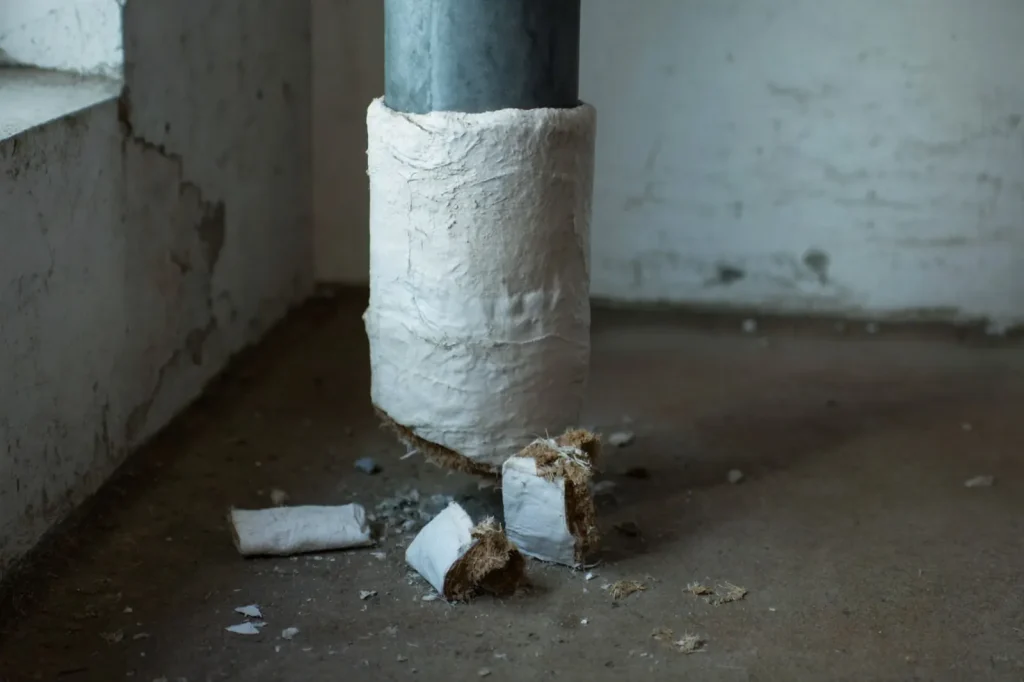
Friable asbestos is material containing more than 1% asbestos, by polarized light microscopy, that when dry can be crumbled, pulverized or reduced to powder by hand pressure, per EPA’s 40 CFR 61.141. Friable material is automatically RACM. Nonfriable Category I and II material becomes RACM only when it turns friable or will be sanded, ground, cut, abraded or crumbled.
What does 40 CFR 61.141 say friable asbestos means, word for word?
The federal definition sits in 40 CFR 61.141, the definitions section of the Asbestos NESHAP (40 CFR Part 61, Subpart M): friable asbestos material means any material containing more than 1 percent asbestos, measured by the polarized light microscopy method in appendix E to subpart E of 40 CFR Part 763, “that, when dry, can be crumbled, pulverized, or reduced to powder by hand pressure.” The nonfriable definition in the same section is the mirror image: the same 1 percent threshold and the same test, with “cannot” in place of “can.”
Three words in that sentence carry the weight. “Dry” means a wetted ceiling or a soaked pipe wrap is judged as it would behave once it dries, which matters on water losses. “Hand pressure” means no tool: a material that only breaks under a hammer is nonfriable under 40 CFR 61.141. “More than 1 percent” means a lab result of exactly 1 percent is not asbestos-containing material for NESHAP purposes.
The definition also carries a lab rule most summaries skip. If a method other than point counting reports less than 10 percent asbestos, 40 CFR 61.141 requires the content to be confirmed by point counting under PLM. A visual estimate of 2 percent therefore needs a point count before the material can be called friable ACM or cleared below the threshold. Ask the lab whether its report used point counting when a result lands between 1 and 10 percent; our page on choosing an asbestos testing lab lists the accreditation to ask for.
What does RACM mean, and why is every friable material RACM?
RACM stands for regulated asbestos-containing material, and 40 CFR 61.141 lists exactly four ways in: (a) friable asbestos material; (b) Category I nonfriable ACM that has become friable; (c) Category I nonfriable ACM that will be or has been subjected to sanding, grinding, cutting or abrading; and (d) Category II nonfriable ACM that has a high probability of becoming, or has become, crumbled, pulverized or reduced to powder by the forces expected in the demolition or renovation. Friable material is item (a), so it is RACM with no further test.
RACM is the unit the NESHAP counts. Under 40 CFR 61.145(a), a renovation triggers the full notice and work practice requirements when the combined RACM disturbed is at least 260 linear feet on pipes, 160 square feet on other facility components, or 35 cubic feet off components where length or area could not be measured. Nonfriable material that stays out of the four RACM items does not count toward those numbers, which is why the category call made during the pre-job inspection changes the paperwork.
The 1990 rewrite explains the vocabulary. EPA Region 4 RACM guidance notes that the original 1973 rule split materials only into friable and nonfriable, and that EPA later concluded severely damaged nonfriable materials can release significant fibers, so the November 1990 revision added Category I, Category II and RACM (EPA's Asbestos NESHAP page dates that comprehensive amendment to November 1990).
When does nonfriable asbestos become RACM? Cutting, grinding and the shearing exception
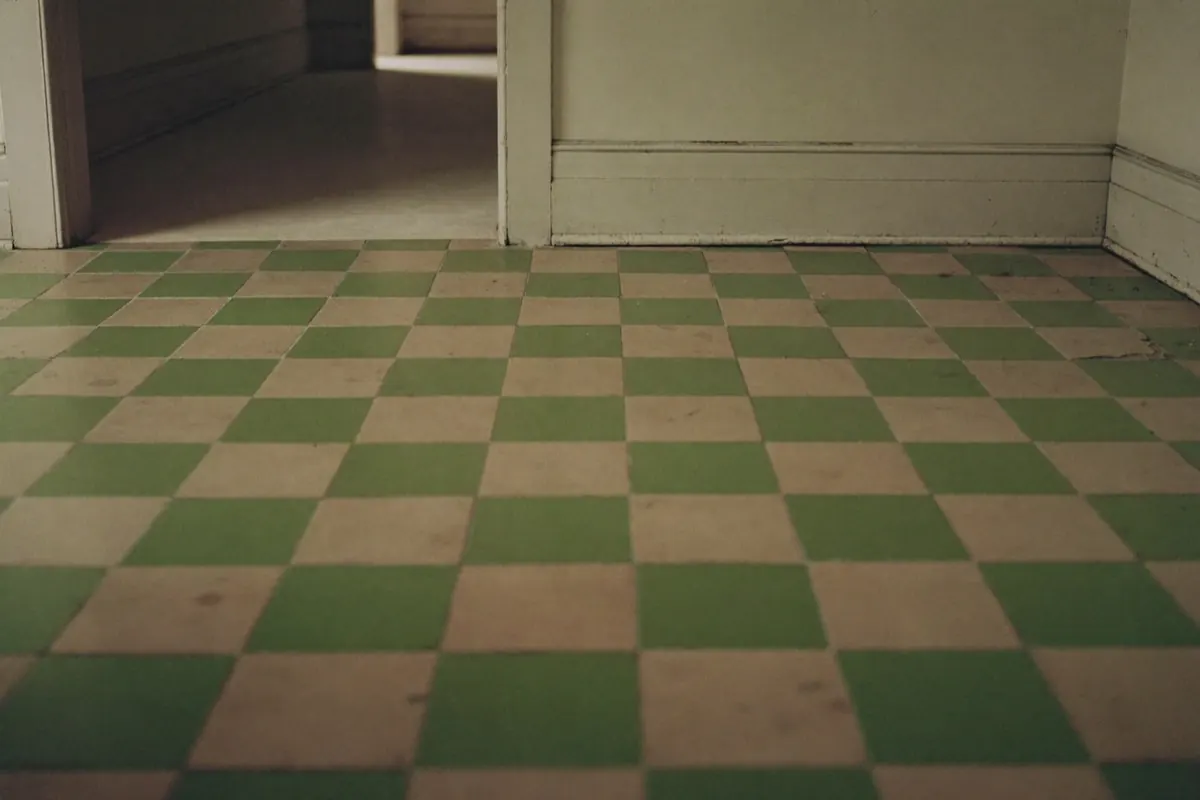
The verbs in the RACM definition are defined terms in 40 CFR 61.141, and the definitions are narrower or wider than plain English. Cutting means penetrating with a sharp-edged instrument, including sawing, “but does not include shearing, slicing, or punching.” Grinding means reducing to powder or small fragments “and includes mechanical chipping or drilling.” So drilling an anchor hole through asbestos floor tile is grinding, which makes that Category I tile RACM, while slicing it with a knife is not cutting.
Category I material gets a demolition exemption that Category II shares only conditionally. Under 40 CFR 61.145(c)(1), RACM need not be removed before demolition if it is Category I nonfriable ACM “that is not in poor condition and is not friable,” or if it is Category II and “the probability is low” that it will be crumbled, pulverized or powdered during the demolition. “Poor condition” is itself defined in 61.141 as binding that is losing integrity, shown by peeling, cracking or crumbling.
EPA Region 4 RACM guidance gives the field version of step 2: collect a piece of dry material, seal it in a transparent reclosable sample bag, and apply hand pressure to see whether it crumbles, pulverizes or powders. Packing that only deforms is nonfriable, the guidance says, and broken edges of asbestos cement pipe and sheet “typically are friable.” EPA’s homeowner page separately advises against sampling suspect material yourself.
Which common materials are friable, Category I or Category II, and which rule each one triggers
The table maps each material to its 40 CFR 61.141 category, the event that makes it RACM, the OSHA removal class from 29 CFR 1926.1101(b), and whether OSHA’s paragraph (k)(1) presumes it contains asbestos. Category assignments for the named Category I products come straight from the rule; the Category II and friable examples come from EPA Region 4 RACM guidance, which EPA wrote for inspectors making exactly this call.
| Material | 61.141 category | Becomes RACM when | OSHA class for removal | OSHA presumes asbestos? |
|---|---|---|---|---|
| Pipe, boiler and tank insulation (TSI) | Friable when it crumbles by hand; Region 4 lists thermal pipe coverings and boiler block under friable materials | Already RACM if friable | Class I | Yes, as PACM if the building was constructed in 1980 or earlier |
| Sprayed fireproofing on beams and decks | Friable; listed by Region 4 | Already RACM | Class I (surfacing) | Yes, as PACM |
| Troweled acoustical plaster, sprayed ceiling texture | Friable when it crumbles by hand; Region 4 lists troweled acoustical plaster | Already RACM if friable | Class I (surfacing) | Yes, as PACM |
| Vinyl asbestos tile, sheet vinyl | Category I (resilient floor covering) | Poor condition and friable, or sanded, ground (including drilled), cut or abraded | Class II | Yes, asphalt and vinyl flooring installed 1980 or earlier |
| Asphalt roofing felt, built up roofing | Category I | Poor condition and friable, or sanded, ground, cut or abraded | Class II | No |
| Packings and gaskets | Category I | Region 4 notes heat can decompose boiler packing binder and make it friable | Class II | No |
| Asbestos cement pipe, siding, transite sheet | Category II (Region 4 examples) | High probability of crumbling during the work; broken edges typically friable | Class II | No |
| Asbestos wallboard | Category II if it does not crumble dry by hand; friable if it does | Depends on the hand pressure result and the work method | Class II (wallboard named) | No |
Two rows deserve a closer look before a renovation. Floor tile is the most common Category I material in houses and offices, and the visual clues are on our page on how to tell if floor tiles contain asbestos. Cement pipe is the textbook Category II product, and the cutting rules for water mains are on our asbestos cement pipe page.
Sprayed ceiling texture is classified by how it was applied: 29 CFR 1926.1101(b) defines surfacing material as material “sprayed, troweled-on or otherwise applied to surfaces,” naming acoustical plaster on ceilings, which makes texture installed in 1980 or earlier PACM. Testing and scraping questions are on our popcorn ceiling asbestos page.
Friable, Category I, Category II, RACM, PACM: who defines each term and what it switches on
Nine terms get used interchangeably on job sites, but they come from three different rule sets with three different purposes. EPA’s NESHAP terms control air emissions during demolition and renovation; EPA’s AHERA terms in 40 CFR Part 763 govern school buildings; OSHA’s terms in 29 CFR 1926.1101 protect workers. The matrix below quotes each definition and the consequence attached to it.
| Term | Defined by | Test in the rule text | What it switches on |
|---|---|---|---|
| Friable asbestos material | EPA, 40 CFR 61.141 | Over 1% asbestos by PLM; crumbles, pulverizes or powders by hand pressure when dry | Always RACM |
| Nonfriable ACM | EPA, 40 CFR 61.141 | Over 1% asbestos by PLM; does not crumble by hand pressure when dry | Split into Category I and II |
| Category I nonfriable ACM | EPA, 40 CFR 61.141 | Packings, gaskets, resilient floor covering and asphalt roofing products over 1% asbestos | RACM if it has become friable or will be sanded, ground, cut or abraded |
| Category II nonfriable ACM | EPA, 40 CFR 61.141 | Any other nonfriable material over 1% asbestos | RACM if demolition or renovation forces will likely crumble, pulverize or powder it |
| RACM | EPA, 40 CFR 61.141 | Friable material plus the Category I and II cases above | Counts toward the 260 ft, 160 sq ft and 35 cu ft thresholds |
| Friable (school buildings) | EPA AHERA, 40 CFR 763.83 | Same hand pressure test, and includes previously nonfriable material once damaged enough to crumble | Triggers AHERA assessment and response actions |
| ACM | OSHA, 29 CFR 1926.1101(b) | Any material containing more than 1% asbestos; no friability test | Basis for Class I to IV work |
| PACM | OSHA, 29 CFR 1926.1101(b) | TSI and surfacing material in buildings constructed no later than 1980 | Treated as ACM until rebutted |
| Intact | OSHA, 29 CFR 1926.1101(b) | ACM that has not crumbled, been pulverized or deteriorated so the asbestos is no longer likely bound in its matrix | Used in place of friable in OSHA’s operative text |
Why OSHA’s asbestos rule sorts work by Class I to IV instead of friable and nonfriable
OSHA’s construction standard, 29 CFR 1926.1101, does not define friable in paragraph (b). Its operative split is by material type and task: Class I is removal of TSI and surfacing ACM and PACM; Class II is removal of any other ACM, naming wallboard, floor tile and sheeting, roofing and siding shingles and construction mastics; Class III is repair and maintenance likely to disturb ACM; Class IV is maintenance and custodial contact without disturbance, plus cleanup.
The word appears in OSHA’s text in only a few places. Paragraph (g)(10)(ii) tells employers controlling areas where “friable thermal system insulation or surfacing material is accessible” to assume the waste and debris contain asbestos, and the glove bag rules in (g)(5)(ii) require loose and friable material next to the bag to be wrapped in two layers of 6 mil plastic. The plain definition sits in non-mandatory Appendix H, which says friable material “can be crumbled with hand pressure and is therefore likely to emit fibers” and calls vinyl asbestos tile and roofing felt non-friable if intact.
The practical result: a nonfriable Category II siding job that falls outside NESHAP can still be Class II work under OSHA, with a regulated area under 29 CFR 1926.1101(e)(1) and respirators unless the employer has a negative exposure assessment. Friability decides EPA’s air rules; the class decides the worker rules. The full federal and state map is on our asbestos regulations page, and pipe and boiler insulation as a category is covered on our thermal system insulation page.
Does friable asbestos in a house trigger NESHAP at 260 linear feet?
Usually not, because of who the rule covers. 40 CFR 61.141 defines a facility to exclude “residential buildings having four or fewer dwelling units,” and EPA's 28 July 1995 Clarification of Intent states that demolishing or renovating an isolated small residential building “by any entity” is not covered, while work on more than one small residential building on the same site by the same owner or operator is.
| Situation | NESHAP status | What applies |
|---|---|---|
| Single house, renovated by its owner | Not a NESHAP facility (4 or fewer units) | No federal NESHAP duty; state or local rules may apply |
| Several houses on one site, same owner or operator | Covered, per the 1995 clarification | Inspection; notice and work practices by RACM amount |
| Houses cleared for a highway, mall or urban renewal project | Covered, per EPA’s 1990 revision | Same as any facility |
| Apartment building with 5 or more units | Facility | Full rules at 260 ft, 160 sq ft or 35 cu ft of RACM |
| Any facility demolition | Facility | Inspection plus notice 10 working days ahead, even with little or no RACM |
Inside a covered facility, friable RACM that is removed must be kept adequately wet and sealed while wet in leak-tight, labelled containers under 40 CFR 61.150(a)(1), and 40 CFR 61.145(c)(8) requires at least one on-site representative trained in the rule, with refresher training every 2 years. EPA’s homeowner page adds that federal law does not require people who inspect, repair or remove asbestos in detached single-family homes to be trained and accredited, though some states and localities do.
Out of scope: health effects. This page reads regulations and EPA guidance only; for health information see EPA's homeowner asbestos page and CDC’s Agency for Toxic Substances and Disease Registry.
Questions people actually ask
Is non-friable asbestos dangerous if left alone?
EPA's homeowner asbestos page says asbestos material in good condition that will not be disturbed generally will not release fibers, and lists the triggers that do: cutting, tearing, sanding, sawing, drilling and scraping. OSHA’s Appendix H to 29 CFR 1926.1101 makes the same point about vinyl asbestos tile and roofing felt, and adds that asbestos cement pipe or sheet can emit fibers when cut, sawed or broken.
Can you tell whether asbestos is friable by looking at it?
No. EPA’s homeowner guidance says you generally cannot tell whether a material contains asbestos by looking unless it is labelled, and friability under 40 CFR 61.141 is a hand pressure test on dry material. EPA Region 4’s inspector guidance seals a dry sample in a transparent bag before pressing it. EPA advises homeowners not to take samples themselves.
What does “friable asbestos breaks into microscopic fibers that” refer to?
It paraphrases OSHA’s Appendix H to 29 CFR 1926.1101, which says friable material can be crumbled with hand pressure “and is therefore likely to emit fibers.” OSHA’s paragraph (b) defines a fiber as a particulate form of asbestos 5 micrometers or longer with a length to diameter ratio of at least 3 to 1, which is what air sampling counts.
Does friable mean the same thing in school buildings under AHERA?
Almost. 40 CFR 763.83 uses the same hand pressure test but adds that friable “includes previously nonfriable material” once damaged enough to crumble. Under 40 CFR 763.85(a)(4)(ii), an accredited inspector must touch all suspected asbestos building material to decide whether it is friable, and reinspections every 3 years recheck nonfriable material.
Who makes the final call on whether material is RACM?
EPA Region 4 RACM guidance says that when a question arises, EPA inspectors on site make the determination. Before work starts, 40 CFR 61.145(a) puts the duty on the owner or operator to thoroughly inspect for asbestos, including Category I and II nonfriable ACM. Ask your inspector to record the category and the planned work method for each homogeneous material.
Sources
- 40 CFR 61.141, Asbestos NESHAP definitions, via Cornell LII. Retrieved 8 November 2026.
- 40 CFR 61.145, Standard for demolition and renovation, via Cornell LII. Retrieved 8 November 2026.
- 40 CFR 61.150, Standard for waste disposal, via Cornell LII. Retrieved 8 November 2026.
- 29 CFR 1926.1101, OSHA Asbestos standard for construction, including paragraphs (b), (e), (g), (k) and Appendix H, via Cornell LII. Retrieved 8 November 2026.
- 40 CFR 763.83 and 40 CFR 763.85, EPA AHERA definitions and inspection rules, via Cornell LII. Retrieved 8 November 2026.
- EPA Region 4 RACM guidance, U.S. EPA Region 4, Asbestos/NESHAP Regulated Asbestos Containing Materials Guidance, read from the Internet Archive copy captured 24 September 2009. Retrieved 8 November 2026.
- EPA's Asbestos NESHAP page, U.S. Environmental Protection Agency. Retrieved 8 November 2026.
- EPA's 28 July 1995 Clarification of Intent, Asbestos NESHAP Clarification of Intent, 60 FR 38725, Federal Register via govinfo.gov. Retrieved 8 November 2026.
- EPA's homeowner asbestos page, Protect Your Family from Exposures to Asbestos, U.S. EPA. Retrieved 8 November 2026.
- The decision path is drawn from the rule text above. Our methodology sets out the standing rules.
This page reads regulations and EPA guidance; it reports no sampling or testing of its own and is not legal advice. Ask your state asbestos program or the delegated NESHAP agency whether a state rule is stricter, and ask your accredited inspector which 61.141 category each material falls in for the work method you plan.
More rules pages sit on our standards hub.