The short answer
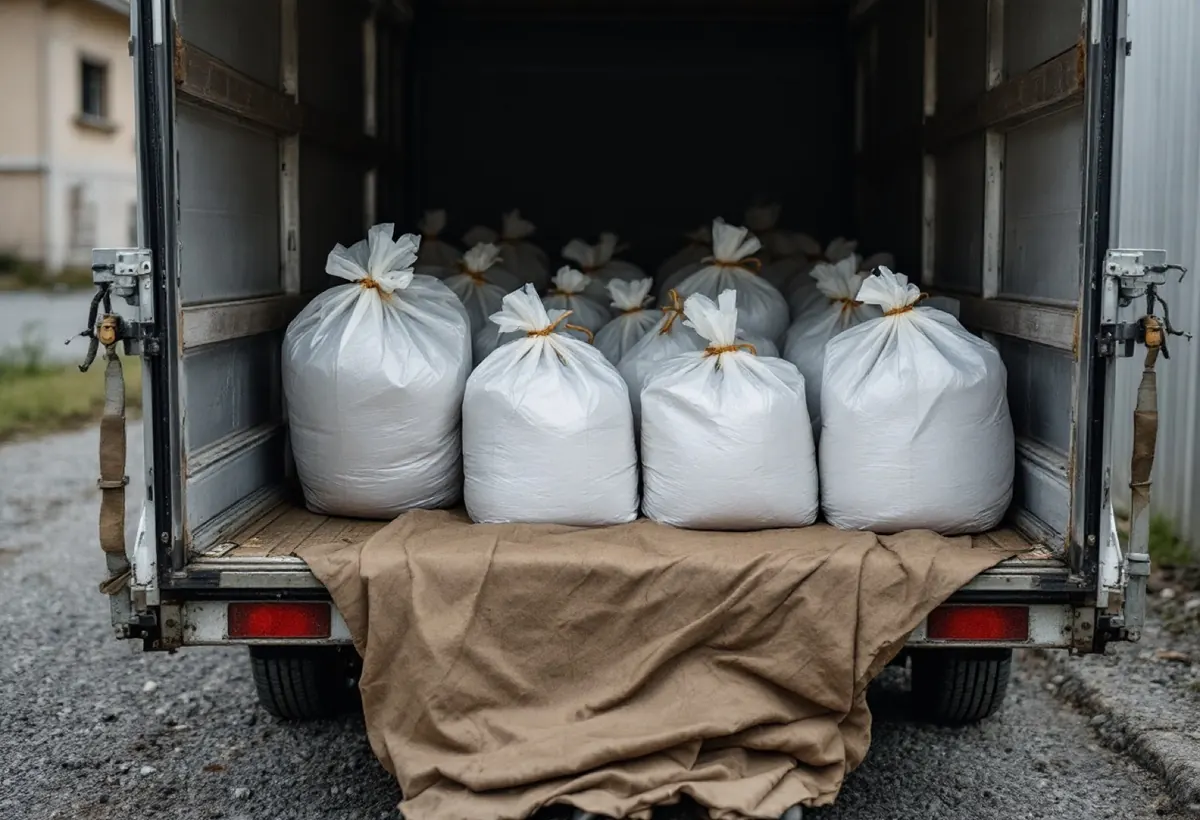
How to dispose of asbestos: keep it adequately wet, seal it in leak tight containers or wrapping, label it with the OSHA warning plus the generator’s name and location, and deliver it only to a landfill that accepts asbestos, with a waste shipment record, per 40 CFR 61.150. Call the landfill first; several states also require a permit, a notice or 6 mil plastic.
What does 40 CFR 61.150 require, step by step, from the wall to the landfill?
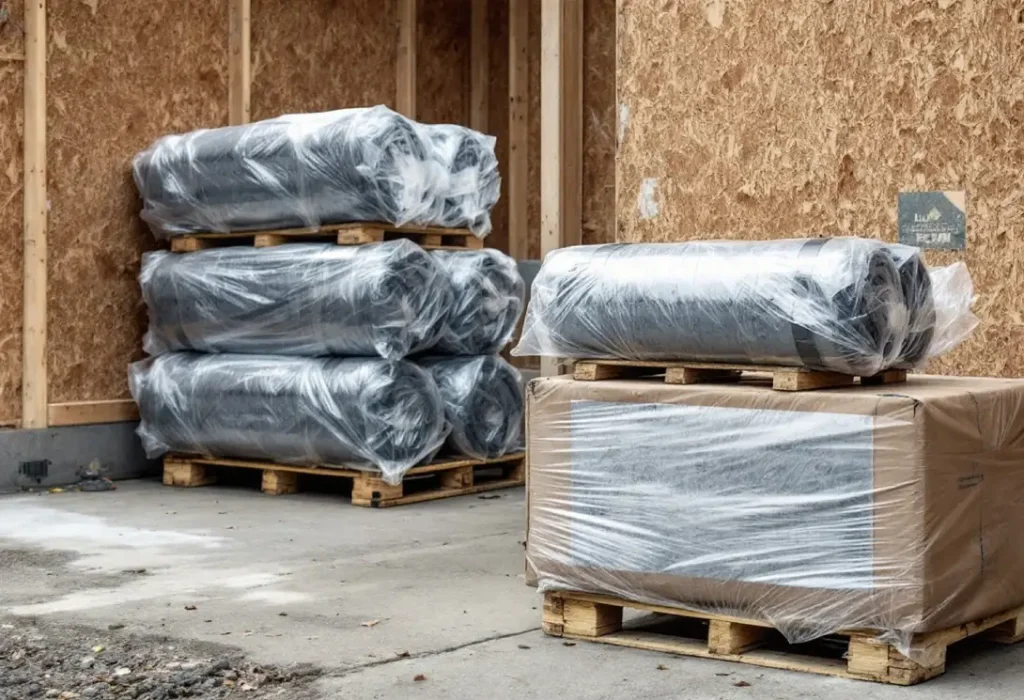
40 CFR 61.150 is the federal disposal rule for asbestos waste from demolition and renovation. It offers three ways to handle the waste with no visible emissions, and the one that applies to almost every building job is paragraph (a)(1): adequately wet the waste, seal it while wet in leak tight containers, or in leak tight wrapping for pieces that will not fit without breaking, and label it.
Two definitions in 40 CFR 61.141 decide whether a load passes. Leak tight means solids or liquids cannot escape or spill out, and “also means dust-tight.” Adequately wet means mixed or penetrated with liquid enough to prevent release, and the rule adds that the absence of visible emissions “is not sufficient evidence of being adequately wet.” EPA's 6 February 1991 letter to G. Hitchings explains that EPA looks at other factors, such as how far the liquid has soaked into the material.
The label has two parts. The first is the OSHA warning whose wording is fixed by 29 CFR 1926.1101(k)(8)(iii); it begins “DANGER CONTAINS ASBESTOS FIBERS” and ends “AVOID CREATING DUST.” The second, required by 40 CFR 61.150(a)(1)(v) for anything leaving the site, is the name of the waste generator and the location where the waste was generated. Removal method itself is covered on our how to remove asbestos page.
Does the federal rule apply to waste from a house with 4 or fewer units?
Usually not, and that is where most homeowner guides stop too early. 40 CFR 61.150 binds sources covered by 40 CFR 61.145, and 40 CFR 61.141 defines a facility to exclude “residential buildings having four or fewer dwelling units.” The same definition pulls some houses back in: a building that was previously subject to the rule stays covered, and an installation means a group of buildings at one site under the same owner or operator.
EPA's asbestos and demolition page states that the asbestos NESHAP applies to most demolition projects conducted by municipalities, counties and land banks, including demolition of homes damaged by disasters and fires. And the exclusion covers the federal air rule only. The South Carolina DES disposal page says federal and state rules typically do not apply to homes of four or fewer units, “However, if a homeowner wants a licensed asbestos contractor” to do the work, the contractor must comply with all asbestos regulations.
The landfill is the other gate. A disposal site that takes asbestos is itself regulated under 40 CFR 61.154, and the Minnesota PCA guidance w-sw5-01 treats every load it receives, homeowner or commercial, under the same work practices. In practice the waste from an excluded house still has to arrive wet, sealed and labelled, because that is what the landfill will accept. Our asbestos regulations page maps which agency covers which part of a job.
Can you haul asbestos to the landfill yourself? Rules in nine states
The answer to “can I dispose of asbestos myself” is set by the state and the landfill, not by EPA. The table compares the homeowner rule, the accepted site type, the paperwork and the packaging spec as each agency publishes them. Two rows rely on copies held by the Internet Archive because the agency sites refused automated requests on 9 November 2026; the California fact sheet is dated December 2006.
| State and source | Can a homeowner haul it? | Where it can go | Notice, permit or manifest | Wrap or package spec |
|---|---|---|---|---|
| California (DTSC) California DTSC asbestos waste fact sheet | Per the DTSC fact sheet, friable waste at 1% or more is California only hazardous waste; over 50 lb needs a registered hazardous waste transporter. Nonfriable is non hazardous to DTSC | Landfill authorized by its Regional Water Board and CalRecycle; most household hazardous waste programs refuse asbestos | Manifest for friable loads; one time temporary California ID number for remodelling generators | Wet, sealed leak tight, bags at least 6 mil; bulk wrapped and taped; hazardous waste marking |
| New York (DEC) New York DEC asbestos page | Yes: hauler pickup, or small amounts taken by the owner | Friable: transfer facility or MSW landfill. Nonfriable: also C&D facilities, if not crushed | Call the facility first; friable transport under 6 NYCRR Part 364 | Homeowners: double bagged and wetted |
| South Carolina (DES) South Carolina DES disposal page | Yes, with a disposal permit from the DES Asbestos Section first | Landfill on the DES approved list; it may still refuse the load | Disposal permit application before disposal | Keep wet; spec not stated on the page |
| Texas (TCEQ) 30 TAC 330.171 | Not addressed in the landfill rule; ask the landfill | RACM: Type I or IAE landfill authorized for RACM. Non RACM: Type I, IAE, IV or IVAE | Delivery coordinated with the on site supervisor | Closed, unruptured bags or containers, or at least 6 mil polyethylene |
| Florida (DEP) Florida DEP asbestos guidance | Not addressed in the guidance | Class I or Class III landfill only, Rule 62-701.520(3) F.A.C.; burning prohibited | Homes of 4 or fewer units excluded from DEP notification unless part of a larger project | Handling rules not waived; spec not stated |
| Washington, Puget Sound area (PSCAA) Puget Sound Clean Air Agency homeowner page | Yes, owner occupied single family homes | Friable: authorized asbestos disposal facility within 10 days of removal. Nonfriable: container labelled “nonfriable asbestos waste” | Per the PSCAA page, notification and a $25 fee for friable work, except under 10 linear ft of pipe or 48 sq ft a year; shipment record at the gate | Regulation III, section 4.07 |
| Minnesota (MPCA) Minnesota PCA guidance w-sw5-01 | Many landfills choose to accept it from residents, often cement siding and flooring | Landfill following its industrial solid waste plan | Operator checks wetting, sealing, labels and manifest; rejects bad loads | Leak tight, wet, labelled; repackaging only by a licensed contractor |
| New Jersey (Monmouth County) Monmouth County Reclamation Center rules | Hauled direct from the site to a permitted facility; never mixed with other waste | Landfill or transfer station permitted for asbestos, per N.J.A.C. 7:26-2.12 | Over 25 bags or 5 cu yd: 5 days notice; smaller loads 24 to 48 hours | Double bagged in 6 mil bags, each sealed with duct tape |
| Michigan (EGLE) Michigan EGLE landfill special wastes list | Ask the landfill | Listed as a landfill special waste; landfill must meet the NESHAP | EGLE Air Quality Division runs the asbestos programme | Landfill sets preparation and shipping terms |
Three patterns stand out. Washington’s Puget Sound agency and New York name a homeowner route outright, while South Carolina allows one only after a state permit. California is the outlier that makes friable asbestos a state hazardous waste, so a load over 50 pounds needs a registered transporter and a manifest. And the 6 mil figure appears in the Texas rule, the California fact sheet and the New Jersey county rules, not in 40 CFR 61.150.
Where can you dump asbestos? Which landfills take it and how deep they bury it
Federally, 40 CFR 61.150(b) sends asbestos waste to a disposal site run under 40 CFR 61.154 or to an EPA approved site that converts it to non asbestos material. A 61.154 site must show no visible emissions or cover the waste at the end of each operating day with at least 6 inches of compacted non asbestos material, and must post warning signs at entrances and at least every 330 feet along the perimeter unless a natural barrier deters access.
States then decide which class of landfill qualifies. Under 30 TAC 330.171 regulated material may go only to a Type I or IAE landfill authorized for it, into a surveyed area recorded in the deed at closure, while non RACM may go on the working face of Type I, IAE, IV or IVAE sites. Per the Florida DEP asbestos guidance, Florida allows Class I or Class III landfills. Per the New York DEC asbestos page, nonfriable waste may go to C&D landfills as long as nothing crushes it.
No federal rule makes a landfill accept asbestos. The South Carolina DES disposal page warns that an approved landfill “may choose not to accept it due to the special handling and tracking that is required,” and the Michigan EGLE landfill special wastes list tells residents to contact the landfill for preparation and shipping instructions. The phone call comes before the loading.
How to dispose of asbestos siding without turning it into regulated waste
Asbestos cement siding is Category II nonfriable material under 40 CFR 61.141: over 1 percent asbestos, not crumbled by hand pressure, and not one of the four Category I products; our friable asbestos page sets out that test. Intact, it gets a partial pass. 40 CFR 61.150(a)(5) exempts Category I and Category II nonfriable waste “that did not become crumbled, pulverized, or reduced to powder” from the wetting and sealing rules. Paragraph (b)(3) waives the disposal site rule only for Category I material, so intact siding from a covered facility still goes to a 61.154 site.
Breaking it changes the answer. EPA's 6 February 1991 letter to G. Hitchings says siding shingles and cement asbestos board “would usually be covered” by the NESHAP “unless they are removed without being damaged,” and EPA's 14 January 1993 letter to J. Dufour adds that when transite is left in place during demolition the entire debris pile becomes asbestos containing waste. Pull nails and lower panels whole; never drop or snap them. Identification and removal belong to our asbestos siding page.
For homeowners the Minnesota PCA guidance w-sw5-01 names cement siding as one of the two materials landfills most often receive from residents, and 30 TAC 330.171 allows non RACM on the working face of Type I, IAE, IV and IVAE landfills. Wrap bundles in plastic so broken edges stay contained, and tell the landfill it is nonfriable siding when you book.
What paperwork follows asbestos waste, and what happens on day 35 and day 45?
The waste shipment record is defined in 40 CFR 61.141 as the shipping document “originated and signed by the waste generator” to track the waste. The clock in 40 CFR 61.150(d) runs from the date the first transporter accepts the load, not from the date of removal.
| When | What the generator does | Rule |
|---|---|---|
| Before the load leaves | Generator fills in the waste shipment record: generator, NESHAP agency, quantity in cubic yards, disposal site, transporter and a shipping certification | 61.150(d)(1) |
| At the gate | A copy goes to the disposal site with the waste | 61.150(d)(2) |
| Day 35 | No signed copy back yet: contact the transporter and the disposal site | 61.150(d)(3) |
| Day 45 | Still nothing: written report to the NESHAP agency with the record and a signed cover letter | 61.150(d)(4) |
| 2 years | Keep every record, including the copy signed by the disposal site | 61.150(d)(5) |
Highway shipping adds one more layer. The 49 CFR 172.101 hazardous materials table lists “Asbestos” as class 9, NA2212, packing group III, with a reportable quantity of 1 pound that its appendix limits to friable forms; the California DTSC asbestos waste fact sheet prints the resulting shipping description as “RQ, Asbestos, 9, NA2212, III” for containers of 110 gallons or less.
Can asbestos go in the household trash, a dumpster or a hazardous waste drop off day?
Not loose, and rarely by default. The Monmouth County Reclamation Center rules rule quoted from N.J.A.C. 7:26-2.12 says asbestos must travel directly from the point of generation to a permitted landfill or transfer station and “can not be mixed with other wastes.” The California DTSC asbestos waste fact sheet notes that most household hazardous waste programs do not accept asbestos, so a drop off day is not a default route.
New York is the clearest exception: the New York DEC asbestos page tells homeowners to contact their solid waste hauler for pickup after removal, and its friable waste definition excludes friable waste “discarded by a household.” Even there, the DEC asks that small amounts be double bagged and wetted, and that the facility be called first. A roll off dumpster belongs to its hauler, so ask whether that hauler is permitted for asbestos before anything goes in.
Out of scope: health effects. This page reads federal and state waste rules only; for health information see EPA's homeowner asbestos page and the CDC’s Agency for Toxic Substances and Disease Registry.
Questions people actually ask
What is the best way to get rid of asbestos?
Often it is to leave it in place. EPA’s homeowner page says asbestos material in good condition that will not be disturbed should be left alone. When it must come out, the disposal route set by 40 CFR 61.150 is wet, sealed, labelled and delivered to a landfill that accepts it, with a waste shipment record and a call to the landfill first.
Can you get rid of asbestos for free?
Not usually. California DTSC notes that most household hazardous waste programs do not accept asbestos, and tells owners to call a landfill about appointments and requirements first. Per the Puget Sound Clean Air Agency, a homeowner notification for friable removal costs $25. Ask your county solid waste office whether it runs a free or subsidised drop off.
Do asbestos waste bags have to be 6 mil?
Federal rule 40 CFR 61.150 says leak tight containers or wrapping and sets no thickness. The 6 mil figure comes from states and landfills: Texas 30 TAC 330.171 requires 6 mil polyethylene for wrapped RACM, California DTSC cites bags of at least 6 mil, and the Monmouth County, New Jersey facility requires two 6 mil bags.
Is asbestos a hazardous waste?
Not under federal RCRA. California DTSC says EPA does not regulate asbestos as a RCRA hazardous waste, but California treats friable waste with 1% or more asbestos as a California only hazardous waste. Elsewhere it is handled as special or solid waste under air rules such as 40 CFR 61.150 and state landfill rules.
Will 30 minutes of asbestos exposure hurt you?
Health questions are outside this page; EPA’s asbestos pages and the CDC cover them. In regulation, 30 minutes appears in OSHA’s excursion limit under 29 CFR 1926.1101(c)(2): 1.0 fibre per cubic centimetre averaged over 30 minutes, alongside the 0.1 f/cc limit averaged over 8 hours.
Sources
- 40 CFR 61.141, 40 CFR 61.145, 40 CFR 61.150 and 40 CFR 61.154, asbestos NESHAP definitions, applicability, waste disposal and disposal site rules, Legal Information Institute. Retrieved 9 November 2026.
- 29 CFR 1926.1101, OSHA construction asbestos standard, paragraphs (c) and (k)(8). Retrieved 9 November 2026.
- 49 CFR 172.101, Hazardous Materials Table entry for asbestos and its appendix A reportable quantity note. Retrieved 9 November 2026.
- EPA's 6 February 1991 letter to G. Hitchings and EPA's 14 January 1993 letter to J. Dufour, applicability letters on nonfriable material, adequate wetting and transite debris. Retrieved 9 November 2026.
- EPA's asbestos and demolition page, United States Environmental Protection Agency. Retrieved 9 November 2026.
- California DTSC asbestos waste fact sheet, Department of Toxic Substances Control, dated December 2006, read via the Internet Archive capture of 23 January 2026. Retrieved 9 November 2026.
- New York DEC asbestos page, New York State Department of Environmental Conservation. Retrieved 9 November 2026.
- South Carolina DES disposal page, South Carolina Department of Environmental Services, read via the Internet Archive capture of 20 April 2026. Retrieved 9 November 2026.
- 30 TAC 330.171, Texas Commission on Environmental Quality rule, Legal Information Institute. Retrieved 9 November 2026.
- Florida DEP asbestos guidance, Florida Department of Environmental Protection, post storm guidance dated October 2016. Retrieved 9 November 2026.
- Puget Sound Clean Air Agency homeowner page, Puget Sound Clean Air Agency. Retrieved 9 November 2026.
- Minnesota PCA guidance w-sw5-01, Minnesota Pollution Control Agency, August 2013. Retrieved 9 November 2026.
- Monmouth County Reclamation Center rules, Monmouth County, New Jersey, quoting N.J.A.C. 7:26-2.12. Retrieved 9 November 2026.
- Michigan EGLE landfill special wastes list, Michigan Department of Environment, Great Lakes, and Energy. Retrieved 9 November 2026.
- EPA's homeowner asbestos page, last updated 25 June 2026. Retrieved 9 November 2026.
- No figure on this page was estimated. Our methodology sets out the standing rules.
State, local air agency and landfill rules change and can be stricter than the federal floor. Confirm with the receiving landfill and your state asbestos programme before you load anything.
More rules pages sit on our standards hub, including our page on asbestos caulk, where the same bead can also be PCB waste.