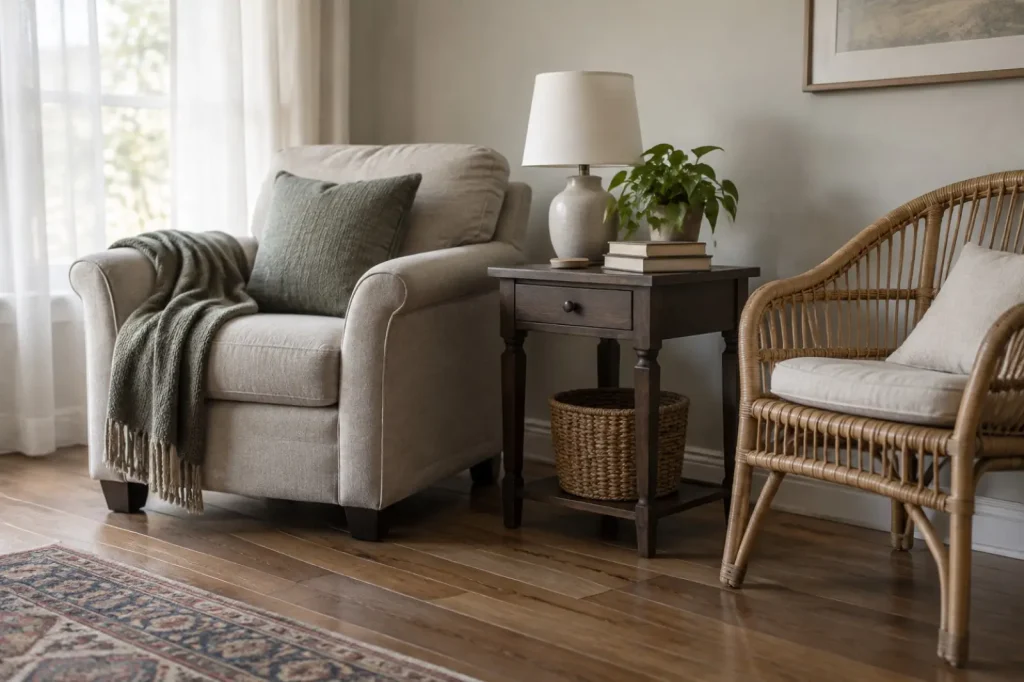
The short answer
Mold on furniture is cleaned by material, never with one spray. Vacuum or brush loose growth off outdoors, then wipe finished wood with mild detergent on a cloth wrung almost dry, treat upholstery only as its W, S, W-S or X code allows, clean leather with mild soap and distilled water, and treat wicker sparingly. Flood-soaked upholstered pieces are usually discarded.
Key takeaways
- The cleaning code on the tag under the cushions decides upholstery: W means water-based, S means solvent only, W-S means either, and X is where makers disagree.
- La-Z-Boy and New Classic Furniture define X as vacuum or brush only; American Leather calls X professional cleaning only.
- Per EPA 402-K-01-001, upholstered furniture may be hard to dry within 48 hours, and discard enters its method list once growth passes 10 square feet.
- NDSU Extension says flood-soaked upholstered pieces should usually be thrown away unless they are antiques or quite valuable.
- Antiques dry slowly: per the NPS, let humidity fall to about 55% over days, no more than about 10% a day.
- Rattan is porous; Walters Wicker warns that heaters and blow dryers can split it.
On this page
A tabletop finish, a polyester cushion and a rattan weave fail in opposite ways; the method that saves one ruins the next.
Which piece is it? Keep, clean or let go
Find your row before you touch anything.
| Piece and condition | Verdict | Who does it |
|---|---|---|
| Finished wood, surface spots, no water damage | Clean in place | Owner |
| Unfinished or raw wood, surface growth | Clean, then dry slowly | Owner, or a pro if structural |
| Upholstery, small spot, code W, S or W-S | Spot clean within the code | Owner |
| Upholstery, code X or growth over a large area | Vacuum only, or professional cleaning | Professional |
| Leather sofa or chair, surface bloom | Clean with soap and distilled water | Owner |
| Wicker or rattan, light mildew | Sparing bleach mix, rinse | Owner |
| Antique, veneered, gilt or inlaid | Stabilise, do not clean | Conservator |
| Upholstered, soaked by floodwater | Usually discard unless antique or valuable | Professional estimate first |
| Veneered, soaked by floodwater | Usually not worth repair unless valuable | Owner decides |
Mold or look-alike: what you are looking at
Per NPS Conserve O Gram 3/4, the first sign is usually a musty odour, and mold can be velvety in almost any colour or a powdery deposit that glows under ultraviolet light. Furniture adds three look-alikes.
| What you see | Likely cause | How to tell |
|---|---|---|
| White film on a waxed wood top | Wax buildup | UF/IFAS: remove with furniture cleaner, re-wax thinly |
| White fuzzy spots on wood | Mildew | NDSU: wood alcohol or turpentine on a cotton ball lifts it |
| Lifting veneer, split members, failed joints | Water damage | NPS COG 7/7 lists these as water damage to wood |
| Pale bloom on leather | Usually mold | Musty smell; returns after wiping; UV glow |
| Ring on a fabric cushion after cleaning | Overwetting | UGA: upholstery finish migrates and leaves a circle |
Why it grows: EPA's Brief Guide to Mold, Moisture and Your Home links condensation to walls behind furniture and sets indoor humidity below 60 percent, ideally 30 to 50.
The method, material by material
| Material | Method | Avoid | Source |
|---|---|---|---|
| Finished wood | Vacuum; mild detergent on a cloth wrung almost dry; one small area at a time; dry each area | Standing water on the finish | UF/IFAS; EPA Table 1 |
| Unfinished wood | Mist growth before removal; detergent and water; dry slowly to below 20% moisture content | Fast drying in direct sun | WWPA; NC State |
| Upholstery W | Water-based shampoo or foam, spot only, pretested | Solvents; saturation; hot water extraction | La-Z-Boy |
| Upholstery S | Water-free dry cleaning solvent, spot only | Any water | La-Z-Boy; New Classic |
| Upholstery, any code allowing it | Brush outdoors, vacuum, sun and air; or 1 cup alcohol to 1 cup water, blot | Alcohol on acetate or acrylic | UGA |
| Leather | Half mild soap, half distilled water on a damp cloth; blot | Heat sources closer than 12 inches; direct sun | La-Z-Boy |
| Wicker and rattan | Damp cloth with mild dish soap; soft brush; air dry | Heaters, blow dryers, abrasives | Walters Wicker |
| Antiques | Blot, isolate, dry slowly, call a conservator | Scrubbing; adhesive tape; biocides | NPS COG 7/7 and 3/4 |
Furniture bleach recipes run about one part in twenty, far weaker than the clothing soaks on our sibling page about mold in closets.
Mold on wood furniture: finished and unfinished
Finished wood. UF/IFAS Extension Jefferson County gives the method: vacuum the growth, then clean with a soft cloth dipped in mild detergent and water and wrung almost dry, one small area at a time, rinsing with a clean damp cloth and drying each area before moving on. Its warning is the reason: water damages wood if it stays on it. Table 1 of EPA 402-K-01-001 agrees that treated or finished wood may be cleaned with mild detergent and clean water. NDSU Extension flood furniture guide adds wood alcohol or turpentine on a cotton ball for white mildew spots, and cream restorers with lanolin afterward.
Why this differs from generic advice: a finish is a seal; keep water on top of it and out of the joints.
Unfinished wood. With no finish, the wood takes up water. According to the Western Wood Products Association fact sheet, mold cannot grow on wood dried below 20% moisture content; it advises misting growth before wiping because dry wiping releases spores. NC State Extension tells owners to dry flood-wet frames slowly, in a ventilated space out of direct sun, to prevent warping. For studs, joists and rot, see our guide to mold on wood.
Why this differs from generic advice: raw wood needs a moisture reading, not a drier look, and sun drying warps it.
Mold on upholstery: the cleaning code decides
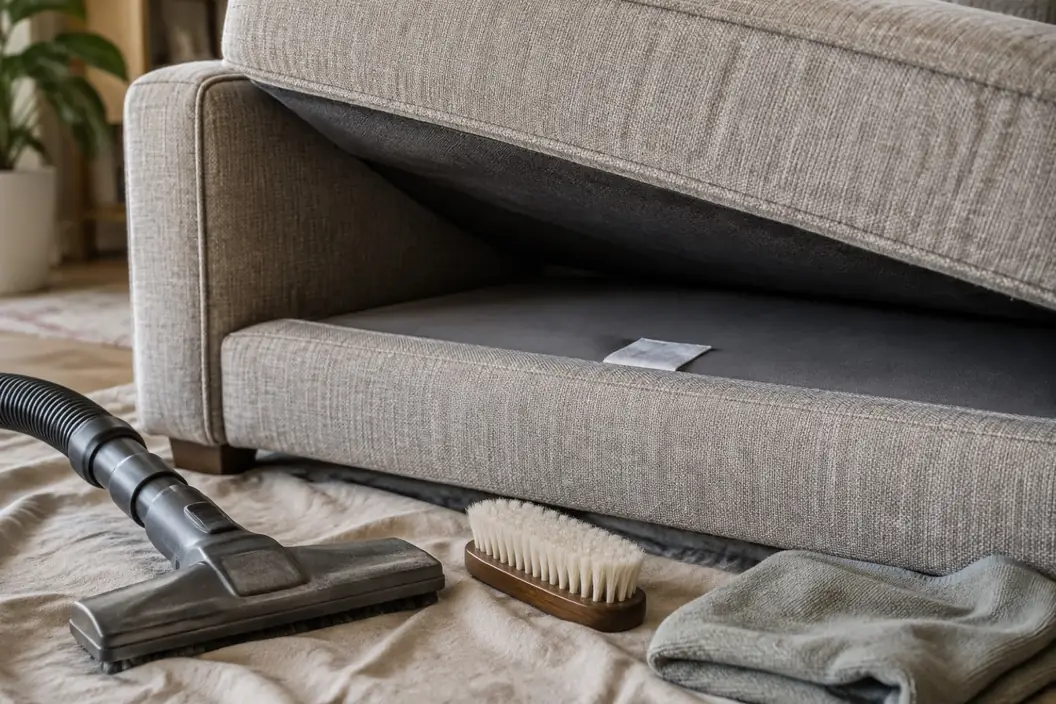
The cleaning code is on a tag attached to the piece, usually under the cushions. Three makers define it:
| Code | La-Z-Boy | New Classic Furniture | American Leather |
|---|---|---|---|
| W | Spot clean only with water-based shampoo or foam upholstery cleaner | Water-based cleaning agents; foam from water-based cleaners | Water-based solutions or mild detergents are safe |
| S | Spot clean only with a water-free dry cleaning solvent | Mild water-free solvent or dry cleaning product | Only water-free, solvent-based cleaners |
| W-S or S/W | Neutral soap and water; for heavier oil-based stains, a nonbleaching cleaner or solvent | Either water or solvent-based products | Both water and solvent cleaners are safe |
| X | No foam or liquid cleaner of any type; vacuum or brush | Vacuum or gently brush only; never any cleaning agent | Do not attempt to clean it yourself |
Two warnings in the La-Z-Boy text change mold cleanup: cushion covers should not be removed and laundered or dry cleaned, and for code W, hot water extraction or steam cleaning is not recommended. That conflicts with EPA 402-K-01-001, whose Method 1 says steam cleaning may be an alternative for some upholstered furniture. The tag is specific to the fabric; EPA is general. Follow the tag.
For the mold itself, University of Georgia Extension prints a sequence: brush the cover outdoors with a soft broom, vacuum, dry with a fan and sun if damp, then sponge with dry-cleaning solvent or wipe with 1 cup denatured or rubbing alcohol to 1 cup water. It warns that overwetting leaves a ring and alcohol damages acetate, triacetate, modacrylic and acrylic.
Why this differs from generic advice: ‘spray with vinegar’ is exactly what an S or X tag forbids.
Mold on leather furniture
La-Z-Boy fabric and leather care page sets the routine: dust and vacuum often, wipe with a soft cloth slightly dampened with distilled water, clean spills with half mild soap and half distilled water, blot rather than rub, keep leather at least 12 inches from radiators and other heat, and call a professional leather cleaner for difficult stains. UF/IFAS Extension Jefferson County uses 1 cup denatured alcohol to 1 cup water on leather goods after a colourfastness test, then saddle soap and a wax dressing. La-Z-Boy’s routine uses no alcohol, so test any alcohol wipe under a cushion first.
Why this differs from generic advice: leather is a protein material that NPS Conserve O Gram 3/4 calls particularly susceptible, so it gets soap and distilled water, not a bleach spray.
Wicker and rattan
The Walters Wicker rattan care sheet explains the material: wicker is a weave, most often of rattan, a porous reed that can warp if stored in moist conditions and grow mildew within the reed itself. Routine cleaning is a damp cloth with a little mild dish soap and a soft brush, then a clean cloth to remove all soap, then air drying. Heaters and blow dryers can split or crack it.
For advanced mildew it prints a mix of 4 teaspoons of household bleach and 1 teaspoon of mild dish soap per 1 1/2 cups of lukewarm water, brushed sparingly onto affected areas and rinsed thoroughly, because residual bleach in the reed causes premature deterioration. Ask before bleaching coloured finishes.
Why this differs from generic advice: soaking a basket or hosing a chair drives water into the reed, which is where its maker says mildew grows. Wet the surface, not the core.
Antiques: stabilise first, clean later
NPS Conserve O Gram 7/7 (Alan Levitan, NPS furniture conservator, 1993) is the museum procedure for water-soaked wooden furniture. Its rules:
- Blot, do not scrub; flood water carries abrasive grit.
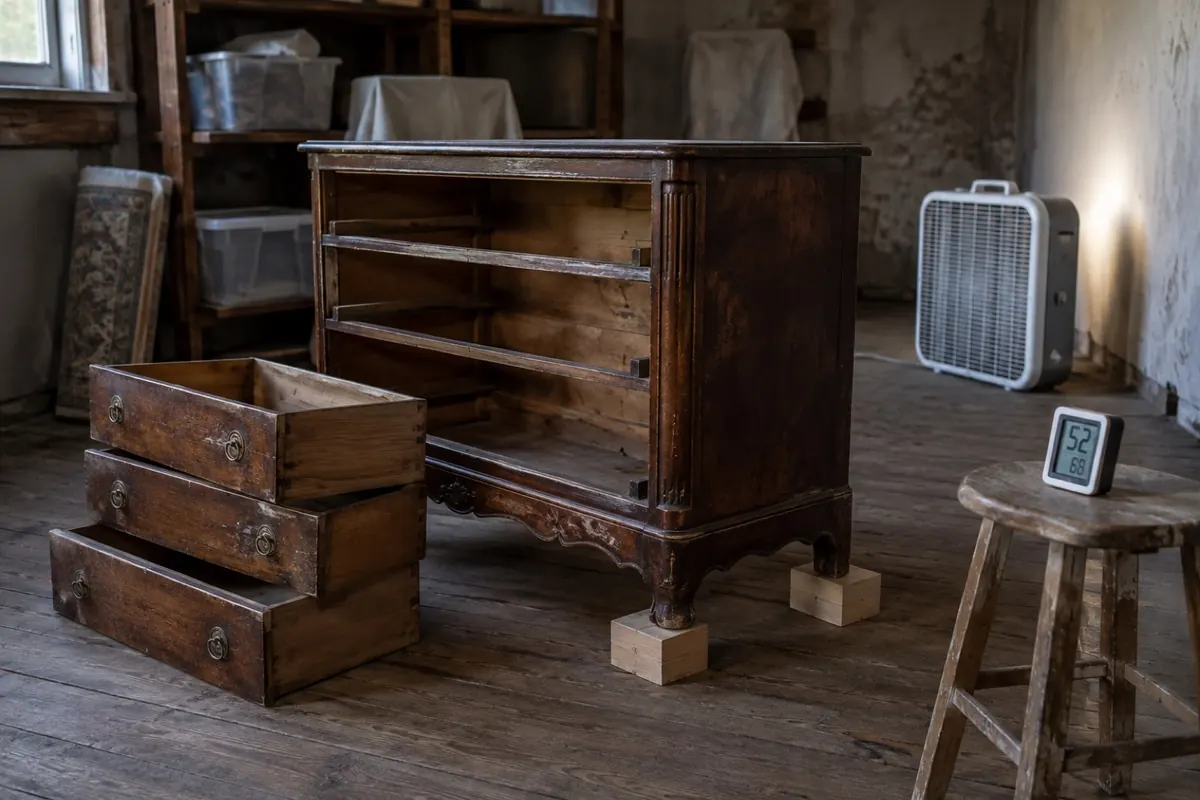
- Lift by the lowest structural member: tables by aprons, chests by bottom rails; remove drawers.
- Open doors and lids, block pieces up, and aim fans away from the object.
- Per the NPS, let humidity fall slowly to about 55%, no more than about 10% per day, slower for veneer and inlay.
- Bag loose pieces with a label; never tape them. Protein glues soften in water.
- Remove iron hardware if it can be done safely; it stains oak.
NPS Conserve O Gram 3/4 adds: seal an infested object in polyethylene, do not touch the mold, lower the humidity, and vacuum only when the growth is dry and powdery, with a HEPA vacuum at the lowest suction. Biocides can become food for fungus as they break down. To find help, the American Institute for Conservation directory lets you search by specialty, including Objects: Furniture; listings are opt-in and tied to membership.
When upholstered furniture goes after a flood
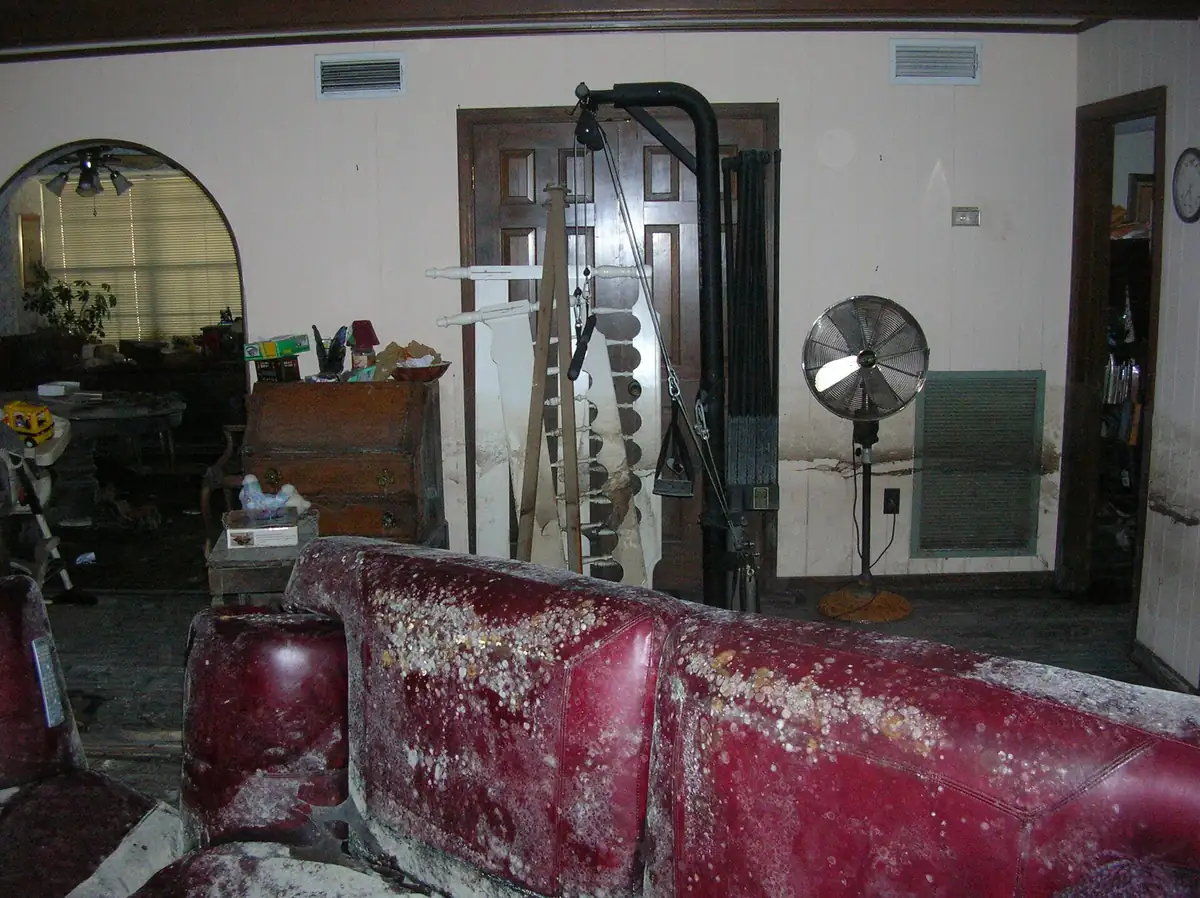

NDSU Extension flood furniture guide is direct: upholstered furniture soaks up contaminants from floodwaters and should be cleaned only by a professional; flood-soaked upholstered pieces should usually be thrown away unless they are antiques or quite valuable. NC State Extension (Sarah Kirby and Wilma Hammett, June 2014) explains why: padding holds water, mildew grows inside and out, and floodwater may carry sewage, pesticides or industrial chemicals.
| Piece | Published verdict | Source |
|---|---|---|
| Flood-soaked upholstered | Usually discard unless antique or quite valuable; professional estimate first | NDSU |
| Upholstered, saving it | Strip to the frame; clamped S springs can be cleaned; burlap webbing usually replaced | NC State |
| Wood frame | 3/4 cup bleach per gallon; dry slowly out of sun to below about 20% moisture | NC State |
| Solid wood | Usually restorable: clean, dry, re-glue | NDSU |
| Veneered wood | Usually not worth repair unless valuable | NDSU |
| Submerged innerspring mattress | Discard | NC State |
| Clean-water upholstery | Extract; dry with dehumidifiers; may not dry within 48 hours | EPA 402 Table 1 |
The building side of a flood belongs to our flood damage restoration guide; the generic EPA method sits on DIY mold remediation.
The contents insurance angle
Furniture is contents, not building. What follows describes standard published wording, not what any policy pays; your policy, your state insurance department and a licensed professional settle that.
| Policy language | What it says | Source |
|---|---|---|
| Coverage C, personal property | Named perils, settled at actual cash value | ISO HO 00 03 |
| Water discharge peril | Excludes mold, fungus or wet rot unless hidden within walls, ceilings or floors | ISO HO 00 03 |
| Duties after loss | Inventory of quantity, description, actual cash value, amount of loss | ISO HO 00 03 |
| NFIP contents | Covers furniture; bought separately from building, separate deductible | FloodSmart (FEMA) |
| NFIP limits | Contents up to $100,000; building up to $250,000 | FloodSmart (FEMA) |
| NFIP basements | Personal property in basements not protected | FloodSmart (FEMA) |
Our contents restoration report shows how contents figure in NFIP claims, and our page on homeowners insurance and mold reads the exclusions.
For contractors
Photograph the cleaning code tag before pack-out; it justifies a clean or replace call. Record wood frame moisture readings against the WWPA 20% line, per the fact sheet, and write each piece as cleaned, replaced or referred to a conservator, with the reason, matching the inventory fields above.
Signs it is bigger than the visible spot
- Musty smell after cleaning. Growth is inside the cushion or padding, which NC State says holds water.
- Several pieces in one room. Room humidity is the cause; measure it.
- Lifting veneer, split wood, loose joints. Water damage beyond mold; NPS says a conservator is usually needed.
- Floodwater touched it. The contamination question comes before mold.
- Over about 10 square feet of growth. Past the EPA homeowner line.
- The wall behind the piece is growing too. Condensation or a leak in the building.
What this page does not cover. Health effects are outside our scope; see CDC's mold page and EPA's Brief Guide to Mold, Moisture and Your Home, and ask a physician about personal concerns. Mattresses and bedding are covered only for flood discard.
Questions people actually ask
Can furniture with mold be saved?
Often. Finished and solid wood usually can be cleaned and dried, and NDSU Extension says solid wood is usually restorable. Upholstery can be spot cleaned within its cleaning code. The exceptions are flood-soaked upholstered pieces, which NDSU says should usually be thrown away unless antique or valuable, and veneered pieces with heavy water damage.
Is mold on furniture harmful?
Health effects are outside this publication’s scope. CDC’s mold page and EPA’s Brief Guide to Mold, Moisture and Your Home are the federal references, and a physician is the right person for personal questions. This page covers how to clean, dry or discard the piece.
Why is mould growing on my furniture?
Moisture. EPA notes condensation on walls behind furniture and advises indoor humidity below 60 percent. A piece pushed against a cold outside wall, a humid room or water damage are the usual causes. Several moldy pieces in one room point to room humidity rather than the furniture.
Will Dawn dish soap kill mold on wood?
EPA’s guidance is about removal: detergent and water, then drying. UF/IFAS Extension uses a soft cloth with mild detergent and water, wrung almost dry, on finished wood. A dish detergent fits that method, but cleaning removes growth rather than sterilising wood; our kill versus remove guide explains the difference.
How do I get mold off a couch?
Check the cleaning code on the tag first. Brush and vacuum the cover outdoors if you can, dry it, then spot clean only as the code allows: water-based for W, solvent for S, either for W-S, nothing liquid for X. University of Georgia Extension also prints a 1 to 1 alcohol and water wipe where the fabric tolerates it.
What is the white mold on my wood furniture?
It may be mildew or a look-alike. UF/IFAS Extension says a white film on waxed wood is likely wax buildup, removed with furniture cleaner and a thin coat of paste wax. NDSU Extension says white mildew spots can be lifted with wood alcohol or turpentine on a cotton ball. A musty smell points to growth.
Sources
- La-Z-Boy fabric and leather care page, La-Z-Boy Inc. Retrieved 19 October 2026.
- New Classic Furniture care guide, New Classic Furniture, on Home Depot’s CDN. Retrieved 19 October 2026.
- American Leather cleaning code guide, American Leather, undated. Retrieved 19 October 2026.
- EPA 402-K-01-001, Mold Remediation in Schools and Commercial Buildings, US EPA, Tables 1 and 2. Retrieved 19 October 2026.
- EPA's Brief Guide to Mold, Moisture and Your Home, US EPA, updated 18 February 2026. Retrieved 19 October 2026.
- EPA's mold cleanup page, US EPA, updated 4 June 2026. Retrieved 19 October 2026.
- CDC's mold page, dated 26 September 2024. Retrieved 19 October 2026.
- UF/IFAS Extension Jefferson County, undated. Retrieved 19 October 2026.
- University of Georgia Extension, textiles stain removal guide, undated. Retrieved 19 October 2026.
- NDSU Extension flood furniture guide, via North Dakota emergency services. Retrieved 19 October 2026.
- NC State Extension, Kirby and Hammett, 5 June 2014. Retrieved 19 October 2026.
- Western Wood Products Association fact sheet, Mold and Wood Products No. 3. Retrieved 19 October 2026.
- Walters Wicker rattan care sheet, Walters Wicker. Retrieved 19 October 2026.
- NPS Conserve O Gram 7/7, July 1993. Retrieved 19 October 2026.
- NPS Conserve O Gram 3/4, August 2007. Retrieved 19 October 2026.
- American Institute for Conservation directory. Retrieved 19 October 2026.
- ISO HO 00 03 05 11 (Maine Bureau of Insurance copy). Retrieved 19 October 2026.
- FloodSmart, FEMA's flood insurance site, undated. Retrieved 19 October 2026.
- Recipe shares are arithmetic on published ratios. No test or survey was conducted. See our methodology and the mold hub.
Care tags override general guidance. Read the tag on your piece and your own policy.