The short answer
Usually no: the answer to does homeowners insurance cover foundation leaks from groundwater is an exclusion, because the filed ISO HO 3 special form excludes water below the ground that “seeps or leaks through” a foundation. The main exception is a sudden plumbing leak. Water escaping a pipe inside the house, or one encased in the slab, can be covered, including tear out to reach the pipe.
Four clauses in a standard homeowners form decide a foundation leak claim. This page quotes them from four filed HO-3 forms posted on the Oklahoma Insurance Department policy forms page: the ISO HO 3 special form (ISO copyright 1999), the CSAA HS 00 03 OK 10 14, the AAIS Form 3, edition 2.0 and the USAA HO-3R(02). Forms filed in other states and newer editions can differ, so the declarations page and the policy jacket in hand are the only text that applies to a given house.
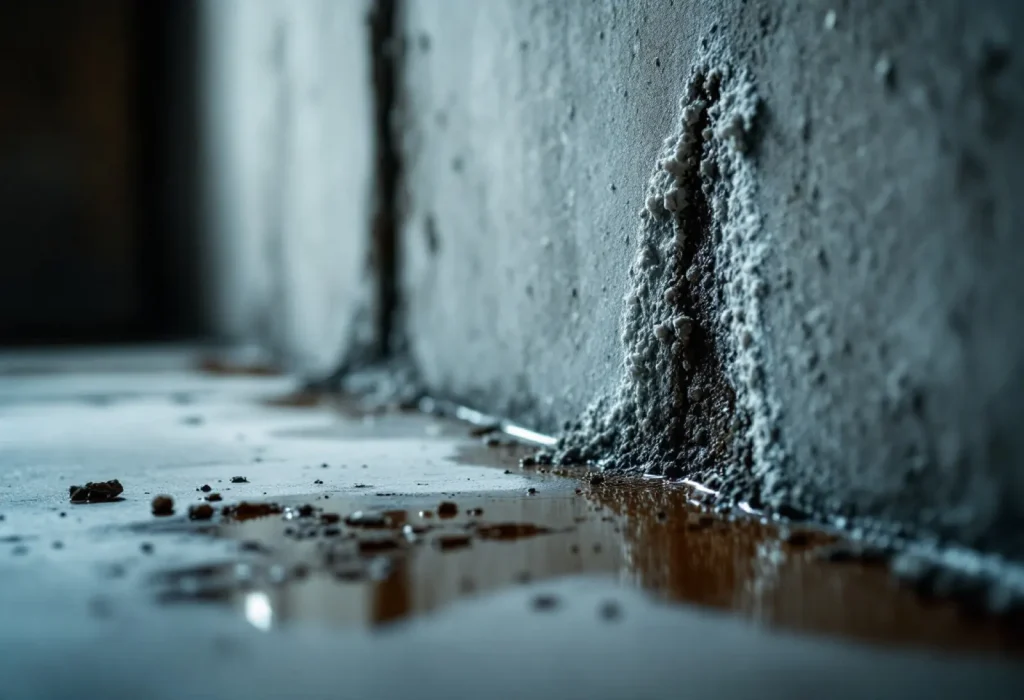
Is groundwater seeping through a basement wall covered under exclusion A.3.c?
Not under the forms read for this page. The ISO HO 3 special form defines Water Damage in Section I, Exclusion A.3, and paragraph c reads: “Water or water-borne material below the surface of the ground, including water which exerts pressure on or seeps or leaks through a building, sidewalk, driveway, foundation, swimming pool or other structure.” The CSAA HS 00 03 OK 10 14 widens the same paragraph to water “whether occurring naturally or artificially” that “seeps, leaks or flows through” a foundation, patio, spa or hot tub.
Two lead-in sentences make the exclusion hard to argue around. The ISO form opens Section I, Exclusion A with “We do not insure for loss caused directly or indirectly by any of the following. Such loss is excluded regardless of any other cause or event contributing concurrently or in any sequence to the loss.” The CSAA form adds that Exclusion A.3 “applies regardless of whether any of the above is caused by an act of nature or by human or animal forces”, which closes the argument that a neighbour’s regrading or a broken municipal main pushed the water in.
State regulators describe it the same way. The North Carolina Department of Insurance flood FAQ says “the standard homeowner’s policy does not cover water damage due to the seepage of water through the walls or floor of a basement. There is no endorsement available for this exposure.” The Minnesota Department of Commerce lists “water that seeps through the basement walls and floors” inside the homeowners water exclusion, and in the same answer notes that “water damage caused by a broken pipe in the house would be covered.”
Five ways water gets into a foundation, and which clause each one meets
The cause of the water, not the place it shows up, picks the clause. The diagram traces the five common paths through a basement section, and the table quotes the clause each one meets in the ISO HO 3 special form and the CSAA HS 00 03 OK 10 14, with the outcome the form text produces. The sixth row covers the slow leak that sits between them.
| Scenario | Water path | Clause that governs it | Outcome per the form text |
|---|---|---|---|
| Groundwater seepage after heavy rain | Through the wall or up through the slab from saturated soil | Section I, Exclusion A.3.c: water below the surface of the ground | Excluded in all four forms read; NC regulator: no endorsement sold |
| Cracked foundation wall | Soil movement or settling opens a crack that lets water in | Perils c.(6)(f) settling, shrinking, bulging; Exclusion A.2 earth movement | Crack and leak excluded; ensuing loss clause can apply to other covered damage |
| Plumbing leak under the slab | Supply or drain line encased in the slab | Exception to c.(6); CSAA: A.3.a and c lifted for a pipe encased in the slab | Water damage and tear out to repair the pipe can be covered; the pipe itself is not |
| Flood through a window well | Surface water fills the well and pours through the window | Exclusion A.3.a: flood, surface water; SFIP flood definition | Excluded by homeowners; a flood policy responds only to a flood as the SFIP defines it |
| Sump pump fails or is overwhelmed | Pit overflows onto the slab | Exclusion A.3.b: discharged from a sump, sump pump or related equipment | Excluded unless a water backup or sump endorsement is bought |
| Slow pipe leak left for weeks | Dripping fitting soaks the wall base and slab edge | CSAA c.(6): over a period of weeks, months or years; USAA: 14 days or more | Excluded unless unknown to all insureds and hidden in walls or floors |
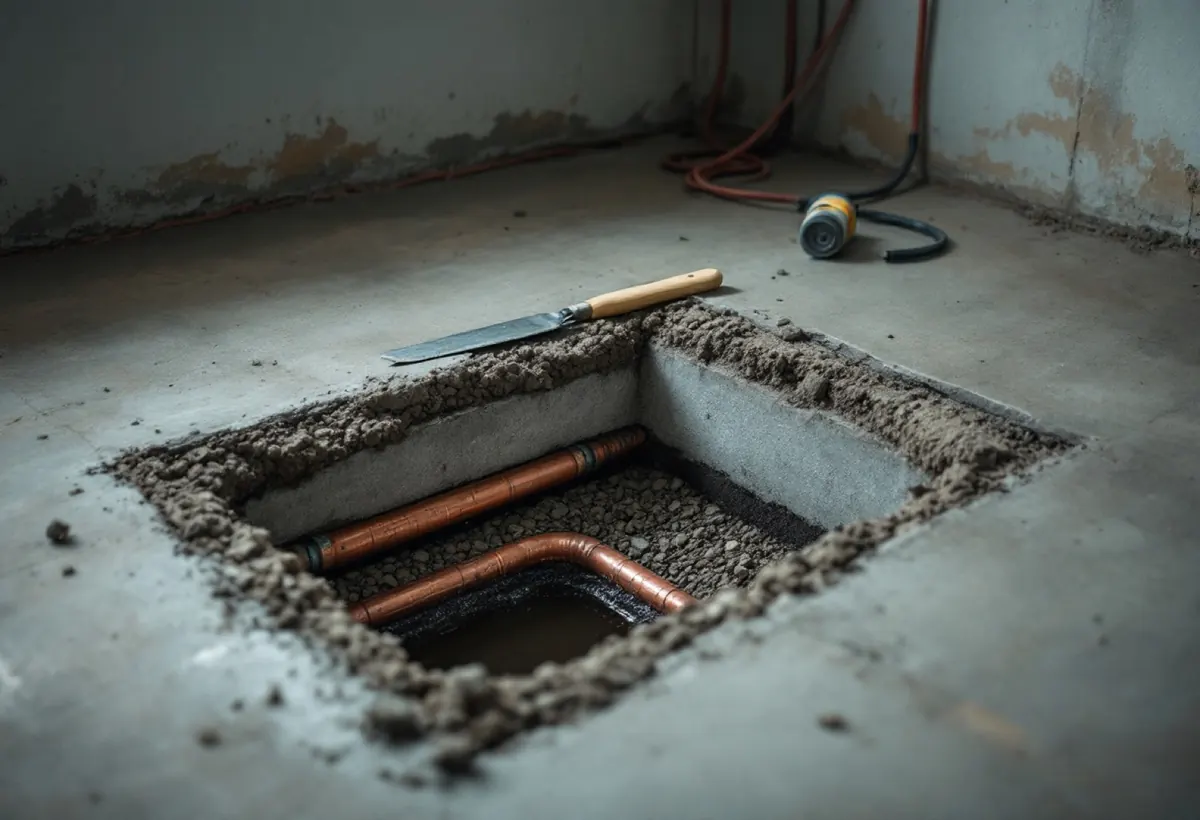
A slab leak under the floor: what the plumbing exception adds back, and what it leaves out
The ISO HO 3 special form carves an Exception to c.(6) out of its own exclusions: “we cover loss to property covered under Coverage A or B resulting from an accidental discharge or overflow of water or steam from within a” plumbing, heating, air conditioning or sprinkler system or household appliance. It continues: “This includes the cost to tear out and replace any part of a building … but only when necessary to repair the system or appliance.” Then the line that limits it: “We do not cover loss to the system or appliance from which this water or steam escaped.”
The surface water and groundwater wording would otherwise swallow a slab leak, because the water is literally below the ground. The ISO form handles that in one sentence: Exclusion A.3 paragraphs a and c “do not apply to loss by water covered under c.(5) and (6) above.” The CSAA HS 00 03 OK 10 14 is narrower and more explicit. It lifts those paragraphs only “when the source of water is solely from a plumbing pipe that is fully enclosed within a building, or fully encased within a slab foundation beneath a building.”
Two definitions trim the exception in every form read. In the ISO, CSAA and AAIS text, a plumbing system “does not include a sump, sump pump or related equipment or a roof drain, gutter, downspout or similar fixtures or equipment”, so a failed downspout soaking the footing is not a plumbing leak. The AAIS Form 3, edition 2.0 words its version as a Seepage or Leakage exclusion that still pays for “accidental leakage, overflow, or discharge” and the “reasonable cost of removing and replacing those parts of the building” needed to reach the system.
Finding and repairing the pipe itself is a licensed plumber’s work, which our sister site The Plumbing Brief (theplumbingbrief.com) covers.
Why does a cracked foundation fall outside the ISO HO 3 settling and earth movement clauses?
Two separate clauses reach a crack. Under Coverage A perils, the ISO HO 3 special form does not insure loss caused by “Settling, shrinking, bulging or expansion, including resultant cracking, of bulkheads, pavements, patios, footings, foundations, walls, floors, roofs or ceilings” at c.(6)(f). Section I, Exclusion A.2 then removes Earth Movement: earthquake, landslide, mudslide, subsidence, sinkhole and “any other earth movement including earth sinking, rising or shifting.” The CSAA HS 00 03 OK 10 14 spells out “compaction, expansion or failure of support of soil” and erosion, “whether combined with water or not.”
The USAA HO-3R(02) folds the same idea into its collapse definition: “Damage consisting solely of settling, cracking, shrinking, bulging or expansion is not covered unless it is the direct result of collapse.” The ISO collapse coverage at E.8 goes one step further for foundations specifically: loss to a “foundation, retaining wall, bulkhead” is not included under the hidden decay, insect, weight and defective construction causes “unless the loss is a direct result of the collapse of a building.”
What survives is the ensuing loss sentence. The ISO form says that under its c.(6) exclusions “any ensuing loss to property described in Coverages A and B not precluded by any other provision in this policy is covered.” The question to put to the adjuster is whether a plumbing discharge caused the movement, or the movement broke the pipe, since the form treats those two sequences differently. Assessing the crack itself is work for a structural engineer licensed in the state, not an insurance question.
How do the CSAA, AAIS and USAA forms word the same foundation clauses?
The clauses move between forms, but the result barely changes. The one real difference is how long a leak may run before it turns into an excluded seepage loss. The CSAA HS 00 03 OK 10 14 uses “over a period of weeks, months or years” and lifts the exclusion when the condition and damage are “unknown to all insureds and hidden within the walls or ceilings or beneath the floors”. The USAA HO-3R(02) draws a hard line at “14 days or more”.
| Situation | ISO HO 3 (1999) | CSAA HS 00 03 OK 10 14 | AAIS Form 3 Ed 2.0 | USAA HO-3R(02) |
|---|---|---|---|---|
| Groundwater through a foundation | Excluded, A.3.c | Excluded, A.3.c, natural or artificial | Excluded, water below the surface | Excluded, seeps through a foundation |
| Settling or cracking | Excluded, c.(6)(f) | Excluded, c.(7)(f) | Excluded, exclusion 6 | Excluded, exclusion k. |
| Long term seepage from plumbing | No time test in this edition | Weeks, months or years, unless hidden and unknown | Repeated or continuous seepage | 14 days or more |
| Sump overflow | Excluded, A.3.b | Excluded, A.3.b | Excluded, sump pump well | Excluded, sump well |
| Mold or fungi from a covered leak | Hidden mold from a covered discharge | Limited coverage, $5,000 per the form | Not read for this page | Up to $2,500 per the form |
Per the CSAA form, its $5,000 fungi limit covers removal, tear out to reach the growth, testing and extra living costs combined; per the USAA form, its $2,500 limit covers treatment, tear out and testing. A foundation leak that runs long enough to grow mold hits both the seepage clock and that cap, which is the point of how the fungi limits work.
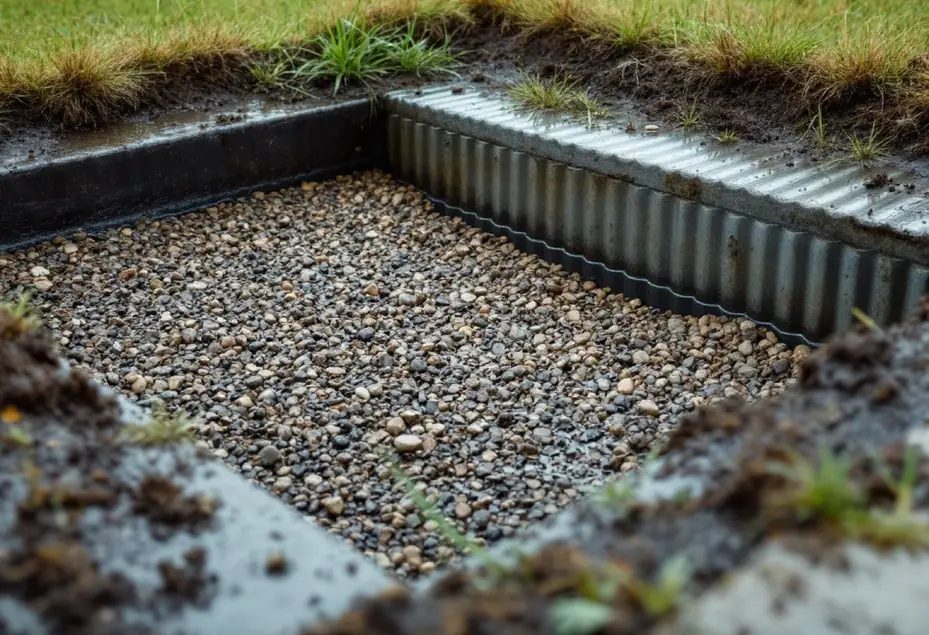
Sump failure and a flooded window well: where the backup endorsement and the SFIP take over
Exclusion A.3.b in the ISO HO 3 special form removes water that “overflows or is discharged from a sump, sump pump or related equipment”. The AAIS Form 3, edition 2.0 adds “or other type of system designed to remove subsurface water which is drained from the foundation area”. The Minnesota Department of Commerce says neither flood insurance nor a typical homeowners policy covers “the inability of sump pumps to handle runoff water from a major downpour”, and that homeowners “must purchase a separate product or endorsement”. It also warns that “a sewer or sump pump endorsement on your policy does not mean you have coverage for flood.”
A flood policy has its own threshold. Under the Standard Flood Insurance Policy, 44 CFR Part 61 Appendix A(1), flood means “a general and temporary condition of partial or complete inundation of two or more acres of normally dry land area or of two or more properties (one of which is your property)”. Section V.D.5 excludes water that “seeps or leaks on or through the insured property” or overflows a sump “unless there is a flood in the area and the flood is the proximate cause”, and V.D.6 applies the same test to “the pressure or weight of water”. A window well that fills in a storm on one lot is not a flood under that definition; the same well filling while the street floods can be.
Inside a basement the SFIP pays only a closed list of 17 building items, and item (17) is “footings, foundations, posts, pilings, piers, or other foundation walls and anchorage systems required to support a building”, per section III.A.8.a. Section V.C excludes earth movement “even if the earth movement is caused by flood”, including “destabilization or movement of land that results from accumulation of water in subsurface land area.” The full list is set out under which basement items the flood policy lists.
Since the leak itself is excluded, what does stopping groundwater at the foundation involve?
No form read here pays to waterproof a wall, regrade a yard or install drainage, because those fix the excluded cause rather than repair covered damage. Our pages on basement waterproofing cost by method and French drain cost set out the published prices for interior drains, exterior membranes and sump systems; that work belongs to a basement waterproofing contractor. A seep that has gone unnoticed for the CSAA form’s “weeks, months or years” often shows first as odour, which is why our guide to tracing a musty basement smell to its source matters before any claim is filed.
Before filing a foundation leak claim, what does Section I Conditions B ask of the homeowner?
The ISO HO 3 special form lists duties after loss that apply to any claim, including a covered slab leak: “Give prompt notice to us or our agent”, “Protect the property from further damage”, “Make reasonable and necessary repairs to protect the property” and “Keep an accurate record of repair expenses”. It requires a signed, sworn proof of loss “within 60 days after our request”, per Condition B.8. The insurer has “no duty to provide coverage” if failing those duties “is prejudicial to us”.
Questions worth putting in writing to the insurer, with the form number from the declarations page in hand:
- Which edition of the form applies, and does it carry a time test for seepage, such as the USAA 14 day line or the CSAA weeks, months or years wording?
- Does the policy carry a water backup or sump overflow endorsement, what is its sublimit, and does it exclude backup that happens during a flood, as the Minnesota Department of Commerce says some do?
- If a pipe in the slab leaked, will the adjuster pay to tear out and replace the slab section needed to reach it, per the Exception to c.(6), and how is the line drawn at the pipe itself?
- Did the adjuster attribute the crack to settling or earth movement, and on what evidence?
If the answer is disputed, the state insurance department takes complaints; the North Carolina Department of Insurance flood FAQ lists the Consumer Division at 855-408-1212, and the Minnesota Department of Commerce lists 651-539-1600. A licensed public adjuster or an insurance coverage attorney can read the denial letter against the form. The question of whether a water claim is worth filing turns on the deductible and these clauses; the insurance hub gathers the rest, including homeowners water damage claims in general.
Questions people actually ask
Does home insurance cover water damage from a foundation leak?
It turns on the source. Per the ISO HO 3 special form, groundwater seeping through a foundation is excluded at Section I, Exclusion A.3.c, so the interior damage it causes is excluded too. Water from an accidental plumbing discharge is treated differently: the Exception to c.(6) covers resulting damage to the dwelling, while the leaking pipe itself is not covered.
Can you live in a house while foundation repair is done?
That is a safety question for the contractor and the local building department. On the insurance side, ISO Coverage D pays additional living expense only “if a loss covered under Section I” makes the home “not fit to live in”. Repairing an excluded settlement crack does not trigger it; a covered slab leak repair can, for “the shortest time required to repair or replace the damage.”
How do you get insurance to pay for foundation repair?
Only a covered cause opens the door. Under the ISO form that means a sudden plumbing discharge, a collapse as defined at E.8, or an ensuing loss after an excluded event. Report promptly, photograph the leak point, keep repair receipts, and send the signed proof of loss within 60 days of the insurer’s request per Condition B.8.
Does flood insurance cover a foundation?
Yes, within limits. The NFIP Standard Flood Insurance Policy lists “footings, foundations, posts, pilings, piers, or other foundation walls” as item (17) of building property covered in a basement, at section III.A.8.a. The damage must come from a flood of at least two acres or two properties, and earth movement is excluded at V.C even when a flood causes it.
Is there an endorsement that covers basement seepage?
Not for homeowners, according to the North Carolina Department of Insurance flood FAQ: “There is no endorsement available for this exposure.” Water backup and sump overflow endorsements exist, and the Minnesota Department of Commerce describes them, but they answer Exclusion A.3.b, not the groundwater wording in A.3.c.
Sources
- ISO HO 3 special form, Insurance Services Office, copyright 1999, posted by the Oklahoma Insurance Department. Retrieved 21 November 2026.
- CSAA HS 00 03 OK 10 14, Oklahoma Homeowners Policy, CSAA General Insurance Company, posted by the Oklahoma Insurance Department. Retrieved 21 November 2026.
- AAIS Form 3, edition 2.0, American Association of Insurance Services Special Form, posted by the Oklahoma Insurance Department. Retrieved 21 November 2026.
- USAA HO-3R(02), Homeowners 3R(02) Special Form (07-08), posted by the Oklahoma Insurance Department. Retrieved 21 November 2026.
- Oklahoma Insurance Department policy forms page, Oklahoma Insurance Department. Retrieved 21 November 2026.
- Standard Flood Insurance Policy, 44 CFR Part 61 Appendix A(1), Federal Emergency Management Agency, via eCFR. Retrieved 21 November 2026.
- North Carolina Department of Insurance flood FAQ, North Carolina Department of Insurance, Flood Insurance FAQs (PDF dated September 2019). Retrieved 21 November 2026.
- Minnesota Department of Commerce, Sewer Backup Policy consumer page. Retrieved 21 November 2026.
- Clauses are quoted from the forms as posted; outcomes in the tables describe the form wording, not a claim decision. Our methodology sets out the standing rules.
This page describes filed policy language and regulator guidance. It does not say what any individual policy pays. Read your own declarations page and policy form, and put coverage questions to the insurer, your state insurance department, or a licensed public adjuster or coverage attorney.