The short answer
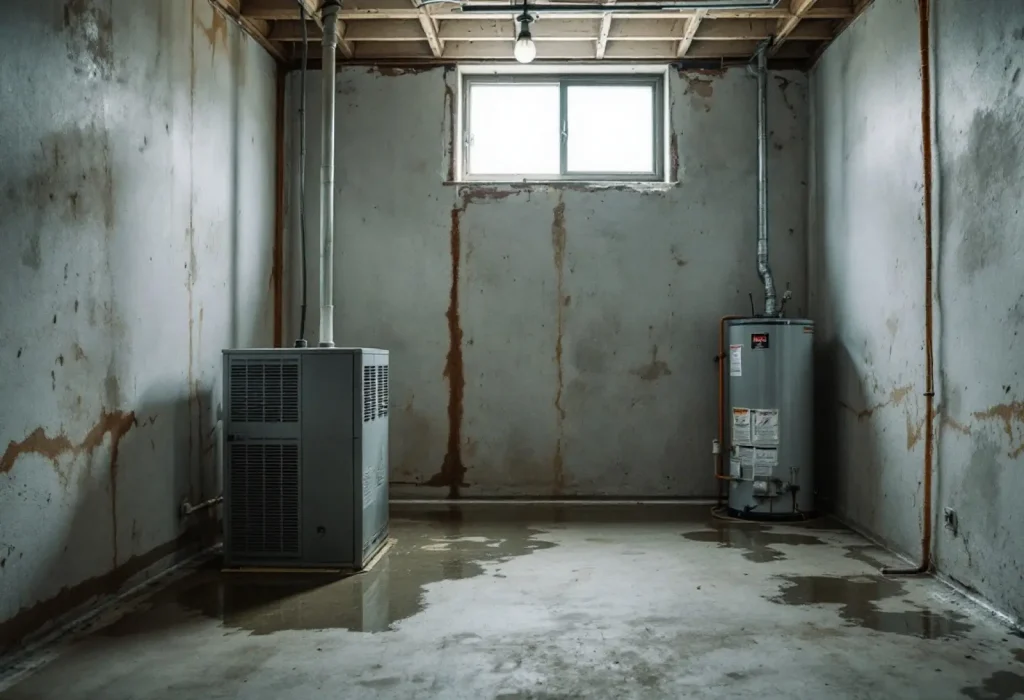
Yes, in part: the answer to does flood insurance cover basements, under the NFIP Standard Flood Insurance Policy, is 17 listed building items, such as furnaces, water heaters, sump pumps and unfinished drywall, plus clean-up, and 3 contents items: washers and dryers, portable or window air conditioners, and freezers with the food in them. Finished floors, paneling, furniture and stored belongings are not on the list.
Is your lower level a basement under SFIP definition II.C.5, or a walkout?
The SFIP Dwelling Form, 44 CFR Part 61 Appendix A(1) defines a basement in section II.C.5 as “any area of a building, including any sunken room or sunken portion of a room, having its floor below ground level on all sides.” Depth does not matter and finish does not matter. A room 2 feet below grade on all 4 sides is a basement for policy purposes; a lower level with one wall fully out of the ground is not.
FEMA spells out the edge cases. Its January 2022 FEMA basement fact sheet says sunken living rooms, crawlspaces and the lower levels of split-level buildings “may still be considered basements because the lowest floor is below ground on all sides.” NFIP Technical Bulletin 10 (March 2023) adds the other half: an area below grade on two or three sides, where the floor is at or above the exterior grade along at least one entire side, “is not a basement, although the area may be called a walkout basement, daylight basement, or terrace or garden level.”
The rating side follows the same line. The April 2020 edition of NFIP Flood Insurance Manual Appendix C tells agents to rate a walkout first level as no basement. One more clause sits at the extreme: SFIP section IV.11 does not insure a building and its contents at all if more than 49 percent of the building’s actual cash value is below ground, with a narrow exception for earth-sheltered homes whose lowest level is at or above the base flood elevation.
Which basement items does the SFIP list as covered, and which does it leave out?
Coverage A in a basement is a closed list. Section III.A.8 of the Standard Flood Insurance Policy Dwelling Form says coverage “is limited to the following” and then names 17 building entries plus clean-up. Each entry counts only “if installed in their functioning locations and, if necessary for operation, connected to a power source.” Coverage B, if bought, is a second closed list of 3 entries in section III.B.5. The table pairs each listed item with the nearest thing that is not covered, with the clause or FEMA document that says so.
| Covered in a basement (SFIP section) | Not covered in a basement (where it says so) |
|---|---|
| Furnaces and hot water heaters (III.A.8.a(8)) | Finished flooring of any kind (FEMA fact sheet, 2022) |
| Central air conditioners (III.A.8.a(1)); heat pumps (III.A.8.a(9)) | Paneling, wallpaper, permanently installed cupboards and bookcases: listed in III.A.7.o but absent from III.A.8 |
| Drywall for walls and ceilings, and the labor to nail it, “unfinished and unfloated and not taped” (III.A.8.a(3)) | Taping, floating and painting drywall: outside the wording of III.A.8.a(3) |
| Nonflammable insulation in a basement (III.A.8.a(10)) | Bathroom fixtures and other built-ins (FEMA fact sheet, 2022) |
| Electrical junction and circuit breaker boxes (III.A.8.a(4)); outlets and switches (III.A.8.a(5)) | Generators and similar items (FEMA fact sheet, 2022) |
| Sump pumps (III.A.8.a(13)); well water tanks and pumps (III.A.8.a(15)) | Dehumidifiers not integral to the heating and air conditioning system (FEMA fact sheet, 2022) |
| Fuel tanks and the fuel in them (III.A.8.a(7)); cisterns and the water in them (III.A.8.a(2)) | Refrigerators: a Coverage A item in III.A.7.s, not on the III.A.8 basement list |
| Water softeners, water filters and faucets that are part of the plumbing (III.A.8.a(14)); solar energy pumps and tanks (III.A.8.a(11)) | Carpet of any kind, and the cost to remove it (III.B.4.b and c; FEMA fact sheet, 2022) |
| Elevators, dumbwaiters and related equipment, with a 30 September 1987 cutoff for equipment below base flood elevation (III.A.8.a(6)) | Couches, computers, televisions and other personal property (FEMA fact sheet, 2022) |
| Attached stairways and staircases (III.A.8.a(12)); footings, foundations and anchorage systems (III.A.8.a(17)) | Stored items not connected to a power source (FEMA fact sheet, 2022) |
| Required utility connections for any listed item (III.A.8.a(16)); clean-up (III.A.8.b) | Removal of any non-covered item, even when it speeds up covered repairs (FEMA fact sheet, 2022) |
| Contents, if bought: clothes washers and dryers, portable or window air conditioners, and food freezers other than walk-in, with the food in any freezer (III.B.5.a to c) | Clothing, furniture, books, photos and anything else stored below grade (FloodSmart: “personal property kept in basements”) |
The pattern behind the list is equipment that keeps the house running and the structure that holds it up. Electrical outlets (III.A.8.a(5)) are on it; finished floors are not. The same form names “paneling, and wallpaper” as Coverage A items elsewhere in the house (III.A.7.o), which is why a finished room upstairs and a finished room below grade can be treated so differently after the same storm.
Why is a chest freezer covered but a refrigerator in the same basement is not?
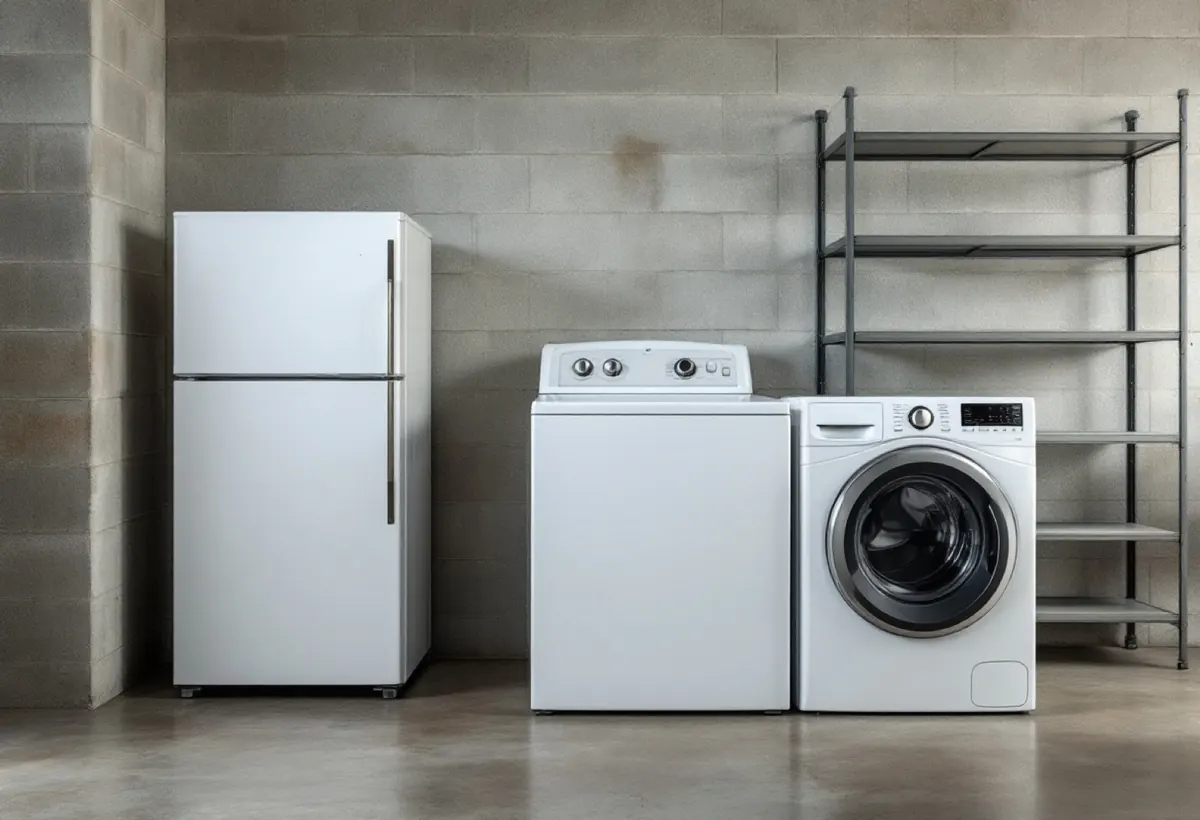
Because the two items sit on different lists. Section III.B.5 limits contents below grade to clothes washers and dryers, portable or window air conditioners, and “food freezers, other than walk-in, and food in any freezer.” A refrigerator is named only in III.A.7.s, the general Coverage A list, and it does not reappear in the 17 basement entries. The FEMA FAQ on basement contents (last updated 5 February 2020) draws the same split: furnace, water heater and circuit breakers under building coverage; washer, dryer, freezer and food only under contents coverage “that must be purchased in addition to building coverage.”
Two conditions narrow it further. The FEMA basement fact sheet says items stored in a basement and “not connected to a power source” are not covered, so a spare washer on a pallet fails the test that a plumbed and plugged washer passes. It also asks owners, before any flood, to record the manufacturer, model, serial number and capacity of furnaces, central air units, freezers, washers and dryers, because the NFIP requires the adjuster to report that information.
Contents coverage limits stack on top of this. Per the text of 44 CFR 61.6, the cap on residential contents coverage is $100,000 in the Regular Program, and SFIP section III.B.8 caps artwork, photographs, collectibles, jewelry and furs at $2,500 per loss anywhere in the house. In a basement those items are already outside the III.B.5 list.
Is water from heavy rain, a sump pump or wall seepage a flood under section V.D.5?
Only when there is a flood in the area. The SFIP’s section II.B.1 definition requires “a general and temporary condition of partial or complete inundation of two or more acres of normally dry land area or of two or more properties (one of which is your property)” from overflow of inland or tidal waters, “unusual and rapid accumulation or runoff of surface waters from any source,” or mudflow. Water that reaches only one basement does not meet that test.
Section V.D.5 then excludes water that “backs up through sewers or drains,” “discharges or overflows from a sump, sump pump, or related equipment,” or “seeps or leaks on or through the insured property,” in each case “unless there is a flood in the area and the flood is the proximate cause.” Section V.D.3 excludes rain, snow, sleet, hail or water spray on their own, and V.D.6 excludes the pressure or weight of water on a foundation wall unless a flood is the proximate cause. The FloodSmart coverage page gives the plain version: a sewer that backed up during a heavy rainstorm is covered, a sewer backup from clogged pipes is not.
| Basement water event | SFIP clause that decides it | Turning point in the wording |
|---|---|---|
| River or surface water enters through windows or doors | II.B.1.a and b | Two or more acres or two or more properties inundated |
| Sump pump overflows during an area flood | V.D.5.b | Flood in the area is the proximate cause |
| Sump pump fails on a dry week | V.D.4.b(2) and V.D.5.b | No area flood; pump failure is within the owner’s control |
| Floor drain backs up in a citywide storm | V.D.5.a | Flood in the area is the proximate cause |
| Groundwater seeps through a block wall | V.D.5.c | Excluded unless an area flood caused the seepage |
| Foundation wall bows from water pressure | V.D.6 | Excluded unless an area flood caused the pressure |
| Water heater bursts | V.D.4.a and b(2) | Condition confined to the dwelling |
Losses that fall outside the SFIP usually belong to a homeowners or renters policy, if anywhere: FloodSmart states that most homeowners and renters policies do not cover flood damage. Drain backup under a homeowners or renters form is its own endorsement question, covered on our water backup coverage page. A burst pipe or failed water heater is a homeowners question; the clause-level reading is on our homeowners water damage page.
What does basement clean-up under SFIP III.A.8.b pay for, and what removal is excluded?
The SFIP lists clean-up as item III.A.8.b with no further wording in the form itself. The FEMA basement fact sheet fills it in: pumping out trapped floodwater, labor to remove or extract spent cleaning solutions, treatment for mold and mildew, and structural drying of salvageable interior foundation elements. The same FEMA document is blunt about the limit: the policy does not pay to remove items it does not cover, “even if the removal of these items facilitates cleanup of covered building repairs, such as the removal of carpet installed inside a basement.”
Timing matters as much as scope. Exclusion V.D.4 removes “water, moisture, mildew, or mold damage” that results from “failure to inspect and maintain the property after a flood recedes.” A basement left wet for weeks can move a mold claim from the clean-up line into that exclusion. The step order for pumping, mucking out and drying is on our basement flood clean-up page.
Why does an enclosure under a post-FIRM house on piers in Zone AE get the same short list?
Section III.A.8 applies its list to two places, not one: property “in a basement regardless of the zone” and property below the lowest raised floor of a post-FIRM building on posts, piers or walls “located in Zones A1-A30, AE, AH, AR, AR/A, AR/AE, AR/AH, AR/A1-A30, V1-V30, or VE.” Section III.B.5 repeats the same two places for contents. So a garage or storage enclosure under a house on piers in Zone VE is limited to the same furnace, water heater, washer, dryer and freezer items as a basement in Zone X.
The definitions decide which buildings fall in. Section II.C.16 covers a building “that has no basement” whose lowest floor is raised above ground level by foundation walls, shear walls, posts, piers, pilings or columns. Section II.C.24 defines post-FIRM as construction or substantial improvement after 31 December 1974, or on or after the community’s first Flood Insurance Rate Map, whichever is later. A basement is limited in every zone; an enclosure is limited only when both the post-FIRM and the zone conditions are met.
Which SFIP deadlines run before and after basement water arrives?
The first clock runs before any storm. Under 44 CFR 61.11(d), a new policy or added coverage takes effect at 12:01 a.m. on the 30th calendar day after the application and premium payment. Paragraph (b) makes coverage bought at a loan closing start at the closing, and paragraph (a) cuts the wait to one day in the 13 months after a flood map revision. Adding contents coverage to protect a basement washer and freezer runs on the same clock.
Two sections pay to keep property out of the water. Per the SFIP, III.C.2.a pays up to $1,000 for sandbags, fill for temporary levees, pumps, and plastic sheeting and lumber, and III.C.2.b pays up to $1,000 to move insured property to safety, covering it there for 45 consecutive days. The sandbag payment also requires an imminent flood plus either general flooding near the building or an official evacuation or civil order, and neither payment raises the Coverage A or B limit.
After the loss, section VII.G.4 asks for a signed and sworn proof of loss “within 60 days after the loss,” with an inventory showing quantity, description, actual cash value and amount of loss for each item (VII.G.3). The form says this applies even if the adjuster does not supply the form or help complete it. What the proof of loss contains and how extensions work is on our proof of loss page.
Does buying the NFIP maximum or a private flood policy widen basement coverage?
The NFIP limits stay fixed. Per the text of 44 CFR 61.6, the Regular Program maximum is $250,000 of building coverage for a single-family dwelling and $100,000 for residential contents, and the basement list applies inside those limits. Buying the maximum does not add a single item to section III.A.8. The SFIP is a federal form under 44 CFR Part 61, so the same basement wording applies in Illinois, Texas or any other state with a participating community.
Private flood policies are written on each insurer’s own form. The South Carolina Department of Insurance says private policies “typically offer broader coverage” than NFIP policies and may include additional living expenses, and the Illinois Department of Insurance says private flood insurance “may offer a broader range/higher amounts of coverage” but “has no guarantee of renewal.” Neither statement says any particular private form covers finished basements; that is read in the form.
Three questions to put to a licensed agent, in writing, before buying either type: does the form define basement the same way as SFIP II.C.5, does it limit basement property to a named list like III.A.8 and III.B.5, and does it cover finished walls, floors and carpet below grade. The Illinois department says its insurance analysts answer consumer questions and give tips on buying private flood cover. Regional premium data is on our flood insurance cost by state page, and paid claims by state are on our flood claims by state page. Both sit in our insurance hub.
Questions people actually ask
Does homeowners insurance cover basement flooding from rain?
FloodSmart states that most homeowners and renters insurance does not cover flood damage and that only a flood policy does. Under the SFIP, rain alone is excluded by section V.D.3 and is covered only when it produces a flood, meaning inundation of two or more acres or two or more properties. Ask your agent whether your homeowners form adds a water backup endorsement and what limit it carries.
Is a finished basement covered by flood insurance?
The finish is the part the NFIP form leaves out. The FEMA basement fact sheet of January 2022 lists finished flooring, finished walls, bathroom fixtures and other built-ins as excluded basement improvements, and SFIP III.A.8.a(3) covers drywall only as “unfinished and unfloated and not taped.” The furnace, water heater and wiring inside the finished room stay on the list.
Does flood insurance cover a basement apartment?
SFIP sections III.A.8 and III.B.5 apply to property “in a basement regardless of the zone” and do not carve out rooms used as living space. A tenant’s contents policy uses the same Dwelling Form, so its III.B.5 list of washers, dryers, window air conditioners and freezers applies below grade. Ask the agent how the declarations page describes the unit’s floor.
Is carpet in a basement covered by flood insurance?
Carpet sits under Coverage B in SFIP III.B.4.b and c, and carpet is not among the 3 contents items allowed in a basement by III.B.5. The FEMA fact sheet of January 2022 also says the policy does not pay to remove non-covered items, and it uses carpet installed in a basement as its example.
Does flood insurance cover basements in Illinois?
The NFIP Dwelling Form is federal text in 44 CFR Part 61 Appendix A(1), so an Illinois NFIP policy carries the same II.C.5 basement definition and III.A.8 list as any other state. The Illinois Department of Insurance notes that private flood insurance may offer broader or higher coverage but has no guarantee of renewal; its insurance analysts take consumer questions.
Sources
- SFIP Dwelling Form, 44 CFR Part 61 Appendix A(1), Federal Emergency Management Agency, Standard Flood Insurance Policy Dwelling Form, sections I to VII, current text as revised 1 October 2021, read via the eCFR. Retrieved 17 November 2026.
- 44 CFR 61.6, Maximum amounts of coverage available, eCFR. Retrieved 17 November 2026.
- 44 CFR 61.11, Effective date and time of coverage, eCFR. Retrieved 17 November 2026.
- FEMA basement fact sheet, FEMA, “What Does Flood Insurance Cover in a Basement?”, January 2022. Retrieved 17 November 2026.
- FEMA FAQ on basement contents, FEMA, “Flood Insurance Coverage for Basement Contents?”, last updated 5 February 2020. Retrieved 17 November 2026.
- FloodSmart coverage page, FloodSmart, National Flood Insurance Program, “What does flood insurance cover?”. Retrieved 17 November 2026.
- NFIP Technical Bulletin 10, FEMA, “Reasonably Safe from Flooding Requirement for Building on Filled Land”, Technical Bulletin 10, March 2023, number of sides below grade. Retrieved 17 November 2026.
- NFIP Flood Insurance Manual Appendix C, FEMA, Lowest Floor Guide, April 2020 edition. Retrieved 17 November 2026.
- Illinois Department of Insurance, “Private Flood Insurance Fact Sheet”. Retrieved 17 November 2026.
- South Carolina Department of Insurance, “Guide to Flood Insurance”. Retrieved 17 November 2026.
- Clause pairings in the covered and not covered table are our reading of the policy text above; no claim outcome is implied. Our methodology sets out the standing rules.
This page describes published policy language and FEMA guidance, not any reader’s coverage. The declarations page, the insurer, and a licensed agent or the state insurance department are the places to confirm what a specific policy pays.