The short answer
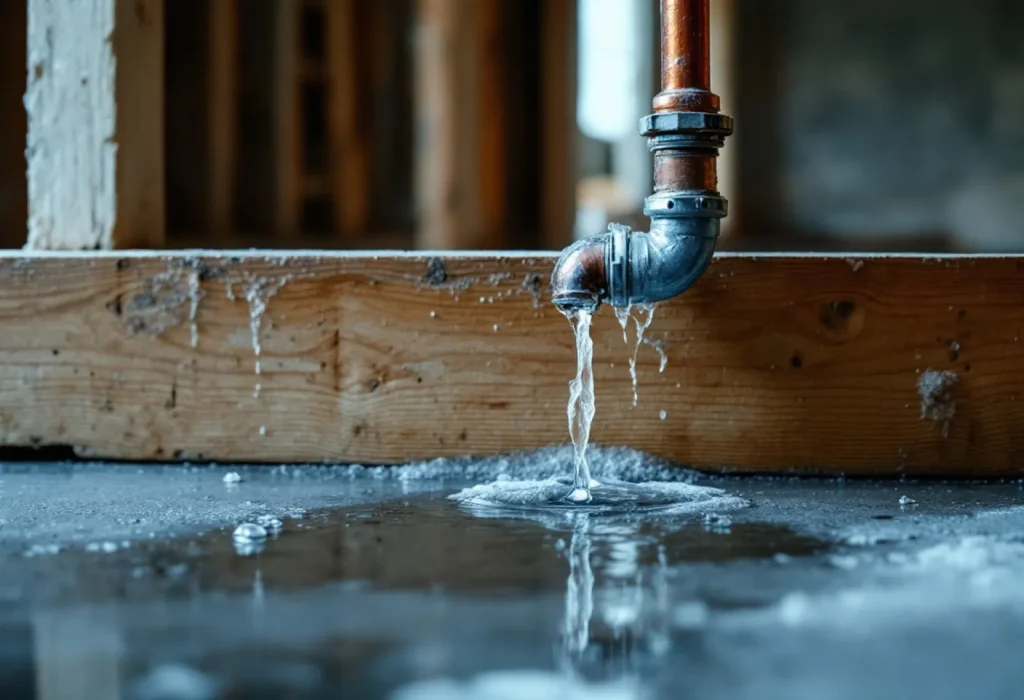
Usually yes: on the question does homeowners insurance cover frozen pipes, the standard ISO HO-3 form covers sudden water damage from a frozen pipe that bursts when you used reasonable care to maintain heat in the building or shut off the water and drained every system. The cracked pipe itself is excluded, and no form reviewed names a thermostat setting.
What does the HO-3 freezing clause say, word for word?
In the ISO HO 00 03 special form posted on the Oklahoma Insurance Department policy forms page (ISO copyright 1999), the rule sits in Section I, Coverage A and B, paragraph 2.c.(1). It removes cover for loss caused by freezing of a plumbing, heating, air conditioning or automatic fire protective sprinkler system or household appliance, and for discharge from it caused by freezing, and then adds the sentence that decides most claims:
“This provision does not apply if you have used reasonable care to: (a) Maintain heat in the building; or (b) Shut off the water supply and drain all systems and appliances of water.”
ISO HO 00 03, Section I, Perils Insured Against, A.2.c.(1)
Two details in that ISO text change outcomes. If the house has an automatic fire sprinkler system, the owner must keep the water supply on and maintain heat, so draining is not an option. And a sump, sump pump, roof drain, gutter or downspout is not a plumbing system for this clause, so a frozen downspout is read under different wording.
Filed forms do not all copy ISO. The table compares the ISO sample with two other homeowners special forms on the same Oklahoma Insurance Department page: the insurer form HS 00 03 OK 10 14, which states it includes ISO material copyright 1999 and 2010, and the AAIS Form 3, edition 2.0 (AAIS copyright 1995).
| Form | When the freezing exclusion applies | Reasonable care test | Sprinkler rule |
|---|---|---|---|
| ISO HO 00 03 (1999 copyright) | At all times, occupied or not | Maintain heat in the building, or shut off and drain | Keep water on and maintain heat |
| HS 00 03 OK 10 14 | At all times, occupied or not | Maintain heat in the entire building, or shut off and drain | Keep water on and maintain heat in the entire building |
| AAIS Form 3 Ed 2.0 | Only while the residence is vacant, unoccupied, or under construction and unoccupied | Maintain heat, or shut off the water and completely empty liquids | No separate sprinkler sentence |
The AAIS difference is the one most guides online miss: in that 1995 AAIS text, an occupied house is outside the freezing exclusion entirely, while the ISO and HS 00 03 wording asks the heat question even when the family is home.
Heat on, away for 10 days, vacant and cold: seven scenarios against three filed forms
Each row below applies the quoted text of the ISO, HS 00 03 and AAIS forms to one situation. The right column names the fact an adjuster has to establish, because the forms turn on facts rather than on the word frozen. This is a reading of form text, not a prediction for any claim: endorsements, state amendments and the declarations page can change every cell.
| Scenario | ISO HO 00 03 text | HS 00 03 OK 10 14 text | AAIS Form 3 Ed 2.0 text | Fact the file turns on |
|---|---|---|---|---|
| Occupied, furnace running, a pipe in an exterior wall bursts in a cold snap | Exclusion lifted if reasonable care was used to maintain heat in the building | Same, but heat in the entire building | Exclusion not triggered: residence occupied | Was the heat on; the split pipe itself is excluded in all three |
| Away 10 days in January, thermostat left on | Same reasonable care test; no temperature named | Same test, entire building | Unoccupied: exclusion applies unless reasonable care to maintain heat | Thermostat setting, fuel supply, whether anyone checked the house |
| Vacant and listed for sale, heat off, water left on | Neither (a) nor (b) met: exclusion applies | Neither met: exclusion applies | Vacant without heat or draining: exclusion applies | After 30 days vacant, AAIS also drops discharge cover for contents |
| Vacant, heat off, water shut off and every system drained | Option (b) met: exclusion lifted | Option (b) met: exclusion lifted | Water shut off and liquids completely emptied: exclusion lifted | Whether all systems and appliances were drained, water heater included |
| Line in an unheated attached garage freezes, house heated | Heat required in the building; garage not mentioned | Heat required in the entire building; building means four or more walls and a roof | Exclusion not triggered if occupied | Whether the garage counts as part of the building to be heated |
| Crawl space supply line freezes, house heated | Reasonable care test; crawl space not named | Same test, entire building | Exclusion not triggered if occupied | Insulation and vent closure; the Red Cross lists crawl spaces as a frequent freeze point |
| Utility power cut off premises stops the furnace for 2 days | Power Failure exclusion A.4; a loss from a Peril Insured Against on the premises is paid for that peril | Power Interruption exclusion 4, same carve back | Power Disruption exclusion h.; direct loss otherwise covered on the premises is paid | Whether shutting off and draining was reasonable once the heat failed |
The pattern across 7 rows: the heat question is asked in 6 of 7 under ISO and HS 00 03 wording, but only in the vacant or unoccupied rows under AAIS wording. The DC Department of Insurance, Securities and Banking makes the same point in plain terms: the DC Department of Insurance, Securities and Banking says a policy “usually requires that heat be maintained within the property” and may not respond if the insured “neglected to take the proper steps”.
Does the policy pay to fix the frozen pipe itself?
Not under the ISO wording. The exception that restores water cover in ISO HO 00 03 ends with “We do not cover loss to the system or appliance from which this water or steam escaped.” The same sentence appears in HS 00 03 OK 10 14, and AAIS Form 3 says “We do not pay for loss to the system, heater, or appliance from which the liquid or steam escapes.”
What the ISO text does add is access cost: it “includes the cost to tear out and replace any part of a building, or other structure, on the residence premises, but only when necessary to repair the system or appliance.” So the drywall a plumber opens to reach a split line inside a wall sits on the paid side of that ISO sentence, and the length of copper or PEX that split sits on the excluded side.
Repair cost for the pipe and the dried room is priced on our burst pipe repair page. The plumbing repair itself, from pipe material to rerouting a line away from an exterior wall, is covered by our sister site theplumbingbrief.com.
Sudden burst on 15 January or a drip since October: which clause applies?
A burst from ice expansion is the sudden case the forms are written for. A slow leak from the same pipe is read under a different clause. HS 00 03 OK 10 14 excludes “constant or repeated seepage or leakage of water or the presence or condensation of humidity, moisture or vapor over a period of weeks, months or years”, with an exception when the condition and the damage are unknown to all insureds and hidden within walls, ceilings or floors.
AAIS Form 3 has its own exclusion 5 for “repeated or continuous seepage or leakage” but pays for accidental leakage, overflow or discharge. The 1999 ISO sample has no separate seepage paragraph; its c.(6) list instead excludes wear and tear, deterioration, rust or other corrosion, and mechanical breakdown. A pipe that froze, cracked and dripped into a subfloor for 3 weeks can land under either heading, which is why the date the damage started matters in the file.
Mold that follows a burst is read separately again. ISO HO 00 03 excludes mold, fungus or wet rot but covers it when hidden in walls, ceilings or floors and caused by accidental discharge from a plumbing system, and HS 00 03 OK 10 14 caps fungi cost, including tear out and testing, at a $5,000 limit according to its Limited Fungi additional coverage. The mold side is set out on our page on whether homeowners insurance covers mold remediation.
For every other water source, from a washing machine hose to a roof leak, the sudden and accidental test is laid out on does homeowners insurance cover water damage.
Vacant or unoccupied: when do the 30 and 60 day clocks start?
None of the three forms defines vacant or unoccupied in its Definitions section; each uses the word vacant there only for vacant land. The day counts sit inside individual clauses. AAIS Form 3 drops its Coverage C accidental discharge peril, its vandalism cover and its glass breakage cover once the residence “is vacant for more than 30 days in a row just before the loss”. ISO HO 00 03 drops vandalism and glass breakage after 60 consecutive days vacant, and HS 00 03 OK 10 14 uses the same 60 day vandalism wording.
The chart shows why a winter vacancy is the worst case. Under the ISO and HS 00 03 text the heat condition never switches off, and under AAIS text it switches on the first day the house is unoccupied, before any day count. The DISB guidance closes the gap in one sentence: if a vacant or unoccupied property has no heat, “shut off the water supply and drain the system(s) and appliance(s) of water”, and if possible have a neighbor check on the property.
Is 55 degrees F enough to count as maintaining heat?
No form reviewed for this page states a temperature. ISO, HS 00 03 and AAIS all say reasonable care to maintain heat, and that phrase is what an adjuster measures your facts against. The numbers come from consumer guidance, not policy text.
| Source | Temperature guidance | Other heat related step |
|---|---|---|
| DC DISB frozen pipes page | Around 69 degrees F, no lower than 55 degrees F in all areas | Shut off and drain if a vacant property has no heat |
| American Red Cross frozen pipes page | No lower than 55 degrees F when going away | Same thermostat setting day and night during cold weather |
| Oklahoma Insurance Department winter weather page | Adequate temperature, no number given | Frozen pipes might not be covered if due to negligence |
The American Red Cross frozen pipes guidance adds steps that speak directly to the “all areas” and “entire building” wording: keep garage doors closed when supply lines run through the garage, open kitchen and bathroom cabinet doors so warm air reaches the plumbing, and let cold water drip from a faucet served by exposed pipes. The Oklahoma Insurance Department winter weather page says frozen pipes “might not be covered if the damage is due to negligence, such as failing to maintain an adequate temperature in the home when you had the ability to do so.”
What do the duties after loss ask in the first hours after the burst?
ISO HO 00 03 Section I Conditions B.4 says to “protect the property from further damage” and, if repairs are required, to make reasonable and necessary repairs and keep an accurate record of repair expenses. Additional Coverage 2, Reasonable Repairs, pays the reasonable cost of measures taken solely to protect covered property from further damage. Exclusion A.5, Neglect, removes loss from failing “to use all reasonable means to save and preserve property at and after the time of a loss”.
The Oklahoma Insurance Department’s Winter Storm Insurance Claim Tips turn that into steps: contact the insurer or agent as soon as possible, photograph or video the damage, do not throw anything away unless the insurer says to, turn off the water if pipes have burst, save all receipts, and ask about additional living expenses if the home cannot be lived in. The same 1 page sheet warns against contractors who offer to waive a deductible.
ISO HO 00 03 condition B.8 then asks for a signed, sworn proof of loss within 60 days after the insurer requests it; the form itself is explained on our proof of loss page. Whether a small burst is worth a claim against a deductible is worked through in should I file a claim for water damage, and the stages and their usual timing are set out in how long a water damage claim takes.
Five questions to put to the insurer and the state insurance department
Only your own policy, its endorsements and your state’s amendatory forms decide a frozen pipe claim. The DC DISB answers questions at (202) 727-8000, and the Oklahoma Insurance Department posts the forms used by the 10 largest homeowners groups in that state. Questions worth asking your insurer, agent or a licensed public adjuster:
- Which form edition is on my declarations page, and is the freezing exclusion in Section I conditioned on vacancy or does it apply at all times?
- Does the heat condition say the building or the entire building, and does that include an attached garage?
- Is there a vacancy or unoccupancy endorsement, and how many days trigger it?
- Is the tear out needed to reach the split pipe paid, and which line on the estimate shows it?
- Is there a separate mold or fungi limit, and what is its dollar amount?
How often freezing actually produces claims, by year and state, is tracked on our frozen pipe damage statistics report, and the rest of our coverage guides sit in the insurance hub.
Questions people actually ask
What can I do if my pipes are frozen at home?
The American Red Cross frozen pipes guidance says to keep the faucet open, then apply heat with an electric heating pad, an electric hair dryer, a portable space heater kept away from flammables, or towels soaked in hot water, until full pressure returns. Never use a blowtorch, kerosene or propane heater or open flame. Call a licensed plumber if the frozen section cannot be found or reached.
What two events are not covered under homeowners insurance?
Flood and earth movement are the two broad ones in the ISO HO 00 03 Section I exclusions. A.2 Earth Movement covers earthquake, landslide, mudflow, subsidence and sinkhole. A.3 Water Damage covers flood, surface water, water that backs up through sewers or drains or overflows from a sump, and water below the ground pressing on or seeping through a foundation.
How long can pipes stay frozen before bursting?
No policy form or agency source read for this page gives a fixed number of hours. The American Red Cross frozen pipes guidance explains the mechanism: water expands as it freezes and puts pressure on metal or plastic pipe alike. It lists outdoor hose bibs, pool and sprinkler lines, basements, crawl spaces, attics, garages and exterior walls as the places pipes freeze most.
What plumbing issues are covered by homeowners insurance?
Under ISO HO 00 03, accidental discharge or overflow from a plumbing system is covered, including tear out needed to repair it, but not the system itself. Wear and tear, deterioration, rust, corrosion and mechanical breakdown are excluded, and a sump pump is not a plumbing system under that 1999 copyright form.
Does homeowners insurance cover broken pipes under a slab?
The ISO HO 00 03 tear out sentence covers replacing any part of a building only when necessary to repair the system, so slab access is read under that wording. Freezing or ice pressure damage to a footing or foundation is excluded separately in paragraph 2.c.(2), and long term seepage falls under the HS 00 03 weeks or months exclusion.
Sources
- DC Department of Insurance, Securities and Banking, “If My Frozen Pipes Burst, Am I Covered by Insurance?”, Government of the District of Columbia. Retrieved 20 November 2026.
- ISO HO 00 03 special form, Insurance Services Office, Inc., copyright 1999, sample copy filed as HO 00 03 10 00 and posted by the Oklahoma Insurance Department. Retrieved 20 November 2026.
- HS 00 03 OK 10 14, Oklahoma Homeowners Policy, CSAA General Insurance Company, includes ISO material copyright 1999 and 2010, posted by the Oklahoma Insurance Department. Retrieved 20 November 2026.
- AAIS Form 3, edition 2.0, Special Form, American Association of Insurance Services, copyright 1995, posted by the Oklahoma Insurance Department. Retrieved 20 November 2026.
- Oklahoma Insurance Department policy forms page, “Policy Forms Used by the 10 Largest Homeowners’ Insurance Groups in Oklahoma”. Retrieved 20 November 2026.
- Oklahoma Insurance Department winter weather page, Oklahoma Insurance Department. Retrieved 20 November 2026.
- Winter Storm Insurance Claim Tips, Oklahoma Insurance Department, 1 page PDF. Retrieved 20 November 2026.
- American Red Cross frozen pipes guidance, American Red Cross, “Frozen Pipes”. Retrieved 20 November 2026.
- Clause readings and scenario rows are our reading of the quoted form text; no outcome on this page was estimated or invented. Our methodology sets out the standing rules.
This page describes published policy forms and regulator guidance. It does not say what any reader’s policy pays. Read your own policy and endorsements, and ask your insurer, your state insurance department or a licensed professional about a specific claim.