The short answer
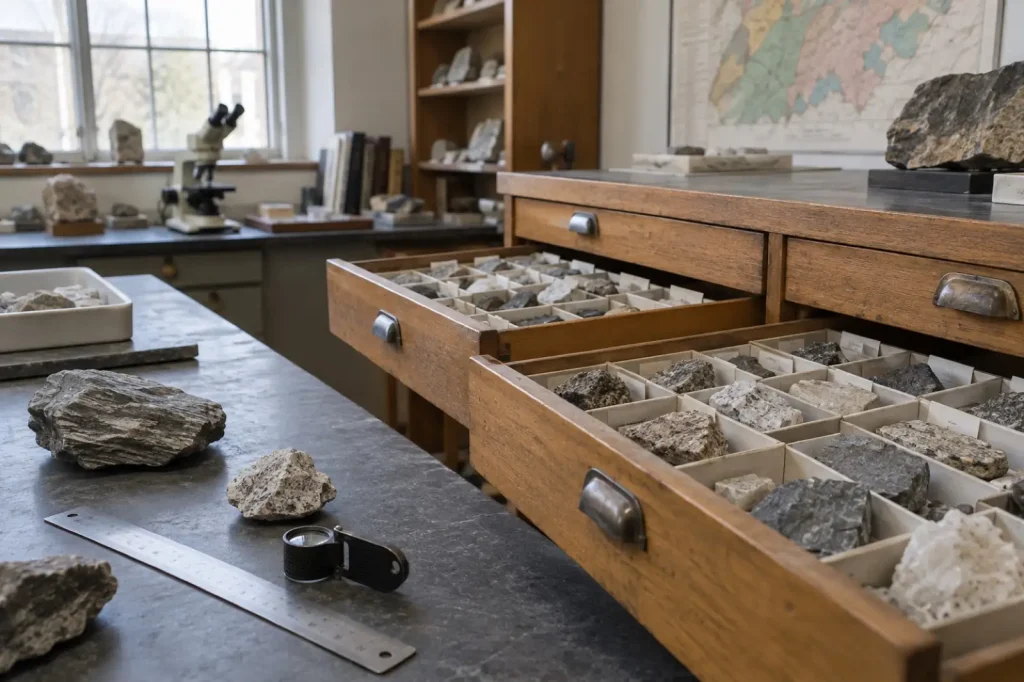
There are six types of asbestos in US regulation: chrysotile, the only serpentine mineral, and five amphiboles, which are amosite, crocidolite, tremolite, actinolite and anthophyllite. EPA and OSHA rules name the same six. According to USGS, chrysotile made up about 96 percent of world production from 1900 to 2003. A lab tells the types apart by polarized light microscopy, never by colour alone.
Key takeaways
- Six minerals, two families: chrysotile is a serpentine sheet silicate that rolls into tubes; the five amphiboles are double-chain silicates that form straight fibres.
- In the US, chrysotile accounted for about 97 percent of the asbestos consumed from 1900 to 2003, by our arithmetic on USGS totals.
- White, brown and blue asbestos are trade names for chrysotile, amosite and crocidolite, per USGS. Colour does not identify type.
- Libby vermiculite carried amphiboles now classed as winchite and richterite as well as tremolite, which complicates a definition built on six names.
- Under federal rules, type does not change the threshold: any of the six above 1 percent makes a material ACM.
- PLM separates the types by refractive index, extinction, sign of elongation and dispersion staining colours, per NIOSH Method 9002.
On this page
Most pages ranking for this term are law-firm pages, and they list the six minerals in order to talk about compensation. This page does the part they skip: the exact regulatory wording, the mineralogy from USGS, what each type went into, and how a laboratory decides which one it is looking at.
What this page does not cover. It describes minerals, regulation and lab methods; health differences between fibre types are outside its scope, and the EPA Learn About Asbestos page is the place for health information.
The six, as the law names them
Four federal rules define asbestos, and they agree on the minerals while differing in wording that matters on a report.
| Rule | Exact text | What the wording adds |
|---|---|---|
| AHERA, 40 CFR 763.83 | “the asbestiform varieties of: Chrysotile (serpentine); crocidolite (riebeckite); amosite (cummingtonite-grunerite); anthophyllite; tremolite; and actinolite” | Asbestiform varieties only, with the mineral species named. |
| NESHAP, 40 CFR 61.141 | “the asbestiform varieties of serpentinite (chrysotile), riebeckite (crocidolite), cummingtonite-grunerite, anthophyllite, and actinolite-tremolite” | Species first; actinolite and tremolite as one series. |
| OSHA, 29 CFR 1926.1101(b) | “chrysotile, amosite, crocidolite, tremolite asbestos, anthophyllite asbestos, actinolite asbestos, and any of these minerals that has been chemically treated and/or altered” | Covers treated or altered fibre, and includes PACM. |
| TSCA, 40 CFR 751.503 | “the asbestiform variety of a hydrated magnesium silicate mineral, with relatively long and flexible crystalline fibers that are capable of being woven” | Chrysotile only, for the 2024 ban rule. |
The word asbestiform carries the weight. According to USGS Open-File Report 02-149, the asbestos varieties occur as bundles of fibres that separate easily, with high tensile strength, aspect ratios from at least 20 up to 1000, and enough flexibility to be spun. The same minerals in a massive, non-fibrous habit are not asbestos under these rules.
Two mineral families: serpentine and amphibole
According to USGS Open-File Report 02-149, chrysotile is built from silicate sheets bonded to a magnesium hydroxide layer whose spacing does not quite match, so the sheets curl into tubes. Its unit fibrils are 20 to 50 nanometres across. The amphiboles are built from double chains of silicate tetrahedra, and their structure does not inherently form fibres: the asbestiform habit needs particular growth conditions.
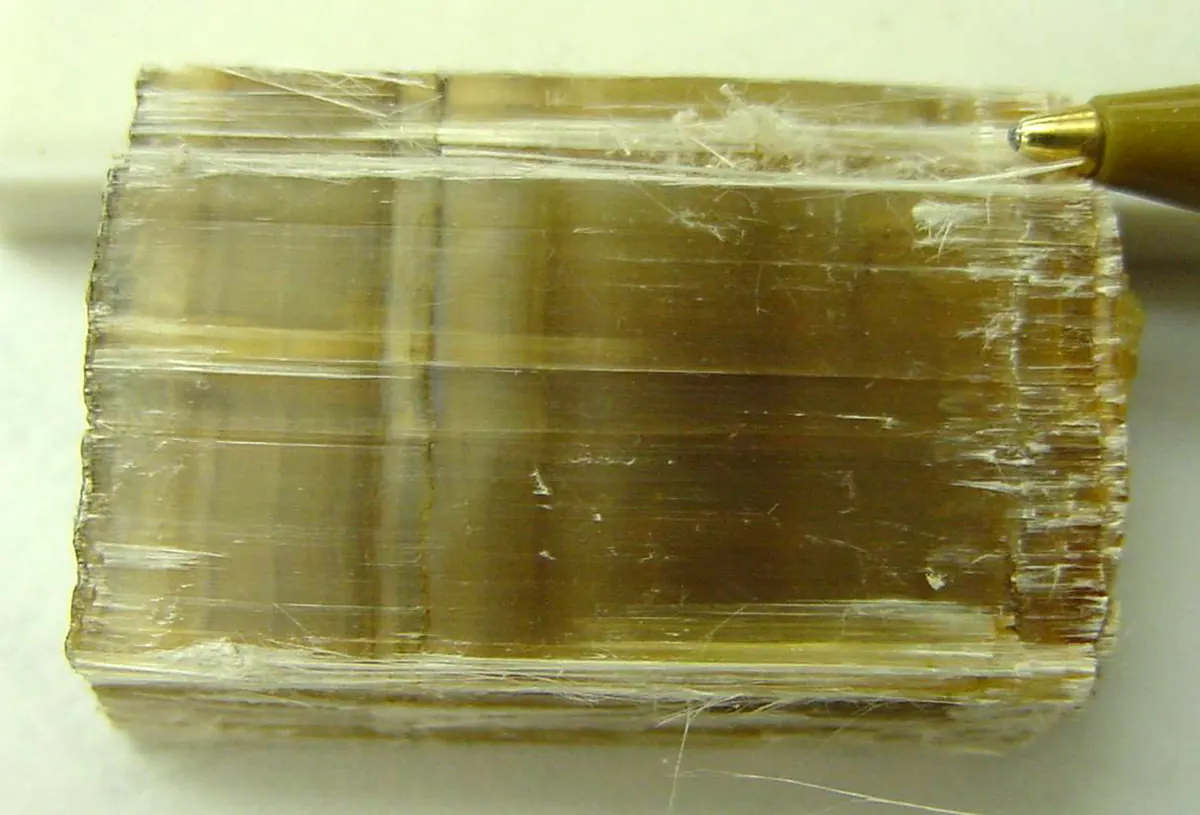

The cleavage difference shows up in the lab. USGS notes that amphiboles cleave at about 56 degrees, so crushing a massive, non-asbestos amphibole yields fragments that look like fibres but have a much lower average aspect ratio. Telling a cleavage fragment from an asbestos fibre is one of the hard calls in amphibole analysis.
The six minerals, one by one
| Type | Family and species | Trade name | Colour, per USGS | Composition |
|---|---|---|---|---|
| Chrysotile | Serpentine | White asbestos | White to greyish green | Hydrated magnesium silicate |
| Amosite | Amphibole: cummingtonite-grunerite | Brown asbestos | Yellowish grey to dark brown | Iron magnesium silicate, iron rich |
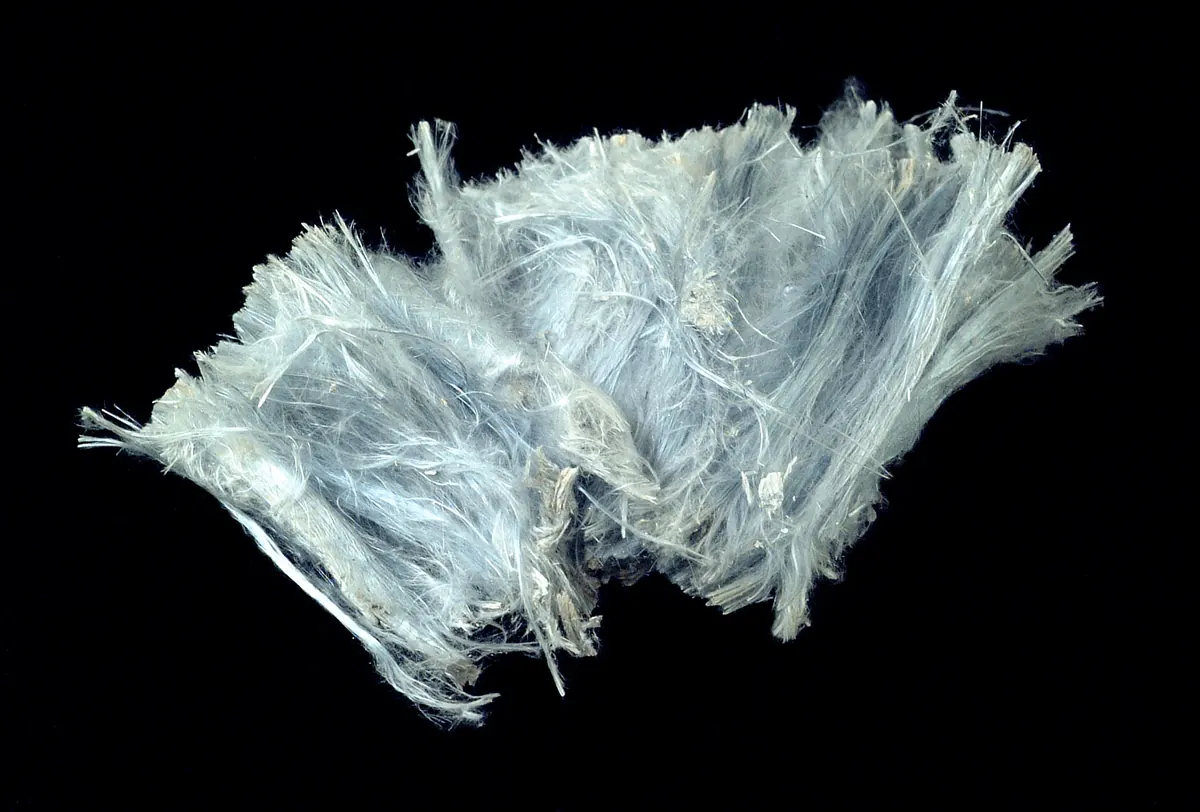
| Crocidolite | Amphibole: riebeckite | Blue asbestos | Cobalt blue to lavender blue | Sodium iron silicate |
| Tremolite asbestos | Amphibole | None given | Grey white, green, yellow, blue | Calcium magnesium silicate |
| Actinolite asbestos | Amphibole | None given | Greenish | Calcium magnesium iron silicate |
| Anthophyllite asbestos | Amphibole | None given | Greyish white, brown grey or green | Magnesium silicate with some iron |
Chrysotile asbestos
The workhorse. USGS Circular 1255-KK says chrysotile occurs in larger quantities and more widely distributed deposits than any amphibole, and has softer, less harsh fibres suited to most applications. Canada, Russia, Zimbabwe and other countries mined it. It is the only type covered by the 2024 TSCA rule in 40 CFR 751 Subpart F; our asbestos ban timeline covers the dates.
Amosite
Amosite is the trade name for asbestiform grunerite. USGS says most of it came from South Africa and that it was the kind of fast-filtering, harsh fibre asbestos-cement makers preferred. USGS reported in 2002 that amosite and crocidolite were no longer mined.

Crocidolite
Crocidolite is asbestiform riebeckite, rich in iron and sodium. USGS records it from South Africa, with small amounts from Australia and Bolivia, and notes that chrysotile was once blended with it for asbestos-cement pipe strength.
Tremolite, actinolite and anthophyllite
The minor three. USGS Open-File Report 02-149 says they have had no significant industrial use in recent decades, with only small local production. Tremolite matters for another reason: USGS notes it occurs as a contaminant in other minerals, including chrysotile and talc. Most anthophyllite came from Finland and the United States, according to USGS.
How much of each was used
According to USGS Circular 1255-KK, the United States consumed about 25.6 million metric tons of chrysotile between 1900 and 2003, against 365,000 tons of crocidolite, 282,000 of amosite and 90,000 of anthophyllite. That puts chrysotile at about 97.2 percent of the US total by our arithmetic. Worldwide, USGS gives chrysotile about 96 percent of production and consumption over the same years, crocidolite 2.2 percent and amosite 1.6 percent.
Small is not the same as absent. The amphiboles total about 737 thousand tons of US consumption on the same USGS figures, and they were concentrated in particular products.
| Type | US consumption, 1900 to 2003 | World production, 1900 to 2003 | US as share of world |
|---|---|---|---|
| Chrysotile | 25,600 thousand t | 173,000 thousand t | 15 percent |
| Crocidolite | 365 thousand t | 3,920 thousand t | 9 percent |
| Amosite | 282 thousand t | 2,810 thousand t | 10 percent |
| Anthophyllite | 90 thousand t | 460 thousand t | 20 percent |
Which types went into which products
USGS records which fibres certain product classes used. Where a source does not name the type, the table says so rather than guessing.
| Product class | Types USGS associates with it |
|---|---|
| Spray-on fireproofing and insulation, after World War II | Mainly chrysotile or amosite; crocidolite in Europe until the 1970s |
| Asbestos-cement pipe | Chrysotile, formerly blended with crocidolite |
| Asbestos-cement sheet and other products | Amosite was a preferred fast-filtering fibre, no longer used |
| Packings and gaskets | Mainly chrysotile in rubber |
| Brake linings and pads | Usually short chrysotile |
| Vinyl and asphalt floor tile | Type not stated in the USGS text |
| Talc and vermiculite | Tremolite and other amphiboles as contaminants |
By about 2000 the market had narrowed. USGS Open-File Report 02-149 says industrial use had shifted almost entirely to chrysotile, and that US use was led by roofing compounds at 62 percent, gaskets at 22 percent and friction products at 11 percent.
For older products in a building, the mineral rarely changes what you do; the product type and date do. Our identification guide covers what to suspect, and the asbestos containing material page covers what the rules call each product.
Libby amphibole: the name that is not on the list
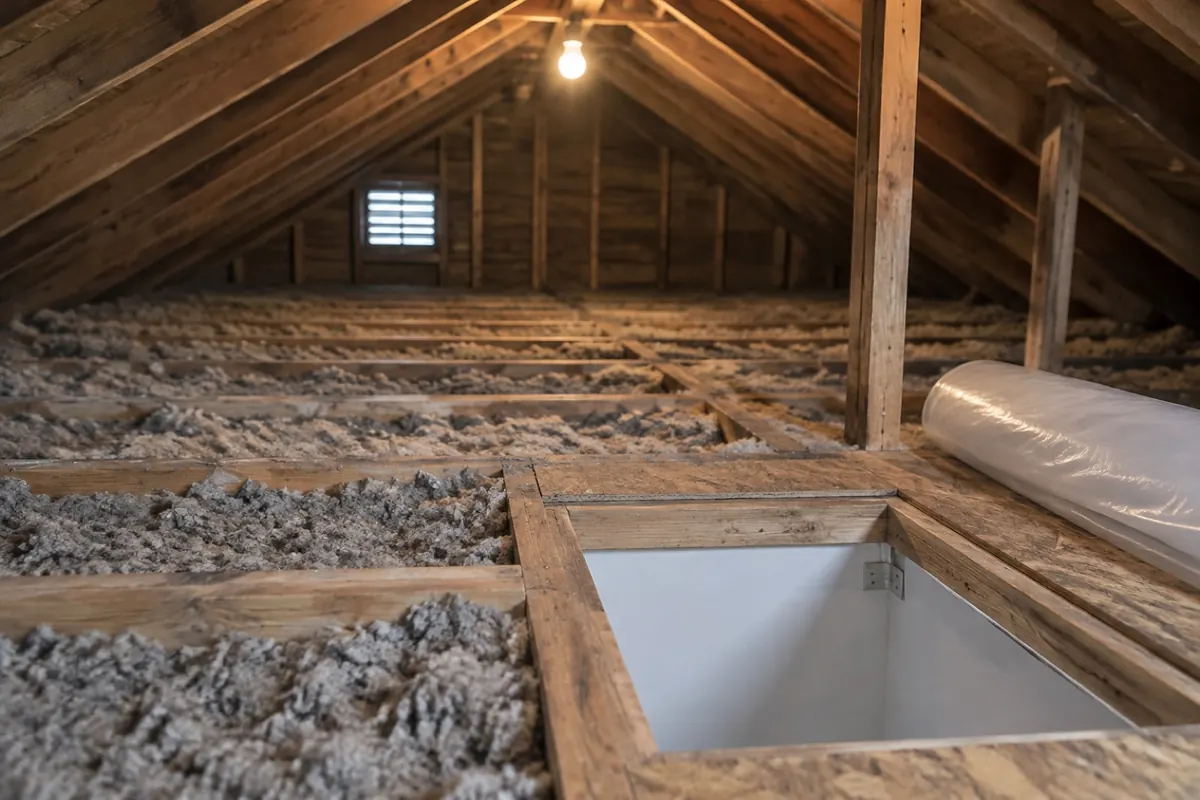
Vermiculite from Libby, Montana is the case where six names fall short. The EPA vermiculite guidance says the Libby mine supplied over 70 percent of all vermiculite sold in the United States from 1919 to 1990, often as Zonolite. USGS Circular 1255-KK, citing Meeker and others (2003), identifies asbestiform winchite, richterite, tremolite and magnesioriebeckite in the deposit.
The ATSDR Libby vermiculite summary report explains the wrinkle: the Libby amphiboles were historically characterized as a form of tremolite for industrial and regulatory purposes, and have more recently been characterized as including winchite and richterite under different International Mineralogical Association criteria. It also notes that CERCLA uses a broader definition not limited to the six commercial types.
For owners the EPA advice is the same whatever the mineral name: assume vermiculite contains asbestos and do not disturb it. Our asbestos insulation page covers that material in detail.
How PLM tells the types apart
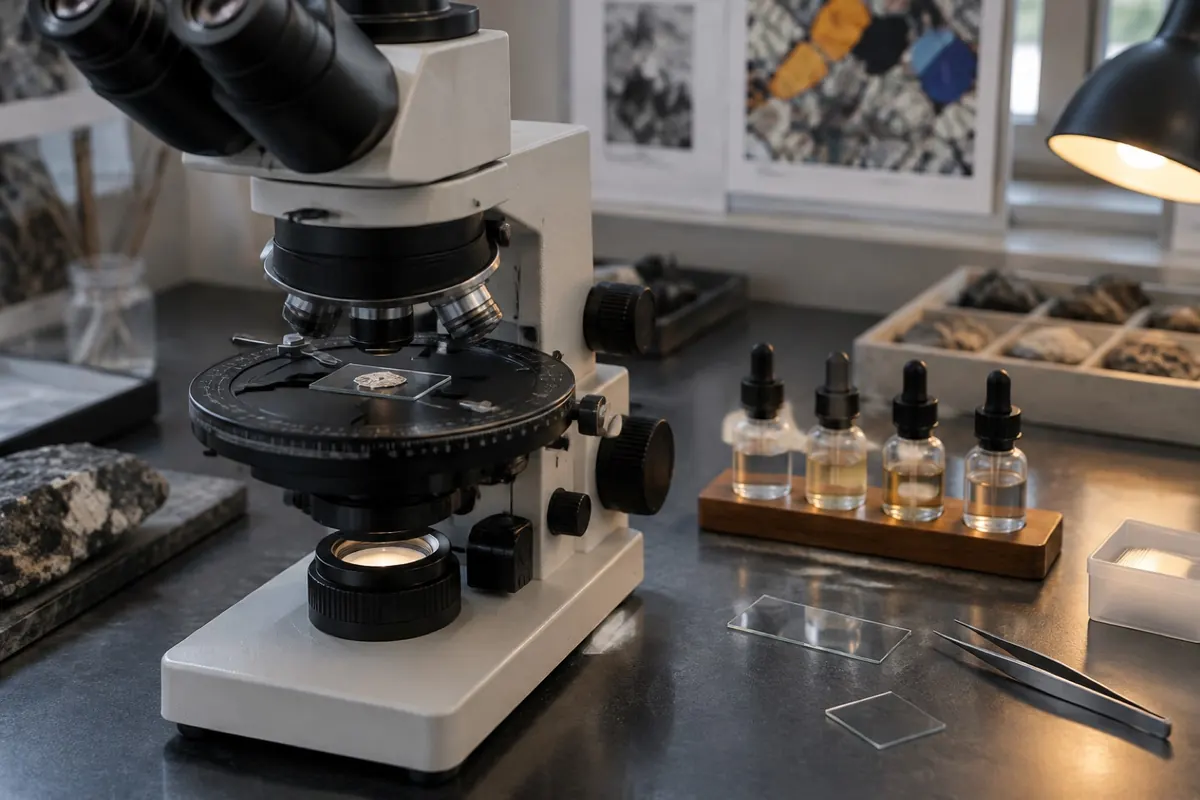
Bulk building samples are typed by polarized light microscopy. NIOSH Method 9002, a federal bulk method similar to EPA’s, identifies all six types using morphology, refractive index, colour, pleochroism, birefringence, extinction, sign of elongation and dispersion staining. In outline: mount the sample in 1.550 liquid and look for fibres; cross the polars, because fibres that vanish at every angle are isotropic glass or mineral wool, not asbestos; check the extinction angle and the sign of elongation, which is positive for every type except crocidolite; then move through 1.700, 1.680 and 1.605 liquids for the amphiboles.
| Type | Morphology, per NIOSH | Approx. refractive index | Extinction and sign | Dispersion staining colours |
|---|---|---|---|---|
| Chrysotile | Wavy fibres with kinks, splayed ends | 1.54 to 1.55 | Parallel; positive | Blue and blue magenta in 1.550 |
| Amosite | Straight fibres, broom-like or splayed ends | 1.67 to 1.70 | Parallel; positive | Blue and pale blue, or gold and blue, in 1.680 |
| Crocidolite | Straight, rigid, blue, pleochroic | 1.70 to 1.71 | Parallel; negative | Red magenta and blue magenta in 1.700, often hard to see |
| Anthophyllite | Straight fibres, cleavage fragments | 1.61 to 1.63 | Nearly parallel; positive | Blue and gold or gold magenta in 1.605 |
| Tremolite | Straight and curved fibres, colourless | 1.60 to 1.64 | Oblique 10 to 20 degrees, sometimes parallel; positive | Pale blue and yellow in 1.605 |
| Actinolite | Light to dark green, some pleochroism | 1.62 to 1.68 | Oblique; positive | Magenta and golden yellow in 1.605 |
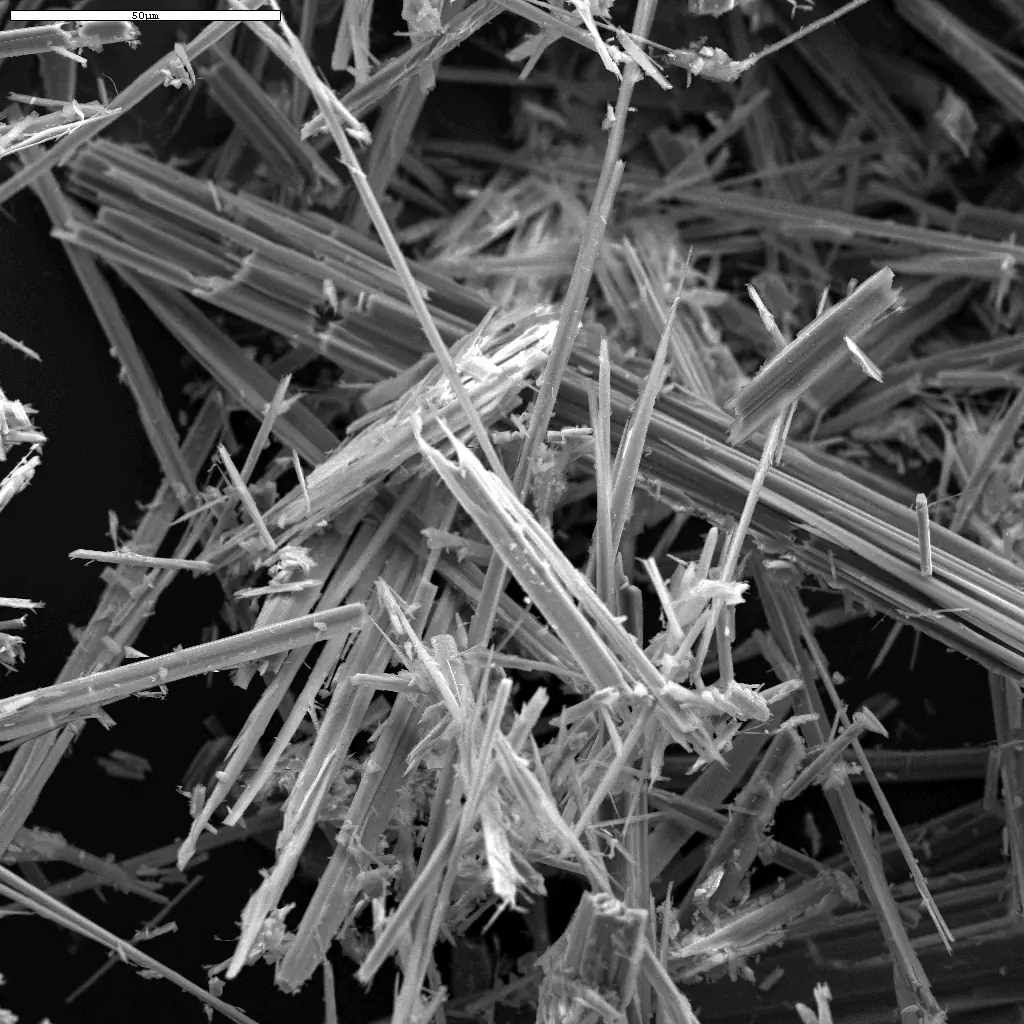

The method states its own limits. NIOSH Method 9002 says fibres finer than about 0.3 micrometre will not be detected, that heat and acid treatment may alter refractive index and colour, that cellulose and wollastonite can interfere, and that floor tiles may need transmission electron microscopy for short fibres. Lab options and kits are covered on our asbestos testing kit page.
Why the regulatory definition matters on a lab report
A PLM report names a type and a percentage for each layer. Reading it against the definitions above avoids four common misreadings.
| Report says | What it means under the rules |
|---|---|
| Chrysotile 2 percent | Above the 1 percent line: ACM under OSHA, AHERA and NESHAP, whatever the type. |
| Amosite, trace or less than 1 percent | Not ACM by definition, but NESHAP requires point counting to confirm friable results under 10 percent by visual estimate. |
| Tremolite in vermiculite, or none detected | EPA says testing vermiculite may give erroneous results; assume it contains asbestos. |
| Non-regulated amphibole, such as winchite | Outside the six-name definition in most rules, though ATSDR notes Libby material was historically called tremolite. |
| Fibrous non-asbestos, such as cellulose or wollastonite | Interferences NIOSH 9002 tells analysts to rule out. |
Precision near the line costs money. According to the EMSL Analytical price guide, a 400 point count reports to below 0.25 percent and a 1,000 point count to below 0.1 percent, against below 1 percent for a visual estimate.
For contractors
Under federal rules the mineral type does not change the job. 29 CFR 1926.1101 applies one permissible exposure limit to asbestos as defined, all six types included, and sorts work into classes by material, not mineral. The NESHAP and AHERA thresholds treat every type alike. What type does change is the paperwork: record the type and percentage for each homogeneous area in the scope, keep the lab report with the job file, and flag any vermiculite or talc-bearing product for the abatement firm. The standards hub links the related rules, and the asbestos inspection page covers sampling.
Questions people actually ask
How many types of asbestos are there?
Six are regulated in the United States: chrysotile, amosite, crocidolite, tremolite, actinolite and anthophyllite, as listed in 40 CFR 763.83 and OSHA’s standards. USGS notes other asbestiform amphiboles exist, such as winchite and richterite found in Libby vermiculite, but they are not among the six commercial types named in most federal rules.
What are the three main types of asbestos?
Chrysotile, amosite and crocidolite, often called white, brown and blue asbestos. According to USGS, they were the three most used: chrysotile accounted for about 96 percent of world production and consumption from 1900 to 2003, crocidolite 2.2 percent and amosite 1.6 percent. Colour names are trade terms; a lab confirms type by microscopy.
What are the three categories of asbestos?
The question usually means one of two things. In mineral terms it means chrysotile, amosite and crocidolite. In EPA’s NESHAP it means the material categories: friable asbestos material, Category I nonfriable ACM such as gaskets, resilient flooring and asphalt roofing, and Category II nonfriable ACM, which is everything else that will not crumble by hand.
Which type of asbestos is most dangerous?
This page does not compare types on health grounds; see the scope note above. In regulatory terms the answer is that the rules do not rank them: OSHA, AHERA and the NESHAP apply the same 1 percent definition and the same work practices to all six types.
Is 2 percent chrysotile asbestos dangerous?
This page does not answer health questions; see the scope note above. In regulatory terms, a material with 2 percent chrysotile is above the 1 percent line, so it is asbestos-containing material under OSHA, AHERA and the NESHAP. It must be handled with the work practices its material class requires, the same as any other type at that level.
Which types of older consumer products might still contain asbestos?
EPA lists attic and wall insulation containing vermiculite, vinyl floor tiles, roofing and siding shingles, textured paint, pipe coverings, furnace gaskets, heat-resistant fabrics, and automobile clutches and brakes. The Minnesota Department of Health adds items such as fireplace decoration, gardening products with vermiculite, table pads and heat resistant gloves.
What asbestos surveys can property buyers get?
The rules describe three scopes: a survey of all accessible suspect materials in AHERA style, a pre-renovation or pre-demolition survey limited to the areas the work will touch, as the NESHAP requires for regulated buildings, and targeted sampling of one or two materials, the route OSHA allows for rebutting a presumption. Our asbestos inspection page explains what each must include.
Sources
- 40 CFR 763.83 and 40 CFR 61.141, AHERA and NESHAP definitions of asbestos. eCFR, Title 40 as of 15 October 2026. Retrieved 18 October 2026.
- 40 CFR 751 Subpart F, chrysotile asbestos definition and prohibitions (89 FR 22005, 28 March 2024). eCFR. Retrieved 18 October 2026.
- 29 CFR 1926.1101, definitions and permissible exposure limits. eCFR, Title 29 as of 14 October 2026. Retrieved 18 October 2026.
- USGS Open-File Report 02-149, Asbestos: Geology, Mineralogy, Mining, and Uses, Robert L. Virta, 2002. Tables 1, 2 and 4 and section 10. Retrieved 18 October 2026.
- USGS Circular 1255-KK, Mineral Commodity Profiles: Asbestos, Robert L. Virta, 2005. Figures 3 and 4, table 11 and the Libby discussion. Retrieved 18 October 2026.
- NIOSH Method 9002, Asbestos (bulk) by PLM, Issue 2, 15 August 1994. Retrieved 18 October 2026.
- ATSDR Libby vermiculite summary report, ATSDR, US Department of Health and Human Services, 29 October 2008, glossary and mineral characterization notes. Retrieved 18 October 2026.
- EPA vermiculite guidance, EPA, updated 17 April 2026. Retrieved 18 October 2026.
- Learn About Asbestos page, EPA, updated 13 July 2026. Retrieved 18 October 2026.
- Minnesota Department of Health product list, updated 18 December 2025. Retrieved 18 October 2026.
- EMSL Analytical price guide, PLM reporting limits. Retrieved 18 October 2026.
- Mineral photographs: USGS (public domain) and the Geoscience Digital Image Library (CC0), via Wikimedia Commons, licences checked on each file page. Shares and totals marked as our arithmetic are computed from the USGS figures above. Our methodology sets out how we source everything on this site.
Mineral names and regulatory definitions can differ from state rules. Confirm the definition your state programme uses before relying on a lab report for a project.