
The short answer
How to get rid of mothball smell: take out every ball, flake or cake with gloves on, open windows and run a fan to move the vapor outside, wash or dry clean fabrics by their care label, and run an activated carbon filter while carpet, drywall and wood release what they absorbed. Sprays only mask naphthalene or paradichlorobenzene (PDB); they remove nothing.
Naphthalene or PDB: which chemical is in the house?
Every mothball sold legally in the United States is close to a pure dose of one of two chemicals, according to the NPIC mothball overview: naphthalene or paradichlorobenzene. The two EPA accepted labels opened for this page list 99.95% naphthalene (EPA accepted naphthalene label, Reg. No. 1475-74) and 99.90% PDB (EPA accepted PDB label, Reg. No. 1475-39). The package names the active ingredient and EPA registration number.
The NIOSH Pocket Guide, naphthalene describes naphthalene as a colorless to brown solid “with an odor of mothballs” and the NIOSH Pocket Guide, p-dichlorobenzene calls PDB a white crystalline solid “with a mothball-like odor”. For cleanup, vapor pressure matters most: PDB is listed at 1.3 mmHg and naphthalene at 0.08 mmHg, so PDB has about 16 times the vapor pressure and turns to gas faster at the same temperature. Naphthalene balls last longer and, by the sink studies below, cling harder to nearby materials.
| Property | Naphthalene | PDB | Source |
|---|---|---|---|
| Active ingredient share on the EPA label | 99.95% naphthalene | 99.90% PDB | EPA accepted labels |
| Formula | C10H8 | C6H4Cl2 | NIOSH |
| Vapor pressure | 0.08 mmHg | 1.3 mmHg | NIOSH |
| Melting point | 176 °F | 128 °F | NIOSH |
| Water solubility | 0.003% | 0.008% | NIOSH |
| Odor detection threshold, AIHA mean | 0.038 ppm | 0.12 ppm | PubChem (Haz-Map) |
| Half-life in air | under 1 day | about 31 days | NPIC fact sheets |
| Air sampling method | NIOSH 1501 | NIOSH 1003 | NIOSH |
Warmth is the lever that speeds the exit. The NTP figures in PubChem, naphthalene put naphthalene at 0.05 mmHg at 68 °F and 1 mmHg at 126.7 °F, a twentyfold rise, and the matching record in PubChem, 1,4-dichlorobenzene puts PDB at 0.6 mmHg at 68 °F and 1.8 mmHg at 86 °F.
Why does a thousandfold dilution still smell of mothballs?
The AIHA mean odor detection thresholds reported in PubChem are 0.038 ppm for naphthalene and 0.12 ppm for PDB. Divide each NIOSH vapor pressure by atmospheric pressure (760 mmHg) and you get the most vapor air can hold at that temperature.
| Step | Naphthalene | PDB |
|---|---|---|
| Vapor pressure, per the NIOSH Pocket Guide | 0.08 mmHg | 1.3 mmHg |
| Saturated air, vapor pressure ÷ 760 × 1,000,000 | about 105 ppm | about 1,711 ppm |
| Odor detection threshold (AIHA mean) | 0.038 ppm | 0.12 ppm |
| Saturated air ÷ odor threshold | about 2,770 times | about 14,250 times |
| After diluting saturated air 1,000 times | 0.105 ppm, 2.8 times the threshold | 1.71 ppm, 14 times the threshold |
Per the calculation, a closed chest can hold naphthalene vapor at about 2,770 times the level where the average nose picks it up, and PDB at about 14,250 times. Cut either by a factor of a thousand with fresh air and the result is still above threshold, per the table. One airing does little; days of air exchange with the source gone does the work.
Naphthalene starts with less vapor but is detected at a lower concentration: its 0.038 ppm threshold is about 3.2 times lower than PDB’s 0.12 ppm, per the AIHA figures in PubChem. Low vapor pressure plus a sensitive nose makes old naphthalene odor in a cedar chest stubborn.
How does the vapor get into carpet, drywall and upholstery?
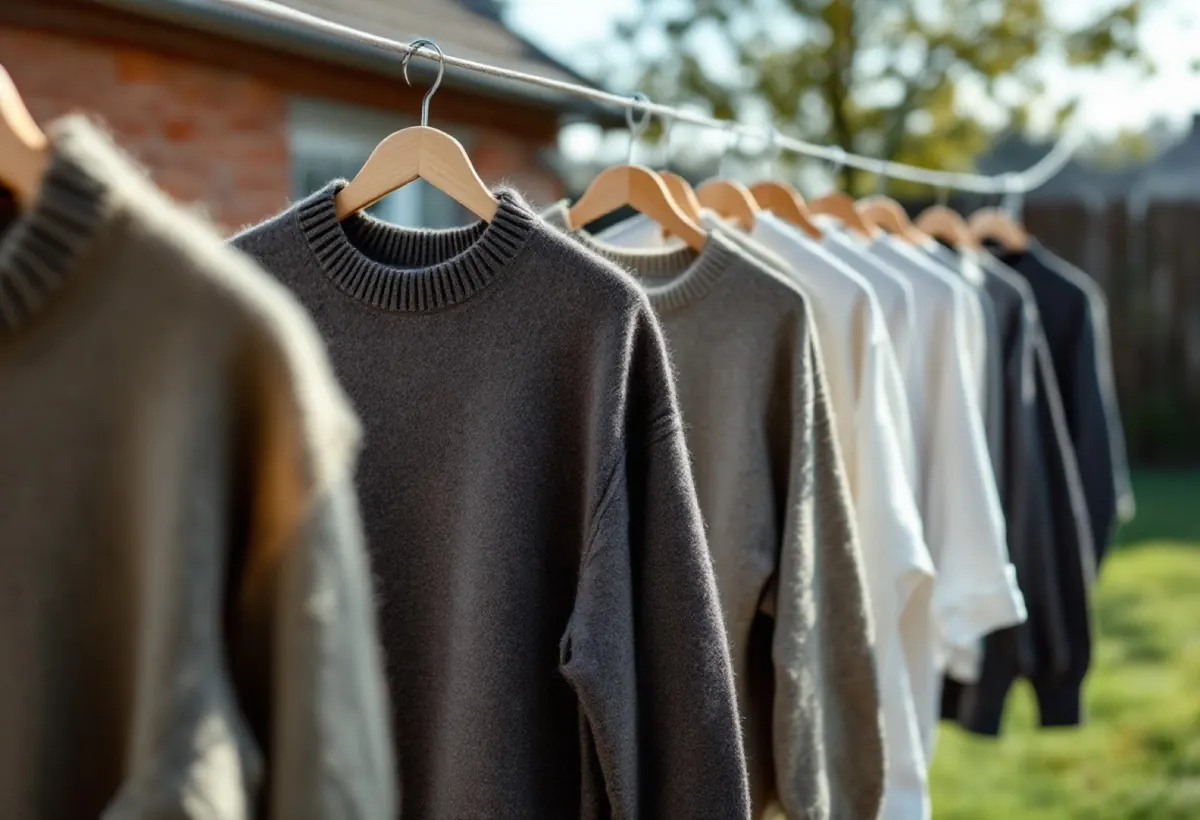
Both chemicals leave the ball as gas; the NPIC chemical properties page says they “slowly become fumes at room temperature” and that the fumes “can stick to fabrics or clothing following storage, requiring items to be aired out and washed”. Indoor air scientists call the surfaces that soak up vapor sinks. The EPA sponsored sink study by Tichenor and colleagues (1991) tested carpet, painted wallboard, ceiling tile, window glass and upholstery, and its abstract notes that re-emissions of adsorbed organic vapors can keep indoor levels high.
A later study by An, Zhang and Shaw (2000) measured PDB with carpet, vinyl floor tile, painted drywall and ceiling tile, and found that sink capacity “increased linearly with the inverse of the VOC vapor pressure”, with large differences among the 4 materials. Naphthalene’s vapor pressure (0.08 mmHg, NIOSH) is the lower of the two, so by that relationship it is held more tightly by room surfaces than PDB. The study abstract does not report naphthalene itself; the comparison is our reading of its stated relationship. Walls and carpet give vapor back whenever room air is cleaner than they are, so the smell returns after the balls are gone.
Were the mothballs used where the EPA label allows?
A strong whole house smell usually means the balls were used off label. Both EPA accepted labels state that it “is a violation of Federal law to use this product in a manner inconsistent with its labeling” and restrict use to “clean, airtight containers, such as chests, trunks” and garment bags, adding: “Do not use dry cleaning bags, garbage bags or other containers that allow vapors to escape into occupied rooms.” The naphthalene label also says “NOT FOR USE TO CONTROL SQUIRRELS, BATS AND BIRDS INSIDE THE HOME.”
- Dose: the EPA accepted PDB label, Reg. No. 1475-39 allows one ounce, or 8 balls, per 3 cubic feet of storage, so a 12 cubic foot garment bag takes 4 ounces.
- Time: both labels say keep the product in the airtight space for a minimum of 7 days.
- Aftercare: the PDB label says “Odor quickly vanishes when articles are aired” and the naphthalene label says “Odor dissipates when treated articles are aired.”
- Outdoors and attics: the NPIC regulation and proper use page lists gardens and outdoor use against snakes or wildlife as a common mistake, and NPIC states mothballs are not wildlife repellents.
Balls scattered in an attic, crawl space or basement to chase rodents are the classic source of a smell that fills a house, the scenario in the NPIC mothball mishap case. Clothes moth control without mothballs is covered by The Pest Control Brief.
Removing the source: gloves, a sealed bag and the solid waste agency
The steps NPIC gave in its NPIC mothball mishap case are the core of the job: remove the mothballs, open doors and windows, use a fan to increase air circulation if needed, and consider leaving the home while it airs. The labels say to avoid skin contact, so wear gloves; the PDB label adds protective eyewear and washing with soap and water after handling.
- Search closet shelves, trunk and drawer bottoms, attic insulation and crawl spaces: one missed ball keeps re-dosing the room at the NIOSH vapor pressures above.
- Bag the balls, flakes and any crumbs in a sealable polyethylene bag, the plastic the PDB label accepts.
- Disposal: both labels say that for a partly filled package you should “Call your local solid waste agency for disposal instructions” and “Never place unused product down any indoor or outdoor drain.” NPIC also points to local household hazardous waste programs.
- Ventilate for days, not minutes: NPIC’s advice is open doors and windows plus a fan, and the labelled calculation above shows that even a thousandfold dilution of saturated air can stay above the odor threshold.
Health effects are out of scope here. The NPIC health effects page and the ATSDR ToxFAQs for naphthalene cover them; if a child or pet has eaten a mothball, the NPIC case page lists Poison Control at 800-222-1222.
Fabric, wool, carpet, drywall, wood: what the record says about each
Guides online give confident week counts for how long mothball odor lasts in each material. None of the sources opened for this page, including NPIC, NIOSH, ATSDR, two EPA accepted labels and two EPA linked sink studies, publishes such a number. The table records what each source does say and leaves the duration blank where no one has measured it.
| Material | What the sources record | Published persistence | Removal step | Source |
|---|---|---|---|---|
| Clothing and linens (cotton, synthetics) | NPIC: fumes stick to fabric; items need airing and washing. PDB label: odor “quickly vanishes” when aired. | No duration published | Wash per the care label (16 CFR 423.6), line dry outdoors | NPIC; EPA label 1475-39 |
| Wool and wool blends | Naphthalene label is “For use only on cloth containing wool or wool blends”. | No duration published | Air outdoors; dry clean if the care label says so | EPA label 1475-74 |
| Carpet | Sink material in both chamber studies; re-emits after the source is removed. | Not reported in the abstracts | Remove source, ventilate, carbon filter | Tichenor 1991; An 2000 |
| Painted drywall or wallboard | Sink material in both studies; capacity rises as vapor pressure falls. | Not reported in the abstracts | Ventilate; shellac primer only if odor persists | Tichenor 1991; An 2000; BIN-03 |
| Upholstery | Sink material in the 1991 EPA sponsored study. | Not reported in the abstract | Remove source, warm ventilated room, carbon filter | Tichenor 1991 |
| Ceiling tile | Sink material in both studies; behavior differed significantly between materials. | Not reported in the abstracts | Ventilate; replacement is a judgment call | Tichenor 1991; An 2000 |
| Bare wood (cedar chest, drawers) | No sink measurement for wood in the sources opened. | No data found | Air open in warm space, carbon inside, shellac seal last | BIN-03 for the sealer |
| Plastic bins that are not PE or PP | PDB label: product “can damage some plastics”. | Not applicable | Check the resin code; replace damaged bins | EPA label 1475-39 |
Clothes and linens: does vinegar or a hot wash remove naphthalene?
Washing helps because agitation and air drying expose every fiber, not because water dissolves the chemical. Per the NIOSH Pocket Guide, water solubility is 0.003% for naphthalene and 0.008% for PDB, so the vapor leaves mainly by evaporation while the garment dries. Detergent and a full rinse carry off crystals and residue; a warm line dry outdoors finishes the job, since NTP data show vapor pressure climbing with heat.
A popular claim says white vinegar works because its acetic acid neutralizes alkaline odors. Neither molecule is alkaline: NIOSH gives the formulas as C10H8 and C6H4Cl2, a carbon ring carrying only hydrogen or chlorine, with no basic group for an acid to react with. Vinegar does no harm in a rinse, but it is the wash and the drying that do the work.
Follow the garment’s care label. Under 16 CFR 423.6, labels on apparel must state a washing or a drycleaning instruction, a water temperature unless hot water up to 145 °F will not harm the item, and a drying method. Where a wool item carries only a drycleaning instruction, airing it outdoors is the step both EPA accepted labels name for clearing the odor. The same wash and dry logic for smoke odor is on our page on how to get smoke smell out of clothes.
Cedar chests and dresser drawers: airing, carbon, then shellac
Wood sat closest to the balls, often for years, and none of the sources opened for this page measured how fast it gives vapor back. Naphthalene, at 0.08 mmHg, leaves slowest. Work in three stages and stop when the smell stops.
- Stage 1, open air: empty the chest, pull the drawers, vacuum crumbs from joints, and leave everything open in a warm, ventilated room for several days (NTP data: warmth raises vapor pressure).
- Stage 2, carbon: close the lid on a tray of activated carbon The EPA air cleaner guide says carbon “can be effective, provided that there is a large amount of material”, so use pounds, not a sachet.
- Stage 3, seal: if the odor survives, a shellac primer coat on the interior is the last resort. The Zinsser B-I-N data sheet BIN-03 states that the primer “Seals porous surfaces” and “Permanently blocks most every kind of odor”, recoatable in 45 minutes. The sheet does not name naphthalene or PDB, and sealing a cedar interior ends its cedar scent too.
Whole rooms and closets: why carbon works and sprays do not
For room air, the EPA Guide to Air Cleaners in the Home is direct: to filter gases, “choose a portable air cleaner with an activated carbon filter or other filter designed to remove gases”. It also warns that no widely used performance rating exists for gas filters, that “most filters are designed to filter either particles or gases”, and that “Filtration does not replace the need to control pollutants and ventilate.”
Fragrance sprays and plug ins add vapor rather than removing it. The EPA page on VOCs and indoor air lists both moth repellents and air fresheners as household VOC sources, and the ATSDR ToxFAQs for dichlorobenzenes names air fresheners and toilet deodorizer blocks as products that can contain PDB, the same chemical as the mothball. The same guide tells readers to avoid air cleaners that intentionally produce ozone; the reasons are on our ozone generator page.
The sequence matches smoke odor work, covered room by room in the guide on how to get smoke smell out of a house. More odor guides sit on the fire and smoke hub.
Smell mothballs but never used any? Four other sources
- Toilet and trash can deodorizer blocks: the NPIC paradichlorobenzene fact sheet and ATSDR both list deodorizer blocks as PDB products.
- Air fresheners: ATSDR names air fresheners among the PDB products people breathe at home.
- Tobacco smoke: the ATSDR ToxFAQs for naphthalene lists tobacco smoke as a source of naphthalene exposure.
- A previous owner’s balls: attics, crawl spaces and wall cavities hold old naphthalene for years, and NPIC calls outdoor and wildlife use a common mistake.
If the smell is earthy rather than sharp and sits in a closet or basement corner, it may be mold rather than mothballs; compare the signs on mold in a closet and the musty smell in a basement. When the source cannot be found, a lab can measure naphthalene in air by NIOSH 1501 and PDB by NIOSH 1003, the methods NIOSH lists; ask any lab you hire which method it runs and its reporting limit. What a test can and cannot tell you is on our indoor air quality testing page.
Questions people actually ask
What can neutralize mothball smell?
Nothing neutralizes it chemically in a home setting. Naphthalene and PDB are carbon rings with no acid or base group (NIOSH lists them as C10H8 and C6H4Cl2), so the vapor has to be moved out by ventilation or captured. The EPA air cleaner guide names activated carbon as the filter type for gases, provided there is a large amount of it.
How long does mothball smell last?
No primary source publishes a figure. Both EPA accepted labels say the odor dissipates when stored articles are aired, while the 1991 and 2000 sink studies show carpet, drywall and ceiling tile release absorbed vapor after the source is gone. With every ball removed and steady ventilation, fabric clears first; wood and drywall take longest.
Does baking soda absorb mothball smell?
No test of baking soda against naphthalene or PDB turned up in the NPIC, EPA, NIOSH or ATSDR material opened for this page. The EPA guide names activated carbon, in large amounts, for gases. If you use baking soda on upholstery, vacuum it out afterward and keep running ventilation, which is the step with documented effect.
Can I just put the mothballs in a closet to keep moths out?
Only if the closet is airtight. The naphthalene label limits use to clean, airtight chests, trunks, garment bags and storage closets; both EPA accepted labels require at least 7 days and ban containers that let vapor escape into occupied rooms. The PDB label sets the dose at one ounce, or 8 balls, per 3 cubic feet of space.
How do I get mothball smell out of a car?
Take out the source, including any balls placed to repel rodents, which the naphthalene label does not allow for squirrels, bats or birds. Park in the sun with windows down, since NTP data show vapor pressure rising with heat, then run the cabin with fresh air, not recirculation. Wash removable fabric covers by their care label.
Are mothballs legal to use in an attic or crawl space?
Not as a repellent. NPIC says mothballs are not wildlife repellents and that using them in a way the label does not allow is illegal. The labels state that it is a violation of Federal law to use the product inconsistent with its labeling, and the naphthalene label bans use against squirrels, bats and birds inside the home.
Sources
- NPIC mothball overview, NPIC chemical properties page, NPIC regulation and proper use page and NPIC health effects page, National Pesticide Information Center, Oregon State University and EPA, pages last updated April 2025 to April 2026. Retrieved 20 November 2026.
- NPIC mothball mishap case, NPIC common pesticide question. Retrieved 20 November 2026.
- NPIC naphthalene fact sheet and NPIC paradichlorobenzene fact sheet, NPIC general fact sheets, reviewed December 2010. Retrieved 20 November 2026.
- EPA accepted naphthalene label, Reg. No. 1475-74, ENOZ Old Fashioned Moth Balls master label, Willert Home Products, EPA notification dated 2 July 2018. Retrieved 20 November 2026.
- EPA accepted PDB label, Reg. No. 1475-39, ENOZ Para Moth Balls master label, Willert Home Products, accepted May 2014. Retrieved 20 November 2026.
- NIOSH Pocket Guide, naphthalene and NIOSH Pocket Guide, p-dichlorobenzene, National Institute for Occupational Safety and Health, page last reviewed 30 October 2019. Retrieved 20 November 2026.
- PubChem, naphthalene and PubChem, 1,4-dichlorobenzene, National Library of Medicine: vapor pressure (CAMEO Chemicals citing NTP 1992) and odor threshold (Haz-Map citing AIHA) records. Retrieved 20 November 2026.
- ATSDR ToxFAQs for naphthalene and ATSDR ToxFAQs for dichlorobenzenes, Agency for Toxic Substances and Disease Registry. Retrieved 20 November 2026.
- EPA sponsored sink study by Tichenor and colleagues (1991), Interaction of vapor-phase organic compounds with indoor sinks, Tichenor, Guo, Dunn, Sparks and Mason, OSTI record of EPA contract 68-02-4701. Retrieved 20 November 2026.
- An, Zhang and Shaw (2000), Measurements of VOC adsorption/desorption characteristics of typical interior building materials, OSTI record. Retrieved 20 November 2026.
- EPA Guide to Air Cleaners in the Home, United States Environmental Protection Agency, 2nd edition. Retrieved 20 November 2026.
- EPA page on VOCs and indoor air, United States Environmental Protection Agency. Retrieved 20 November 2026.
- 16 CFR 423.6, Care Labeling of Textile Wearing Apparel, via eCFR. Retrieved 20 November 2026.
- Zinsser B-I-N data sheet BIN-03, Rust-Oleum Zinsser B-I-N Shellac-Base Primer technical data. Retrieved 20 November 2026.
- Saturated vapor concentrations and odor threshold multiples are arithmetic on the NIOSH and PubChem values above, computed when this page was built. Our methodology sets out the standing rules.
Mothballs are EPA registered pesticides. Read the label on the product you have before handling or disposing of it, and call your local solid waste agency for disposal rules.