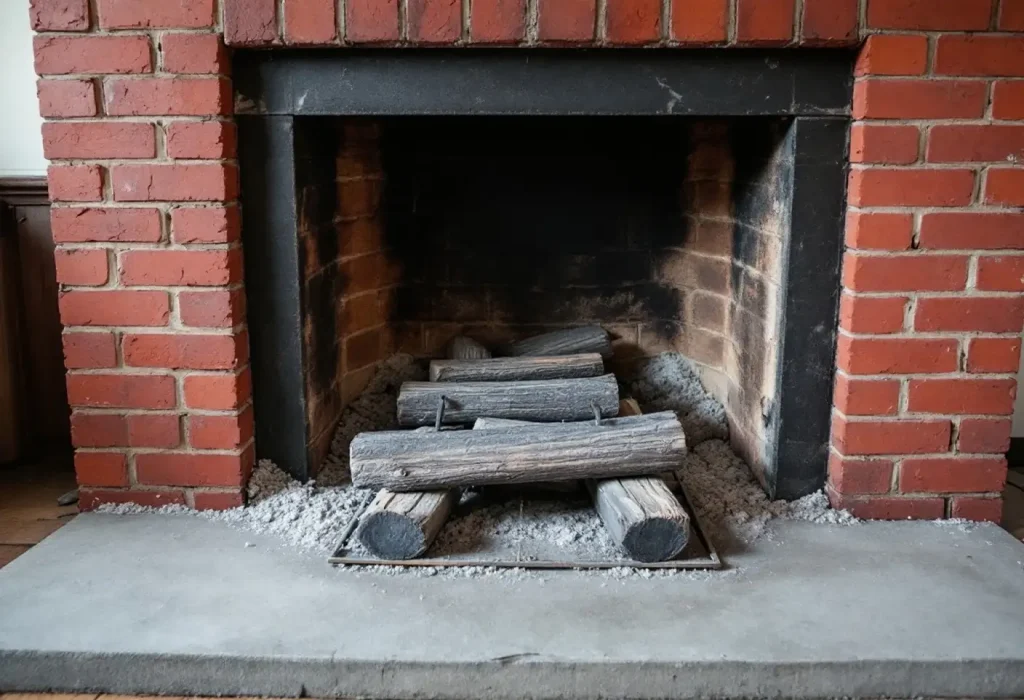
The short answer
Yes, an asbestos fireplace is possible, but the asbestos usually sits in the parts around the masonry, not the brick. The federal record names gas log embers and ash (banned in 1977 under 16 CFR 1305 at up to 50 percent asbestos), millboard or cement sheet under and behind stoves, door gaskets, and flue pipe or flue insulation. Leave intact parts alone and sample before demolition.
Which parts of a 1950s to 1970s fireplace could hold asbestos? Eight places on one cross section
Three federal pages agree on the list. EPA's Learn About Asbestos page names walls and floors around wood burning stoves protected with asbestos paper, millboard or cement sheets, plus furnace door gaskets. CPSC's Asbestos in the Home guide adds that artificial ashes and embers sold for gas fired fireplaces may contain asbestos, and that worn door seals can release fibres during use.
Two overseas regulators fill in the masonry side. WorkSafe New Zealand's homeowner guidance says asbestos was used for insulation in heaters, fireplaces and stoves and to insulate flues, and lists the fireplace surround among common locations in homes built before 1 January 2000. The NSW Environment Protection Authority fireplace page says asbestos sheets are found as the base and around fireplaces.
| Part | Era in the record | Evidence | What to do |
|---|---|---|---|
| 1. Embers and ash on gas logs | Sold until the CPSC ban took effect on Federal Register publication, 15 December 1977 | 16 CFR 1305.3: emberizing materials, placed under or glued to artificial logs | Leave in place; never vacuum. Sample before the logs go |
| 2. Millboard or asbestos paper on the wall behind a stove | Millboard printed as in use from 1925 | EPA's Learn About Asbestos page; EPA's 1985 Purple Book (EPA 560/5-85-024), Appendix A | Leave if intact; sample before removing or drilling |
| 3. Cement sheet hearth pad or base board | Flat cement sheet printed as in use from 1930 | EPA's Learn About Asbestos page; NSW Environment Protection Authority fireplace page | Leave if intact; sample before cutting or lifting |
| 4. Fireplace surround panels | New Zealand homes built before 1 January 2000 | WorkSafe New Zealand's homeowner guidance lists the fireplace surround | Sample before removal |
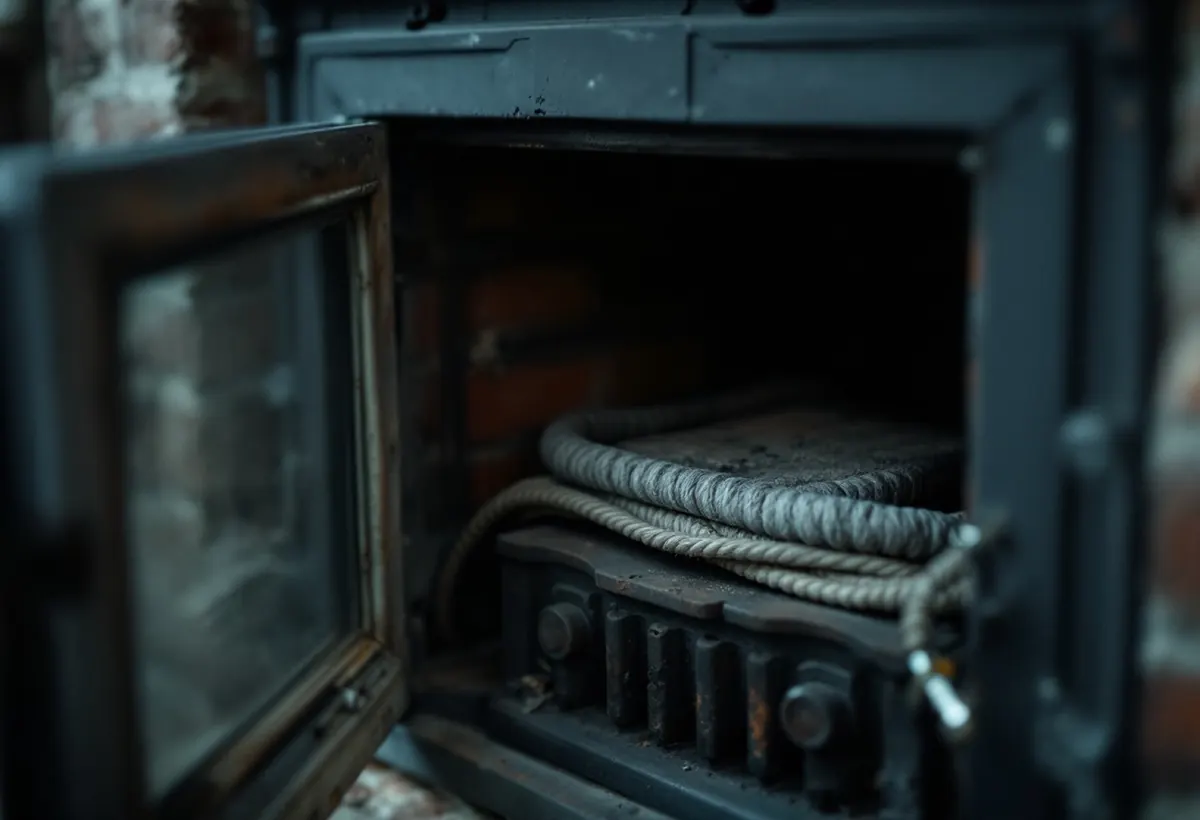
| 5. Door gasket or rope seal on an insert or stove | Cord and rope printed as in use from 1920 | CPSC's Asbestos in the Home guide; EPA's 1985 Purple Book (EPA 560/5-85-024) | Sample when replacing; sibling page covers the method |
| 6. Flue pipe, liner and stove connector | Cement pipe printed as in use from 1935 | WorkSafe New Zealand's homeowner guidance; EPA's 1985 Purple Book (EPA 560/5-85-024) | Leave if intact; sibling page covers removal |
| 7. Insulation or wrap around the flue | Insulating cement printed as used from 1900 to 1973 | WorkSafe New Zealand's homeowner guidance says flues were insulated with asbestos | Treat as friable if crumbling; abatement by a trained crew |
| 8. Firebrick and refractory mortar | No dated record found | No US or state source found that names fireplace firebrick mortar | Do not assume either way; sample before demolition |
Parts 2, 3 and 4 are the ones a renovation reaches first: a 1960s hearth pad or surround panel looks like plain grey board until a lab reads it, and EPA's homeowner asbestos page says only an accredited professional should take that sample.
Were gas log embers really up to 50 percent asbestos? What 16 CFR 1305 says
Yes. The Consumer Product Safety Commission findings in 16 CFR 1305.5 state that emberizing materials may contain up to 50 percent asbestos. 16 CFR 1305.3 defines them as asbestos materials, usually sold in kits, placed under artificial logs in gas fireplaces or glued to the logs. Burnable cellulose logs and electric fireplace ash beds are excluded.
The timeline is short. CPSC release 77-042, dated 28 April 1977, announced plans to ban artificial fireplace logs and ashes containing asbestos. CPSC release 77-118, dated 2 December 1977, said the ash ban took effect as soon as it was published in the Federal Register, and 16 CFR Part 1305 carries the citation 42 FR 63364, 15 December 1977.
The scale was small. Per the findings in 16 CFR 1305.5, about 100,000 artificial gas logs sold each year, of which 25,000 to 30,000 would be subject to the ban, or 25 to 30 percent of annual sales on our arithmetic, and about 100,000 asbestos treated logs were already in homes. By 1977 most gas logs shipped with non asbestos kits.
The same findings note that downdrafts from a chimney can stir the material into room air, and the ban in 16 CFR 1305.1 covers bags of ember material sold separately, not only kits packed with logs. A 1970s gas log set with a grey, fluffy bed under the burner is the one part of this page with a named federal ban behind it.
CPSC release 77-118 printed disposal advice that still reads correctly: do not vacuum the material, dampen it with a fine spray of water and detergent rather than pouring water on it, double bag it, label the outer bag as asbestos, and never burn it or put it in a compactor. It told owners to call the local sanitation or health department for disposal instructions.
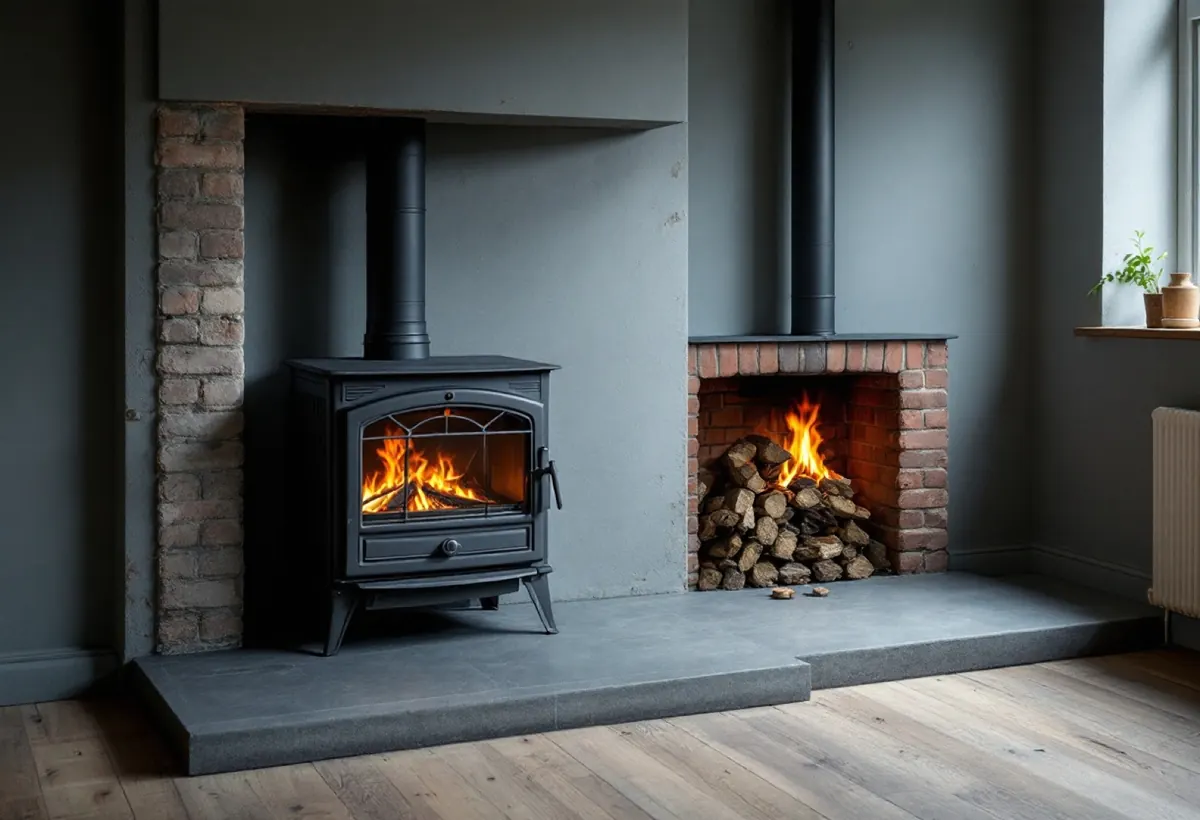
How much asbestos did millboard, cement sheet and rope hold? EPA’s 1985 percentages
EPA’s 1985 building guidance prints a content range for each product family. Of the 8 families that map onto a fireplace, 7 top out above the 50 percent ceiling for banned gas log embers, so the hearth board and door rope were often richer in asbestos than the product the CPSC banned.
| Material (fireplace part) | Asbestos percent | Dates of use |
|---|---|---|
| Millboard | 80 to 85 | 1925 onward |
| Flat cement sheet | 40 to 50 | 1930 onward |
| Insulating cement | 20 to 100 | 1900 to 1973 |
| Finishing cement | 55 | 1920 to 1973 |
| Cord, rope, yarn | 80 to 100 | 1920 onward |
| Tape and strip | 90 | 1920 onward |
| Fire blankets | 100 | 1910 onward |
| Fire and water sealants | 50 to 55 | 1935 onward |
The same EPA's 1985 Purple Book (EPA 560/5-85-024) notes that an EPA nationwide survey found pipe or boiler insulation in about 16 percent of buildings, and 20 percent of those built before 1970. That figure is for heating plant, not fireplaces, and no federal survey counts asbestos fireplaces.
Is the firebrick or refractory mortar asbestos? What the record does and does not say
No US federal or state page opened for this article names fireplace firebrick or firebrick mortar as an asbestos product. EPA's Learn About Asbestos page, CPSC's Asbestos in the Home guide and the NSW Environment Protection Authority fireplace page list sheets, millboard, gaskets and embers, and stop there. Guides online that put a percentage on firebrick mortar do not cite a lab or a regulator.
The nearest federal evidence is indirect. EPA's 1985 Purple Book (EPA 560/5-85-024) records insulating cement at 20 to 100 percent asbestos, used from 1900 to 1973, and finishing cement at 55 percent, used from 1920 to 1973, and says boiler insulation may consist of refractory thermal bricks covered with finishing cement. A heat cement skim on a firebox, smoke shelf or flue joint fits those families; the ordinary face brick does not appear in any table.
So the honest instruction is to sample, not to guess. Before a firebox is relined or a chimney breast is demolished, ask the inspector to take separate samples of the mortar joints, any smooth cement skim and any parging on the smoke chamber, because a lab reports each layer on its own. Our asbestos inspection page explains what a pre demolition survey covers.
Is an intact hearth board friable, nonfriable or regulated under 40 CFR 61.141?
The federal air rule sorts the eight parts three ways. 40 CFR 61.141 defines friable asbestos material as anything over 1 percent asbestos that can be crumbled to powder by hand pressure when dry. Category I nonfriable covers packings, gaskets, resilient flooring and asphalt roofing. Category II is any other material over 1 percent that hand pressure cannot crumble.
- Door gaskets and rope seals (part 5) fall in Category I, the same class as packings in 40 CFR 61.141.
- Cement sheet hearth pads, surround panels and cement flue pipe (parts 3, 4 and 6) are Category II while intact.
- Loose embers, soft millboard and crumbling flue insulation (parts 1, 2 and 7) behave as friable material, and Category II board that is broken up becomes regulated asbestos containing material under 40 CFR 61.141.
Most single family homes sit outside the federal notice rule: the facility definition in 40 CFR 61.141 excludes residential buildings with four or fewer dwelling units, though condominium and cooperative buildings stay in. State and local rules can still apply to a house, which is the reason for the next section.
Who may sample and remove fireplace asbestos in a house?
EPA's homeowner asbestos page says intact material that will not be disturbed does not need testing, that a trained and accredited professional should take samples, and that owners should not saw, sand, scrape or drill suspect material or dust, sweep or vacuum its debris. Lab fees by sample are on our asbestos testing cost page.
Whether an owner may remove a hearth board personally is set by state and local rules that differ between states, so the question for the local air agency is specific: does an owner occupied single family exemption exist here, and does it reach friable material. The step sequence and owner rules are on our how to remove asbestos page.
Door rope and gasket replacement has its own method, set out on our asbestos wood stove gasket page. Cement vents and liners, including the connector at part 6, are covered on our asbestos flue pipe page. Chimney sweeping, relining and gas log service belong to the heating trade, which our sister site thehvacbrief.com covers.
When the work is past the owner, ask an abatement firm for its state licence number and whether each worker on the crew holds current state asbestos accreditation, with dates. Our licensed asbestos abatement professional page lists the questions.
For contractors: which OSHA class is a fireplace tear out under 29 CFR 1926.1101?
29 CFR 1926.1101 defines Class I work as removal of thermal system insulation and surfacing material, Class II as removal of any other asbestos containing material, and Class III as repair and maintenance where asbestos is likely to be disturbed. Flue insulation (part 7) can fall under the thermal system insulation definition, which names breeching and ducts; hearth board, surround panels and gaskets are Class II.
Two numbers govern every class: per 29 CFR 1926.1101, the permissible exposure limit is 0.1 fibre per cubic centimetre as an 8 hour time weighted average, and the excursion limit is 1.0 fibre per cubic centimetre over 30 minutes. For the door seal, paragraph (g)(8)(iv) says a gasket that is visibly deteriorated and unlikely to come out intact must be removed within a glovebag and placed straight into a disposal container.
Presumed asbestos containing material under 29 CFR 1926.1101 means thermal system insulation and surfacing material in buildings built no later than 1980. A 1975 fireplace with a cement skim on the smoke chamber is presumed until a lab result says otherwise.
Out of scope here: health effects. For those, read the EPA asbestos pages, starting with EPA's Learn About Asbestos page. This article covers materials, rules and procedure only.
Questions people actually ask
Can fireplaces have asbestos?
Yes. CPSC and EPA guidance name four fireplace sources: artificial embers and ash for gas logs, which 16 CFR 1305 banned in 1977, millboard, paper or cement sheet protecting walls and floors near stoves, door gaskets, and flue materials. The brick itself is not on any federal list found for this page.
What does asbestos in a fireplace look like?
It usually looks like nothing special: flat grey or off white board under the hearth or behind a stove, a grey rope seal in the door channel, or a fluffy grey bed under 1970s gas logs. Colour and texture prove nothing; 40 CFR 61.141 counts a material as asbestos containing above 1 percent by polarized light microscopy, so only a lab result confirms it.
Is asbestos around a fireplace safe if left undisturbed?
EPA and CPSC both advise leaving asbestos material in good condition alone, and EPA says intact material that will not be disturbed does not need testing. The exceptions are loose ember material on gas logs and frayed door rope, which CPSC says can release fibres during normal use, so both deserve a sample.
What happens if asbestos catches on fire?
WorkSafe New Zealand says asbestos went into fireplaces, stoves and flues because it resists heat, but the boards, binders and seals around it can still break apart in a fire. After a fire, debris from a pre 1980 fireplace should be sampled before cleanup. Our will asbestos burn page covers heat, ash and fire debris.
How do I dispose of old gas log ash that might be asbestos?
CPSC release 77-118 from 2 December 1977 said: do not vacuum it, dampen it with a water and detergent spray, double bag it, label the outer bag as asbestos, and never burn it. It told owners to ask the local sanitation or health department where the bags may go.
Do I need to test a fireplace before I remodel it?
If the work will cut, lift or demolish a hearth, surround or firebox in a pre 1980 house, yes. EPA advises an accredited professional take samples before disturbance, and 29 CFR 1926.1101 presumes thermal system insulation in buildings built by 1980 contains asbestos until tested.
Sources
- 16 CFR Part 1305, 16 CFR 1305.1, 16 CFR 1305.3 and 16 CFR 1305.5, Consumer Product Safety Commission ban of artificial emberizing materials, 42 FR 63364, 15 December 1977, via Legal Information Institute, Cornell Law School. Retrieved 16 November 2026.
- CPSC release 77-042, US Consumer Product Safety Commission, 28 April 1977. Retrieved 16 November 2026.
- CPSC release 77-118, US Consumer Product Safety Commission, “Asbestos Ban Announced”, 2 December 1977. Retrieved 16 November 2026.
- CPSC's Asbestos in the Home guide, US Consumer Product Safety Commission, undated. Retrieved 16 November 2026.
- EPA's Learn About Asbestos page, US Environmental Protection Agency, last updated 13 July 2026. Retrieved 16 November 2026.
- EPA's homeowner asbestos page, US Environmental Protection Agency, “Protect Your Family from Exposures to Asbestos”, last updated 25 June 2026. Retrieved 16 November 2026.
- EPA's 1985 Purple Book (EPA 560/5-85-024), US Environmental Protection Agency, “Guidance for Controlling Asbestos-Containing Materials in Buildings”, June 1985, Appendix A and section 2.2.3. Retrieved 16 November 2026.
- WorkSafe New Zealand's homeowner guidance, WorkSafe New Zealand, “Asbestos in the home”, last updated 15 August 2024. Retrieved 16 November 2026.
- NSW Environment Protection Authority fireplace page, NSW Environment Protection Authority for the NSW Asbestos Coordination Committee. Retrieved 16 November 2026.
- 40 CFR 61.141, asbestos NESHAP definitions, via Legal Information Institute. Retrieved 16 November 2026.
- 29 CFR 1926.1101, OSHA construction asbestos standard, via Legal Information Institute. Retrieved 16 November 2026.
- The share of gas log sales subject to the ban is arithmetic on the figures in 16 CFR 1305.5. No figure on this page was estimated or invented. Our methodology sets out the standing rules. More rules pages: standards.
Asbestos rules differ by state and city. Confirm sampling and removal requirements with your state or local air agency before any fireplace work.