The short answer
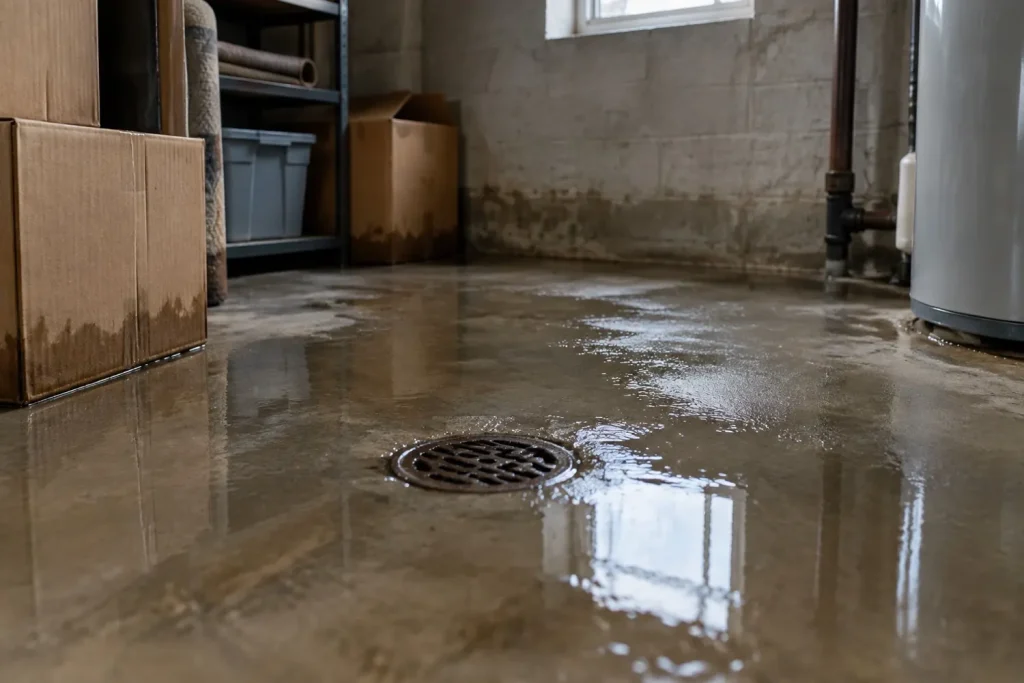
Water backup coverage renters insurance policies offer is an endorsement, not part of the base form. It patches a named exclusion for water that backs up through a sewer or drain or overflows from a sump. It is not the same thing as flood cover, it pays for your belongings rather than for the plumbing repair, and it carries its own limit that is often well below the value of what a basement holds.
Key takeaways
- Backup is a named exclusion on standard forms, deliberately written in. It is not an oversight and it is not something an adjuster decides case by case.
- Backup and flood are two different exclusions. Water rising up a drain from inside the system is backup; water rising across the ground from outside is flood. Neither endorsement covers the other.
- The endorsement is normally inexpensive relative to the loss it answers, and it is normally sold in fixed limit tiers rather than at your full contents limit.
- It covers damage to your belongings. It does not pay to unblock or replace the pipe, and it does not pay for surface flooding.
- Ground-floor and basement units carry almost all of the exposure. On an upper floor the endorsement is worth much less, and it is honest to say so.
- Sewage backup is a Category 3 loss, so porous belongings are removed rather than cleaned. That changes what the claim looks like before anyone argues about limits.
On this page
- The exclusion the endorsement patches
- Backup is not flood, and the difference matters
- What the endorsement covers
- What it still does not cover
- Limit tiers and why they run out
- Who it is actually worth buying for
- What causes a backup in the first place
- Sewage backup is a Category 3 loss
- How the claim runs, step by step
- Reading your declarations page
- Questions to ask before you buy
- Questions people actually ask
Water backup coverage renters insurance carriers sell as an add-on is the endorsement most people skip, usually because it was offered as a line item at purchase and declined in the same click as the identity-theft add-on. This page is only about that endorsement: what the base form excludes, why the exclusion exists, what the add-on restores, and what it still leaves on your side of the line. For the wider question of how renters policies treat water generally, our renters water damage guide covers the contents-against-building split, the sudden and accidental test, and loss of use.
The exclusion the endorsement patches
Standard renters and homeowners forms exclude loss caused by water that backs up through sewers or drains, or that overflows from a sump or sump pump. This is written into the base form as a named exclusion. It sits alongside the flood exclusion and the gradual seepage exclusion, and it is one of the reasons the base premium is what it is.
The logic behind it is worth understanding, because it explains why no amount of arguing moves it. Escape of water is a covered peril when water leaves a pressurised supply line inside the building: sudden, accidental, and largely unrelated to how the building is maintained. A drain backing up is a different event. It usually reflects the condition of a system shared between many properties, or the condition of a lateral that somebody was responsible for maintaining, and it correlates with heavy rainfall across a whole neighbourhood at once. Insurers price and sell that exposure separately rather than folding it into the base form.
| Route the water took | Base form treatment | Why |
|---|---|---|
| Supply pipe bursts inside the wall | Covered peril on the base form | Sudden, accidental escape from a pressurised line. |
| Washing machine hose fails | Covered peril on the base form | Same, from an appliance connection. |
| Water comes up through a floor drain or shower trap | Excluded without the backup endorsement | Backed up through a drain, which is a named exclusion. |
| Sump pit overflows because the pump failed | Excluded without the backup endorsement | Sump overflow is named in the same exclusion. |
| Sewer surcharges during heavy rain and enters the unit | Excluded without the backup endorsement | Backup through the sewer, regardless of what caused the surcharge. |
| River or storm water rises across the ground and enters | Excluded, and the backup endorsement does not restore it | That is the separate flood exclusion, which needs a flood policy. |
| A slow leak under the bath over several months | Excluded, and no endorsement here helps | Gradual damage, which is a third and separate exclusion. |
It applies even when the cause was nothing to do with you
The exclusion is written by reference to the route the water took, not by reference to fault. A municipal main surcharging after a storm, a neighbour’s blockage pushing waste back through the shared lateral, and a failed pump in the building’s own sump all produce the same answer on a base form: excluded. Tenants reasonably feel this is unfair, and the feeling does not change the wording. The endorsement is the mechanism the market provides.
Backup is not flood, and the difference matters
These two get conflated constantly, including by people selling the cover. They are separate exclusions, patched by separate products, and holding one does nothing for the other. The distinction turns on where the water was immediately before it reached you.
Contents-only flood cover for tenants is available through the FEMA, National Flood Insurance Program and through private carriers, priced separately from building cover because tenants are the buyers. A tenant in a ground-floor unit near water who buys the backup endorsement and assumes they are now covered for flooding has bought the wrong product for that risk, and will find out at the worst moment.
The same storm can produce both, on the same night
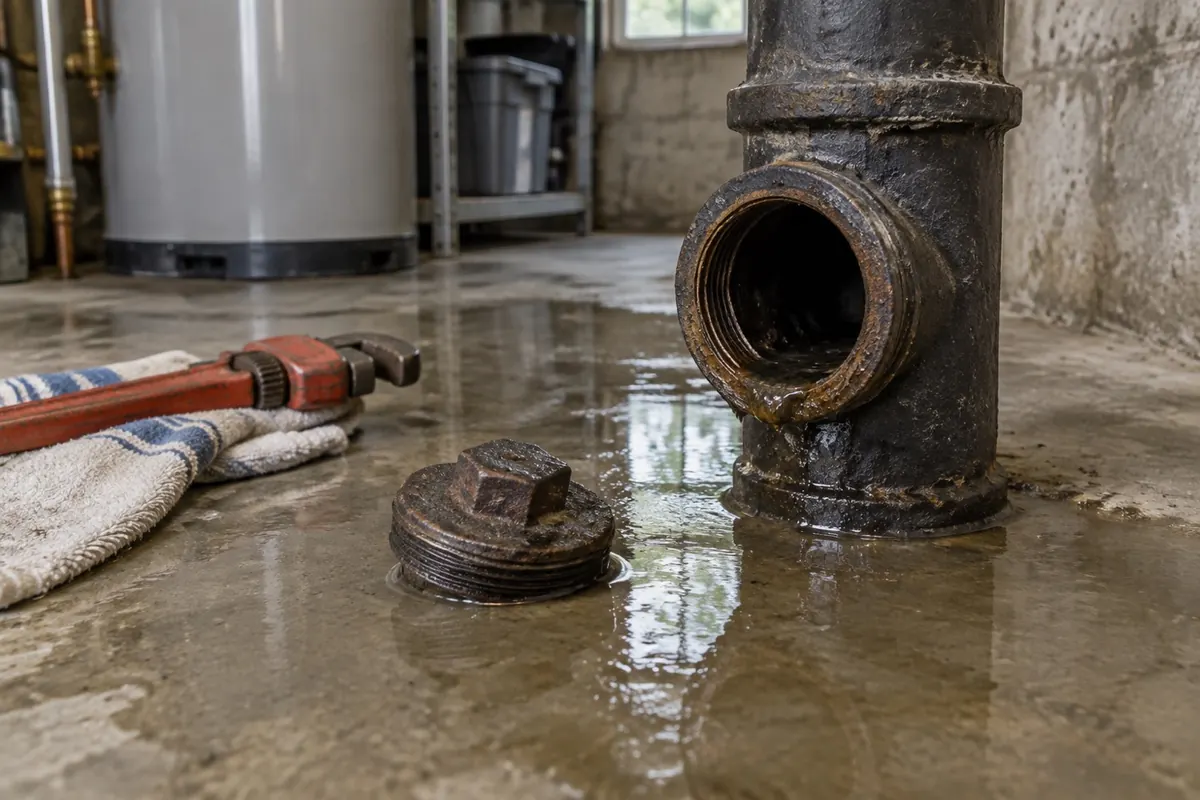
This is where it gets genuinely difficult. A heavy rainfall event can surcharge the sewer system and push water up through a basement floor drain at the same time as surface water is pooling against the building and finding its way in at ground level. Two perils, two products, one puddle. The adjuster will try to determine which water arrived first and which did the damage, and photographs taken while the water is still present are the only evidence that exists for that question afterwards.
What the endorsement covers
On a renters policy the endorsement restores cover for damage to your personal property caused by the excluded event. It is narrower than people expect, and the narrowness is usually reasonable once you see where the boundaries fall.
| Item or cost | Typically inside the endorsement | Note |
|---|---|---|
| Your furniture, boxes and belongings in the affected area | Yes, up to the endorsement limit | This is the core of what the cover buys. |
| Cleanup and disposal of your damaged property | Usually | Removing contaminated contents is part of the contents loss. |
| Drying and decontamination of the space | Structural work is the landlord’s; your own contents handling is yours | On a renters policy there is no building cover to extend. |
| Additional living expense if the unit becomes unfit | Often, where the base form’s loss of use extends to the endorsement | Not universal. Check whether the endorsement names it. |
| Rugs, stored clothing, books, mattresses in a basement | Yes, within the limit | Category 3 water means most of these are removed rather than cleaned. |
| Electronics and appliances you own | Yes, within the limit | Anything submerged is normally treated as a loss rather than repaired. |
What it still does not cover
Three gaps recur, and all three catch people who believed the endorsement was a general water add-on.
| Gap | What is not paid | Where it actually sits |
|---|---|---|
| The plumbing repair itself | Clearing the blockage, relining or replacing the lateral, replacing the failed sump pump | A maintenance cost. On a rented unit it is normally the landlord’s or the utility’s, depending on where the defect is. |
| Surface flooding | Water that rose across the ground and entered at or below grade | A flood policy, through NFIP or a private carrier. |
| Long-term neglect | Damage that developed gradually from a known, unreported condition | Nowhere. Gradual damage is excluded by the base form and the endorsement does not restore it. |
| The building and fixed finishes | Drywall, flooring, fitted units in a rented property | The landlord’s property policy, not yours. |
| Loss above the endorsement limit | Anything beyond the tier you chose | You. This is the most common shortfall on a real backup claim. |
| Some named causes inside the endorsement | Certain wordings exclude a sump failure with no power outage, or a blockage in a lateral you were responsible for | Read the endorsement text, which is where these sit. |
The pipe is never covered, and that surprises people
This holds across the whole of property insurance and it is worth stating plainly: insurance pays for the damage water did, not for fixing the thing that let the water in. Escape of water claims do not pay for the burst pipe. Backup claims do not pay for the blocked drain or the dead sump pump. On a rented unit that is usually academic, because the repair belongs to the landlord anyway, but it explains why a tenant who bought the endorsement still gets told the pump replacement is not their claim.
Limit tiers and why they run out
The endorsement is not written at your full contents limit. It is normally sold in fixed tiers that you select, and the tier is the most the endorsement will pay regardless of how much contents cover you bought. This is the structural feature that decides whether the endorsement was worth having.
| Structural feature | Indicative pattern | What it means for you |
|---|---|---|
| How the limit is set | A fixed sum you choose from a small list of tiers | Your contents limit does not raise it. They are separate numbers. |
| Where the tiers usually start | A low entry tier, frequently the default when the box is ticked without thought | The default is often the smallest one on offer. |
| How high tiers usually go | Higher tiers are commonly available, sometimes to a substantial sum | Ask what the top tier is rather than accepting the first option. |
| Premium shape | Cost per additional tier is usually modest relative to the extra limit bought | The step up is often cheaper per dollar of cover than the first tier was. |
| Deductible | Sometimes the policy deductible, sometimes a separate one named in the endorsement | A separate deductible can consume a meaningful share of a low tier. |
| Basis of settlement | Follows the base form, so actual cash value unless you hold replacement cost | A depreciated settlement inside a low tier is a small cheque. |
The limit is frequently far below a finished-basement loss
Here is the practical problem. The entry tier on a backup endorsement is designed around a modest, partial contents loss. What a backup into a finished basement actually produces is a full-room contents loss in Category 3 water, in which almost everything porous leaves the building. A basement that functions as storage or a spare bedroom can easily hold more value than the entry tier, and the tenant discovers the ceiling at settlement rather than at purchase.
Who it is actually worth buying for
We are not going to tell every renter to buy this. The exposure is extremely uneven, and an honest answer helps more than a blanket recommendation. What matters is the vertical relationship between your belongings and the drainage system.
| Your situation | Exposure | Reasoning |
|---|---|---|
| Basement unit, or you store belongings in a shared basement | High | Below the level of the sewer lateral. This is where backup water arrives first and stands longest. |
| Ground-floor unit with floor drains or a sump in the building | High | Backup enters at the lowest fixture, and that is on your floor. |
| Ground-floor unit, no basement, older municipal system | Moderate to high | Combined sewer systems surcharge during heavy rainfall, and older laterals fail more often. |
| First or second floor above a ground-floor unit | Low to moderate | Backup rarely reaches you directly, though a failure below can still displace you. |
| Upper floor of a larger building | Low | Water follows gravity and the lowest fixtures. The endorsement is worth much less to you. |
| Any floor, but with belongings in a basement storage cage | Moderate to high | The exposure follows your property, not your bed. |
Ask what is below you before you decide
The question to put to a landlord or managing agent is short: is there a basement, is there a sump, has the building backed up before, and when was the lateral last cleared or inspected. A building with a history of backups has a drainage problem that has not been fixed, and that is the single best predictor available to a tenant of whether the endorsement will ever be used.
What causes a backup in the first place
Understanding the mechanism helps because it tells you which failures are anybody’s fault and which are simply weather meeting an old system.
- Sewer surcharge during heavy rainfall. Where storm water and foul water share a combined system, a large rainfall event can fill the system beyond capacity and push it back up through the lowest fixtures connected to it. Nobody is at fault and the endorsement is the only answer.
- Blockage in the lateral. Roots, grease and accumulated solids restrict the pipe between the building and the main. Responsibility for the lateral varies by jurisdiction and is frequently the property owner’s rather than the utility’s.
- Sump pump failure. A pump that fails, or loses power during the storm that was filling the pit, allows the pit to overflow. Our sump pump guide covers how these systems are specified and why battery backup exists.
- Collapsed or offset pipe. Older clay and cast-iron laterals fail structurally. This produces repeat backups rather than a single event, which is why a building’s history matters.
- Downstream work on the main. Utility work or a blockage further along the system can back water up into properties with no defect of their own.
Sewage backup is a Category 3 loss
Before any argument about limits, the nature of the water decides what happens to your belongings. Backup that carries sewage is Category 3 under the water damage classification the restoration industry works to, and Category 3 changes the whole shape of the job. Porous materials that contacted it are removed and disposed of rather than cleaned, because cleaning cannot be verified inside the material.
| Your property | Usual outcome after sewage backup | Why |
|---|---|---|
| Mattresses, upholstered furniture, cushions | Removed and disposed of | Porous throughout. Contamination cannot be verified as removed from a foam core. |
| Carpet and underlay you own | Removed and disposed of | Underlay is a sponge, and carpet backing holds contamination. |
| Cardboard boxes and their contents | Usually discarded | Cardboard wicks upward well above the visible water line. |
| Clothing and washable textiles | Sometimes salvageable by specialist laundering | Washable fibres can be processed, subject to the restorer’s assessment. |
| Books, paper, photographs | Usually a total loss | Absorbent and impossible to decontaminate economically. |
| Hard plastics, metal, sealed glass | Normally cleanable | Non-porous, so contamination sits on the surface. |
| Electronics that were submerged | Normally a loss | Contamination inside the housing, and corrosion follows. |
Our water categories reference explains the classification and why it drives so much of the response, and our sewage backup cleanup cost guide covers what the remediation side of this costs and who normally pays for it on a rented property.
Do not start cleaning before the claim is documented
The instinct after a sewage backup is to get everything out immediately, and it is the wrong instinct for the first twenty minutes. Photographs and video taken before anything moves are the only evidence of what was in the room, how deep the water was and what it contained. After that, mitigation should start straight away, because standing contaminated water gets worse rather than better.
How the claim runs, step by step
The mechanics of a backup claim differ from an ordinary escape of water claim in two ways: the water is contaminated, so the documentation window is short, and the endorsement limit is fixed, so the inventory has to be complete enough to reach it.
- Do not wade in. Category 3 water is a health exposure, and it may be in contact with electrical outlets. If the water is near sockets or an appliance, the power to that area comes off first.
- Record the water level before anything moves. Photograph the tide line against a fixed reference such as a door frame or a wall socket. The depth determines what was affected and is impossible to reconstruct afterwards.
- Photograph and video the whole room, wide first, then close on individual items, before any removal.
- Notify your carrier the same day, and tell the landlord or managing agent separately. Two policies, two notifications.
- Keep damaged items until the adjuster has seen them or released them. If health or the restorer’s schedule means they must go sooner, get the release in writing and photograph each item before it leaves.
- Build the inventory item by item: what it was, roughly when bought, roughly what it cost. Bank and card statements and emailed order confirmations reconstruct this better than memory.
- Ask early whether the claim will reach the endorsement limit. If it obviously will, the argument moves from item valuation to whether loss of use and cleanup sit inside or outside the tier.
Coverage is decided by the exact wording of your policy and of the endorsement, and by the facts your insurer establishes. This page describes the common pattern in standard US forms and backup endorsements so that you know which questions to ask. It is not insurance advice, it is not advice on any specific policy, and it does not create any expectation of coverage. Read your own declarations page and the endorsement text, and speak to your agent or a licensed adviser.
Reading your declarations page
Whether you hold this cover is a two-minute check, and it is answered on the declarations page rather than by memory of what the agent said.
| What to look for | Where | What it tells you |
|---|---|---|
| A line naming water backup, sewer backup or sump overflow | Endorsements or optional coverages section | If it is not named, you do not hold it. Absence is the answer. |
| The endorsement form number | Next to that line | It identifies the exact wording, which is what you then read. |
| A limit beside the endorsement | Same line | This is the ceiling. It is not your contents limit. |
| A separate deductible | Either on the line or inside the endorsement text | Some endorsements carry their own, and it can be a large share of a low tier. |
| Whether loss of use is named as extending to it | Inside the endorsement text | Determines whether a hotel is payable when a backup makes the unit unfit. |
| Valuation basis on your contents | Personal property section of the declarations | Actual cash value or replacement cost, which applies to backup losses as it does to any other. |
Questions to ask before you buy
- What tiers do you offer, and what is the highest? The first number quoted is frequently the lowest available.
- What is the price difference between tiers? The step up is often modest relative to the extra limit, which makes the default tier a poor default.
- Does the endorsement carry its own deductible? If so, work out what it leaves of the lowest tier before choosing it.
- Does loss of use extend to a backup loss? A contaminated unit is frequently unfit to occupy for days, and this is not universal in endorsement wordings.
- Does it settle at replacement cost or actual cash value? It normally follows the base form, so this is really a question about your contents cover.
- Are there exclusions inside the endorsement? Sump failure without a power outage, and blockage in a lateral you are responsible for, are the two that appear most often.
- Is there a waiting period before it takes effect? Usually short or none, unlike flood, but worth confirming if rain is forecast.
If the answers point to a low ceiling on a high exposure, the sensible response is a higher tier rather than skipping the cover, because the marginal premium on limit is normally the cheapest part of the product. Our methodology sets out the standing rules we apply to every figure and every general statement published here.
Questions people actually ask
What is water backup coverage on renters insurance?
It is an endorsement added to a renters policy that restores cover for damage to your belongings caused by water backing up through a sewer or drain, or overflowing from a sump. The base form excludes that specific route of water, and the endorsement is how the market puts it back.
Is water backup the same as flood insurance?
No. They patch two different exclusions. Backup is water rising up through the drainage system from inside it. Flood is surface water rising across the ground from outside the building. Holding the backup endorsement does nothing for a flood, and a flood policy does nothing for a backup.
Does the endorsement pay to fix the blocked drain or the sump pump?
No. Property insurance pays for the damage the water did, not for repairing what let it in. On a rented unit the drain and the pump are normally the landlord’s responsibility anyway, so the repair would not have been your cost in the first place.
How much backup cover should a renter buy?
Enough to cover what you actually keep at or below ground level, which is usually more than the default tier. The tiers are fixed sums rather than a share of your contents limit, and the step up between tiers is generally inexpensive relative to the extra cover bought. Ask your carrier for the full tier list rather than accepting the first option offered.
Is sewage backup covered by renters insurance without an endorsement?
Generally not. Backup is a named exclusion on standard forms, so without the endorsement there is normally no cover for the contents damage. Check the declarations page for a line naming water backup, sewer backup or sump overflow; if no such line appears, assume the cover is not there.
Can I claim the hotel if a backup makes my flat unusable?
Sometimes. It depends on whether your endorsement extends the loss of use section to a backup loss, which is not universal. A sewage backup frequently does make a unit unfit to occupy for several days, so it is worth confirming this before you need it rather than afterwards.
Do I need this if I live on an upper floor?
The exposure is much lower, because backup water follows gravity and arrives at the lowest fixtures in the building. It is still worth considering if you keep belongings in a basement storage area, since the endorsement follows your property rather than your bed, and a failure below you can still displace you.
Sources
- The water backup and sump overflow exclusion, and its separation from the flood exclusion, reflect the standard structure of US renters and homeowners forms. Exact wording differs between carriers and the policy governs.
- FEMA, National Flood Insurance Program, on the separation of flood cover from standard property policies and on the availability of contents-only cover for tenants. Retrieved 23 September 2026.
- Endorsement structure, including fixed limit tiers, optional separate deductibles and internal exclusions, is described as the common market pattern. We do not publish carrier-specific tier amounts or premiums, because those vary by carrier, state and rating and quoting one would be inventing a figure.
- Category 3 treatment of porous contents follows the water damage category framework used in professional restoration, under which porous materials contacted by grossly contaminated water are removed rather than cleaned.
- The basement contents ranges shown in the chart are ILLUSTRATIVE and invented to make a scale argument. They are not survey data, not carrier data and not a quote.
- State insurance departments handle consumer complaints against carriers. The relevant department is the one in the state where the policy was issued.
This page is general information about how a standard water backup endorsement is structured. It is not insurance advice, it is not advice on any specific policy, and it does not create any expectation of coverage. Read your own policy and endorsement and speak to your agent or a licensed adviser.