The short answer
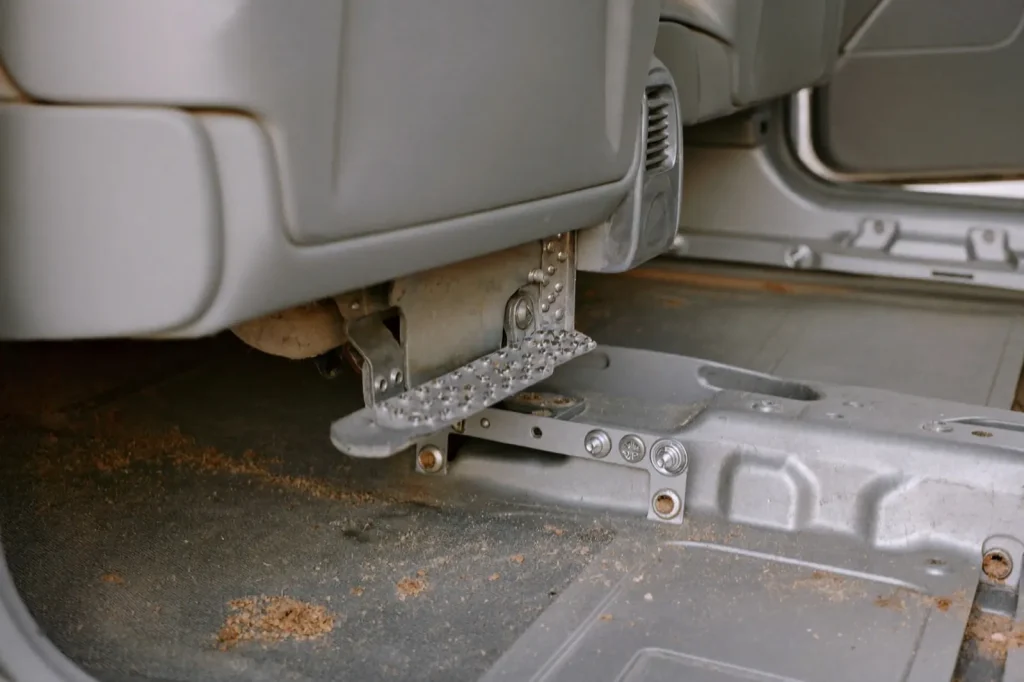
Car flood damage diagnosis comes down to two checks that back each other up: a physical inspection keyed to how high the water rose, and a records search for a total loss or flood brand. Toyota’s flood bulletin sets 5 water levels, and once water passes the rocker panel into the floor its guidance reaches seat wiring, airbag sensors and control units.
Which 10 signs of flood damage in a car are hardest to fake?
The order below is our editorial ranking of how much disassembly a seller would need to hide each sign, judged from the repair scope in Toyota service bulletin T-SB-0229-12. It is not a Toyota ranking. Rows 1 to 5 are hard to fake because clearing them means pulling seats, trim or panels; rows 8 to 10 can be cleaned, cleared or masked without removing any trim. Print it and tick each box as you go.
| Rank | Where to look | What counts as a hit | Water level it implies | Why it matters | Done |
|---|---|---|---|---|---|
| 1 | Seat motor, seat track bolts and the harness under each front seat | Rust, silt or white crust on bolts, connectors or the seat heater plug | Level 3 | Fixing it means pulling seats; the bulletin lists seat motor, switches and harness at Level 3 | ☐ |
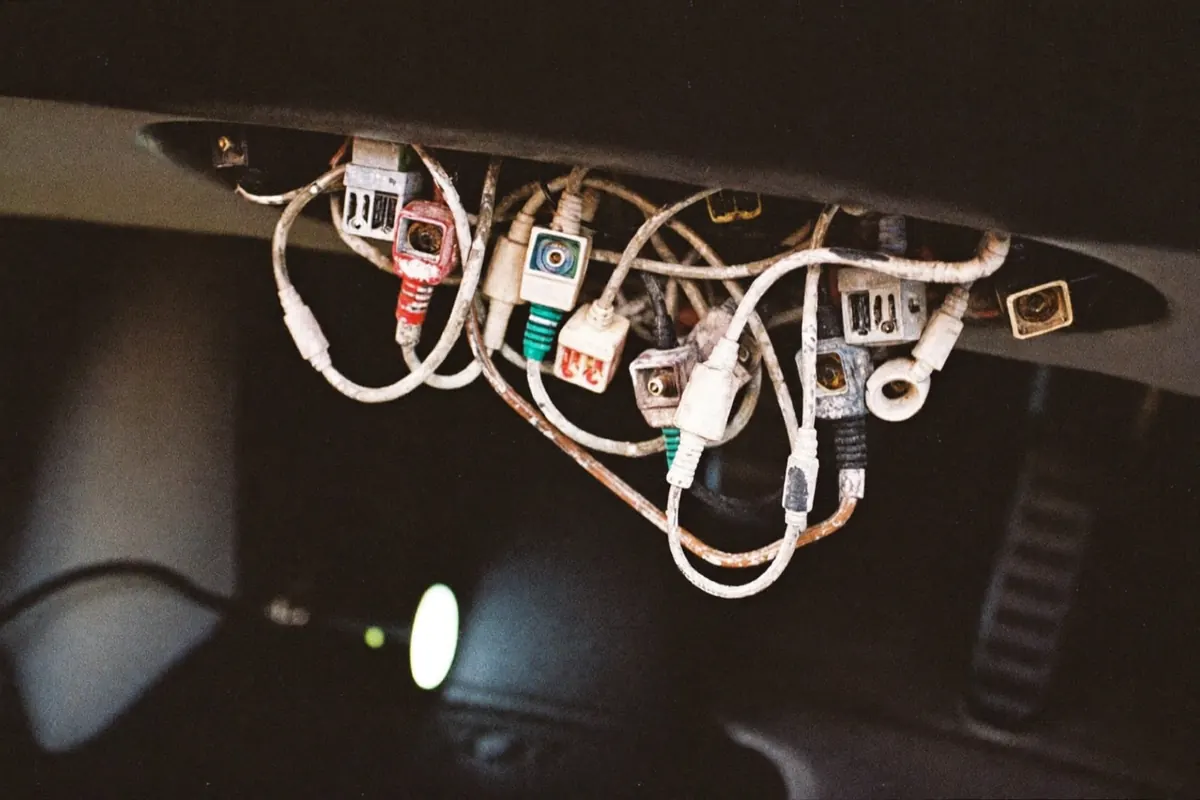
| 2 | Junction blocks, relay blocks and connectors under the dash | Green or white corrosion on pins; brittle or stained tape on harnesses | Level 3 to 4 | Corrosion here can cause false airbag deployment and heat, per the bulletin | ☐ |
| 3 | Frame channels and the lower edges of body panels | Dried silt or salt bloom inside channels and seams | Level 3 | Salt residue keeps corroding and stays conductive after drying | ☐ |
| 4 | Body pressure relief vents and low pockets in the rear quarters | Mud, grit or a water ring behind the trim | Level 3 | Toyota names these vents as a water entry path that also traps water | ☐ |
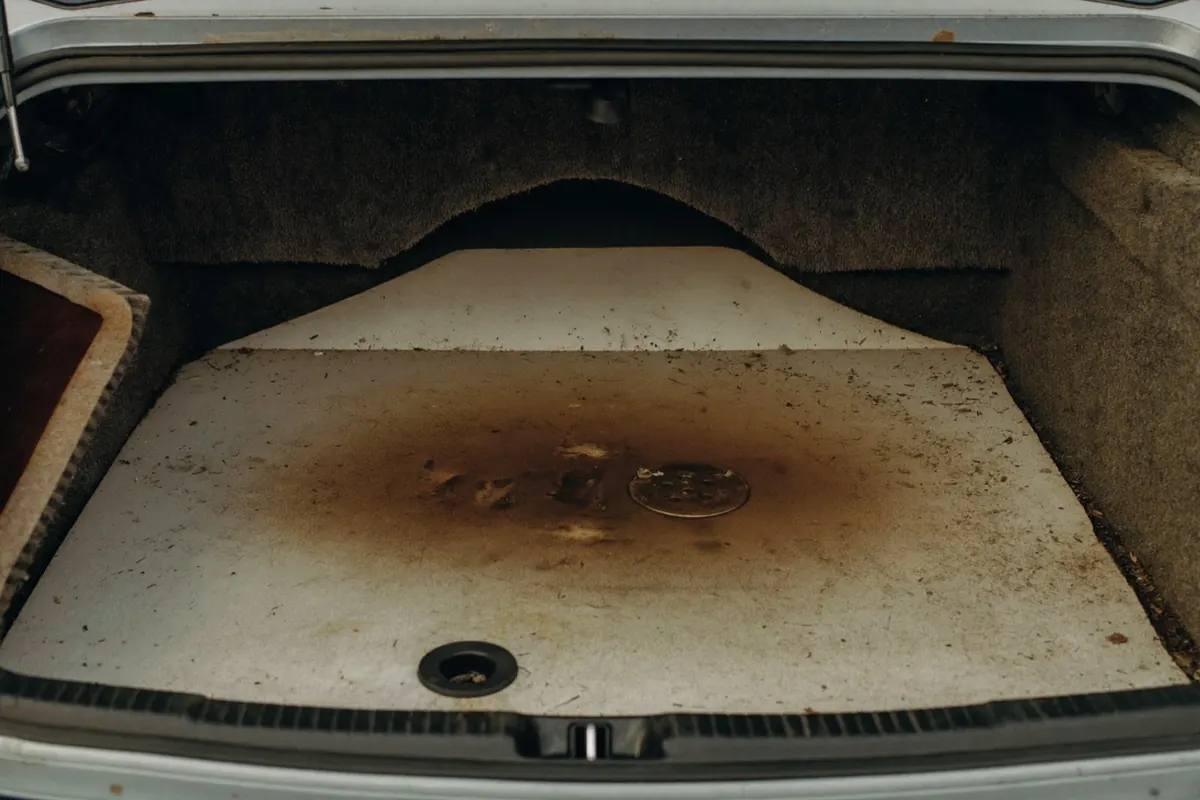
| 5 | Body drain plugs at the rear cabin corners and in the spare tire well | Plugs recently removed, a ring in the well, rust on the well floor | Level 3 | Removing these plugs is step 3 of Toyota’s drain procedure | ☐ |
| 6 | Engine oil, transmission fluid, differential and transfer case oil | Milky or grey fluid, water droplets on the dipstick | Level 2 to 4 | Fluids can be changed before sale, so a clean result proves little | ☐ |
| 7 | Brake calipers, wheel speed sensors and their connectors | Heavy rust on slides and hardware; green sensor pins | Level 2 | Toyota says clean, lube or replace; submerged sensors in salt water get replaced | ☐ |
| 8 | Scan tool: stored and pending trouble codes, misfire and fuel trim data | Codes across many modules at once, or codes freshly cleared | Driven | The bulletin’s driven check uses live data and a full health check | ☐ |
| 9 | Carpet, padding, seat foam, door trim | Damp padding, tide marks, new carpet in an older cabin | Level 3 | The cheapest parts to swap; the bulletin flags them for replacement and mold review | ☐ |
| 10 | Cabin smell after the car sits closed | Musty odor, or heavy fragrance masking it | Any | Easiest sign to hide, so weigh it least | ☐ |
A hit in rows 1 to 5 outweighs a clean result in rows 6 to 10. A car with new carpet, a fresh oil change and no codes can still carry silt in its seat track bolts, and Toyota’s Level 3 guidance says every electrical part submerged in salt water should be replaced, not reused.
How high did the water get, and what does each level put at risk?
Toyota’s Toyota service bulletin T-SB-0229-12 (Rev1, dated November 22, 2017) grades a parked car by its highest water line on a five step scale, and says the inspection areas add up as the water rises. Find the line first: silt on the door sill, a ring in the spare tire well, or rust on seat bolts but not on the dash bracket tells you which row to read.
| Level | Water line | Key inspection areas | Toyota guideline for salt water |
|---|---|---|---|
| Level 1 | Lower edge of rim or wheel | Wheel surfaces, TPMS valve, undercarriage splash | Clean or replace; rinse with fresh water |
| Level 2 | Axle centerline | Brakes, suspension, wheel bearings, starter, neutral start switch, exhaust sensors, driveline fluids | Replace any electrical part submerged in salt water; drain and refill fluids |
| Level 3 | Lower edge of door, top of rocker panel | ECUs, sensors, airbags, pretensioners, seat and door wiring, HV battery on hybrids, carpet | Full interior disassembly; replace all salt submerged electrical parts |
| Level 4 | Lower edge of dash panel | All under hood electronics, engine oil, transmission fluid, fuel contamination | Replace interior parts as needed; consider mold inspection |
| Level 5 | Top edge of dash panel | Everything above, plus the full upper interior | Replace all components submerged in or damaged by salt water |
The bulletin adds a second table for a car that was driven through water: engine knock, trouble codes, misfire and fuel trim, air filter box, transmission shift quality and lockup shudder. A car that was driven in needs both the parked and the driven checks, per Toyota service bulletin T-SB-0229-12. The National Weather Service warns that 12 inches of rushing water can carry away most cars, which is why a driven car’s water line often sits higher than the seller remembers.
How fast that water arrives is covered on our flash flood page, which draws on the same NWS guidance.
Why do airbags and control modules matter more than wet carpet?
Because corrosion keeps working after the cabin dries. Toyota service bulletin T-SB-0229-12 lists three results of water entry: improper power distribution or overcurrent, high resistance and abnormal heat that could lead to a fire, and false activation or deployment of SRS airbags, pretensioners and side curtain airbags.
Salt is the multiplier. T-SB-0229-12 says salt residue continues to corrode and remain conductive even after a vehicle dries, and that any electrical component submerged in salt water, from harnesses and connectors to ECUs and hybrid batteries, needs to be replaced before the car is operated and should not be reused. For fresh water, Toyota says residual corrosion is not as great a concern but every case is judged on its own.
A truck maker says the same thing in plainer words. Freightliner bulletin 00-042, dated October 16, 2017, says that if any electrical computer or module has been submerged it should be replaced, and that pneumatic air brake valves submerged in sea water should be replaced with new parts.
That is the practical answer to whether a flood damaged car is repairable. Toyota service bulletin T-SB-0229-12 states that after an extended partial or full submersion some vehicles may not be repairable and should be decommissioned, and that the repair, value and salvage decision belongs to the owner, dealer and insurer. Flood damage is not covered by Toyota’s new vehicle warranty, per the same note.
What will a VIN history report catch, and what will it miss?
Start with NMVTIS, the federal title database. Its NMVTIS report guide lists five indicators: current title state and date, brand history (labels such as junk, salvage and flood), odometer reading, total loss history and salvage history. Reports are sold through approved NMVTIS data providers; the Justice Department page says consumers cannot get NMVTIS reports from Carfax, DMVDesk or Experian.
Three gaps matter for a flood car. First, the NMVTIS Consumer Access Product Disclaimer (rev. September 2022) says some states do not yet send data, so NMVTIS does not hold every vehicle. Second, damage never declared a total loss or branded by a state may not appear at all. Third, the insurer reporting rule in 28 CFR Part 25, Subpart B, section 25.55, covers vehicles of the current model year or any of the four prior model years. An insurer that totals an older car is not required by that section to report it.
The federal definition is broad when it does apply. Section 25.52 of 28 CFR Part 25, Subpart B defines a salvage automobile as one damaged by collision, fire, flood or another event so that salvage value plus repair cost exceeds its fair market value just before the damage, and counts any vehicle an insurer designates a total loss under its policy terms.
Commercial reports add what NMVTIS leaves out, such as repair records, and the FTC used car guidance notes that a history report may list flood damage but typically will not list mechanical problems. The disclaimer and the FTC both say the report is not a substitute for an independent inspection, which is what the checklist above is for.
Run the report before you drive to see the car. Then check that the VIN on the dash plate, the driver door jamb label and the title all match, because the brand history only helps if you looked up the right car.
Which states print flood on the title, and at what damage level?
Fewer than you would hope. Of the five statutes below, read in full on 8 November 2026, only Florida and Louisiana name water on the title record. Minnesota, Iowa and Virginia brand a car salvage by cost, whatever the cause, so a flooded car from those states shows up as salvage, not flood.
| State | Statute | Brand or document | Trigger | What a buyer sees |
|---|---|---|---|---|
| Florida | Florida Statutes 319.14 (1)(c)8, (2), (3); Florida Statutes 319.30 (3)(a) | Flood vehicle | Declared a total loss under 319.30(3)(a) from water damage | Seller must disclose in writing before sale; every ad must say flood vehicle or the seller commits a second degree misdemeanor |
| Louisiana | Louisiana R.S. 32:702 (5), (15), (18) | Water damaged vehicle; certificate of destruction | Power train, computer or electrical system damaged by flooding and a total loss at 75% or more of NADA market value, per the statute | After a governor declared disaster: certificate of destruction, reassignable at most 2 times before dismantling |
| Minnesota | Minnesota Statutes 168A.01 subd. 17b; Minnesota Statutes 168A.151 subd. 1 | Salvage or prior salvage (cause not named) | Insurer total loss, or repairs over 80% of pre damage value, per the statute | Per the statute, salvage brand for model years within 5 calendar years or ACV over $9,000; prior salvage otherwise |
| Iowa | Iowa Code 321.52 (4) | SALVAGE, then a previously salvage notation | Repair cost over 70% of fair market value before damage, per the statute | Per the statute, applies to vehicles worth $500 or more; rebuilt cars need a $50 salvage theft examination |
| Virginia | Code of Virginia 46.2-1600 | Salvage, rebuilt or nonrepairable (cause not named) | Late model where repair cost exceeds ACV minus salvage value | Per the statute, late model means current plus 5 prior model years, or ACV of at least $10,000 |
The table also shows where a flooded car can slip through. Per the statutes, Minnesota’s brand rule in Minnesota Statutes 168A.151 keys on model year and value, Virginia’s late model definition in Code of Virginia 46.2-1600 stops at 5 prior model years or $10,000, and Iowa’s Iowa Code 321.52 starts at $500. An older, low value car that floods and is repaired without an insurance claim may never meet any of those triggers. NMVTIS says brand types and definitions vary by state, per its disclaimer.
What should you do first if your own car sat in floodwater?
Do not try to start it. Toyota service bulletin T-SB-0229-12 says that if any water is found in the car or the carpet is wet, do not start it until inspection and any repairs are done, and if the 12 volt battery is found disconnected, do not reconnect it. Toyota also says to assume internal flooding when the carpet is wet even without standing water.
- Open the doors and trunk to let trapped water out and air the cabin, per step 2.
- Remove the body drain plugs at the rear cabin corners and in the spare tire well, per step 3.
- Disconnect the 12 volt battery and fold the cable away from the terminal, per step 4. On a hybrid, only a trained technician should pull the HV service plug, and only after the 12 volt battery.
- Store the car away from buildings and other vehicles, per step 6, and keep ignition sources away because of battery outgassing.
- Photograph the water line inside and out before anything is cleaned.
Those photos are evidence for the claim. Coverage turns on the policy, not on how the car looks, and the claim side is on our page about whether car insurance covers flood damage.
Treat the cabin as a contaminated space. Toyota service bulletin T-SB-0229-12 tells technicians to wear a respirator, face shield, safety glasses and gloves around flood damaged parts, and wet carpet, seats and trim may need follow up mold work, which is covered on our page about mold in a car.
Questions people actually ask
Can a flood car pass a dealer’s multi point inspection?
Yes, if the inspection never pulls a seat or scans every module. Toyota’s bulletin puts seat wiring, ECUs and airbag harnesses at Level 3, behind trim. Ask the inspector in writing whether seats were removed, which modules were scanned, and whether the spare tire well and drain plugs were checked, then keep that answer with the bill of sale.
Does a clean NMVTIS report mean the car never flooded?
No. The NMVTIS disclaimer says damage may be missing if no insurer declared a total loss and no state branded the title, and some states do not report yet. Federal insurer reporting under 28 CFR 25.55 covers only the current and 4 prior model years, so an older car totaled by an insurer may never appear.
How long after a flood do problems show up?
There is no published timeline, and that is the point of Toyota’s T-SB-0229-12: salt residue keeps corroding and stays conductive after the car dries, so a car that starts today proves little about next month. The bulletin’s answer is to replace salt submerged electrical parts before the car is operated, not to wait and see.
Is fresh water flooding less serious than salt water?
For electronics, yes. Toyota’s T-SB-0229-12 says residual corrosion and conductivity after drying are not as great a concern with fresh water, but it still tells technicians to judge every flood on its own. Fluids, bearings, carpet and padding are affected either way once water passes Level 3.
What should I ask a private seller about water?
Ask where the car was parked during the last named storm in your area, whether it was ever in standing water above the wheel rims, and whether any insurance claim was paid on it. In Florida, a flood vehicle must be disclosed in writing before sale under section 319.14(2), so ask for that statement too.
Sources
- Toyota service bulletin T-SB-0229-12, Flood Damaged Vehicle Inspection and Handling, Toyota Motor Sales USA, Rev1 November 22, 2017, hosted by NHTSA. Retrieved 8 November 2026.
- Freightliner bulletin 00-042, Flood Damage Repair Guidelines, Freightliner (Daimler Trucks North America), October 16, 2017, hosted by NHTSA. Retrieved 8 November 2026.
- 28 CFR Part 25, Subpart B, National Motor Vehicle Title Information System, sections 25.52, 25.53, 25.55 and 25.56, eCFR current to November 5, 2026. Retrieved 8 November 2026.
- NMVTIS Consumer Access Product Disclaimer, U.S. Department of Justice, Bureau of Justice Assistance, rev. September 2022. Retrieved 8 November 2026.
- NMVTIS report guide and approved NMVTIS data providers, U.S. Department of Justice, Bureau of Justice Assistance. Retrieved 8 November 2026.
- FTC used car guidance, Buying a Used Car From a Dealer, Federal Trade Commission. Retrieved 8 November 2026.
- Florida Statutes 319.14 and Florida Statutes 319.30, Florida Legislature, Florida Statutes. Retrieved 8 November 2026.
- Louisiana R.S. 32:702, Louisiana State Legislature. Retrieved 8 November 2026.
- Minnesota Statutes 168A.01 and Minnesota Statutes 168A.151, Minnesota Office of the Revisor of Statutes. Retrieved 8 November 2026.
- Iowa Code 321.52, Iowa Legislature. Retrieved 8 November 2026.
- Code of Virginia 46.2-1600, Virginia Legislative Information System. Retrieved 8 November 2026.
- National Weather Service, Turn Around Don’t Drown, NOAA National Weather Service. Retrieved 8 November 2026.
- How we read and cite sources is set out in our methodology. More on flood losses sits on the water damage hub and in our flood damage restoration guide.
This page describes 2 maker bulletins, federal NMVTIS rules and 5 state statutes. It is not a vehicle inspection. Have the car inspected by an independent mechanic who removes trim and scans every module, and confirm title rules with the titling agency in the state where the car is registered.