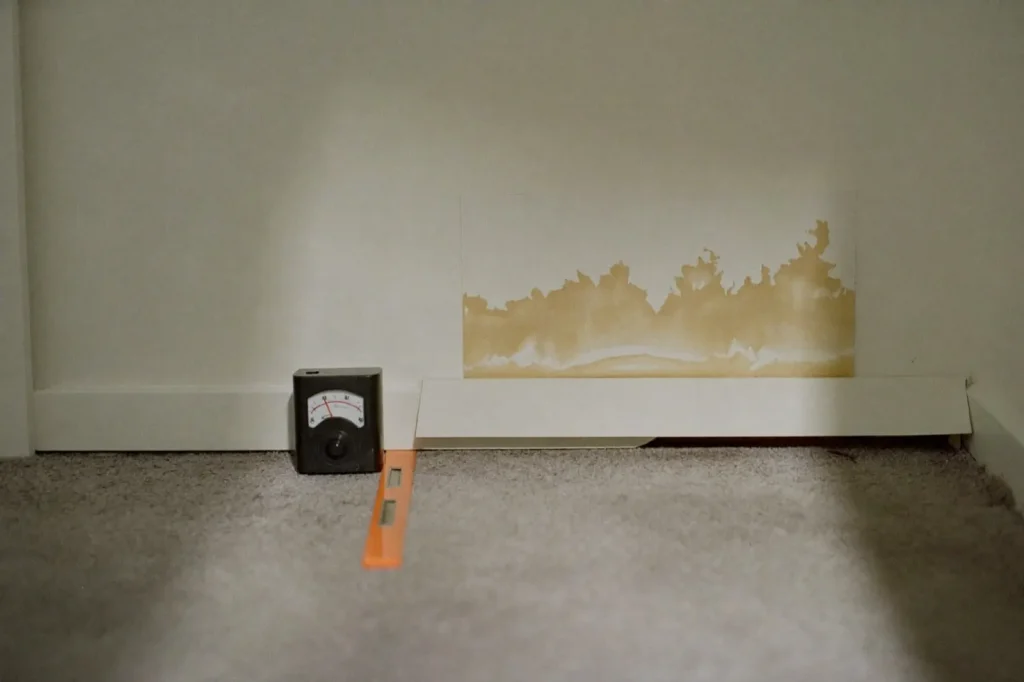
The short answer
When dealing with insurance adjuster after water damage, put everything in writing and know the clock: the NAIC model rule gives insurers 15 days to acknowledge a claim and 21 days after proof of loss to accept or deny it, and Florida requires payment or denial within 60 days of notice. Show the damage before tear-out, get the estimate, and use appraisal for price disputes.
Staff, independent or public: which adjuster is at your door?
Two of the three work for the insurer. Florida’s code draws the lines cleanly: a company employee adjuster under Fla. Stat. 626.856 sits on the insurer’s staff, and an independent adjuster under Fla. Stat. 626.855 is licensed, works for an adjusting firm, and “undertakes on behalf of an insurer” to set the amount payable. Either way, the number they write is the carrier’s number.
The third works for you. Under Fla. Stat. 626.854(1), a public adjuster is anyone other than a licensed attorney who, for pay, prepares or files a claim for an insured or negotiates its settlement. Florida caps that fee at 10% of claim payments for claims within a year of a declared state of emergency and 20% otherwise, per the statute; caps in other states and how contracts are written are on our public adjuster fees page.
Ask the person who calls three things and write the answers down: their name and license number, whether they are staff or independent, and whether they can approve payment or only report to a desk adjuster. The last answer tells you who receives your follow-up letters, which matters because the deadlines below run from receipt by the insurer, and N.J.A.C. 11:2-17.6(b) says notice to an agent is notice to the insurer.
What does the policy require before the adjuster arrives?
The Duties After Loss condition is your checklist, and breaking it can cost coverage. The NJM New Jersey HO-3 (03/18) says the insurer has no duty to pay if a failure to comply “is prejudicial to us”, then lists the duties. Four of them bite hardest on water claims, where drying crews usually tear out material before anyone from the carrier sees it.
| Duty in the form | What it means after a leak |
|---|---|
| Give prompt notice | Report the claim the day you find the leak; the state clocks below start from that notice |
| Protect the property; make reasonable and necessary repairs; keep an accurate record of repair expenses | Stop the water and start drying, and keep every invoice and moisture log |
| Prepare an inventory with quantity, description, actual cash value and amount of loss | List each wet item; attach receipts or photos |
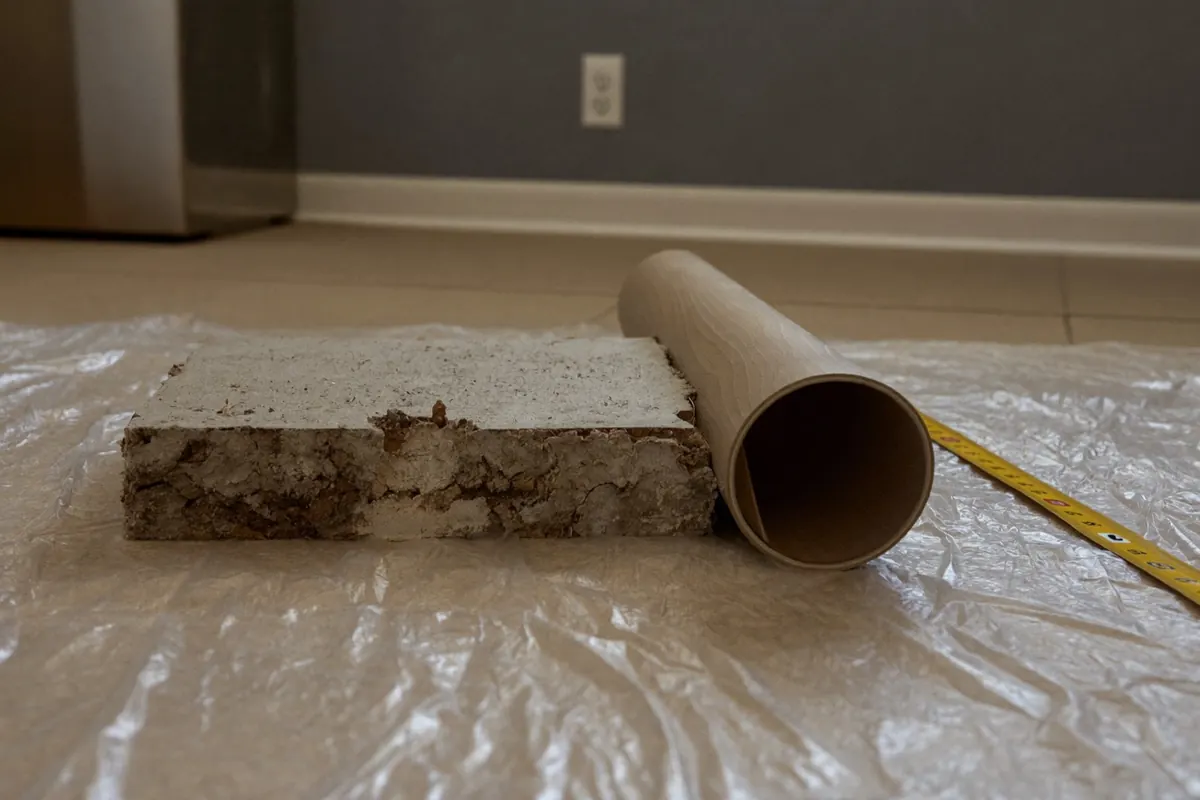
| Show the damaged property as often as reasonably required | Photograph before tear-out, and keep a cut sample of drywall, carpet pad and flooring |
| Provide records and submit to examination under oath | Expect a recorded statement request on large losses |
| Send a signed, sworn proof of loss within 60 days after the insurer’s request | The day count starts at the request, not the loss |
Drying cannot wait for the adjuster, and the form does not ask it to: protecting the property is itself a listed duty. What the form asks is proof. Photograph each room wide and close before demolition, record the date, and keep the pieces. The difference between that emergency work and the rebuild is set out on what is water mitigation, and the sworn statement itself is covered on proof of loss.
On the visit, walk the adjuster through every wet room, including closets and cabinets below the source, and ask for the claim number, the scope they are writing, and the date you will get the estimate. In Florida you are owed a copy of any detailed estimate within 7 days after the adjuster generates it, under Fla. Stat. 627.70131(3)(e). Elsewhere, ask in writing.
How many days does the insurer have? Claim clocks in 8 states
Every deadline below is a regulator’s rule for the insurer, not for you. The NAIC Model Regulation 902 from 1997 is the template, and each state below sets its own numbers on how long a water damage claim takes. The model gives 15 days to acknowledge and 21 days after proofs of loss to accept or deny. Florida moved furthest, to a 60 day outer limit counted from notice of the claim rather than from proof of loss.
| Rule | Acknowledge | Investigate and decide | Pay after agreement | If it needs more time |
|---|---|---|---|---|
| NAIC model, NAIC Model Regulation 902 | 15 days | Accept or deny 21 days after proofs of loss | 30 days after liability affirmed | Letter at 21 days, then every 45 days |
| California, 10 CCR 2695.5, 10 CCR 2695.7 | 15 calendar days, plus forms and start of investigation | 40 calendar days after proof of claim | 30 calendar days after acceptance | Every 30 calendar days |
| Florida, Fla. Stat. 627.70131 | 7 calendar days | Investigation within 7 days and inspection within 30 days of proof of loss; pay or deny within 60 days of notice | Inside the 60 days; later payment bears interest from notice | Not stated in this section |
| Texas, Tex. Ins. Code 542.055, 542.056, 542.057 | 15 days, with investigation started and documents requested | 15 business days after all requested items; 45 more days if the insurer explains why | 5 business days after notice of payment | Plus 15 days after a declared weather catastrophe, Tex. Ins. Code 542.059 |
| New York, 11 NYCRR 216.4, 216.5, 11 NYCRR 216.6 | 15 business days | 15 business days after proof of loss and requested items | 5 business days after settlement agreement | Every 90 days while unsettled |
| Washington, WAC 284-30-360, 284-30-370, WAC 284-30-380 | 10 business days | Investigation done and decision made within 30 calendar days of notice | Not stated in these sections | Every 30 days |
| Pennsylvania, 31 Pa. Code 146.5, 146.6, 146.7 | 10 working days | Investigation in 30 days; decision 15 working days after proofs of loss | Not stated in these sections | At 30 days, then every 45 days |
| New Jersey, N.J.A.C. 11:2-17.6, N.J.A.C. 11:2-17.7 | 10 working days; investigation starts in 10 working days | No separate decision deadline in these sections | 30 calendar days from proofs of loss | Every 45 days |
| Illinois, 50 Ill. Adm. Code 919.50 | Not stated in this section | Within a reasonable time | 30 days after liability affirmed | Written reason for a denial or lower offer within 30 days |
Watch which event starts each clock. California, New York, Pennsylvania and the NAIC model count the decision from proof of loss; Washington and Florida count from notice. Texas counts from the day the insurer has every item it asked for, which is why Tex. Ins. Code 542.055(a)(3) makes the insurer list those items within 15 days. Keep a dated log of what you sent and when, because that log is what a regulator compares against these numbers.
Two of these states put a price on late money. Under Tex. Ins. Code 542.058, delay beyond 60 days after the insurer has everything it requested triggers Tex. Ins. Code 542.060, which per the statute adds interest at 18% a year plus attorney’s fees, or judgment rate plus 5% in suits under Chapter 542A. Per Fla. Stat. 627.70131(7)(a), a Florida payment after the 60 days carries interest from the date of notice.
What should you check line by line in the adjuster’s estimate?
Start with scope, then price. Count the rooms, wall heights and square footage against your own tape measure, and check that the estimate removes drywall to a sensible cut line and replaces pad and baseboard where they were wet. Most carrier estimates are written in Xactimate, and how its unit prices are built is on how Xactimate pricing works.
Washington now gives you a lever on price. WAC 284-30-380(8), effective 18 October 2026 per the rule’s history note, says an insurer that uses a database, survey, estimating software or benchmarks for material or labor pricing must, on request, tell you when the data was collected, where, and which businesses supplied it. Subsection (7) adds that insurers are responsible for the accuracy of evaluations made on their behalf.
Matching is the next fight in water claims, where one wet room often shares flooring with three dry ones. Section 9 of the NAIC Model Regulation 902 says that when replaced items do not match in quality, color or size, the insurer shall replace all items in the area for a reasonably uniform appearance. The NJM HO-3 says the opposite in its own words: replacement cost “does not constitute cosmetic matching”. Your state’s adoption and your form decide which applies, so ask the adjuster to cite the clause.
- Depreciation: per the NJM HO-3, the insurer pays no more than actual cash value until repair is complete, unless the damage is under 5% of the building limit and under $2,500; the holdback math is on recoverable depreciation.
- Undisputed items: 11 NYCRR 216.6(e) requires payment for undisputed elements even while others are argued; ask for that check in writing.
- Release language: 11 NYCRR 216.6(g) and Section 5 of the NAIC Model Regulation 902 bar a partial payment check that claims to release the whole loss.
- Insurer’s option: the NJM HO-3 lets the insurer choose to repair or replace itself if it gives written notice within 30 days of your sworn proof of loss.
When should you invoke appraisal instead of arguing?
Appraisal settles price, not coverage. The NJM HO-3 lets either side demand it when the two “fail to agree on the amount of loss, rather than the scope”, so an adjuster who denies that the subfloor got wet is a scope dispute appraisal will not fix. An adjuster who agrees the subfloor is damaged but prices it at half your contractor’s bid is the case it was written for.
Costs are shared, which makes appraisal poor value on a small gap. Each side pays its own appraiser and the two split the umpire, so weigh your appraiser’s fee against the dollar gap first. Once an award is filed, the form’s Loss Payment condition makes payment due within 10 working days, and its Suit Against Us condition requires any lawsuit to start within 2 years after the date of loss.
Where do you complain when a deadline slips?
Go to the state insurance department, and cite the rule by number. 50 Ill. Adm. Code 919.50(a)(1) makes an Illinois insurer attach a Notice of Availability of the Department of Insurance to every first party denial or lower offer, and 11 NYCRR 216.6(h) requires a New York rejection involving personal property insurance to include a statement on taking the matter up with the Department of Financial Services. Department inquiries carry their own clocks: 15 working days under N.J.A.C. 11:2-17.6(d) and 10 business days under WAC 284-30-360(2).
A complaint letter works best as a timeline: date of notice, date of the inspection, date proofs of loss were sent, and which day count in the table above has passed. Watch your own deadline too. WAC 284-30-380(5) requires an insurer negotiating with an unrepresented first party claimant to give written notice 30 days before a statute of limitations or policy time limit expires; the NAIC Model Regulation 902 sets the same 30 days for statutes of limitation. The NJM HO-3 sets its suit limit at 2 years from the loss.
Bring in help when the dollars justify it. A public adjuster fits a large, scope-heavy claim where the fee buys measurements and documentation; an attorney fits a denial on coverage grounds, and Fla. Stat. 626.854 says Florida regulates public adjusters partly to prevent the unauthorized practice of law. Tenants have a different set of payers, and the landlord versus renter split is on our water damage in apartment page.
Questions people actually ask
Should I let the insurance adjuster record my statement?
You may be required to. The NJM New Jersey HO-3 (03/18) lists examination under oath, outside the presence of other insureds, among the duties after loss, and failing it can cost coverage if it prejudices the insurer. Ask whether the request is a recorded interview or a formal examination, ask for questions in advance, and request a copy of the transcript or recording for your 60 day proof of loss file.
Do I have to wait for the adjuster before starting repairs?
No for drying, often yes for rebuilding. The NJM HO-3 makes protecting the property and making “reasonable and necessary repairs” a duty after loss, with an accurate record of repair expenses, so extraction and drying should start the first day. Hold off on replacing cabinets or flooring until the adjuster has seen the damage or agreed in writing, and keep cut samples and dated photos.
Can I get my own contractor’s estimate?
Yes, and you should before the adjuster’s number becomes the only one. The NJM HO-3 lets you demand appraisal when you and the insurer “fail to agree on the amount of loss”, and a contractor’s line-item estimate is the evidence an appraiser works from. Ask the contractor to write in the same estimating software the carrier used so the lines compare one to one.
Can the insurance company deny a water claim over the wording of a letter?
Not without citing the policy. Section 7.A of the NAIC Model Regulation 902 and 146.7(a)(1) both bar denying a claim on a provision, condition or exclusion unless the written denial refers to it. Ask for the denial in writing with the clause quoted, then read that clause against your declarations page and send any dispute to your state insurance department.
Is it worth hiring a public adjuster for water damage?
It depends on the gap between the carrier’s estimate and the repair bid. Per the statute, Florida caps public adjuster fees at 20% of claim payments outside a declared emergency under Fla. Stat. 626.854, so a disputed amount should exceed that fee by a clear margin. Ask any candidate for a license number, the fee in writing, and whether it applies to money already offered.
Sources
- National Association of Insurance Commissioners, Unfair Property/Casualty Claims Settlement Practices Model Regulation (Model 902), 1997, retrieved 8 November 2026.
- California Department of Insurance regulations via Cornell LII, 10 CCR 2695.5 and 10 CCR 2695.7, retrieved 8 November 2026.
- Florida Legislature, Fla. Stat. 627.70131, Insurer’s duty to acknowledge communications regarding claims; investigation, 2025 statutes, retrieved 8 November 2026.
- Florida Legislature, Fla. Stat. 626.854, 626.855 and 626.856, adjuster definitions, retrieved 8 November 2026.
- Texas Legislature via Public.Law, Insurance Code 542.055, 542.056, 542.057, 542.058, 542.059 and 542.060, retrieved 8 November 2026.
- New York Department of Financial Services regulations via Cornell LII, 11 NYCRR 216.4, 216.5 and 216.6, retrieved 8 November 2026.
- Washington Office of the Insurance Commissioner rules, WAC 284-30-360, 284-30-370 and 284-30-380 (WSR 26-17-089, effective 18 October 2026), retrieved 8 November 2026.
- Pennsylvania Code, 31 Pa. Code 146.5, 146.6 and 146.7, retrieved 8 November 2026.
- New Jersey Department of Banking and Insurance regulations via Cornell LII, N.J.A.C. 11:2-17.6 and 11:2-17.7, retrieved 8 November 2026.
- Illinois Department of Insurance regulations via Cornell LII, 50 Ill. Adm. Code 919.40 and 919.50, retrieved 8 November 2026.
- New Jersey Manufacturers Insurance Company, New Jersey HO-3 Homeowners Insurance Policy, Special Form (03/18), retrieved 8 November 2026.
This page reads claim handling regulations and one filed policy form and is not legal or insurance advice. It does not say what your policy pays: your declarations, endorsements and state law control, and agencies can change these rules. Your state insurance department can confirm the current deadline for your claim, and a licensed attorney or public adjuster can review a dispute, using the clause and deadline you can name from this page. Method: how we source and check our figures. Related claim pages sit in the insurance hub.