The short answer
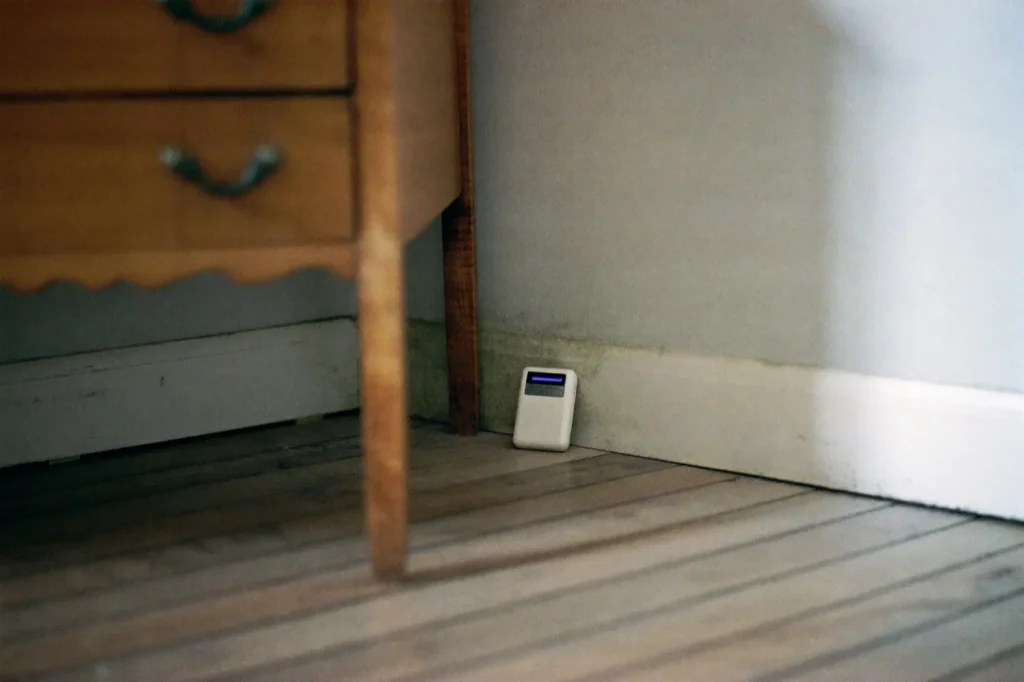
How to get rid of mold smell comes down to one step: remove the damp, moldy material giving off the odor and dry the area, because the smell is a gas released by growing mold. Find where it is strongest, fix the leak or condensation, scrub hard surfaces with detergent and water, discard moldy porous materials, and keep indoor humidity below 60%, as EPA advises.
What does mold smell like, and what is the smell made of?
Mold smells musty, earthy or like mushrooms because growing fungi release gases called microbial volatile organic compounds (MVOCs). A 2025 review by Yin, Moore and Bennett (Mycology, 2025) reports that eight carbon volatiles are the most characteristic fungal compounds, with odours described as fatty, waxy, musty or mushroom-like.
The best known is 1-octen-3-ol, the so-called mushroom alcohol, which the same review says is responsible for much of the specific odour associated with fungi; one form smells of fresh mushrooms and the other is described as mouldy, grassy or fusty. The review reports indoor levels of up to 10 micrograms per cubic metre in buildings with dampness or water damage, and notes it has been recommended as a marker of fungal growth indoors.
Two consequences follow. First, the smell is a gas, so it passes through a HEPA filter and through gaps in a wall cavity that would stop spores. Second, the gas is produced only while something is growing on a damp material, which is why EPA uses “moldy odors should not be present” as one of its tests for a finished cleanup in EPA's homeowner mold guide.
Where is the mold smell strongest? A room by room source finder
A mold smell is a trail, and it is strongest closest to the growth. EPA's Brief Guide to Mold, Moisture and Your Home says to suspect hidden mold when a building smells moldy but you cannot see the source, and it lists the places to look. The table turns that EPA list into a route: start in the room where the smell is worst, match the description, run the check, then apply the fix from the EPA remediation tables.
| Where the smell is strongest | Likely source | Check | Fix |
|---|---|---|---|
| Behind a sofa, bed or wardrobe on an outside wall | Condensation on the wall surface behind furniture, a location EPA lists for hidden mold | Pull the furniture out and look at the wall face and baseboard | Scrub the painted surface with detergent and water, dry it, bring humidity below 60% |
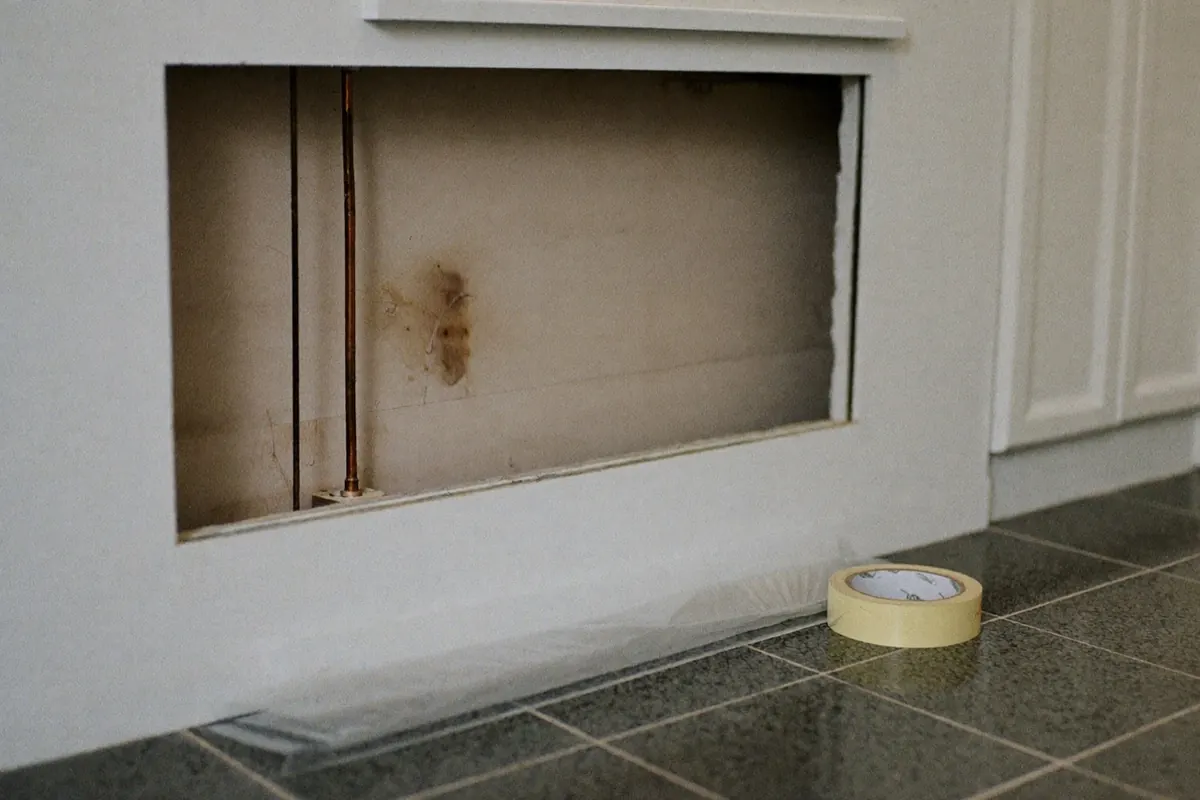
| A wall shared with a sink, toilet, shower or washer hookup | Inside the wall around leaking or condensing pipes (EPA) | Compare moisture meter readings on that wall with a dry wall in the same room | Fix the leak first; EPA Table 1 lets wallboard dry in place only with no swelling and intact seams |
| A room with vinyl wallpaper or wood paneling | The back of drywall, wallpaper or paneling; EPA notes vinyl wallpaper and paneling can trap moisture like a vapor barrier | Do not peel to look: EPA warns removing wallpaper can lead to a massive release of spores | Remove and bag the affected covering and board (EPA Table 2 methods 3 and 4) |
| Near the floor, worse after walking on carpet | The underside of carpet and pad (EPA) | Lift a corner of carpet and pad at the edge nearest the water source | Carpet over 10 sq ft of growth: EPA Table 2 adds method 4, discard |
| A top floor room, or under a stained ceiling | The top side of ceiling tiles, or roof materials above them from roof leaks or thin insulation (EPA) | Check the attic side or the top of a lay-in tile | EPA Table 1: discard and replace ceiling tiles; repair the roof leak |
| Every room, strongest at supply vents when the system runs | Ductwork, porous duct liners or the condensate drain pan in the air handler (EPA) | Look at the drain pan and line; EPA says keep pans clean and lines flowing | EPA: do not run an HVAC system you suspect is contaminated |
| Inside one closet | Condensation from room air; EPA’s guide shows a closet as Photo 3A | Check the back wall and the floor under stored items | Clean, dry, and keep relative humidity within the EPA 30 to 50% band |
The vent row is the exception to following your nose, because EPA lists ductwork liners and air handler drain pans as hidden locations: if every room smells the same and the smell rises when the blower starts, the source can be at the air handler rather than in any room. A smell that is strongest in a basement is covered on our musty smell in basement page. Garments and car interiors have their own fixes on mold on clothes and mold in car.
Two sister sites own the trades behind the last rows: roof leaks are covered at theroofingbrief.com and air handler drain pans at thehvacbrief.com. For mold already inside ducts, our mold in air ducts page walks through EPA’s duct cleaning guidance.
Why do air purifiers, sprays and ozone not remove the smell?
Because each one acts on the air, not on the wet material that keeps producing the gas. EPA’s own remediation guidance notes, in its respirator section, that HEPA filters do not remove vapors or gases (EPA's Mold Remediation in Schools and Commercial Buildings). A HEPA unit can lower spore counts and still leave the room smelling exactly the same.
Activated carbon does better on odor. EPA's Guide to Air Cleaners in the Home says to choose an air cleaner with an activated carbon filter to remove gases, that such filters work only with a large amount of material, that all filters need regular replacement, and that there are no widely used performance rating systems for gas filters. EPA also says plainly that filtration does not replace the need to control pollutants and ventilate.
Ozone is the fix most often sold for mold odor, and EPA's page on ozone generators sold as air cleaners is blunt about it: ozone is not effective at removing many odor-causing chemicals, ozone applied to indoor air does not effectively remove mold or other biological pollutants, and it may have no effect on contaminants embedded in porous material. The same page reports that ozone reactions can produce aldehydes and formic acid, and that ozone damages rubber, electrical wire coatings and fabrics.
EPA’s page also lists the exposure limits: FDA caps indoor medical devices at 0.05 ppm of ozone and OSHA sets 0.1 ppm as an 8 hour average for workers. The machine itself, run times and re-entry are covered on our ozone generator page.
How do you get rid of mold smell in walls without spreading spores?
Measure before you cut. A pin or pinless moisture meter comparing the suspect wall with a dry wall of the same construction tells you where the cavity is wet; our moisture meters for water damage page explains the readings. EPA lists the inside of walls around leaking or condensing pipes as a common hidden location in EPA's homeowner mold guide.
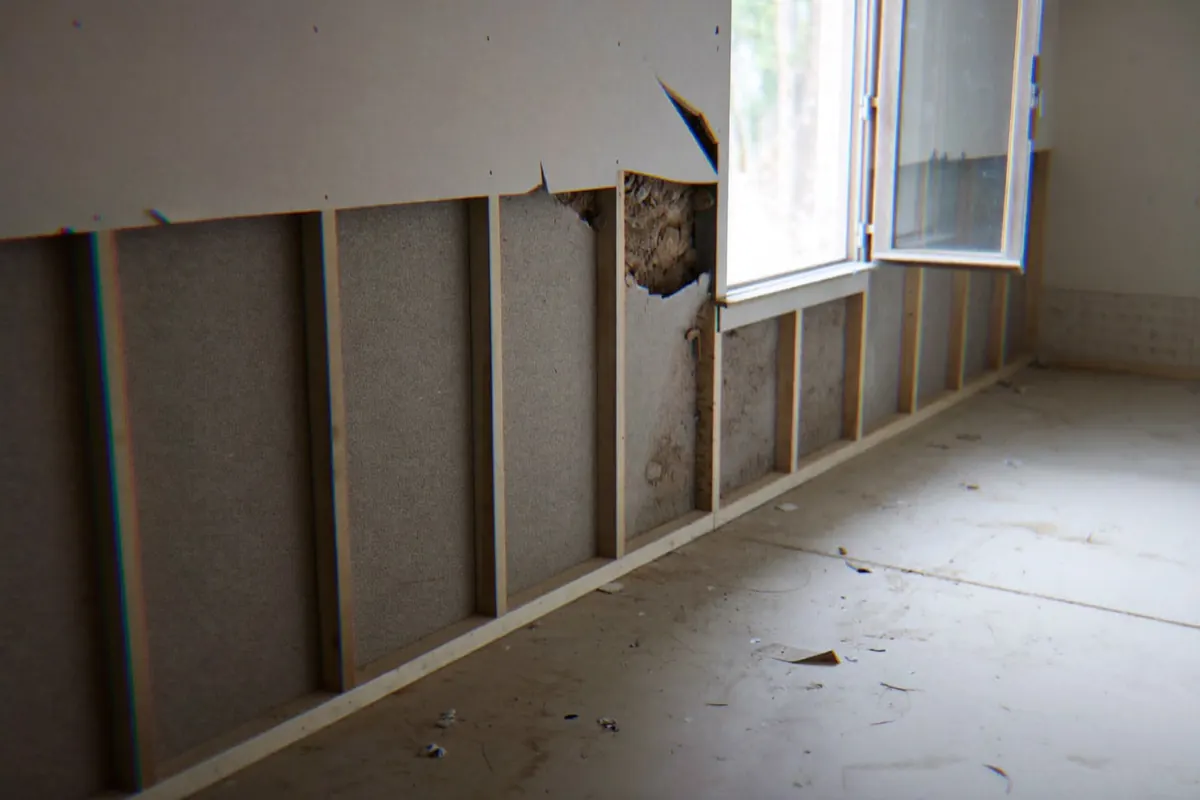
Opening the wall is the risky step. EPA's Mold Remediation in Schools and Commercial Buildings lists breaking up moldy wallboard, invasive work in a wall cavity and stripping wallpaper among the actions likely to stir up mold, and warns that removing wallpaper can lead to a massive release of spores from its underside. Its minimum protection is an N-95 respirator, gloves and goggles without vent holes.
- Shut off the HVAC to the room: EPA says not to run a system you suspect is contaminated, because it can spread mold through the building.
- For 10 to 100 square feet of growth, EPA recommends limited containment: a single layer of 6-mil fire-retardant polyethylene, vents and doors sealed, and the area kept under negative pressure with a HEPA fan unit exhausted outdoors.
- Bag removed board in 6-mil polyethylene, double-bagged, before it leaves the room (EPA Method 4).
- Finish with a HEPA vacuum once materials are dry and removed (EPA Method 3).
Do not seal the smell in. EPA's homeowner mold guide says not to paint or caulk moldy surfaces and that paint applied over mold is likely to peel; a stain-blocking primer over live growth leaves the gas source in the cavity.
What does removing the source take, material by material?
EPA Table 2 sorts cleanup by material and by area: small is under 10 square feet, medium is 10 to 100, and large is over 100. The method numbers are EPA’s: 1 is wet vacuum (only while materials are still wet), 2 is damp wipe with water or water and detergent, 3 is HEPA vacuum, and 4 is discard, double-bagged in 6-mil polyethylene.
| Material | Under 10 sq ft | 10 to 100 sq ft | What it means for the smell |
|---|---|---|---|
| Non-porous hard surfaces (plastics, metals) | Methods 1, 2, 3 | Methods 1, 2, 3 | Detergent and water lift growth off; smell goes when it is dry |
| Wood surfaces | Methods 1, 2, 3 | Methods 1, 2, 3 | Over 100 sq ft adds method 4; finished wood cleans with mild detergent |
| Wallboard (drywall, gypsum board) | Method 3 | Methods 3, 4 | No damp wipe listed at any size; over 10 sq ft, discard |
| Carpet and backing | Methods 1, 3 | Methods 1, 3, 4 | Pad underside holds the smell; check it before cleaning the face |
| Upholstered furniture and drapes | Methods 1, 3 | Methods 1, 3, 4 | Drapes: follow the maker’s laundering label |
| Concrete or cinder block | Methods 1, 3 | Methods 1, 3 | Dry with dehumidifiers and fans; seal the moisture path |
| Ceiling tiles, fiberglass and cellulose insulation | Discard and replace | Discard and replace | EPA Table 1 gives no cleaning option once wet |
The pattern matters for odor: porous materials are where smells persist. EPA explains in Method 2 that mold infiltrates porous substances and fills empty spaces and crevices, so it can be difficult or impossible to remove completely, and wet porous materials with growth may have to be discarded. If a cleaned drywall panel still smells after it has dried, that is the signal to cut it out rather than clean it again.
Killing the mold is not the goal either. EPA’s schools guide says it is necessary to clean up mold contamination, not just kill it, and that a biocide such as chlorine bleach is not recommended as a routine practice. Dead growth left in place is still there to clean up, which is why EPA Method 3, a HEPA vacuum, comes after drying and removal.
How dry must the house stay so the smell does not come back?
EPA's Brief Guide to Mold, Moisture and Your Home gives two numbers: dry water-damaged areas and items within 24 to 48 hours, and keep indoor relative humidity below 60%, ideally between 30 and 50%. EPA notes a humidity meter costs about $10 to $50 at hardware stores, which makes the target checkable rather than guessed.
EPA’s moisture list doubles as a smell prevention list: vent clothes dryers and other moisture-producing appliances outside, run the bathroom fan or open a window when showering, keep air conditioning drip pans clean and drain lines flowing, insulate cold water pipes that sweat, and treat condensation on windows as a sign of high humidity (EPA's homeowner mold guide). A dehumidifier lowers the number but does nothing to growth already on a surface, so clean first and dry second.
When does a mold smell need a remediator, and what should you ask one?
EPA’s homeowner guide treats about 10 square feet as the size most people can clean themselves. It also points to professional help when the water was sewage or other contaminated water and when you suspect the HVAC system (EPA's homeowner mold guide); EPA's Mold Remediation in Schools and Commercial Buildings adds hidden mold as a reason to consider an experienced professional. A smell with no visible source after the source finder above is that last case.
Ask any contractor four things, and keep the answers in writing: what moisture source they found and how it will be fixed, since EPA's Mold Remediation in Schools and Commercial Buildings says remediation is not finished until the water problem is fixed; what containment they will use for the measured area; which materials they will remove rather than clean, per EPA Table 2; and what the completion test is. EPA’s own finish line is no visible mold, no moldy odors, and no return of water damage on a revisit shortly after cleanup. Whether a license is required depends on the state, which our state mold licensing table sets out.
Testing rarely finds the smell for you. EPA says sampling is usually unnecessary when mold is visible, and its schools guide notes that EPA has no regulations or standards for airborne mold concentrations (as of December 2000, the date printed in the guide). More pages on finding and removing growth sit in the mold hub.
Out of scope: this page covers finding and removing the source of a mold smell, not health effects. For those, read EPA's Brief Guide to Mold, Moisture and Your Home and speak with a clinician.
Questions people actually ask
How long does mold smell last after the mold is removed?
It should not linger once the source is gone and the area is dry. EPA lists “moldy odors should not be present” as a test for a finished cleanup, alongside a revisit shortly afterwards showing no new water damage. A smell that survives drying to below EPA’s 60% humidity ceiling points to growth left in a cavity, pad or porous material that was cleaned rather than removed.
Does baking soda or activated charcoal get rid of mold smell?
They absorb some odor from the air but do nothing to the growth producing it. EPA’s air cleaner guide says carbon filters remove gases only when a large amount of material is used, that every filter needs regular replacement, and that filtration does not replace removing the pollutant source. Use them after the source is out, not instead of removing it.
Can you paint over mold to stop the smell?
No. EPA’s homeowner guide says not to paint or caulk moldy surfaces, to clean and dry them first, and warns that paint applied over moldy surfaces is likely to peel. A coat of primer also leaves the growth in place behind it, still producing the MVOCs you can smell, so the odor returns once the paint film is breached or the wall gets damp again.
Is a musty smell always mold?
Not always. A 2025 review in Mycology notes that geosmin, a major odor compound in soil, is produced by many species of Streptomyces bacteria and cyanobacteria as well as fungi. Damp materials can smell musty from bacterial growth too. The response is the same either way: find the wet material, dry it within EPA’s 24 to 48 hour window, and remove what cannot be cleaned.
Why does the house smell musty only when the air conditioning runs?
That pattern points at the air handler. EPA lists condensate drain pans inside air handling units and porous liners inside ductwork as hidden mold locations, and tells owners to keep drip pans clean and drain lines flowing. EPA also says not to run a system you suspect is contaminated, because it can spread mold through the building, so switch it off and have it inspected.
Sources
- EPA's Brief Guide to Mold, Moisture and Your Home, United States Environmental Protection Agency, last updated 18 February 2026: hidden mold locations, drying window, humidity targets, 10 square foot threshold, paint warning and completion tests. Retrieved 8 November 2026.
- EPA's Mold Remediation in Schools and Commercial Buildings, EPA 402-K-01-001, chapter 3: hidden mold, cleanup methods 1 to 4, biocide guidance, respirator notes and containment. Retrieved 8 November 2026.
- EPA Table 1 (water damage cleanup and mold prevention) and EPA Table 2 (mold remediation guidelines), same EPA guide. Retrieved 8 November 2026.
- EPA's page on ozone generators sold as air cleaners, EPA, last updated 19 February 2026. Retrieved 8 November 2026.
- EPA's Guide to Air Cleaners in the Home, EPA, last updated 1 October 2026. Retrieved 8 November 2026.
- Yin, Moore and Bennett (Mycology, 2025): Yin G, Moore GG, Bennett JW, Diversity and functions of fungal VOCs with special reference to the multiple bioactivities of the mushroom alcohol, Mycology 16(3):1011 to 1022. Retrieved 8 November 2026.
- The source finder and the smell column of the material table arrange EPA’s published guidance; no figure on this page was estimated or invented. Our methodology sets out the standing rules.
This page describes published EPA guidance for homes. Local rules and state licensing can add requirements for paid remediation work.