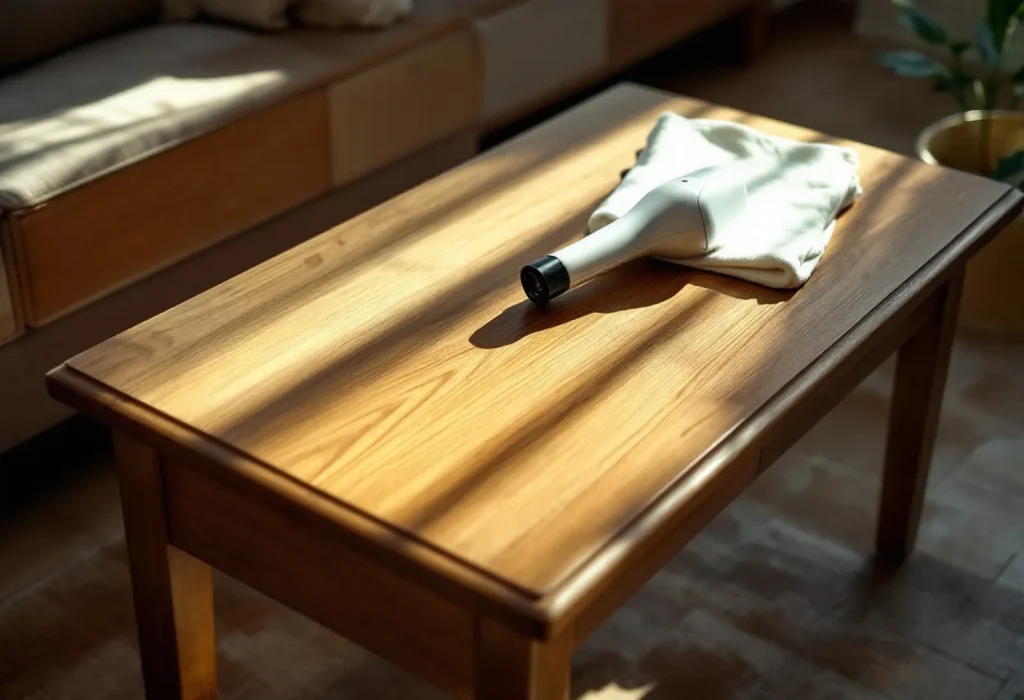
The short answer
Water stains on wood come in two kinds, and colour tells you which. A white or cloudy ring is moisture trapped in the finish, and it usually lifts with an oily polish, gentle heat or a barely damp alcohol wipe. A black ring means water reached the wood and, in oak and other tannin-rich species, reacted with iron; the finish must come off before oxalic acid can clear it.
Key takeaways
- White marks sit in the finish; dark marks are in the wood, per Bob Flexner in Popular Woodworking. Treat the wrong layer and you waste the finish.
- According to Wood Handbook chapter 16, Finishing Wood, iron only moves through wood above about 16% moisture content, which is why black rings follow water that sat, under a vase or a plant saucer.
- The Forest Products Laboratory, Iron Stain on Wood spot test: if oxalic acid clears the mark it is iron; if not and bleach clears it, it was mildew.
- In FPL tests of three coats, paste wax scored 1 and linseed oil 0 for moisture exclusion against 46 for clear shellac, according to the FPL Techline, Protecting Wood From Humidity.
- Steel wool is a common white ring fix, but FPL names steel wool as a source of the iron that causes black stains on tannin-rich wood.
- Interior wood normally sits at 6 to 12% moisture content, per the Wood Handbook; that, not the look of the surface, is when drying is done.
On this page
What you are looking at
Five marks get called water stains on wood. Only the first two are, and they need opposite treatments.
| What you see | Where it is | Cause | Source |
|---|---|---|---|
| White, grey or cloudy ring; white rings on a wood table under glasses | In the finish | Moisture creates voids in an aged film | Flexner |
| Black or blue-black ring or blotch | In the wood | Iron reacting with tannin after water got through the finish | Wood Handbook ch. 16; Knaebe |
| Reddish-brown tide marks on cedar or redwood trim | In the wood, deposited at the surface | Water-soluble extractives carried out and left as water evaporates | Wood Handbook ch. 16 |
| Grey or black fuzzy or powdery spots, musty | On the surface | Mildew or mold; see mold on wood | Wood Handbook ch. 14 |
| Light or dark patch where an object sat, no water involved | In the wood | Normal colour change from light; evens out in months | Wood Handbook ch. 16 |
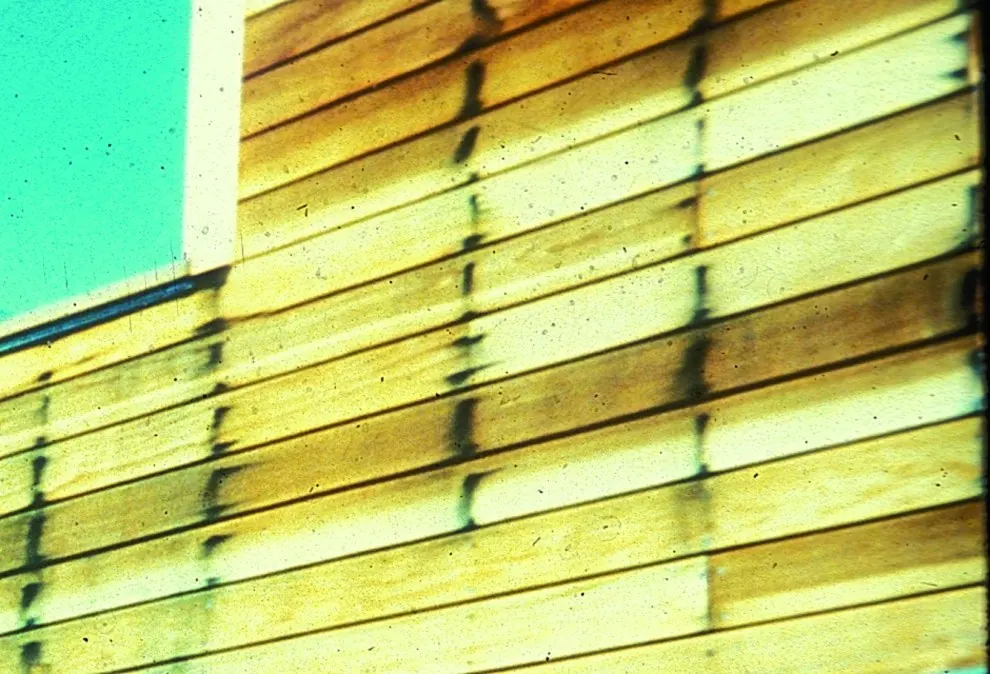
Species matters as much as colour. Forest Products Laboratory, Iron Stain on Wood lists oak, redwood, cypress and cedar as particularly prone to iron stain because they carry large amounts of tannin, and Wood Handbook chapter 14 adds many tropical hardwoods and Douglas-fir. Pine has few tannins, so iron leaves a brown rust halo instead of a black stain. Mildew has its own page: mold on wood.
The decision path
Answer in order.
- Is the mark white, grey or cloudy? It is in the finish. Go to the white stain method and stop there.
- Is it dark and fuzzy, or does it smell musty? That is growth, not a stain. Treat it as mold on furniture.
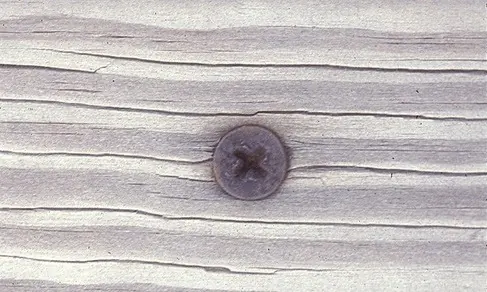
- Is it black or blue-black with a hard edge? It is in the wood. Check the species: oak, cedar, redwood or cypress make iron stain likely.
- Is the piece valuable or antique? Stop. NC State advises restoration over refinishing for antiques and a professional restorer, because stripping can cut the value.
- Otherwise, strip a test area and run the FPL test. Oxalic acid clears it: iron. Bleach clears it: mildew. Neither: sand or refinish.
- Is the wood soft, swollen or split, or the veneer lifting? It is water damage, not a stain. See the leak section.
Know the finish before you treat it
The same ring needs different handling on shellac, lacquer and varnish, so identify the finish first. Fine Woodworking's finish identification test uses a three-step solvent test on a hidden spot: wipe off wax with mineral spirits, then put a drop of denatured alcohol on the finish for a few minutes. If finish rubs off, it is shellac. If not, a drop of lacquer thinner that turns the surface sticky means lacquer or a water-based finish. If neither touches it, it is a reactive finish such as varnish or polyurethane.
| Finish | Solvent test result | Moisture exclusion, 3 coats (FPL) | White ring risk | Black mark risk | What it tolerates |
|---|---|---|---|---|---|
| Shellac (common before the 1930s, per Flexner) | Rubs off with denatured alcohol | 46 clear; 73 pigmented | Common once aged | Low while the film is intact | Barely damp alcohol only; heavy alcohol smears it |
| Lacquer | Sticky under lacquer thinner | Not in FPL table | Common once aged | Low while intact | Heat, oils, blush eliminator, mild abrasives |
| Varnish or polyurethane | Unaffected by either solvent | 63 for a two component poly sealer | Rare when newly applied | Low while intact | Heat, oils, abrasives; resists alcohol |
| Oil (linseed, tung) or oil and wax | Not a film | 0 linseed oil; 1 paste wax | Very rare, per Flexner | High: thin finish, little water resistance | Re-oil after treatment |
The scores explain the stain pattern. Per the FPL Techline, Protecting Wood From Humidity, paste wax and linseed oil barely slow moisture, which is why Bob Flexner in Popular Woodworking says dark marks form easily under oil finishes, while aged film finishes trap moisture and turn white instead.
How to remove white water stains on wood
Work from least to most aggressive, the order Bob Flexner in Popular Woodworking gives. Test each step on a hidden area and stop when the ring is gone.
- Oily polish, petroleum jelly or mayonnaise, left overnight. Why this differs: blogs present this as the fix; Flexner says it restores some clarity but seldom all.
- Gentle heat from a hair dryer. Keep it moving. Why this differs: Flexner warns an overheated finish blisters, so heat is a test, not a cure-all.
- A barely damp wipe of denatured alcohol. Why this differs: it works best on shellac, which is also the finish it can dissolve, so the solvent test comes first.
- On a whole cloudy top: ammonia and water. NC State’s flood factsheet uses half a cup of household ammonia in half a cup of water, or turpentine, on a damp cloth, wiped dry at once, then wax. Why this differs: this is for blush across a whole top after damp storage, not a single ring.
- Mild abrasive: non-gel toothpaste or rottenstone with light oil. Why this differs: Flexner lists #0000 steel wool as a faster last resort, but on oak or other tannin-rich wood that may get wet, use a synthetic pad; FPL names steel wool as an iron source for black stain.
- Still white? NC State says strip and refinish if spots remain after all efforts.
| Method | Who prints it | Main risk |
|---|---|---|
| Oil or mayonnaise overnight | Flexner; common in blogs | Partial result |
| Hair dryer or heat gun | Flexner | Blistering if too hot |
| Denatured alcohol, barely damp | Flexner | Dulls or smears shellac |
| Ammonia and water, or turpentine | NC State factsheet | Strips wax and polish; re-wax |
| 000 steel wool dipped in oil | NC State factsheet | Scratches; iron on tannin woods |
| Aerosol blush eliminator | Flexner (professional product) | Excess spray damages finish |
| Padding lacquer (French polish) | Flexner | Can trap whiteness deeper |
How to remove black water stains on wood
Wood Handbook chapter 16, Finishing Wood is direct: iron stain under a clear finish is extremely difficult to fix, and the coating must be removed before the stain can be treated. Bob Flexner in Popular Woodworking adds that a dark mark forms when water and metal residue get through cracks in the finish.
- Find and remove the iron source. A plant pot, a steel base, nails, old steel wool residue, or pet urine, which FPL says hastens the reaction. Why this differs: FPL says the stain returns if any iron remains.
- Strip the finish over the whole surface, not just the ring. Why this differs: Flexner brushes the acid over the entire top so the colour stays even.
- Mix a saturated oxalic acid solution. According to the Forest Products Laboratory, use about 1 lb per gallon of hot water (0.5 kg per 4 L), and at least 5% by weight. It is sold as wood bleach; check the ingredients.
- Apply, let it dry, then rinse well with warm water. Why this differs: FPL warns oxalic acid left too long on oak can leave a pink stain, and residue left behind lets the stain return.
- Repeat once if needed, then sand out any light tan remainder. Flexner notes one application often works.
- Dry to normal interior moisture, then refinish. Use a film finish if the piece will see glasses or plants.
| Species group | Tannin level | What water plus iron does | Source |
|---|---|---|---|
| Oak | High | Black or blue-black stain | FPL; NPS 7/7 |
| Western redcedar, redwood, cypress | High | Black stain; also reddish extractive bleed | FPL Knaebe; Wood Handbook ch. 16 |
| Douglas-fir, many tropical hardwoods | Enough to stain | Iron stain | Wood Handbook ch. 14 |
| Pine | Low | Brown rust halo, no black reaction | Wood Handbook ch. 16 |
Handling oxalic acid
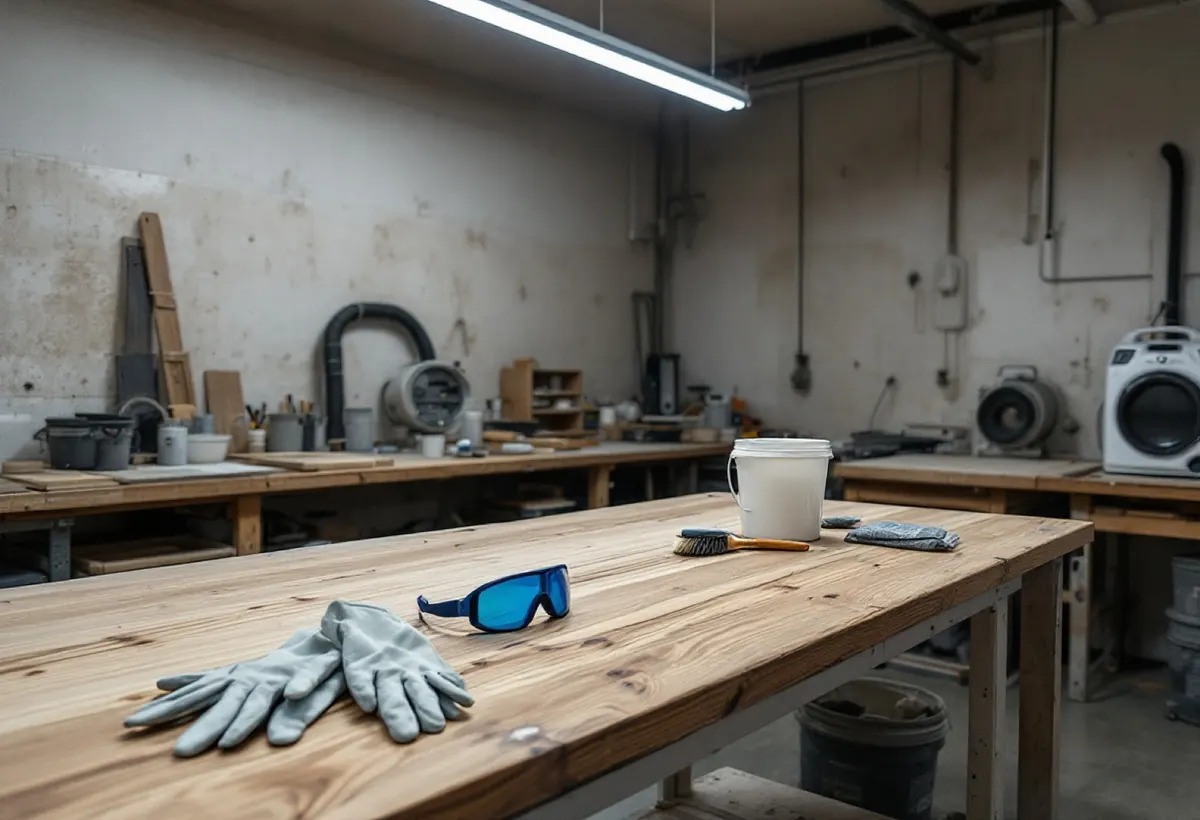
FPL calls for extreme caution: oxalic acid irritates and burns skin, eyes and mucous membranes, and swallowing a few grams can be fatal. The NIOSH Pocket Guide entry for oxalic acid sets a recommended limit of 1 mg/m³ over a work shift and 2 mg/m³ short term, and says to prevent skin and eye contact and provide an eyewash. Wear gloves and goggles and do not create dust when sanding dried crystals.
The moisture numbers behind both
Both stains are moisture events, and the Forest Products Laboratory publishes the thresholds that separate a cosmetic mark from a damaged piece.
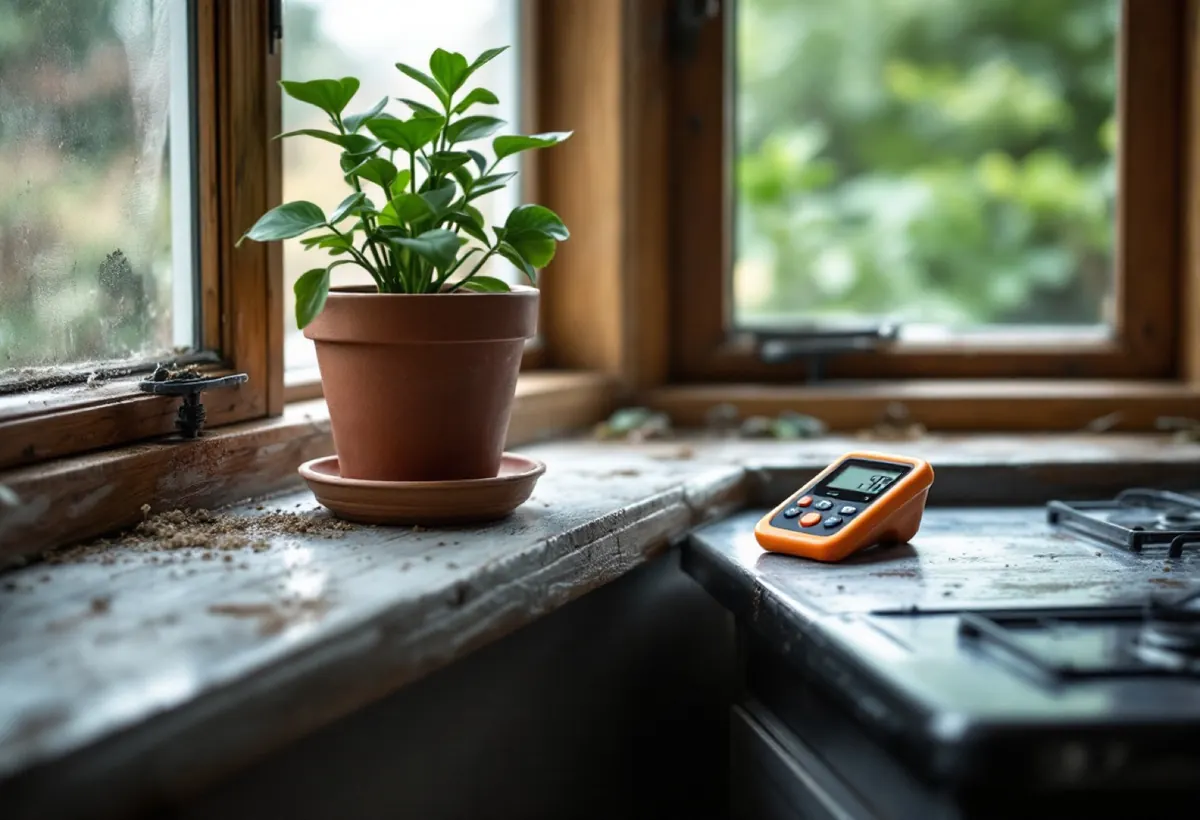
Use a meter, not your hand. According to Wood Handbook chapter 13, dielectric meters read reliably from 4% to about 30% and need a specific gravity adjustment, set by choosing the species on the meter. A black ring on a piece still above the iron line is not finished reacting.
After a leak: furniture and trim
When the stain came from a leak or a flood, not a glass, the stain is the least of it. NC State Extension's flood furniture factsheet adapts the NIDR damage scale for furniture:
| Material | Slight | Moderate | Severe |
|---|---|---|---|
| Solid wood furniture | Cloudy finish, minor water stains | Flaking or missing finish, open joints; mold and mildew | Cracks, warping, separation; wood decay |
| Pressed board core with veneer or vinyl wrap | In water 1 hour or less: dirty, cloudy finish | In water several hours: minor swelling, mold, mildew | Permanent swelling, vinyl wrap separation |
Dry slowly. According to National Park Service Conserve O Gram 7/7, let relative humidity fall over days to about 55%, by no more than about 10% a day, with fans not aimed at the piece, and to remove iron hardware from wet furniture because it stains high-acid woods such as oak. NC State adds: never dry it in the sun, and expect weeks or months before it is ready to refinish.
Other surfaces have their own pages: floors on hardwood floor water damage repair, cabinet boxes on water damaged cabinets and sills on mold on window sills.
Signs it is more than a stain
- The wood dents under a fingernail or feels soft: decay, which the Wood Handbook ties to moisture above fibre saturation.
- Veneer is lifting or particleboard edges have swollen; NC State says swollen particleboard is permanent.
- The ring keeps coming back in the same spot on a sill or shelf, pointing to condensation or a leak, not a glass.
- Several pieces in one room cloud over at once: room humidity. EPA's mold and moisture guide advises keeping it below 60%.
- Fuzzy growth or a musty smell: see mold on furniture.
- The meter stays above 20%, the mildew line according to NC State.
Any of these makes it a drying job first: structural drying.
For contractors: rings on contents and trim
Some rings predate the loss, so document before you touch.
| Record | How | Why the adjuster asks |
|---|---|---|
| Each mark, before cleaning | Photo with scale, colour noted | White against black decides cosmetic or refinish |
| Species and finish | Species and solvent test on a hidden spot | Sets method and refinishing cost |
| Moisture readings | Meter set to species; date and time | Shows when drying was complete |
| Pre-existing rings | Age, location, dust in the mark | Separates old wear from the loss |
| Hardware removed | Location of each piece | NPS: iron hardware stains wet oak |
| Antiques and veneered pieces | Set aside for a restorer | NC State: restoration preserves value |
Oxalic acid work is a chemical exposure: OSHA’s permissible limit is 1 mg/m³ over a shift, per the NIOSH Pocket Guide entry for oxalic acid, so treat stripping and bleaching as a specialist line. This page does not say what any policy pays; owners should read their policy and ask their state insurance department or a licensed professional. More on the water damage hub.
Questions people actually ask
How do you remove water stains from wood?
Read the colour first. White or cloudy rings sit in the finish: try an oily polish overnight, then gentle heat, then a barely damp denatured alcohol wipe, then a mild abrasive. Black stains are in the wood: strip the finish, apply saturated oxalic acid, rinse and refinish. The Forest Products Laboratory warns the black stain returns if the iron source remains.
Why do water stains on wood turn black?
Water got through the finish and let iron react with tannins in the wood, according to the Forest Products Laboratory. Oak, redwood, cypress and cedar are particularly prone. The iron can come from a plant pot, metal hardware, nails or steel wool residue, and according to FPL, iron only moves through wood above about 16% moisture content, which is why the stains follow water that sat.
Does mayonnaise remove water rings on a wood table?
Sometimes, partly. Bob Flexner lists oily substances such as furniture polish, petroleum jelly or mayonnaise left overnight as the gentlest first step for white rings, but says they restore some clarity and seldom all of it. They do nothing for black stains, which are in the wood rather than the finish.
Can a hair dryer fix a white water ring?
Often, on a white ring only. Flexner uses gentle heat to consolidate the finish film. Keep the dryer moving and test a hidden spot, because Flexner warns an overheated finish will blister. If heat does not work, move to a barely damp alcohol wipe or a mild abrasive, after checking the finish type.
Can you sand out a black water stain?
Not usually on its own. FPL says iron stain under a clear finish is extremely difficult to fix and the coating must come off first. After stripping, oxalic acid clears the black; Flexner says a light tan mark that remains can then be sanded out. On veneer, use a restorer.
Is a black water stain on wood mold?
Usually not, but test it. The Forest Products Laboratory spot test applies saturated oxalic acid to the stripped stain: if it clears, the cause is iron. If it does not and household bleach clears it, the discoloration was probably mildew. Fuzzy texture or a musty smell also point to growth.
Sources
- Wood Handbook chapter 16, Finishing Wood, C.G. Hunt, Wood Handbook, FPL-GTR-282, USDA Forest Service Forest Products Laboratory, 2021. Retrieved 31 October 2026.
- Wood Handbook chapter 13, R. Bergman, Drying and Control of Moisture Content, FPL-GTR-282, 2021. Retrieved 31 October 2026.
- Wood Handbook chapter 14, Biodeterioration of Wood, FPL-GTR-282, 2021. Retrieved 31 October 2026.
- Forest Products Laboratory, Iron Stain on Wood, M. Knaebe, FinishLine, revised July 2013. Retrieved 31 October 2026.
- FPL Techline, Protecting Wood From Humidity, USDA FPL, issued May 1998, via the University of North Texas web archive. Retrieved 31 October 2026.
- Bob Flexner in Popular Woodworking, ‘Remove Watermarks’, 20 August 2014. Retrieved 31 October 2026.
- Fine Woodworking's finish identification test, Mark Schofield, Fine Woodworking issue 206, 2009. Retrieved 31 October 2026.
- NC State Extension's flood furniture factsheet, ‘Flood-Damaged Wood Furniture’, NC Cooperative Extension, via the University of North Texas web archive (captured 4 December 2008). Retrieved 31 October 2026.
- National Park Service Conserve O Gram 7/7, ‘Emergency Treatment for Water-Soaked Furniture and Wooden Objects’, revised 1993. Retrieved 31 October 2026.
- NIOSH Pocket Guide entry for oxalic acid, NIOSH Pocket Guide to Chemical Hazards, with the OSHA limit. Retrieved 31 October 2026.
- EPA's mold and moisture guide, US EPA, last updated 18 February 2026. Retrieved 31 October 2026.
- No figure on this page was estimated. Our methodology sets out the standing rules.
Test every method on a hidden area first. Valuable or antique pieces belong with a furniture conservator.