The short answer
Shower curtain mold is handled by material, not by one recipe. The plastic liners and curtains in polyethylene, PEVA and EVA on IKEA’s US pages are labelled do not wash, do not bleach, so wipe or hand wash them and replace them when spots stay. The polyester and cotton curtains we compared can be machine washed, warm or cold as their labels say, then air dried.
Key takeaways
- All 5 plastic IKEA curtains and liners checked on 31 October 2026 carry the same label: do not wash, bleach, tumble dry, iron or dry clean. That contradicts the washer-and-bleach advice that dominates search results.
- Under 16 CFR Part 423, Appendix A, do not bleach means no bleaches may be used; warm is 87 to 111 F and hot is 112 to 145 F.
- IKEA’s polyester curtain says iron low after washing to retain water repellence, a step almost no cleaning guide mentions.
- Kelley and colleagues, Applied and Environmental Microbiology, 2004 found pink and orange shower curtain biofilm under the soap scum dominated by Sphingomonas and Methylobacterium bacteria.
- Replacement is cheap for plastic: per the IKEA US list prices, $1.99 to $7.99. A cotton curtain at $109, per the Parachute page, is worth washing.
- IKEA's shower curtain washing guide says pull the curtain fully open after every shower and never leave the hem lying damp.
What this page does not cover. Health effects are outside our scope. Kelley and colleagues note that shower curtain biofilms can include relatives of opportunistic pathogens and that frequent cleaning or disposal of shower curtains is indicated, especially in some households; for health questions see CDC's mold page or ask a clinician.
On this page
Search for this and you get the same recipe a dozen times: throw the liner in the washer with towels, add bleach or vinegar, hang it up. Nobody checks it against a label. We compared the published care instructions of seven current curtains and liners, and the recipe breaks the label on most of them. This page is about the curtain only; the room is on mold in bathroom, grout and caulk on mold in shower, and the rest of the series on our mold hub.
What you are looking at on a shower curtain
A curtain grows two different things, and the colour mostly tells you which. Kelley and colleagues, Applied and Environmental Microbiology, 2004 scraped biofilm from 4 vinyl shower curtains, each in use more than 6 months, and described the samples as pink, pinkish or pinkish orange. Dense microbial growth sat in a matrix beneath the soap scum, and the authors suggest Methylobacterium likely causes the pink in some of these films.
| What you see | Most likely | Where on the curtain | Source |
|---|---|---|---|
| Pink or orange slick film | Bacterial biofilm: Methylobacterium suggested; Serratia marcescens is the classic bathroom pink | Inside face, lower third, folds | Kelley 2004; NDSU Extension |
| Black or dark green specks that will not wipe off a fabric | Mold growth in the weave or coating | Hem, folds, around grommets | Method sections below |
| Grey filmy layer, slippery | Soap scum, with biofilm under it | Splash zone | Kelley 2004 |
| White chalky crust | Limescale from hard water | Where drips dry | IKEA's shower curtain washing guide |
| Spots on the outer decorative curtain only | Liner too short or hung outside the tub | Bottom edge | Fit, not cleaning |
NDSU Extension identifies the pink residue in tubs, showers and toilets as Serratia marcescens, feeding on soap and fatty residue. Either way, pink mold on a shower curtain is usually not mold at all, which is why it keeps returning on a liner that is never allowed to dry.
Shower curtain care labels, compared side by side
No competitor page shows the labels. These are the care lines printed on each maker’s US product page, unedited, with list prices on 31 October 2026.
| Product | Type | Material | Care as printed | US list price |
|---|---|---|---|---|
| NORDRÖNN | Shower curtain | Polyethylene | Do not wash, bleach, tumble dry, iron or dry clean | $1.99 |
| NÄCKTEN | Shower curtain | 100% PEVA | Do not wash, bleach, tumble dry, iron or dry clean | $3.49 |
| NÄLK | Liner with magnets | Polyethylene, EVA heading tape | Do not wash, bleach, tumble dry, iron or dry clean | $4.99 |
| LUDDHAGTORN | Shower curtain | Polyethylene | Do not wash, bleach, tumble dry, iron or dry clean | $4.99 |
| DOCKBÅT | Shower curtain | EVA plastic | Do not wash, bleach, tumble dry, iron or dry clean | $7.99 |
| STRANDLUMMER | Fabric curtain | 100% polyester (recycled) | Machine wash warm, normal cycle. Do not bleach. Do not tumble dry. Iron low; iron after washing to retain water repellence. Do not dry clean | $12.99 |
| Parachute Waffle | Fabric curtain | 100% Turkish cotton | Spot clean or machine wash cold on delicate in a mesh laundry bag, mild liquid detergent. Line dry | $109 |
Two patterns stand out. Every plastic product carries the full row of prohibitions, and IKEA’s own tip on its PEVA pages is to keep the curtain clean by regularly rinsing and wiping it with a wet sponge. IKEA's shower curtain washing guide adds the reason: gently hand wash PEVA and EVA, as machine washing can cause damage. Neither fabric label calls for a tumble dryer.
The FTC business guide to the Care Labeling Rule says the rule requires care instructions on clothing and some piece goods sold for home sewing. It does not mention household textiles such as shower curtains, and a plastic liner is not a textile at all, so a curtain may carry no label. When it has one, it is the maker’s only written word on care.
What the label words actually mean
| Label term | Definition in the federal glossary | On a curtain |
|---|---|---|
| Cold | Initial water up to 86 F (30 C) | Parachute cotton |
| Warm | Initial water 87 to 111 F (31 to 44 C) | IKEA polyester |
| Hot | Initial water 112 to 145 F (45 to 63 C) | None of the seven |
| Do not bleach | No bleaches may be used | All IKEA products |
| Only non-chlorine bleach | Only the bleach specified, when necessary; chlorine bleach may not be used | None of the seven |
| Line dry | Hang damp from a line or bar, indoors or out | Parachute cotton |
IKEA's shower curtain washing guide gives 30 C for delicate fabrics, 40 C for sturdy ones and 60 C only if explicitly permitted on the care label. In Fahrenheit that is 86, 104 and 140, so a warm label caps you well below the hot water most recipes call for. The reverse also holds: under 16 CFR 423.1, a label that says only machine wash, with no temperature, allows hot water up to 145 F.
How to clean mold off a plastic shower curtain liner
For a shower curtain liner in PEVA, EVA or polyethylene, the label rules out the machine. This is the label-compliant method.
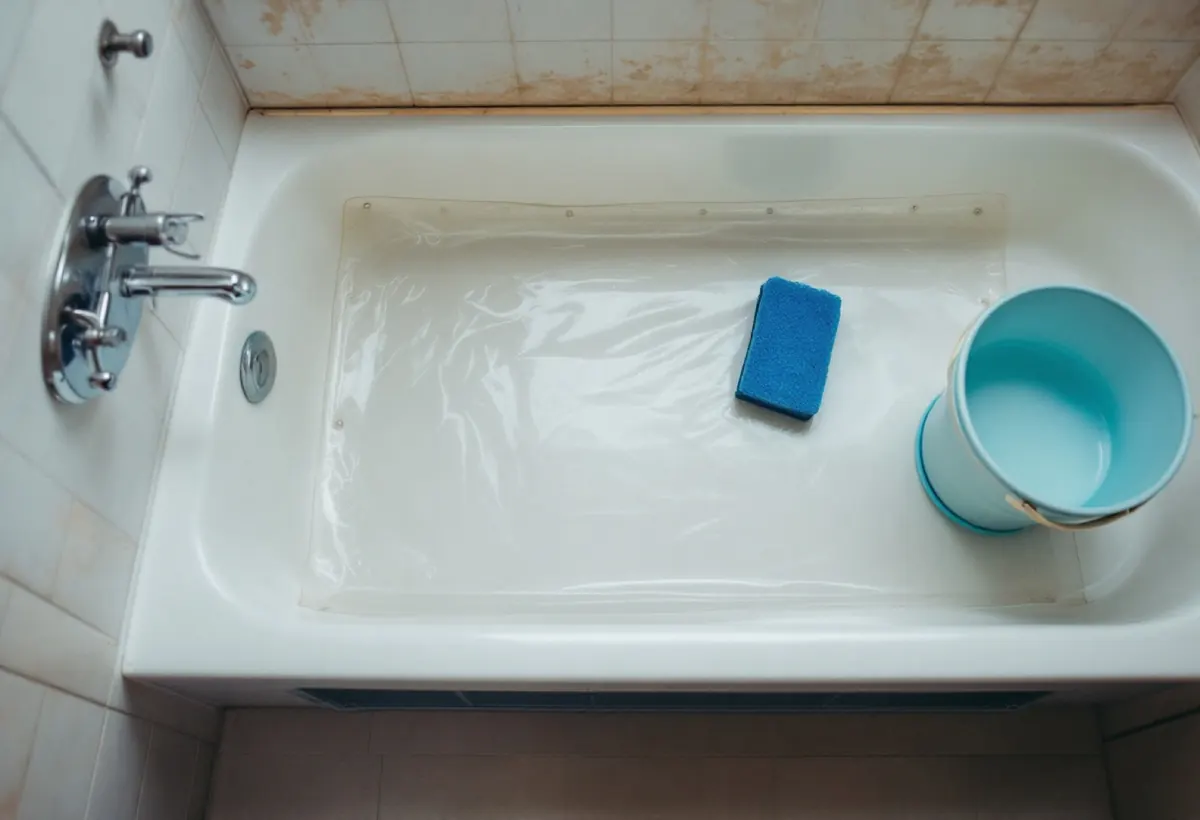
- Take it down and lay it flat in the tub. Why this differs from generic advice: scrubbing a hanging liner folds the film back onto itself; flat, you reach every crease and the grommet line.
- Wet it and wipe with a sponge and mild detergent. Why this differs: IKEA’s own instruction is rinsing and wiping with a wet sponge, and its guide says hand wash gently, which rules out a stiff brush or abrasive pad.
- For spots, a vinegar solution, tested first. IKEA's shower curtain washing guide says vinegar solutions or specialised cleaners work on mould and to test any method on a hidden area first. Why this differs: the label says do not bleach, and the federal glossary reads that as no bleaches at all. For what vinegar does and does not do, see does vinegar kill mold.
- Rinse both faces and hang it open to dry. Why this differs: no dryer, per every plastic label, and a liner bunched on the rod stays wet in the folds.
- Judge it dry, in daylight. Black specks that remain are in the coating. Why this differs: at $1.99 to $7.99 per the IKEA US list prices, a second scrub costs more in time than the liner.
Vinyl (PVC) liners are the material Kelley’s team sampled. Read the label; where there is none, IKEA's shower curtain washing guide says take care with high heat and use a mild detergent and lukewarm water.
How to clean mold off a fabric shower curtain
Fabric curtains are the ones that go in the machine, but on their own terms.
| Step | Polyester (IKEA STRANDLUMMER) | Cotton (Parachute) | Why this differs from generic advice |
|---|---|---|---|
| Pre-treat | Spot test first, per IKEA’s guide | Spot clean allowed by the label | Generic recipes go straight to soaking |
| Wash | Machine, warm, normal cycle | Machine, cold, delicate, mesh bag, mild liquid detergent | Many recipes say hot; neither label does |
| Additives | No bleach; IKEA’s guide says avoid fabric softener | Label is silent on bleach | Bleach is a common tip |
| Dry | Do not tumble dry | Line dry | Neither label calls for a dryer |
| Finish | Iron low after washing to retain water repellence | None stated | Almost no guide mentions it |
Run an empty hot or maintenance cycle on the washer afterwards if it smells; that problem has its own page, mold in the washing machine. If the curtain shared a load with clothes, the same rules apply to them; see mold on clothes. On bleach and porous fabrics generally, see does bleach kill mold.
Replace or clean: the arithmetic
Per the list prices above, the cotton curtain costs about 55 times the cheapest plastic curtain. That spread is the whole decision. A plastic liner that still shows specks after one careful wipe is a replace. A fabric curtain is worth a full label-compliant wash, and EPA's Brief Guide to Mold, Moisture and Your Home notes that absorbent materials may have to be thrown away if they become moldy, so stain that survives one wash is the end of it.
| Material | Clean when | Replace when |
|---|---|---|
| PE, PEVA, EVA liner | Film or light pink that wipes off | Black specks remain after one wipe; coating cracked or cloudy |
| Vinyl (PVC) liner | Film that wipes off at lukewarm | Specks remain; liner stiff or split |
| Polyester curtain | Spots in the hem; label allows a warm wash | Stain survives a label wash; repellence gone after ironing |
| Cotton curtain | Any spotting; label allows cold delicate | Stain or odour survives one wash and line dry |
Which situation are you in?
- Read the label or the product page. Do not wash on it: go to the plastic method. Machine wash: go to the fabric table. No label: treat plastic as plastic and fabric as the more delicate setting.
- Pink or orange only? Bacterial film. Wipe it; fix drying habits; it is not a reason to replace.
- Black specks on plastic after one wipe? Replace the liner.
- Black specks on fabric? One label-compliant wash, line dry, inspect in daylight. Still there: replace.
- Back within a week? The curtain is the messenger; check the room and the fan on mold in bathroom.
Keeping shower curtain mold from coming back
| Habit | Published basis |
|---|---|
| Pull the curtain fully open after every shower | IKEA's shower curtain washing guide |
| Do not leave the bottom hem lying in damp conditions | IKEA's shower curtain washing guide |
| Clean it at least twice a year, or ideally once a month | IKEA's shower curtain washing guide |
| Keep room humidity below 60%, ideally 30 to 50% | EPA's Brief Guide to Mold, Moisture and Your Home |
| Run the fan or open the window when showering | EPA's Brief Guide to Mold, Moisture and Your Home |
| Wipe tubs and enclosures dry after use | NDSU Extension |
The curtains in Kelley and colleagues, Applied and Environmental Microbiology, 2004 had been in use more than 6 months; IKEA’s monthly cleaning advice is the practical opposite.
When it is not the curtain
| Sign | What it suggests | Go to |
|---|---|---|
| New liner spotted within a week or two | Room humidity or fan problem | mold in bathroom |
| Black lines in the caulk behind the curtain | Joint growth, separate job | mold in shower |
| Spots on the ceiling above the rod | Condensation at the ceiling | mold in bathroom |
| Musty smell after washing the curtain | The washer, not the curtain | mold in the washing machine |
| Pink film on tub and toilet too | Room-wide bacterial film | pink mold |
For contractors: the curtain on a remediation scope
On a bathroom remediation the curtain and liner are low-value soft contents. Bag and dispose of them rather than clean on site, note material and condition in the contents log with a dated photo, and price the replacement from a published list price rather than an estimate. An adjuster may ask how long the growth was there: a liner heavily colonised in the folds is evidence of long-term condensation. The NJM New Jersey HO-3 (03/18) form, one published example, excludes personal property loss caused by constant or repeated condensation of humidity, moisture or vapor over weeks, months or years. Forms differ; owners should read their own policy and ask their state insurance department or a licensed professional.
Questions people actually ask
Can you clean mold off a shower curtain liner?
Usually, if it is film or pink residue. Lay the liner flat in the tub and wipe both faces with a sponge, mild detergent and water, then hang it open to dry. IKEA’s plastic liners are labelled do not wash and do not bleach, so the machine is out. Black specks that remain after one wipe mean replace it.
Can I put a shower curtain liner in the washing machine?
Only if its label allows it. All five plastic IKEA curtains and liners checked, in polyethylene, PEVA and EVA, say do not wash, and IKEA’s guide says machine washing can damage PEVA and EVA. Polyester and cotton curtains are different: IKEA’s polyester says machine wash warm; Parachute’s cotton says cold, delicate, mesh bag.
What is the pink mold on my shower curtain?
Usually bacteria, not mold. Kelley and colleagues found pink and orange shower curtain biofilm dominated by Sphingomonas and Methylobacterium bacteria and suggest Methylobacterium causes the pink in some films; NDSU Extension names Serratia marcescens as the classic pink bathroom residue. It feeds on soap film and wipes off, but returns on a curtain that never dries.
Should I use bleach on a moldy shower curtain?
Not if the label says do not bleach, which every IKEA curtain checked does. The federal care label glossary defines do not bleach as no bleaches may be used. A label that says only non-chlorine bleach rules out chlorine bleach. With no label, test any product on a hidden corner first, as IKEA’s guide advises.
How often should you replace a shower curtain liner?
No maker we read sets an interval. IKEA’s guide says clean the curtain at least twice a year, ideally monthly. Replace a plastic liner when black specks survive one careful wipe or the film has cracked; per the IKEA US list prices of $1.99 to $7.99 for plastic, replacing costs less than a second round of scrubbing.
Why does my shower curtain get moldy so fast?
Because it stays wet. A curtain bunched on the rod or a hem lying in the tub never dries between showers, and soap film feeds the growth. IKEA’s guide says pull it fully open after every shower; EPA’s Brief Guide sets room humidity below 60%. If a new liner spots within a week, look at the room’s ventilation.
Sources
- IKEA NORDRÖNN page, IKEA NÄCKTEN page, IKEA NÄLK liner page, IKEA LUDDHAGTORN page, IKEA DOCKBÅT page and IKEA STRANDLUMMER page, IKEA US product pages: material, care and list price. Retrieved 31 October 2026.
- IKEA's shower curtain washing guide, IKEA Switzerland, undated. Retrieved 31 October 2026.
- Parachute's waffle shower curtain page, Parachute Home: material, care and list price. Retrieved 31 October 2026.
- FTC business guide to the Care Labeling Rule, Federal Trade Commission. Retrieved 31 October 2026.
- 16 CFR Part 423, Appendix A and 16 CFR 423.1, Care Labeling Rule glossary and definitions, via Cornell LII. Retrieved 31 October 2026.
- Kelley and colleagues, Applied and Environmental Microbiology, 2004: S.T. Kelley, U. Theisen, L.T. Angenent, A. St. Amand, N.R. Pace, Molecular analysis of shower curtain biofilm microbes, 70(7):4187 to 4192; 337 clones screened, 117 unique sequences. Retrieved 31 October 2026.
- NDSU Extension, NDSU Extension release, 9 August 2010. Retrieved 31 October 2026.
- EPA's Brief Guide to Mold, Moisture and Your Home, U.S. EPA, updated 18 February 2026. Retrieved 31 October 2026.
- CDC's mold page, CDC, dated 26 September 2024. Retrieved 31 October 2026.
- NJM New Jersey HO-3 (03/18) form, New Jersey Manufacturers Insurance Company. Retrieved 31 October 2026.
- We compared published labels and prices; we did not wash or test any curtain. Our methodology sets out the standing rules.
Labels and prices change between production runs. The label sewn or printed on your curtain overrides this page.