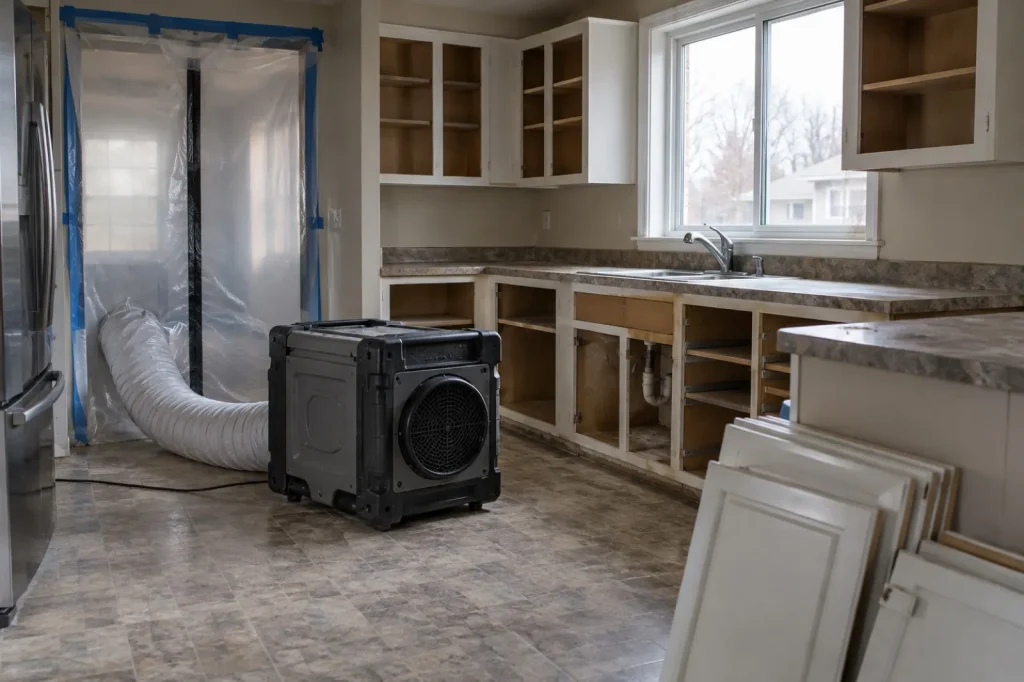
The short answer
Meth lab cleanup is the removal of methamphetamine residue from a building until wipe samples fall below the state’s surface limit, which ranges from 0.1 to 1.5 micrograms per 100 square centimetres in the rules read for this page. Colorado uses 0.5, Utah 1.0, and Washington, Montana and California 1.5. Tennessee and Kentucky keep 0.1. Many states set no number at all.
Key takeaways
- Release is a lab number, not a look: every rule read here clears a property on wipe results, never on elapsed time.
- Limits have loosened. NIOSH listed Washington below 0.1 and Utah at 0.1 in January 2008; today WAC 246-205-541 says 1.5 and Utah R392-600-6 says 1.0.
- Colorado runs three limits in one rule: 0.5 for living space, 1.5 for painted-over surfaces, 4 for attics and crawl spaces, per 6 CCR 1014-3.
- Scope differs. Colorado and Montana cover use or consumption; Washington’s chapter covers manufacture or storage sites.
- EPA’s guidance is voluntary, still the August 2021 edition (EPA-540-B-21-002), and sets no number of its own.
- Solvent moves the result: according to NIOSH 9111 backup data, one methanol wipe recovered 87% against 46% for water.
On this page
- State limits, rule by rule
- What you are looking at
- How the limits moved since 2008
- What EPA’s guidelines say
- Meth residue testing
- Meth house remediation, step by step
- Who may do the work
- Disclosure for sellers and landlords
- Which situation are you in
- Signs it is bigger than it looks
- For contractors
- Questions people actually ask
Meth lab cleanup limits, state by state
Each figure is the methamphetamine surface limit in micrograms per 100 square centimetres, read in the document linked in the same row. Where the current text would not open, the row says so rather than repeat a number from a secondary list. EPA reports that as of August 2021, 21 states had a quantitative meth standard and 11 had process-only guidance, per its EPA guidelines PDF.
| State | Limit (µg/100 cm²) | Where it is written | Scope |
|---|---|---|---|
| Washington | 1.5 | WAC 246-205-541, effective 9 January 2015 | Manufacture or storage sites |
| Montana | 1.5 | MCA 75-10-1303(1); DEQ may set another by rule | Labs and consumption |
| California | 1.5 | AB 1489 floor analysis (2009) raised the interim 0.1 in Health and Safety Code 25400.16 | Health based, per the analysis |
| Utah | 1.0 | Utah R392-600-6 Table 1, amended 13 July 2022 | Ecstasy 0.1 in same table |
| Colorado | 0.5; 1.5 painted-over; 4 limited exposure | 6 CCR 1014-3 section 7.1, version of 27 April 2021 | Manufacture, use, storage |
| Tennessee | 0.1 | Tenn. Rule 0400-15-02-.01, effective 23 May 2012 | Quarantined manufacturing sites |
| Kentucky | 0.1 | 401 KAR 101:040 section 11 | Tiered by production |
| Connecticut | 0.1 | Connecticut DPH guidelines, July 2006, detection limit as target | Guidance |
| Hawaii | 0.1 | Hawaii DOH fact sheet, undated | Fact sheet |
| Oregon | Not confirmed | Licensing and disclosure rules read; numeric value is in Division guidelines we could not open | NIOSH 2008: 0.5 per sq ft |
| Arizona | Not confirmed | Arizona Laws 2016, chapter 167 moved firm licensing to the Registrar of Contractors; R4-30 text not reachable | NIOSH 2008: 0.1 |
| Minnesota | None found | Minnesota Department of Health keeps no guidance of its own and points to EPA’s | NIOSH 2008: 0.1 labs |
| Illinois | None found | Illinois Department of Public Health gives process guidance only | Points to EPA |
| Kansas, New Mexico, Ohio, Virginia, Wisconsin | Not checked | Marked in EPA Appendix D as referencing EPA guidance | Check the agency |
| AK, AR, FL, GA, ID, IN, IA, LA, MI, NE, OK, WV | Not checked | EPA Appendix D lists a state resource; not opened for this page | Check the agency |
| North Carolina, South Dakota | Not checked | Absent from EPA Appendix D | NIOSH 2008: 0.1 |
| AL, DE, ME, MD, MA, MS, MO, NV, NH, NJ, NY, ND, PA, RI, SC, TX, VT, WY | None found | Absent from EPA’s 2021 Appendix D; NIOSH listed each as no standard in 2008 | Local codes may apply |
The spread is fifteen-fold: a wipe reading 1.2 passes in Washington and fails in Tennessee. The low values are inherited from laboratory capability. Utah DHHS says the 2008 value of 0.1 was the detection limit of the day, and Utah moved to 1.0 after adapting Colorado’s exposure model. EPA agrees that most state standards rest on detection limits and feasibility, not health.
What you are looking at: lab, use or storage site
Meth contamination cleanup starts with classification, because the rule that applies depends on what happened in the building. Residue is usually invisible: a clean-looking wall can fail and a stained one can pass. EPA notes that iodine and red phosphorus leave visible stains, and stained surfaces are generally removed rather than sampled.
| Situation | How the rules treat it | Source |
|---|---|---|
| Former lab reported by police | Listed or quarantined until cleared | Tenn. Rule 0400-15-02-.01; 401 KAR 101:040; WAC 246-205-541 |
| Smoking or use only | Colorado’s definition includes ‘used’; Montana covers consumption | 6 CCR 1014-3; MCA 75-10-1305 |
| Chemical or product storage | Washington covers storage sites | WAC 246-205-010 |
| Owner finds residue, no police report | Montana ‘volunteer property’ route to a Certificate of Fitness | Montana DEQ |
Why third-hand smoking residue is regulated differently
EPA states that smoking meth alone can contaminate a structure, with levels depending on how much was smoked, and that its guidelines may be useful for use sites although written for labs. The regulatory difference is scope. A manufacturing site carries the chemical load of production, so rules add tests for volatile organic compounds, corrosives, lead and mercury. A use-only site is a residue question. Colorado builds this in: limited composite screening, where any composite above 0.2 µg/100 cm² triggers the full assessment, per 6 CCR 1014-3 section 3.6. Washington defines its subject as manufacturing or storage sites, so a use-only house may sit outside its listing process.
How the limits moved since 2008
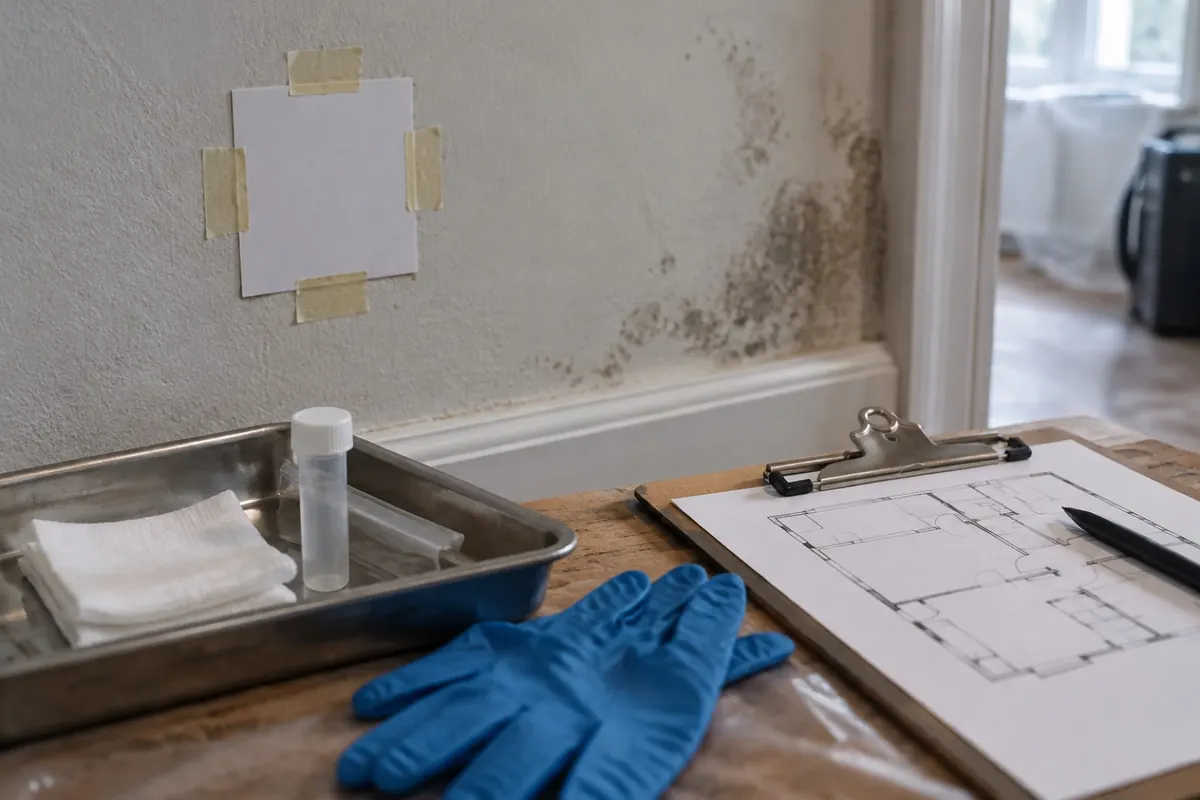
NIOSH printed a state table in Method 9111, dated January 2008. Against today’s rule text, the states that rewrote their rules moved up. Montana’s 2008 figure was per square foot, about 0.054 per 100 cm² once one square foot is taken as 929 cm².
| State | NIOSH, Jan 2008 | Rule text today | Change |
|---|---|---|---|
| Washington | <0.1 | 1.5 | Raised, 2015 |
| Utah | 0.1 | 1.0 | Raised |
| Montana | 0.5 per sq ft | 1.5 | Raised, unit changed |
| California | <1.5 | 1.5 | Codified 2009 |
| Colorado | 0.5 | 0.5 plus two tiers | Tiers added |
| Minnesota | 0.1 labs, <1.5 use | No state guidance | Defers to EPA |
| Tennessee | 0.1 | 0.1 | Unchanged |
| Kentucky | 0.1 | 0.1 | Unchanged |
What EPA’s Voluntary Guidelines actually say
The federal document is the EPA Voluntary Guidelines for Methamphetamine and Fentanyl Laboratory Cleanup, revised edition August 2021, EPA-540-B-21-002, required by the Methamphetamine Remediation Research Act of 2007. EPA says it was first published in 2009, updated in 2013 and revised in 2021 to add fentanyl. The Minnesota Department of Health page mentions a June 2023 update, but EPA’s page lists none and the PDF still carries the 2021 cover.
It is voluntary; EPA says it does not set or promote quantitative standards. It records the state range as 0.05 to 1.5 µg/100 cm², with 0.1 most common. It reports lab seizures falling from 23,703 in 2004 to 891 in 2019, which EPA says makes its use-site guidance especially relevant. On fentanyl, EPA says no state or federal remediation standard exists; Montana DEQ reports amended rules adding one took effect on 8 August 2026.
Meth residue testing: wipe sampling by NIOSH 9111
NIOSH Method 9111, Issue 1 of 17 October 2011, measures methamphetamine on wipes by liquid chromatography and mass spectrometry. Colorado accepts it alongside NIOSH 9106, 9109 and EPA 8270D, per 6 CCR 1014-3 section 6.12. Kentucky names EPA 8270C modified with a detection limit of at least 0.1, per 401 KAR 101:040 section 10.
| Parameter | What the method or rule says | Why it matters |
|---|---|---|
| Area | 100 cm² template (10 by 10 cm), per NIOSH 9111 | Results are per 100 cm² |
| Wipe and solvent | Gauze with 3 to 4 mL methanol or isopropanol | Solvent changes recovery |
| Pattern | Vertical S-strokes, fold, horizontal, fold, vertical | Makes before and after comparable |
| Blanks | At least two field blanks, one per ten samples | Proves clean handling |
| Storage | 7 days at 22 °C, 30 days below 6 °C | Ship cold |
| Range | About 0.1 to 100 µg per sample | A 0.1 limit sits at the method floor |
| Coverage | Colorado 800 cm² per property and 400 cm² of HVAC; Montana 6 samples, 3 from HVAC | 6 CCR 1014-3 6.9; MCA 75-10-1303(2)(b) |
A pass taken with water and a fail taken with methanol can describe the same wall, which is why rules fix the method and why OAR 333-040-0070 requires post-cleaning samples next to the original spots by identical methods. Home kits screen; state release needs laboratory results.
Meth house remediation, step by step
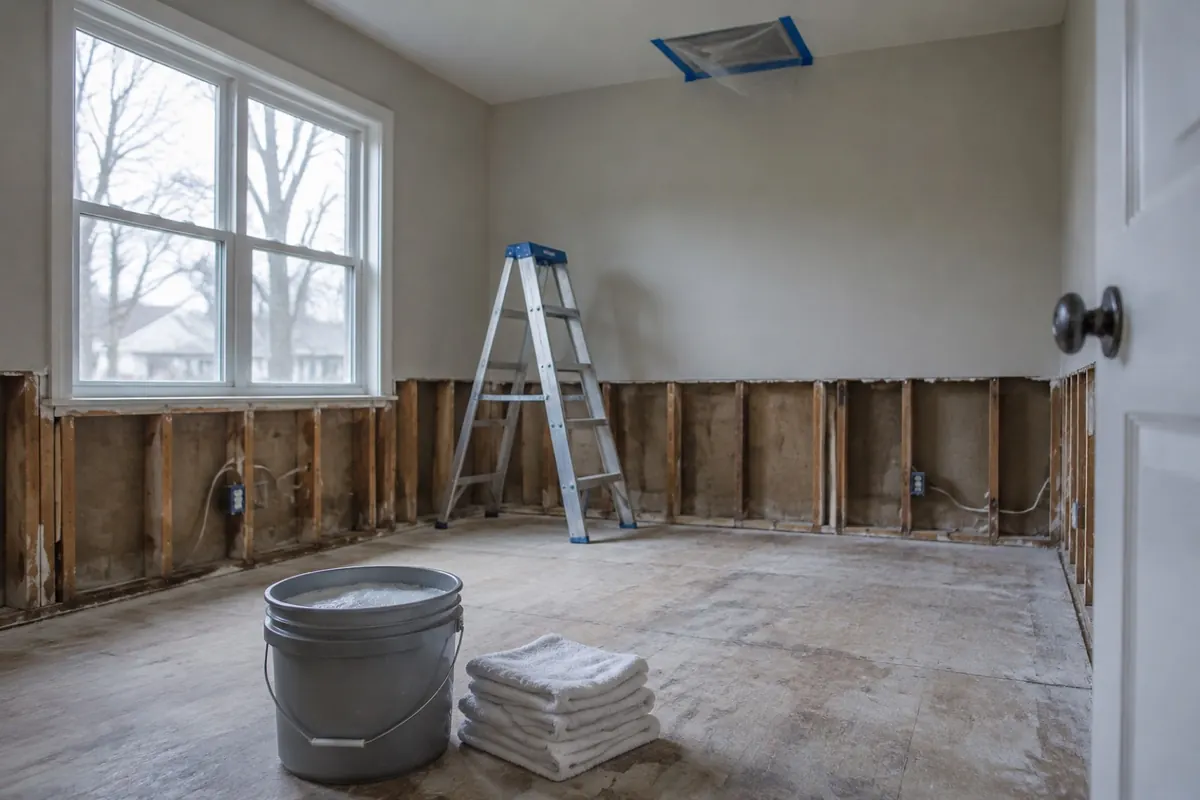
The sequence is EPA’s, compressed, with why each step differs from ordinary cleaning. Stricter state rules govern: Colorado holds painted-over surfaces to 1.5 and, once they pass, requires them to be encapsulated, per 6 CCR 1014-3 section 7.1.2.
| Step | What EPA says | Why this differs from generic advice |
|---|---|---|
| 1. Secure, ventilate 24 hours or more | EPA minimum before work | Air first, cleaning second |
| 2. Assess and pre-sample | Biased samples at likely worst spots | Hunts the maximum, not the average |
| 3. Remove what will be discarded | Upholstered furniture, most mattresses, paper and books | Removal before washing avoids recontamination |
| 4. HEPA vacuum | EPA section 3.10 | Dry dust out before water |
| 5. Clean and seal HVAC | No chemicals in ducts; run it before post-sampling | Restart dust can fail a clearance |
| 6. Detergent wash, ceiling to floor, back to front | All-purpose cleaner; hot water not proven better | Seal each finished room |
| 7. No bleach or methanol | EPA says bleach should not be used | Generic advice reaches for bleach |
| 8. Post-sample when dry | Adjacent to original locations | The lab result ends the job |
| 9. Encapsulate only after passing | Oil-based paint, polyurethane or epoxy | Paint never replaces cleaning |
EPA says to sample a sprayed popcorn ceiling for meth and, if clean, leave or encapsulate it because of possible asbestos; see popcorn ceiling asbestos, and get an asbestos survey before removing walls or floors. HEPA negative air is explained on our air scrubber page.
Who may do the work: certification by state
OSHA’s hazardous waste standard, 29 CFR 1910.120, is the training baseline the Colorado, Montana and Oregon rules reference. The Minnesota Department of Health says it does not license meth cleanup firms.
| State | Who samples | Who cleans | Source |
|---|---|---|---|
| Colorado | Certified Consultant | Certified Decontamination Supervisor and Workers | 6 CCR 1014-3 |
| Montana | DEQ-certified contractor | Same; 16-hour course or 8-hour refresher plus HAZWOPER | Montana DEQ |
| Tennessee | Certified CML Specialist | Authorized contractor; a CIH may do both | TDEC |
| Oregon | Independent samplers, supervised | Licensed contractor registered with the CCB; 40 hours hazmat for supervisors | OAR 333-040-0110 |
| Washington | Certified CDL supervisor or health officer | Certified workers and authorized contractors | WAC 246-205 |
| Kentucky | Certified contractor | Certified contractor | Kentucky EEC |
| Utah | Certified decontamination specialist | Specialist or owner of record | Utah R392-600-6 |
Disclosure laws for sellers and landlords
| State | Who must disclose | What and when | Source |
|---|---|---|---|
| Minnesota | Seller | In writing before a sale agreement, if they know production occurred, with order and remediation status | Minn. Stat. 152.0275, subd. 2(m) |
| Montana | Owner, to occupants and buyers | Written notice before a lease or sale unless remediated by a certified contractor | MCA 75-10-1305 |
| Oregon | Owner of unfit-for-use property | Verbatim statement in 10-point bold on the sale document; copies to the state within 10 days | OAR 333-040-0100 |
Minnesota makes a seller who knew and stayed silent liable for remediation costs and attorney fees. Montana pairs notice with immunity once DEQ confirms the standard is met. Colorado lists a seller disclosure statute, C.R.S. 38-35.7-103, and grants immunity when verification testing results go to the local governing body, according to CDPHE.
Which situation are you in
Stop at the first match.
- Listed property. The state program governs: hire the credentialed sampler and cleaner it names; no reoccupancy until delisted.
- Buying, suspect use. Get the seller’s disclosure where required, then independent composite screening before closing.
- Landlord after a tenant. Screen first; in Colorado a composite above 0.2 means a full assessment, and Montana requires notice to the next tenant unless remediated.
- No state standard. Write a target into the contract before cleaning; EPA reports 0.1 as the most common state value.
- Containers or lab equipment left behind. Stop work and call law enforcement, as EPA advises.
Signs it is bigger than it looks
- Very high pre-samples: the Connecticut guidelines cite data that one cleaning may not reach 0.1 when pre-cleaning results exceed 10.
- A shared forced-air system; EPA lets a mattress stay only if it was not on the source room’s HVAC.
- Drain or septic odours, which bring in plumbing and outdoor work.
- Mobile homes and RVs, which EPA says some states found cost-prohibitive to clean.
- Multi-unit buildings: Colorado’s rule says one building can hold several affected properties.
- Failed samples after three washes, when EPA has encapsulation or removal weighed with the regulator.
For contractors: scope, documentation, line items
| Source | Published figure | Age and caveat |
|---|---|---|
| EPA Appendix B, citing IIR | $5,000 to $150,000 | Undated estimate |
| House Report 110-8 | $5,000 to $15,000 for 1,500 sq ft | 2007, one contractor |
The same House Report 110-8 says most insurers excluded ‘contamination’ and ‘felony activities’ for private homes in 2007; whether a policy responds is for its wording, the state insurance department and a licensed professional.
- Line items: assessment, pre- and post-sampling, removal and disposal, HEPA vacuuming, HVAC, washing by square foot, encapsulation, with refurbishment separate, as EPA’s cost appendix distinguishes.
- Documentation: floor plan with sample points, photos, chain of custody, blanks, lab method and detection limit.
- Regulatory duty: state credential, work-plan approval where required (Oregon, Montana), HAZWOPER training.
- What an adjuster asks for: the lab report, the standard used, and proof of sampler independence.
What this page does not cover. Health effects of methamphetamine residue are out of scope; see the EPA Voluntary Guidelines page and your state health department. Bodily-fluid scenes are on our biohazard cleanup page, with what is a biohazard, what is remediation and the standards hub.
Questions people actually ask
Can a meth house be cleaned up?
Usually, yes. Every rule read for this page sets a cleanup path that ends in wipe samples below the state limit, with demolition as the alternative; Kentucky and Colorado both name demolition as an owner option. EPA flags mobile homes as the main exception, because porous materials can make cleaning cost more than replacing.
Can hydrogen peroxide be used for meth decontamination?
EPA does not recommend it yet. Its 2021 guidelines say peroxide-based proprietary cleaners may work, but meth may oxidise to another compound, so their effectiveness should be verified first. EPA’s recommended wash is household detergent and water, rinsed, repeated and confirmed by sampling.
How much does meth cleaning cost?
Published figures are old and wide. EPA cites an estimate of $5,000 to $150,000 per cleanup, and a 2007 House report quotes one contractor at $5,000 to $15,000 for a 1,500 square foot house. Sampling, debris volume, HVAC work and asbestos findings move the total, according to EPA.
Does meth contamination dissipate over time?
No rule read for this page gives credit for elapsed time; each releases a property only on sample results below the limit. EPA says how far residue migrates through materials is still unknown, which is why it treats paint as a barrier after cleaning, never a substitute for it.
What is the legal limit for meth residue in a house?
It depends on the state. Washington, Montana and California use 1.5 micrograms per 100 square centimetres, Utah 1.0, Colorado 0.5 for living space, and Tennessee and Kentucky 0.1. EPA reports the state range as 0.05 to 1.5, with 0.1 the most common value.
Do I need a certified company for meth lab cleanup?
In several states, yes. Colorado, Montana, Washington, Oregon, Tennessee and Kentucky credential the people who sample, clean or both. Minnesota’s health department says it does not license cleanup firms and points contractors to OSHA’s hazardous waste standard, 29 CFR 1910.120.
Sources
- EPA Voluntary Guidelines and EPA guidelines PDF, US EPA, revised edition August 2021, EPA-540-B-21-002. Retrieved 19 October 2026.
- NIOSH Method 9111, Issue 1, 17 October 2011, with Table 1 (January 2008). Retrieved 19 October 2026.
- 6 CCR 1014-3, Colorado State Board of Health, and CDPHE. Retrieved 19 October 2026.
- WAC 246-205-541 and chapter 246-205 WAC, Washington Department of Health. Retrieved 19 October 2026.
- MCA 75-10-1303, MCA 75-10-1305 and Montana DEQ, Montana. Retrieved 19 October 2026.
- Utah R392-600-6 via Cornell LII, and Utah DHHS on the standard’s history. Retrieved 19 October 2026.
- AB 1489 floor analysis, California Assembly, 28 August 2009. Retrieved 19 October 2026.
- Tenn. Rule 0400-15-02-.01 and TDEC meth page. Retrieved 19 October 2026.
- 401 KAR 101:040 and Kentucky EEC. Retrieved 19 October 2026.
- Connecticut DPH guidelines, July 2006, and Hawaii DOH fact sheet, undated. Retrieved 19 October 2026.
- OAR 333-040-0100, OAR 333-040-0110 and OAR 333-040-0070, Oregon Health Authority, via Cornell LII. Retrieved 19 October 2026.
- Minnesota Department of Health and Minn. Stat. 152.0275. Retrieved 19 October 2026.
- Illinois Department of Public Health and Arizona Laws 2016, chapter 167. Retrieved 19 October 2026.
- House Report 110-8, US House, 7 February 2007. Retrieved 19 October 2026.
- The Montana unit conversion and the fifteen-fold spread are arithmetic on the figures above. Our methodology sets out the standing rules.
State rules change. Confirm the current limit, credential and disclosure duty with the state agency. This page describes rules; it is not legal advice.