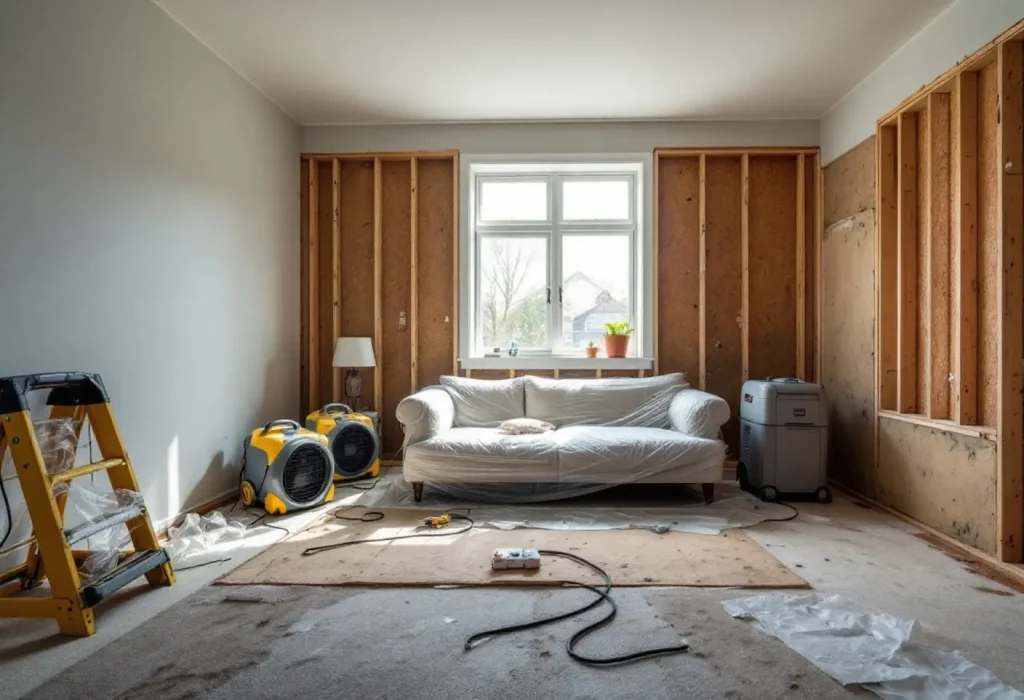
The short answer
Loss of use coverage is Coverage D of a standard homeowners policy. In the ISO HO 00 03 wording it pays the necessary increase in living costs when a covered loss makes your home not fit to live in, lost rent on a part you rent out, and up to two weeks when a civil authority bars entry. It runs for the shortest time needed to repair.
Key takeaways
- Coverage D is three coverages under one limit: additional living expense (ALE), fair rental value, and civil authority prohibits use.
- ALE pays the increase over normal living costs, not the whole hotel bill.
- The clock is the repair, not the calendar: the shortest time to repair or replace, not cut off when the policy expires.
- ISO civil authority cover needs direct damage to neighbouring premises by a covered peril and stops at two weeks.
- The NFIP flood policy excludes additional living expenses and loss of use outright.
- California and Colorado set ALE time floors after declared disasters; dollar limits still apply.
- Living expense money is not the lender’s: the ISO mortgage clause names Coverages A and B only.
On this page
Scope. This page describes standard policy wording and regulator guidance. It does not say what your policy pays: your own form controls, and your insurer, state insurance department or a licensed professional can answer for your claim.
What you are looking at on the policy
Most people meet Coverage D as one dollar figure on the declarations page beside the words Loss of Use. The rules sit in the form. In the ISO HO 00 03 10 00 specimen the heading is “Coverage D, Loss Of Use”, and its limit “is the total limit for the coverages in 1. Additional Living Expense, 2. Fair Rental Value and 3. Civil Authority Prohibits Use”. ALE insurance, additional living expense and Coverage D homeowners all name this section. Two look-alikes are not it: “loss of use of tangible property” in the liability definitions, which concerns damage you cause to others, and auto loss of use, which pays for a rental car.
| Where to look | What it tells you | Why it matters |
|---|---|---|
| Declarations, Coverage D line | The dollar limit, sometimes a time limit | One cap for all three parts |
| Form edition code (HO 00 03 10 00 here) | Which wording applies | Editions and carrier forms differ |
| Section I, D.1 Additional Living Expense | Covered loss makes your residence not fit to live in | No covered loss, no ALE |
| Section I, D.2 Fair Rental Value | Rent on a part rented or held for rental | Duplex owners and basement units |
| Section I, D.3 Civil Authority Prohibits Use | Order caused by damage to neighbouring premises | Two week cap |
| Section I, D.4 Loss Or Expense Not Covered | Lease cancellation is excluded | Breaking a lease is not a Coverage D cost |
| Conditions, Duties After Loss B.7.g | Receipts for ALE, records for rental value | What the insurer can ask for |
The three parts, clause by clause
Each part has its own trigger. Additional living expense applies when a covered Section I loss makes the part of the residence premises where you reside not fit to live in, and covers “any necessary increase in living expenses incurred by you so that your household can maintain its normal standard of living”, in the wording of the ISO HO 00 03 10 00 specimen. Fair rental value covers a rented or for rent part, less expenses that stop. Civil authority applies when an order keeps you out because of direct damage to neighbouring premises by a Peril Insured Against, “for no more than two weeks”.
Two phrases decide most disputes. “Not fit to live in” is not a defined term in the 2000 ISO form, which is why the California department publishes its own examples of uninhabitable conditions, such as no water, sewer or electricity. “Necessary increase” is the measure, so a receipt alone does not settle a claim.
| Part | Trigger in the wording | What it pays | How long |
|---|---|---|---|
| 1. Additional living expense | Covered loss makes your residence not fit to live in | Necessary increase to keep the normal standard of living | Shortest time to repair or replace, or to settle elsewhere if you move permanently |
| 2. Fair rental value | Covered loss makes a rented part not fit to live in | Fair rental value less expenses that stop | Shortest time to repair or replace that part |
| 3. Civil authority | Order bars use after direct damage next door by a covered peril | ALE and fair rental value as in 1 and 2 | No more than two weeks |
| 4. Not covered | Cancellation of a lease or agreement | Nothing | Periods are not limited by expiration of the policy |

It pays the increase, not the bill
The clearest public statement of how the increase is measured is a tax rule. IRS Publication 547 defines a temporary increase in living expenses as actual living expenses minus the normal living expenses you would have had, across rent, transportation, food, utilities and miscellaneous services. According to its worked example, one month in a motel after a hurricane cost $3,850 against normal costs of $1,900, an increase of $1,950, and the insurer paid $2,200.
According to IRS Publication 547, the $250 by which the payment exceeded the increase is income, unless the casualty is in a federally declared disaster area, in which case none of it is taxable. A tax professional applies that to a real return.
| Cost while displaced | Named as eligible by | How the increase is usually found |
|---|---|---|
| Temporary housing (hotel, rental) | CDI, IRS | Displaced rent minus housing costs that stopped |
| Food | CDI, IRS | Restaurant meals minus normal grocery spend |
| Phone or utility installation at the temporary home | CDI | Connection fees you would not otherwise pay |
| Extra transportation to work or school | CDI, IRS | Added mileage or fares |
| Relocation and storage | CDI | Moving and storage invoices |
| Furniture rental | CDI | Rental invoices |
| Laundry while evacuated | Colorado DOI | Laundromat receipts against normal home cost |
| Mortgage payment on the damaged home | Not an increase | Already a normal cost; CFPB says payments stay due |
How big the limit is
The ISO form prints no percentage; the limit is a declarations figure set by rating rules and your choices, and published descriptions disagree. According to the Texas Department of Insurance, if a policy covers ALE it “might be limited to 10 to 20%” of dwelling coverage, and you pay the rest if repairs outlast it. According to NerdWallet (updated 21 January 2026), defaults run “such as 20% or 30%” of the dwelling limit, and renters and condo limits may follow personal property instead.
| Source | What it says, per the source | Date |
|---|---|---|
| ISO HO 00 03 10 00 specimen | One total limit for the three parts; no percentage in the form | 2000 edition |
| Texas Department of Insurance | Per the TDI guide, may be 10 to 20% of dwelling, if ALE is covered at all | Updated 1 June 2026 |
| NerdWallet | Per NerdWallet, defaults such as 20% or 30%; renters limits may follow personal property | Updated 21 January 2026 |
| California Department of Insurance | Dollar limits can run out before state time minimums end | 2025 consumer alert |
The repair clock
Coverage D ends at “the shortest time required to repair or replace the damage”, so the restoration schedule is the evidence. Steps a job genuinely needs sit inside that time; waiting on an unsigned contract usually does not. If you permanently relocate, the ISO form pays the shortest time to settle elsewhere instead, and the periods “are not limited by expiration of this policy”. Durations live on our drying time and mold remediation time pages.
| Phase | Why it can sit inside the shortest time | Document that shows it |
|---|---|---|
| Emergency mitigation and extraction | Protecting the property is a policy duty | Dated mitigation invoice and photos |
| Drying to a dry standard | Closing walls wet invites a second loss | Daily moisture readings and equipment log |
| Asbestos or lead testing before demolition | Regulated materials must be identified first | Lab report with sample dates |
| Permit and inspection holds | Work cannot legally proceed | Permit and inspection dates |
| Material lead times | Like kind and quality items may be back ordered | Supplier order confirmation |
| Contents cleaning and pack back | Home may be fit to live in before contents return | Contents inventory and return date |
State rules that set a floor
According to the California Department of Insurance, after a declared state of emergency a policyholder has ALE for a minimum of 24 months, plus 12 months when reconstruction is delayed by circumstances beyond their control, then 6 month extensions for good cause, under Cal. Ins. Code section 2060(b)(1); a dollar limit can run out first, and an insurer may instead fix the condition, for example with a generator. According to the Colorado Division of Insurance advisory of 6 July 2026, a total loss in a designated wildfire disaster carries at least 24 months of ALE with an option to twice extend it by 6 months.
| Rule set | What it says, per the source | Applies when |
|---|---|---|
| ISO HO 00 03 10 00 | Shortest time to repair; civil authority no more than two weeks | Policy uses this wording |
| California | Per the CDI, 24 months minimum plus 12, then 6 month extensions for good cause | Declared state of emergency |
| Colorado | Per the DOI, 24 months minimum and two 6 month extensions; any policyholder gets a policy copy within three business days | Wildfire total loss (time floor) |
| Texas | Per the TDI guide, ALE may be capped at 10 to 20% of dwelling; not every policy covers it | Guidance, not a time floor |
| NFIP flood policy | Excludes additional living expenses and loss of use | Flood damage under the federal policy |
Section V.A of the NFIP Standard Flood Insurance Policy pays only direct physical loss and lists “any additional living expenses incurred while the insured building is being repaired or is unable to be occupied” among its exclusions.
Loss of use in renters insurance
Loss of use in renters insurance pays the same kind of extra cost, but the California Department of Insurance warns that most renters policies pay ALE only until you can move back or for a reasonable time to find another rental, whichever is less. The limit may track the personal property limit, per NerdWallet. The rest of that policy is on renters insurance and fire damage.
Which situation are you in
Work down the list and stop at the first match.
- Flood? The NFIP policy excludes ALE. Check a homeowners policy, FEMA aid or another source before booking long stays.
- Home undamaged but closed by an order over damage nearby? That is civil authority: damage to neighbouring premises by a covered peril, no more than two weeks in the ISO wording.
- A covered loss made the part you live in not fit to live in? That is ALE. Write down your normal monthly costs now; the claim is the increase over them.
- You rent out part of the building? Fair rental value may apply to that unit, less costs that stop.
- Declared emergency in California, or a wildfire total loss in Colorado? State time floors apply; dollar limits still do.
- Repair running long? Get a written schedule with the reason for each delay and send it to the adjuster before the limit or time runs out.
- ALE check also names your lender? See insurance checks and the mortgage company; servicer rules treat living expense money differently.
For contractors
Coverage D is not on a restoration estimate, but the contractor’s paperwork decides how long it runs. The ISO Duties After Loss let the insurer ask for “specifications of damaged buildings and detailed repair estimates” and “receipts for additional living expenses incurred and records that support the fair rental value loss” (ISO HO 00 03 10 00 specimen).
- Scope: record habitability facts (no kitchen, no working bathroom, open walls, containment blocking egress) as conditions, not coverage conclusions.
- Schedule: date each dependency (drying target, lab results, permit, material order) so the adjuster can test it against the shortest time standard.
- Delays: log each hold with cause and date; the California extension turns on delays beyond the policyholder’s control.
- Line item: none. ALE goes to the household, and the ISO mortgage clause names only Coverages A and B, so expect no living expense money in a joint check or draw.
- What the adjuster asks: when the home is fit to live in again, which can come before final trim. Say so; it ends Coverage D.
Servicer rules follow the same split: Fannie Mae Servicing Guide B-5-01 tells servicers to “immediately issue the borrower a check” for living expense proceeds, the HUD FHA servicing fact sheet requires prompt release of temporary housing proceeds, and the VA disaster guidance says those checks should be payable to the borrower only. The sworn statement belongs on proof of loss, and the fire sequence on what to do after a house fire.
What this page does not cover. Auto loss of use, commercial business income forms, and the merits of any claim. For a dispute, contact your state insurance department; related pages are on the insurance hub.
Questions people actually ask
Is loss of use coverage the same as additional living expenses?
Additional living expense is one of three parts of loss of use coverage. In the ISO HO-3, Coverage D combines additional living expense, fair rental value for a part you rent out, and civil authority prohibits use, under one limit. The California Department of Insurance treats ALE, loss of use and fair rental value as near synonyms. Your form’s headings decide which parts you have.
Does loss of use pay my mortgage while I am out of the house?
The ISO wording pays the necessary increase in living expenses, and IRS Publication 547 measures that increase as actual minus normal costs. A mortgage payment is a cost you already had, and the CFPB says payments remain due while a claim is paid. Ask your servicer about forbearance and your insurer how your form measures the increase.
How long does ALE last after a fire or water loss?
In the ISO HO-3 it lasts for the shortest time required to repair or replace the damage, or to settle elsewhere if you move permanently, and policy expiration does not end it. The dollar limit can end it sooner. California and Colorado set longer floors after declared disasters, and civil authority cover stops at two weeks.
Does homeowners insurance pay for a hotel during mold remediation?
Only if the mold traces to a covered loss and the work makes the home not fit to live in, the ALE trigger in the ISO wording. If your policy has a separate mold section or mold limit, read that too. A written schedule from the remediator helps the adjuster judge the time the job needs.
Is loss of use money taxable?
IRS Publication 547 says living expense insurance payments are not income up to the temporary increase in living costs; any excess is income, reported on Schedule 1. If the casualty is in a federally declared disaster area, none of those payments are taxable. A tax professional should apply the rule to a real return.
Does renters insurance include loss of use coverage?
Check the form first. The California Department of Insurance describes renters ALE as narrower: it says most renters policies pay ALE only until you can move back or for a reasonable time to find another rental, whichever is less, and NerdWallet notes the limit may be tied to personal property coverage.
Sources
- Insurance Services Office, Homeowners 3 Special Form, ISO HO 00 03 10 00 specimen (copyright 1999), sample published by the Insurance Information Institute. Retrieved 31 October 2026.
- California Department of Insurance, consumer alert on additional living expenses after a wildfire (2025), citing Cal. Ins. Code 2060(b). Retrieved 31 October 2026.
- Colorado Division of Insurance, consumer advisory on wildfire protections, 6 July 2026 (copy of the doi.colorado.gov page). Retrieved 31 October 2026.
- Texas Department of Insurance, Home insurance guide, updated 1 June 2026. Retrieved 31 October 2026.
- Internal Revenue Service, IRS Publication 547 (2025), “Insurance payments for living expenses”. Retrieved 31 October 2026.
- FEMA, NFIP Standard Flood Insurance Policy, Dwelling Form, 44 CFR Part 61 Appendix A(1), Sections V.A and VII.N, via eCFR. Retrieved 31 October 2026.
- NerdWallet, “What Is Loss of Use Coverage for Home Insurance?”, updated 21 January 2026. Retrieved 31 October 2026.
- Fannie Mae Servicing Guide B-5-01, Insured Loss Events (dated 12 July 2023). Retrieved 31 October 2026.
- HUD FHA servicing fact sheet, Flood or Hazard Insurance Proceeds, revised 18 October 2023. Retrieved 31 October 2026.
- CFPB, “How do home insurance companies pay out claims?”, last reviewed 28 May 2024. Retrieved 31 October 2026.
- U.S. Department of Veterans Affairs, VA disaster guidance, version 2. Retrieved 31 October 2026.
- No claim was filed or handled for this page; see our methodology.
Policy wording varies by edition, carrier and state. This page describes published wording and regulator guidance and is not advice about any policy.