The short answer
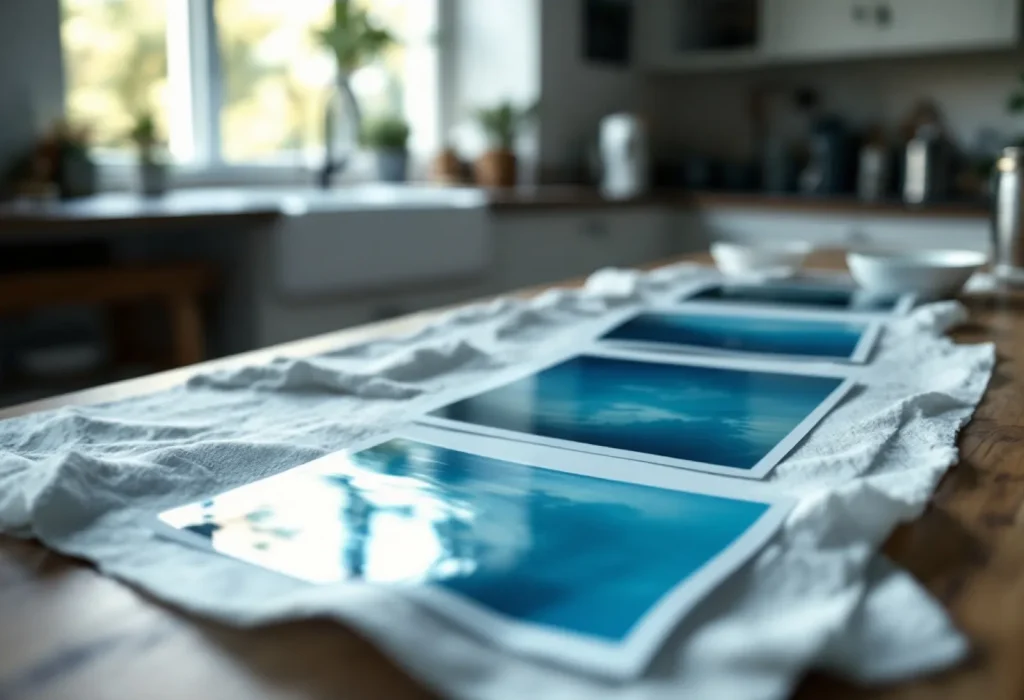
How to dry wet photos: lift each print out of the water, rinse it in clean water only if it is muddy and the image layer is intact, then lay it face up in a single layer on paper towels or blotter with air moving and no heat or sun. Do it within 48 hours, or bag and freeze modern prints until you can.
Which wet photos can go in a rinse tray, and which must stay out of the water?
The NEDCC Preservation Leaflet 3.7 puts the problem in one line: some photographic processes withstand immersion for a day or more, while others are permanently disfigured or destroyed in a few minutes. The American Institute for Conservation wiki says that if you cannot tell processes apart, you should sort by support instead: paper, plastic, glass and metal.
| Photo type | Rinse? | Freeze? | Drying position | Source |
|---|---|---|---|---|
| Modern colour prints (drugstore or lab prints) | Yes, if dirty and the image layer is intact | Yes, safe for most processes | Flat, face up, single layer | NPS, AIC, LOC |
| Black and white gelatin prints | Yes, if dirty and intact | Modern: yes. Old: NARA says never; NPS says ask a conservator first | Flat, face up | NPS, NARA, AIC |
| Inkjet prints (home or fine art printer) | Only if muddy or salty: brief bath, no running tap | Last resort (IPI); AIC lists digital prints as do not freeze | Flat, face up, below 65% RH per the IPI, no heat, no stacking | IPI, AIC |
| Instant prints (Polaroid type) | No source gives a rinse step; ask a conservator | No (AIC) | Flat, face up, single layer | AIC |
| Daguerreotypes and ambrotypes in cases | No: open the case, leave the image in it | No (AIC, LOC) | Case opened, air dry slowly | AIC, LOC, NEDCC |
| Tintypes (wet collodion on a metal plate) | Only if muddy and layers are not lifting; NEDCC warns many will not survive immersion | Never freeze dried (NEDCC); ask a conservator before freezing | Vertical, if possible | NEDCC, AIC |
| Glass plate negatives | Only if muddy and layers are not lifting | Collodion plates: no (LOC, AIC). Other plates: AIC allows it only if no other option | Vertical, propped on edge | LOC, AIC, NEDCC |
| Film negatives | Yes, if muddy | Most: yes (LOC). Old negatives: NARA says never | Hung vertically, clips on the edge | NEDCC, AIC, LOC, NARA |
| Slides | Yes, then air dry | No slide rule found; LOC says most photos and negatives can be | Hung or propped on edge, out of any glass mount | NEDCC |
| Salted paper, albumen, platinum, cyanotype | Tolerate immersion of 48 hours or more | Old photographs: NARA says never; ask a conservator | Flat, face up | NEDCC, NARA |
Order matters as much as method. The National Park Service guide to saving wet photographs says to start with wet colour prints, then black and white prints, then negatives and transparencies. NEDCC adds a list to salvage before everything else: ambrotypes, tintypes, collodion and gelatin glass plates, lantern slides, deteriorated nitrate or safety film, autochromes, carbon prints, Woodburytypes, inkjet prints and colour materials. Anything you can reprint from a digital file or an undamaged negative goes to the bottom of the pile, and the NPS guide says to reprint it and discard the wet copy.
How long can wet photos wait: minutes, 48 hours or 7 days?
Most guidance converges on 48 hours. According to the NEDCC Preservation Leaflet 3.7, mold can grow within 48 hours at 60% relative humidity and 70 F, the Library of Congress salvage guide says you may have as little as 48 hours, and the National Archives flood salvage guidance says items that cannot be air dried within 2 days should be frozen. The 48 hours is a mold clock, not a soaking allowance.
Two exceptions sit on either side of that clock. NEDCC lists salted paper, albumen, platinum and cyanotype prints among processes that can survive 48 hours or more in water, while the Image Permanence Institute warns that the common 48 hour allowance does not apply to inkjet prints, which must come out of the water as soon as possible. The fuller timeline for drywall and framing is on our page on how long mold takes to grow after water damage.
Step by step: drying a modern print face up in 9 moves
These steps combine the National Park Service guide to saving wet photographs, NEDCC Leaflet 3.7 and the National Archives guidance for ordinary colour and black and white prints. Inkjet, instant, cased and glass items follow their own rows in the table above.
- Make the room safe first. NEDCC says to turn off the electricity if standing water is present, and NPS lists gloves, eye protection and an N95 respirator in case of mold.
- Photograph the damage. NEDCC advises taking digital photos of the damage before and during salvage and noting where items were moved.
- Set up two rinse tubs. The NPS guide uses two trays of distilled water and a plastic covered table topped with unprinted newsprint.
- Lift each print from below. NPS says to cradle a wet photo in your palm and never touch the image side until it is dry; the AIC wiki adds: do not blot off excess water.
- Rinse only if muddy. Lower the print into the first tray, rock it slowly, then repeat in the second (NPS). The AIC wiki says to skip rinsing if the image layer is lifting along the edge, and NARA says never to rinse images already blurred, feathered or faded.
- Drain and lay face up. One layer, image side up, on blotter, unprinted newsprint, paper towels or a clean cloth (NEDCC). Replace the towels as they soak through (NARA).
- Move the air, not the heat. NEDCC says to keep air moving at all times; NARA says not to aim the fan directly at the photos; the AIC wiki says not to dry them in direct sun.
- Short on table space? Stack drying shelves of corrugated board on plastic cups with at least 4 inches of space above the photos (NEDCC), or peg prints to a line by the very edge (NPS).
- Flatten later. Curling is expected. NPS says dry prints can be flattened under a heavy weight for several days; NEDCC prefers flattening under a conservator’s guidance.
A dehumidifier helps here: NPS suggests drying outdoors in the shade or indoors in a room with a dehumidifier. Sizing one for a wet room is covered on our water damage dehumidifier page.
Colour prints may look milky while wet. The AIC wiki says a semi opaque white blue or pink tinge on wet colour photographs usually disappears once they dry, so a cloudy print at hour 2 is not a reason to throw it out.
Inkjet prints from a home printer: why they need under 65% humidity and no heat
According to the Image Permanence Institute at Rochester Institute of Technology, inkjet prints are not true photographs: traditional prints were made to survive wetting during processing, inkjet prints were not. Its guidance is stricter on every point. Bathe only prints that sat in dirty or salty water, keep the bath brief, use tap water but never a running tap or hose, and never wipe the surface.
Drying must happen below 65% relative humidity, according to IPI: a print left above that level can feel dry to the touch while still holding enough moisture for ink bleed and mold. IPI also says never to stack wet inkjet prints, even with interleaving, and never to apply heat, which can blister the coating or permanently deform the paper.
The same IPI page gives the time before dye ink starts to migrate if dry prints are left in a damp house. Pigment only prints do not bleed at high humidity, IPI notes, but both types can still grow mold because mold attacks the paper.
| Room relative humidity | Days before dye inkjet bleed shows |
|---|---|
| 60% RH or below | No bleed |
| 65% RH | 28 days |
| 70% RH | 21 days |
| 75% RH | 7 days |
| 80% RH or above | Less than 24 hours |
Freezing inkjet prints is still unsettled. IPI calls it less safe than air drying but better than mold, while the AIC wiki lists digital prints as do not freeze. RIT reports a three year, $453,054 IMLS funded study of whether freezing and freeze drying are safe for inkjet prints, because freezing could damage the fragile ink receiving coatings.
How do you unstick wet photos stuck together or stuck in an album?
While they are still wet, not after. The American Institute for Conservation wiki says to peel a wet stack apart at a low angle only if it releases, never to force it, and to accept some image loss. The National Archives flood salvage guidance says contemporary prints that have stuck together may separate after soaking in cold water, then warns the same soak could cause irreversible damage, so valued prints without a negative go to a conservator. A clump that will not part should be bagged damp and frozen, per NEDCC, rather than left to dry into a solid block.
For sleeves and envelopes, NEDCC says not to slide the photo out: trim the enclosure on at least 3 sides and peel it back at an acute angle, stopping at any resistance. The AIC wiki says a print stuck to a plastic sleeve should be kept damp, wrapped in plastic, until a conservator sees it.
Self adhesive magnetic albums get the same trimming treatment. NEDCC says to remove photos only if they release easily; strongly adhered prints carry a high risk of damage and belong with a conservator. If the album pages are blank, NEDCC says it may be best to destroy the pages to save the photographs; annotated pages are dried like a book, which our water damaged books page covers.
A photo stuck to the frame glass: freeze it, or dry it glass side down?
The agencies split on this one. The NEDCC Preservation Leaflet 3.7 says to take the photo and its glazing out of the frame together, bag and freeze them, and wait for a conservator. The National Archives flood salvage guidance 1993 guidance says not to remove the item and to dry it intact, glass side down. Both agree on one point: do not peel the print off the glass.
| Situation | NEDCC Leaflet 3.7 (rev. 2020) | National Archives (1993) | AIC wiki (2015) |
|---|---|---|---|
| Photo stuck to frame glass | Remove photo and glass together, bag and freeze for a conservator | Leave it in the frame and dry intact, glass side down | Unframe carefully, watching for stuck areas, then air dry |
| Freezing older photographs | Most processes freeze safely; never freeze dry wet collodion | Never freeze old photographs or negatives | Do not freeze cased, instant, digital or collodion on glass |
| Hanging framed photos to dry | Remove from the frame and lay face up | Remove the backing first | Do not hang wooden frames to dry: joints loosen |
NEDCC points out that a photo stuck to glass can still be photographed or scanned through the glass, which secures the image before any separation is attempted.
Freezing wet photos as a pause: what goes in, how to pack it, how to thaw it
Freezing does not dry or clean anything. The National Archives flood salvage guidance says a home freezer will not kill mold but puts it in a dormant state, and NEDCC calls frozen photographs reasonably stable until a conservator can advise. The Library of Congress freezing guidance says to set a household freezer to its coldest setting and lists cased photographs such as daguerreotypes and ambrotypes, and collodion glass plate negatives, as items not to freeze.
- Interleave every few prints with wax paper or non woven polyester (NEDCC).
- Keep stacks 1 to 2 inches tall, push the air out of a zip bag and double bag it (AIC wiki).
- Write what is inside on the bag (NEDCC).
- To thaw, leave the bag closed at room temperature for a few hours (AIC wiki), then peel prints off one at a time and lay them face up (NEDCC).
- Inkjet prints are the exception: IPI says take them out of the bag immediately and separate them as soon as thawing allows, because wet dye keeps bleeding.
Commercial drying has its own rule. NEDCC says vacuum thermal drying is not recommended for photographs because gelatin prints mottle and stick together, vacuum freeze drying is acceptable with some mottling, and wet collodion on glass or metal must never be freeze dried. Ask any contents vendor which drying method it uses before handing over a box of prints. How contents cleaning is documented for a claim is set out in our contents restoration report.
Negatives and slides: hang them, and get slides out of glass mounts
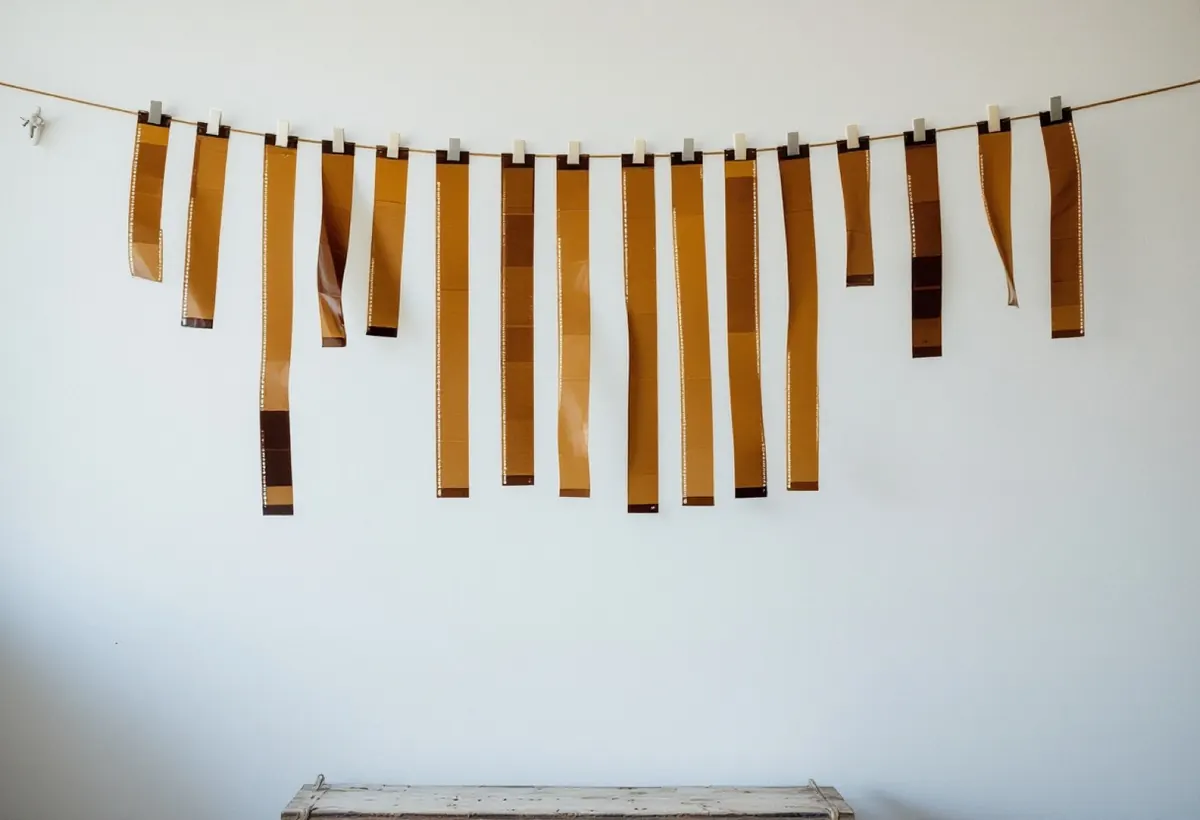
Film dries differently from prints. The NEDCC Preservation Leaflet 3.7 says negatives should be dried vertically, hung on a line with plastic clips at the edges, and the AIC wiki suggests opened paper clips as S hooks through the sprocket holes of film strips. Slides can be rinsed and air dried hung or propped on edge, NEDCC says, and slides mounted between glass must come out of the glass or they will not dry.
When to call a photo conservator, and the 3 numbers to try first
The National Park Service guide to saving wet photographs says to bring in a conservator for a large collection of irreplaceable photos, photos stuck to frame glass or album pages, and photos stuck together in a clump. Three free or public routes are published:
- NEDCC Collections Emergency Hotline, 1-855-245-8303, 24 hours a day for institutions or individuals with damaged photographic materials (NEDCC Leaflet 3.7).
- National Heritage Responders, 1-202-661-8068: NEDCC says all NHR assistance is free, with advice for individuals.
- The AIC Find a Conservator directory, searchable for photograph specialists near you.
Questions worth asking a conservator on the first call: which process each item is (the AIC wiki notes that similar looking processes react differently in water), whether the item should be frozen or air dried now, and whether a stuck print can be imaged before separation.
Photos often sit with other soaked belongings. Deciding what else to keep is covered in what to throw away after a flood, and the wider room cleanup in basement flood cleanup. All water topics are collected on our water damage hub.
Questions people actually ask
Can water damaged photos be fixed?
Many can be stabilised, though not returned to new. NPS warns that dried prints may warp and keep some stains, and NEDCC says image layers may crack or lose gloss. Prints you can reprint from a negative or a digital file are usually cheaper to replace; NPS says to reprint and discard the wet copy in that case.
Can I use a hair dryer to dry wet photos?
No published conservation source recommends heat. The Image Permanence Institute says heat should never be applied to inkjet prints because it can blister the coating, and the AIC wiki says not to dry photographs in direct sunlight. Moving room air with a fan that is not aimed at the prints is the method NEDCC and the National Archives describe.
Should I rinse wet photos in tap water or distilled water?
The NPS guide sets up two tubs of distilled water for rinsing. The Image Permanence Institute says tap water is fine for bathing inkjet prints as long as it is not under pressure from a tap or hose. The AIC wiki says to use the cleanest water available and to skip rinsing if the image layer is lifting.
Can photos dry in the album?
Sometimes. The AIC wiki says sturdy albums can stand upright with pages fanned, with spacers such as wax paper placed away from the photographs. NEDCC says photos that release easily should come out to air dry, and a very wet album may need to be bagged and frozen with wax paper between facing pages.
Do wet photos need to be frozen right away?
Only if you cannot start air drying within 2 days, per the National Archives, or within 48 hours per NPS and NEDCC. Freezing buys time for modern prints and most negatives, but the AIC wiki lists cased, instant, digital and collodion glass items as ones not to freeze.
Sources
- National Park Service guide to saving wet photographs, National Park Service, National Center for Preservation Technology and Training, Preservation Matters series, last updated 29 September 2022. Retrieved 17 November 2026.
- NEDCC Preservation Leaflet 3.7, Northeast Document Conservation Center, Emergency Salvage of Wet Photographs, written 1999, revised 2019 and 2020. Retrieved 17 November 2026.
- National Archives flood salvage guidance, National Archives and Records Administration, Emergency Salvage of Flood Damaged Family Papers, August 1993. Retrieved 17 November 2026.
- Library of Congress salvage guide (Salvaging Wet Collections) and Library of Congress freezing guidance, Library of Congress Preservation Directorate research guide. Retrieved 17 November 2026.
- American Institute for Conservation wiki, American Institute for Conservation, Stabilizing Wet Photographic Materials, last edited 13 May 2015. Retrieved 17 November 2026.
- Image Permanence Institute, Image Permanence Institute, Rochester Institute of Technology, DP3 Museum Water Emergency Response and Recovery, including the bleed and drying time tables. Retrieved 17 November 2026.
- RIT News, Research to evaluate effects of freezing and freeze drying on water damage to inkjet prints. Retrieved 17 November 2026.
- AIC Find a Conservator directory, American Institute for Conservation. Retrieved 17 November 2026.
- The type by type table and the timeline compile the rules above without adding figures of our own. Our methodology sets out the standing rules.
This page describes published conservation guidance for family photographs. For unique, valuable or historic items, speak to a photograph conservator before rinsing, separating or freezing.