
The short answer
Hoarding cleanup starts with rating the home, not hauling. Crews use the ICD Clutter-Hoarding Scale’s five levels to judge structural load, blocked exits, fire load, biohazards and pests, then clear exits first and sort with the occupant. Homeowners insurance generally excludes it. HomeGuide reports $1,000 to $4,000 for typical homes; Fixr reports severe homes at about $1,000 a day.
Key takeaways
- The ICD scale rates the home, not the person, across five levels with Level III as the pivot point, per the ICD Clutter-Hoarding Scale page.
- From Level IV the ICD calls for a coordinated team, including biohazard cleaners and pest and animal control; Level V needs written agreements first.
- Water adds weight: the NFPA hoarding tip sheet warns soaked contents can collapse a building.
- OSHA’s bloodborne pathogens rule reaches urine and feces only when visibly bloody or indistinguishable, per 29 CFR 1910.1030.
- The standard HO-3 form pays debris removal only when a covered peril causes the loss, per the ISO HO 00 03 10 00 form.
- APS must answer immediate-risk self-neglect reports in person within 24 hours, per 45 CFR 1324.402.
On this page
What this page does not cover. Hoarding disorder is a clinical matter and nothing here assesses a person; for understanding it and finding treatment, start with the IOCDF hoarding centre. This page covers the house: how it is rated, what makes it dangerous, which rules apply and who can pay.
What you are looking at: hoarding, clutter, collecting or squalor
A hoarder house cleanup is not big decluttering. Per the IOCDF comparison, hoarding clutter takes over kitchens, bedrooms and hallways so they cannot be used, while ordinary clutter sits in basements and attics. Squalor can occur with or without hoarding.
| Condition | How items arrive | What the home looks like | What the job is |
|---|---|---|---|
| Hoarding | No theme; acquisition unplanned, often excessive | Clutter takes over living spaces | Sort with the occupant |
| Normal clutter | Not excessive | Mostly storage areas; rooms usable | Junk removal |
| Collecting | A theme, planned, limited | Organized and displayed | Not a cleanup job |
| Squalor | No intentional saving; build-up from neglect | Disrepair, unclean | Sanitation first; maybe APS |
The two rating scales professionals use
The ICD Clutter-Hoarding Scale (C-HS, English edition dated 4 March 2026) is a free observational tool for a home’s interior that, per the ICD Clutter-Hoarding Scale page, measures environment and function, not the person. It scores five categories (structure and zoning; animals and pests; household functions; health and safety; PPE) at five levels: I Green Low, II Blue Guarded, III Yellow Elevated, IV Orange High and V Red Severe. Level III is ICD’s pivot between cluttered and hoarded.
The Clutter Image Rating, from Steketee and Frost’s 2013 Oxford University Press treatment guide, is three series of nine photographs of a living room, kitchen and bedroom; the living room set rates other rooms. The form says scores above 3 in any room are cause for concern. The CIR says how full a room is; the C-HS adds what is broken, infested or unsafe. A quote needs both.
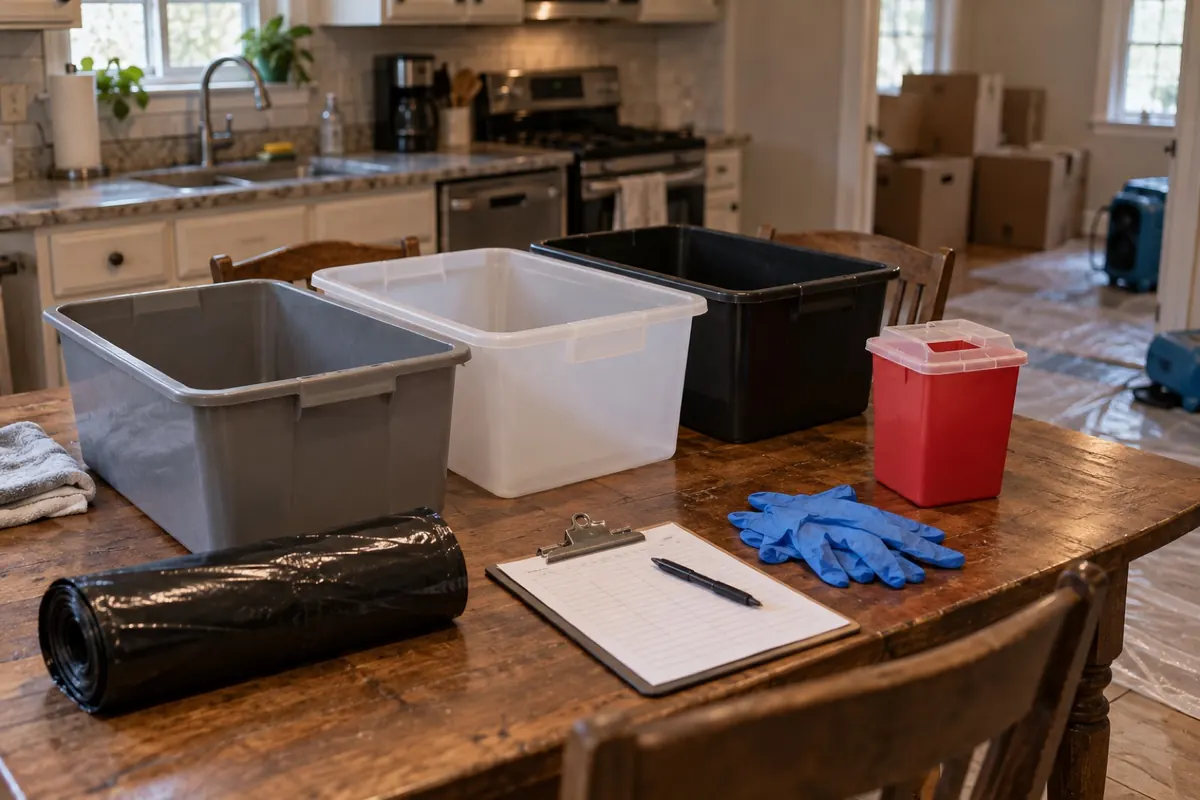
Clutter level, hazard, crew and disposal on one table
Hazard, crew and PPE are condensed from the ICD Clutter-Hoarding Scale level pages; the disposal column applies 40 CFR 261.4(b)(1), 29 CFR 1910.1030 and the FDA sharps guidance.
| C-HS level | Typical hazards in the ICD text | Crew the ICD describes | Disposal approach | ICD PPE |
|---|---|---|---|---|
| I Green | No blocked exits; working detectors | Organizer; ICD says special knowledge is always required | Household trash | Optional |
| II Blue | One major exit blocked; detectors missing; light pests | Organizer with specific knowledge | Household trash; expired medicines to take-back | Gloves, caps, shoe covers |
| III Yellow | Clutter at exits; light structural damage; light infestation; small hazardous spills | Advanced knowledge plus a mental health network | Separate chemicals and sharps | Mask or particulate respirator, eye protection, coveralls |
| IV Orange | Exit access inhibited; structural damage over 6 months; sewer odour; stored gasoline; obvious mold; rodents | Coordinated team: biohazard cleaners, pest and animal control, licensed contractors | Haul loads plus biohazard streams | Full PPE, particulate or organic-filter respirator |
| V Red | Exits blocked; human waste; toilets not working; kerosene or candle heat; heavy infestation | Adds building, zoning and fire agencies; written agreements first | Bloody material as regulated waste; sharps by FDA steps | Full PPE required |
Household trash is excluded from federal hazardous waste rules under 40 CFR 261.4(b)(1), so most of a hoard is ordinary disposal. Medicines are the exception: the ICD quotes FDA advice to use take-back programmes rather than flushing.
The five hazards a team assesses before anything moves
| Hazard | What the walkthrough checks | Source |
|---|---|---|
| Structural load | Sagging floors, wet piles of paper | Fairfax County cites collapse; IOCDF cites load limits |
| Blocked egress | Every exit, window and stair passable | Per the NFPA tip sheet, blocked paths hinder escape |
| Fire load | Items near stoves and heaters, cords under piles, candles | Per the NFPA tip sheet, worn or chewed wiring starts fires |
| Biohazards | Human or animal waste, rotting food, sharps | ICD Levels IV and V; OSHA covers blood |
| Pests | Droppings, live insects, infested bedding | ICD rates infestation light to heavy |
The NFPA fire service sheet says excessive fire loading and obstructed exits put firefighters at risk of collapse. Pest treatment is outside this page; The Pest Control Brief covers it.
Which situation are you in
Who called decides who may consent, which decides the first step. This is the table to keep.
| Who called | Who consents to removal | First step |
|---|---|---|
| The occupant asks for help | The occupant | Agree scope and decision rules in writing; rate with the CIR together |
| Family calls | The occupant, or a court-appointed guardian or conservator | Meet the occupant first; IOCDF says unwelcome cleanouts cause intense distress |
| A landlord calls | The tenant, for the tenant’s possessions | Read the lease and notice; accommodation may pause an eviction, per the Fairfax FAQ |
| Code enforcement or the fire marshal issued a notice | The owner, under a deadline | File the notice; the placard says who may enter |
| APS or a task force referral | The occupant; APS services are voluntary unless state law says otherwise | Coordinate with the caseworker; ask about APS emergency funds |
| After a death, for an estate | The executor or administrator | Confirm authority in writing |
The hoarding cleanup method, in order
- Rate before you quote. Why this differs from generic advice: A cleanout quotes by volume. Here the C-HS level sets crew, PPE and partners, and a CIR rating records the start.
- Put scope and decision rules in writing. Why this differs from generic advice: ICD requires written agreements at Level V; IOCDF says in treatment the client makes the keep or discard calls.
- Clear exits and paths first. Why this differs from generic advice: Not convenience order: the NFPA tip sheet stresses clear pathways, exits and an escape plan.
- Pull hazards before volume. Why this differs from generic advice: Sharps, medicines, gasoline and rotting food come out first; the ICD flags the last three, and sharps fall under OSHA and FDA guidance.
- Sort with the occupant, in sessions. Why this differs from generic advice: Nothing leaves without agreement; IOCDF says imposed cleanouts usually fail and clutter returns within months.
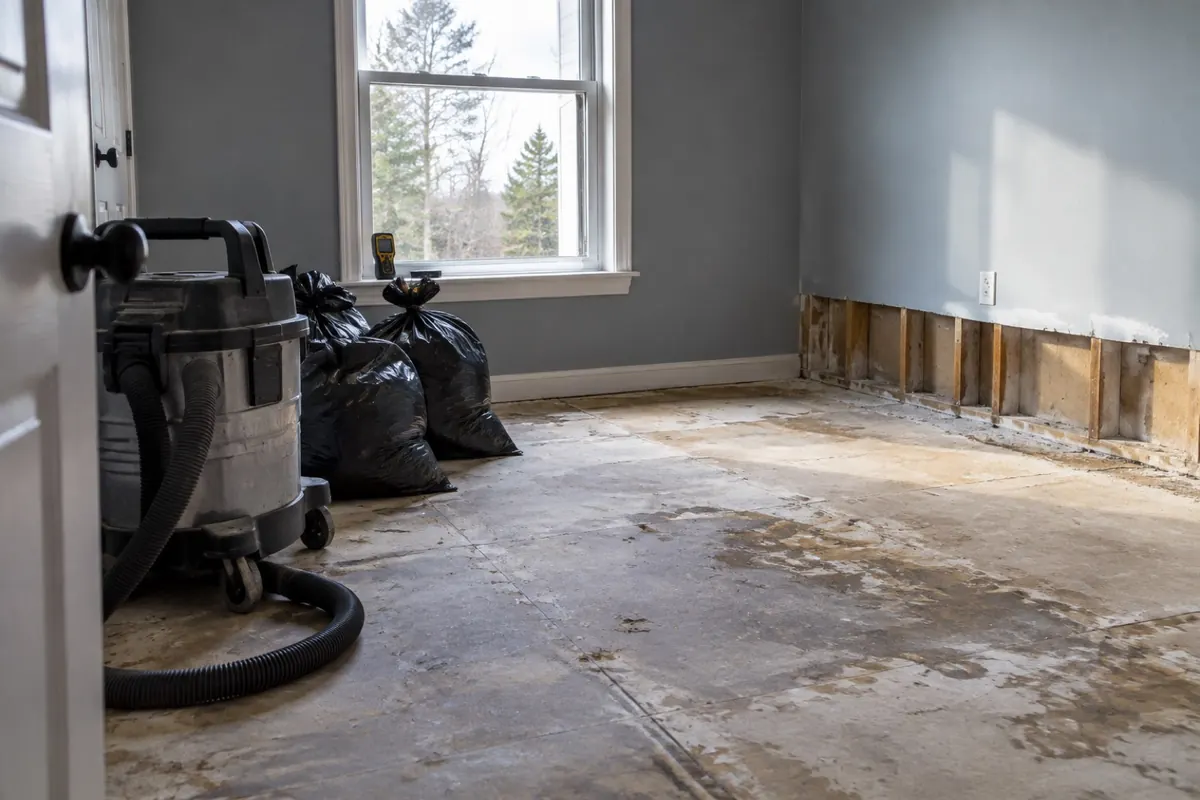
- Remove by zone, watching weight and water. Why this differs from generic advice: Wet paper is heavy and NFPA warns water-loaded contents can bring a structure down, so do not stack bags on a weak floor.
- Decontaminate, then hand off. Why this differs from generic advice: After the biohazard clean, water, mold and pest damage become their own scopes; see the mold remediation process and sewage damage cleanup.
Working with the occupant is the method. The NFPA fire service sheet advises using the person’s own words for their things, avoiding terms such as junk or trash, and building support for safety fixes rather than insisting on an overwhelming cleanup.
The regulated parts of the work
Per 29 CFR 1910.1030, the OSHA standard covers occupational exposure to blood or other potentially infectious materials; that list omits urine and feces unless visibly bloody or impossible to tell apart. Animal urine is an odour problem covered in our cat urine smell guide.
| Part of the job | Rule or guidance | What it requires | When it applies |
|---|---|---|---|
| Bloodborne pathogens | 29 CFR 1910.1030 | Exposure control plan; hepatitis B vaccination offered within 10 working days; annual training | Blood, listed fluids, fluids visibly contaminated with blood |
| Respirators | 29 CFR 1910.134 | Written programme, trained administrator | Wherever respirators are required |
| Household waste | 40 CFR 261.4(b)(1) | Excluded from hazardous waste rules | Contents derived from households |
| Sharps | FDA sharps guidance | Container closed at three-quarters full, then local disposal | Needles found in contents |
| Regulated waste | 29 CFR 1910.1030 | Containers, labels, disposal | Items caked with dried blood or that release it when compressed |
| Animals and pests | Local animal control; The Pest Control Brief | Local limits | ICD Levels III to V |
Who pays for hoarding cleanup
Usually the owner or family. The ISO HO 00 03 10 00 form, hosted by the Maine Bureau of Insurance, insures against direct physical loss, pays debris removal only where an insured peril caused the loss, and excludes wear and tear, vermin, insects and the insured’s animals. Your policy, your state insurance department and a licensed agent are the authorities on your coverage; see our water damage coverage page for sudden losses.
Public routes: per 45 CFR 1324.401, self-neglect is a serious risk of imminent harm from an adult’s inability to perform essential self-care, and per 45 CFR 1324.402 APS responds to immediate risk in person within 24 hours and otherwise within 7 days. The City of Gaithersburg programme requires 18 months’ residency and a connection to a behavioral health provider.
| Route | Source | What it offers | Limits |
|---|---|---|---|
| Homeowners insurance | ISO HO 00 03 10 00 form | Debris removal only after an insured peril; vermin, insects, wear and tear, own animals excluded | A covered fire or burst pipe is a separate question |
| Landlord | Fairfax County hoarding FAQ | Virginia tenants must keep units clean and safe | Accommodation may pause eviction |
| Adult Protective Services | 45 CFR 1324.403 | Emergency funds for goods and services | Eligible adults; voluntary |
| City assistance | City of Gaithersburg | Pays for organizing services | Eviction or condemnation risk, income limits |
| Task forces | IOCDF task force page | Agencies provide dumpsters and cleanouts | People working with the team |
Municipal hoarding task forces: three examples from county pages
The IOCDF task force page counts at least 75 US communities with task forces, most running on in-kind staff time. Two of the oldest wound down in 2026, so confirm one exists before relying on it.
| Programme | Source | Founded | Members | Status, October 2026 |
|---|---|---|---|---|
| Fairfax County, Virginia | Fairfax County | 1998, per the county (IOCDF says 1989) | Code, first responders, health, social services, attorneys | Committee on hiatus since July 2026; agencies still collaborate |
| Arlington County, Virginia | Arlington County | 2003 | Fire, code enforcement, human services | Active |
| Multnomah County, Oregon | Multnomah County | 2013 | County-led | Ended June 2026; more than 5,000 trained, per the county page |
Hoarding cleanup cost, from two published guides
HomeGuide prices by home size; Fixr prices severe homes by the day. Neither ties price to a C-HS level. IOCDF warns that thousands of dollars spent clearing a home can be lost when the clutter returns, per the IOCDF housing guidance.
| Source and date | Whole job | Hourly | Add-ons |
|---|---|---|---|
| HomeGuide, 17 Sep 2024 | HomeGuide reports $1,000 to $4,000, or $1 to $2 per sq ft | HomeGuide reports $25 to $100 | Per HomeGuide, haul $150 to $350 a load; biohazard $1,500 to $5,000 |
| Fixr, 31 Jan 2025 | Fixr reports about $1,000 a day, severe homes | Fixr reports $25 to $150 | Per Fixr, biohazard $3,000 to $5,000 |
Escalation triggers: when it is more than clutter
- Sagging floors or structural damage older than six months. An ICD Level IV marker; stop loading the floor and call a licensed contractor.
- Sewer odour, backup or dead toilets. Levels IV and V; the job now includes sewage; see the IICRC water categories.
- Human waste. A Level V marker: full PPE and biohazard procedures.
- Gas odour or open-flame heating. The ICD lists possible gas leakage and kerosene or candle heat; leave and call the utility or 911.
- Animals at risk. Level V; animal control has jurisdiction.
- An adult at imminent risk. That fits the federal self-neglect definition; report to APS.
For contractors: scope, documentation and the file
Put the C-HS level and the categories behind it on the scope; it justifies crew, PPE and partners. Photograph with written consent, log valuables returned, keep haul tickets and sharps or regulated waste receipts, and keep the signed decision rules. Both published guides price by hour, day or load, so show those units.
The employer carries an exposure control plan and annual training under 29 CFR 1910.1030 and a respiratory programme under 29 CFR 1910.134. If a covered fire or burst pipe occurs in a hoarded home, record the pre-existing condition before mitigation, since the policy treats the peril and the accumulation differently. The standards hub and what counts as a biohazard cover the wider rules.
Questions people actually ask
How much does hoarding cleanup cost?
HomeGuide reports $1,000 to $4,000 for a typical job, or $1 to $2 per square foot, and $25 to $100 an hour. Fixr reports about $1,000 a day for severe homes and biohazard cleanup at $3,000 to $5,000. Pests, biohazards and structural damage push a job up.
Does homeowners insurance cover hoarding cleanup?
Generally not. The standard ISO HO-3 form pays debris removal only when a peril insured against caused the loss, and excludes wear and tear, vermin, insects and the insured’s own animals. A sudden covered loss inside a hoarded home is a separate question. Check your policy and your state insurance department.
What are the 5 levels of hoarding?
The ICD Clutter-Hoarding Scale rates a home from Level I Green Low through II Blue Guarded, III Yellow Elevated, IV Orange High and V Red Severe, across structure, animals, household functions, health and safety, and PPE. Level III is the pivot point; Level V calls for written agreements before work starts.
Who do you call for a hoarder house?
For fire hazards, the fire marshal; for code violations, code enforcement; for an adult who cannot care for themselves, Adult Protective Services. Arlington County, Virginia lists confidential lines for all three through its task force. For the work itself, a hoarding or biohazard cleanup specialist.
Where can I find hoarding disorder cleanup help that is free or low cost?
Ask APS, which may use emergency funds for goods and services, and your city: Gaithersburg, Maryland pays for organizing services for eligible residents facing eviction or condemnation. IOCDF says task force agencies provide dumpsters and cleanouts, and lists task forces by state.
Can you force someone to clean a hoarder house?
A family member cannot. Landlords and code officials can act through leases, notices and placards, and APS services are voluntary unless state law says otherwise. IOCDF says forced cleanouts usually fail and the clutter returns, often within a few months, so consent is also the practical route.
How long does a hoarding cleanup take?
HomeGuide reports 1 to 5 days, depending on the home’s size and condition and the crew. Severe homes take longer, and the occupant’s part in sorting sets the pace, which IOCDF treats as the part that makes the result last.
Sources
- ICD Clutter-Hoarding Scale (English full version, 4 March 2026) and ICD Clutter-Hoarding Scale page, Institute for Challenging Disorganization. Retrieved 30 October 2026.
- Clutter Image Rating, Steketee and Frost, Oxford University Press 2013, hosted by the Philadelphia Hoarding Task Force. Retrieved 30 October 2026.
- IOCDF comparison, IOCDF housing guidance, IOCDF task force page, IOCDF family guidance and IOCDF hoarding centre, International OCD Foundation. Retrieved 30 October 2026.
- NFPA hoarding tip sheet (NFPA 2016) and NFPA fire service sheet, NFPA Public Education Division, hosted copies. Retrieved 30 October 2026.
- 29 CFR 1910.1030, 29 CFR 1910.134, 40 CFR 261.4(b)(1), 45 CFR 1324.401, 45 CFR 1324.402 and 45 CFR 1324.403, via eCFR. Retrieved 30 October 2026.
- ISO HO 00 03 10 00 form, ISO, hosted by the Maine Bureau of Insurance. Retrieved 30 October 2026.
- FDA sharps guidance. Retrieved 30 October 2026.
- Fairfax County and Fairfax County hoarding FAQ; Arlington County; City of Gaithersburg; Multnomah County. Retrieved 30 October 2026.
- HomeGuide (17 September 2024) and Fixr (updated 31 January 2025) cost guides. Retrieved 30 October 2026.
- How we source: methodology.
Programmes change; confirm services with your county, and coverage with your policy and state insurance department.