The short answer
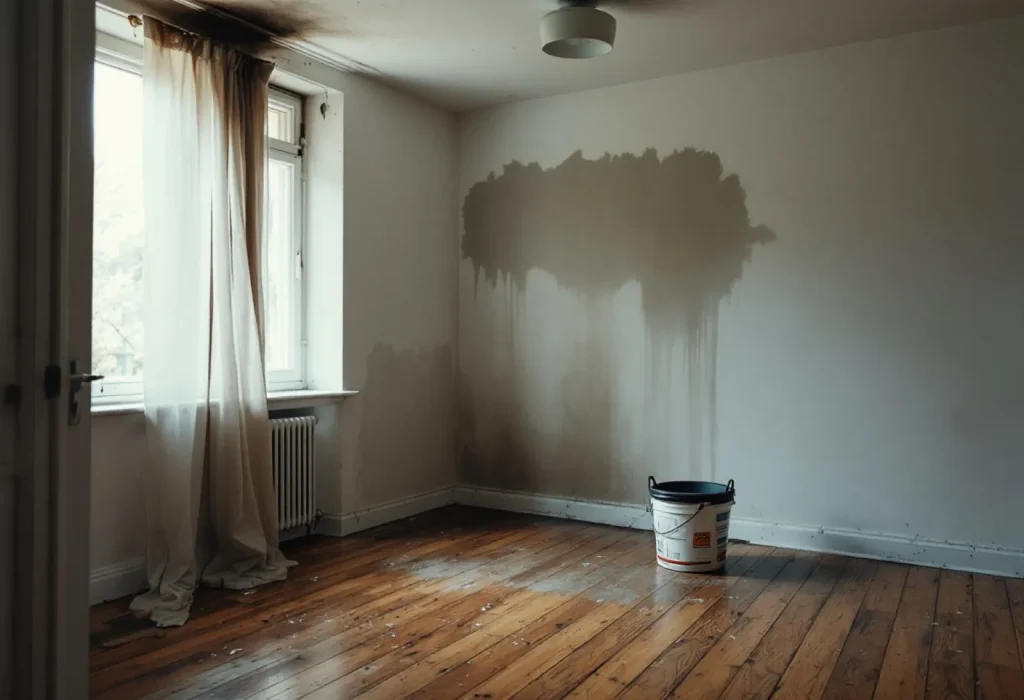
Does landlord insurance cover water damage? Yes for sudden water on the DP 2 and DP 3 dwelling forms, no on the basic DP 1. The DP 2 names accidental discharge of water but drops it after 60 days vacant; the DP 3 covers the building against all unexcluded perils. Flood, sewer backup, seepage, mold and tenant belongings fall outside.
Which DP form is on your declarations page, and why does that decide the water claim?
A landlord policy is usually a dwelling fire policy, not a homeowners policy. The North Carolina Department of Insurance dwelling policy guide lists rental properties, vacant homes and secondary homes as the buildings these forms are written for, and notes that dwelling policies generally carry no liability coverage unless it is added. The form number printed on the declarations page, DP 1, DP 2 or DP 3, is the first fact to find after a leak.
The three forms differ in how they list perils. Per the NC Department of Insurance, the DP 1 basic form covers fire, lightning and internal explosion, with windstorm, hail, smoke and vehicles added as extended coverage when the declarations show it. The DP 2 broad form keeps those perils and adds named ones, among them freezing, weight of ice and snow, and accidental discharge or overflow of water or steam. The DP 3 special form flips the logic for the building: everything is covered except the exclusions printed in the form.
Editions matter. The InsuranceXDate form index lists 07 14 as the current ISO edition of the special form, replacing 12 02 and 07 88, and notes that carriers adopt editions state by state and that Washington has its own 07 25 versions. The edition date sits in the bottom corner of every page of the form.
DP 1, DP 2 or DP 3: which form answers 11 common rental water losses?
Each cell below names where its answer comes from. Two kinds of source sit behind it: the NC Department of Insurance consumer guide, which summarises the three forms, and a complete landlord policy, landlord package form 56-5019, posted by the Oklahoma Insurance Department sample policy library. That second document is a proprietary form, not the ISO text, and it is used only to show how filed landlord wording handles a clause the regulator summary does not reach.
| Water scenario | DP 1 basic | DP 2 broad | DP 3 special |
|---|---|---|---|
| Supply line bursts in an occupied unit | No water peril named (NC DOI) | Named: accidental discharge or overflow (NC DOI) | Open perils; not on the exclusion list (NC DOI) |
| Drain leaks slowly behind a vanity for months | No water peril named (NC DOI) | No confirmed wording on gradual leaks; read the peril | Excluded: constant or repeated leakage or seepage (NC DOI) |
| Tenant leaves the tub running | No water peril named (NC DOI) | Named: accidental overflow of water (NC DOI) | Open perils; example filed form covers sudden escape from plumbing (Form 56-5019) |
| Wind tears off shingles and rain enters | Windstorm only if extended coverage is shown (NC DOI) | Includes the DP 1 perils (NC DOI) | Open perils; rain inside only through a wind made opening (Form 56-5019) |
| Old roof seeps in an ordinary rain | No peril named (NC DOI) | No peril named (NC DOI) | Excluded: wear and tear, deterioration (NC DOI) |
| Sewer or drain backs up into the basement | No water peril named (NC DOI) | Not in the NC DOI peril list; ISO sells DP 04 95 endorsement | Example filed form excludes backup through sewers or drains (Form 56-5019) |
| River or surge flood | Separate NFIP policy (NC DOI, FEMA) | Separate NFIP policy (FEMA) | Separate NFIP policy (FEMA) |
| Pipe freezes in an unheated vacant unit | Freezing not named (NC DOI) | Freezing named (NC DOI); check the heat condition | Example form excludes it unless heat kept or water drained (Form 56-5019) |
| Pipe bursts on day 61 of a vacancy | No water peril named (NC DOI) | Excluded: vacant 60 days before loss (NC DOI) | No confirmed ISO wording; read the vacancy clause |
| Mold found after a covered leak | No peril named (NC DOI) | No confirmed wording; read the exclusions | Excluded: mold, rust, rot (NC DOI) |
| Rent lost while the unit is repaired | Fair rental value included (NC DOI) | Loss of rent may be included (NC DOI) | Coverage D fair rental value (InsuranceXDate) |
Three patterns run through the 11 rows. The DP 1 has no water peril at all, so a burst pipe on a basic form with no endorsement has nothing to attach to. The DP 2 and DP 3 both respond to sudden escapes of water, and both exclude what builds up over time. Flood is never in any of the three: FEMA states that most homeowners insurance does not cover flood damage and that flood needs its own policy.
Is a burst pipe covered once the unit has sat empty for 60 days?
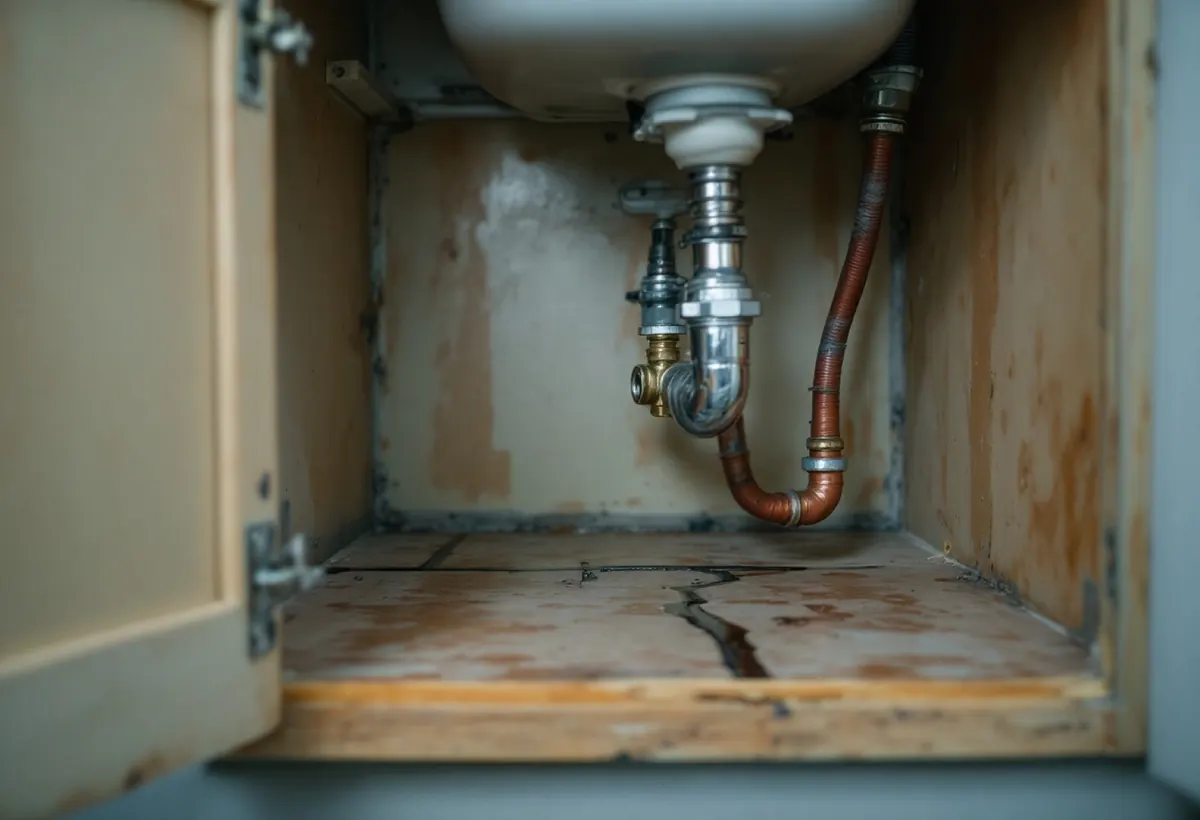
Turnover is when a rental is most exposed and least insured. On the DP 2, the NC Department of Insurance lists accidental discharge or overflow of water or steam as covered only as long as the building was not vacant for 60 days before the loss. A pipe that splits on day 61 of an empty unit falls outside that peril, even though the same split on day 59 would not.
Filed landlord forms can set shorter clocks. The sample landlord package form 56-5019 drops theft, vandalism and glass breakage once the dwelling has been vacant for more than 30 days, while its general condition says the premises may be vacant or unoccupied without limit of time except where the policy states otherwise. The exceptions are where the money is, so read them line by line.
Freezing has its own trigger that starts on day one. Form 56-5019 excludes freezing of plumbing, heating or air conditioning and any resulting leak while the dwelling is vacant or unoccupied, unless the owner used reasonable care to maintain heat in the building or shut off the water supply and drain the system. For a winter vacancy, a thermostat log or a dated note that the main was shut and the lines drained is the evidence that clause asks for.
Does a slow leak, or the mold that follows it, ever qualify?
On the DP 3 the answer is mostly no, by design. The NC Department of Insurance lists constant or repeated leakage or seepage of water or steam, wear and tear, deterioration, and mold, rust and rot among the typical DP 3 exclusions, next to neglect and intentional loss. Those are the clauses an adjuster reaches for when the drywall behind a vanity has been wet for a season.
Filed wording shows the line being drawn inside one sentence. Form 56-5019 excludes rust, mold and wet or dry rot, then carves back coverage when one of those causes water to escape suddenly and accidentally from plumbing or an appliance, but still not for deterioration, rust, mold, wet or dry rot due to the presence of water over a period of time. The same form pays to tear out and replace the part of the building needed to reach the broken system, and never the system itself.
Sewer backup and flood: why does each need its own product?
Backup is written out of standard dwelling wording and sold back as an endorsement. The InsuranceXDate form index lists ISO form DP 04 95, Limited Water Back-Up and Sump Discharge or Overflow Coverage, as a related dwelling form, and the sample form 56-5019 defines water damage to include water which backs up through sewers or drains and water that escapes from sump pumps, gutters and downspouts, then excludes it however caused. Tenants face the same split on their side, covered on water backup coverage on renters insurance.
Flood is a federal product. FEMA states that most homeowners insurance does not cover flood damage and that the NFIP insures property owners, renters and businesses. According to FloodSmart, the NFIP consumer site, building policies cover up to $250,000 of flood damage and contents policies up to $100,000, and coverage starts 30 days after purchase unless the policy is bought while making, increasing, extending or renewing a mortgage.
The 30 day wait is the practical trap for landlords. A policy bought when a storm is already forecast, per FloodSmart, will not be in force when that storm arrives, so the time to price flood for a rental is at purchase or renewal.
How long does Coverage D pay lost rent while the unit is repaired?
Coverage D, fair rental value, is the part of a dwelling form that replaces rent, and it only follows a covered loss. The InsuranceXDate form index summarises the DP 3 version as paying lost rent for the time needed to repair, plus up to two weeks when a civil authority bars use because of damage to a neighbouring location. The NC Department of Insurance lists fair rental value on the DP 1 and loss of rent on the DP 2.
Form 56-5019 shows how a filed cap reads. Its Coverage D pays for the shortest time needed to make the rental fit to live in, not to exceed 12 consecutive months from the date of loss, states that the period is not cut off by the policy expiring, adds up to 2 weeks for a civil authority order, and applies no deductible to either. A leak that is excluded, such as seepage or flood, triggers no rent payment at all.
The tenant’s own displacement costs are a different coverage on a different policy, explained in loss of use coverage.
The tenant’s couch was ruined too: whose policy pays for that?
Not the landlord’s. The New York Department of Financial Services states that a landlord does not provide insurance for a tenant’s personal property and that the landlord’s insurance will not protect the renter or the renter’s belongings. Form 56-5019 makes the same point in its own text: it does not cover property of roomers, boarders and other tenants. The tenant’s side of the same leak is covered in does renters insurance cover water damage, and repair deadlines between landlord and tenant are in water damage in an apartment.
Six questions to put to the agent about your dwelling form
The NC Department of Insurance tells dwelling policyholders to review the form to understand exactly what it will and will not cover, and to ask about extended perils and replacement cost. These six questions turn that advice into answers you can check against the printed form:
- Which form and edition is this, DP 1, DP 2 or DP 3, and is it 07 14, 12 02 or a company form? The edition sets the wording.
- Does the declarations page show extended coverage? On a DP 1, windstorm and hail depend on it, per the NC DOI guide.
- What does the vacancy clause say, and how many days? The DP 2 summary uses 60; form 56-5019 uses 30 for theft and vandalism.
- Is DP 04 95 or another water backup endorsement attached, and what is its separate limit?
- What is the Coverage D limit and is there a month cap? Form 56-5019 caps rent at 12 consecutive months.
- Is flood written on a separate NFIP policy, and when did its 30 day wait end?
If the answers and the form disagree, the NC Department of Insurance runs a consumer line at 1-855-408-1212, and every state insurance department takes coverage complaints. Whether a given loss is worth filing at all is weighed in should I file a claim for water damage, and the owner-occupied version of these rules is in does homeowners insurance cover water damage. Unit owners in a condo building start instead from does condo insurance cover water damage. More coverage pages sit in the insurance hub.
Questions people actually ask
Will insurance pay out for water damage to a rental?
Only if the water comes from a peril the form covers. Per the NC Department of Insurance, the DP 2 names accidental discharge or overflow of water or steam and the DP 3 covers the building against all perils not excluded, while the DP 1 basic form names only fire, lightning and internal explosion plus optional extended perils. Flood, seepage and mold fall outside.
What does landlord insurance not cover?
The NC Department of Insurance lists neglect, intentional loss, mold, rust and rot, constant or repeated leakage, earth movement, wear and tear, and damage from birds, rodents or insects among typical DP 3 exclusions. FEMA says most homeowners policies do not cover flood, and New York DFS says a landlord’s policy does not insure the tenant’s belongings.
What type of water damage is not covered by insurance?
Four kinds recur across dwelling forms: flood, which needs an NFIP policy with a 30 day wait per FloodSmart; sewer and drain backup, which needs an endorsement such as ISO DP 04 95; constant or repeated seepage; and mold or rot from water present over time. Sample landlord form 56-5019 excludes all four in its printed text.
Can a tenant sue the landlord for water damage?
That is a question of state landlord and tenant law and the lease, not of the landlord’s property policy. New York DFS states that the landlord’s insurance will not protect a renter’s belongings, so the tenant’s first claim usually runs through a renters policy, which DFS says covers plumbing failure, appliance failure and sprinkler discharge. A tenant attorney or legal aid office can say whether the landlord’s delay creates liability.
Does landlord insurance cover water damage the tenant caused?
The DP 2 peril, per the NC Department of Insurance, is accidental discharge or overflow of water, and the summary does not limit it by who opened the tap. Form 56-5019 covers sudden and accidental discharge from plumbing or an appliance on the same terms. Ask the agent whether the insurer would pursue the tenant afterwards, because that is decided by the policy and state law.
Sources
- North Carolina Department of Insurance dwelling policy guide, North Carolina Department of Insurance: DP 1, DP 2 and DP 3 perils, the 60 day vacancy condition on accidental discharge, typical DP 3 exclusions and settlement basis. Retrieved 16 November 2026.
- Oklahoma Insurance Department sample policy library, Oklahoma Insurance Department, and the sample landlord package form 56-5019 (Farmers Insurance Company, Landlords Protector Package, 2nd edition 1-90) posted there: water damage definition, water, freezing, vacancy and mold exclusions, Coverage D loss of rents and tenant property exclusion. Retrieved 16 November 2026.
- New York Department of Financial Services, renters insurance consumer page: landlord policy does not cover tenant belongings. Retrieved 16 November 2026.
- FloodSmart, the NFIP consumer site, Federal Emergency Management Agency: building and contents limits and the 30 day waiting period. Retrieved 16 November 2026.
- FEMA, flood insurance overview: homeowners policies and flood. Retrieved 16 November 2026.
- InsuranceXDate form index, DP 00 03 entry: editions, Coverage D summary and related form DP 04 95. Retrieved 16 November 2026.
- The scenario table is a reading of the sources above, compiled when this page was built; no clause was paraphrased from a source that was not opened. Our methodology sets out the standing rules.
This page describes published policy language and regulator guidance. It does not say what any individual policy pays. The policy issued to you, its endorsements and your state’s law control; ask your agent or your state insurance department about your own form.